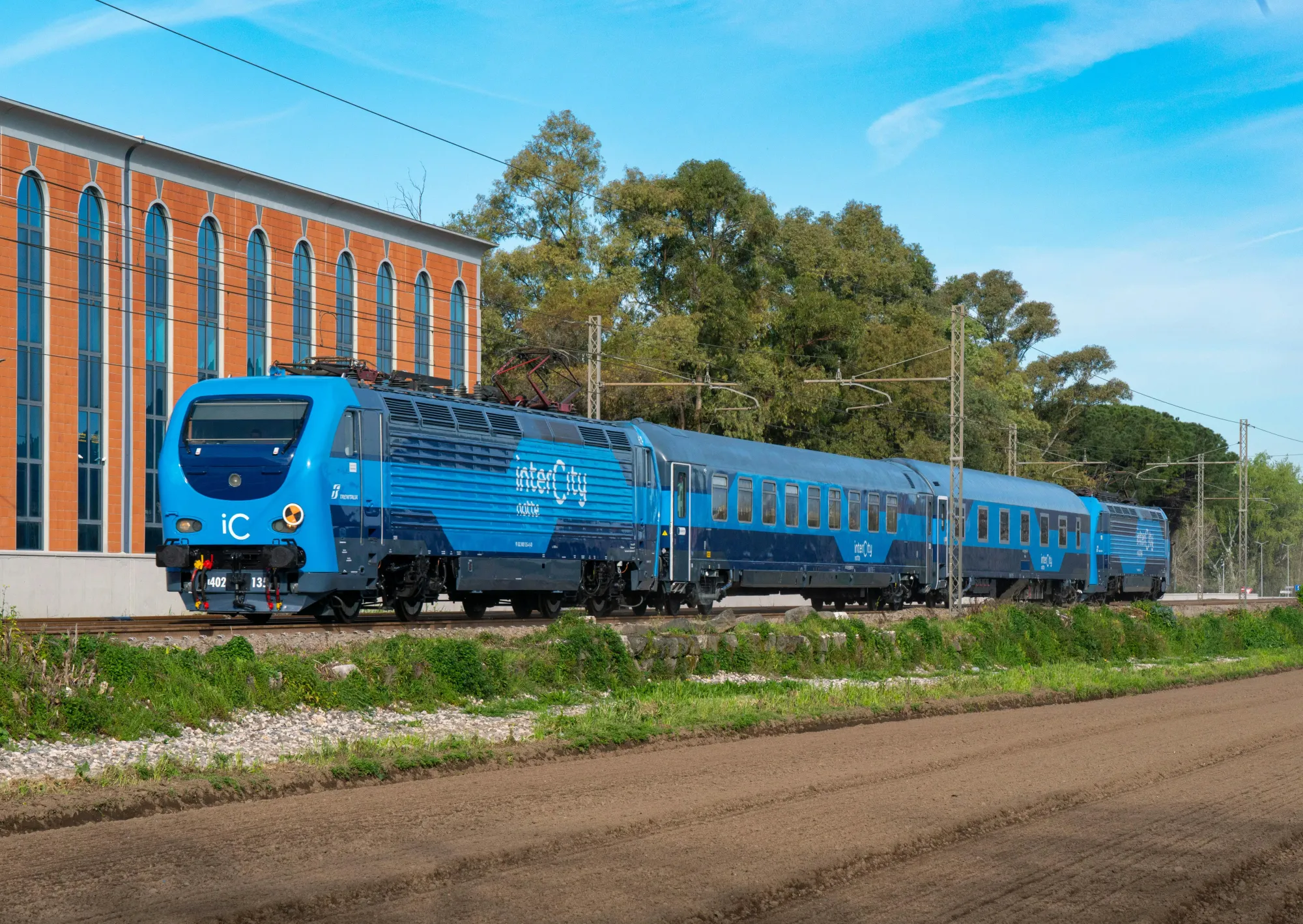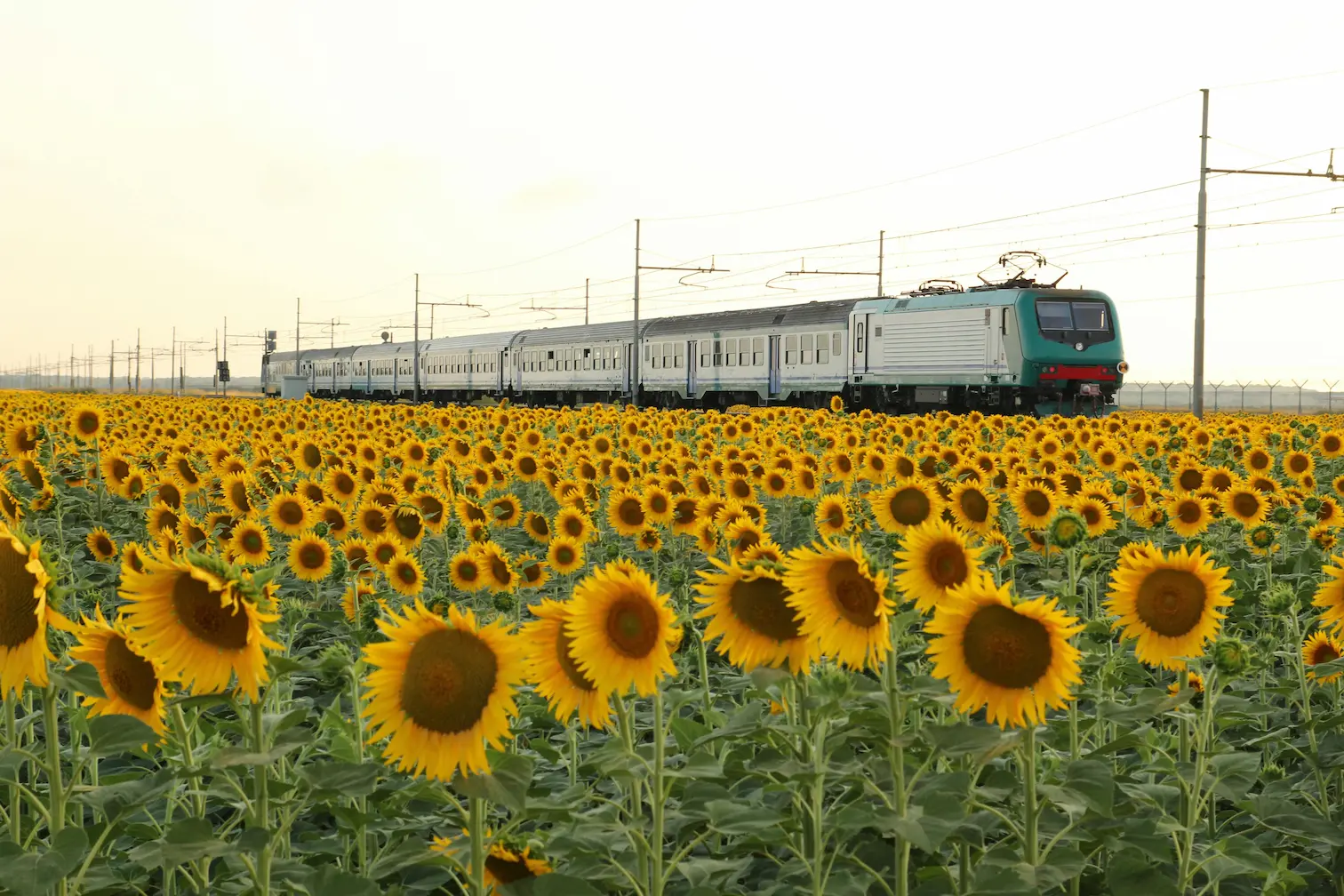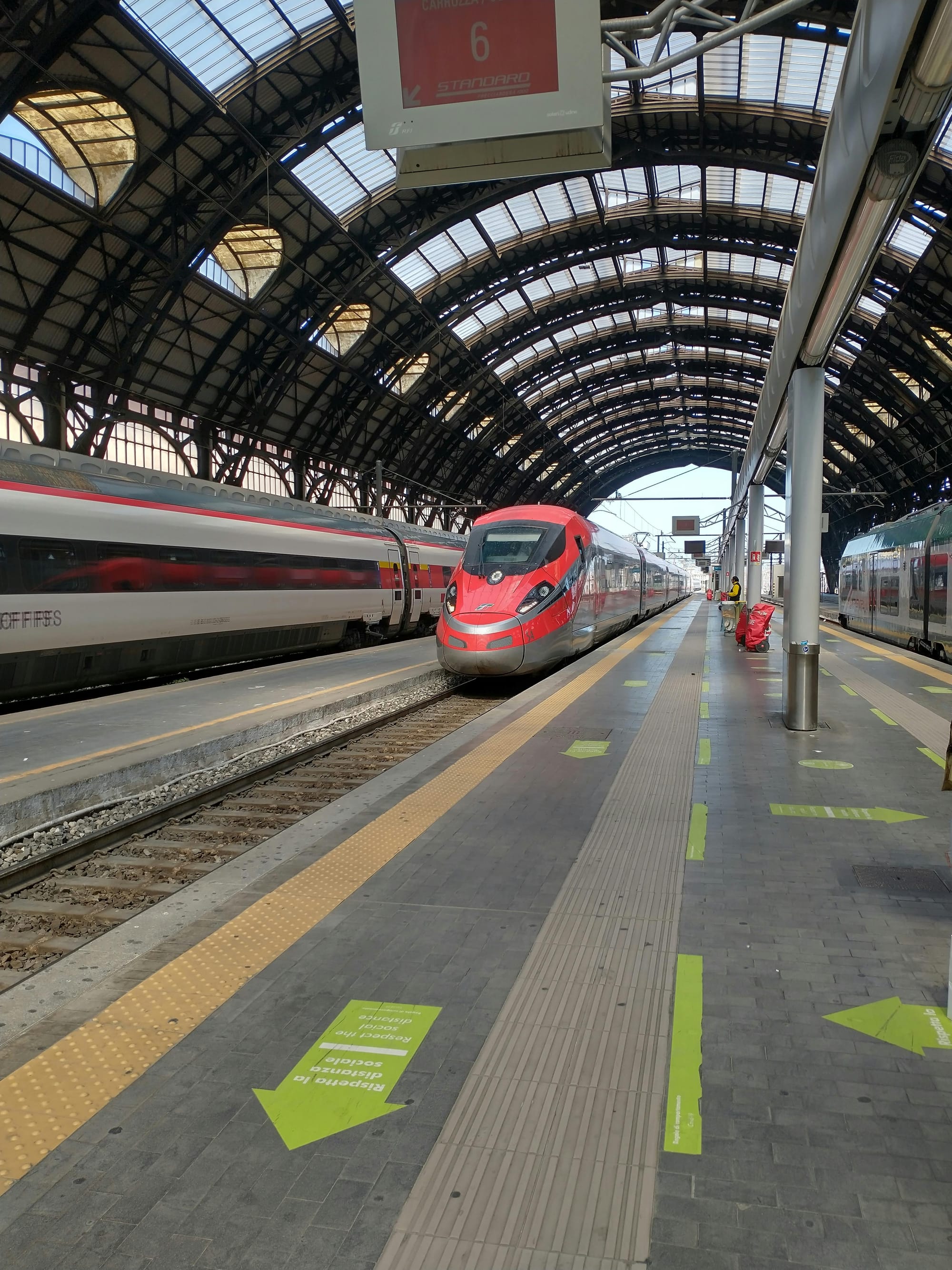
No hire car, no motorway tolls, no parking in a medieval town built for horses. Travelling Italy by train gives you freedom without the stress — here's everything a first-time traveller needs to know.
Travelling around Italy by train and bus is affordable, flexible and genuinely enjoyable — and it removes two of the most stressful parts of any Italian holiday: driving on unfamiliar roads and being stuck in one place for a week. Once you understand how the system works, getting around Italy by public transport is straightforward. This guide covers everything a first-time traveller needs to know.
I've been travelling around Italy by train and bus for years, using a mix of long-distance fast trains, regional services and local coaches to reach places that most visitors miss entirely — from hidden corners of Rome to overlooked gems in Florence. Here is everything I wish I'd known before my first trip.
| Type | Best For | Book Via |
|---|---|---|
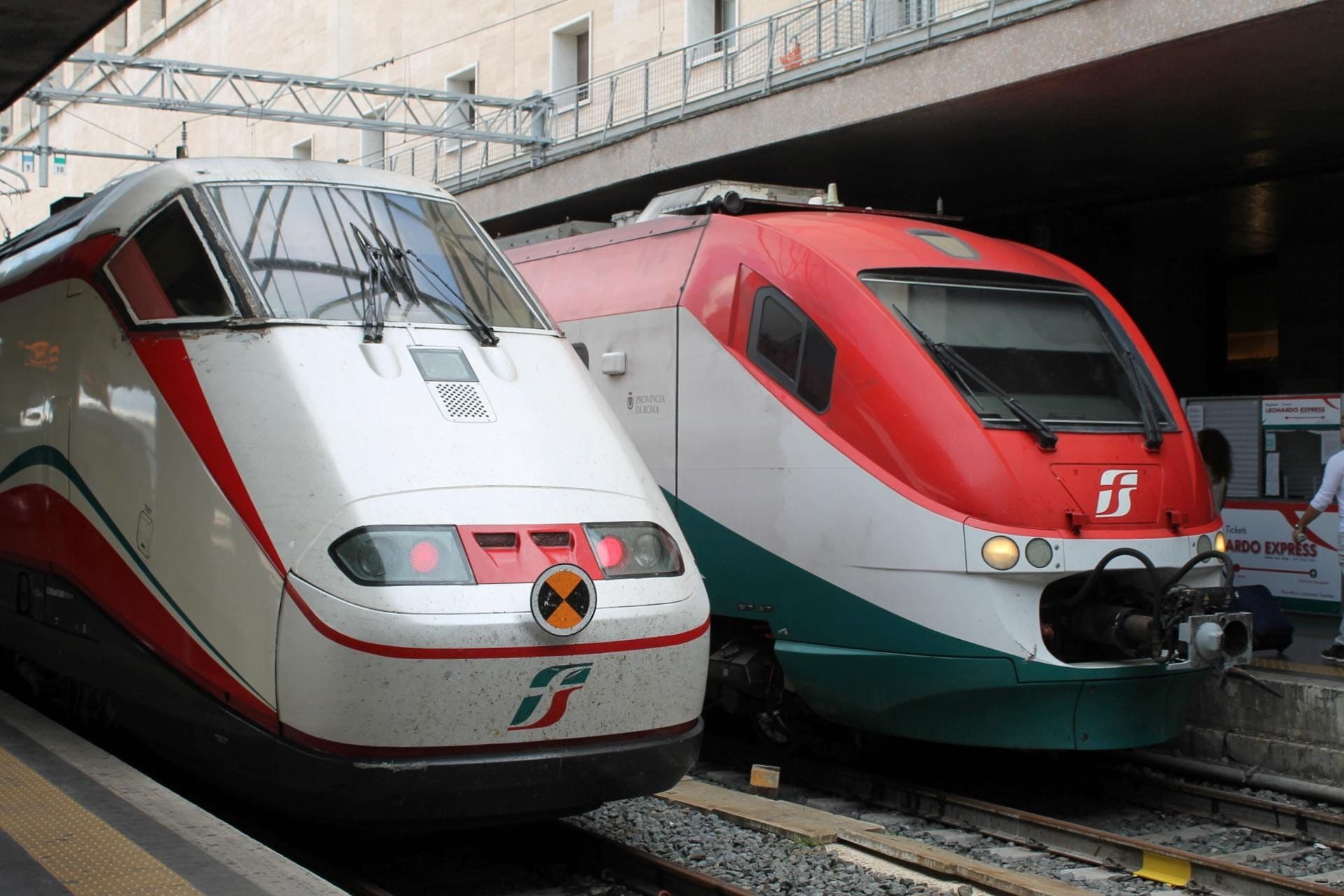
| Frecciarossa / Italo fast train | Long distances — Rome to Milan, Florence to Venice | Trenitalia, Italo or Trainline |
| Regional train | Shorter journeys, day trips, scenic routes | Trenitalia, Trainline or buy at station |
| FlixBus | Budget travel between cities | FlixBus website or app |
| Local bus or coach | Reaching smaller towns not on the rail network | Individual company websites or apps |
Why Travel Italy by Train and Bus?
The case for travelling Italy without a hire car is simple: you arrive relaxed, you can have a glass of wine with dinner, and you never have to navigate Italian traffic or worry about parking in a medieval town centre. Italian trains are affordable, especially when booked in advance, and the network connects almost everywhere you'd want to go. And if you are used to travelling in the UK on expensive trains, then you'll find the price of Italian trains to be a fraction of the cost.
Buses are equally easy to navigate and enable you to extend further beyond the train network coverage to towns and cities in more remote areas. You can book in advance and coaches are often more comfortable if you have a lot of luggage, as they will store them below in the hold.
How to Structure Your Trip
There are two main approaches to travelling Italy by train and bus, and both work well depending on your travel style.
The moving trip — going from place to place
This is the classic approach — and the structure behind our 12-day Rome to Milan itinerary: Rome for three nights, Florence for two, Cinque Terre for two, Venice for three.
Each city is a stop on the route, with your luggage travelling with you. Fast trains make this very easy — Florence to Rome is 1 hour 30 minutes, Florence to Venice is 2 hours and 15 minutes. The main consideration is luggage. If you're moving every two or three days, travel light. When you arrive you can use a service like Bounce or Radical Storage — which means you can drop your bags near the station directly on arrival and start exploring immediately rather than waiting for your hotel room.
The base trip — staying put and exploring outward
This is my preferred approach. You choose one or two bases — Florence, Rome and Bologna are all excellent — and take day trips by train from there.
You unpack once, you know your local area, and you return each evening without the stress of checking into a new place. It also tends to be cheaper, since you're booking fewer hotel nights in different cities and will generally get better rates for longer stays.
The two approaches also combine well. I often do a multi-base trip — two or three nights in one city, then a travel day to the next base, where I stay for three or four nights before moving again. This gives you the best of both: the variety of moving and the comfort of staying put.
What about flying between bases?
For most of mainland Italy, trains are faster and more convenient than flying once you factor in airport transfers and security. But for the larger islands — Sicily and Sardinia — a short internal flight makes a lot of sense. The same applies if you're travelling between very distant points, such as Bari in the south and Milan or Venice in the north.
Booking Trains — How It Works
| Fast trains (Frecciarossa, Italo) | Always book in advance — prices rise significantly closer to departure. Book directly through Trenitalia, Italo or via Trainline |
| Regional trains | Can usually be bought on the day at the station or via the Trenitalia app or with Trainline. No advance booking required for most routes |
| Best booking site | Trainline shows both Trenitalia and Italo options side by side, making it easy to compare prices and journey times. |
| Flexibility options | Some tickets allow rebooking or cancellation for 80% refund — these cost slightly more but are worth it for uncertain plans |
Booking trains in Italy is genuinely easy. Trainline is particularly useful for first-time travellers as it shows you both Trenitalia and Italo services side by side.
If you're unsure about your timings, look for tickets with rebooking flexibility (or cancellation options) — they cost a little more but remove the stress of being locked into a specific train. Regional trains can also usually be rebooked through the app.
For cancellations, some long-distance tickets offer an 80% refund if you cancel — usually on tickets above €10 in value. Trainline explains these options clearly at the point of booking.
For a full breakdown of every train type and ticket class in Italy, see our Italy train network guide.
Booking Buses
Buses are slightly more involved than trains, simply because there's no single platform covering all Italian bus operators. Each local company has its own website and app. That said, a few pointers make it much more manageable:
- FlixBus is expanding its Italian coverage and is the easiest starting point — one app, one booking system, consistent across routes. One thing to check: FlixBus stops are sometimes on the edge of town rather than at the central bus station. It's always easy enough to get into the centre from there, but leave a little extra time
- Local coaches often have more convenient central stops than FlixBus and can be cheaper for shorter routes. The downside is finding and booking them — a quick search for the route you need plus "autobus" usually surfaces the right operator
- Tickets on your phone are now accepted by all the operators I've travelled with. The days of needing to print a paper ticket are behind us, which makes the whole process much simpler
- FlixBus cancellations — FlixBus does allow cancellations and rebooking, usually issuing a voucher code for future travel. For airport transfer buses like Terravision, check the cancellation policy carefully before booking — in my experience these tickets were rebookable but not always refundable.
Should You Upgrade Your Ticket?
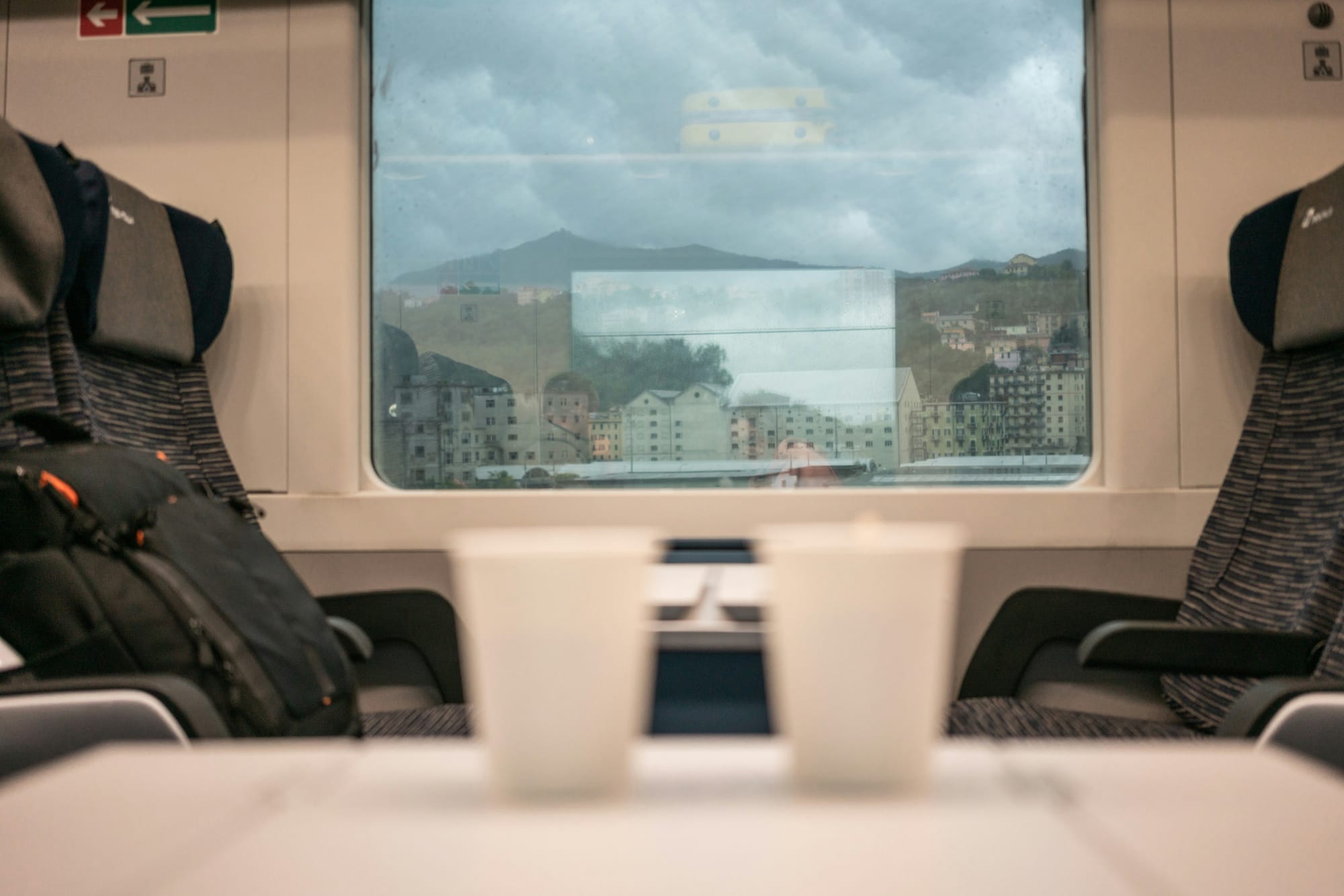
On Italian fast trains, I'd recommend upgrading to Business or Premium class — and the reason isn't just comfort, though the seats are noticeably larger. The real advantage is luggage. Business and Premium carriages are not as busy, which means there is more space for your suitcase. You also get a snack and a drink included, which is a nice touch during a long journey.
The price difference between standard and Premium on Italian fast trains is often surprisingly small — sometimes as little as €5-10 on a two-hour journey. On a trip where you're taking several long-distance trains, it's worth checking the upgrade cost each time rather than assuming standard is the only option.
One small note: if you're offered tea on an Italian train, be aware it sometimes comes with creamer rather than milk. Not the end of the world, but worth knowing if you're particular about your cup of tea.
Validating Your Ticket — What You Need to Know
This is the one area that catches out first-time travellers on Italian trains, so it's worth understanding clearly.
- Digital tickets (booked online or via app) — no validation needed. Your ticket is tied to a specific train and self-validates when the train departs. Simply show it on your phone if the conductor asks
- Paper tickets for regional trains — these must be validated before you board. Look for the small yellow or green stamping machines on the platform or in the station corridor. Insert your ticket and wait for the stamp. An unvalidated paper ticket on a regional train can result in a fine even if you paid for it — inspectors do check.
- Fast train tickets (paper) — these are tied to a specific train and generally don't require separate validation, but check when you buy
The simplest approach is to book digitally wherever possible. It removes the validation question entirely and means you always have your ticket on your phone.
Reading the Boards and Finding Your Train
Italian stations can feel busy and slightly chaotic to a first-time visitor, but the system is logical once you know what to look for.
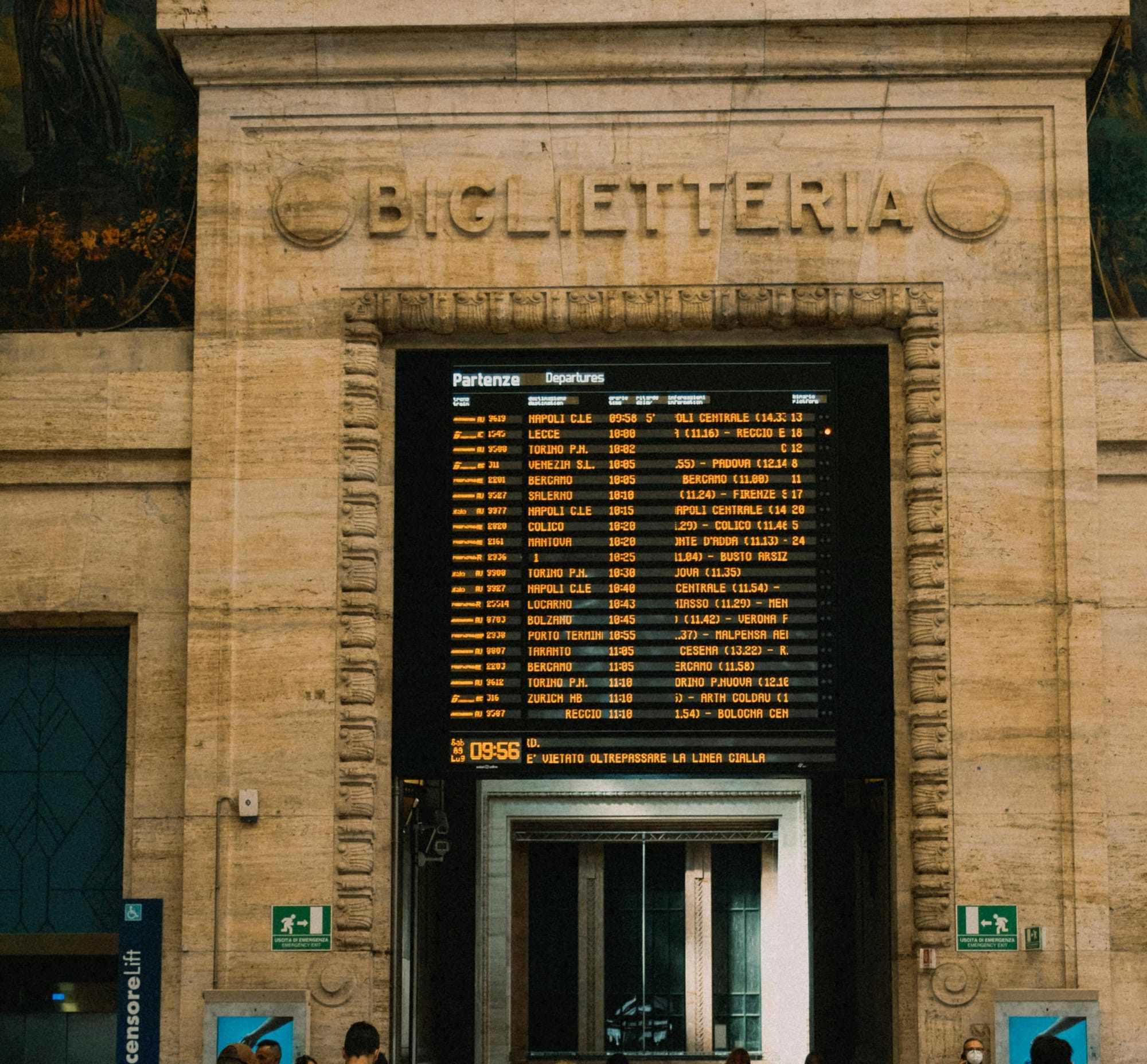
- It is common for a train not to be appear on the departure board until 10 minutes before it departs — this is completely normal. Don't panic if you can't see your train. Wait patiently and it will appear.
- Platform changes happen — as they do in any country. Keep an eye on the boards as your departure approaches, as the platform can change with little notice and are not always announced in English.
- Search by train number, not just destination — several trains may run to the same destination at similar times. Finding your specific train number (shown on your ticket) on the board avoids any ambiguity about which service to board
Italian Train Strikes — What You Need to Know
Italy does have train strikes, and they're worth being aware of — though they're much less alarming than they sound. Italian strikes are always announced in advance and are legally required to maintain a minimum service level, which means trains do still run during strike periods, just less frequently.
The practical advice is simple: before any major journey, do a quick search for Italian train strikes on your travel dates. If a strike has been announced, check Trenitalia's or Italo's website for the guaranteed minimum service on your route — they publish this clearly and in advance. In most cases you'll still be able to travel, just with fewer options and potentially busier trains.
Strikes are more common in autumn and winter than in summer, and rarely affect fast intercity services as severely as regional trains. Having a flexible ticket on important travel days is worthwhile insurance.
Travelling with Mobility Considerations
Italian trains are not always the easiest for passengers with limited mobility. Many trains — particularly older regional services — have steps to board, and some double-deck trains require navigating stairs between levels. Platforms vary in height and aren't always level with the train door.
If mobility is a consideration, Trenitalia does offer assistance services at major stations — book in advance through their dedicated accessibility service. Fast trains (Frecciarossa in particular) are generally more accessible than regional services. For smaller regional stations, it's worth researching the specific route before travelling.
Taking a Comfort Break
For buses, the practical consideration is different — most coaches don't have onboard toilets, or if they do they're often not available during the journey. Longer coach journeys typically stop at service stations along the route, but if this is a concern, trains are the better option, as they have them on board.
Arriving and Departing — Timing Your Journeys
Major Italian stations — Rome Termini, Milan Centrale, Florence Santa Maria Novella, Venice Santa Lucia — are busy at all hours and well served by taxis, buses and night services. Arriving late or departing early at these stations is no problem at all.
Smaller regional stations are a different matter. Outside of peak hours, smaller stations can be unstaffed and quiet. For these, I'd suggest arriving before 8pm or departing after 7.30am where possible — not because they're unsafe, but simply because the practical support (taxis, staff, open cafes) is much more limited outside those hours.
Practical Tips at a Glance
- Book fast trains early — prices on Frecciarossa and Italo services rise significantly as the departure date approaches. Booking two to three weeks ahead saves money
- Download the Trenitalia and Italo, or the Trainline apps — useful for checking live departures, rebooking regional trains and having your tickets to hand without searching through emails
- Use luggage storage — most major stations have left luggage facilities, increasingly bookable online. Or book with Bounce or Radical Storage. Depositing your bags on arrival and collecting them before departure gives you a full day's exploring without dragging a suitcase around
- Take a screenshot of your ticket — mobile signal in tunnels and rural areas can be unreliable. Having your ticket saved offline means you can always show it
- Check for strikes before you travel — a quick search before any major journey takes 30 seconds and could save significant disruption
Ready to start planning your trip? Our guide to planning your Italy by train itinerary covers which regions connect best, how many stops is realistic, and why booking trains before accommodation makes everything easier.
Frequently Asked Questions — Travelling Italy by Train
Is travelling Italy by train easy for first-time visitors?
Yes — once you understand a few basics, Italian trains are straightforward and enjoyable to use. The main things to know are: book fast trains in advance, validate paper tickets before boarding, search by train number on the departure board, and check for strikes before important journeys.
Is it cheaper to travel Italy by train or hire a car?
For most itineraries, train travel works out cheaper than hiring a car once you factor in fuel, motorway tolls, parking and insurance. Fast train tickets booked in advance can be very affordable — Florence to Rome start from around €19 with Trenitalia or Italo. Regional trains are even cheaper and can often be bought on the day.
What is the difference between Trenitalia and Italo?
Both operate fast intercity trains on Italy's main routes. Trenitalia is the national operator and has the wider network including regional trains. Italo is a private competitor operating only fast trains between major cities — it's often competitively priced and worth checking alongside Trenitalia. Trainline shows both side by side.
Do I need to print Italian train tickets?
No — all major operators now accept tickets on your phone. Digital tickets booked online or through apps are the most convenient option and remove the need for validation on fast trains. Paper tickets for regional trains do need to be validated before boarding at the yellow or green stamping machines on the platform.
What happens if there is a train strike in Italy?
Italian strikes are always announced in advance and legally required to maintain a minimum service level. Trains still run during strikes, just less frequently. Check Trenitalia's website for the guaranteed minimum service on your route if a strike has been announced. Having a flexible ticket on important travel days is good insurance.
Can I travel around Italy by bus as well as train?
Yes — buses are useful for reaching smaller towns not served by rail, and for some longer intercity routes where buses are cheaper than trains. FlixBus is the easiest to book and has growing Italian coverage. Local bus operators also serve key routes but require booking through individual company websites. All major operators now accept tickets on your phone.
Is it worth upgrading to Business or Premium class on Italian trains?
Often yes — the price difference is smaller than you might expect and the benefits include bigger seats, less people and a complimentary snack and drink. On a journey with a large suitcase, the less congested luggage space in Business or Premium carriages alone can make the upgrade worthwhile.
What is the best way to structure an Italian train trip?
The two main approaches are moving trips — going from city to city — and base trips, where you stay in one or two places and take day trips from there. Rome and Florence are both excellent bases, with an extraordinary range of destinations reachable in under two hours. Base trips are lower stress and often cheaper, as you unpack once and don't need to manage luggage daily. A combination of both works well: two or three nights in each base, with day trips between moves.