Just 25 minutes from Milano Centrale, Pavia is one of northern Italy's most rewarding train trips — medieval towers, a covered bridge over the Ticino, a university older than the Renaissance, and one of the finest monasteries in the country.
Most visitors to Milan never make a day trip to Pavia by train. That's a shame. Pavia makes an excellent day trip from Milan by train — a short journey from Milano Centrale (or Rogedo) and costs around €5, and a full day comfortably covers both the city and the Certosa di Pavia. If you're new to train travel in Italy then read our Italy Train Guide on how it all works.
Pavia is the kind of place that reminds you why you travel. Not because it's undiscovered (Italians know it well), but because it feels lived-in and unhurried in a way that the more famous cities often don't.
Here's everything you need to plan a day trip to Pavia from Milan by train — including how to visit the Certosa, which needs a little more time and preparation.
At a glance
- 🚆 Journey time
- 17–30 minutes from Milano Centrale
- 🎟 Ticket price
- From approx. €5 one way
- 🕐 Time needed
- Full day for city + Certosa; half day for city only
- ⛪ Certosa di Pavia
- Free entry; separate short train hop from Pavia
- 📅 Best time to visit
- Spring and autumn; avoid August
- 🚶 Getting around
- Compact historic centre — best explored on foot
- 🍚 Don't miss
- Risotto, Zuppa Pavese, aperitivo in the university quarter
How to get to Pavia from Milan
The train from Milano to Pavia runs frequently throughout the day — you'll find around 100 services daily, so there's no need to plan obsessively around a timetable. The fastest trains take as little as 17 minutes; most take around 25–30 minutes. Tickets start from around €5.
Buy your ticket at the machines in Milano Centrale, on the Trenitalia or Trainline web site or app, or at the ticket windows. Remember to validate your ticket before boarding if you're using a paper ticket — stamp it at the green machines at the entrance to the platforms. Find out more about train tickets and how to validate them in our How Italy's Train network works article.
Pavia train station sits at the southern edge of the historic centre. Step outside and you're a short, flat walk from everything.
Practical tip: Take an early train — aim to be in Pavia by 9am. You'll want the full day, especially if you're planning to visit the Certosa as well.
Certosa di Pavia: Why You Need a Separate Train Leg
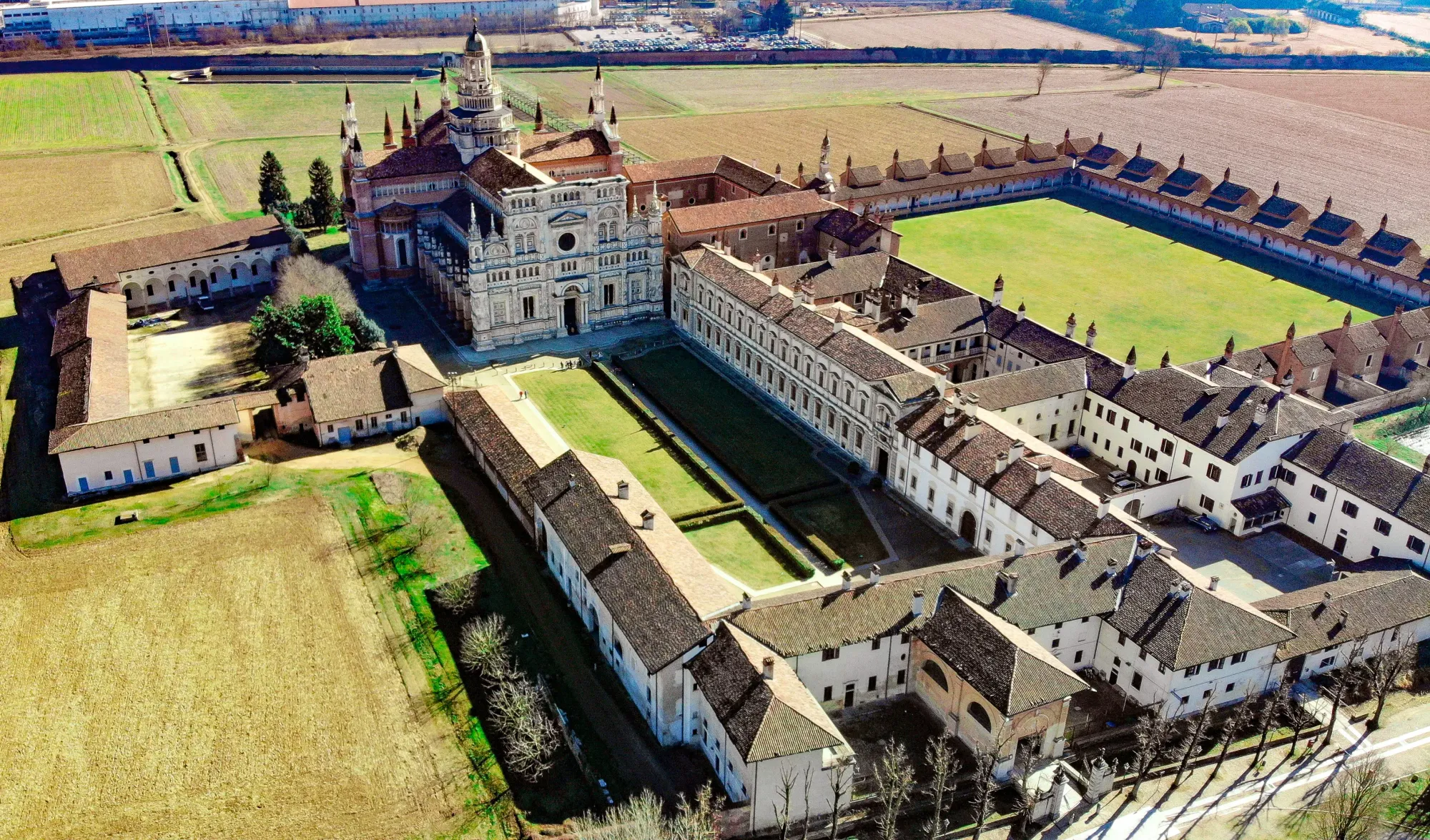
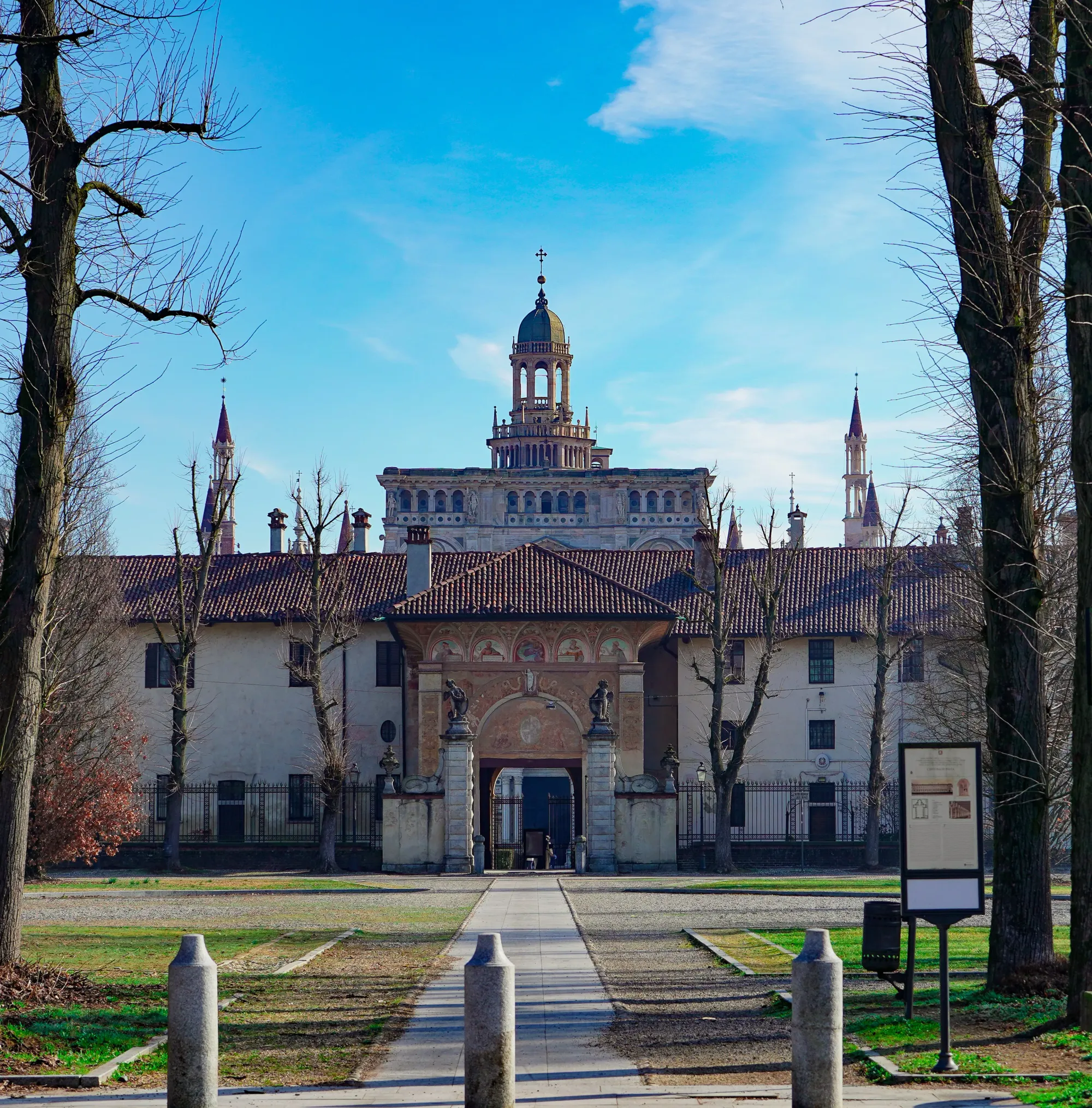
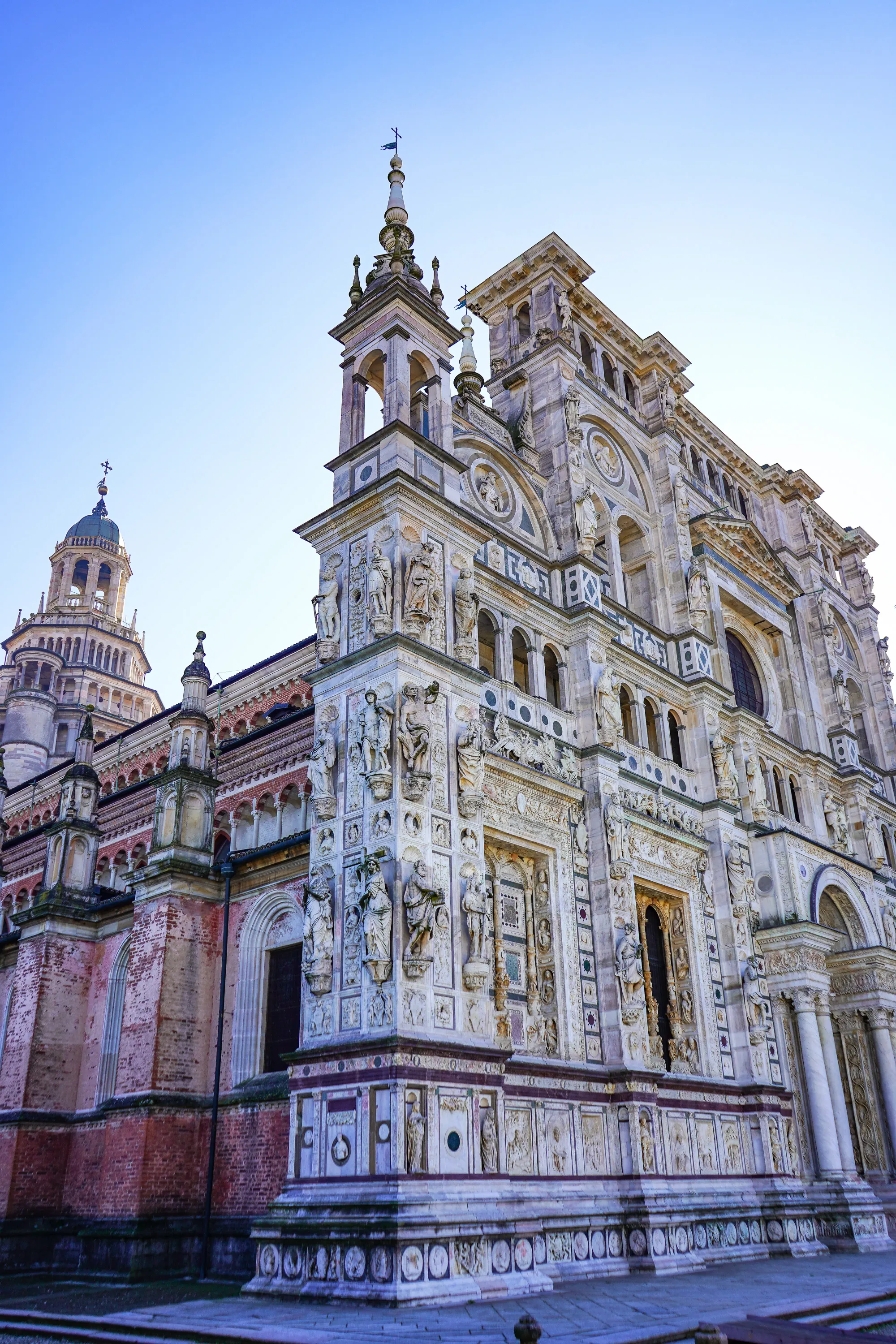
Most guides treat the Certosa di Pavia as an afterthought — a quick mention at the end. It deserves far more than that. But visiting Certosa di Pavia needs a bit of planning, because it is not in Pavia city centre.
The Certosa — a vast Gothic-Renaissance Carthusian monastery begun in 1396 — sits about 8km north of Pavia, in open countryside. The easiest way to reach it from Pavia is by train back towards Milan, getting off at the small Certosa di Pavia station on the Milano–Rogoredo–Pavia line. It's a short hop — just a few minutes — trains stop there around 2 times per hour.
From the station it's a 20 minute walk to the monastery entrance.
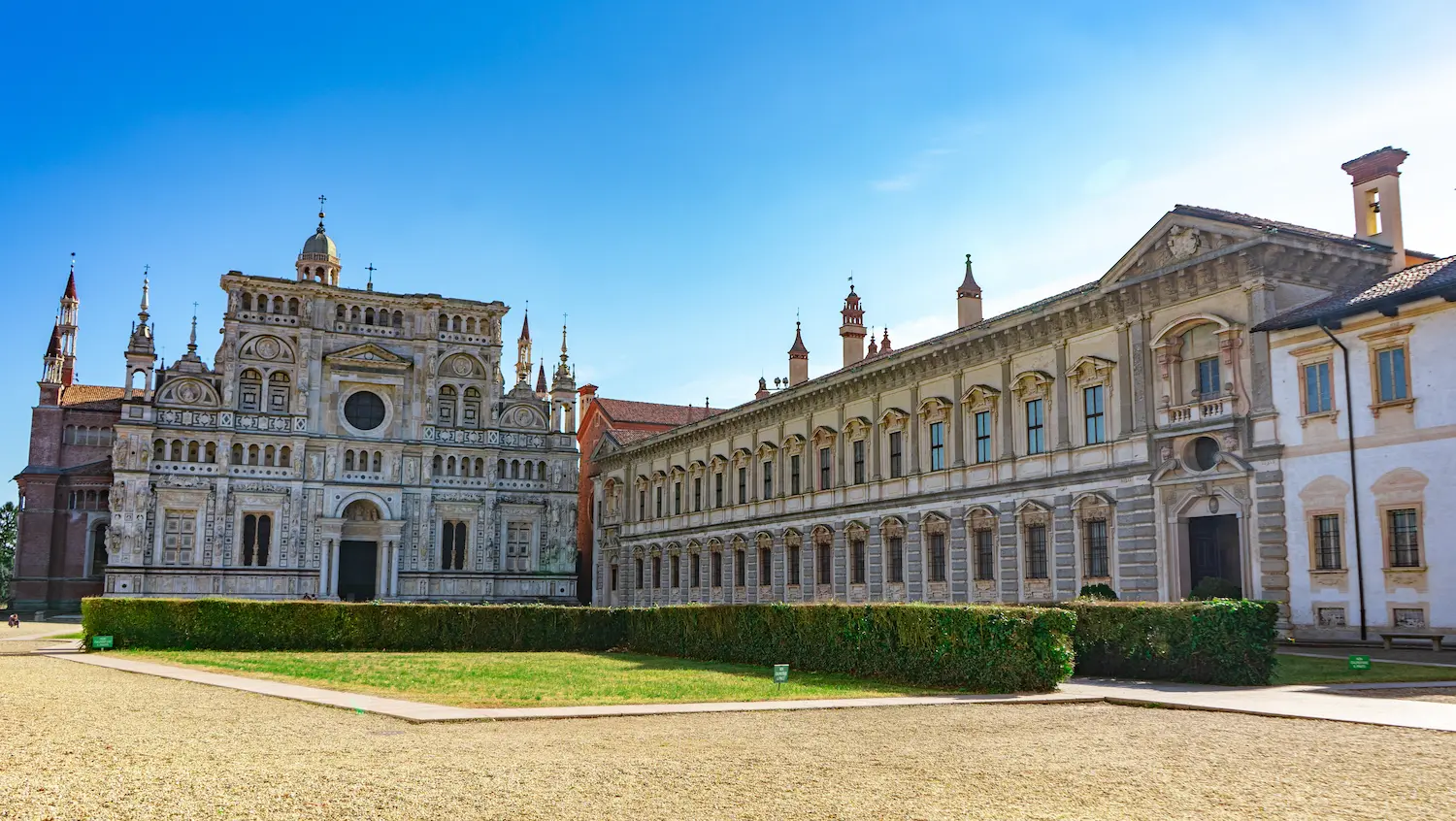
The Certosa is entry is €10, and guided tours (included in the visit) run at set times — check current hours before you go, as they vary by season and the monastery observes periods of silence. Allow at least 90 minutes for your visit. The facade alone will stop you in your tracks: white marble carved in extraordinary detail, a riot of saints, medallions, and bas-reliefs that somehow holds together as a unified, breathtaking whole.
My advice: Visit the Certosa either first thing in the morning (take the train from Milan directly to Certosa di Pavia station, then continue to Pavia train station afterwards) or in the early afternoon after exploring the city. I did city first, Certosa after lunch — a full day, comfortably managed, with no rushing.
Top things to see in Pavia
The University Quarter
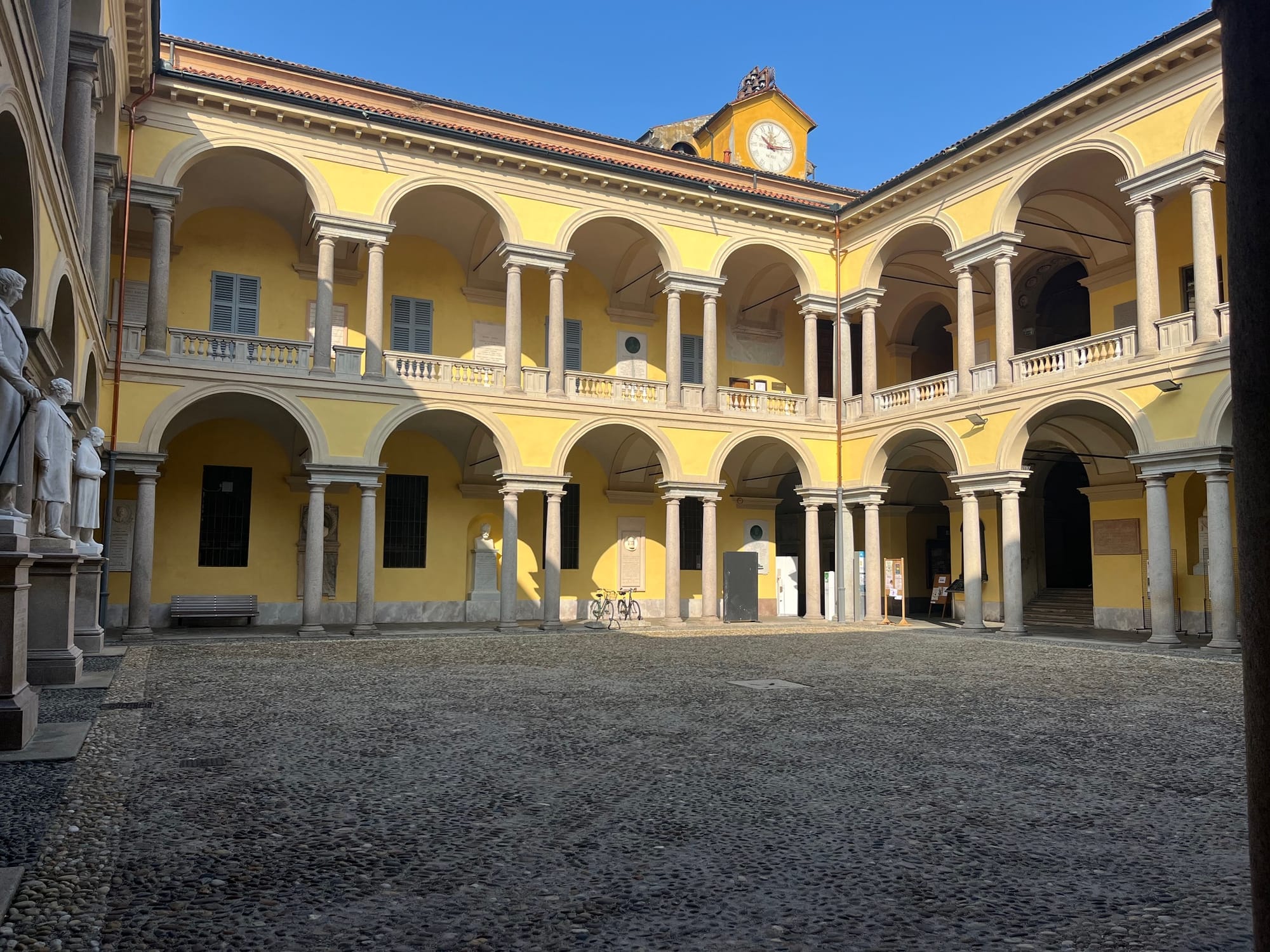
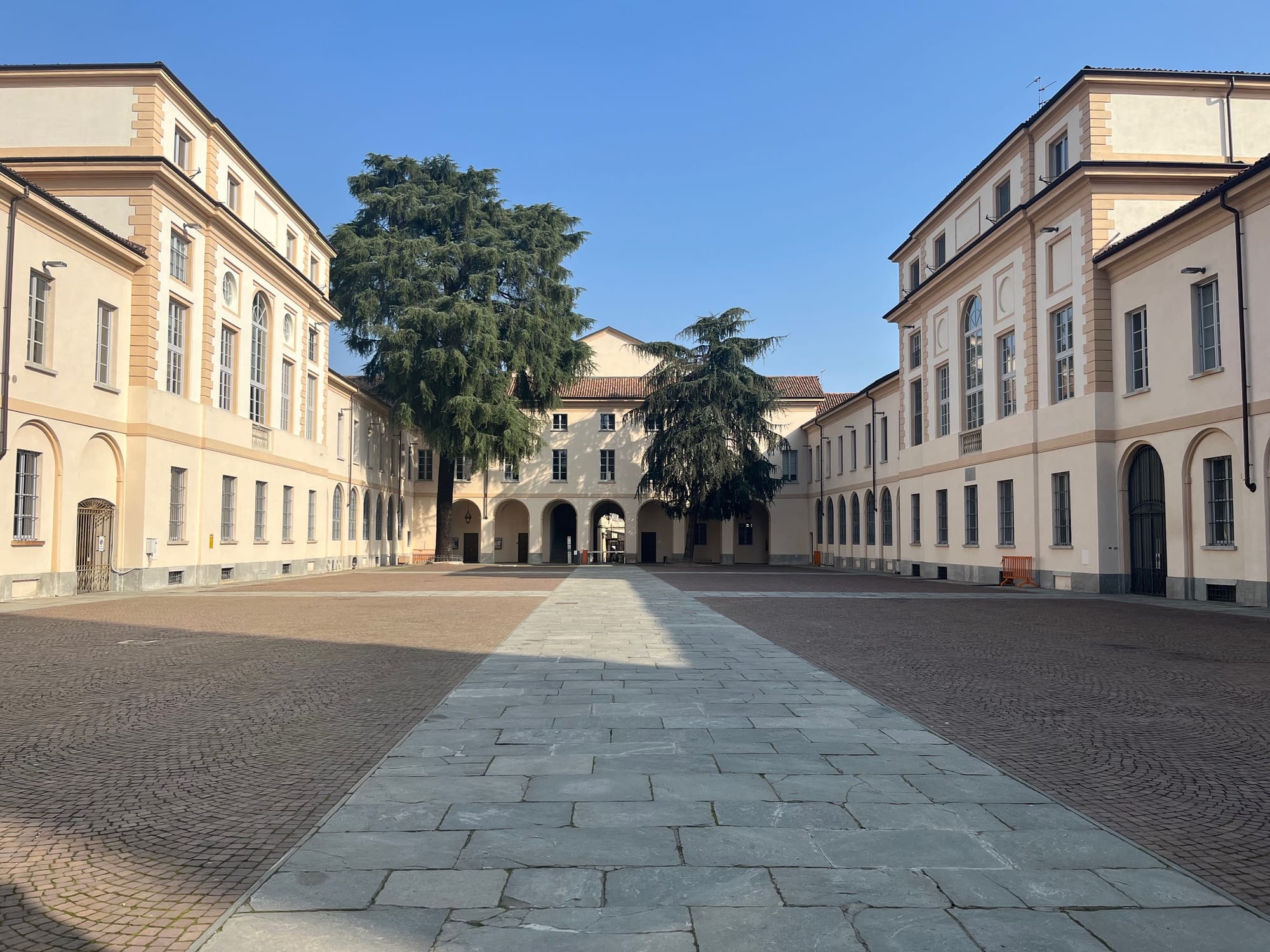
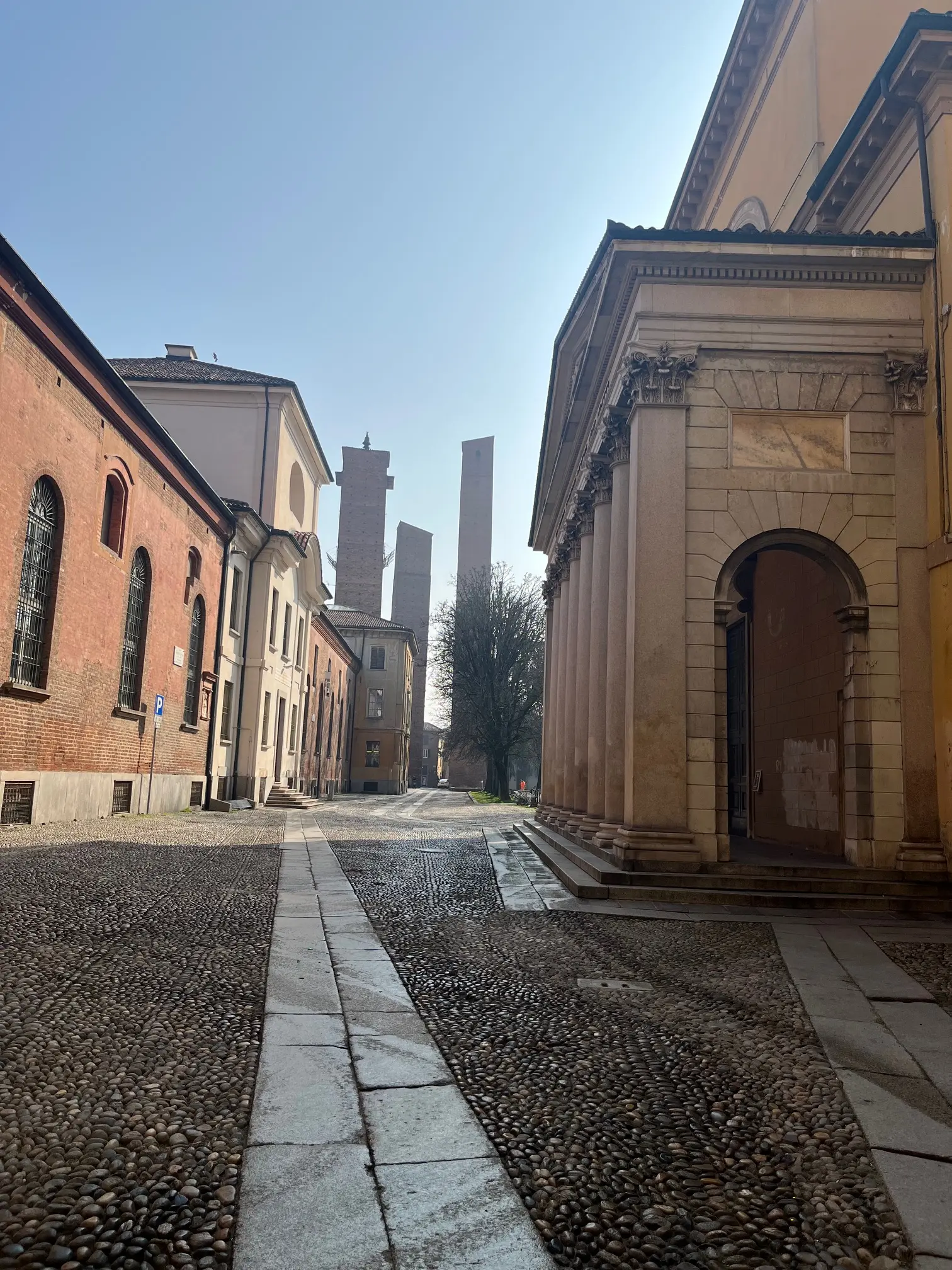
For me, this is the heart of Pavia — and it's where you feel most strongly that this is a city with its own life, not a museum piece for tourists.
The University of Pavia is one of the oldest in the world, founded in 1361 (though its roots go back further still). Gerolamo Cardano, one of the founders of algebra, studied here. The university buildings are woven into the fabric of the city — courtyards opening off main streets, arcaded walkways. Wander in if the doors are open. Peer into the botanical garden. Sit in one of the piazzas nearby where students gather for coffee.
The area around Piazza Leonardo da Vinci is particularly worth seeking out — three medieval towers rise unexpectedly from the square, survivors of the hundreds that once gave Pavia the nickname "city of a hundred towers." They're extraordinary to stumble upon.
The Castello Visconteo
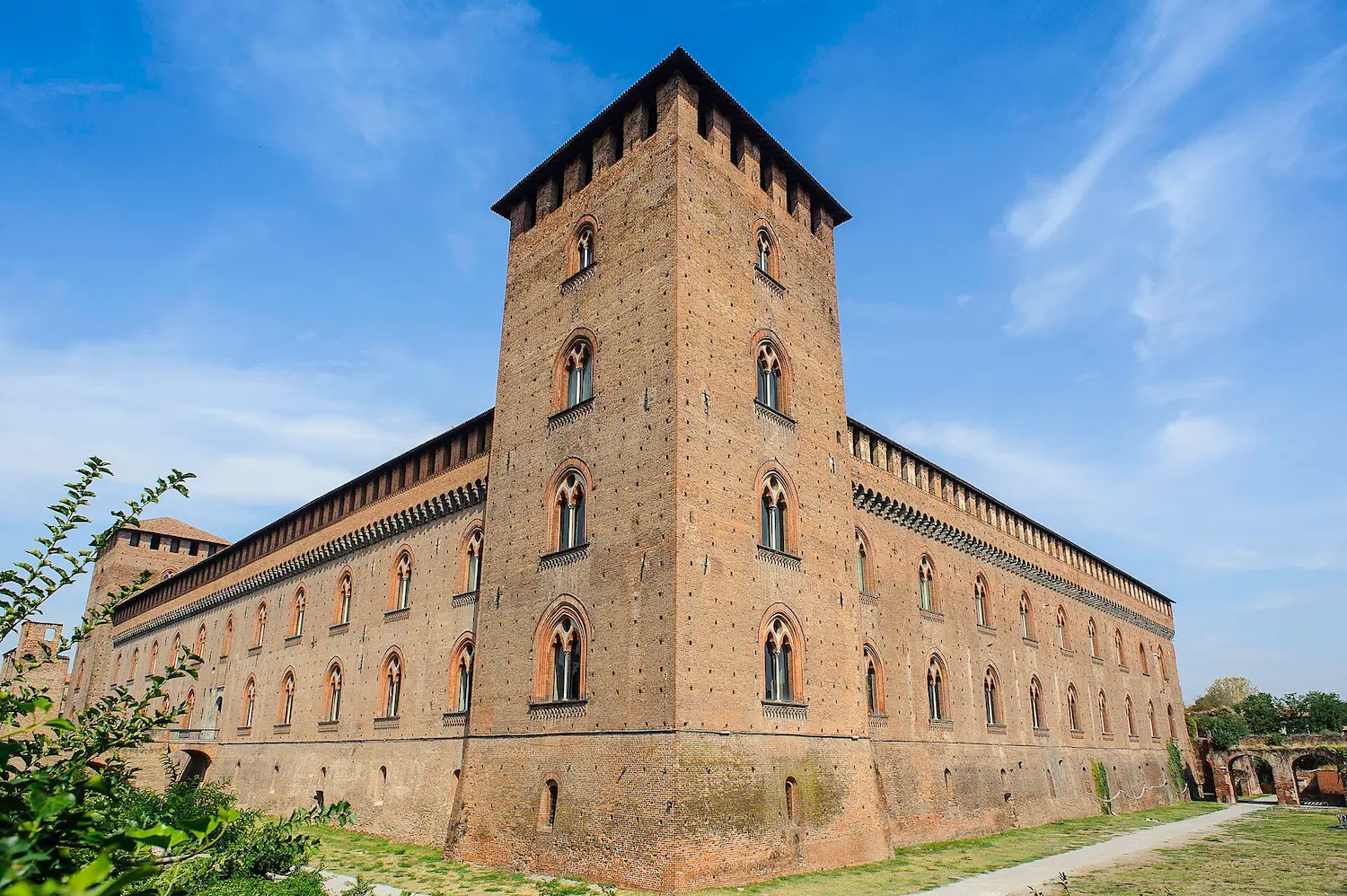
The Castello Visconteo sits at the northern edge of the historic centre, a short walk from the university quarter. It was built in 1360 by Galeazzo II Visconti — the same dynasty that would go on to commission the Certosa. The Visconti didn't just rule Pavia; they shaped it architecturally in ways that are still visible seven centuries later.
The castle is a substantial, brick-built fortress with four towers and a wide courtyard. It's less forbidding than it sounds — the inner courtyard has an elegance to it, with arched loggias running along two sides, that softens the military purpose. Today it houses the Musei Civici di Pavia, the city's civic museum, with collections covering Lombard sculpture, Roman archaeology and a significant collection of Flemish tapestries.
Even if you don't go inside, the exterior and grounds are worth the short detour. It gives you a sense of the scale of Visconti ambition — the same family responsible for the Duomo, the Certosa, and the university all within a few streets of each other.
Ponte Coperto
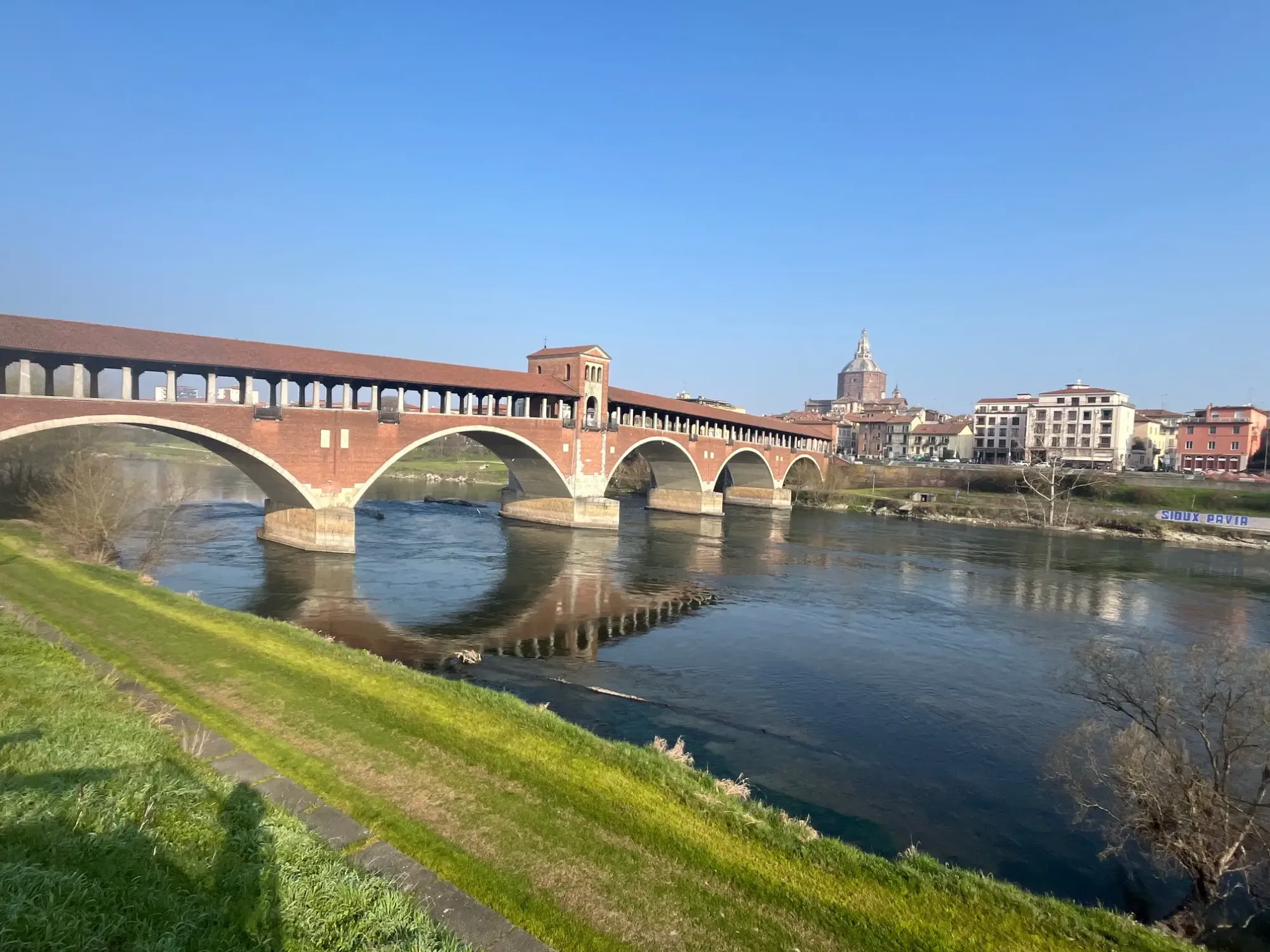
Pavia's covered bridge over the Ticino is one of those landmarks that earns its postcard status. The current structure is a post-WWII reconstruction of the medieval original (destroyed by Allied bombing in 1944), but it doesn't feel like a replica. Walk across it, stop in the middle, look back at the skyline.
On the far bank, the Borgo Ticino neighbourhood is worth a wander — quieter than the centre, with colourful houses and a handful of trattorias.
The Duomo and Piazza della Vittoria
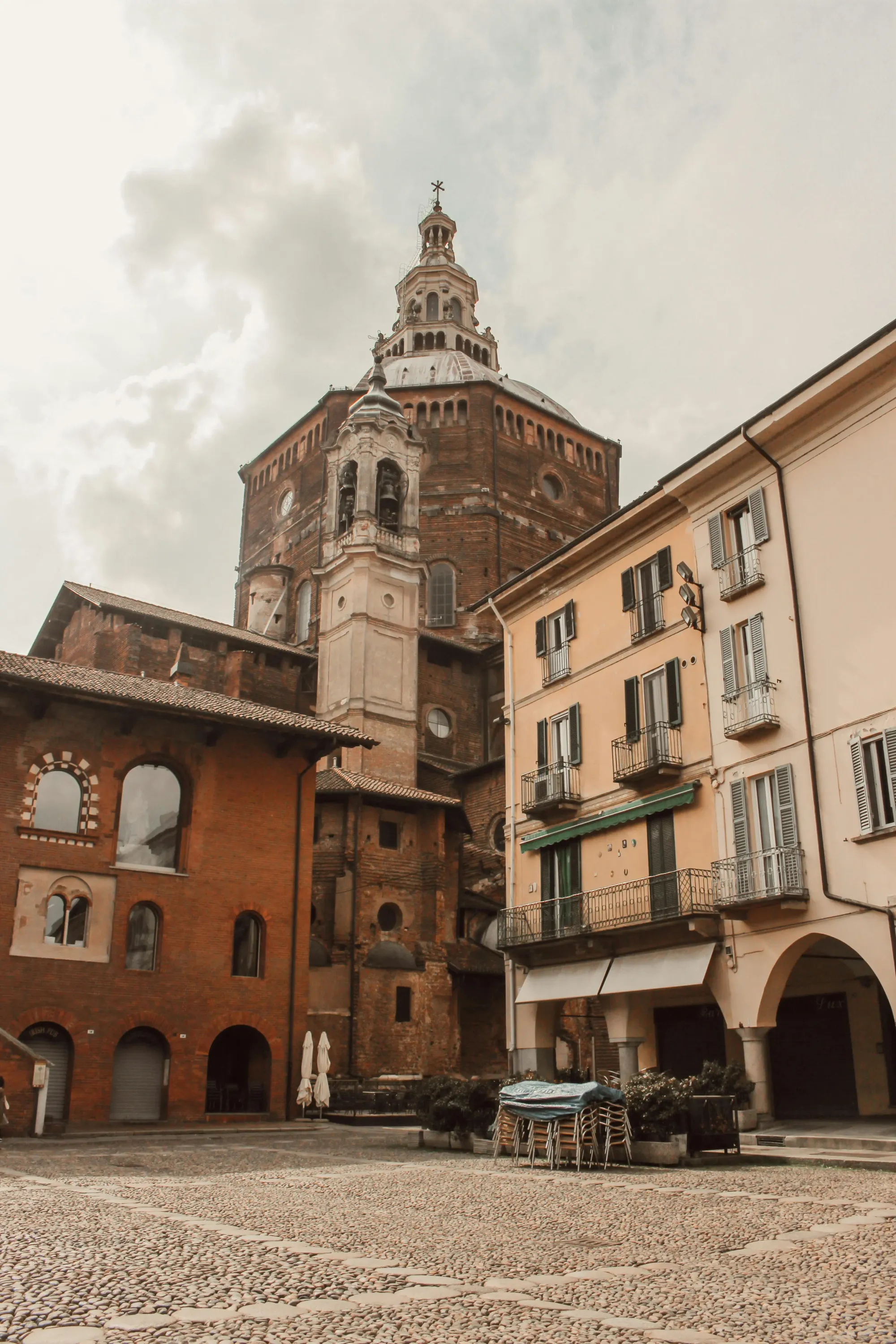
Pavia’s cathedral is crowned by one of the largest domes in Italy, often ranked among the most impressive after those of St Peter’s in Rome and Florence’s Duomo. The Piazza della Vittoria in front of it is the city's main square and a fine place to have a coffee and watch daily life.
San Michele Maggiore
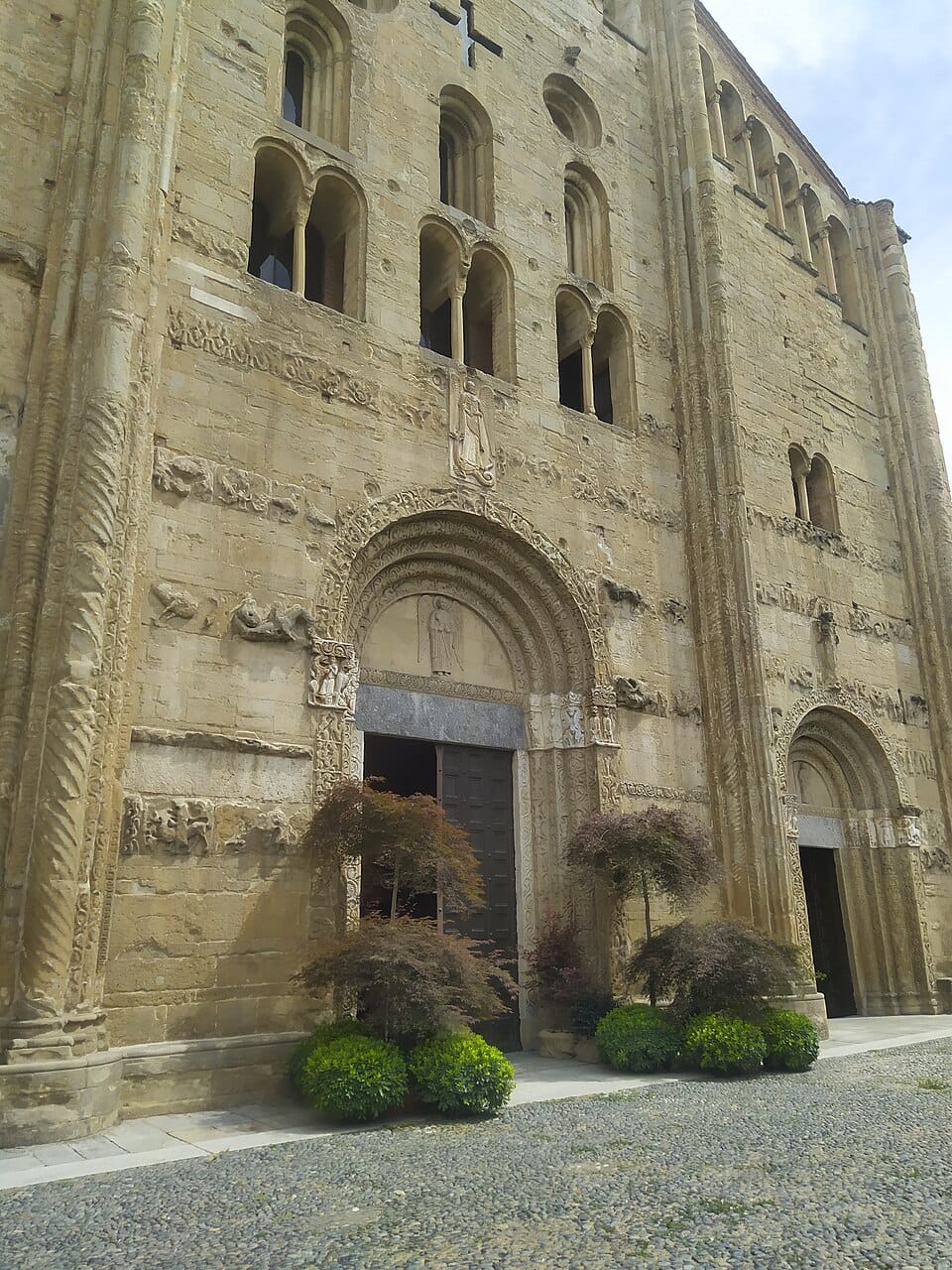
Don't miss this Romanesque church, a short walk from the main square. It's where the Lombard kings were crowned — including Frederick Barbarossa — and the carved sandstone facade, worn soft by centuries of weather, is one of the most beautiful things in the city. It tends to be quiet even when the piazzas are busy.
Where to Eat in Pavia - food and drink tips
Pavia is a university city, which means good food at sensible prices. The area around Piazza della Vittoria and Strada Nuova (the main street, built over the old Roman cardo) has plenty of options.
Look for risotto on menus — you're in rice country here, surrounded by the paddy fields of the Po Valley. The local Zuppa Pavese is worth trying if you see it: a simple broth poured over bread and a raw egg, born from the cucina povera tradition but with an improbable royal history attached to it. Legend has it that French King Francis I, fleeing defeat at the nearby Battle of Pavia in 1525, stumbled hungry to a peasant farmhouse. The woman of the house had nothing to offer but stale bread and broth — so she improvised, adding an egg and serving it to the king. He loved it, named it after the city, and a dish was born.
Pavia day trip — your questions answered
Can I do Pavia and the Certosa in one day from Milan?
Yes — comfortably, as long as you take an early train. Aim to arrive in Pavia by 9am, spend the morning in the city centre, then take the short train hop to the Certosa after lunch. The last train back to Milan from Pavia runs late in the evening, so there's no need to rush. A full day is ideal; half a day is enough for the city alone.
Do I need to book the Certosa di Pavia in advance?
No booking is required — entry costs €10 and guided tours are included in the visit. Tours run at set times throughout the day, so check the current schedule at certosadipavia.com before you go, as hours vary by season. The monastery also observes periods of silence, which can affect visiting times.
Which train do I take from Pavia to the Certosa di Pavia?
Take a train from Pavia towards Milan and alight at Certosa di Pavia station — it's a journey of just a few minutes. Important: not all trains on this line stop at Certosa di Pavia station. Before you travel, search "Pavia to Certosa di Pavia" on Trenitalia.com to find services that stop there. From the station it's a 20-minute walk to the monastery entrance.
How much does the train from Milan to Pavia cost?
Tickets start from around €5 for a second-class regional train. There are around 100 services a day from Milano Centrale, so there's no need to book in advance — you can buy at the machines in the station or on the Trenitalia app. Remember to validate your paper ticket before boarding.
Is Pavia worth visiting for a half day?
Yes — the city centre is compact enough to cover the main highlights (the university quarter, Ponte Coperto, the Duomo and San Michele Maggiore) in three to four hours. If you only have a half day, skip the Certosa and save it for a return visit. Pavia rewards a slower pace, but even a few hours here is time well spent.
When is the best time to visit Pavia?
Spring (April–June) and autumn (September–October) are ideal — the university is in session, the city feels lively, and the weather is comfortable for walking. Avoid August if you can: many restaurants and shops close for the summer holidays and the city loses much of its everyday energy.
How long do you need in Pavia?
A full day is ideal if you want to see both the city and the Certosa di Pavia. The city centre alone — the university quarter, Castello Visconteo, Ponte Coperto, the Duomo and San Michele Maggiore — can be covered comfortably in three to four hours on foot. If you're combining Pavia with the Certosa, arrive by 9am and you'll have time for both without rushing.
Is Pavia worth visiting?
There's a version of Italy that exists between the famous cities — less photographed, more lived in, still carrying the weight of an extraordinary history. Pavia is that version at its best. It was the capital of the Lombard kingdom when Rome was falling. It helped shape the Renaissance. It produced some of the greatest scientific minds in history. And most visitors to Milan never see it.
Take the 25-minute train. You won't regret it.