An hour from Rome by train, Orvieto rises from the Umbrian plain on a plug of volcanic rock. Here's how to get there, how the funicular works, what to see — and whether the Carta Unica is actually worth buying.
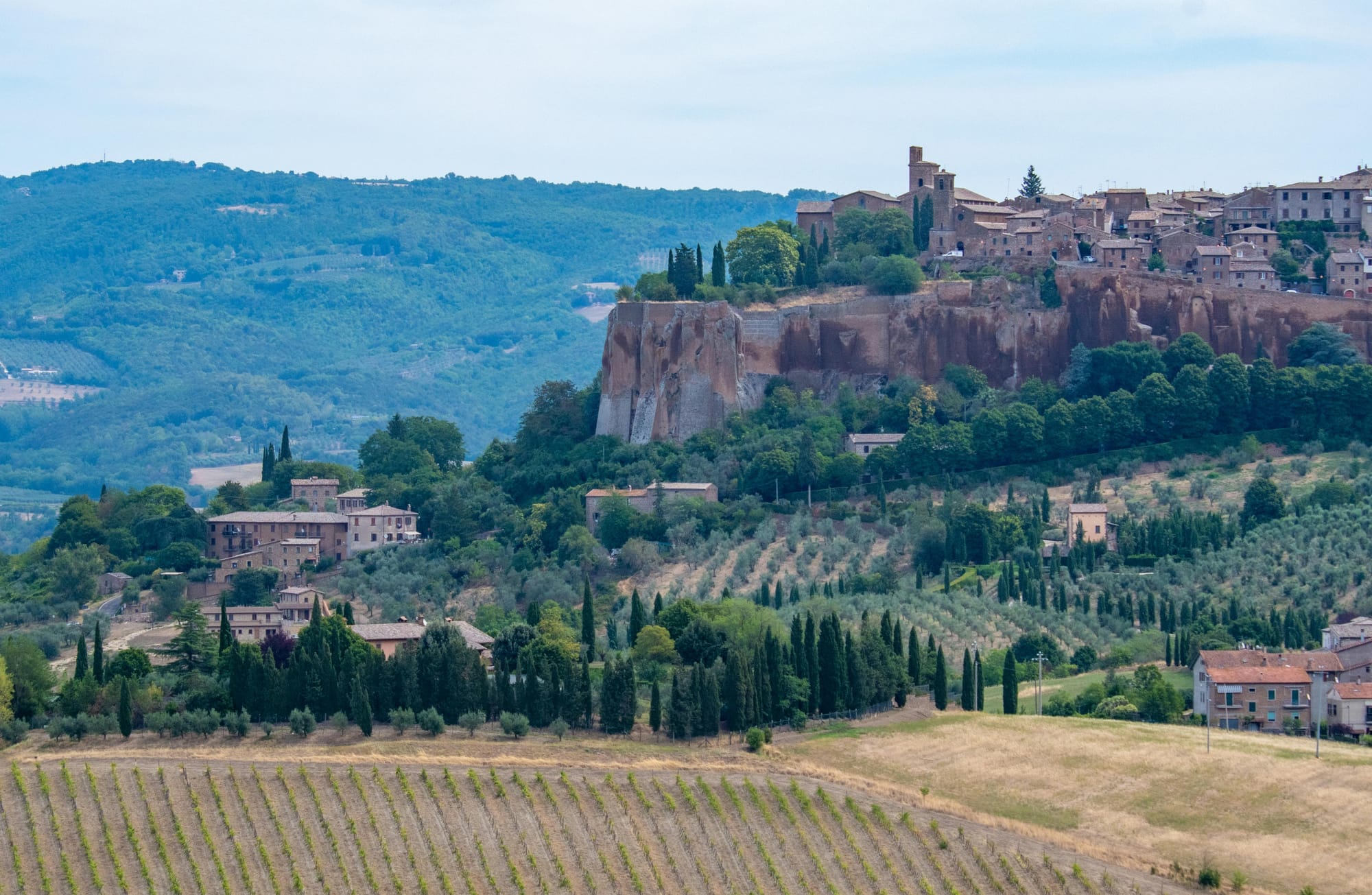
Orvieto is one of those places that stops you in your tracks before you've even arrived. The town perches dramatically above the valley — and the first time you see it from the train window emerge from the landscape you'll understand immediately why people have been travelling here for centuries.
It's an easy hour from Rome, and the journey itself is part of the pleasure. The train cuts through rolling countryside and you arrive at the foot of the hill with the whole town above you, which brings us to the first thing to know about Orvieto: you don't walk up. You take the funicular.
Getting to Orvieto by train
Orvieto sits on the main Rome to Florence rail line, which means it's well connected and easy to reach from several directions.
| From | Journey time | Train type |
|---|---|---|
| Rome Termini | 1 hour – 1 hour 30 mins | Intercity or Regionale |
| Florence | Around 2 hours 15 mins | Intercity or Regionale |
| Perugia | Around 2 hours | Regional (change at Terontola) |
From Rome the fastest Intercity trains take just over an hour. Regional trains take slightly longer but stop more frequently and are cheaper. For a day trip, the Intercity is worth the small price difference — it's more comfortable and gets you there faster, leaving more time in the town.
Tickets from Rome cost from around €12 on a regional train to €18–20 on an Intercity, depending on when you book. Unlike high-speed trains between major cities, the price doesn't vary dramatically with advance booking — but it's still worth checking a few days ahead as cheaper seats do exist.
Note that Orvieto is not on the high-speed Frecciarossa network — you won't find fast direct services from Rome or Florence here. The Intercity is the best option, and it's perfectly comfortable.
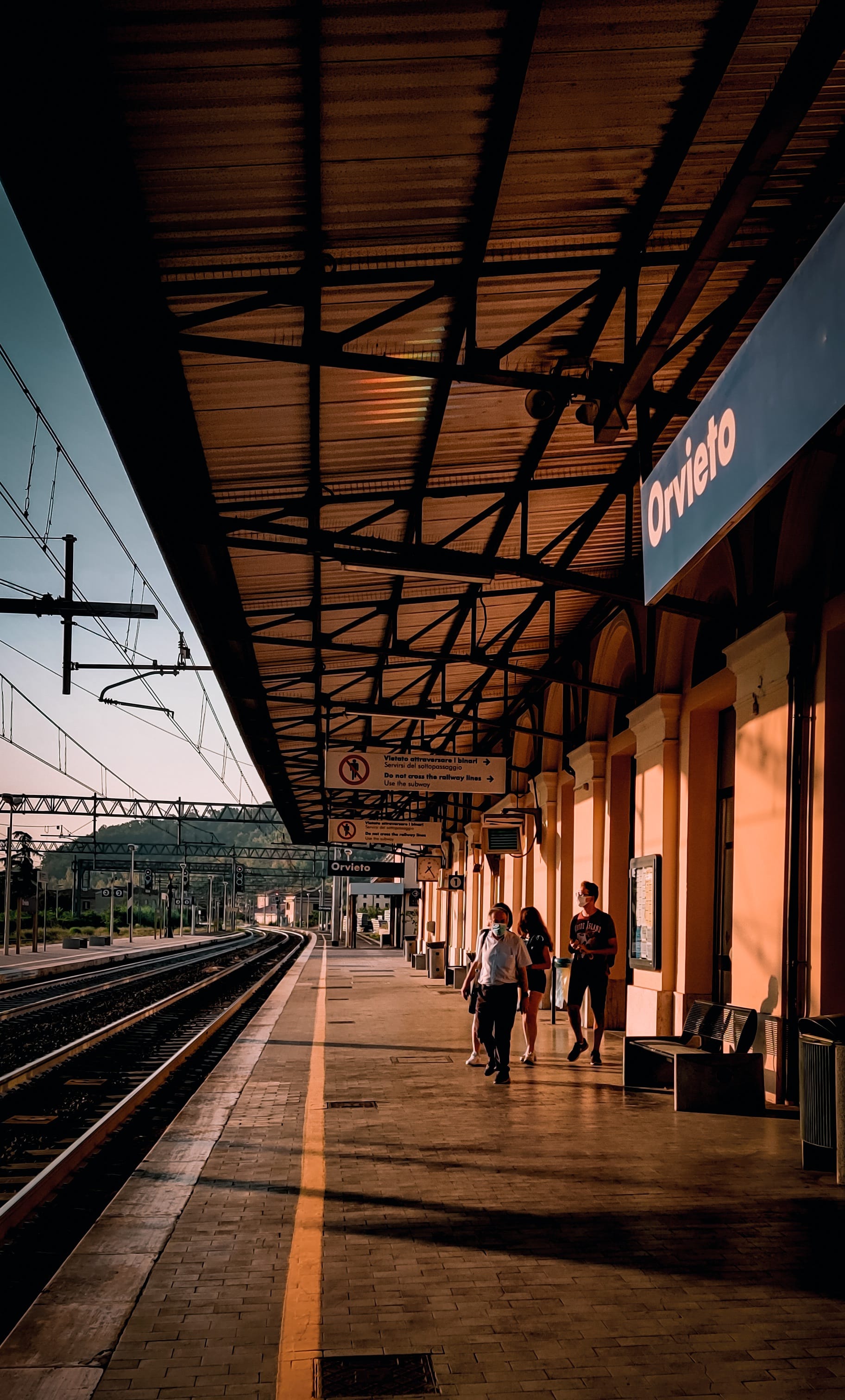
The funicular — getting from the station to the town
Orvieto station sits at the bottom of the hill in a lower area called Orvieto Scalo. The historic town is at the top, roughly 50 metres above you. To get up, you take the funicular, a cable railway that has been connecting the two levels since 1888.
The funicular station is immediately outside the train station, in Piazza Matteotti — you can't miss it. The journey takes five minutes and runs every ten minutes throughout the day, from 7.15am to 8.30pm on weekdays (8am to 8.30pm on weekends and holidays). It deposits you in Piazza Cahen at the top, from where the historic centre is a short walk away.
Tickets cost €1.30 one way or €2.60 return. Buy them at the ticket windows in the station or from the machines. One ticket is valid for 90 minutes.
If you have a Carta Unica (see below), it includes a free return funicular ride, which saves you the €2.60.
What to see in Orvieto
The Cathedral
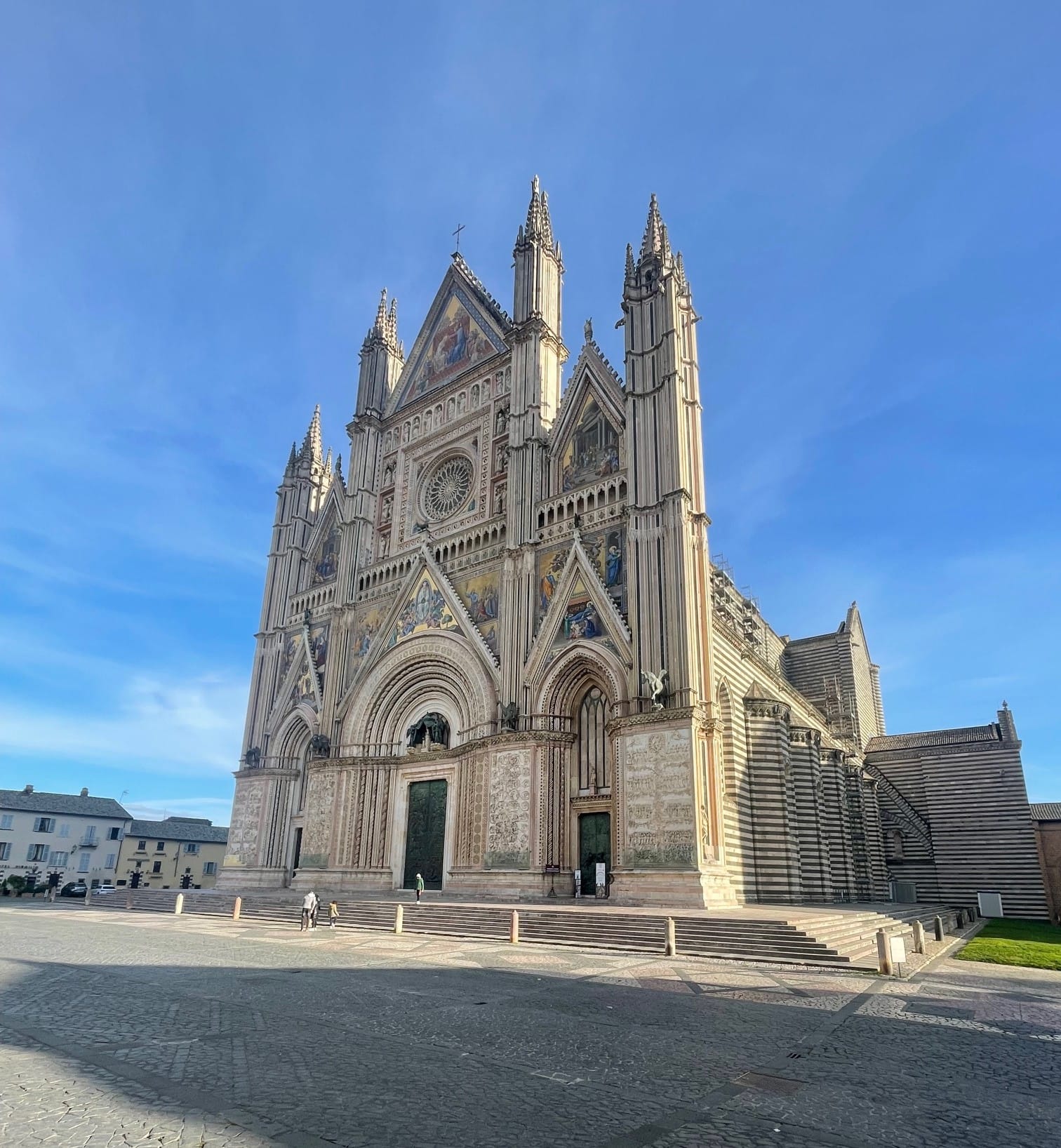
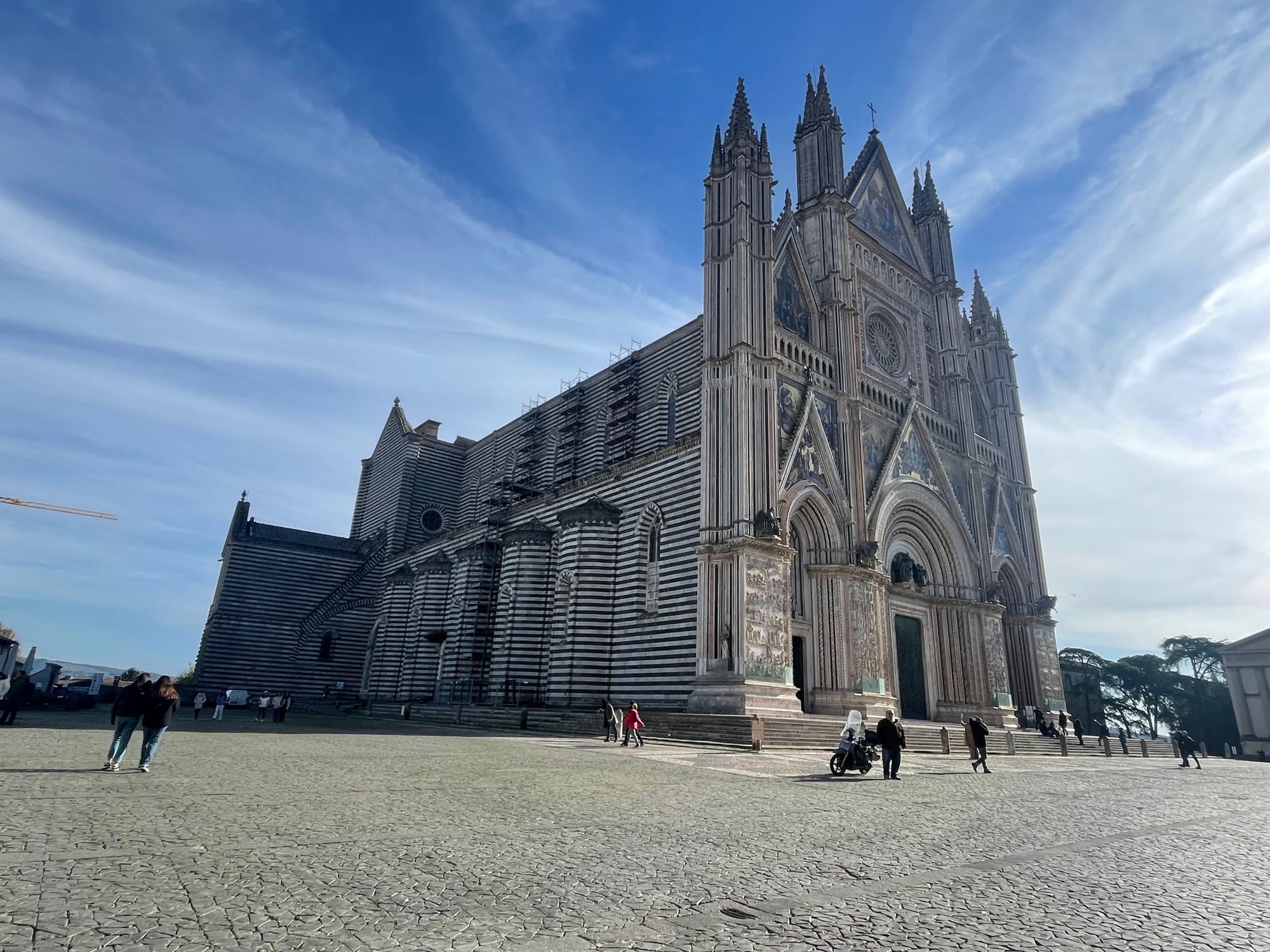
The Duomo di Orvieto is one of the great Gothic cathedrals of Italy — which is saying something in a country that has rather a lot of them. The facade is extraordinary: a riot of gold mosaic, carved reliefs and coloured marble that took over 300 years to complete. Stand in the piazza opposite it in the morning light and it genuinely dazzles.
Inside, the real treasure is the Cappella di San Brizio — a chapel decorated with a cycle of frescoes by Luca Signorelli depicting the Last Judgement. It is said that Michelangelo studied these paintings before beginning the Sistine Chapel ceiling.
The Cathedral ticket (€8) includes the cathedral itself, the Emilio Greco Museum and the Cathedral Crypt. There is a free audio guide app available on the App Store and Google Play.
Pozzo di San Patrizio
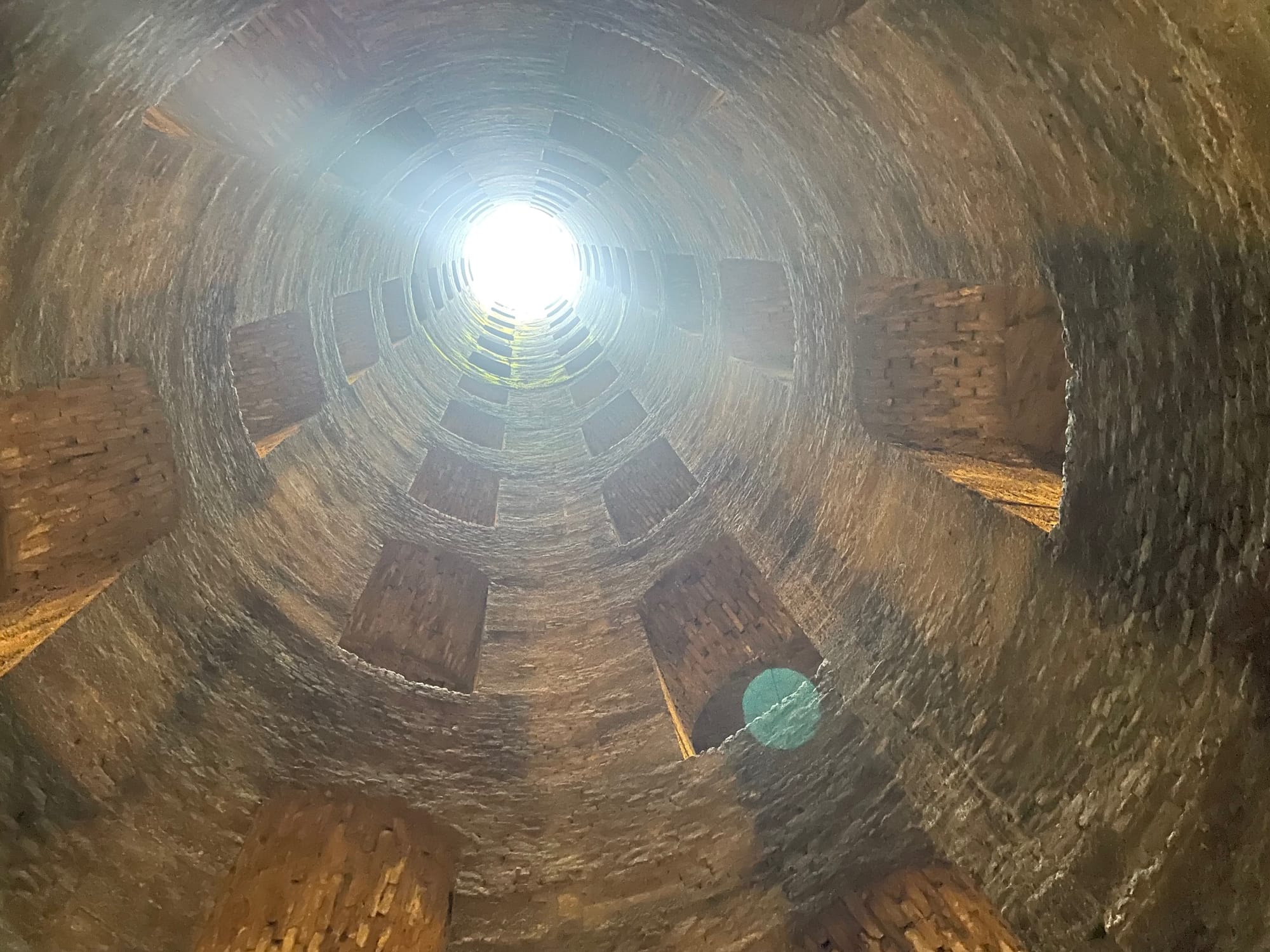
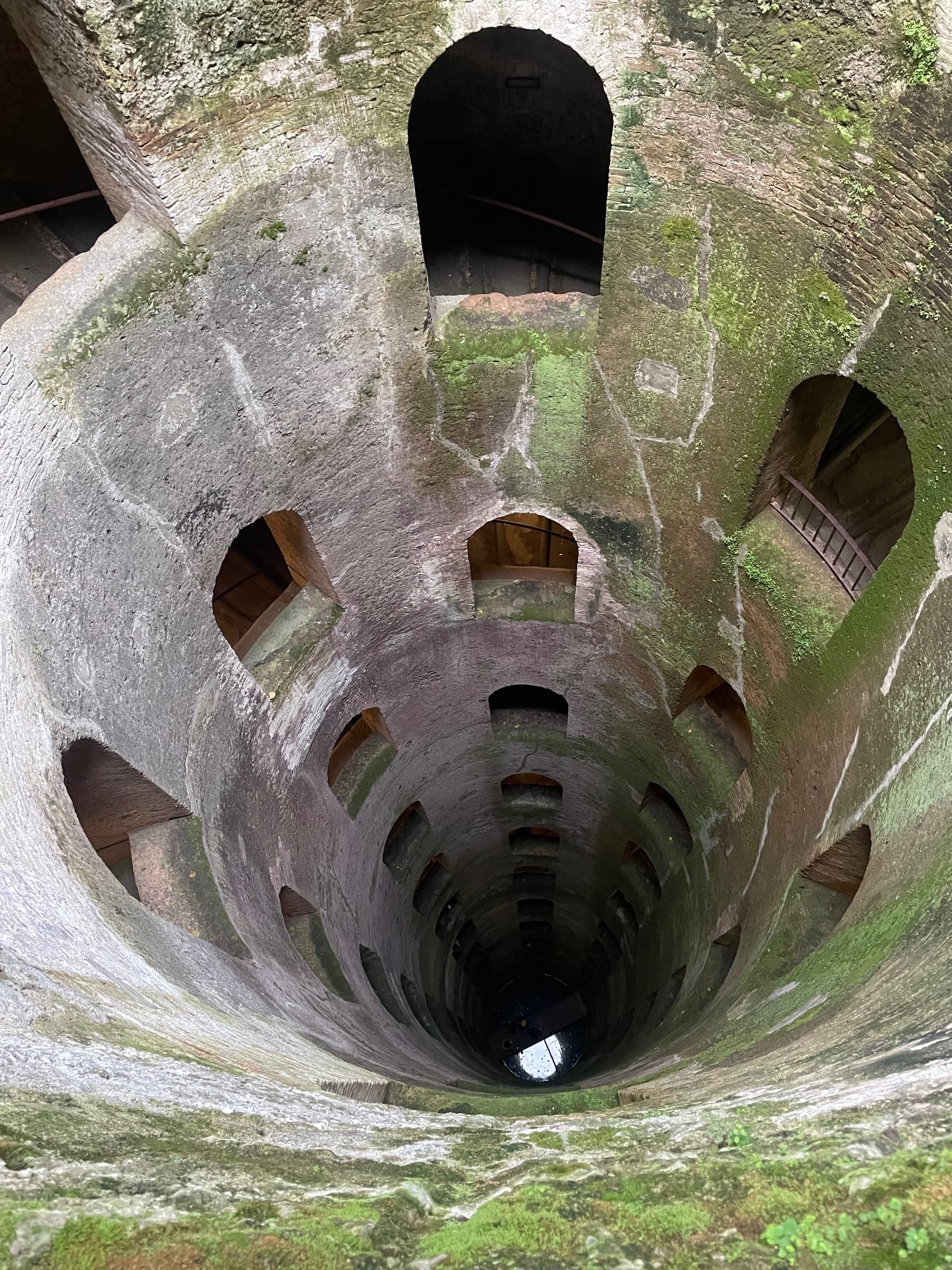
St Patrick's Well is one of the most remarkable pieces of Renaissance engineering in Italy. Commissioned by Pope Clement VII after he fled Rome during the sack of 1527 — wanting to ensure a reliable water supply in case of siege — it descends 53 metres into the tufa rock. What makes it extraordinary is the design: two separate spiral staircases wind down to the water, one for the descent and one for the ascent, so that the donkeys carrying water up never crossed the donkeys going down. You can walk the full circuit yourself today, which takes around 20 minutes.
Entry costs €5. It sits right next to the funicular station in Piazza Cahen, which makes it the ideal first or last stop of the day.
The images below show the view of the well from the bottom and from the top - which give really interesting but different perspectives on the well.
Orvieto Underground
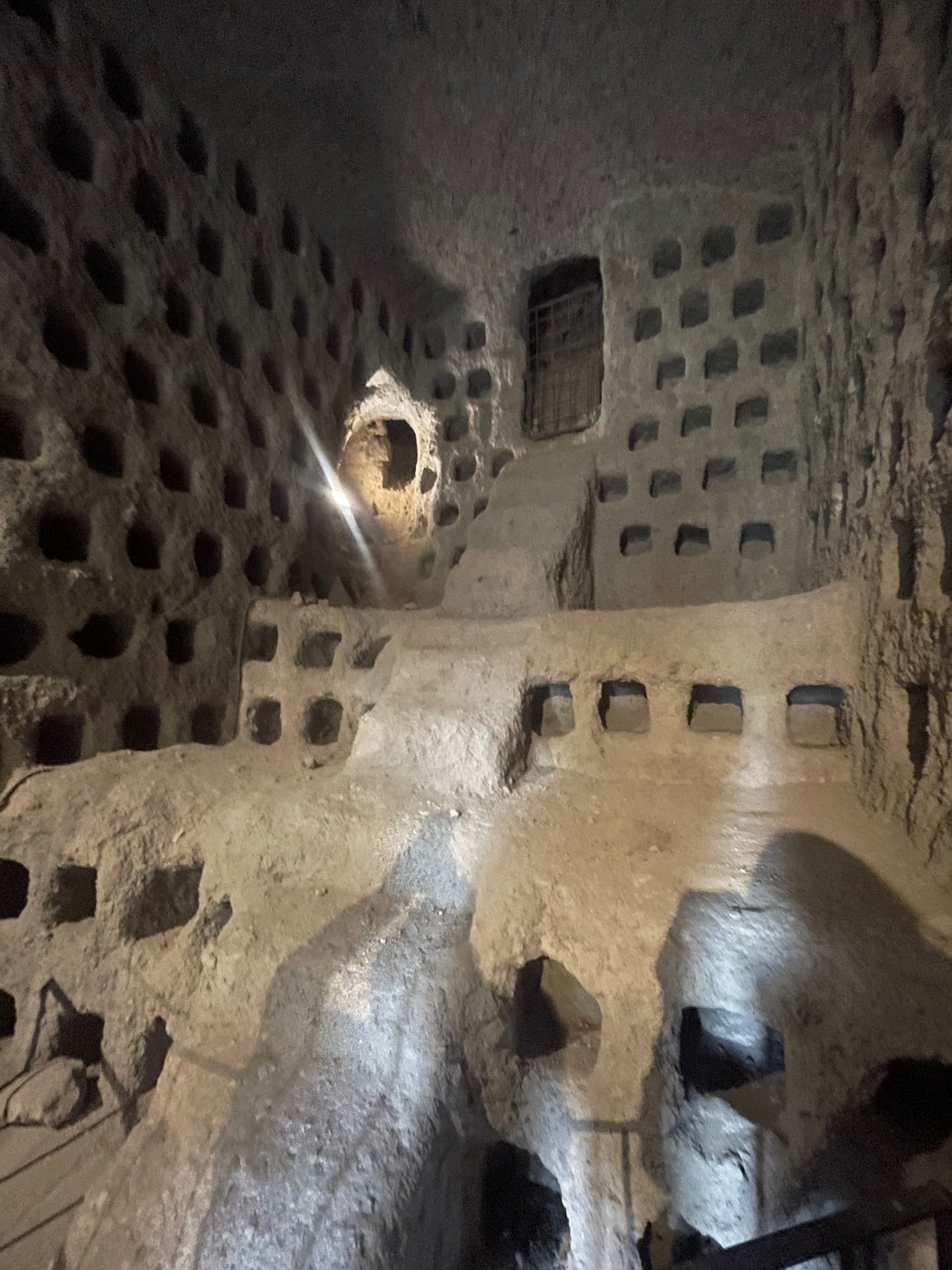
Beneath the town is a network of over 1,200 caves, tunnels and cisterns carved into the tufa by the Etruscans and expanded over centuries. Guided tours run regularly from Piazza del Duomo and last around 45 minutes.
One of the interesting parts of the tour is where they showed where they kept the pigeons, in one of the caves on the edge Orvieto, where the outside of the cave looked out through gaps in the cave walls onto the valley. This is shown in the image below. Pigeon is still a delicacy in Orvieto, that you can eat in many restaurants across the town.
The underground is cool year-round — genuinely welcome in summer — and the tours are informative and well-run. Entry is €10; booking in advance is recommended in peak season.
Torre del Moro
The medieval clock tower in the centre of town offers the best elevated views of Orvieto and the surrounding countryside. Entry is €3.80 and the climb is manageable. Worth doing on a clear day.
The streets themselves
Orvieto is small enough to walk in an afternoon and flat enough to do so comfortably. The medieval streets between the cathedral and the western edge of the town — where the cliff drops away to open countryside — are genuinely beautiful and rarely crowded. Allow time simply to wander. The views from the clifftop walls over the Umbrian plain are among the best in central Italy.
Is the Orvieto Carta Unica worth buying?
The Orvieto Carta Unica is a combined ticket covering nine attractions: the Cathedral, the Museo Etrusco C. Faina, the National Archaeological Museum, Orvieto Underground, Pozzo della Cava, Pozzo di San Patrizio, Torre del Moro, and the Crocifisso del Tufo Necropolis. It also includes a return funicular ride and discounts at partner restaurants, hotels and shops. In 2026 it costs €35 for adults.
Is it worth it for a day trip from Rome? Honestly, probably not. The card saves money only if you visit most of the eight included sites, which is difficult to achieve in a single day. A realistic day trip itinerary — cathedral, Pozzo di San Patrizio, Orvieto Underground and Torre del Moro — would cost around €27 paying separately, which is less than the €35 card.
Is it worth it if you're staying overnight or for two days? Yes, clearly. If you can spread the visits across a full day and the following morning, visiting six or more sites, the card pays for itself comfortably and the restaurant discounts add further value.
There are also four themed cards available — Piazza Duomo Journey, Medieval Journey, Subterranean Journey and Etruscan Journey — each covering four specific sites at a lower price. These are worth considering if your interests are specific.
| Attraction | Individual price |
|---|---|
| Cathedral (incl. Emilio Greco Museum + Crypt) | €8 |
| Pozzo di San Patrizio | €5 |
| Orvieto Underground | €10 |
| Torre del Moro | €3.80 |
| Funicular return | €2.60 |
| Carta Unica (9 sites + funicular + discounts) | €35 |
The Carta Unica is available online at cartaunica.it, at the tourist offices in Piazza del Duomo and Piazza Cahen, and at the ticket offices of all included sites. It's valid for one year from first use.
Practical information
| Travel time from Rome | 1 hour – 1 hour 30 mins |
| Route | Train from Roma Termini → funicular from Orvieto Scalo to historic centre |
| Funicular | €1.30 one way, €2.60 return — runs every 10 mins, 7.15am–8.30pm |
| Time needed | Full day for a day trip — two days to do it properly |
| Best visited | Weekdays — quieter than weekends, particularly at the cathedral |
When to visit
Orvieto is pleasant year-round, but it's worth knowing that summer weekends can be busy — the town is a popular excursion from Rome for both tourists and Romans. Weekdays are noticeably quieter even in July and August. Spring and autumn are ideal: mild temperatures, good light for photography, and the town at its most atmospheric.
The Umbrian winter is cool and occasionally foggy, which actually suits Orvieto well — the town feels properly medieval in low cloud, and there's almost nobody else there. Most attractions stay open, though hours shorten between November and February.
Making the most of a day trip from Rome
An early start pays off. The first Intercity trains from Rome leave before 8am — catching one of these gets you to Orvieto by 9.30am, ahead of the tour groups that arrive mid-morning. The cathedral in the early light, before the piazza fills up, is worth the early alarm.
A suggested order: funicular up to Piazza Cahen, Pozzo di San Patrizio first (it's right there), walk to the cathedral, lunch somewhere in the medieval streets, Orvieto Underground in the early afternoon, Torre del Moro for the late afternoon light. Funicular back down in time for a late afternoon or early evening train to Rome.
Orvieto also makes an excellent stop between Rome and Florence if you're doing the journey in a day — check out trains, pause for four or five hours, and continue north on a later Intercity.
For more ideas on what to reach from Rome by train, see our complete guide to day trips from Rome.