Getting to Syracuse by train, the flat walk to Ortigia, the easy airport coach, and how to spend two days between the old town and the ancient sites.
Last verified: November 2026. Train times, ticket prices and opening hours change regularly. Always check official sources before travelling.
Syracuse (Siracusa in Italian) was once one of the most powerful cities of the ancient Greek world, and its old heart on the island of Ortigia still holds a cathedral built around a 5th-century BC temple, a medieval castle on the water's edge and a Jewish quarter with a ritual bath reputed to be the oldest in Europe.
A few kilometres inland, a Greek theatre, a Roman amphitheatre and a famous echoing cave sit side by side in the same archaeological park. None of it needs a car: Ortigia is a restricted traffic zone, the sights are walkable, and the town is well connected by bus and train.
At a Glance
| 🚆 From Catania | Direct regional train to Syracuse - approx. 53 mins up to 2h (depending on train), up to about 14 a day, roughly €9. Interbus coach also runs (1h 20 mins), around €6.20 |
| 🚆 From Taormina | Regional train to Syracuse - approx. 1h 40 - 3h (depending on train), from about €12 |
| 🚉 Nearest train station | Syracuse, on the mainland - not on Ortigia itself. Takes 15-25 minutes by foot or local bus to Ortigia |
| ✈️ To Catania Airport | Direct Interbus coach from Corso Umberto (Syracuse bus station) - approx. 1h 10, around €6.20 |
| 🏛️ Must-see | Piazza Duomo and the cathedral, Castello Maniace, and the Neapolis Archaeological Park |
| ⏱️ Time needed | Two days - one for Ortigia, one for the Neapolis park and the catacombs |
| 📅 Best time | March to May and September to October - July and August are hot and busy |
In This Guide
- Getting to Syracuse by Train & Coach
- How Long to Spend in Syracuse
- Exploring Ortigia
- The Mainland Sights: Neapolis and the Catacombs
- Day Trip to Noto by Train
- Food and Drink
- Practical Information
Getting to Syracuse by Train & Coach
Syracuse (Siracusa) is at the southern end of the Ionian coast railway line, so trains arrive from the north through Messina, Taormina-Giardini and Catania.
From Catania is the busiest and easiest connection. Direct regional trains from Catania Centrale take roughly 53 mins up to 2 hours (depending on the train), with up to around 14 a day from early morning until late evening, and fares of roughly €9. Book with Trenitalia or Trainline
By coach from Catania is a good alternative. Interbus runs roughly hourly coaches to Syracuse (Siracusa), taking about 1 hour 20 minutes and costing around €6.20. Services end at different stops in Syracuse. If you are staying on Ortigia, Corso Umberto (the Syracuse bus station) is the one you want.
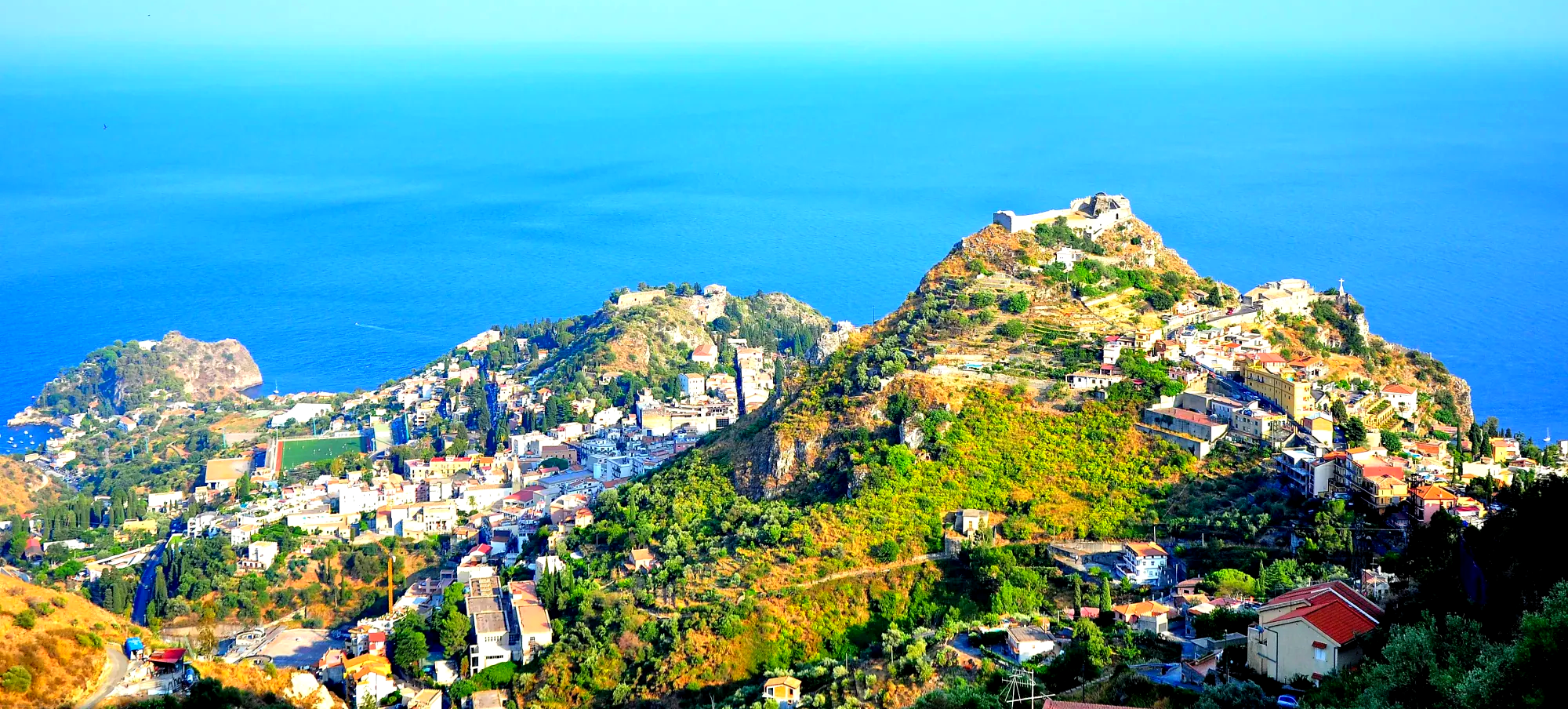
From Taormina there is a direct regional train that takes roughly 1 hour 40 to 3 hours (depending on the train), with a dozen or more departures a day, and tickets start from about €12 - book on Trenitalia or Trainline. Taormina-Giardini train station sits at sea level in Giardini Naxos rather than in Taormina itself, so allow time for the bus down from the town if you are staying there - our Taormina guide explains how it works.
From Messina direct trains take roughly 2 hours 20 to 4 hours (depending on the train), about 11 a day, with fares from around €13. Book with Trenitalia or Trainline
Some departures on all these routes involve a change, so check the journey details before booking rather than assuming every train is direct.
| From | How | Typical journey | Approx. fare |
|---|---|---|---|
| Taormina-Giardini | Direct regional train to Syracuse | 1h 40 - 3h | Around €12 |
| Catania Centrale | Regional train to Syracuse | 53 mins to 2h | Around €9 |
| Catania | Interbus coach to Syracuse | 1h 20 | €6.20 |
| Catania Airport | Interbus coach to Syracuse | 1h - 1h 10 | €6.20 |
From the Train & Bus Stations to Ortigia
Syracuse (Siracusa) railway station is on the mainland, and Ortigia is the small island just beyond the city centre, across a short bridge. The walk is flat and straightforward: turn left out of the station, follow the road through Piazza Marconi and down Corso Umberto to the bridge, and you are on the island. Allow 15-25 minutes, depending on where you are staying. Local AST buses and minibus shuttles also link the station with the island, but routes and frequencies change, so check the current timetable and ticket rules when you arrive.
The bus station is on Corso Umberto, about a two-minute walk from the railway station, so Ortigia is the same 15-25 minute walk from there.
Airport Bus From Syracuse to Catania
For an early flight, the direct Interbus coach from Syracuse (Siracusa) to Catania Airport is the practical choice. It leaves from the stop on Corso Umberto (the Syracuse bus station), only about 150 m from the railway station, and takes about an hour 10 minutes for around €6.20 one way. The earliest departures are around 04:30-05:00 on the summer timetable, but early services are reduced outside the high season, so check the timetable for your date on the Interbus website before booking your flight.
The bus station is on the mainland side (in Syracuse), so if you are staying on Ortigia you need to walk over the bridge first. If you are at the southern end of the island and need to be at the stop before dawn, allow extra time or plan a taxi.
How Long to Spend in Syracuse
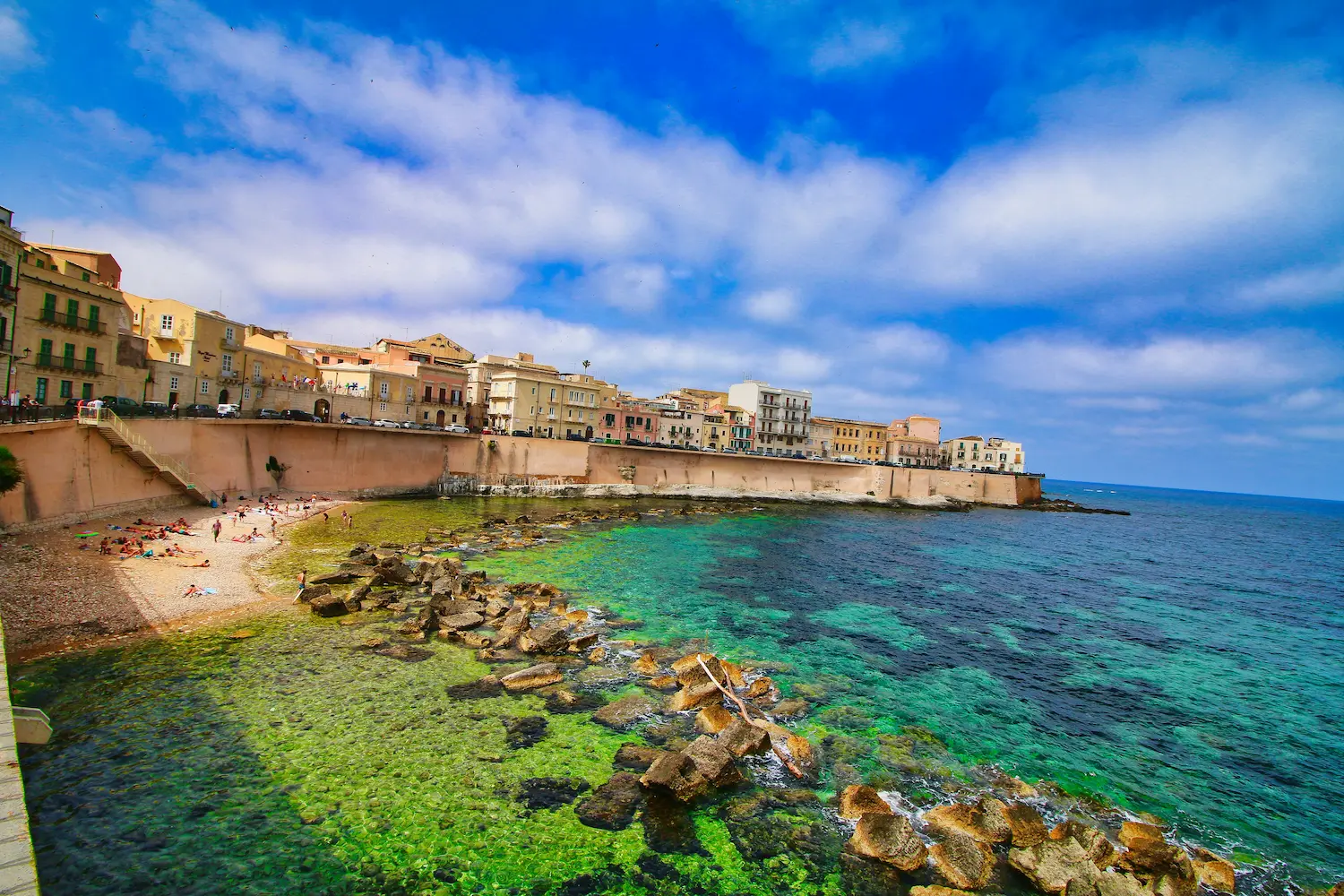
Two days is the best fit: one on Ortigia and one on the mainland (Syracuse) for the archaeological sites. The island is compact enough to enjoy at an easy pace in a day, and staying overnight means you see it in the evening, once the day-trippers have gone.
Day one: Ortigia
Arrive by train, walk across the bridge and start at the Temple of Apollo, then the market behind it if it is a weekday morning. Go on to Piazza Duomo for the cathedral and then Santa Lucia alla Badia, then spend the middle of the day in the Giudecca and the Miqwe. In the afternoon walk down to Castello Maniace at the tip of the island, and finish with the walk along the waterfront and the Fountain of Arethusa.
Day two: Neapolis and the catacombs
Go to the archaeological park early, especially in summer, when shade is limited. Allow at least 90 minutes for the Greek theatre, the Roman amphitheatre and the Ear of Dionysius. The Catacombs of San Giovanni fit in afterwards.
If you have a third day
Noto is the easy extra: a direct regional train from Syracuse takes roughly 30 to 45 minutes. See the day trip section below.
Exploring Ortigia
Ortigia is small and flat enough to cover on foot in a day. This is roughly the order you meet things as you walk in from the bridge.
Temple of Apollo and the Market
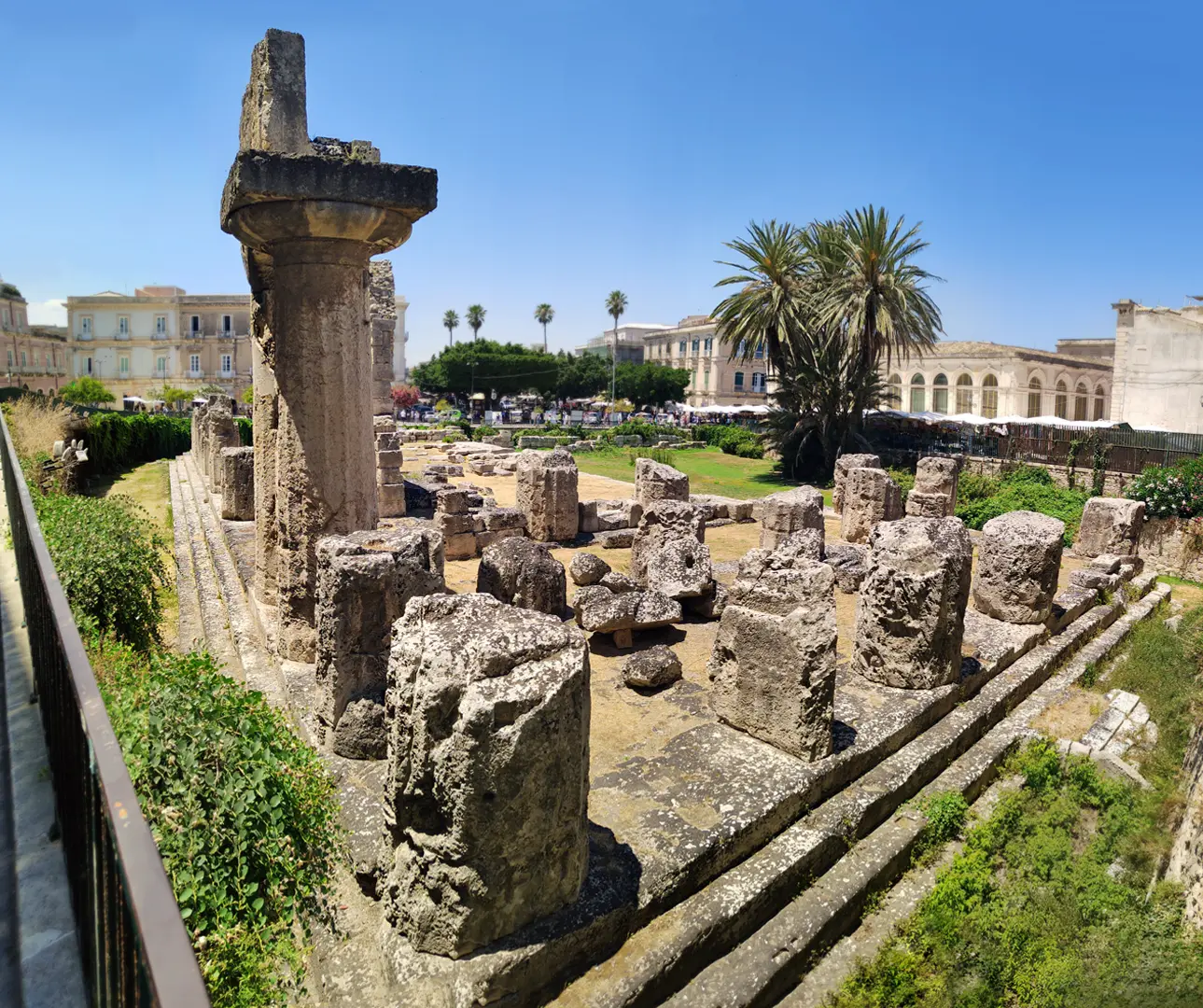
The first ancient site you meet after crossing the bridge onto Ortigia is the Temple of Apollo, in Largo XXV Luglio. It dates from the early 6th century BC and is described as the oldest Doric temple in Sicily. What survives is modest - a few column stumps, steps and sections of wall in a sunken, fenced area that you look at from the street rather than enter - so treat it as a five-minute stop on the way in. It is free to see. Behind it, on weekday mornings, is Ortigia's daily market, which is worth timing your arrival for if you want fruit, cheese or a cheap lunch.
Piazza Duomo and the Cathedral
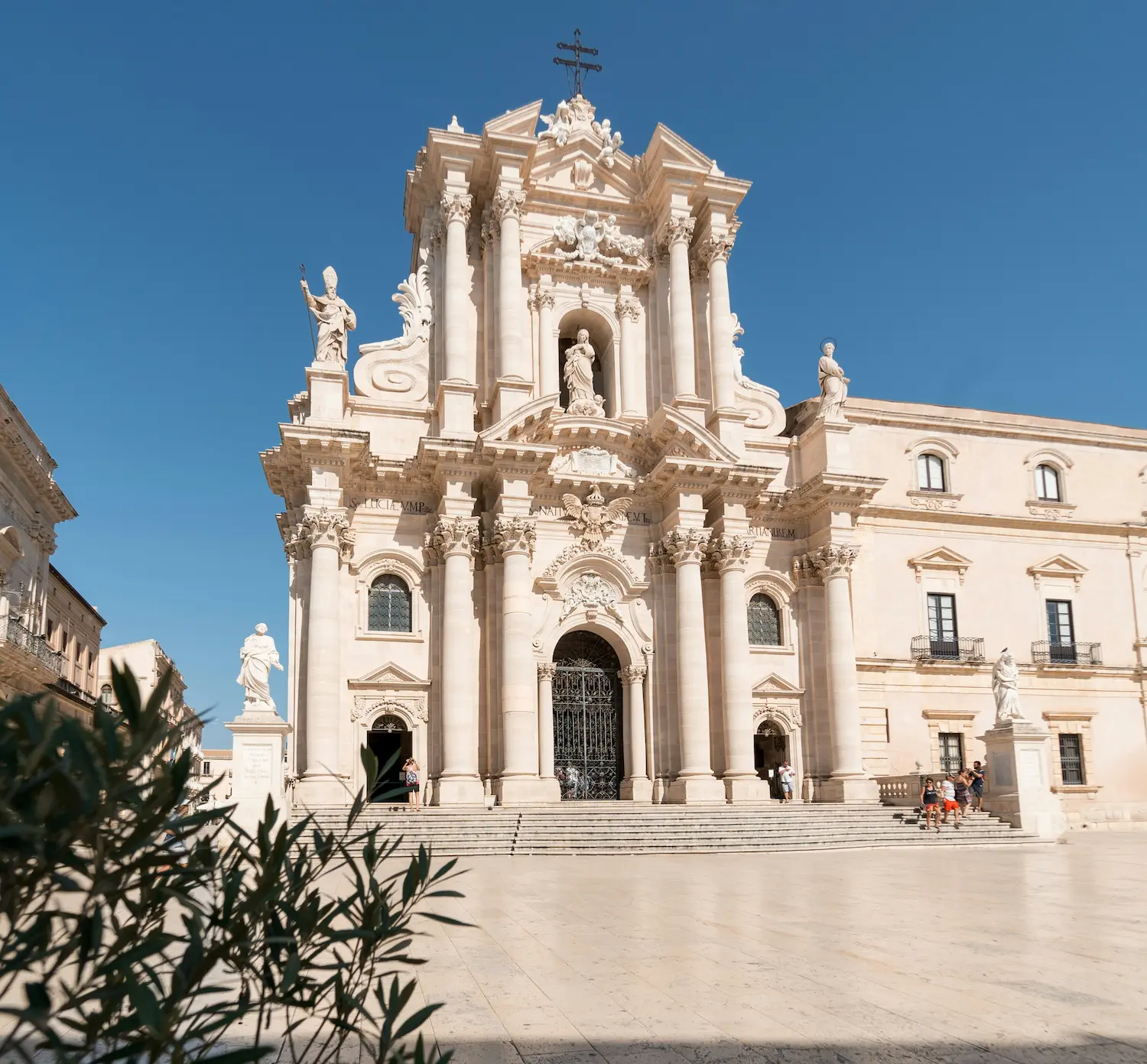
Piazza Duomo is the centre of Ortigia, a broad, gently curving square of pale stone buildings dominated by the cathedral. The cathedral is the highlight: it was built in the 7th century AD by walling up the spaces between the columns of a Greek temple of Athena, founded around 480 BC, and the Doric columns are still visible both inside the church and along its side walls. The Baroque façade you see from the square is much later, rebuilt after the earthquake of 1693.
Entry to the cathedral is €2 plus a €1 booking fee on the official ticketing site, with combined tickets that add a virtual reality reconstruction of the temple or access to the Secreta Palatii, the cathedral's historic spaces.
Santa Lucia alla Badia
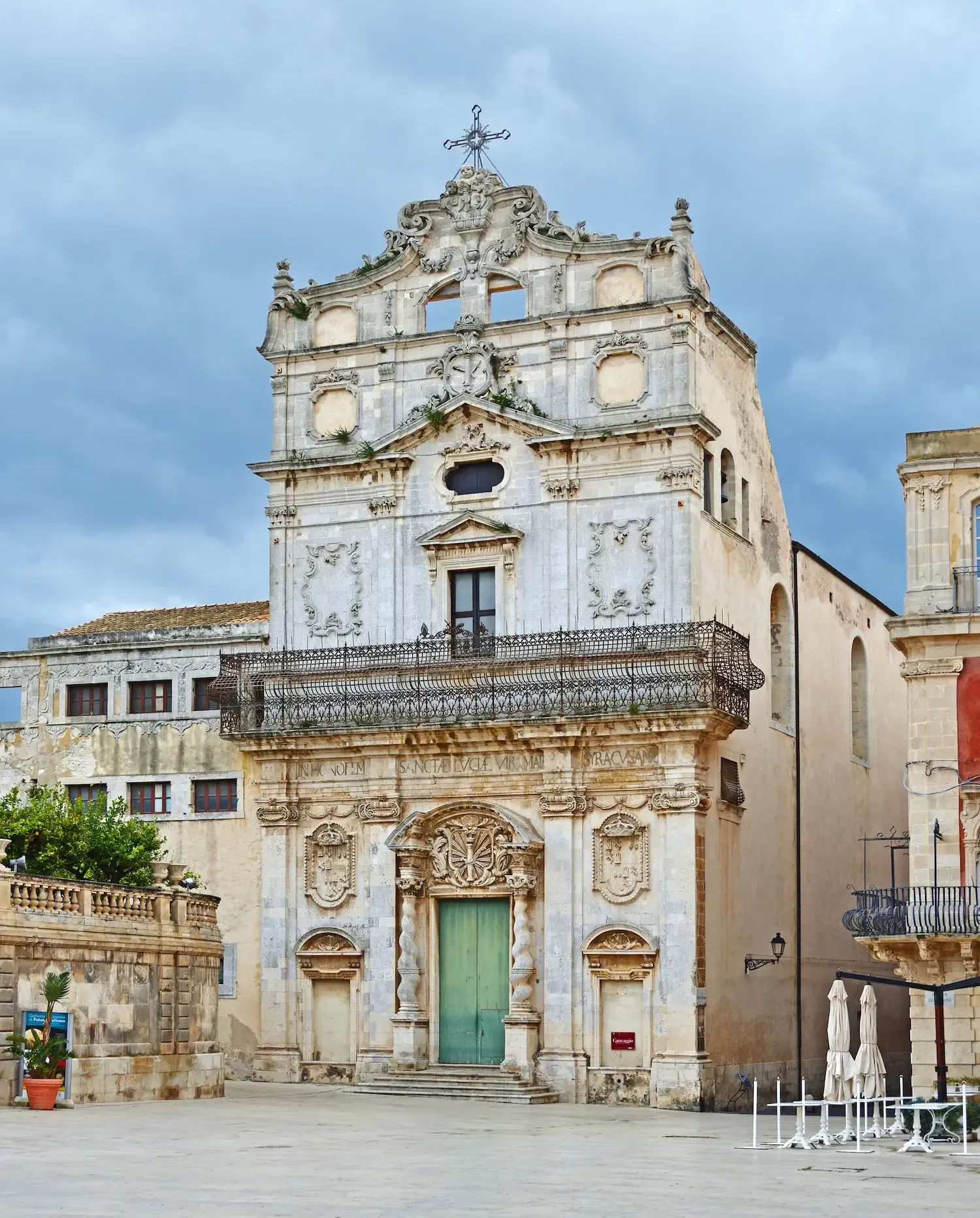
Santa Lucia alla Badia stands on the south side of Piazza Duomo, just beside the cathedral. It is a Baroque church dedicated to Syracuse's patron saint, Lucy, with a façade that was moved to face the square after the 1693 earthquake and a wrought-iron balcony from which cloistered nuns once watched the goings-on below. The church is deconsecrated and, with the former monastery beside it, is now used for exhibitions and events.
Castello Maniace
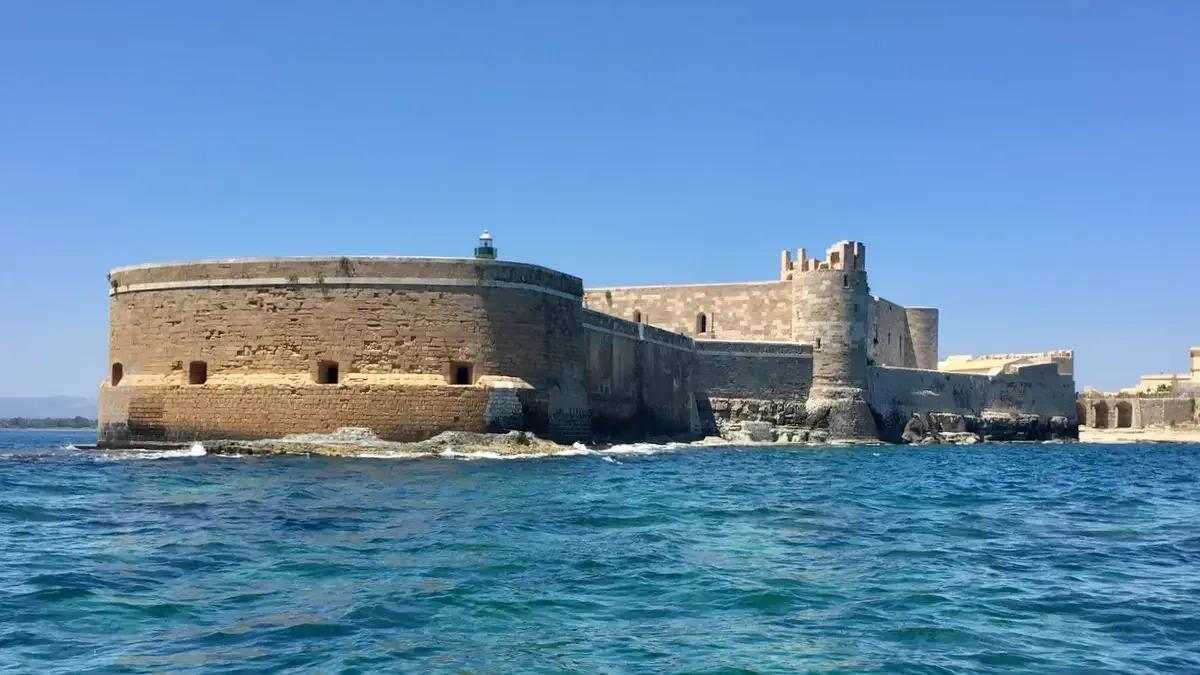
At the southern tip of Ortigia, where the island ends and the Ionian Sea begins, Castello Maniace is a fortress built by Emperor Frederick II between 1232 and 1240. It is reached by a long, easy walk down the island and along the sea wall, and the setting, with water on three sides, is as much of the appeal as the building.
The castello is closed on Sundays and entry costs €6. It is possible to buy tickets directly at the site or the official site provides an email address and telephone number.
If you are staying near the northern end of the island, it is a walk of around 20 minutes each way.
The Giudecca and the Miqwe
The streets around Via della Giudecca were the Jewish quarter of Ortigia in the Middle Ages, when Syracuse had one of the largest Jewish communities in Sicily, until the expulsion of Jews from Sicily in 1492-93. Almost nothing of the period survives above ground, but the narrow lanes, small courtyards and the churches of San Filippo Apostolo and San Giovanni Battista, one of which was a synagogue before it became a church, make it one of the most atmospheric parts of the island to walk through.
The main sight is the Miqwe, an underground Jewish ritual bath at Via Alagona 52, inside the Alla Giudecca residence. It was rediscovered in 1989 during building work, and is reached by a steep flight of 58 steps carved into the rock. It is reputed to be the oldest and best preserved of its kind in Europe. Visits are guided and short, and bookable via Hotel Residence Alla Giudecca, and the descent is not suitable for anyone with mobility problems or claustrophobia.
Walking Around Ortigia and the Fountain of Arethusa
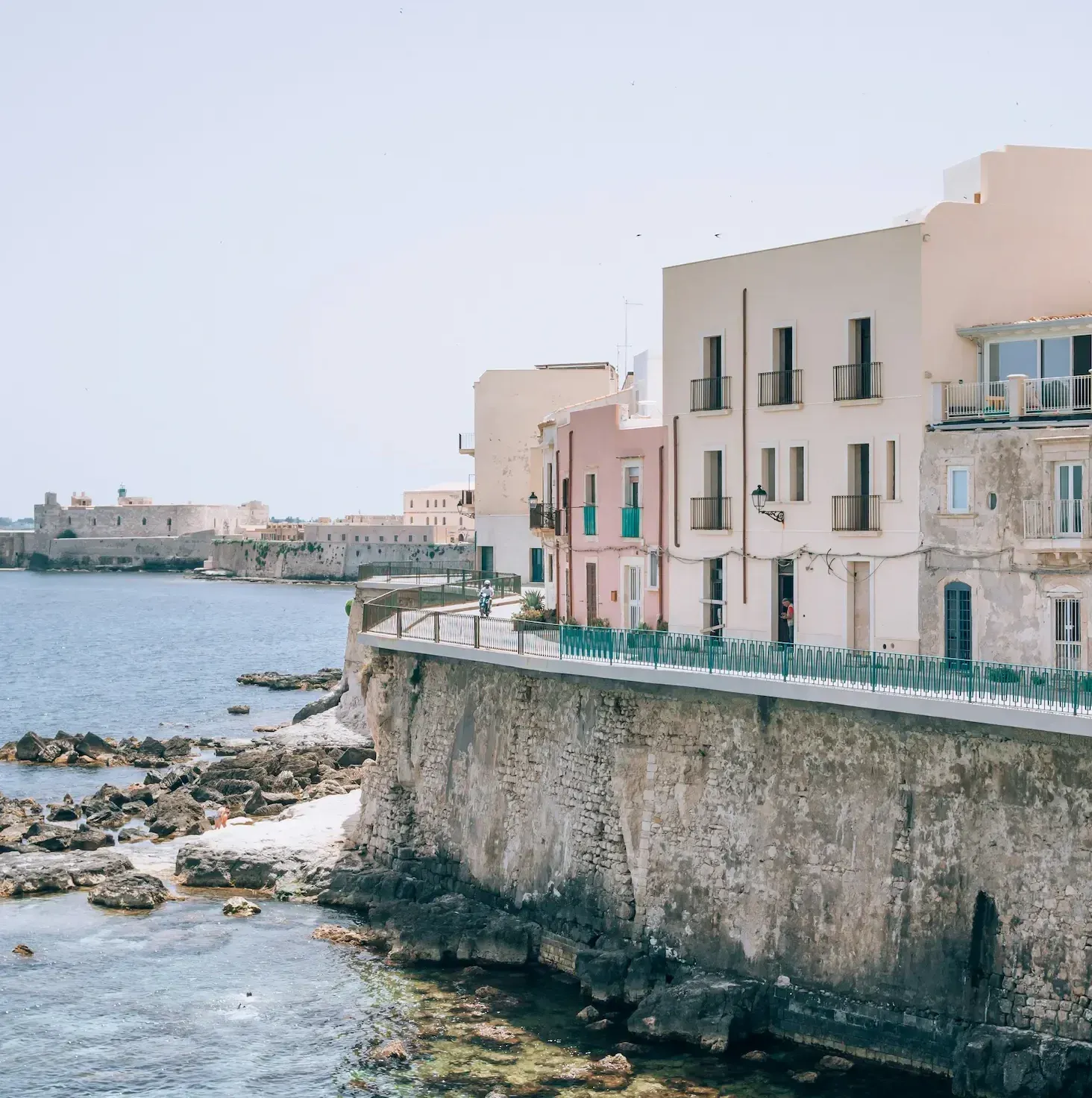
Ortigia is compact, so the best way to see it is simply to walk. The island is about a kilometre long, and the lanes between Piazza Duomo, the Giudecca and the sea wall are full of small squares, balconies, workshops and cafés. The sea wall that runs around the island gives views over the harbour and, on the eastern side, out over the open Ionian Sea.
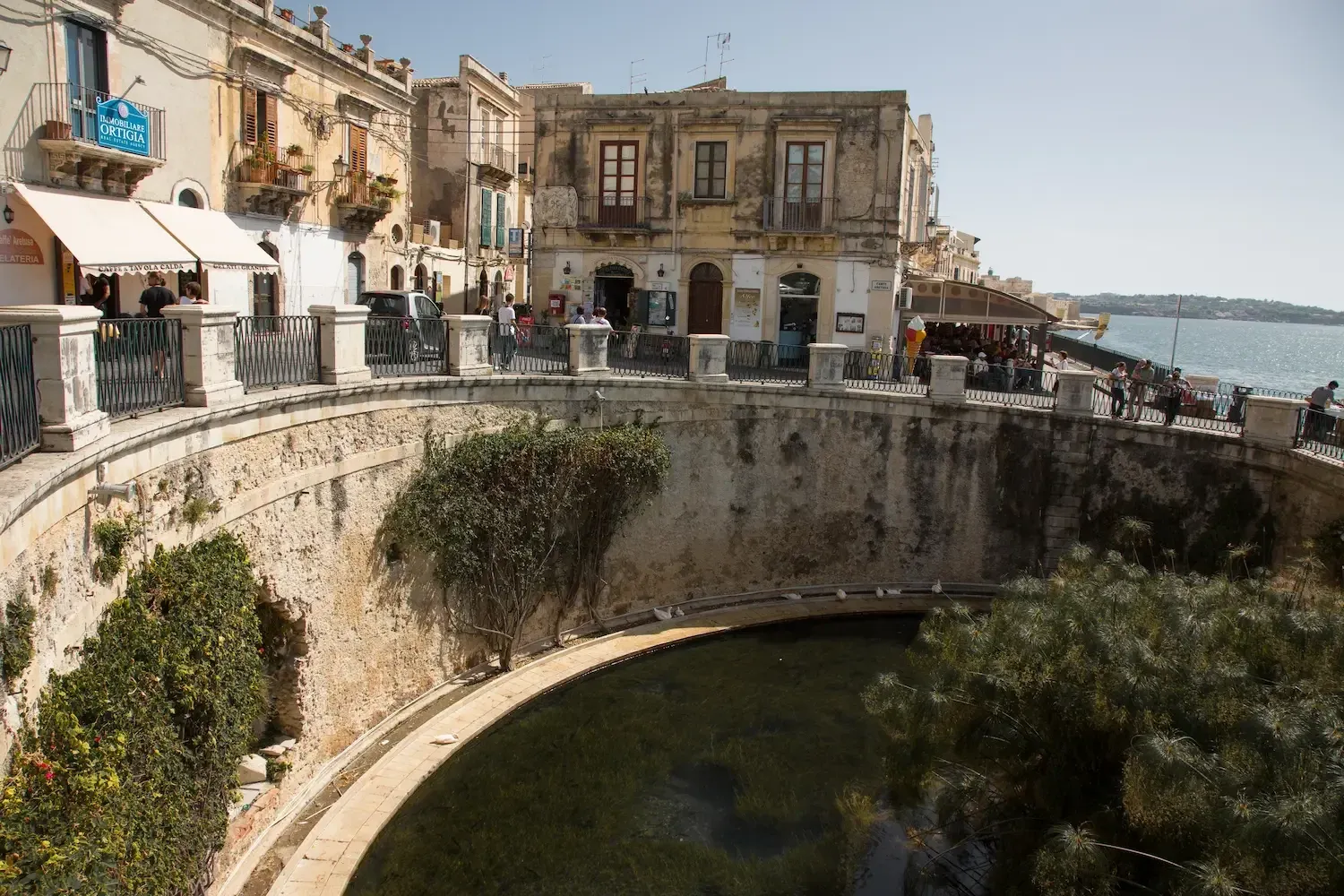
Two walks are worth building in. The first is the Fountain of Arethusa, a freshwater spring just a few metres from the sea, where a round pool is planted with papyrus and home to ducks and fish. Papyrus is rare in Europe, and the spring is tied to a Greek myth in which the nymph Arethusa was turned into water to escape the river god Alpheus. You can see the pool from the railings for free at any time.
The second is the traditional evening walk along the waterfront: the seafront walk runs towards Castello Maniace at the tip of the island, and the Foro Italico promenade beside the harbour makes an easy loop with the fountain. In the evening the whole island is at its best once the day-trippers have left.
The Mainland Sights: Neapolis and the Catacombs
The ancient sites are on the Syracuse mainland, and make a good second day.
Neapolis Archaeological Park
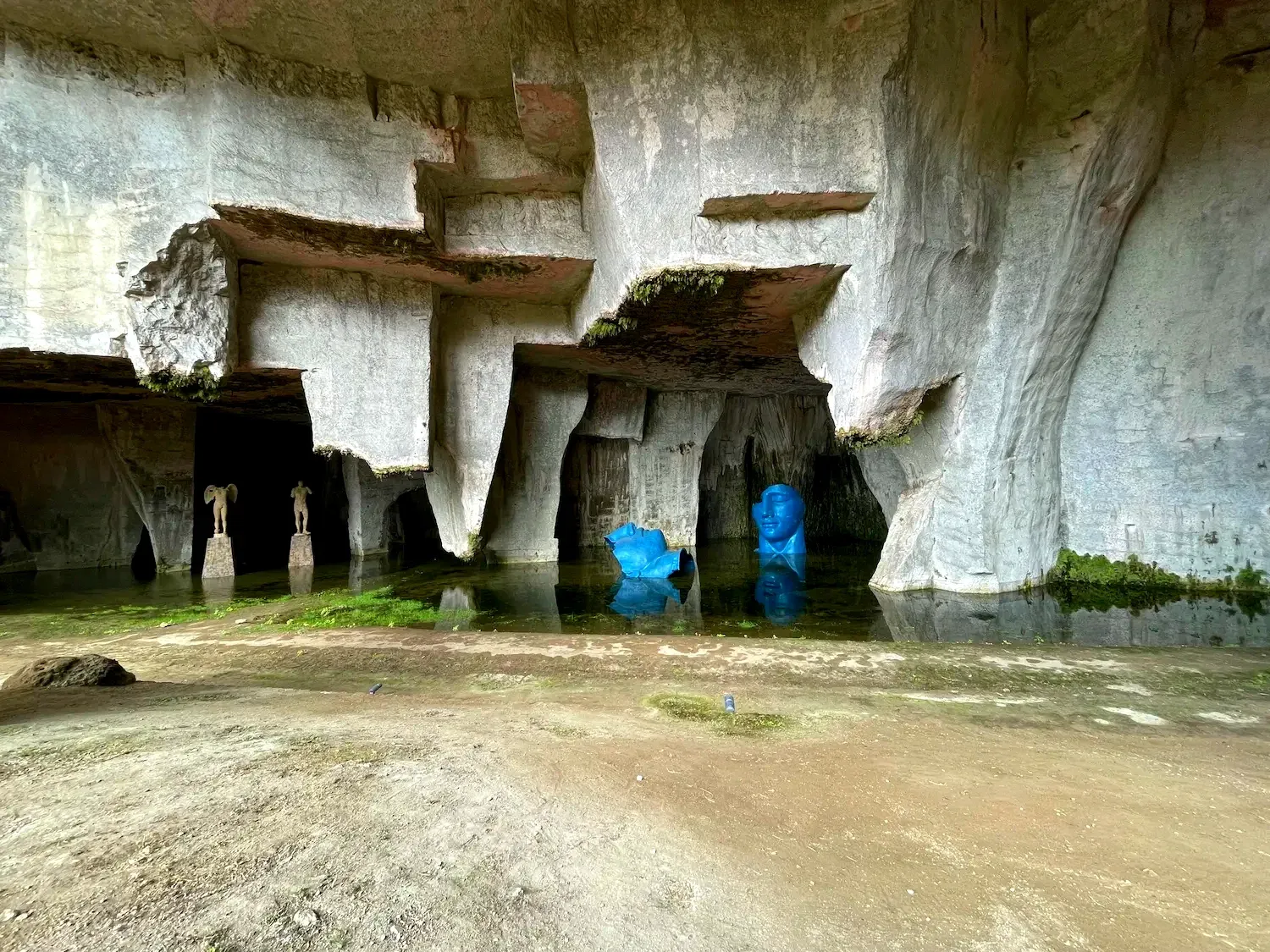
The Neapolis Archaeological Park, on the mainland, is the largest group of ancient sites in Syracuse and the main reason to spend a second day. One ticket (€14) covers the Greek theatre, the Roman amphitheatre, the Ear of Dionysius and the former quarries (latomie).
From Ortigia it is a walk of about 25-40 minutes depending on your starting point, or a short taxi or local bus ride. The park generally opens at about 08:30 and closes in the late afternoon or early evening depending on the season.
Allow at least 90 minutes, and arrive early in summer, when the site is hot and shade is limited.
Greek Theatre and Roman Amphitheatre
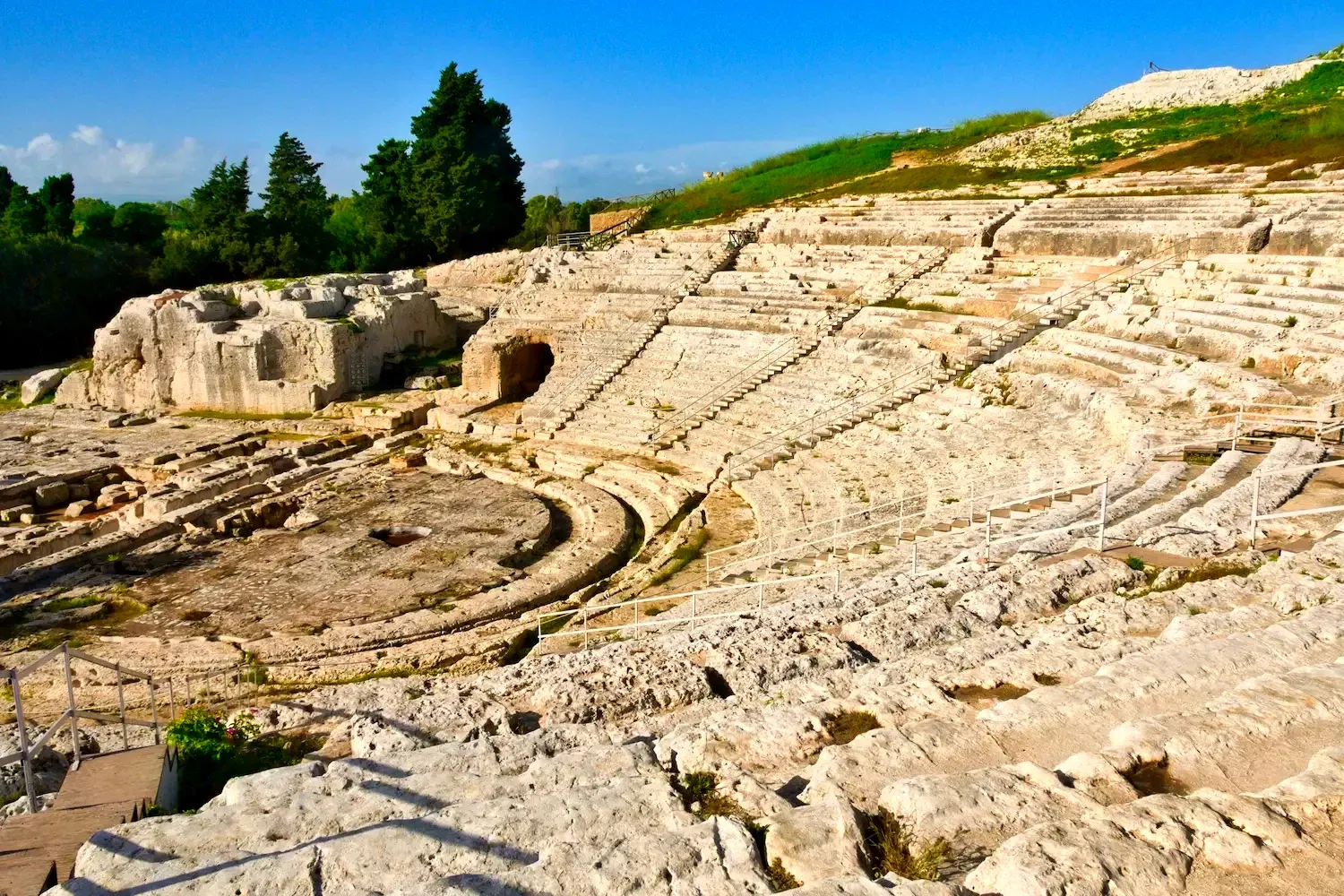
The Greek theatre is one of the largest and most important theatres of the ancient world, with rows of seats cut directly into the rock of the hillside, and is still used for performances of classical drama in the spring and early summer.
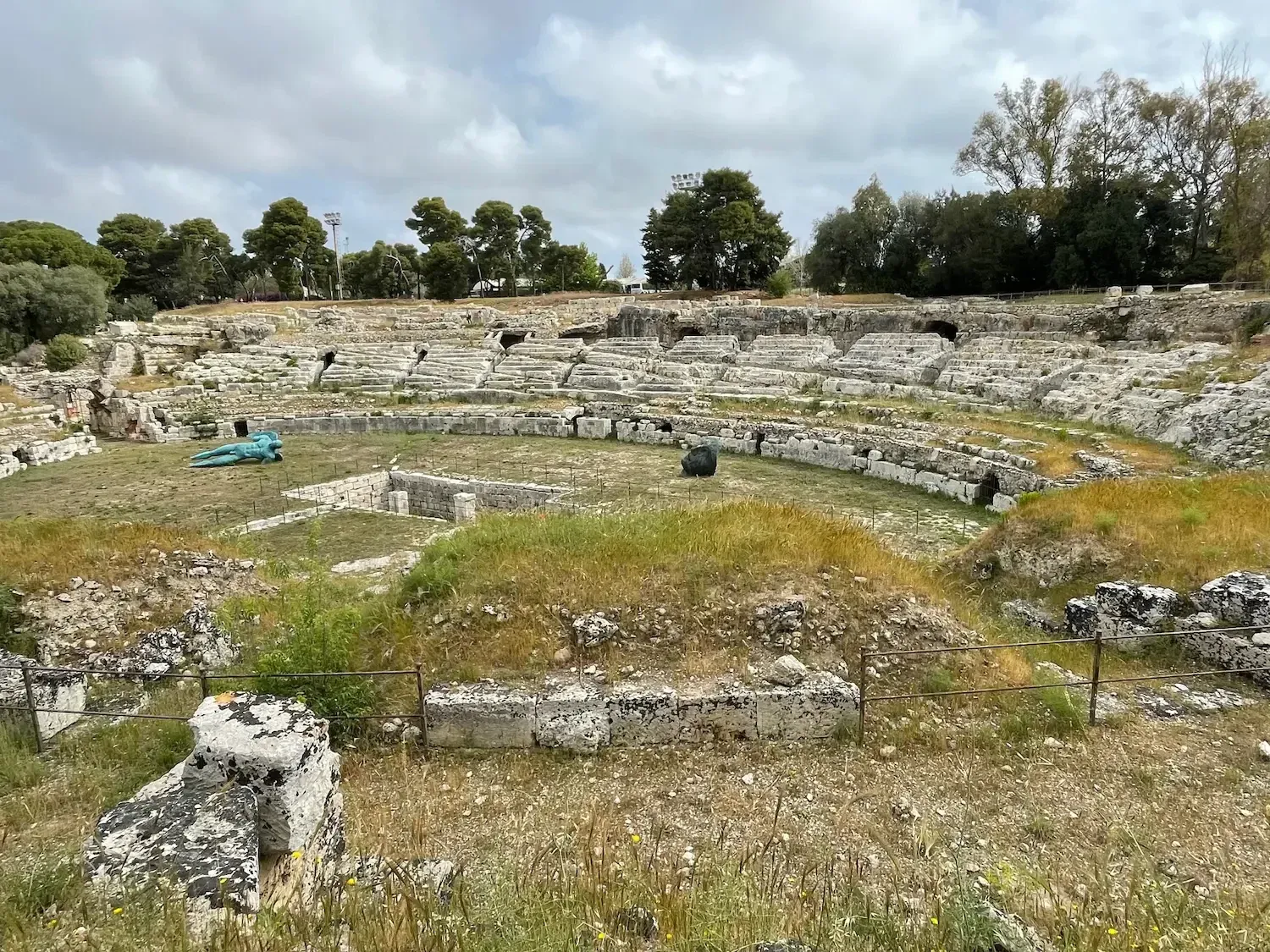
Next to it, the Roman amphitheatre was built between the 1st and 3rd centuries AD and used for gladiatorial contests and animal fights. Much of its stonework has been quarried away over the centuries, but its scale and its elliptical arena are still easy to read. Seeing the Greek and Roman sites together shows how the city's role changed after the Romans took it in the 3rd century BC.
Ear of Dionysius
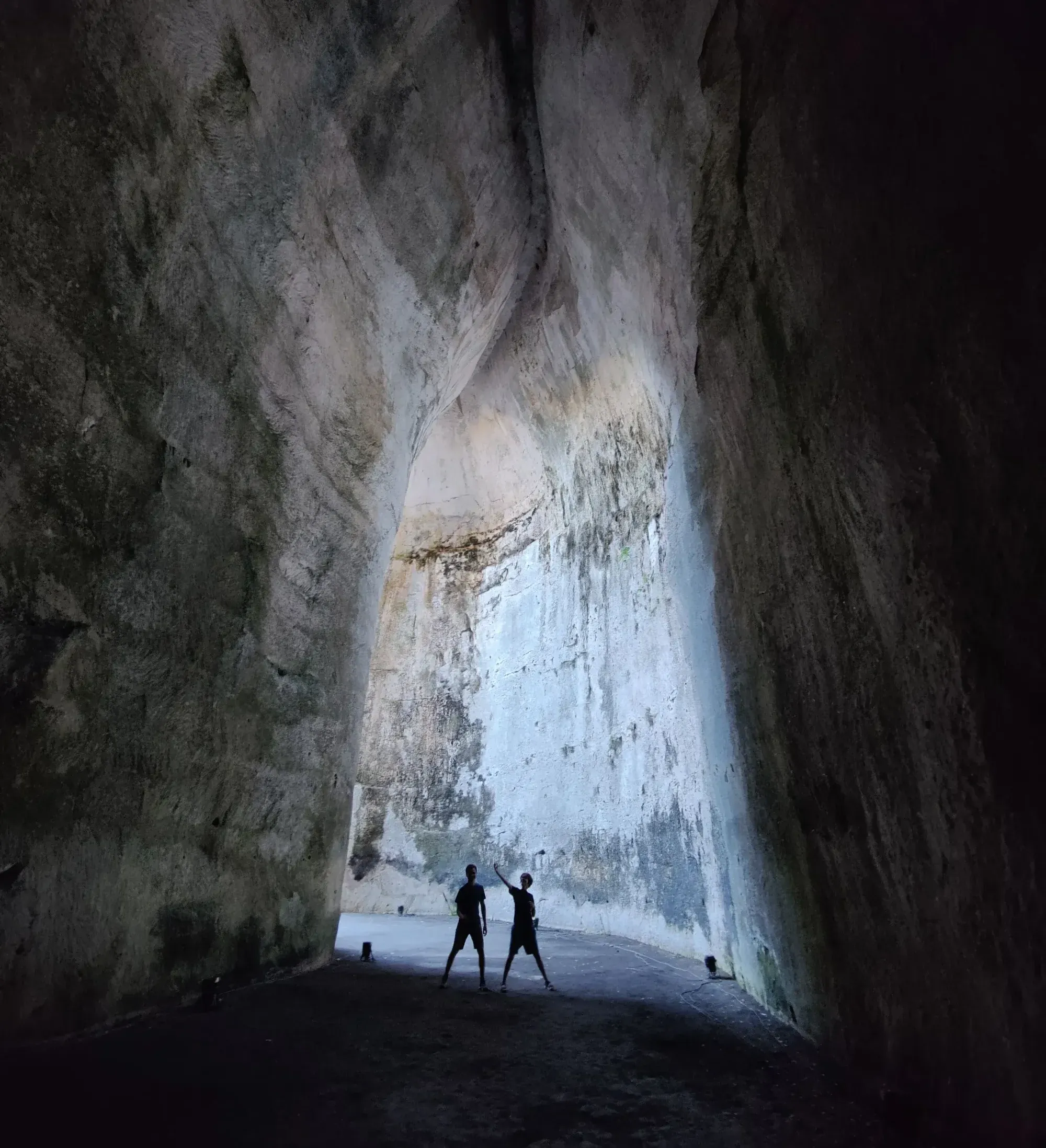
The Ear of Dionysius is an artificial cave about 23 metres high, cut into the limestone of the former quarry and famous for its acoustics. The name is tied to an old story that the tyrant Dionysius used the cave to overhear his prisoners, which is more legend than fact, but a sound made inside carries remarkably well. Tourists often test it with a shout or a few notes.
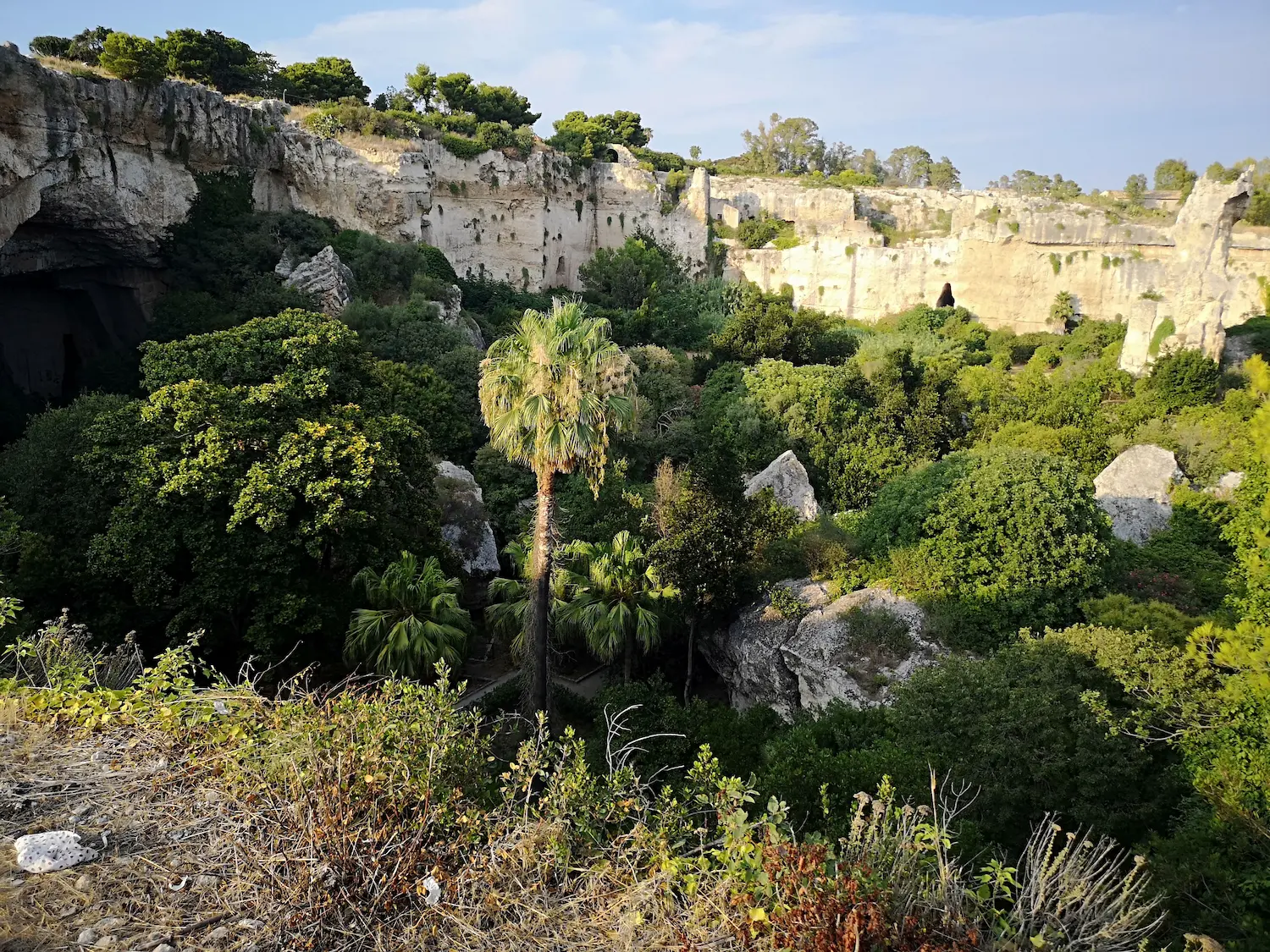
It sits in the Latomia del Paradiso, a deep quarry whose floor is now a lush garden, and it is one of the most memorable parts of the park. The cave is not very large, so it is quietest early or late in the day.
Catacombs of San Giovanni
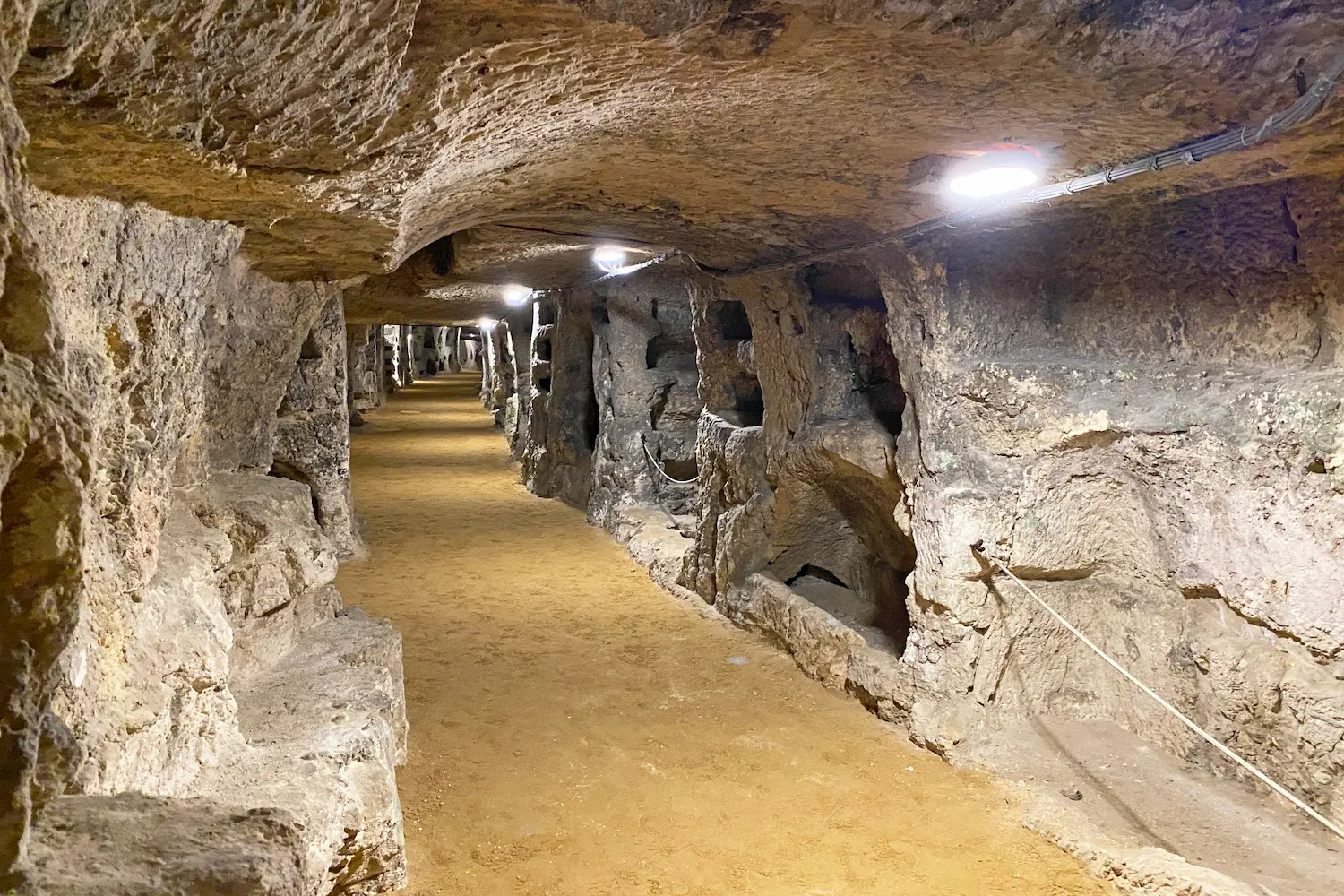
Syracuse's Catacombs of San Giovanni are one of the most extensive early Christian burial complexes in the Mediterranean, carved into the rock beneath the ruins of a 6th-century basilica on the mainland side of the city.
You can only enter on a guided visit, which lasts around 45 minutes and finishes above ground among the remains of the basilica, where you can also see the crypt of Saint Marcian, the first bishop of Syracuse.
Entry for the guided visit is €12 and can only be booked at the ticket office. The ticket office is generally open in the morning until 12.30 and again from 14.30, so plan around that rather than arriving at lunchtime.
Day Trip to Noto by Train
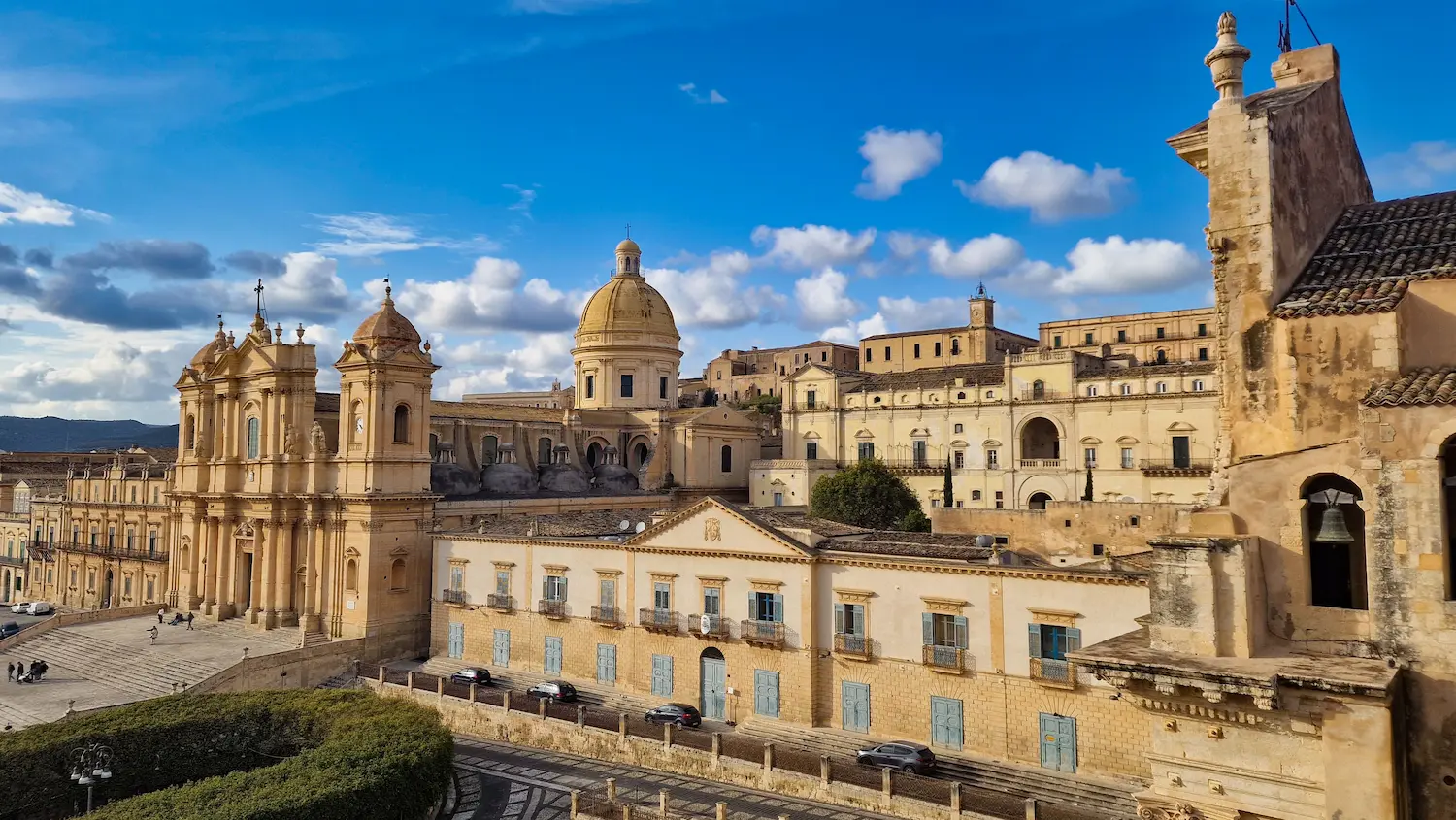
Noto is an easy day trip from Syracuse (Siracusa). It is a UNESCO-listed Baroque town, and direct regional trains take roughly 30 to 35 minutes, with about six or seven a day and fares from around €5-6. Book with Trenitalia or Trainline.
Noto station is not in the historic centre. It is about 1.2 km away, and the walk into town is uphill - roughly 10-20 minutes depending on your pace and the heat. But local buses and taxis wait outside the station if you would rather not climb. The town's entrance is the Porta Reale, a monumental gate at the eastern end of the centre, which leads onto the pedestrianised Corso Vittorio Emanuele. Most of the main sights lie along that street, in a stretch of under a kilometre, so once you are in you can see everything on foot.
The alternative is the coach. Interbus and AST run services that take around an hour and cost roughly €4. In Syracuse they leave from Corso Umberto, close to the railway station, and in Noto they stop near the Porta Reale (sources name Via Pola and Piazzale Marconi), so there is no climb. There are fewer departures than by train, so check times. In hot weather, the coach out and the train back is a sensible combination, because the station is downhill from the centre.
Food and Drink
Syracuse eats like the rest of south-eastern Sicily: look for fresh fish and seafood, pasta with sardines or swordfish, arancini and, for breakfast, granita with a brioche. The weekday-morning market behind the Temple of Apollo is the best place for fruit, cheese and local produce, and a quick, cheap lunch.
Restaurants on and around Piazza Duomo are the busiest and the most expensive. For better value, walk a street or two away from the main squares, and check prices before you sit down.
Practical Information
Ortigia is small, flat and best done on foot, but Syracuse is spread out, so a two-day visit works better than one rushed day. Spend a day on the island, and a second on the mainland for the Neapolis park and the Catacombs. Staying on Ortigia puts the cathedral, the castle and the Giudecca on your doorstep, while the Park and the Catacombs need a walk, a bus or a taxi.
Public transport in this part of Sicily is more seasonal than on the mainland. The coastal railway runs year-round, but evening services and early coach departures thin out outside summer, so check times for your date. July and August are hot and crowded, and the spring and autumn months give you the same sights with easier walking.
Frequently Asked Questions
Can you get from Taormina to Syracuse by train?
Yes. There is a direct regional train from Taormina-Giardini to Syracuse (Siracusa) that takes roughly 1 hour 40 to 3 hours (depending on the train), with a dozen or more departures a day. Tickets start from about €12. Some services involve a change, so check the details when you book.
How far is Syracuse train station from Ortigia?
The station is on the mainland, and the walk to Ortigia is flat and takes 15-25 minutes to reach the centre, depending on where you are going. Local buses also run between the station and the island.
How do I get from Catania Airport to Syracuse by public transport?
Take the direct Interbus coach from the airport to Syracuse (Siracusa). It takes roughly an hour 10 mins and costs around €6.20 one way, and drops you at the stop on Corso Umberto (Syracuse Bus Station) near the railway station, from where Ortigia is a walk across the bridge.
How do I get from Syracuse to Catania Airport early in the morning?
Interbus runs a direct coach from the Corso Umberto stop (Syracuse Bus Station), about 150 m from the railway station, to Catania Airport, taking about an hour 1o mins for around €6.20. The earliest departures were listed at around 04:30-05:00 on the summer timetable, but early services are fewer outside the high season, so check the timetable for your date.
Is it better to stay on Ortigia or in the rest of Syracuse?
Ortigia puts the cathedral, Castello Maniace and the Giudecca within walking distance and is the most atmospheric place to be in the evening. The Neapolis Archaeological Park and the Catacombs of San Giovanni are on the mainland, so you will need a walk, a bus or a taxi to reach them.
How do I get from Ortigia to the Neapolis Archaeological Park?
It is a walk of roughly 25-40 minutes, or a short taxi or local bus ride.
Can you visit the Catacombs of San Giovanni without a guide?
No. Visits are by guided tour only, with a short guided tour. The guided visit cost about €12 and can be booked directly at the ticket office (which is closed 12.30-14.30).
Can you see Syracuse in one day?
You can see the highlights, such as Piazza Duomo, the cathedral and the Fountain of Arethusa, in a long day. Fitting in the Neapolis Archaeological Park as well is rushed, so two days, with one night on Ortigia, is a better plan.
Can you visit Noto from Syracuse by train?
Yes. Direct regional trains run from Syracuse (Siracusa) to Noto in roughly 30 to 35 minutes, about seven a day, with fares listed from around €5-6.
Is the Temple of Apollo in Ortigia free?
Yes. The ruins are in Largo XXV Luglio, just across the bridge onto Ortigia, and are viewed from outside a fence, so there is nothing to pay. On weekday mornings the daily market is held behind it.
Can you drive into Ortigia?
Not in the historic centre. Ortigia is a restricted traffic zone, and driving in without a permit risks a fine. Arriving by train and walking is simpler.
Also on The Unseen Italy: Taormina by Train: A Car-Free Guide to Sicily's Clifftop Town · How Italy's Train Network Works · How to Save Money on Train Travel in Italy