Trieste is reachable by direct train from Venice in 2 hours, a former Habsburg free port on the Adriatic with grand literary cafés, a seafront square, and a history that swings between Vienna, Trieste and Ljubljana.
Last verified: October 2026. Train times, ticket prices and opening hours change regularly. Always check official sources before travelling.
Trieste spent nearly two centuries as the main seaport of the Austro-Hungarian Empire, and it still feels like it - grand Viennese-style cafés, a skyline of neoclassical facades rather than Renaissance domes, and a local identity caught somewhere between Italian, Austrian and Slavic. It sits at the far northeastern edge of Italy, a few kilometres from the Slovenian border, and it's reachable by a single direct train from Venice with no bus transfer, no car, and barely any tourist crowds at all.
At a Glance
| 🚆 From Venice | Direct regional train - approx. 2h, from ~€17 |
| 🚆 From Udine | Regional train - approx. 1h, from ~€10 |
| 🚆 From Padua | Regional train - approx. 2h 20 mins, from ~€18 |
| 🚉 Nearest train station | Trieste Centrale, a 10-minute walk from Piazza Unità d'Italia |
| ☕ Coffee culture | Historic grand cafés dating to the Habsburg era - Caffè San Marco, Caffè degli Specchi |
| 🏛️ Must-see | Piazza Unità d'Italia and Miramare Castle |
| ⏱️ Time needed | A full day covers the highlights - two days allows Miramare and the Risiera di San Sabba without rushing |
| 📅 Best time | Spring and autumn - and be prepared for the Bora, Trieste's famous winter wind |
In This Guide
- Getting to Trieste by Train
- Piazza Unità d'Italia
- Miramare Castle
- Trieste's Grand Cafés and Literary History
- Castello di San Giusto and the Cathedral
- Teatro Romano
- The Risiera di San Sabba
- Food and Drink
- Practical Information
Getting to Trieste by Train
Trieste is one of the simplest car-free trips in this web site, because there's no transfer to plan around. Direct regional trains run from Venezia Santa Lucia to Trieste Centrale roughly every 30 minutes, taking about two hours and costing from around €17. If you're coming from further afield, change at Venice or at Udine, which sits just 1 hour from Trieste on the same line and is itself a useful base for the wider Friuli-Venezia Giulia region. For example, it's only 2 hours 20 minutes from Padua.
Trieste also makes a natural stop-off if your trip crosses into Slovenia - FlixBus runs a direct service to Ljubljana in around an hour and a half, departing every sixty to ninety minutes throughout the day - and costs ~€10.
Trieste Centrale station sits a flat, ten-minute walk from Piazza Unità d'Italia, along a wide boulevard - no bus or tram required to reach the historic centre.
Piazza Unità d'Italia
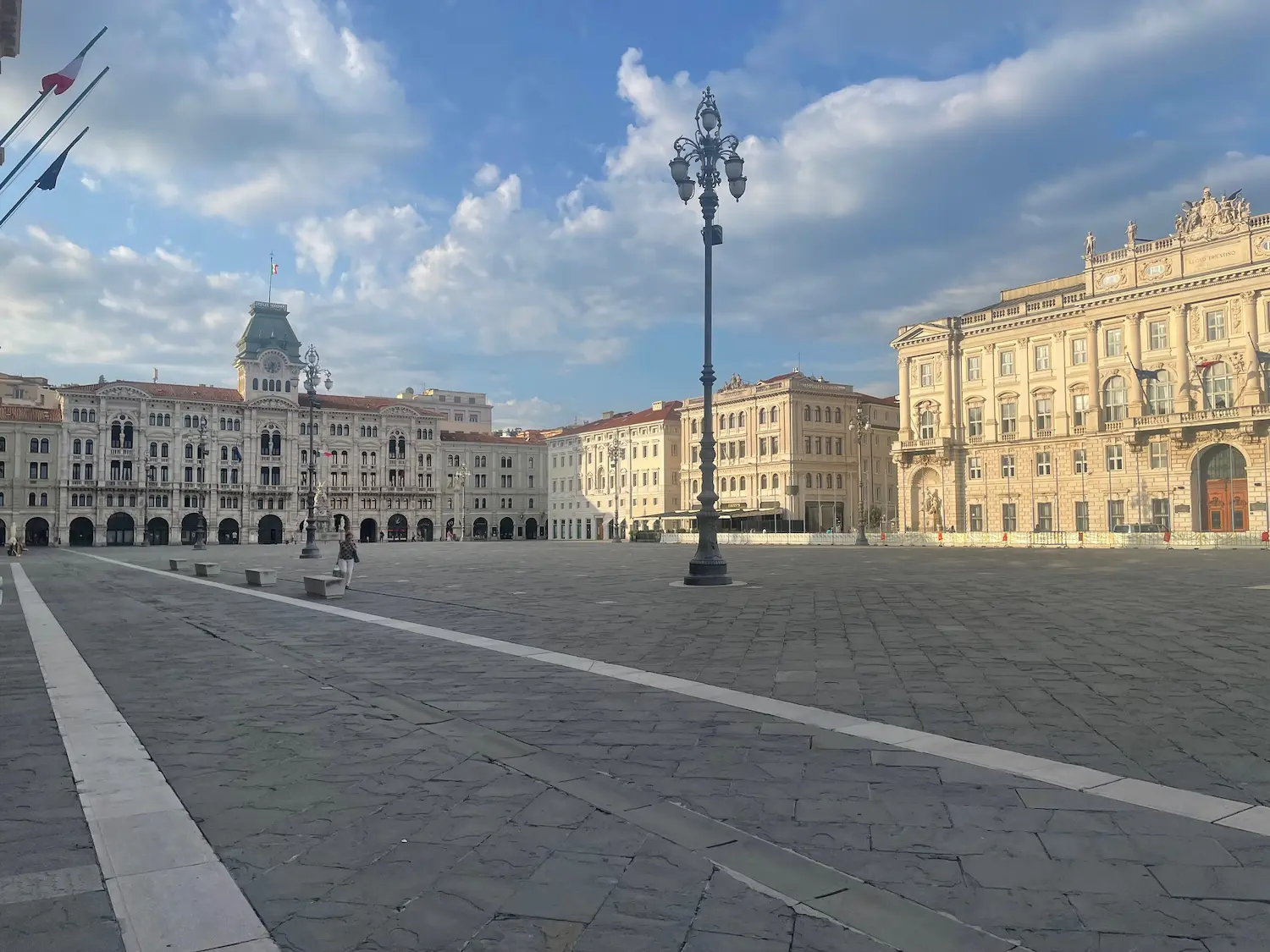
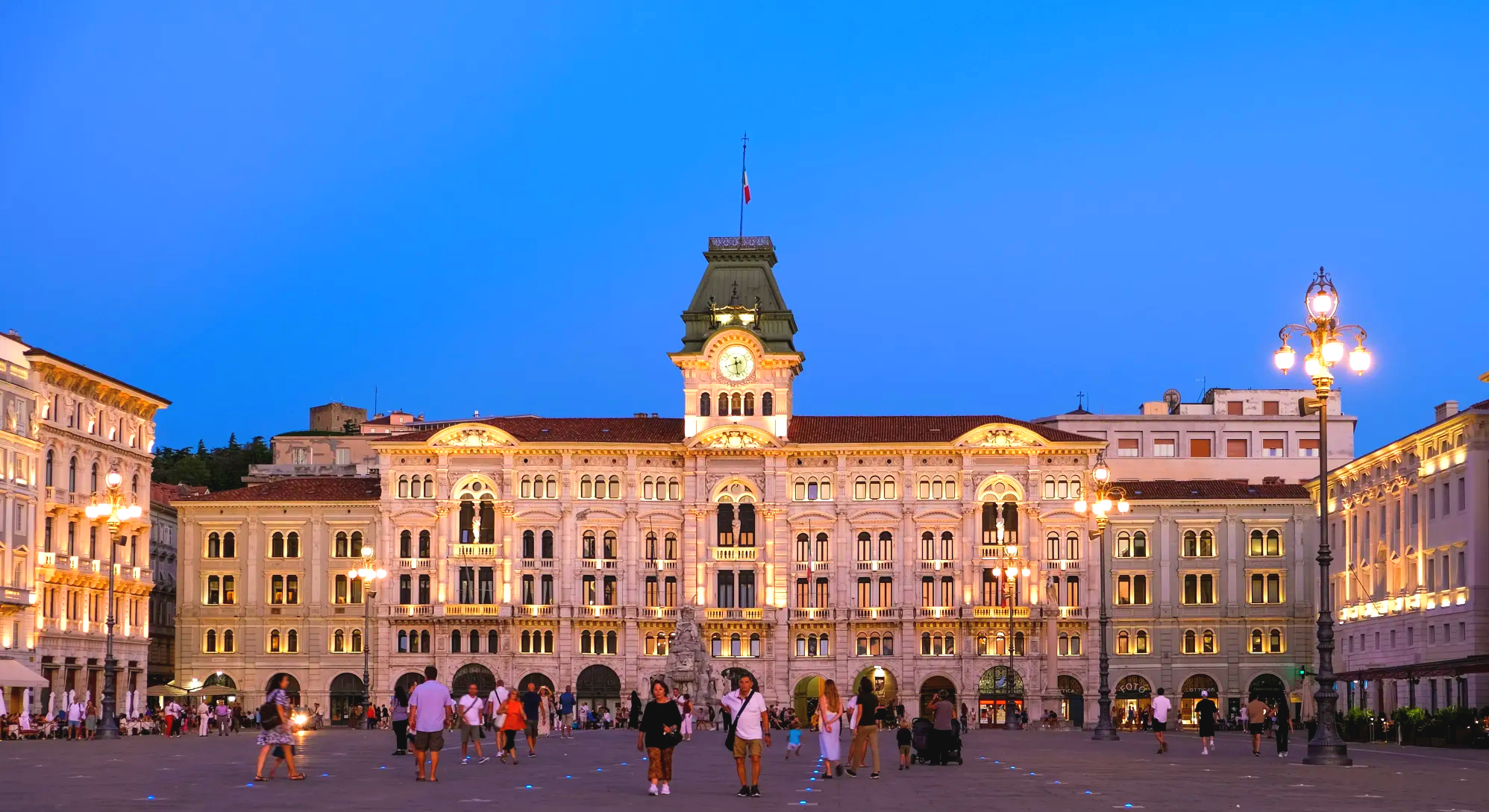
Piazza Unità d'Italia is often described as the largest square in Europe that opens directly onto the sea: one side is lined with grand neoclassical government buildings, including the Palazzo del Municipio with its clock tower, and the other opens straight onto the Adriatic with nothing but water beyond the paving stones. It's the natural starting point for a visit and the square most associated with Trieste's identity as a Habsburg-built port city rather than a typically Italian one.
In the evening, when the buildings along the square are lit and the crowds have thinned, it's one of the most striking public spaces in Italy - and one of the least visited by comparison with squares of similar scale elsewhere in the country.
Miramare Castle
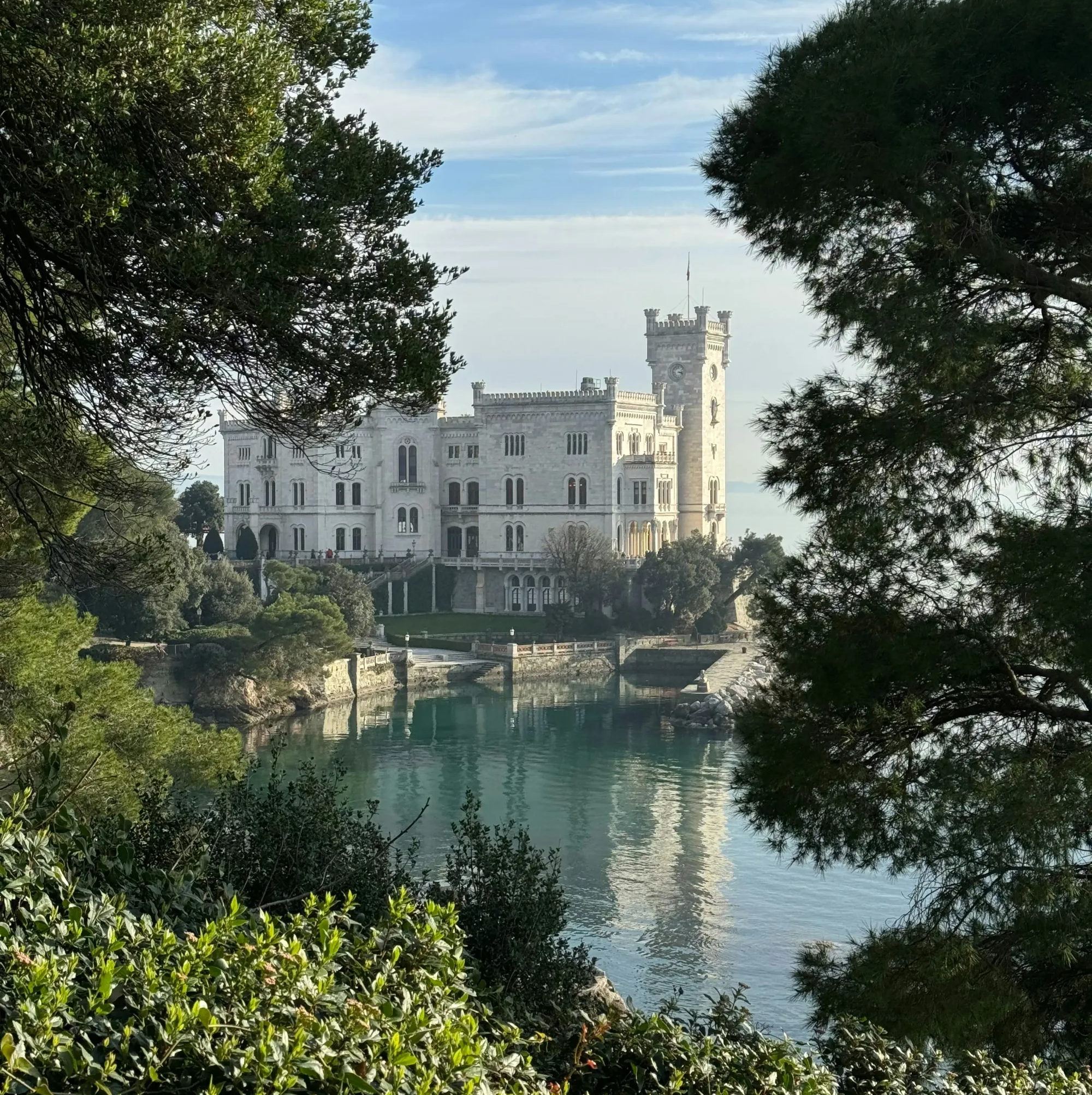
A short bus ride or a scenic coastal walk north of the centre, Miramare Castle sits on a rocky outcrop jutting into the Gulf of Trieste. It was built in the 1860s for Archduke Maximilian of Habsburg, who lived there only briefly before leaving to become Emperor of Mexico, a role that ended with his execution in 1867 - his wife Charlotte outlived him by six decades, largely in seclusion. The white castle's interiors are preserved much as the couple left them, and the surrounding historic park, laid out with terraces, exotic trees and small lakes, is worth your time.
Bus 6 runs from the city centre to Miramare in around 20 minutes which departs from Piazza Oberdan. For a longer, more scenic route, the coastal path along Viale Miramare can be walked or cycled in a little over an hour, tracing the shoreline the whole way.
Trieste's Grand Cafés and Literary History
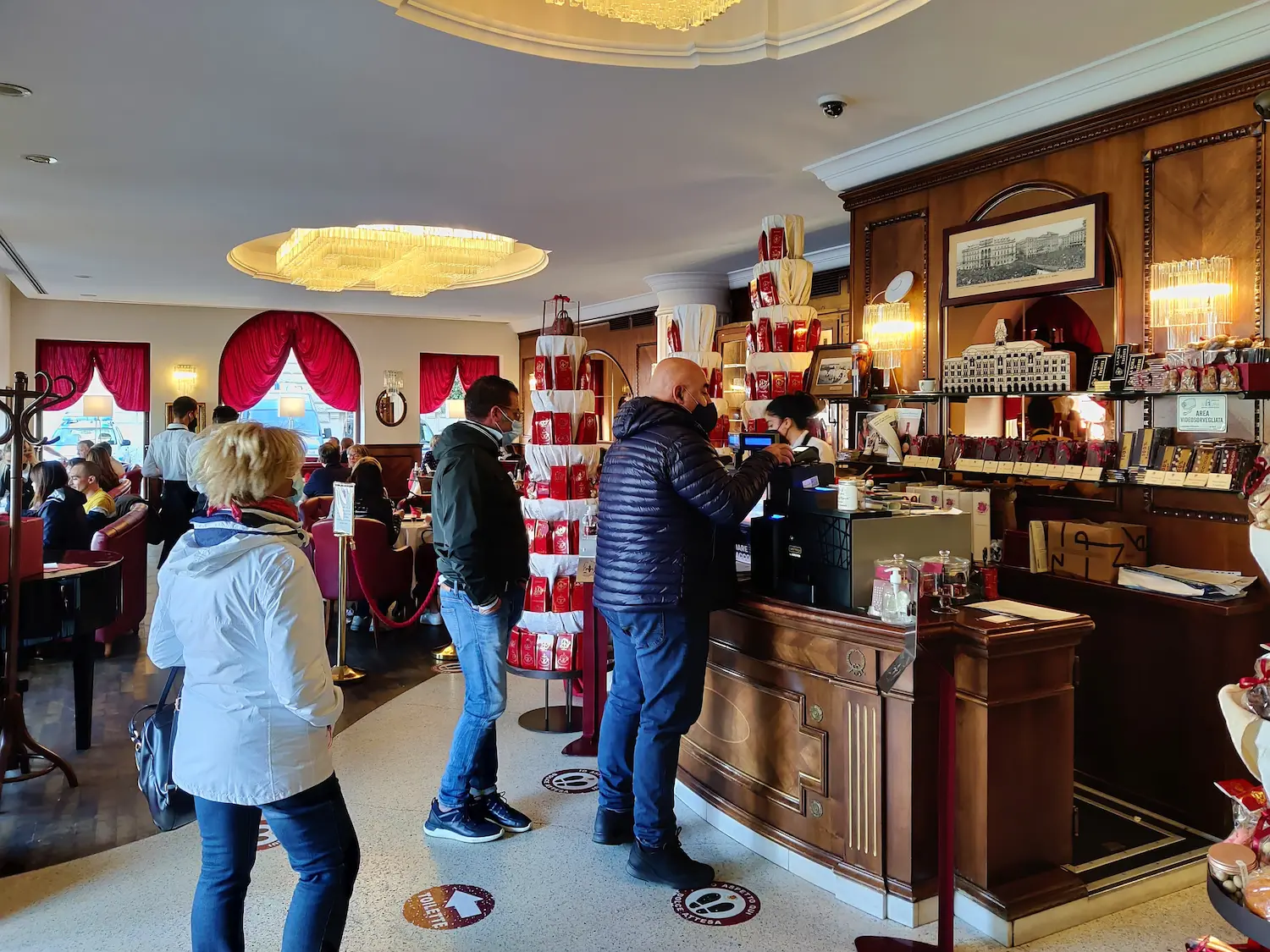
Coffee has mattered to Trieste since the Habsburgs made it a free port in the 18th century and shipments began arriving directly through its harbour - a trade link that still underpins the city's identity today as the headquarters of the coffee company illycaffè. That history shows up most clearly in Trieste's grand cafés: Caffè degli Specchi, on Piazza Unità d'Italia itself, has been serving coffee in Viennese style since 1839, while Caffè San Marco, near the university, has been a meeting point for writers and students since 1914.
Trieste's literary reputation isn't incidental either. James Joyce lived in the city on and off between 1904 and 1920, teaching English and writing much of Dubliners and A Portrait of the Artist as a Young Man here, along with early work on Ulysses - a statue of him now stands on the Ponte Rosso, the small red bridge over Trieste's own modest canal, the Canal Grande.
Castello di San Giusto and the Cathedral
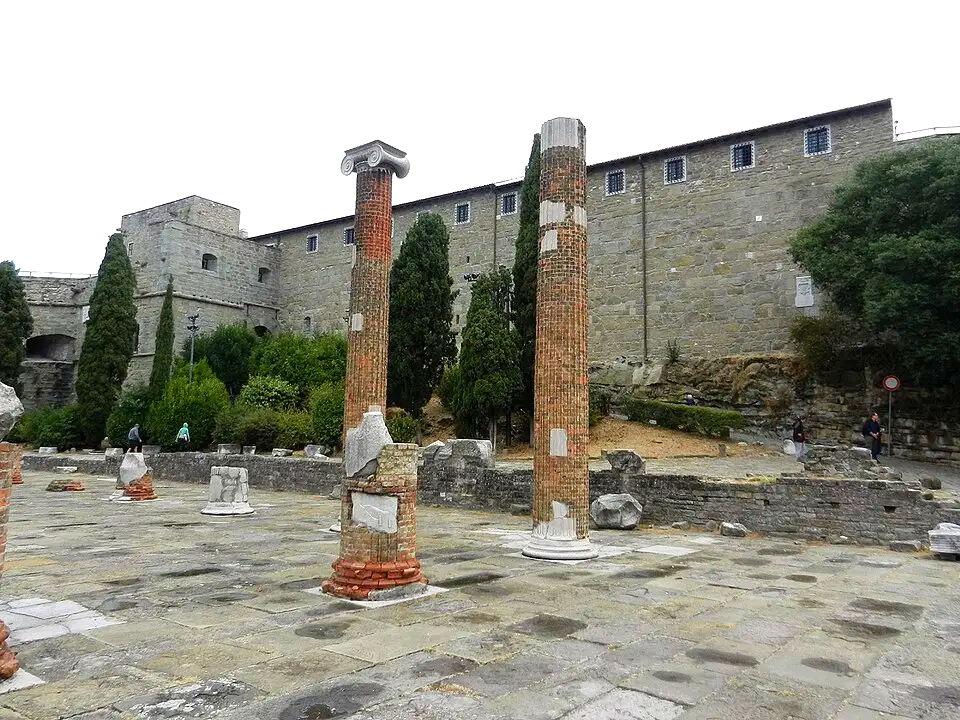
Above the old town, the medieval Castello di San Giusto gives the best panoramic view over Trieste's rooftops and the gulf beyond - well worth the climb up from the centre. Its ramparts are open to walk, and the small museum inside covers the site's long military history. Immediately next to it, the Cattedrale di San Giusto combines two earlier churches into one, with Byzantine-influenced mosaics in the apses that are easy to miss if you don't look up.
Teatro Romano
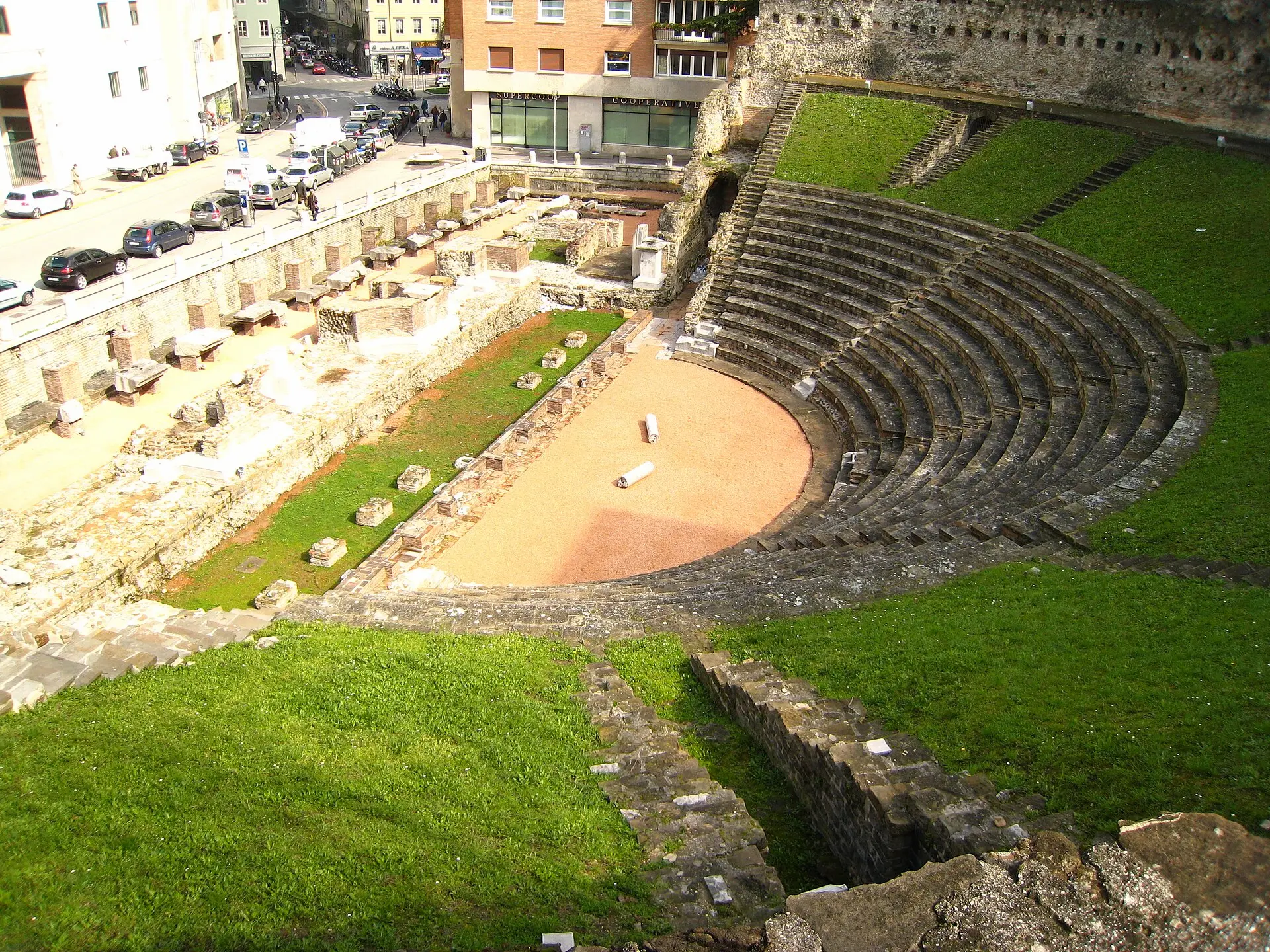
At the foot of the San Giusto hill, Trieste's Roman theatre dates to the reign of Augustus and was enlarged under Trajan in the 2nd century AD to seat around 6,000 people - a reminder that the city's history stretches back well over a thousand years before the Habsburgs arrived. It lay buried until 1938, when excavations uncovered it during a wave of archaeological clearance across the city centre. Today it sits in the open air, visible for free at any time from the surrounding walkway, with the curve of its stone seating still clearly intact. In summer, it occasionally hosts open-air performances.
The Risiera di San Sabba
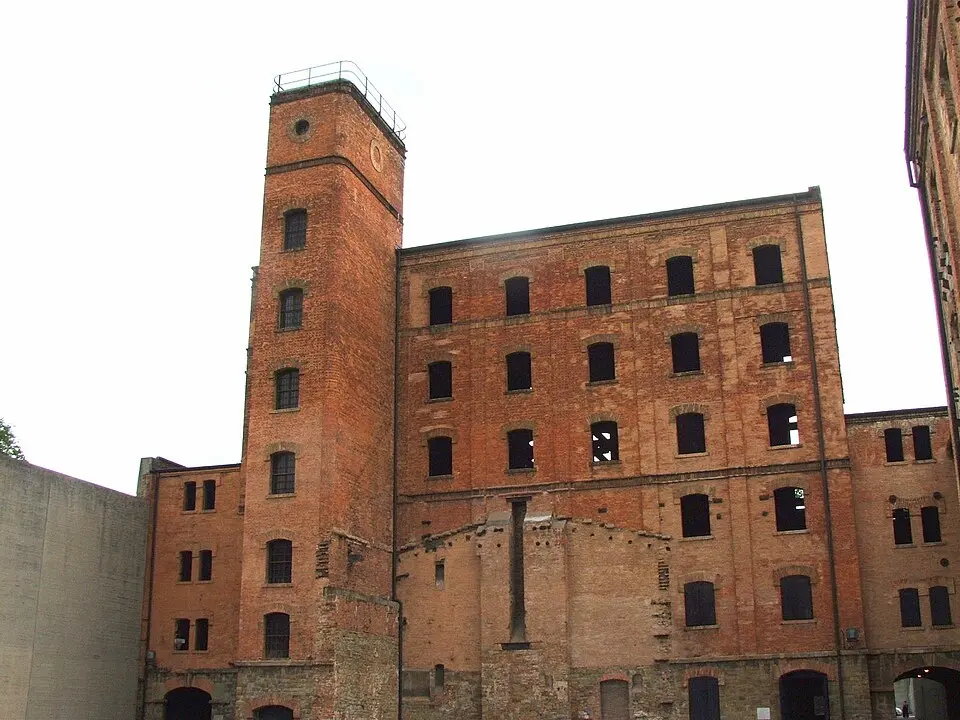
A short bus ride from the centre, the Risiera di San Sabba is a former rice-husking facility that Nazi occupying forces converted into a detention and transit camp during the Second World War, the only site of its kind in Italy to have operated a crematorium. It's now a National Monument and museum, and it is, understandably, a sober and quiet place rather than a typical sightseeing stop. It's an important part of understanding 20th-century Trieste, particularly the city's position on the shifting border between Italy and Yugoslavia in the years after the war, and it's included here for visitors who want that fuller picture.
Food and Drink
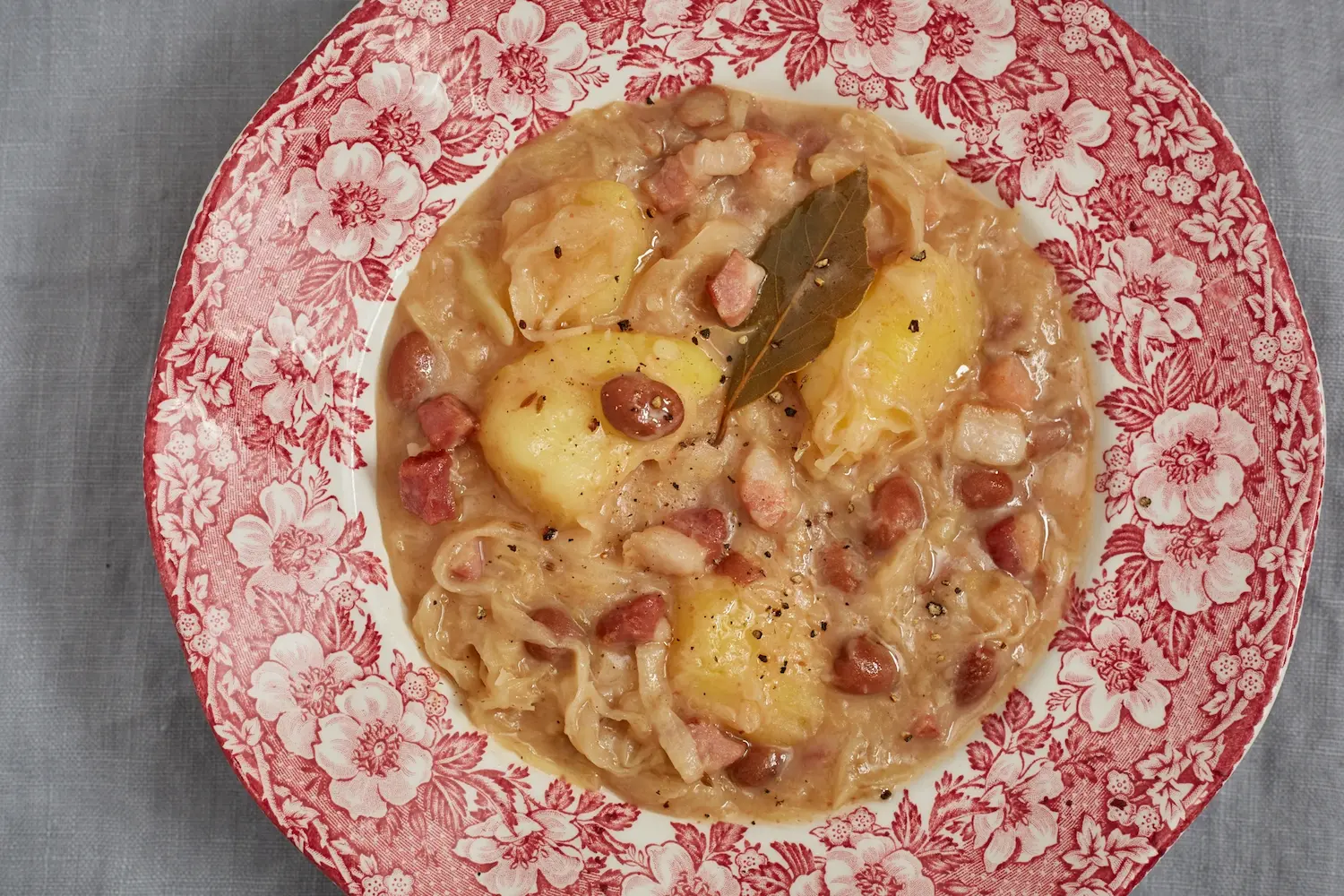
Trieste's food, like its architecture, sits at a crossroads. Look for jota, a hearty soup of beans, sauerkraut and potato that owes more to Central Europe than to the rest of Italy, along with goulash and cevapcici, grilled minced-meat rolls with roots in the Balkans. For something distinctly local, seek out a buffet - Trieste's own term for an unpretentious canteen-style eatery serving boiled meats, sauerkraut and mustard. And a Trieste "capo in b" (an espresso with a dash of milk, served in a small glass) is a typical choice of refreshment.
Practical Information
Trieste's centre is compact, flat near the seafront, and easy to cover on foot, though reaching Castello di San Giusto involves a climb. No metro system is needed here - everything within the historic centre is walkable, and Miramare and the Risiera di San Sabba are the only sights that require a short bus ride.
The one weather quirk worth knowing about is the Bora, a powerful, cold wind that blows down from the Karst plateau above the city, most common and most intense between autumn and winter. It can be strong enough to affect walking along the seafront on its worst days, and some streets in the upper town have handrails specifically for that reason.
As a day trip, Trieste works well from Venice, roughly two hours away by direct train, or as a stop on a longer route through Udine and the Friuli-Venezia Giulia region. An overnight stay is worth considering if you want to fit in Miramare and the Risiera di San Sabba alongside the historic centre without rushing.
It's also a good stop, if you're planning a trip from Italy to Slovenia, as its directly on the route.
Frequently Asked Questions
Is there a train station in Trieste itself?
Yes. Trieste Centrale sits directly in the city, a flat ten-minute walk from Piazza Unità d'Italia, with no transfer required to reach the historic centre.
How do I get from Venice to Trieste without a car?
Direct regional trains run roughly every one to two hours from Venezia Santa Lucia to Trieste Centrale, taking about two hours.
Can you do Trieste as a day trip from Venice?
Yes, and it's a common one - a day covers Piazza Unità d'Italia, the grand cafés and Castello di San Giusto comfortably. An overnight stay is worth it if you also want to see Miramare Castle and the Risiera di San Sabba without rushing.
Is Trieste walkable?
Yes - the historic centre is compact and largely flat, since it sits right on the seafront. The one exception is Castello di San Giusto, which sits on a hill above the old town and requires a climb.
What is Trieste known for?
Its identity as the former main port of the Austro-Hungarian Empire - grand Viennese-style architecture and cafés, a strong coffee culture, and literary connections through James Joyce and Italo Svevo. Piazza Unità d'Italia and Miramare Castle are its two best-known sights.
Do I need to book Miramare Castle tickets in advance?
Not usually for individual visitors, though it's worth booking ahead in peak summer season or if travelling as part of a group.
What is the Bora?
A strong, cold wind that blows down over Trieste from the Karst plateau, most common between autumn and winter. It's a well-known local phenomenon rather than a safety concern for most visits, though it can be intense enough to affect walking along the seafront on its strongest days.
Also on The Unseen Italy: Venice by Train: A Car-Free Guide to the Floating City · Padua by Train: Giotto's Frescoes, a Basilica and Europe's Oldest University · Ferrara by Train · How Italy's Train Network Works