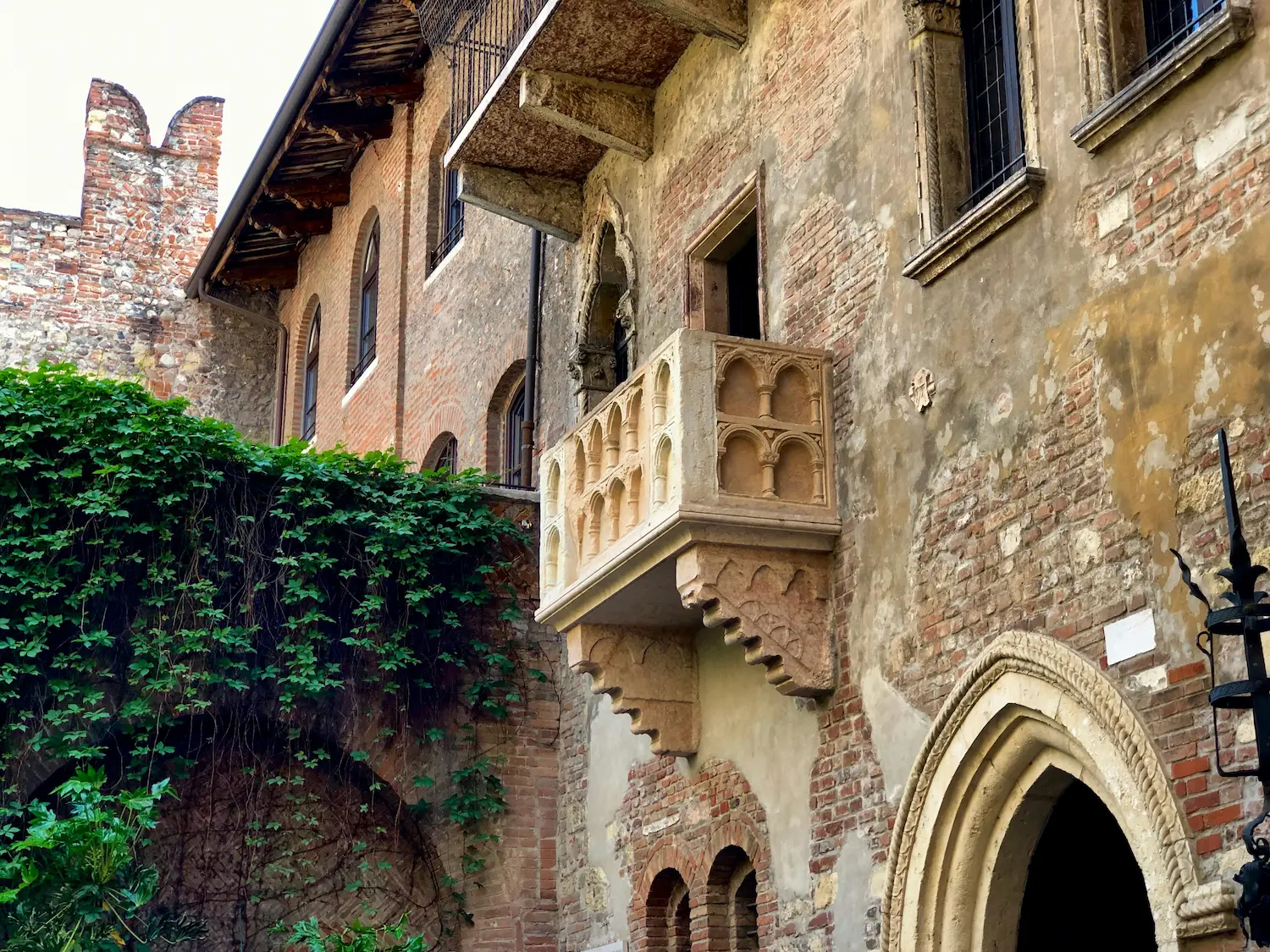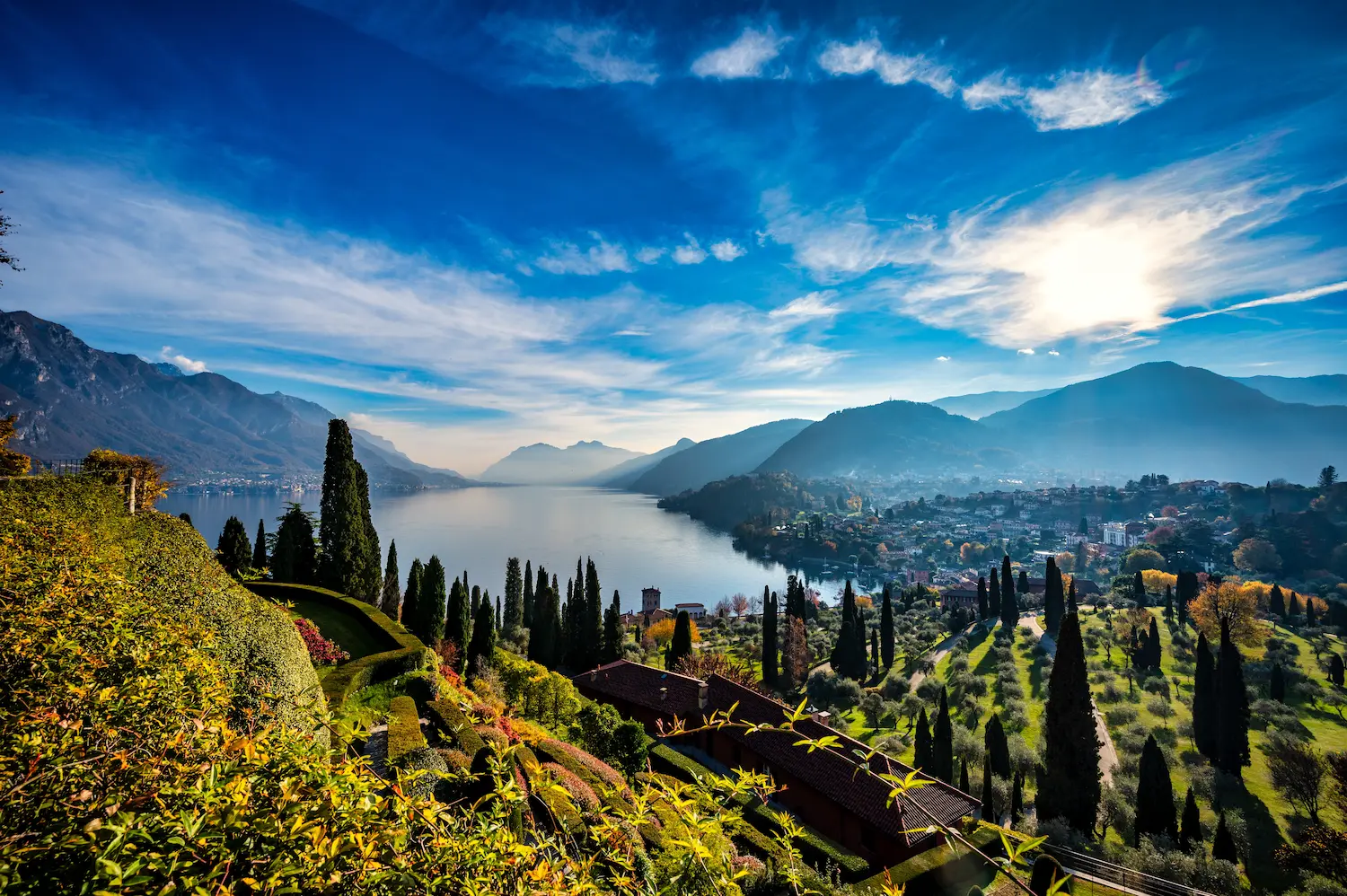
Genoa is one of Italy's most overlooked cities — a UNESCO merchant quarter, extraordinary food, medieval alleyways and a harbour redesigned by Renzo Piano. Genoa is around 90 minutes from Milan by train and almost entirely free of tourists.
Last verified: April 2026. Opening times, prices and transport details change regularly. Always check official sources before travelling.
Most visitors pass straight through on their way to Cinque Terre or the Riviera, barely registering the city beyond its railway stations. But they are missing out.
The city sits on a steep hillside above one of Europe's great historic harbours. Its medieval quarter — the caruggi — is a dense labyrinth of narrow alleyways. The architecture reflects centuries of extraordinary wealth from maritime trade. The food is unlike anything you'll find elsewhere in Italy. Anton Chekhov called it the most beautiful city in the world. And it is around 90 minutes by train from Milan, or 2 hours from Turin.
Getting to Genoa by Train
Genoa sits off the main high-speed spine of Italy but has good connections from several directions — and the journey from Milan, in particular, is straightforward enough to make it a comfortable day trip.
| From | Journey Time | Train Type |
|---|---|---|
| Milan (Milano Centrale) | approx. 1h 30m | Trenitalia Intercity or regional |
| Turin (Torino Porta Susa) | approx. 2h | Trenitalia Intercity |
| Cinque Terre (La Spezia) | approx. 1h 15 mins | Trenitalia Regional |
| Pisa | approx. 2 hours 15 mins | Trenitalia Regional |
Genoa has two main stations — Genova Piazza Principe, which is closer to the old port and the historic centre, and Genova Brignole, which is closer to the modern city and Boccadasse. Both are connected by bus and the city's metro. For most visitors arriving from Milan or Turin, Piazza Principe is the more convenient arrival.
Buy tickets via Trenitalia or Trainline. Intercity tickets require a seat reservation and are tied to a specific train — no validation required. Regional train paper tickets must be validated using one of the green machines before boarding.
New to Italian trains? Our Italy train network guide covers everything you need to know.
At a Glance
| 🚆 From Milan | approx. 1h 30m — Trenitalia Intercity or regional train from Milano Centrale |
| 🏛️ UNESCO status | Palazzi dei Rolli and Strade Nuove — World Heritage Site since 2006 |
| 🗺️ Getting around | On foot in the centre; funiculars, lifts and buses for the hillside |
| 🍽️ Food highlights | Farinata, pesto, focaccia, seafood, Mercato Orientale |
| 📅 Best time | Spring and autumn — summer can be hot in the caruggi |
| 🏨 Best area to stay | The medieval quarter — stay inside the caruggi |
| 🔗 Combine with | Cinque Terre, Portofino, Camogli, Boccadasse |
The Caruggi — Genoa's Medieval Heart
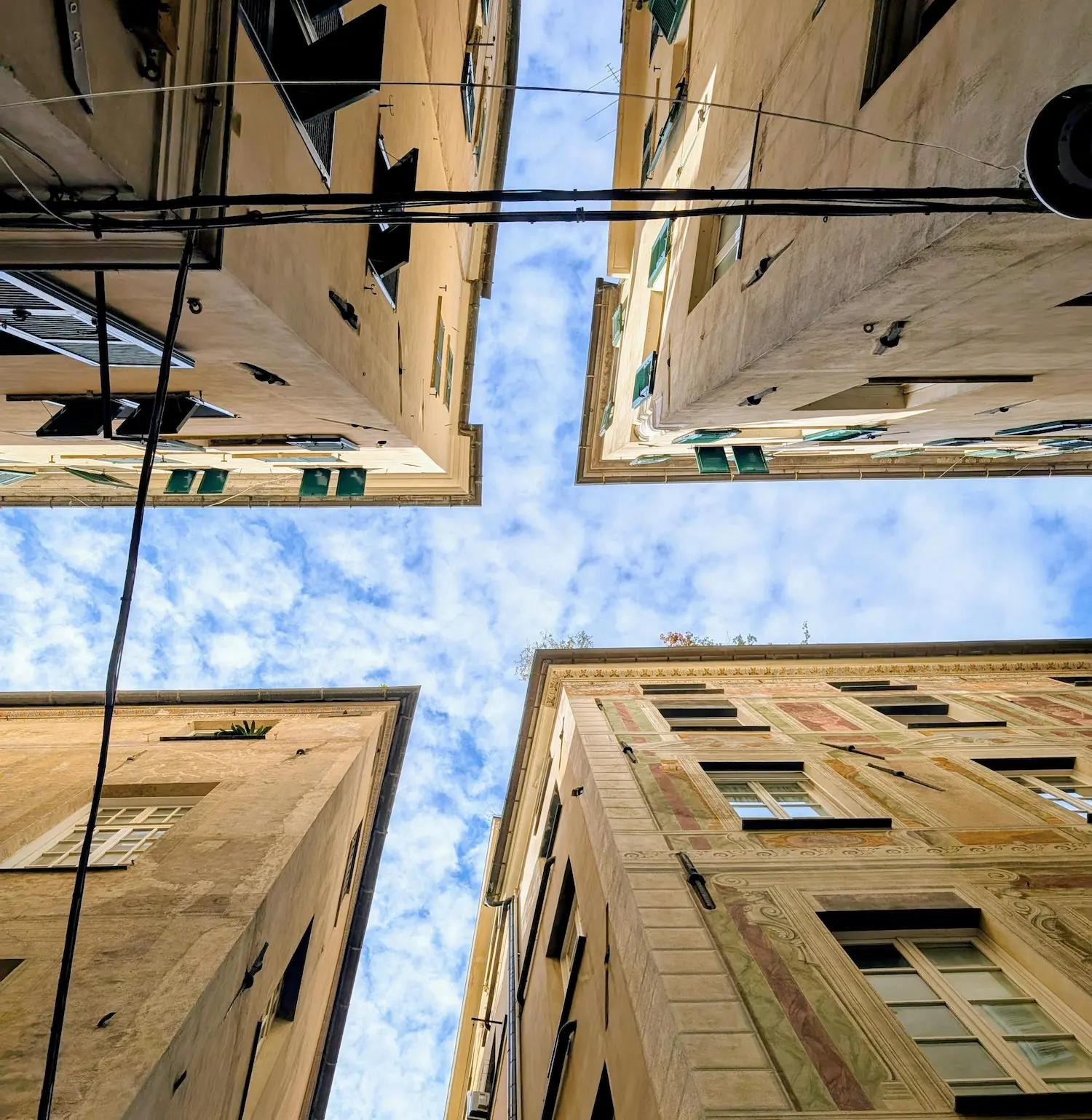
The caruggi are the defining experience of Genoa — a dense, dark, endlessly surprising network of medieval alleyways that spread out from the old port into the hillside above, and among the least touched by modern tourism. Washing hangs between buildings. Workshops occupy ground-floor spaces. Bread ovens and focaccerie operate on street corners that look unchanged for three hundred years.
Walking into the caruggi from the modern city feels like stepping through a door into a different century. The light is dim, the streets are narrow enough that you could touch both walls simultaneously, and the sounds of the city above — the funiculars, the port — seem to come from somewhere far away.
This is the area I would recommend staying in. It can feel disorientating at first and some of the darker streets feel isolated after dark — but it is the most authentic and interesting part of the city, and being based here puts you within walking distance of everything worth seeing.
The Palazzi dei Rolli — UNESCO World Heritage Site
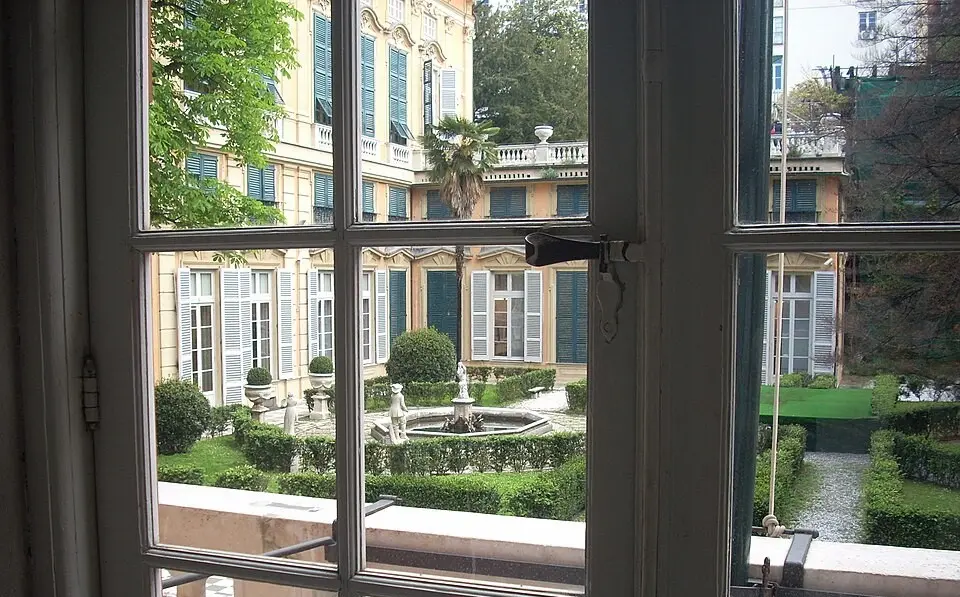
What makes Genoa architecturally extraordinary is its merchant palaces. During the late 16th and early 17th centuries, when the Republic of Genoa was at the peak of its financial and maritime power — financing the Spanish crown, trading across Europe and the Mediterranean — the city's noble families built a series of magnificent Renaissance and Baroque palaces along newly built streets called the Strade Nuove.
In 1576, the Genoese Senate decreed that these palaces should be registered on official lists — the Rolli — and that when state visitors arrived in Genoa, a palace would be chosen by lottery to host them, the grandeur of the palace matched to the rank of the guest. The Strade Nuove and the system of the Palazzi dei Rolli represent the first example in Europe of an urban development project planned by a public authority associated with a particular system of public lodging in private residences. UNESCO recognised them as a World Heritage Site in 2006.
Via Garibaldi (the original Strada Nuova) is the street to walk first — the most complete and impressive of the Strade Nuove, lined with palaces that now house museums, banks and institutions. Palazzo Rosso, Palazzo Bianco and Palazzo Doria Tursi together form the Musei di Strada Nuova and are open to visitors with a combined ticket. The rooftop terrace of Palazzo Rosso offers one of the finest panoramas of the city.
The palaces are not all accessible — many remain in private ownership or institutional use. But the exteriors of Via Garibaldi alone, with their scale and their evident wealth, tell the story of a city that was once among the most powerful in Europe.
Twice a year — typically one weekend in May and one in September — Genoa holds the Rolli Days, when many normally private palaces open their doors for free guided visits. If you can time your visit to coincide, it is a wonderful cultural experience to take part in.
The Old Port — Porto Antico
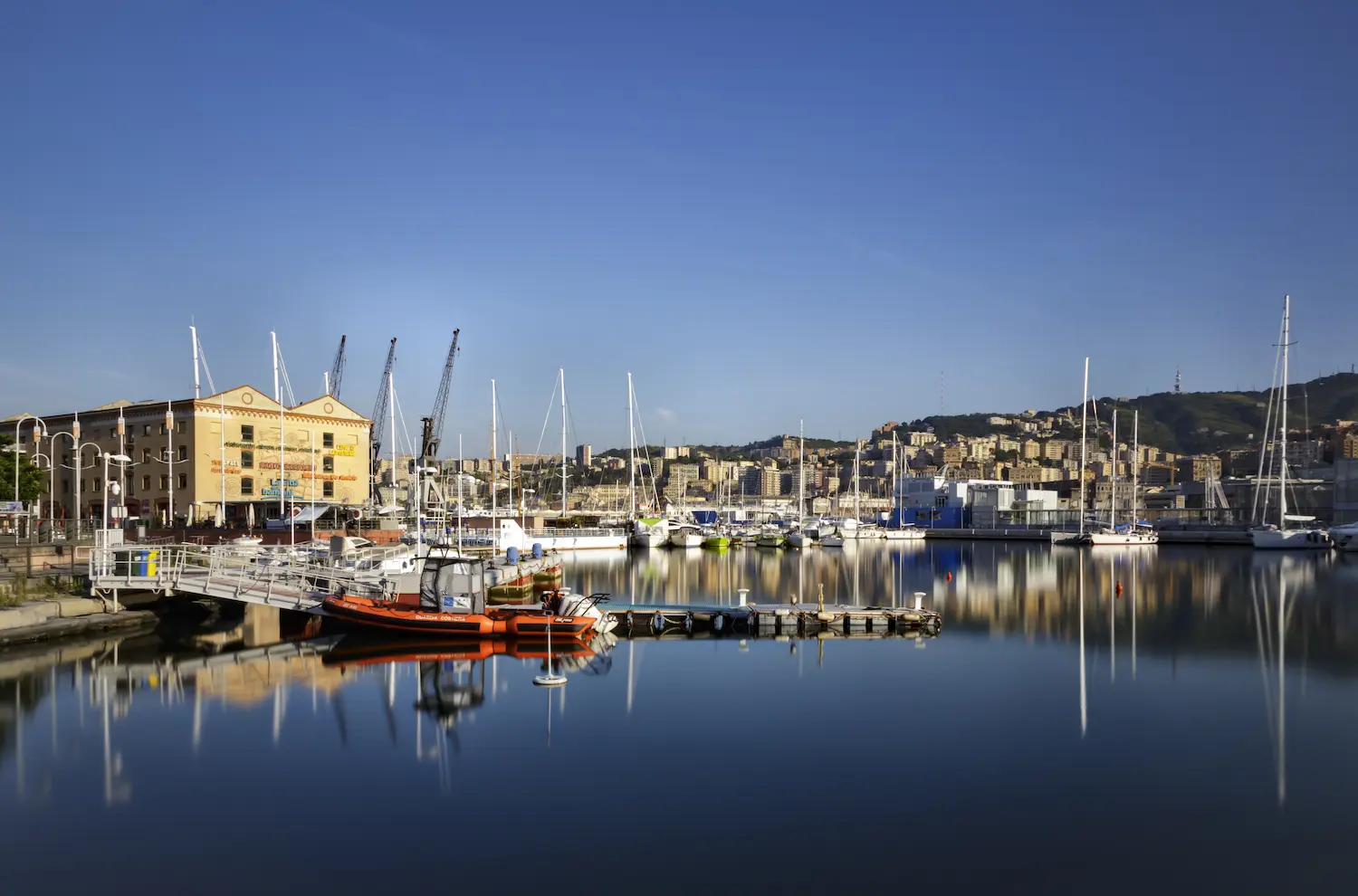
The Porto Antico is where the city meets the sea, and where much of Genoa's public life plays out. The harbour area was redesigned for the 1992 Columbus celebrations by the Genoese architect Renzo Piano — the same architect who designed the Pompidou Centre in Paris and the Shard in London — and the result is a thoughtful, human-scale waterfront that rewards a long walk.
The Aquarium of Genoa is the largest in Italy and one of the largest in Europe, occupying a converted warehouse on the waterfront. It covers Mediterranean, tropical and polar marine environments and is genuinely impressive — worth two to three hours, particularly if you're visiting with children or have any interest in marine life. Buy tickets in advance at acquariodigenova.it to avoid queues.
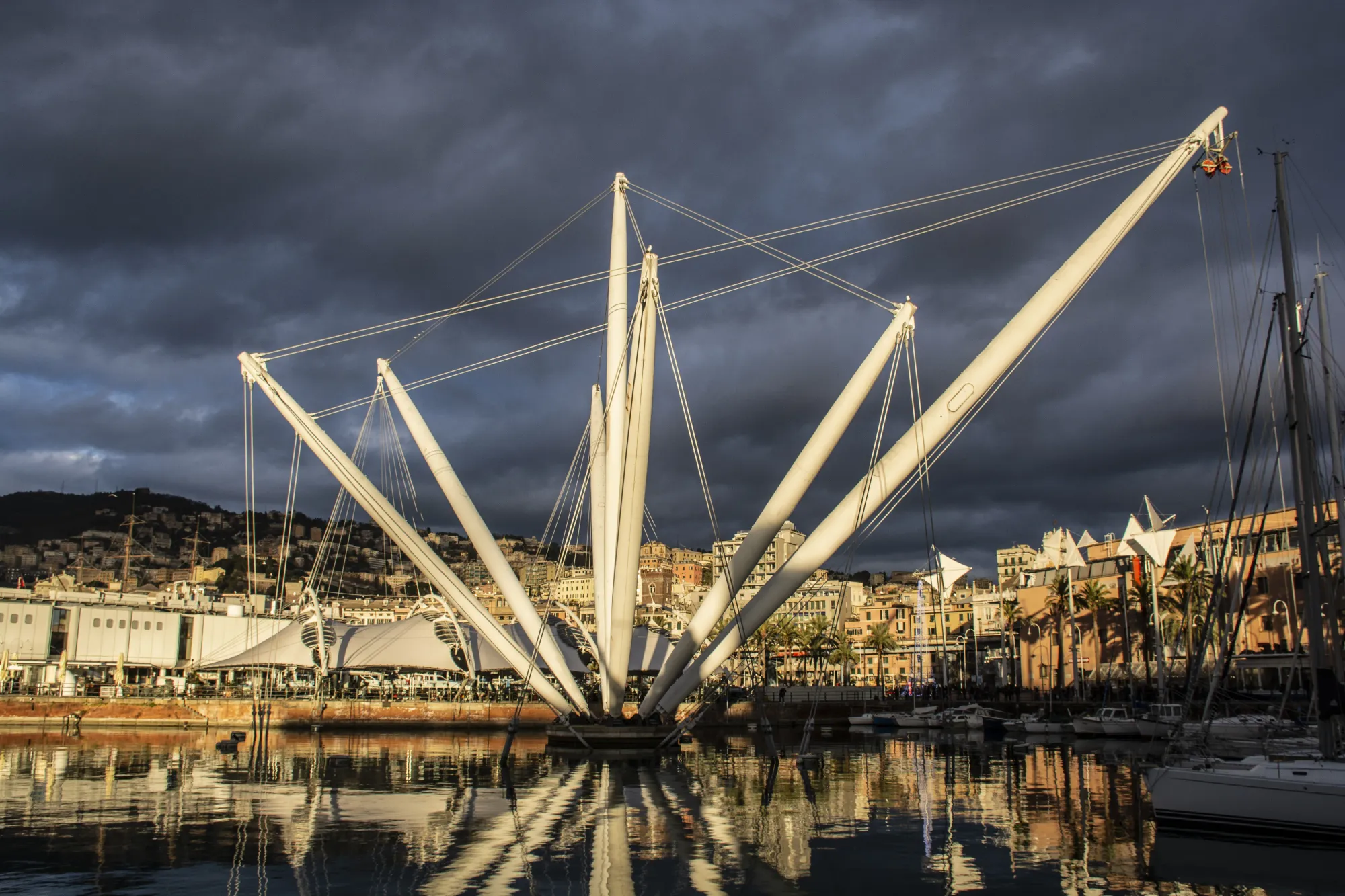
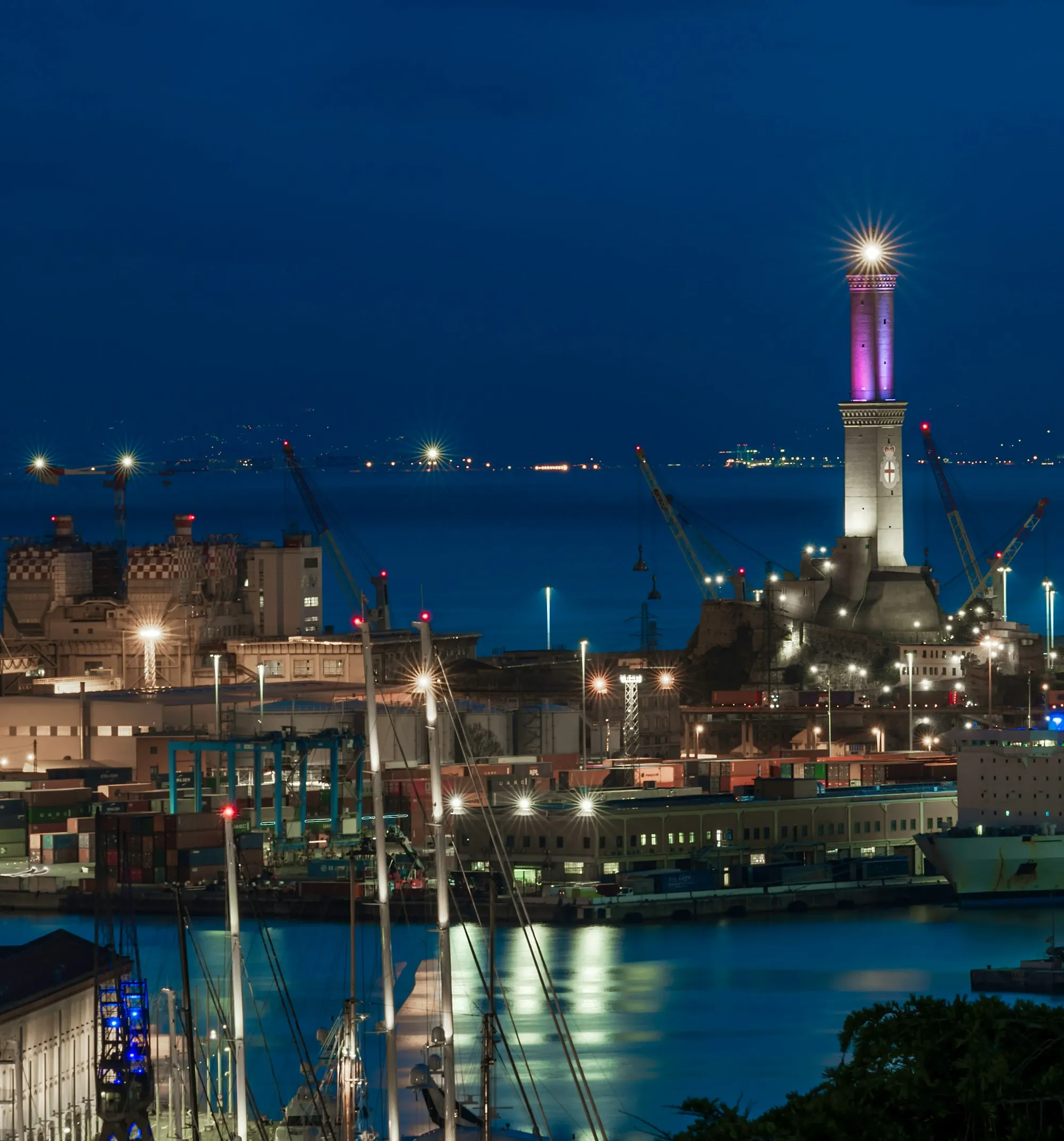
Alongside it, Piano's Bigo — a crane-like panoramic lift — rises above the harbour, giving you views over the port and the city climbing the hillside behind it. A short walk east along the waterfront brings you to the Lanterna, Genoa's 77-metre lighthouse, one of the oldest working lighthouses in the world and visible from 30 kilometres out to sea.
At the far end of the Porto Antico, past the old sea walls, there is a traditional bathing area — lidos and platforms built into the rocks at the water's edge — where locals swim in summer.
Moving Around the City — Funiculars and Lifts
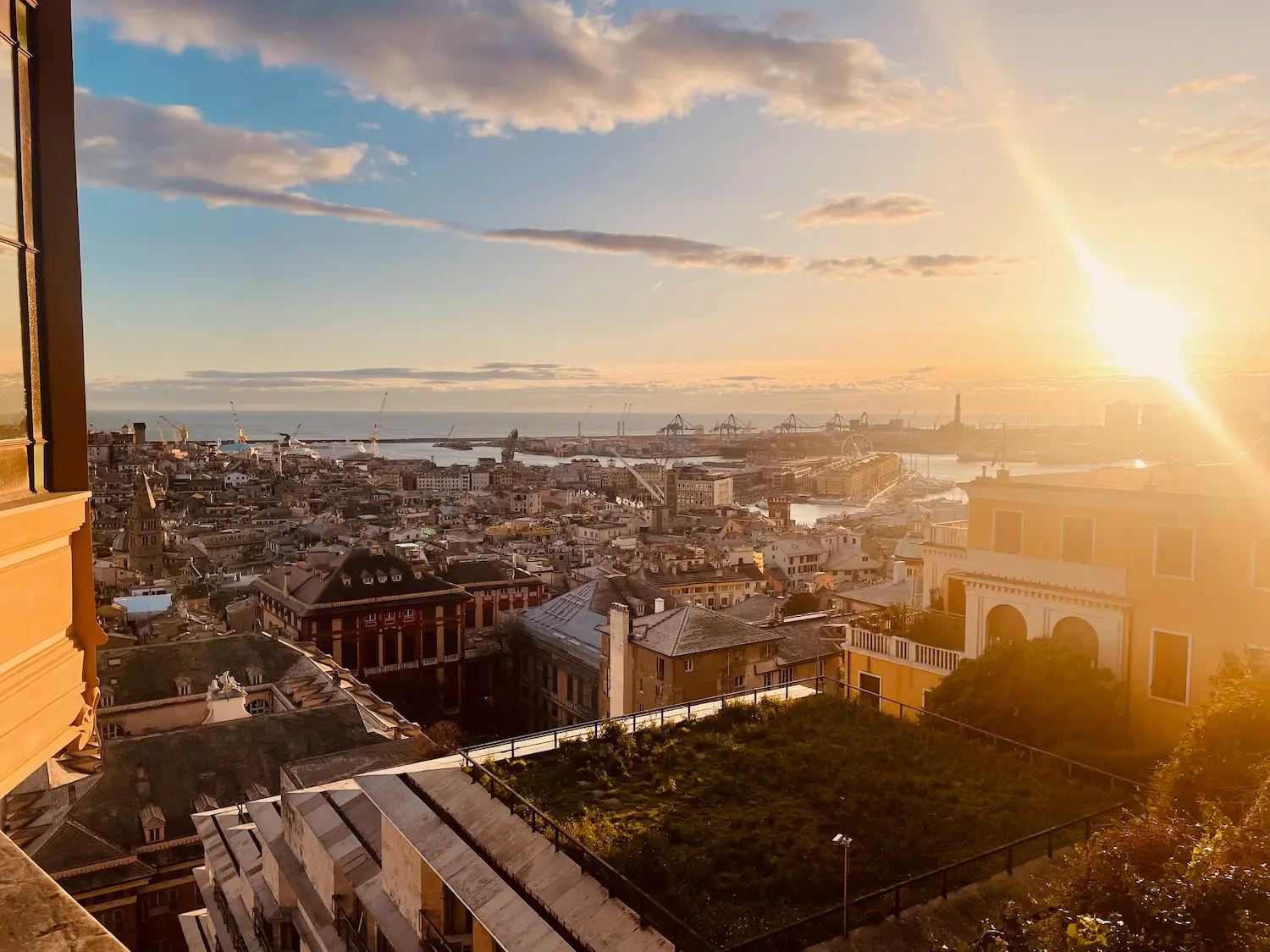
Genoa is built on a hillside. The historic centre rises steeply from the port, and getting between levels is part of the experience. The city has an extraordinary network of funiculars, lifts and escalators — some dating from the art nouveau period — that carry you up between the port district, the medieval quarter and the residential hillside above.
The Funicolare Zecca–Righi runs from near the old city walls up to the Righi neighbourhood at the top of the hill, with views over the rooftops and the sea. The Ascensore del Castello and several other public lifts connect the lower and upper levels of the city. The Belvedere Castelletto — reached by a short funicular — gives you arguably the best panoramic view of Genoa, looking down over the caruggi and the port to the sea beyond.
These are not tourist attractions — they are the ordinary daily transport of a city built on a hill, used by residents going to work and coming home.
Piazza De Ferrari and the City Centre
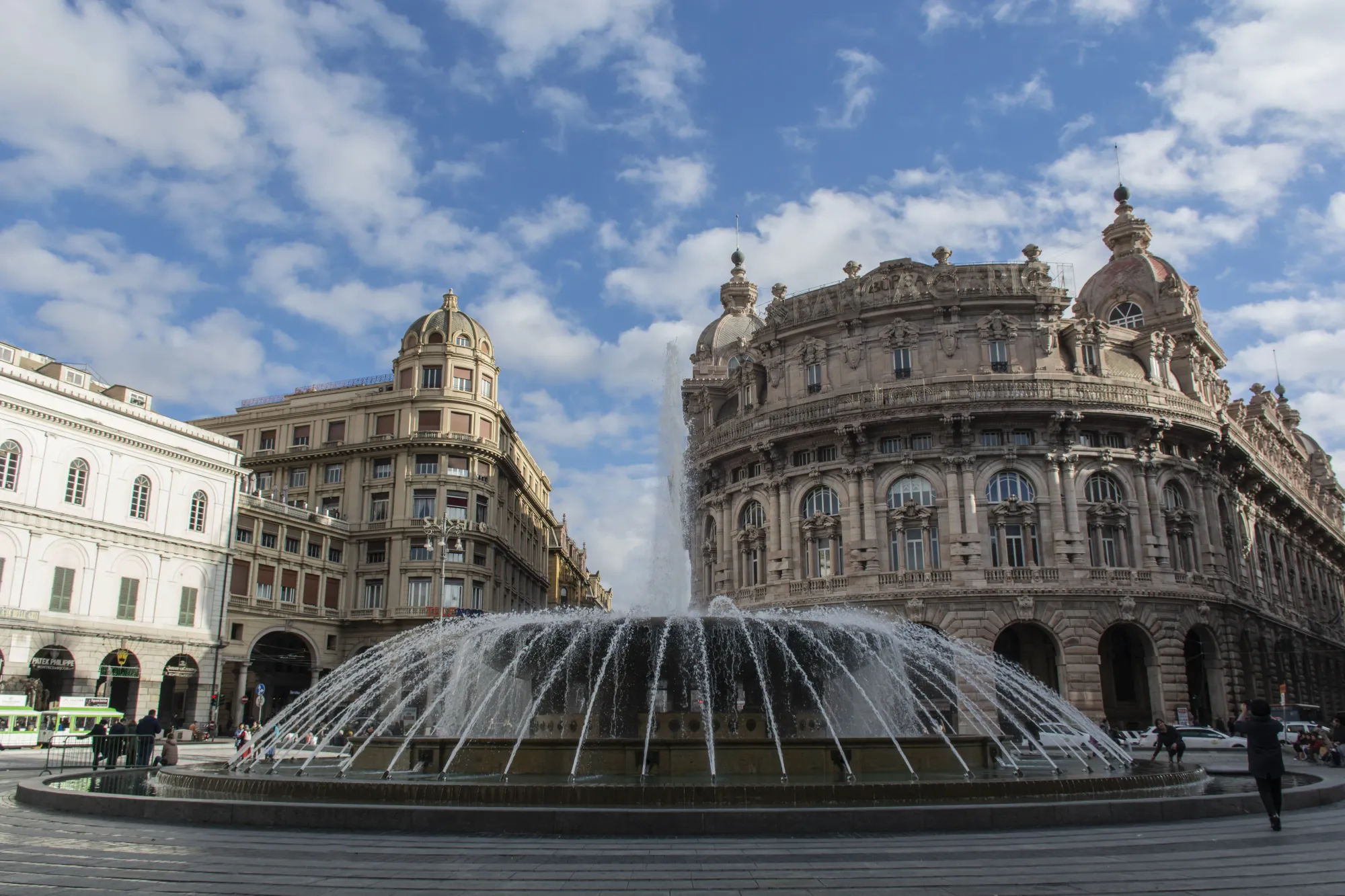
Piazza De Ferrari is Genoa's central square — a large, elegant space anchored by a dramatic bronze fountain and surrounded by significant buildings. The Teatro Carlo Felice, the city's opera house, occupies one side. The Palazzo della Borsa Valori — Genoa's former stock exchange, now a cultural venue — faces it with an extraordinary art nouveau facade.
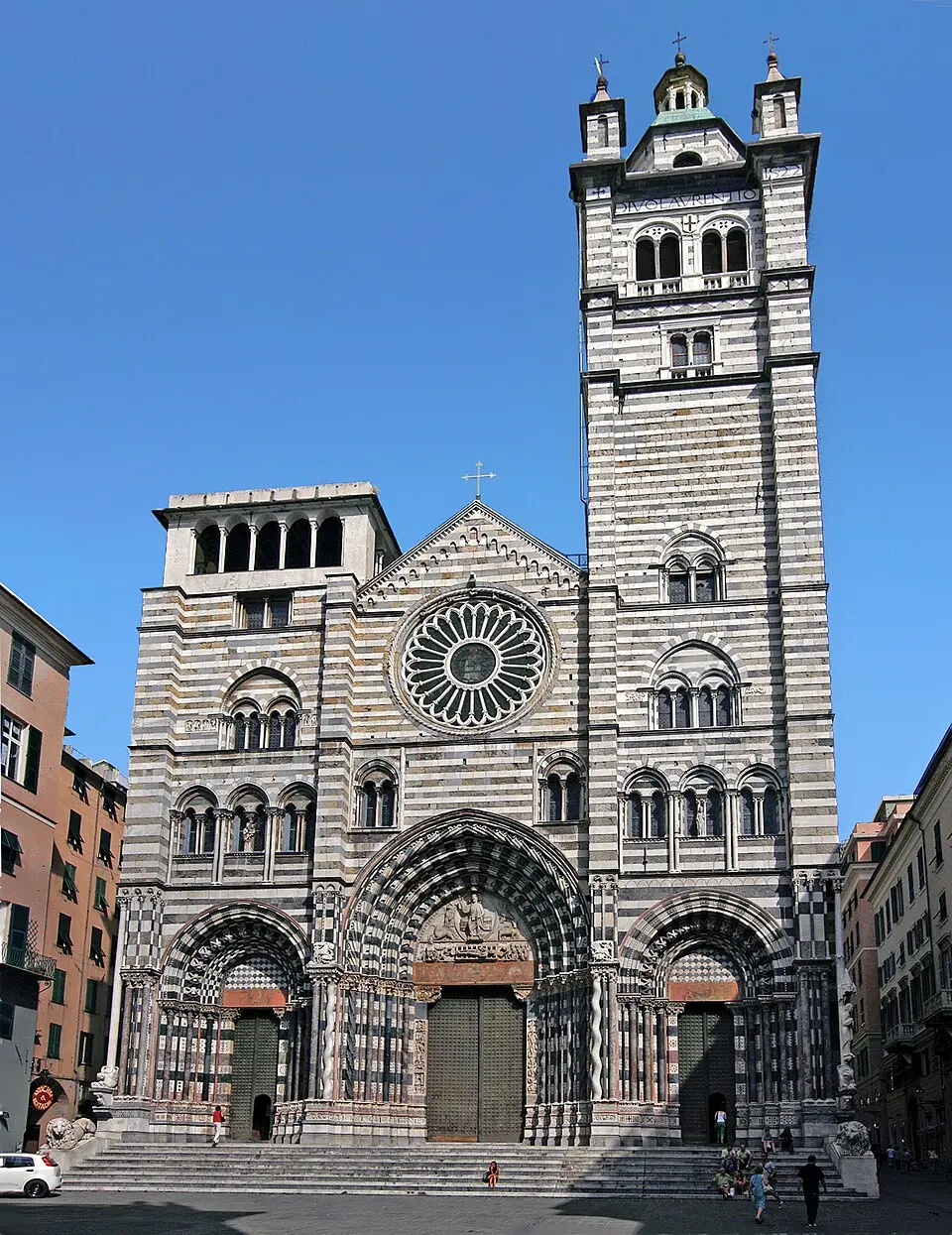
A short walk away, the Cattedrale di San Lorenzo is Genoa's cathedral — a remarkable striped Romanesque-Gothic building in black and white marble that dates from the 12th century. The treasury museum inside contains some of the most extraordinary medieval ecclesiastical objects in Italy, including a plate that legend holds was used at the Last Supper.
A Note on Christopher Columbus and Jeans
Two things were born in Genoa that shaped the modern world.
Christopher Columbus was Genoese — born in the city around 1451, though the exact location is disputed. The house identified as his birthplace (Casa di Colombo) is in the old city near Porta Soprana, and the Galata Museo del Mare, the maritime museum on the old port, tells the full story of Genoa's extraordinary seafaring history.
Denim — the fabric from which jeans are made — also originates here. Genoa (known in French as Gênes) was a major producer of a heavy cotton twill fabric used for sailors' trousers, which became known as "Gênes cloth" in English, eventually shortened to "jeans." The rough workwear of Genoese sailors became, several centuries later, the most widely worn garment in the world.
The Mercato Orientale
Genoa's indoor market is one of the finest in Italy and almost entirely unknown outside the city. It occupies a beautiful 19th-century structure — circular in plan, with a domed iron roof — and contains every kind of food stall: vegetables, fish, meat, cheese, dried goods, focaccia, street food. The quality is exceptional and the atmosphere is entirely local.
Inside the market, the MOG (Mercato Orientale Genova) area has been developed as a food hall with bars and restaurants — a good option for lunch if you want to sample several different Genoese specialities in one sitting.
Genoese Food — Unlike Anywhere Else in Italy
Genoa's food is distinctive and deeply rooted in its history as a trading port that imported ingredients from across the Mediterranean while developing its own hyper-local specialities from the surrounding Ligurian hills.
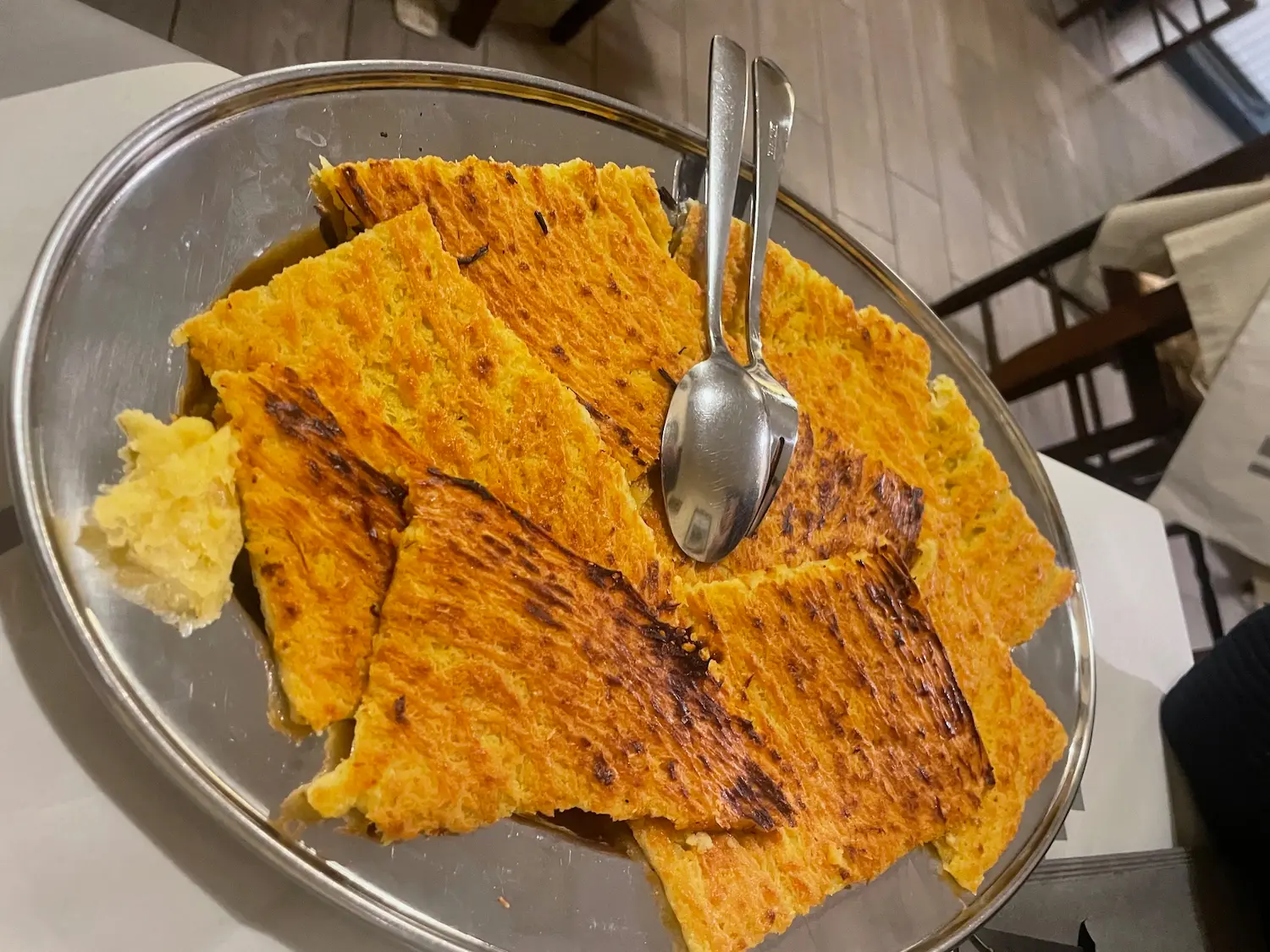
Farinata is the dish to try first — a thick chickpea pancake cooked in a wood-fired oven in a large copper pan, sold by the slice and eaten standing at a counter. Simple, ancient and extraordinarily good. It dates from at least the 13th century and remains entirely a local speciality — you won't find it in Milan or Rome.
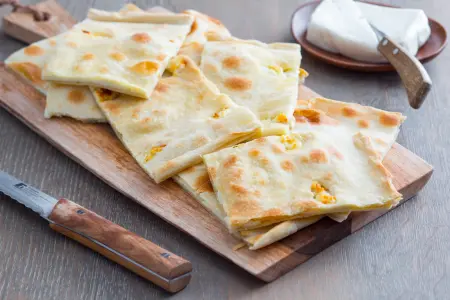
Focaccia here is different from the focaccia of the rest of Italy — thinner, oilier, more savoury, with a crispness at the edges that the softer versions elsewhere don't have. The focaccia col formaggio from Recco (a town just outside Genoa) is even better — two thin layers of dough filled with fresh cheese, baked until the top blisters. Find it at any decent bakery in the centre.
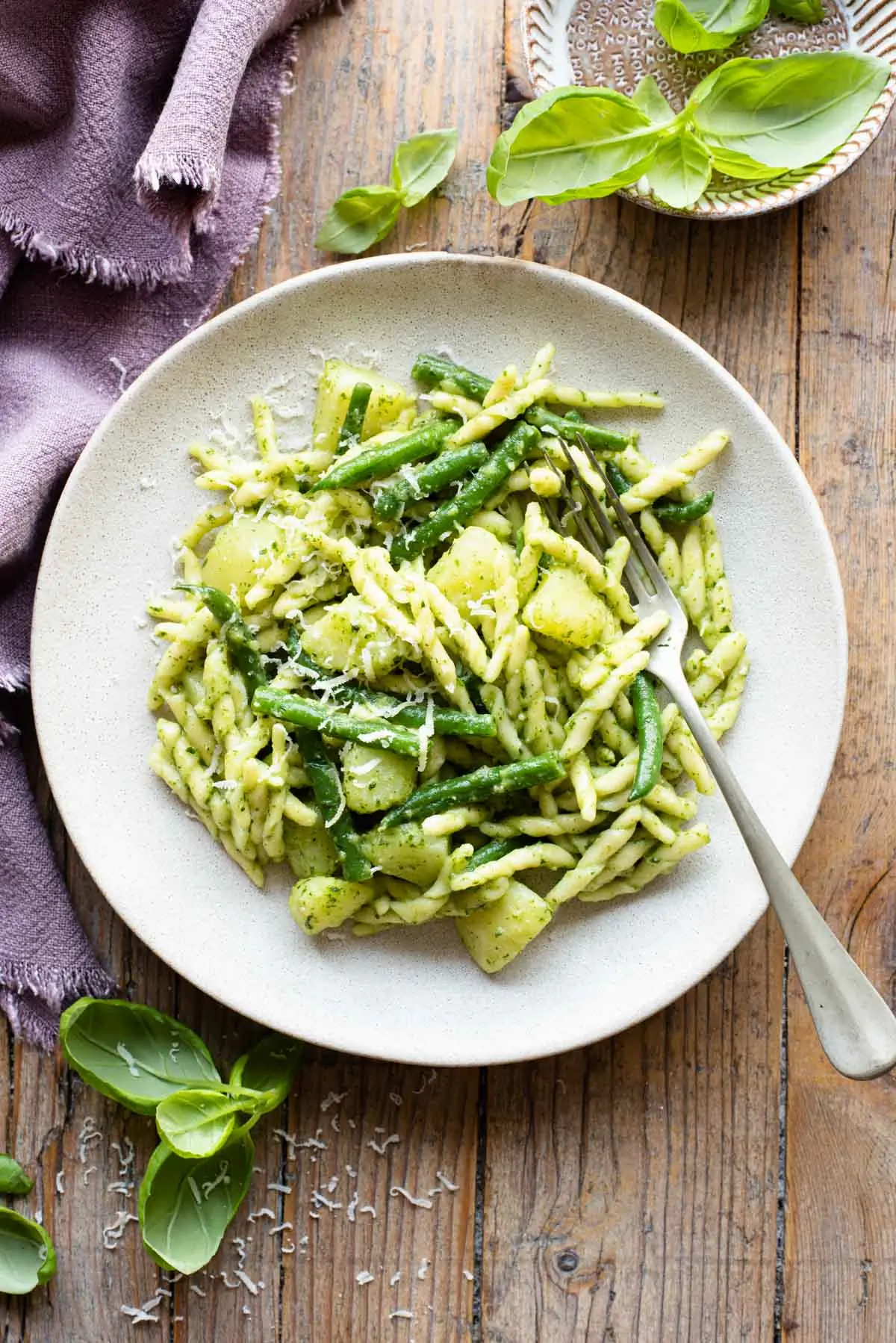
Pesto was invented here — the original is made with Ligurian basil, Ligurian olive oil, Parmigiano, Pecorino, pine nuts and garlic, ground by hand in a marble mortar. The version you eat in the caruggi bears no resemblance to the jarred variety. It is served on trofie pasta, a short twisted shape made specifically to hold the sauce, alongside potatoes and green beans. One of the best traditional trattorias in the centre for pesto pasta is Cavour modo21.
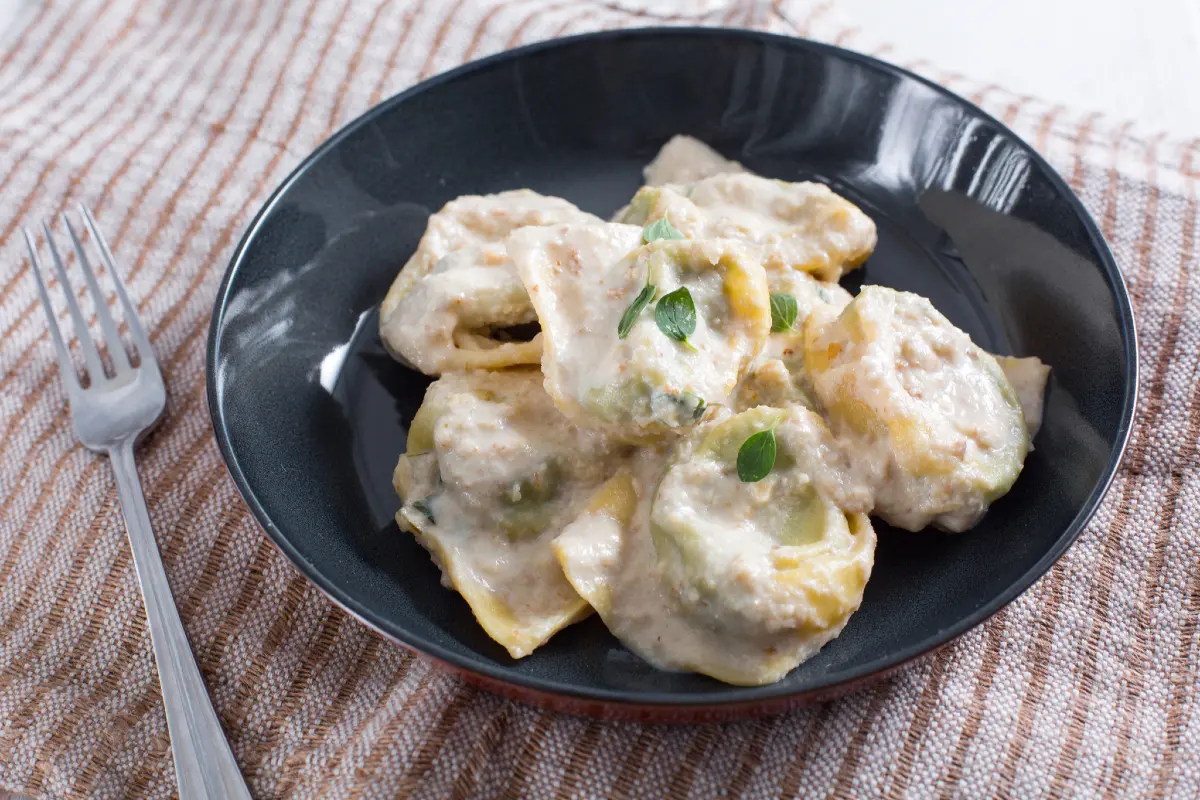
Seafood reflects the port — fried anchovies, stuffed mussels, baccalà in multiple preparations. Genoese cooking was historically a cucina povera — food of the poor — and vegetables feature more prominently than in many other Italian cuisines: stuffed vegetables (ripieni), vegetable tortes and herb-filled pasta are all characteristic.
Boccadasse — Cinque Terre Without the Crowds
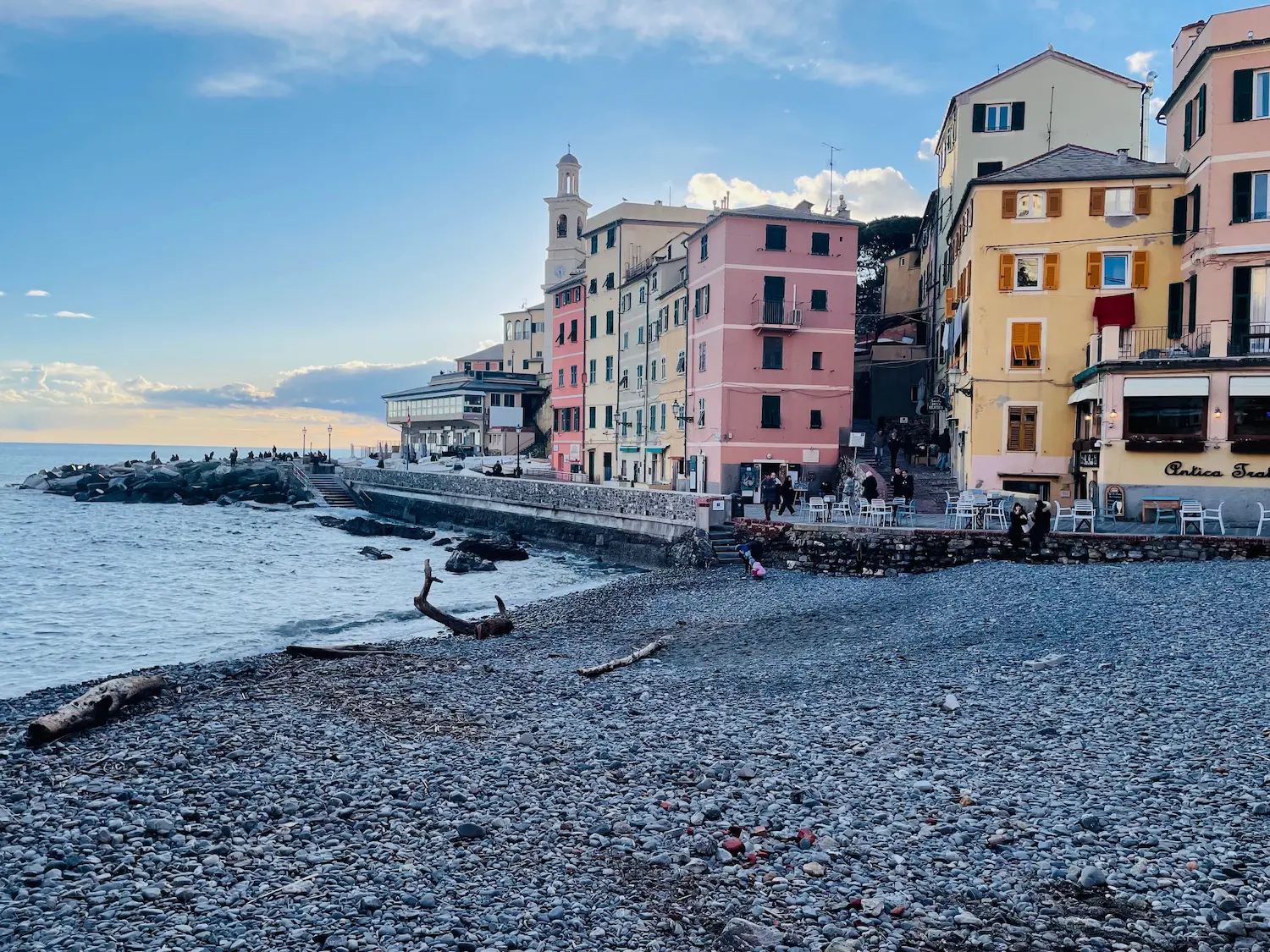
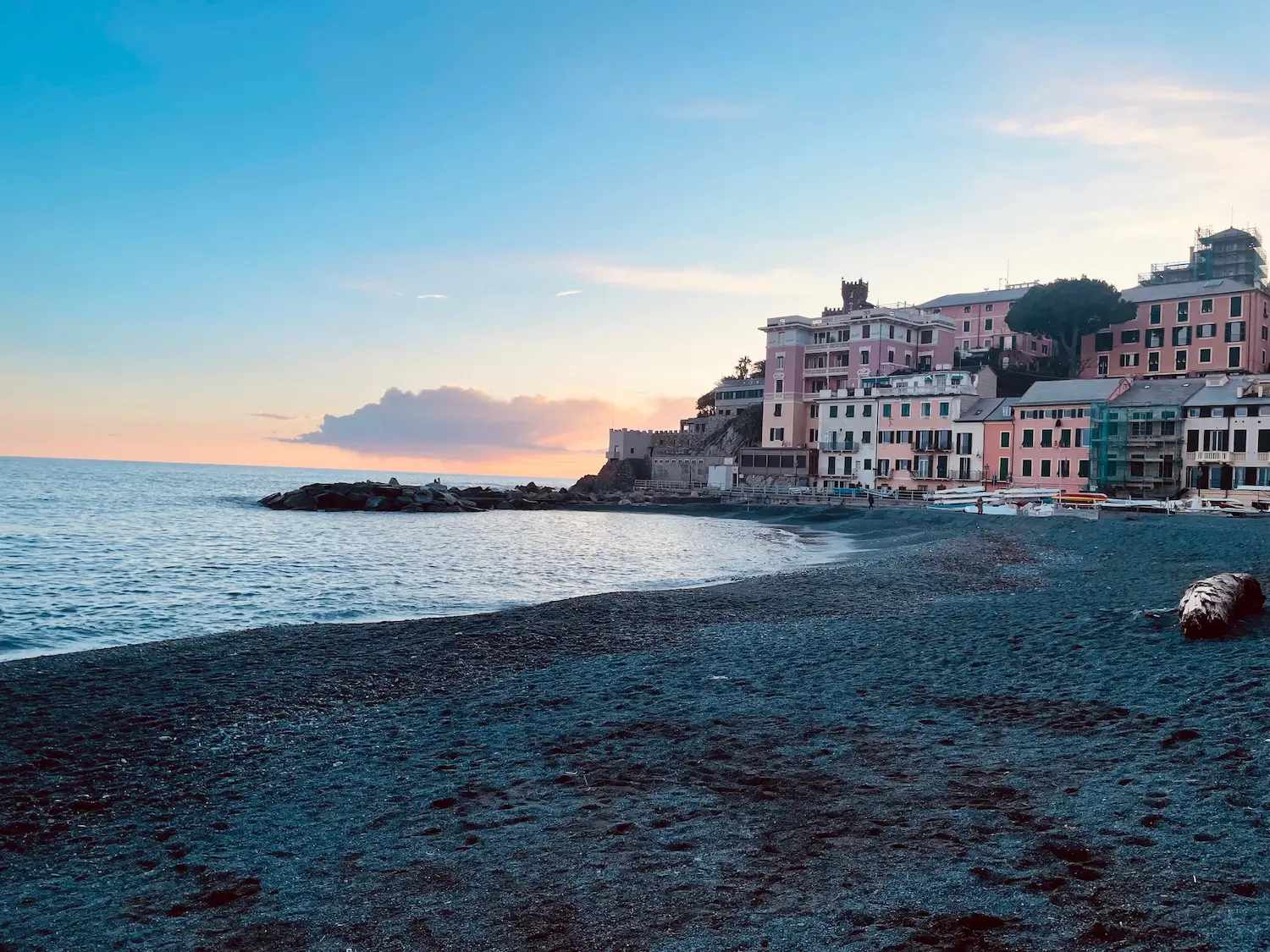
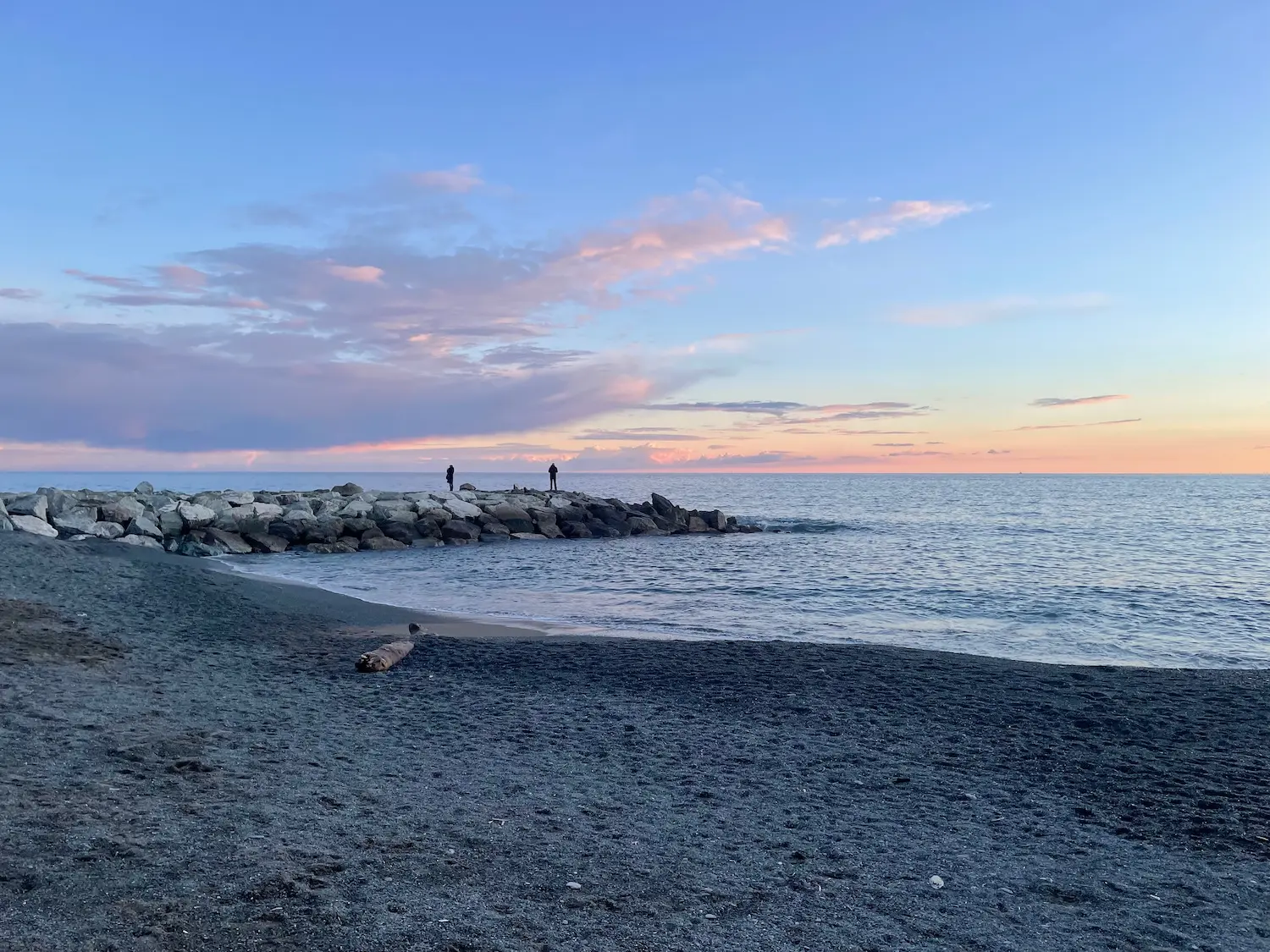
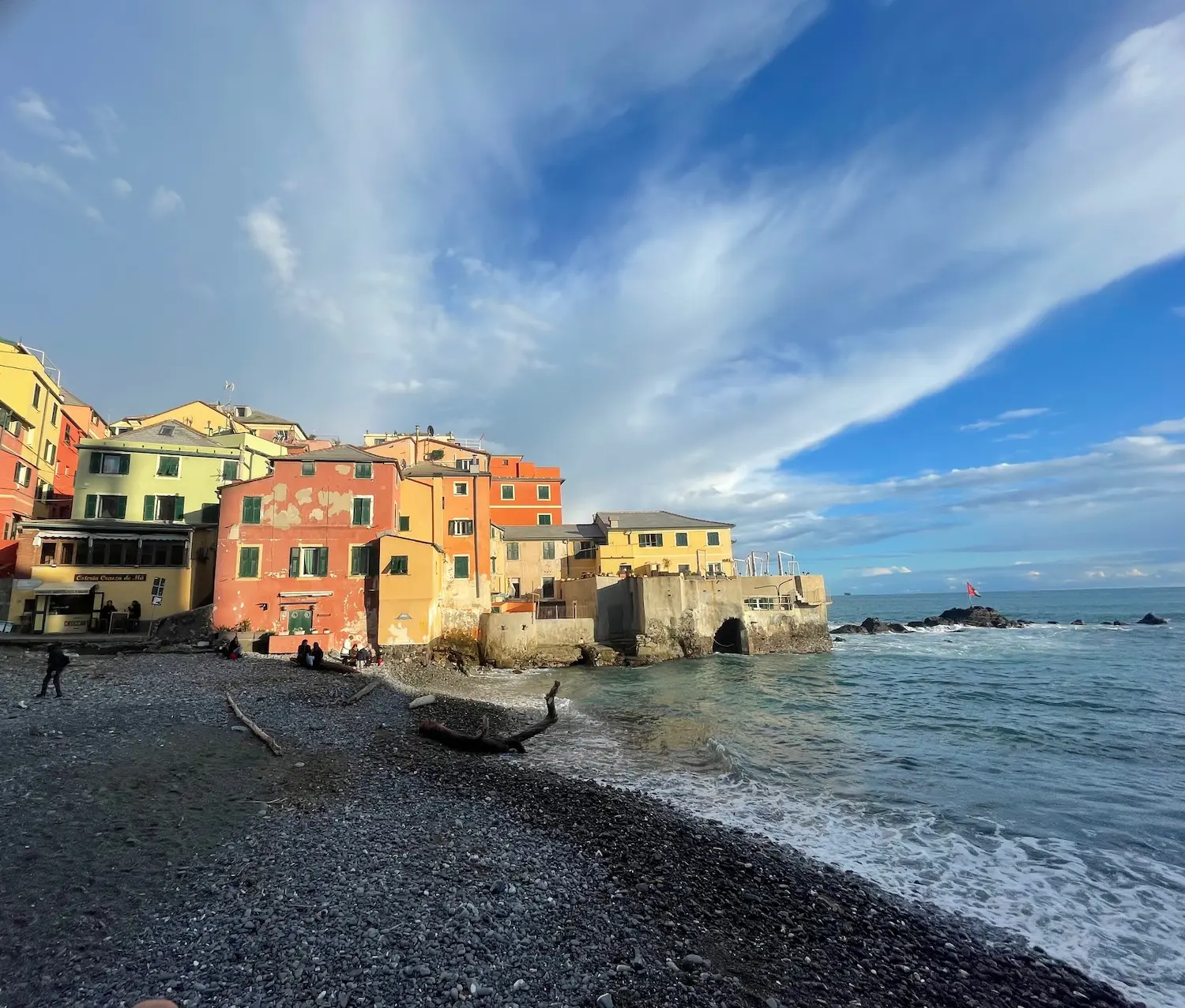
Boccadasse — Genoa's fishing cove, 20 minutes by bus from the city centre.
Boccadasse is a small fishing cove at the eastern end of Genoa's main promenade, Corso Italia — reachable by bus number 31 from Piazza Brignole (buy tickets on the AMT app and activate them before boarding). The journey takes around 20 minutes.
What you find there is a cluster of colourful stacked houses around a small pebble beach, fishing boats pulled up on the shore, restaurants and ice cream shops along the waterfront. It looks almost exactly like a Cinque Terre village — the same Ligurian palette of ochre, terracotta and faded yellow — but with a fraction of the visitors and a genuinely local atmosphere.
Sit on the rocks with a cone of fried food and a glass of local white wine and watch the boats.
Combining Genoa With Other Destinations
Genoa and Cinque Terre: Genoa and the Cinque Terre are both on the Ligurian coast, connected by one of Italy's most scenic railway lines. The journey to La Spezia takes around one hour 15 minutes, and from La Spezia the Cinque Terre Express connects all five villages. Genoa makes a natural base for a Ligurian trip — spend a day in the city and a day or two in the villages. See our complete Cinque Terre guide for the villages and our Cinque Terre train tickets guide for how to get around.
Genoa and Milan: 90 minutes apart — an easy day trip in either direction. Combine with our day trips from Milan guide for a broader northern Italy itinerary.
Practical Information
Getting around: The city centre is walkable but hilly. The metro runs from Piazza Principe to Brignole and is useful for crossing between the two stations. Buses cover the wider city. The AMT app allows you to buy bus tickets on your phone — buy before you board and activate when you get on. The funiculars and lifts are covered by the same tickets.
Where to stay: The medieval quarter (the caruggi) is the most atmospheric base. It can feel isolated after dark in some areas but is generally safe and puts you in the heart of the best of the city.
Day trip or overnight? Genoa rewards at least one night. The city changes character in the evening — the caruggi quieten, the restaurants fill with locals, and the Porto Antico takes on a different quality. But a full day from Milan is enough to get a genuine sense of the city.
Frequently Asked Questions
What is Genoa famous for?
Genoa is famous for several things that shaped the modern world more than most people realise. It was the birthplace of Christopher Columbus, born in the city around 1451. It is the origin of denim — the heavy cotton fabric made here for sailors' trousers became known in English as "Gênes cloth," eventually shortened to jeans. It invented pesto, the original version made with Ligurian basil ground by hand in a marble mortar.
And it was, during the 16th and 17th centuries, one of the most powerful financial cities in Europe — the merchant families who financed the Spanish crown built the Renaissance palaces of the Strade Nuove, now a UNESCO World Heritage Site. For a city so little visited by international tourists, its fingerprints are everywhere.
Is Genoa worth visiting?
Genuinely yes — and emphatically so if you've already seen Rome, Florence and Venice. Genoa is one of the most historically significant cities in Italy, with a UNESCO World Heritage historic centre, extraordinary food, and almost no mass tourism.
How do I get to Genoa from Milan by train?
Trenitalia Intercity and regional trains from Milano Centrale reach Genova Piazza Principe in around one hour and thirty minutes. Buy tickets at the station or via Trenitalia or Trainline. Seat reservation is included with Intercity tickets — no separate booking needed.
Can I combine Genoa with Cinque Terre?
Yes — and it's one of the best combinations on the Ligurian coast. Genoa to La Spezia takes around one hour 15 minutes by regional train. Spend a day in Genoa and a day or two in the Cinque Terre villages. See our Cinque Terre guide for full details.
What are the Palazzi dei Rolli?
The Palazzi dei Rolli are a group of Renaissance and Baroque merchant palaces built by Genoa's noble families during the 16th and 17th centuries, when the Republic of Genoa was one of the most powerful financial powers in Europe. In 1576, the Senate decreed they should be used to host visiting state dignitaries. 42 of the surviving palaces are now a UNESCO World Heritage Site. Several are open as museums; others open twice yearly during the Rolli Days events.
What should I eat in Genoa?
Start with farinata — the chickpea pancake cooked in a copper pan, sold by the slice. Then focaccia, which is different here from anywhere else in Italy. Trofie al pesto is the essential pasta dish. For something more substantial, look for stuffed vegetables, baccalà or any of the fried seafood available along the port.
What is Boccadasse?
Boccadasse is a small fishing cove at the eastern end of Genoa's seafront promenade — colourful houses, a pebble beach, fishing boats, ice cream and local restaurants. It looks like a miniature Cinque Terre village and is reachable by bus from the centre in around 20 minutes. Take bus 31 from Piazza Brignole, buy your ticket on the AMT app and activate it before boarding.
Is Genoa safe to visit?
Yes. The caruggi (medieval alleyways) can feel isolated after dark in some areas — use the main routes rather than the darkest side streets at night. By day the whole city is straightforward and pleasant to walk.
Also on The Unseen Italy: Cinque Terre by Train · Day Trips from Milan by Train · How Italy's Train Network Works