Verona is up to an hour and fifteen minutes from Milan, Bologna, and Venice by fast train — a 2,000-year-old Roman amphitheatre still hosting opera under the stars, medieval piazzas, Shakespeare's balcony and some of the best wine in Italy. One of the most rewarding day trips in northern Italy.
Last verified: April 2026. Opera season dates, ticket prices and opening times change annually. Always check official sources before booking.
Verona has been drawing visitors for two thousand years and it's not hard to see why. A Roman amphitheatre hosts opera every summer. Medieval squares open onto frescoed palaces. A bridge built in 100 BC crosses the Adige River. And somewhere between the ancient stones and the excellent local wine, you start to understand why Shakespeare set his greatest love story here.
It is an easy trip from Milan, Bologna, Venice, and Florence by fast train, compact enough to cover on foot, and layered enough to reward anyone who slows down and looks beneath the surface.
At a Glance
| 🚆 Milan to Verona | Trenitalia or Italo — approx. 1 hour 15 minutes, Fast train ~€35, with slower trains taking 1 hour 40 mins from ~€13 |
| 🚆 Bologna to Verona | Regional or fast train — approx. 1 hour, from ~€15 |
| 🚆 Venice to Verona | Fast train — approx. 1 hour 15 minutes, from ~€10 |
| 🚆 Florence to Verona | Fast train — approx. 1 hour 40 minutes, from ~€40 |
| 🎭 Opera season | June – September — book well in advance |
| 🏛️ UNESCO status | Verona's historic centre designated World Heritage Site in 2000 |
| 🗺️ Getting around | Entirely walkable — train station is 15 minutes' walk from the Arena |
| 📅 Best time | Summer for opera; spring and autumn for fewer crowds |
Getting to Verona by Train
Verona sits on the main high-speed rail corridor connecting Milan, Bologna, Florence and Venice — which makes it one of the most accessible cities in northern Italy from multiple directions.
From Milan: Trenitalia (Frecciarossa) and Italo fast trains from Milano Centrale reach Verona Porta Nuova in around one hour and fifteen minutes. Tickets start from around €13 booked in advance and rise significantly closer to departure — book early. Services run roughly every 30 minutes throughout the day.
From Bologna: Around one hour by fast train or slightly longer on regional services. An excellent day trip from Bologna, or a natural stop between Bologna and Venice.
From Venice: One hour fifteen minutes by fast train — Verona and Venice combine beautifully into a single day if you're based in one and want to see the other, though two days is more comfortable.
From Florence: Around one hour forty minutes — slightly longer, but entirely doable as a day trip for anyone with an early start.
From Padua: Around 45 minutes away - see our guide to getting to Padua by train
Buy tickets via Trenitalia, Italo or Trainline. Fast train tickets are for specific trains and seats — no ticket validation is required. From Verona Porta Nuova station, the Arena and city centre are a fifteen-minute walk straight up Corso Porta Nuova.
For a full guide to how Italian trains work, see our Italy train network guide.
The Arena di Verona — the Reason Most People Come
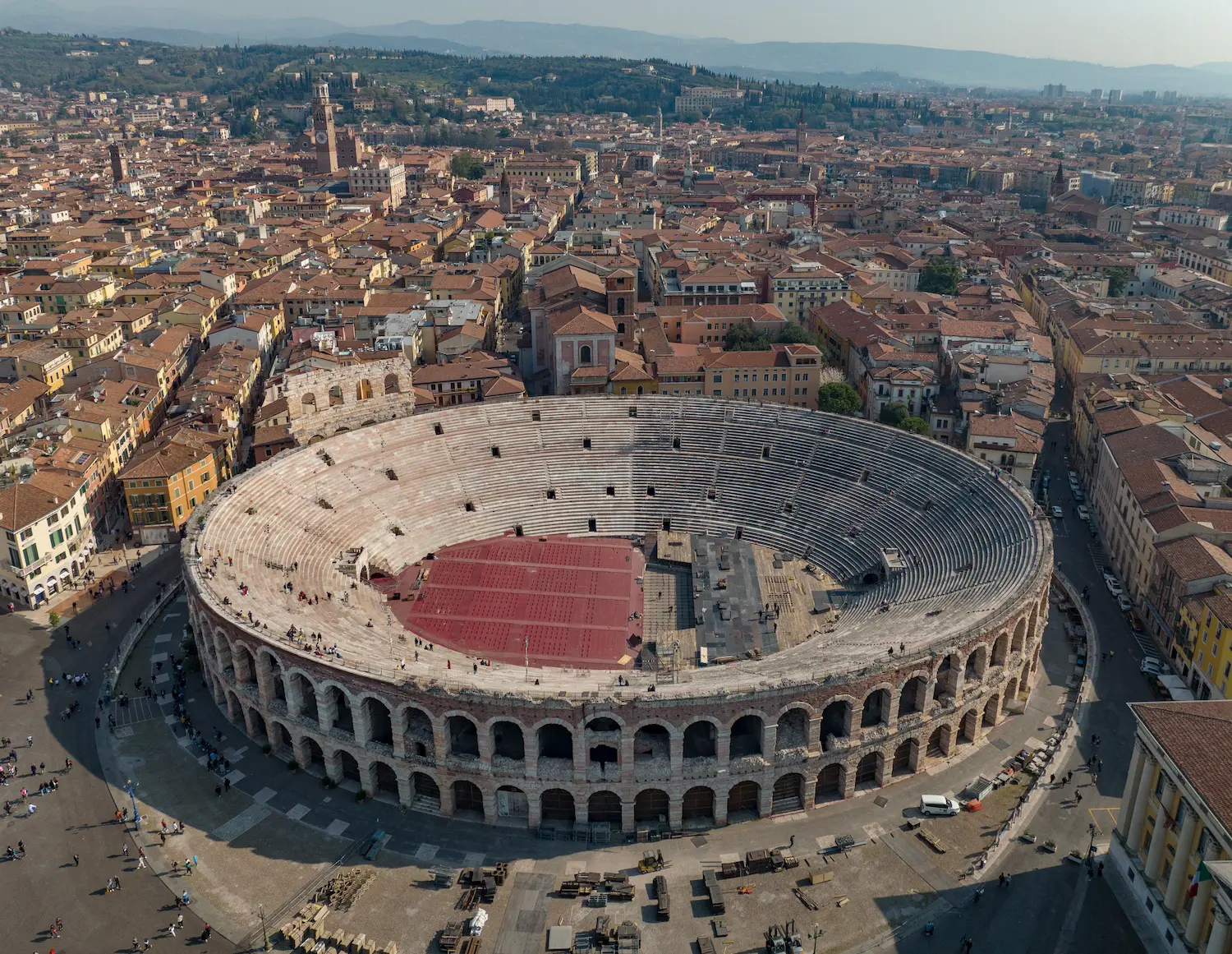
The Arena di Verona is a Roman amphitheatre built around 30 AD — one of the largest and best-preserved in the world. It holds up to 15,000 people and has been in continuous use for two millennia, from gladiatorial combat to, since 1913, opera.
Standing inside it during the day — walking the stone tiers, looking down at the vast stage — gives you a genuine sense of its scale. The pink and white limestone has weathered beautifully. The acoustics are beautiful.
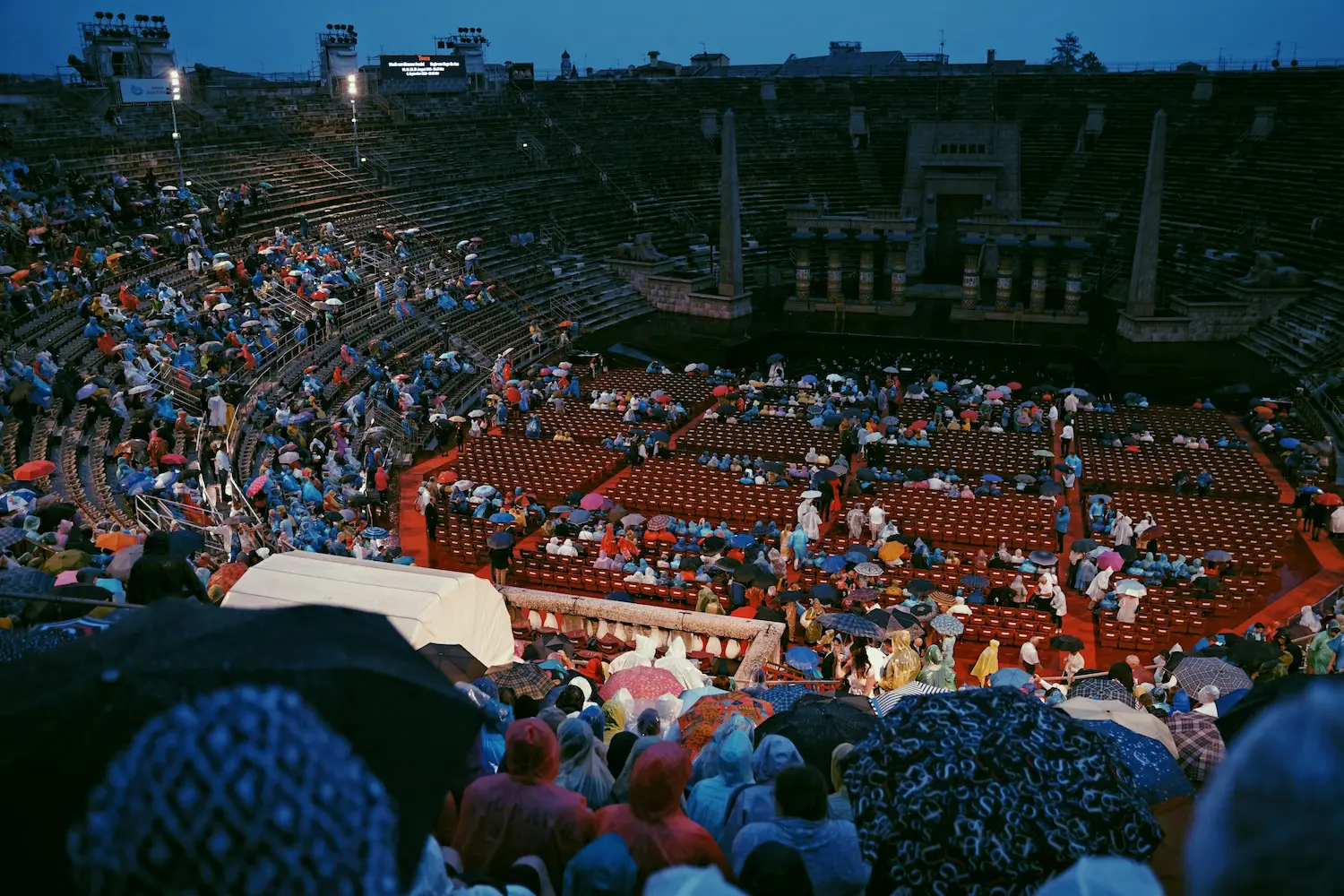
By night, during the summer opera season, it becomes something else entirely. I watched Madama Butterfly here — sitting on the warm ancient stone, the stage filling the full floor of the arena, the cast in full period costume, the evening air carrying the sound up through the seating tiers. The seats are unpadded stone — bring a cushion, which you can hire at the venue — but you'll soon forget the discomfort. It's one of those evenings that stays with you.
The 2026 Opera Festival runs 12 June to 12 September. The programme this year includes La Traviata, Aida (two different productions), Nabucco, La Bohème and Turandot — the latter celebrating its 100th anniversary. Tickets range from around €30 for unreserved upper stone seats to €150 and above for prime stalls positions. Book directly at arena.it — premiere nights and weekend performances sell out months in advance.
Daytime entry costs €12 and is worth doing even if you're not attending an opera — the interior is extraordinary and the museum context adds depth. You can buy tickets on the official ticket site (which believe me, is not easy to find online) to guarantee your spot ahead of time.
The scenery outside — a hidden attraction in itself
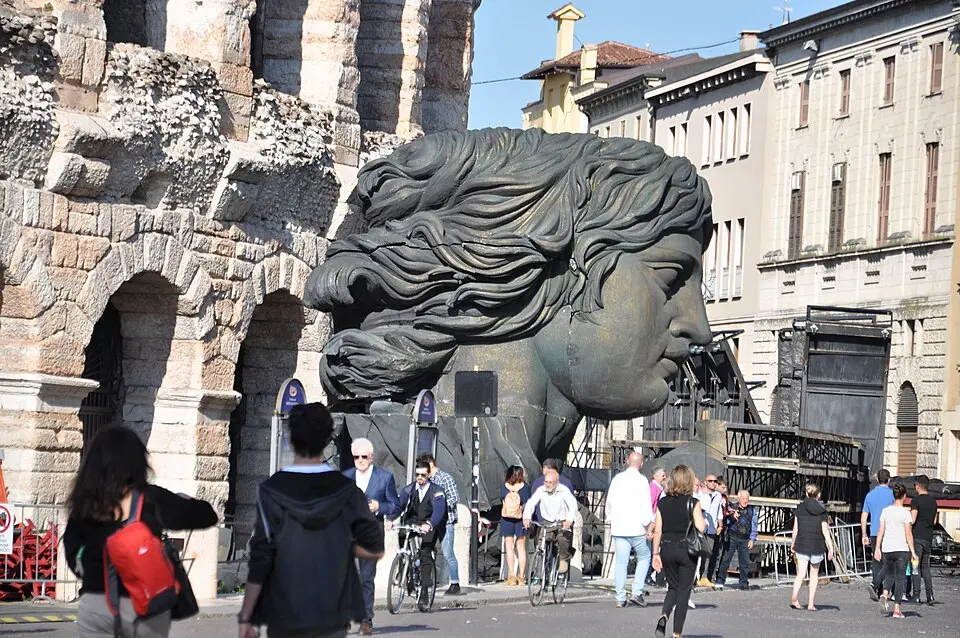
One of the things that surprised me most about the Arena was what surrounds it in the streets. The sets and scenery from previous and upcoming productions are stored and displayed on the streets outside — vast painted backdrops, ornate props, architectural elements from different operas stacked against the walls and along the pavements. It's a free and completely unplanned open-air exhibition, and guessing which opera each piece belongs to is a fun game to play. Look for the Egyptian columns from Aida, the Paris rooftops from La Bohème.
Juliet's House and Statue — Shakespeare's Verona
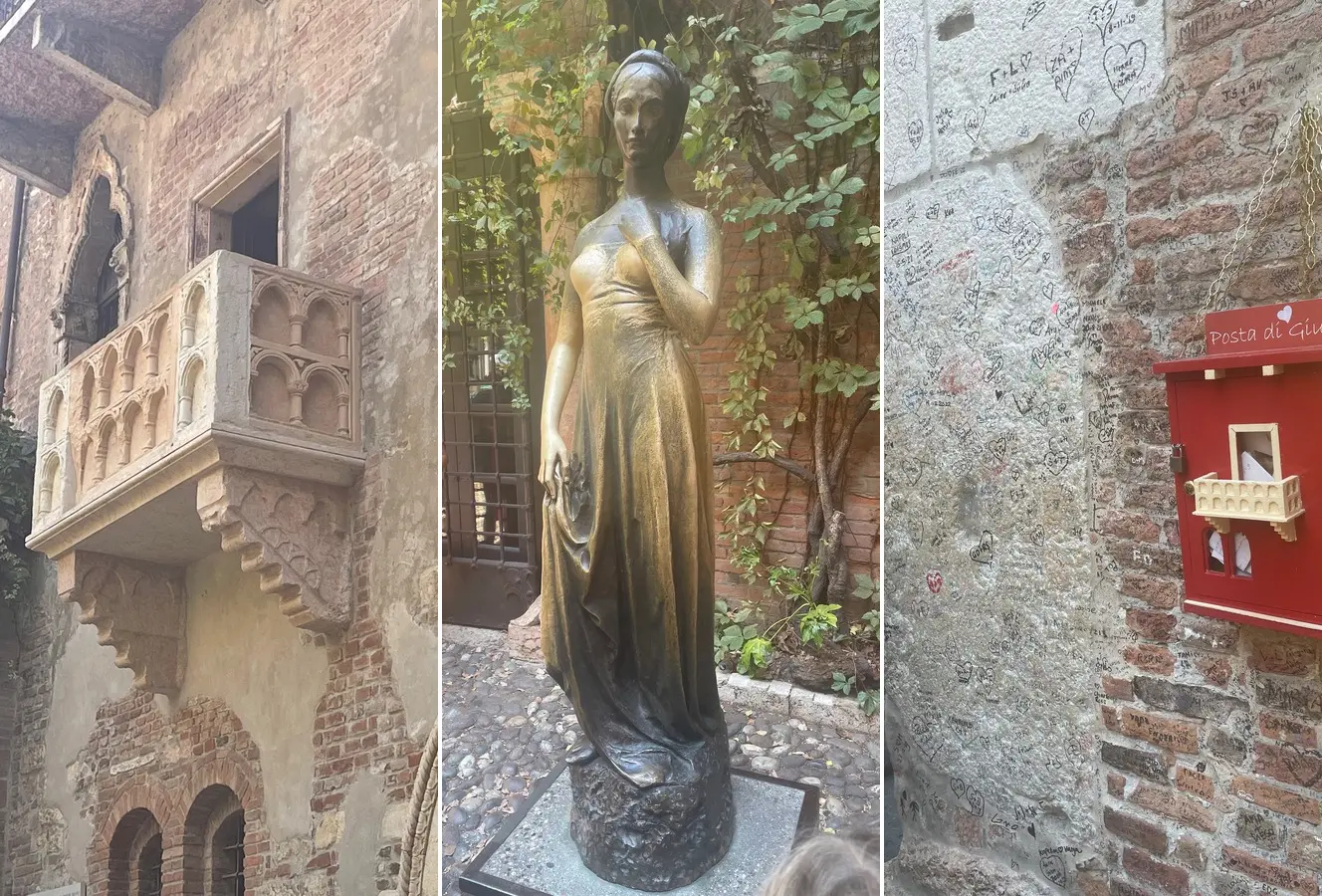
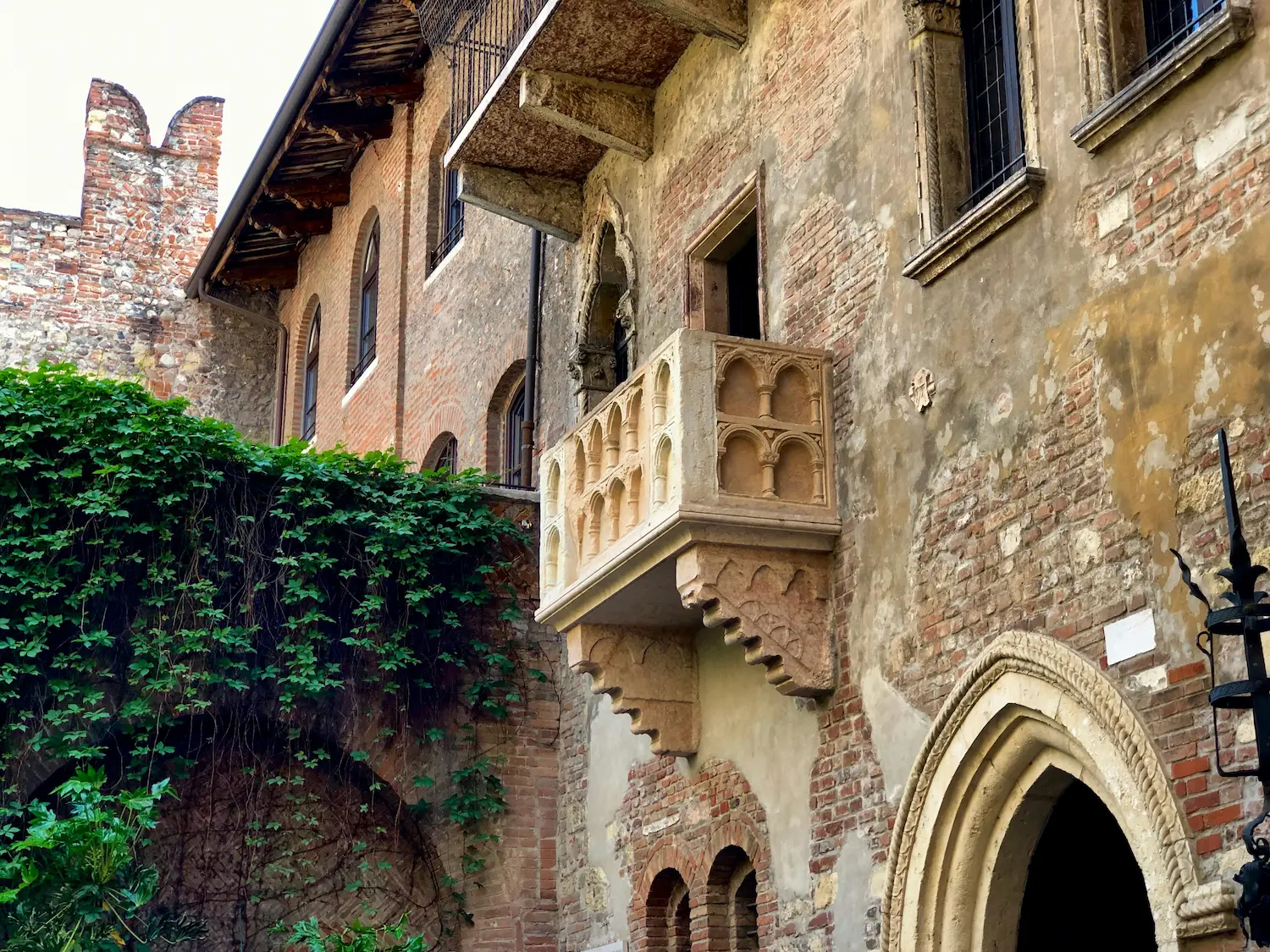
Casa di Giulietta on Via Cappello is a 13th-century palazzo that Verona has embraced as the home of Shakespeare's Juliet. The famous balcony — added in 1936, centuries after the play was written — overlooks a small courtyard that is perpetually crowded with visitors leaving love notes on every surface and queuing to photograph themselves beneath it.
It is, unambiguously, a tourist attraction built around a fictional character. But it is still worth going.
The bronze statue of Juliet in the courtyard has been rubbed so many times by visitors seeking luck in love that her right breast has been polished to a high shine. The love notes covering every inch of the courtyard walls have become their own art installation. Go early to avoid the worst of the crowds.
The nearby Juliet's Tomb (Tomba di Giulietta), a short walk south, is quieter and more atmospheric — a plain stone sarcophagus in a medieval crypt beneath a convent, surrounded by the letters Romeo and Juliet continue to inspire. Entry is €6. You can book tickets on the official Verona museums site.
The Piazzas — the Heart of the City
Piazza Bra is Verona's largest square and the first thing you reach from the station. The Arena dominates one side. The rest is lined with cafes, restaurants and elegant nineteenth-century buildings. The pink marble paving glows in the evening light.
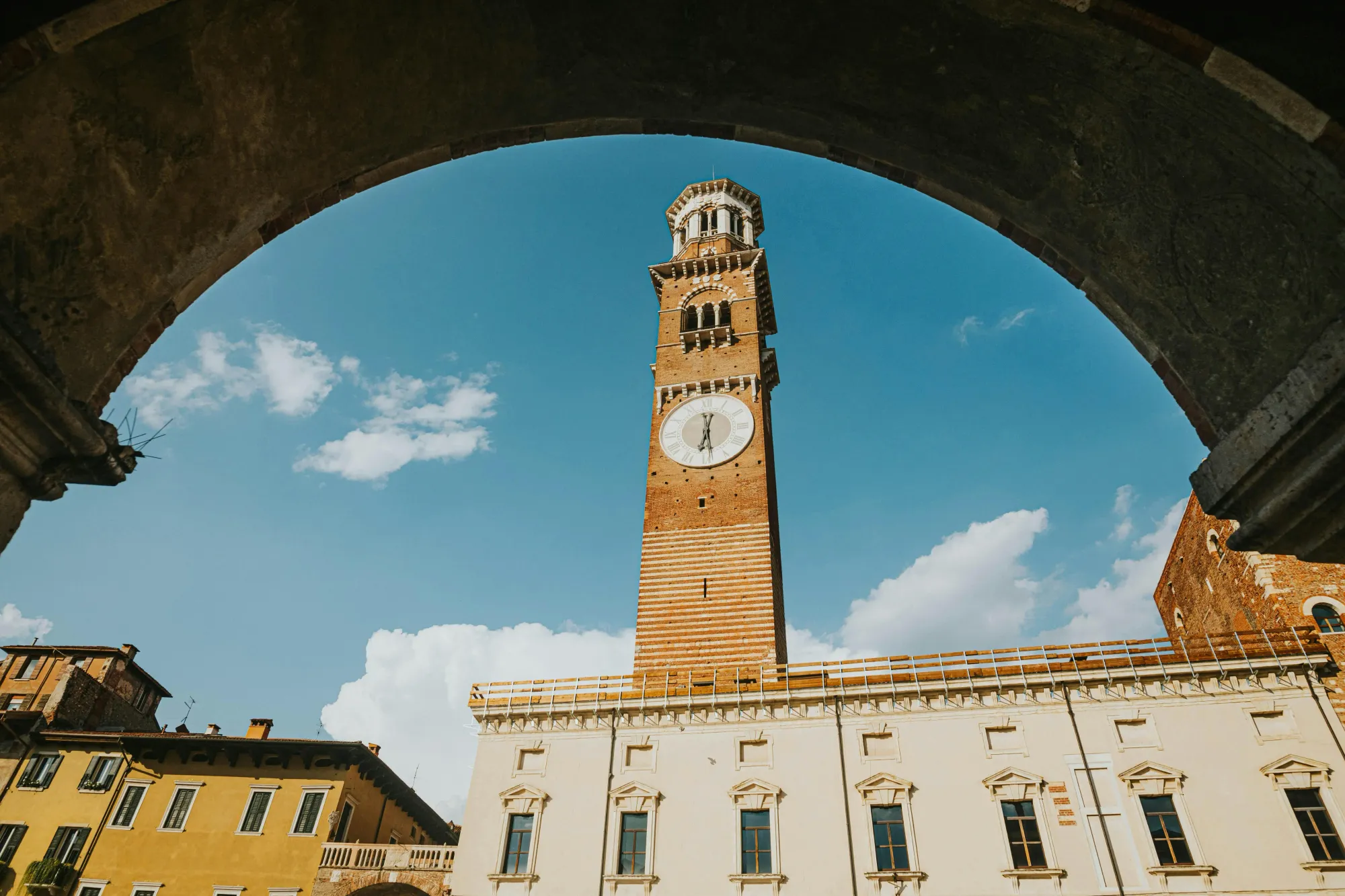
Piazza delle Erbe is Verona at its most alive — the oldest square in the city, built on the site of the ancient Roman forum and still serving as a market today. Colourful stalls, outdoor cafes, frescoed buildings on every side. Look up at the painted facade of the Mazzanti Houses and the 84-metre Torre dei Lamberti rising from the corner. There is allegedly a whale rib hanging from one of the arches — a centuries-old relic that has become one of Verona's more eccentric symbols. The tower is worth climbing for the views (€6, free with the Verona Card). You can buy your ticket on the Torre dei Lamberti official site.
Piazza dei Signori, one minute's walk from Piazza delle Erbe, is Verona's other great square — quieter, more formal, with a statue of Dante at the centre. He lived in Verona during his exile and found patronage with the della Scala family who ruled the city. The architectural coherence of this square — the arcaded loggias, the Palazzo della Ragione — is worth a walk around.
Castelvecchio and the Ponte Scaligero
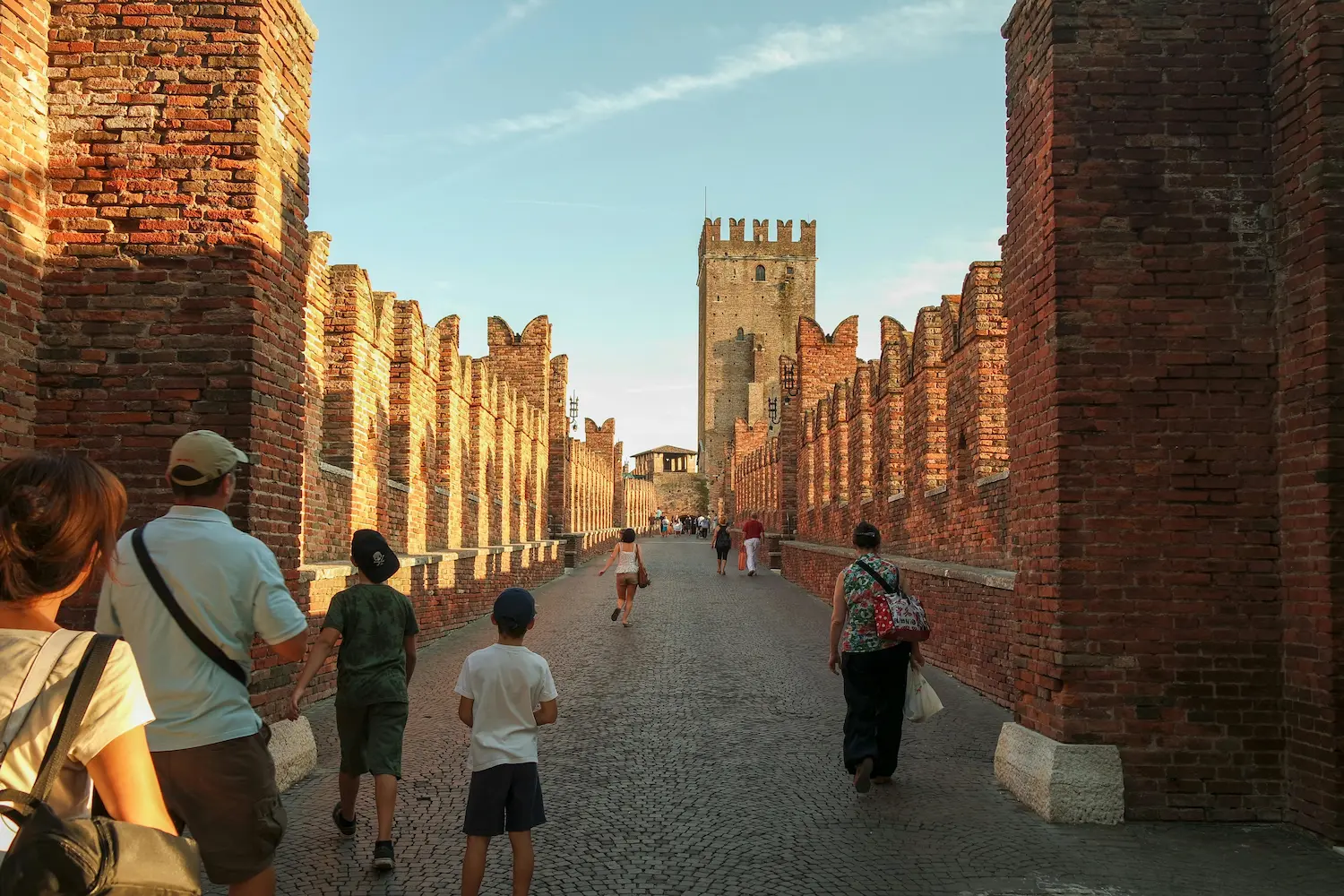
The Castelvecchio is a 14th-century fortress on the Adige River built by the della Scala family — the same dynasty whose tombs you'll find near Piazza dei Signori. Today it houses the Museo di Castelvecchio, with medieval and Renaissance art, sculpture and weaponry. The building itself, sensitively renovated in the 1960s by architect Carlo Scarpa, is as interesting as the collection. Entry €9. You can purchase tickets on the official Venice museums site.
The adjacent Ponte Scaligero — the fortified bridge spanning the Adige — is free to walk and gives excellent views back across the river to the city. It was destroyed in World War II and rebuilt brick by brick with original materials. Worth crossing simply for the perspective.
Ponte Pietra and Castel San Pietro
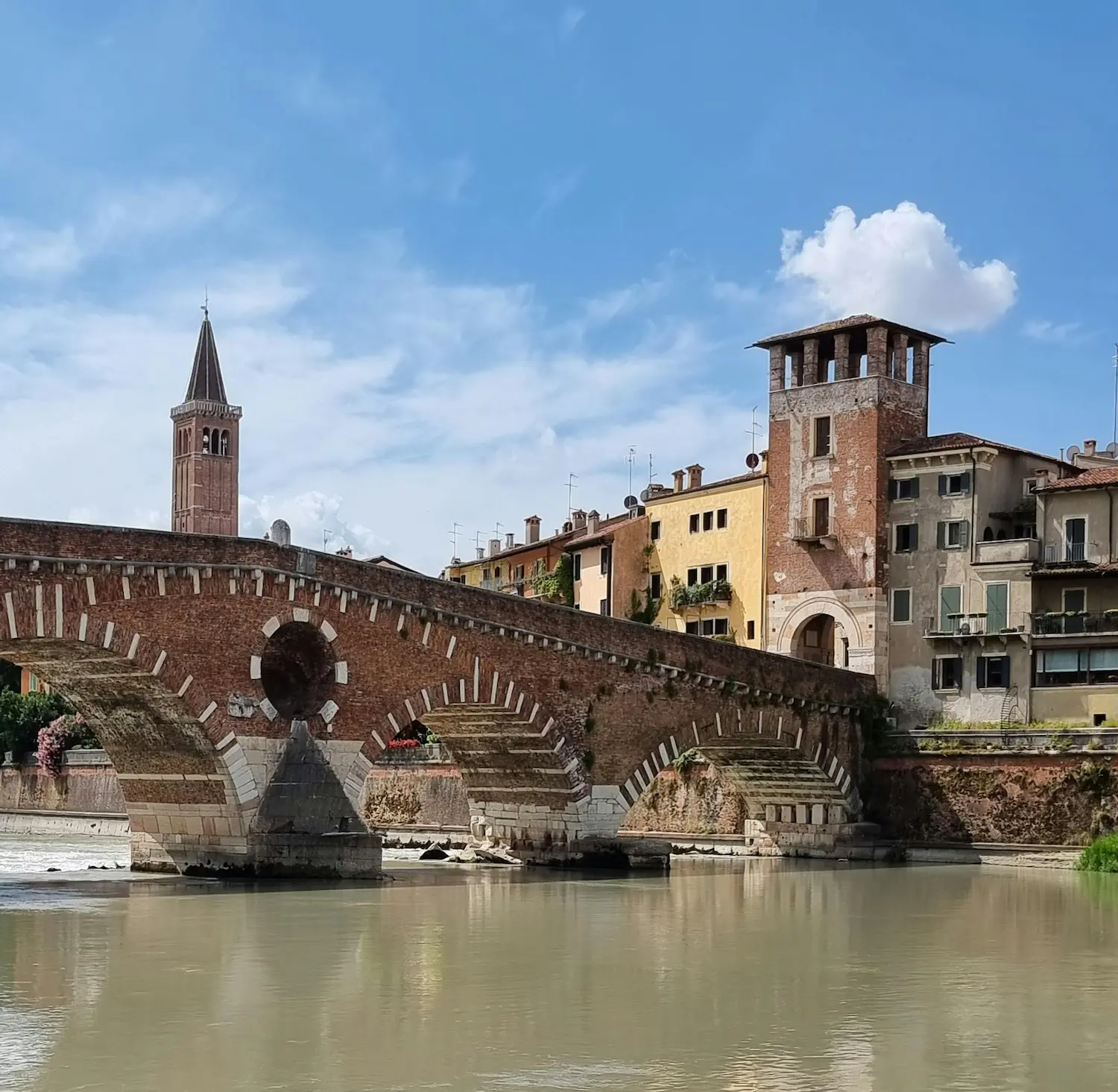
The Ponte Pietra on the northern edge of the historic centre is a Roman bridge completed in 100 BC — the first structure the Romans built after arriving in Verona. Partially destroyed in World War II and rebuilt with the original materials, it's one of those places where the weight of time becomes tangible. The view from the riverbank, with the Roman theatre rising on the hill behind it, is one of the finest in the city.
Cross the Ponte Pietra and climb to Castel San Pietro — either by the steep path through the gardens or by the funicular. The view from the top over the terracotta rooftops of Verona, the curve of the Adige, the Arena and the hills beyond is the best in the city. Go late in the afternoon when the light falls across the rooftops. There's a restaurant at the top if you want to eat with the view.
The Roman Theatre
Just below Castel San Pietro, the Teatro Romano is actually older than the Arena — built in the first century BC on the banks of the Adige. It's less visited and more intimate, with stone seating and loggia arcades still clearly legible. In summer it hosts performances as part of the Verona Estate festival. The Archaeological Museum upstairs offers views across the city that rival those from the tower. Entry €9 (free with Verona Card). You can buy tickets here.
Basilica di San Zeno Maggiore
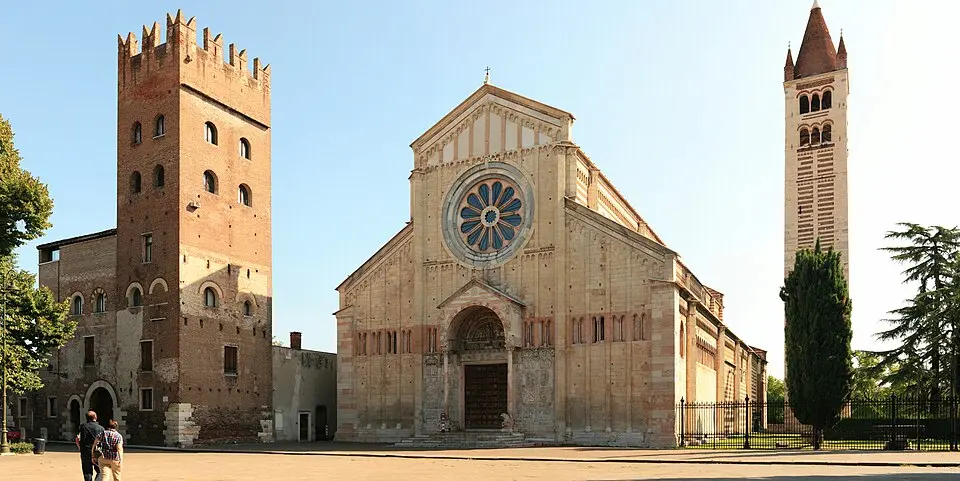
A fifteen-minute walk west of the Arena, the Basilica di San Zeno is one of the finest examples of Romanesque architecture in northern Italy and — according to legend — the church where Romeo and Juliet were secretly married. The bronze doors, cast between the 9th and 12th centuries, are extraordinary — 48 panels depicting scenes from the Old Testament and the life of San Zeno, each one a miniature world. The crypt below, where the saint is buried, has an atmosphere that the more visited churches in the centre don't quite achieve. Entry €4. You can buy tickets here on the official site.
Wine — Verona's Other Great Offering
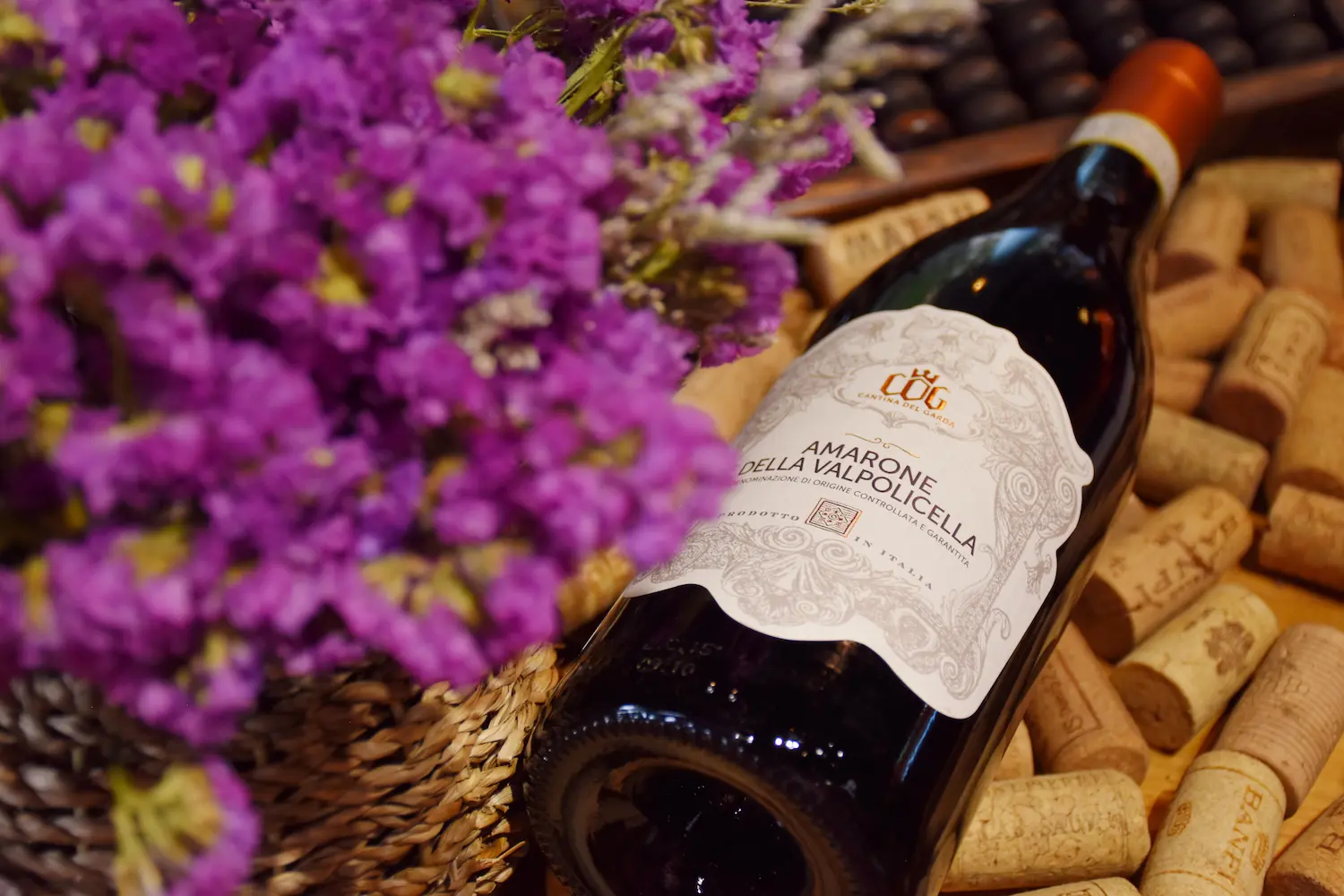
Verona sits at the centre of one of Italy's most important wine regions. The Valpolicella valley is immediately to the north — producing the rich, powerful Amarone and the lighter, more approachable Valpolicella Classico. The Soave region lies to the east, making the elegant dry white that pairs perfectly with the local lake fish.
In the city, the enoteche around Piazza delle Erbe and Piazza dei Signori offer excellent opportunities to taste properly. Look for Amarone by the glass — it's one of Italy's great wines and significantly cheaper here than anywhere else you'll find it.
The Verona Card — Is It Worth It?
The Verona Card covers entry to the main museums and churches including the Arena daytime entry, Torre dei Lamberti, Juliet's house (access to the balcony), Castelvecchio Museum, Roman Theatre Museum and several churches. A 24-hour card costs €27, a 48-hour card €32.
For a full day trip hitting the Arena, Torre dei Lamberti, Castelvecchio and the Roman Theatre Museum — roughly €36 bought individually — the 24-hour card saves a small amount and simplifies the logistics. And it's certainly worth buying if you plan to visit four or more paid sites. Check the current list of included attractions here. Although this is the official Verona card site for purchasing it.
A Suggested Day in Verona
For a single full day arriving by train from Milan:
Morning — walk straight to the Arena from the station, arrive before the coach groups. Spend an hour inside. Then walk across Piazza Bra. Detour to Via Cappello for Juliet's House — go early to beat the queues. Continue to Piazza delle Erbe for coffee and the market atmosphere.
Midday — lunch in or near Piazza delle Erbe. Climb the Torre dei Lamberti after eating.
Afternoon — walk to Castelvecchio and cross the Ponte Scaligero. Then north to Ponte Pietra, cross the river, and climb to Castel San Pietro for the late afternoon views. Return via the Roman Theatre.
Evening — if attending the opera, return to the Arena by 8pm. If not, dinner in the historic centre and an early train back.
Getting There — Practical Summary
From Milan: Trenitalia or Italo from Milano Centrale to Verona Porta Nuova, approx. 1 hour 15 minutes. Book in advance via Trenitalia, Italo or Trainline. Tickets from ~€13 (although tickets are more expensive for the faster trains - around €35).
From Bologna: Approx. 1 hour. Multiple fast and regional services daily.
From Venice: Approx. 1 hour 15 minutes. Fast services run frequently throughout the day.
From Florence: Approx. 1 hour 40 minutes via Bologna. Book in advance.
Opera tickets: Book directly at arena.it. The 2026 season runs June – September. Premiere nights and weekends sell out months ahead.
Verona Card: Available at museums, tourist offices and online.
How Verona Fits Into a Broader Italian Train Trip
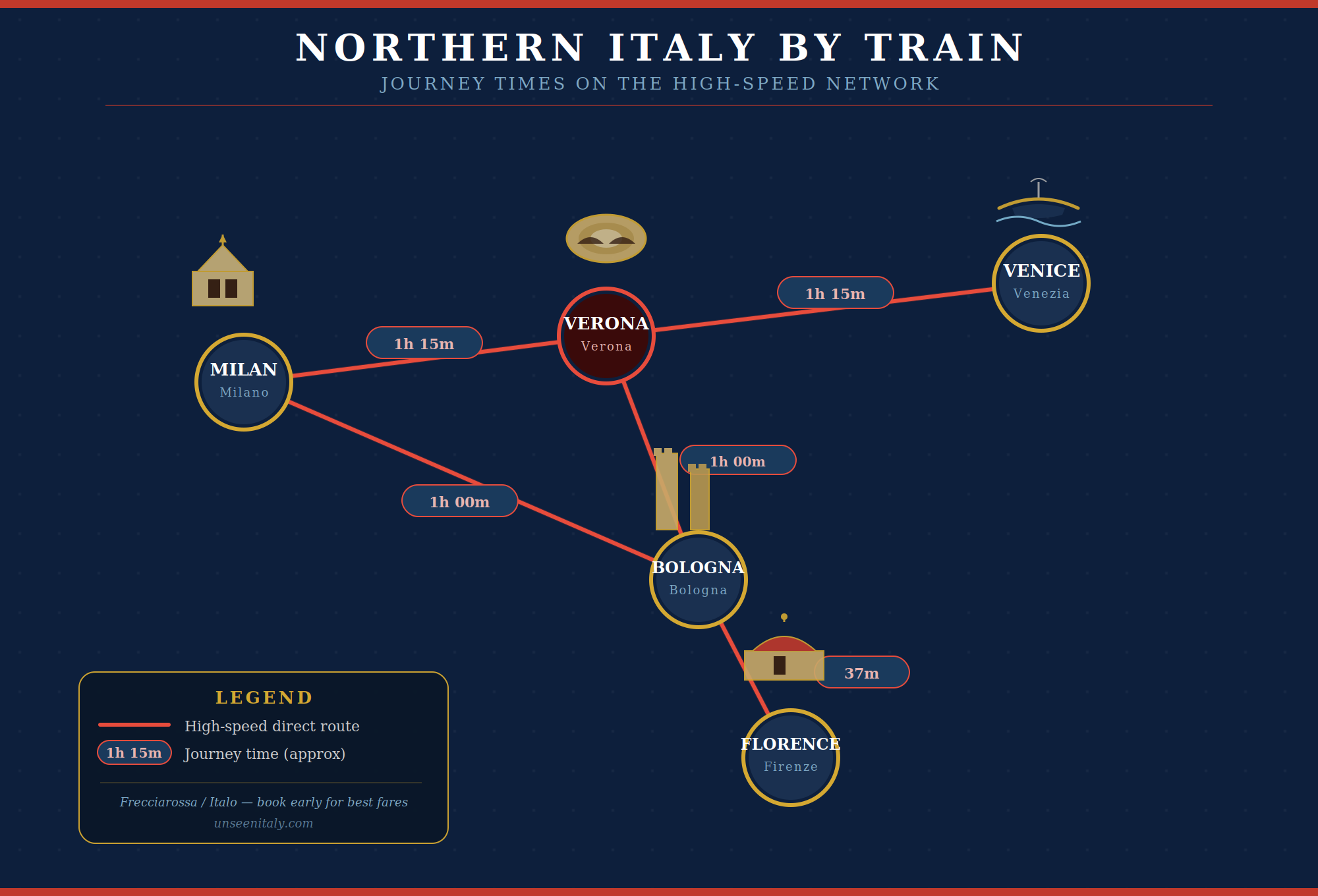
Verona sits on the main high-speed corridor that connects Milan to Venice — which means it slots naturally into almost any northern Italy itinerary without adding significant travel time. A day in Verona between Milan and Venice, or between Bologna and Venice, adds very little to journey times and a great deal to the trip.
For a broader itinerary using train travel across Italy, our guide to planning your Italy by train itinerary covers how to structure the connections. And if you're using Milan as a base, our guides to Pavia, Bergamo, Lake Como and Oltrepò Pavese cover the best of Lombardy.
Frequently Asked Questions
How long does the train from Milan to Verona take?
Around one hour and fifteen minutes on the Trenitalia (Frecciarossa) or Italo fast trains from Milano Centrale to Verona Porta Nuova. Services run approximately every 30 minutes. Book in advance — prices rise significantly closer to departure.
Is Verona worth visiting for a day trip?
Yes — Verona is one of the most satisfying day trips in northern Italy. The historic centre is compact and entirely walkable. The Arena, the piazzas, Juliet's House, Castelvecchio and the viewpoint at Castel San Pietro can all be covered comfortably in a full day. If you're attending an opera in the evening, plan to stay the night or take a late train back.
When is the Verona opera season?
The Arena di Verona Opera Festival runs from June to September, with 50 evenings of performances. Book tickets directly at arena.it — premiere nights sell out months in advance.
What is it like to attend the opera at the Arena di Verona?
The Arena holds up to 15,000 people and performs on the largest operatic stage in the world. The stone seating is hard — hire or bring a cushion — but the experience of opera in a 2,000-year-old Roman amphitheatre under the stars is genuinely extraordinary. The acoustics are remarkable. Book upper unreserved seats for the most affordable entry, or stalls seats for a more comfortable experience.
Is Verona a good day trip from Venice?
Yes — the fast train from Venice to Verona takes around one hour fifteen minutes and runs frequently. The two cities have very different characters and complement each other well. Verona is also an easy day trip from Bologna (one hour) and Florence (one hour forty minutes).
What is the Verona Card and is it worth buying?
The Verona Card covers entry to the Arena daytime, Torre dei Lamberti, Juliet's House (access to balcony), Castelvecchio Museum, the Roman Theatre and several churches. A 24-hour card costs €27. It's worth buying if you plan to visit four or more paid sites in a single day. Check the full list here.
Do I need to book the Arena di Verona opera in advance?
Yes — particularly for premiere nights, Saturdays and the most popular operas. Book as early as possible directly at arena.it.
Also by train from northern Italy: Pavia from Milan · Bergamo from Milan · Lake Como from Milan · 12-day Italy by train itinerary.