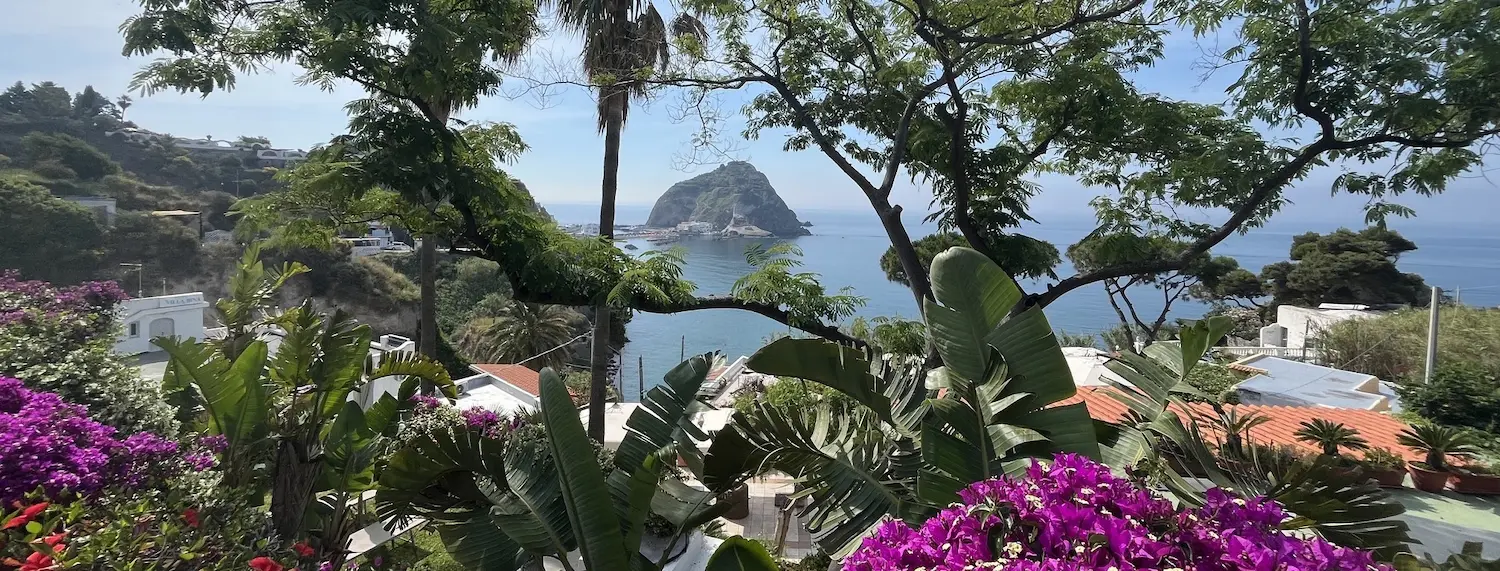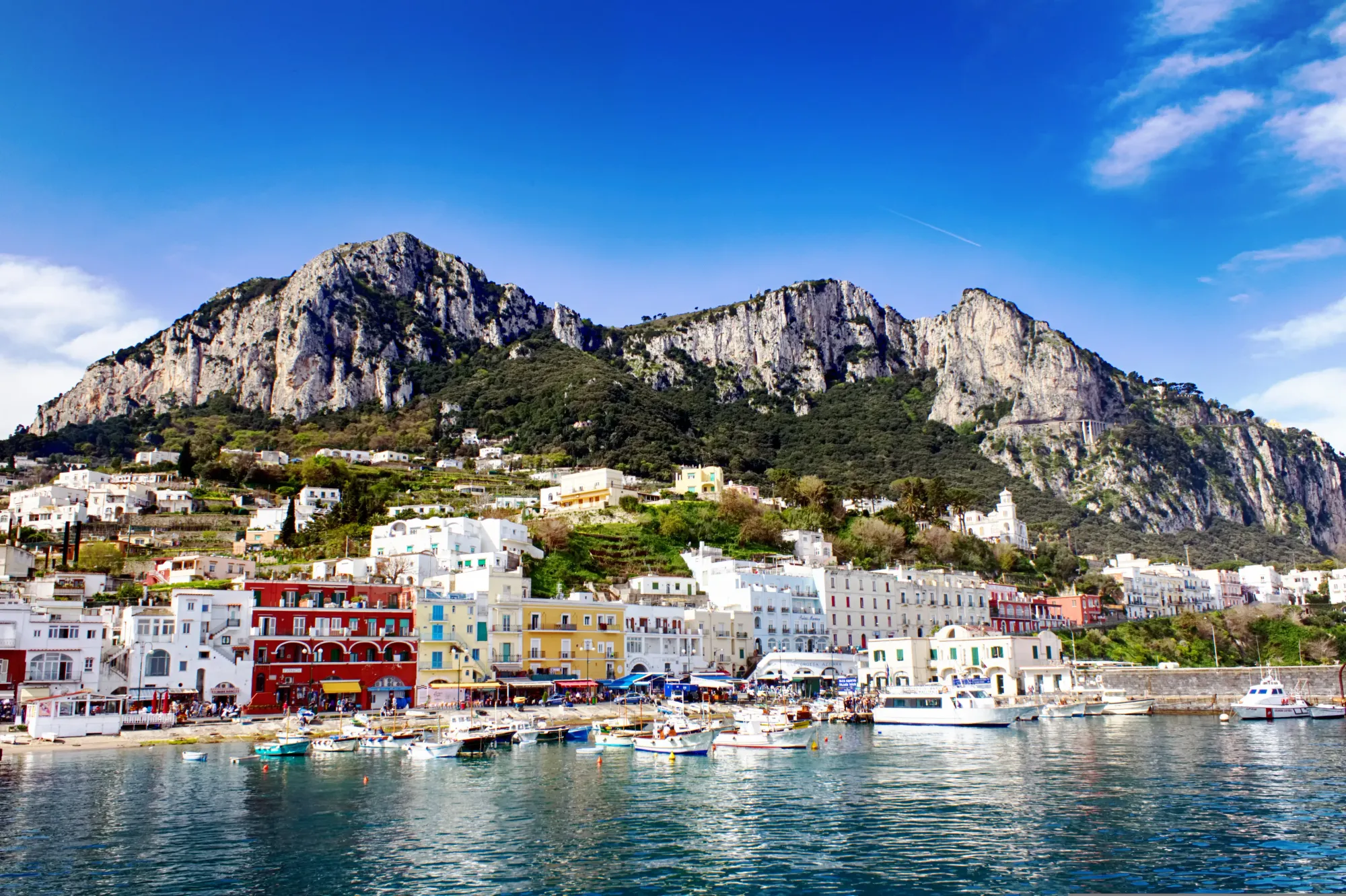
Capri is worth every bit of its reputation — the limestone cliffs, the Blue Grotto, the two very different sides of the island, and the views from Monte Solaro that stretch to the Amalfi Coast. A full day by ferry from Naples or Sorrento, with no hire car required.
Last verified: May 2026. Ferry times, prices and Blue Grotto opening conditions change regularly. Always check official sources before travelling.
Capri needs no introduction, and that is part of its problem. It is the most visited island in the Bay of Naples, and in peak summer the famous Piazzetta can feel overwhelmed by the sheer volume of people who have arrived on the same morning ferry. And yet — despite all of this — Capri delivers. The limestone cliffs, the two very different sides of the island, the extraordinary blue light inside the Grotta Azzurra, the views from Monte Solaro across to the Amalfi Coast.
How to tackle it
The secret is timing and structure. Arrive early, know where you're going, and treat it as a full day rather than a rushed half day. This guide covers how to get there by ferry from Naples, Sorrento or the Amalfi Coast, how to get around the island without a hire car, and how to make the most of eight hours on one of the most beautiful islands in the Mediterranean.
In This Guide
At a Glance
| ⛴️ From Naples | Hydrofoil 50 min from Molo Beverello (~€23–30); ferry 1h 20m from Calata Porta di Massa |
| ⛴️ From Sorrento | Hydrofoil 20 min; ferry 25–35 min from Marina Piccola (~€25-28) |
| ⛴️ From Salerno | Seasonal (May–October) — approx. 1h 40m (~€30+) |
| ⛴️ From Positano/Amalfi | Seasonal — approx. 30–60 min |
| 🚡 Getting around | Funicular, bus, open-air taxis, tuk tuks — no private cars |
| 🌀 Blue Grotto | €18 entry + ~€24 boat transfer (per person) — arrive by 9:30am |
| 📅 Best time | May–June and September–October — less crowded, still beautiful |
| ⏱️ Time needed | Full day — at least 8 hours on the island |
| 🎫 Book ferries | Ferryhopper or direct with operators — book ahead in July and August |
Getting to Capri
From Naples
There are two departure points in Naples for ferries to Capri. Hydrofoils depart from Molo Beverello, while conventional ferries depart from Calata Porta di Massa, slightly further along the waterfront. The two piers are connected by a free shuttle bus - although its only a 15-20 minute walk.
The Naples Beverello to Capri hydrofoil takes around 50 minutes; the conventional ferry from Calata Porta di Massa takes around 1 hour 20 minutes. Ticket prices range from €23–30. The hydrofoil is faster and the right choice if you want to maximise your time on the island.
Sit on the left side of the hydrofoil during the journey and you'll be able to admire Mount Vesuvius. It's a genuinely beautiful crossing — consider it part of the day.
For trips during the high season (June to September), it is best to book your tickets 3–4 weeks in advance to avoid disappointment, particularly for early morning departures from Naples.
From Sorrento
From Sorrento, you can travel by ferry all year round, with around 10 daily crossings taking 20–35 minutes and tickets priced from €25. Sorrento is the closest mainland point to Capri and the most convenient departure if you're already based on the Sorrentine Peninsula.
The port in Sorrento is called Marina Piccola. To reach it, take the pedestrian stairs down from Piazza Tasso, the elevator from Villa Comunale, or the public bus.
From Salerno or the Amalfi Coast
Hydrofoils from Salerno to Capri run from May to mid-October. Ferries to Capri from Positano, Amalfi and the other towns on the Amalfi Coast run from mid-April through October. Journey times are longer — around 1h 40m from Salerno — but if you're already based on the coast, this avoids backtracking to Naples.
Booking Ferries
Buy tickets via Ferryhopper or Ferryscanner to compare companies and times side by side. Although check the operators own web sites as well, as sometimes the booking fees are lower.
Usually, advance ticket reservations are not necessary outside peak season — you can simply arrive at the pier a few minutes before departure and purchase a ticket directly from the ticket office. During July and August, and holiday weekends, it is advisable to purchase your ticket in advance.
It's worth being aware that there are baggage limitations on hydrofoils - Passengers are permitted to one piece of normal cabin size hand luggage (55cm x 35cm x 20cm). Additional luggage can be paid for on the day at a price of a few euros each. Ferry luggage limits have few (and often no) luggage restrictions. Check with your transport provider ahead of time.
Arriving at Marina Grande
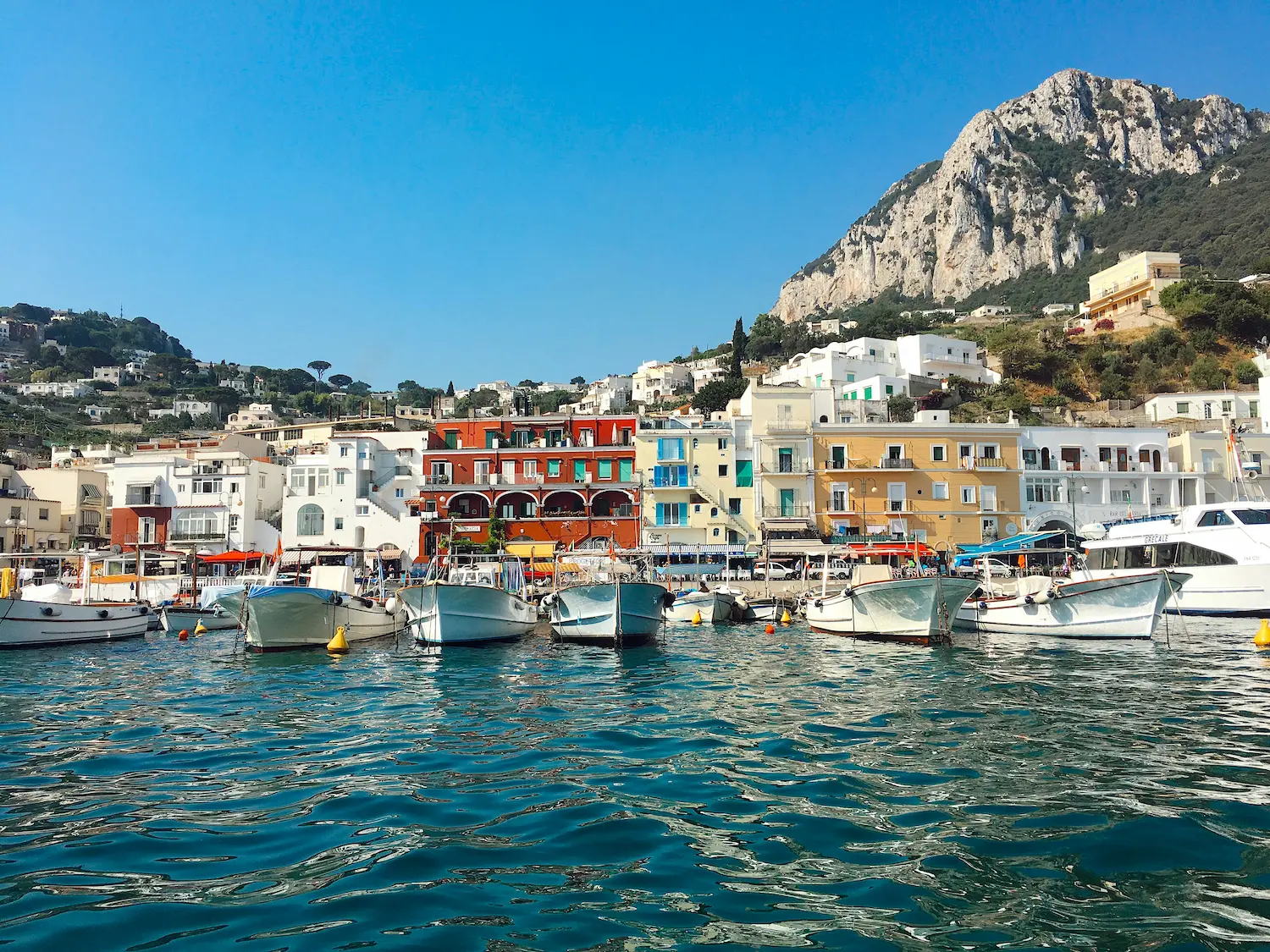
All ferries dock at Marina Grande on Capri's northern shore. The port is busy, colourful and a little chaotic in peak season — in the area around the port you'll find cafés, restaurants, shops, luggage storage and boat tour operators.
From Marina Grande, you have several options for getting up to Capri town:
The funicular runs between the port and the Piazzetta in Capri town above, taking just a few minutes. It runs every 15 minutes and costs €2.40 per person at the ticket office. Buy your ticket immediately on arrival — the trip only lasts 4 minutes, though you can often find long lines of passengers waiting to board at Marina Grande, as only 70 passengers can ride at one time.
Alternatively, open-top taxis operate between the port and other parts of the island. Taxi fares in Capri are fixed based on the destination. A brief taxi ride within Capri town will cost around €20-€30, while a longer trip to Anacapri will be €30-€40 or more. Always check the price with the taxi driver beforehand.
You can also walk. Its about 1-1.5 kilometres, but it is steep in places and not advisable with bags. It will take 20-30 minute for fit walkers.
Getting Around the Island
Capri has no private hire cars for visitors and no scooter rental — and this is one of its great pleasures. The island is served by:
The funicular — connects Marina Grande to Capri town (the Piazzetta). Essential first move on arrival.
Orange buses — public buses operated by ATC Capri connect Capri town, Anacapri, Marina Grande and major sites including the Blue Grotto entrance, charging a flat €2.20 per ride, or €7.20 for the day . Key routes include Capri–Anacapri (15 minutes, every 20 minutes) and Anacapri–Blue Grotto (10 minutes, every 30 minutes - look for bus that says "Grotto-Azzurra").
Open-air taxis — the iconic Capri taxis are convertible vehicles that seat up to seven passengers. Fares are fixed by the island authority. Expensive but memorable, and useful when buses are full.
Tuk tuks — small electric three-wheelers that have become popular for getting around the island's narrow lanes, particularly between Capri town and the smaller paths the buses don't reach. Available for hire near the Piazzetta and at the port.
On foot — walking remains free and feasible for fit visitors. Many visitors walk downhill routes while using buses or the funicular for uphill segments. The island is small enough that most areas are reachable on foot in 30–45 minutes.
Chairlift — departing from Via Caposcuro near Piazza Vittoria — is as much an experience as it is a mode of transport. An open single seat carries you above the terraces and pine trees to the summit of Monte Solaro, the highest point on the island, in around 13 minutes. The views open up gradually as you climb and are extraordinary by the top. Tickets cost €14 return. The lift opens at 9:30am and closes between 3:30pm and 5pm depending on the time of year — check before you go.
The Two Sides of the Island — Capri and Anacapri
This is the most important thing to understand before you plan your day. Capri is divided into two distinct areas, separated by the hillside and connected by bus:
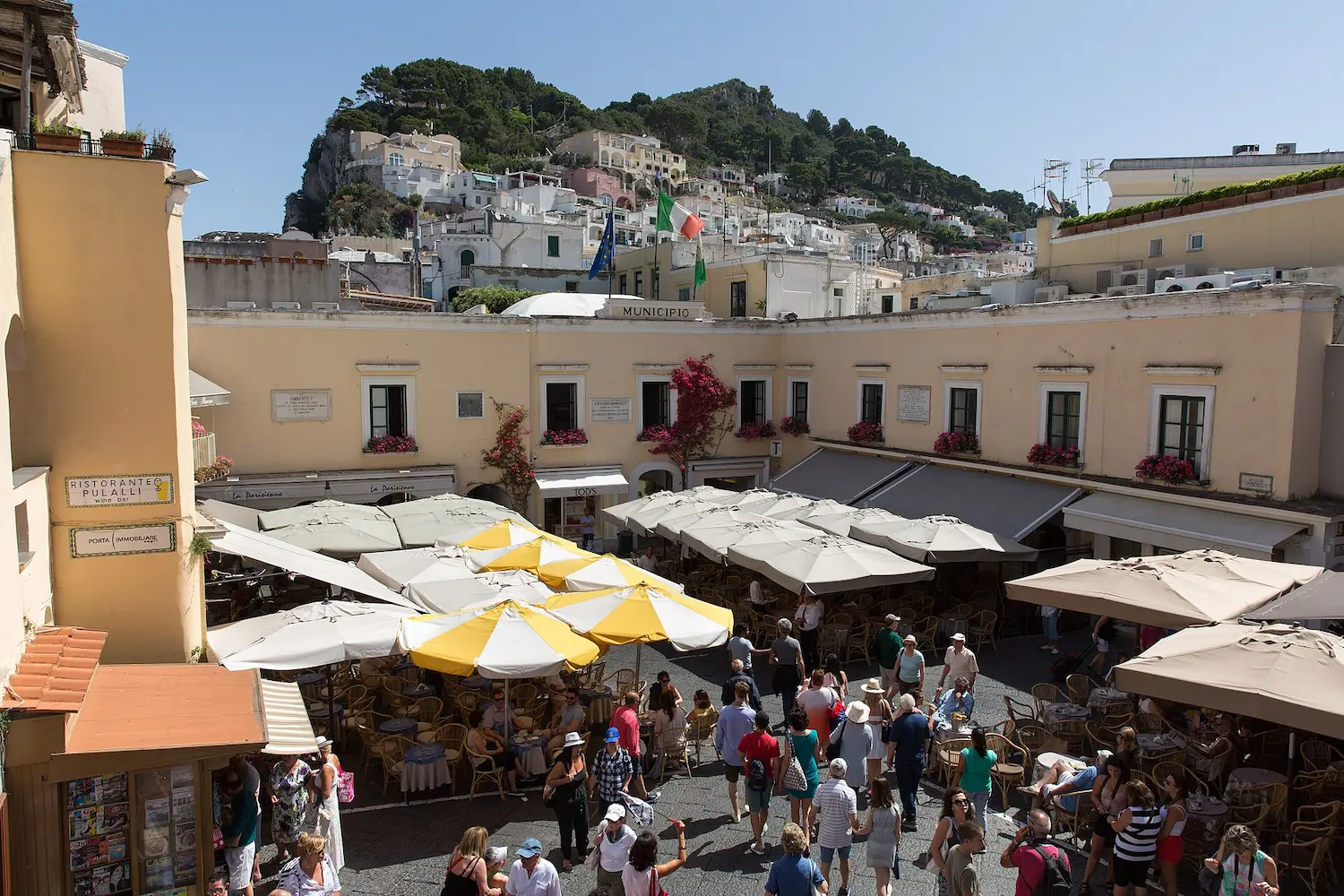
Capri town — the famous Piazzetta, the designer shops, the cafés, the Via Camerelle. This is the Capri of the photographs — glamorous, crowded in summer and undeniably beautiful. The Piazzetta is tiny, and the surrounding lanes of the historic centre reward wandering. The Gardens of Augustus (free) give you the best views of the Faraglioni rocks from the island itself.
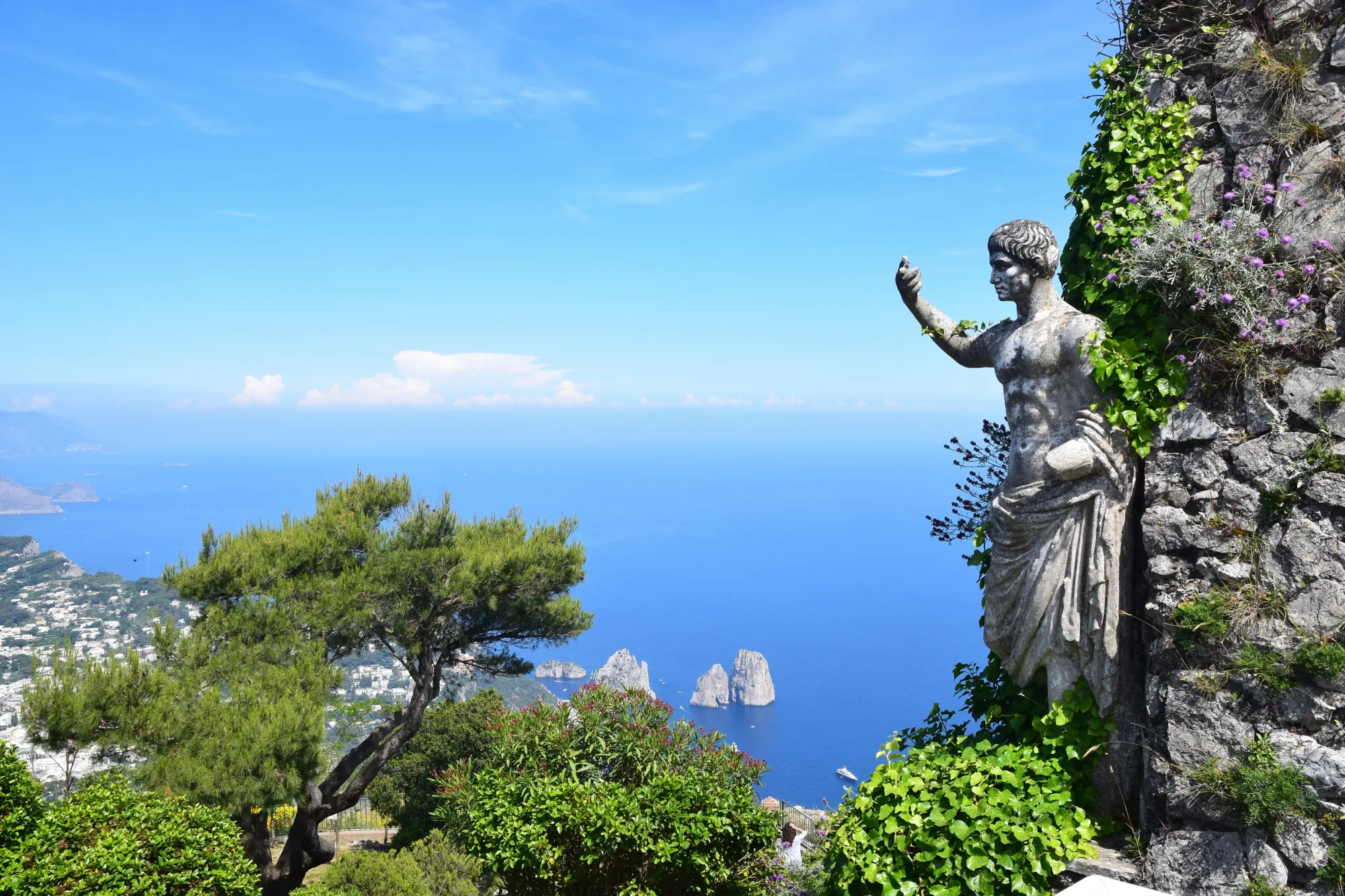
Anacapri — the upper village on the western side of the island, quieter and more genuinely residential than Capri town. The pace is slower, the streets less designer-clad. From Anacapri, the chairlift (seggiovia) carries you to the summit of Monte Solaro — at 589 metres the highest point on the island — with views that on a clear day extend to the Amalfi Coast, Ischia, and on exceptional days even to Sicily. The chair lift costs around €14 return and takes about 13 minutes each way. The views from the top are the finest on the island.
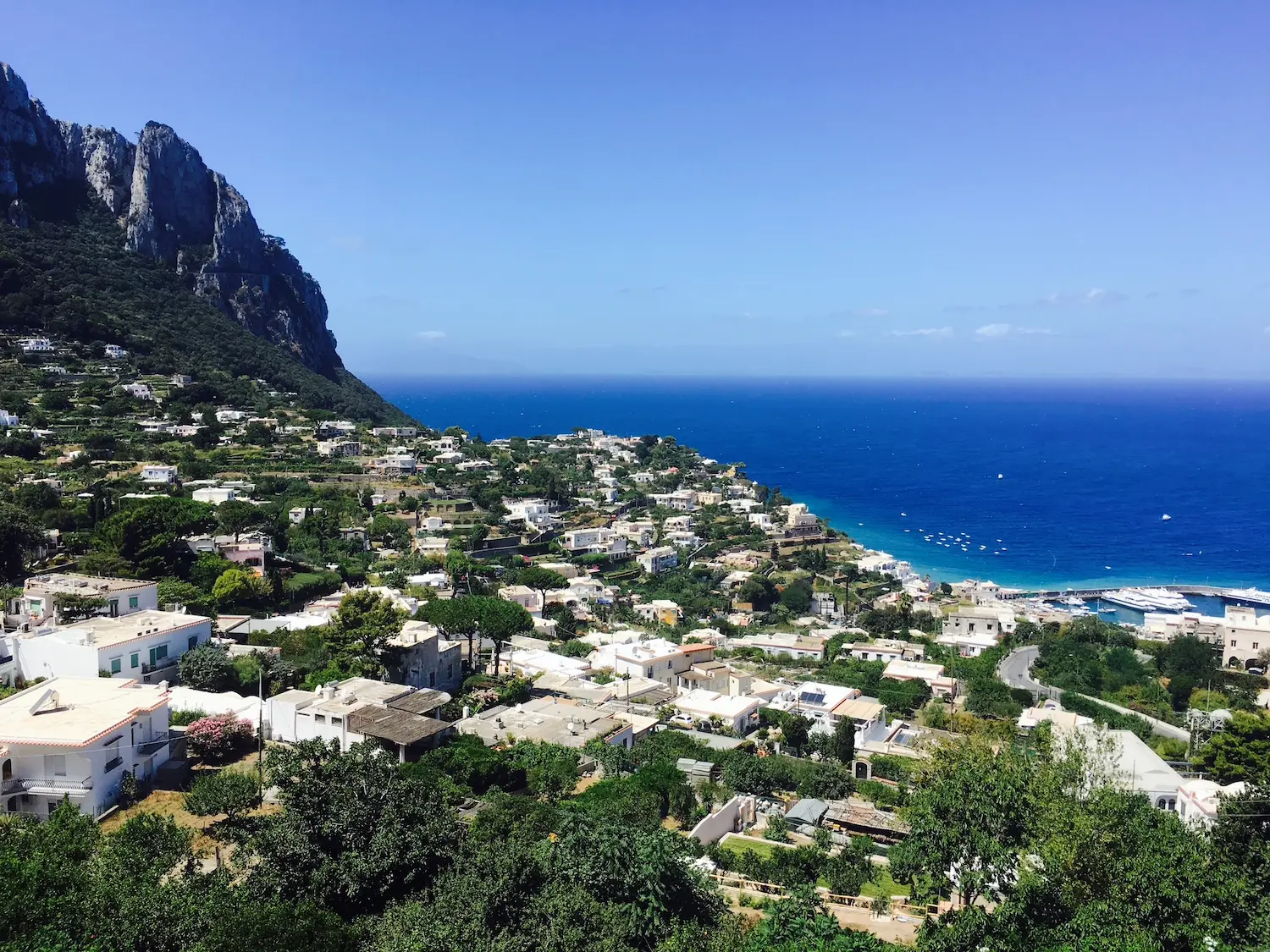
Anacapri is also the starting point for reaching the Blue Grotto by bus rather than by boat — more on this below.
Marina Piccola — Swimming on the South Side
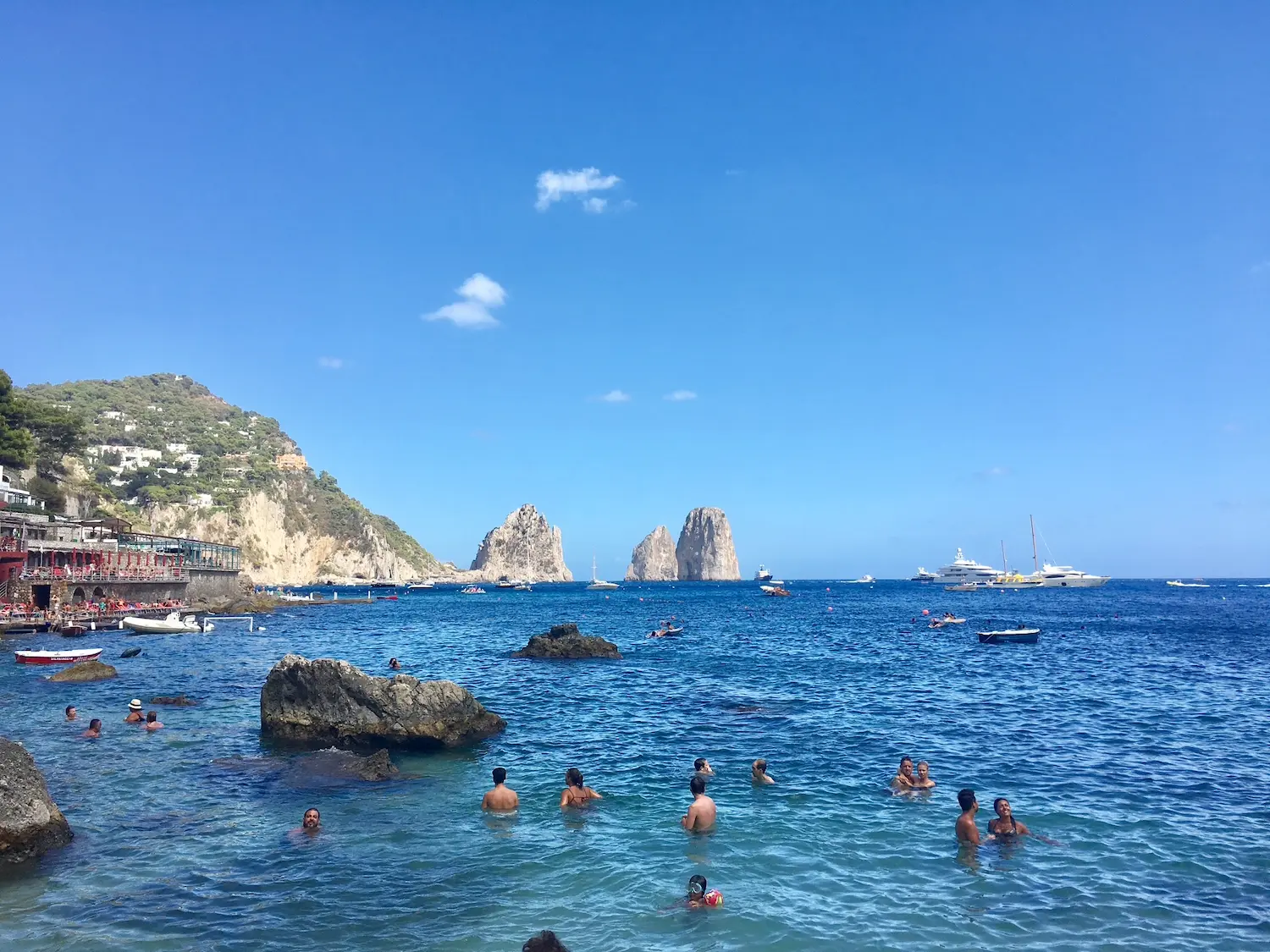
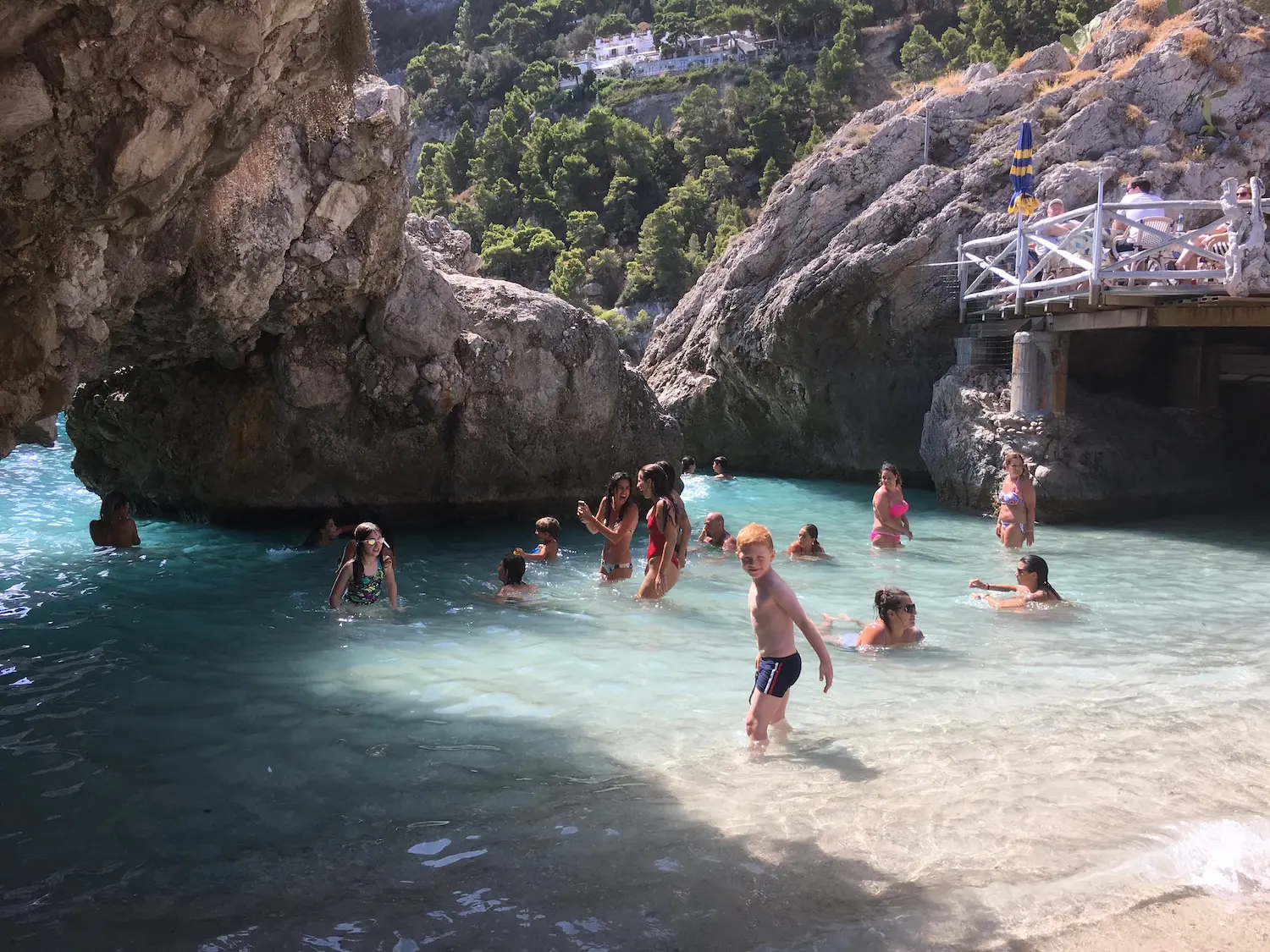
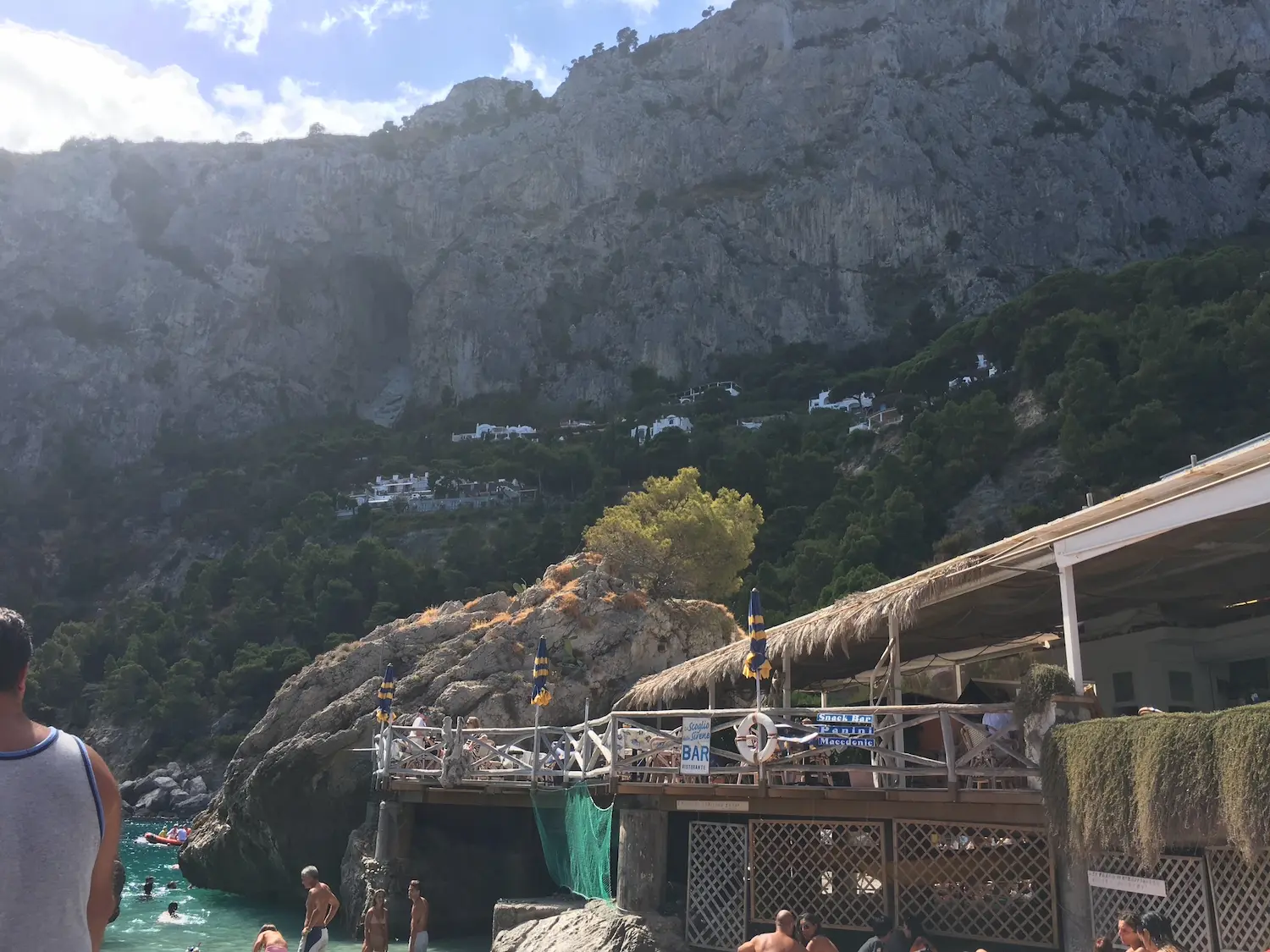
Marina Piccola — Capri's best swimming bay, with the Faraglioni directly in front. Bus from the Piazzetta, €2.20.
Most visitors to Capri spend their time on the northern side of the island around Marina Grande and Capri town. Marina Piccola, on the south coast, is the quieter alternative — a small bay with clear water, a handful of beach clubs and restaurants, and a noticeably more relaxed atmosphere than the port side.
The water at Marina Piccola is exceptionally clear and the bay is sheltered from the north wind, which makes it one of the best swimming spots on the island. There are both free and paid sections of beach — the lidos charge for sun loungers and umbrellas, while the free areas are smaller but perfectly usable. Bring your own towel and snorkelling gear if you have it; the underwater visibility is excellent.
To get there from Capri town, take the orange bus from the terminal near the Piazzetta — the journey takes around 10 minutes and costs €2.20. The road winds down through terraced gardens with views of the Faraglioni as you descend. You can also walk - as a path runs all the way done - which is what we did.
The Blue Grotto — What to Know Before You Go
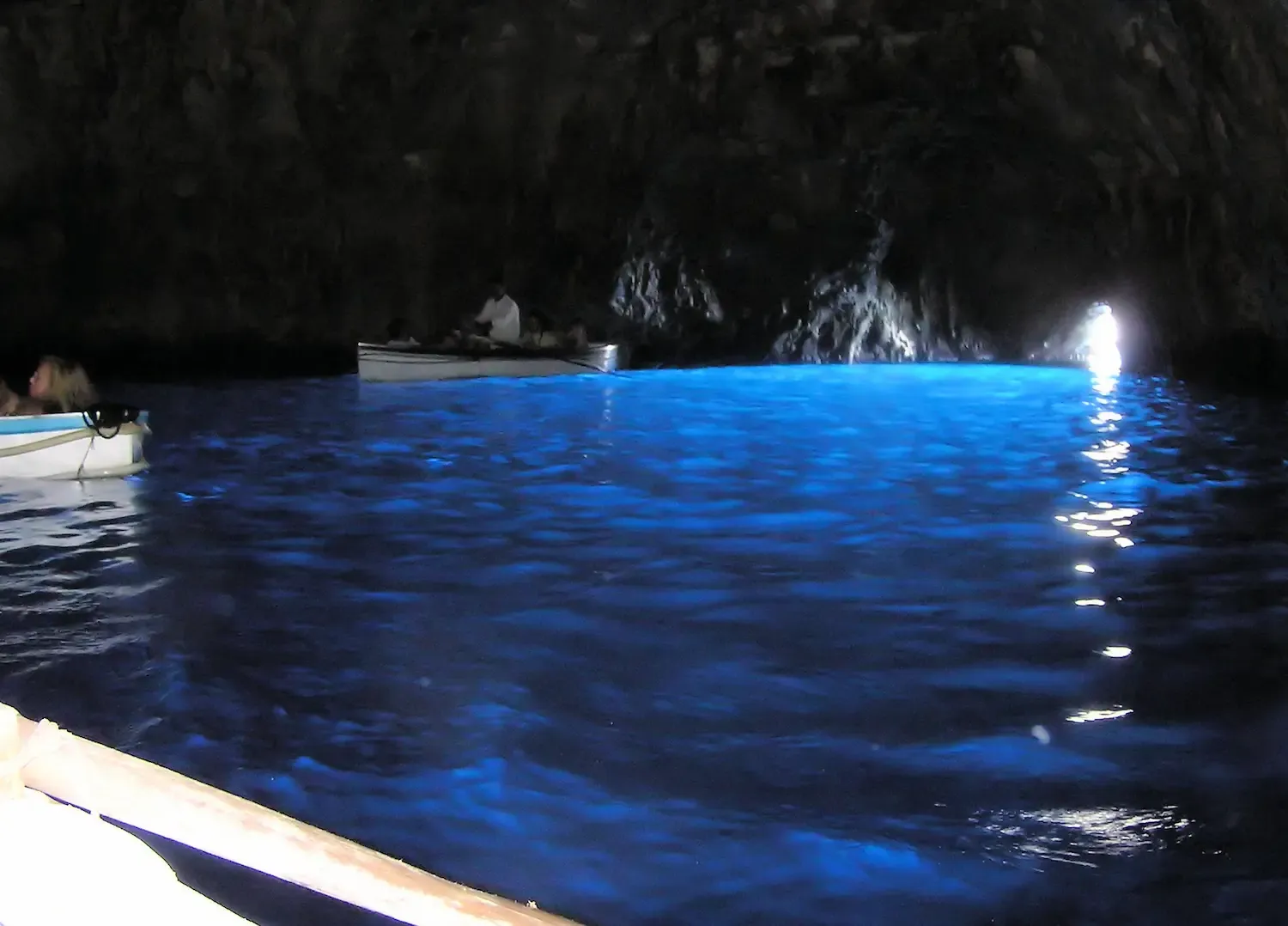
The Blue Grotto (Grotta Azzurra) is Capri's single most famous attraction and one of the most extraordinary natural experiences in Italy. It is a natural sea cave, 60 metres long and 25 metres wide, lit from below by sunlight entering through an underwater opening, which turns the entire chamber a vivid, luminous blue. To enter, visitors board small wooden rowboats that hold a maximum of four passengers, lying back while the skipper guides the boat through the cave mouth — barely a metre high — using a chain attached to the rock.
The entrance fee is €18 per person. On top of this, reaching the grotto by motorboat from Marina Grande costs around €24 per person for the transfer. The visit inside lasts approximately five minutes.
So the honest cost is around €42 per person in total for a five-minute experience — and waiting times in peak season can be one to two hours. But you can save the cost of the €24 boat transfer by taking the bus to the entrance. Is it worth it?
Yes — with caveats. The light inside the grotto is genuinely extraordinary, unlike anything else you will see on the island or anywhere in Italy. The boatmen often sing as they row, the acoustics carry the sound beautifully, and the blue glow of the water is one of those experiences that photographs cannot replicate. But go in with honest expectations: it is brief, it can be crowded, and the queue is a significant part of the day.
How to visit the Blue Grotto
Option 1 — by motorboat from Marina Grande: Take a dedicated grotto transfer boat from the port. The crossing to the grotto takes around 20 minutes. This is the most straightforward option.
Option 2 — by bus from Anacapri: Take the bus from Anacapri to the Blue Grotto stop and descend the steps to the grotto entrance. You still need to board a rowboat to enter, but you can queue from the land rather than from a rocking boat — a significant advantage if you suffer from seasickness or simply find waiting on a boat uncomfortable.
Arrive at the entrance by 9:30am at the latest to avoid the longest queues. The grotto faces west, so afternoon light is less effective for the blue effect. However, some visitors find the late afternoon queue shorter — if you can be flexible, consider returning by bus from Anacapri in the early afternoon when the main boat tours have moved on.
The grotto is closed in rough seas and high winds — each morning the skippers evaluate conditions from 9am. There is no way to guarantee the grotto will be open on any given day.
A Suggested Day on Capri
This itinerary assumes arrival by the first or second ferry from Naples or Sorrento — aim to be at Marina Grande by 9am.
9:00am — Arrive at Marina Grande. Buy your funicular ticket immediately and board as soon as you can. If the queue is very long, take a taxi to Capri town instead.
9:15am — Capri town and the Piazzetta. Walk the lanes of the historic centre before the crowds build. The Piazzetta is best in the early morning — have a coffee here and watch the island wake up. Via Camerelle (the main shopping street) and the lanes around the church of Santo Stefano are worth exploring.
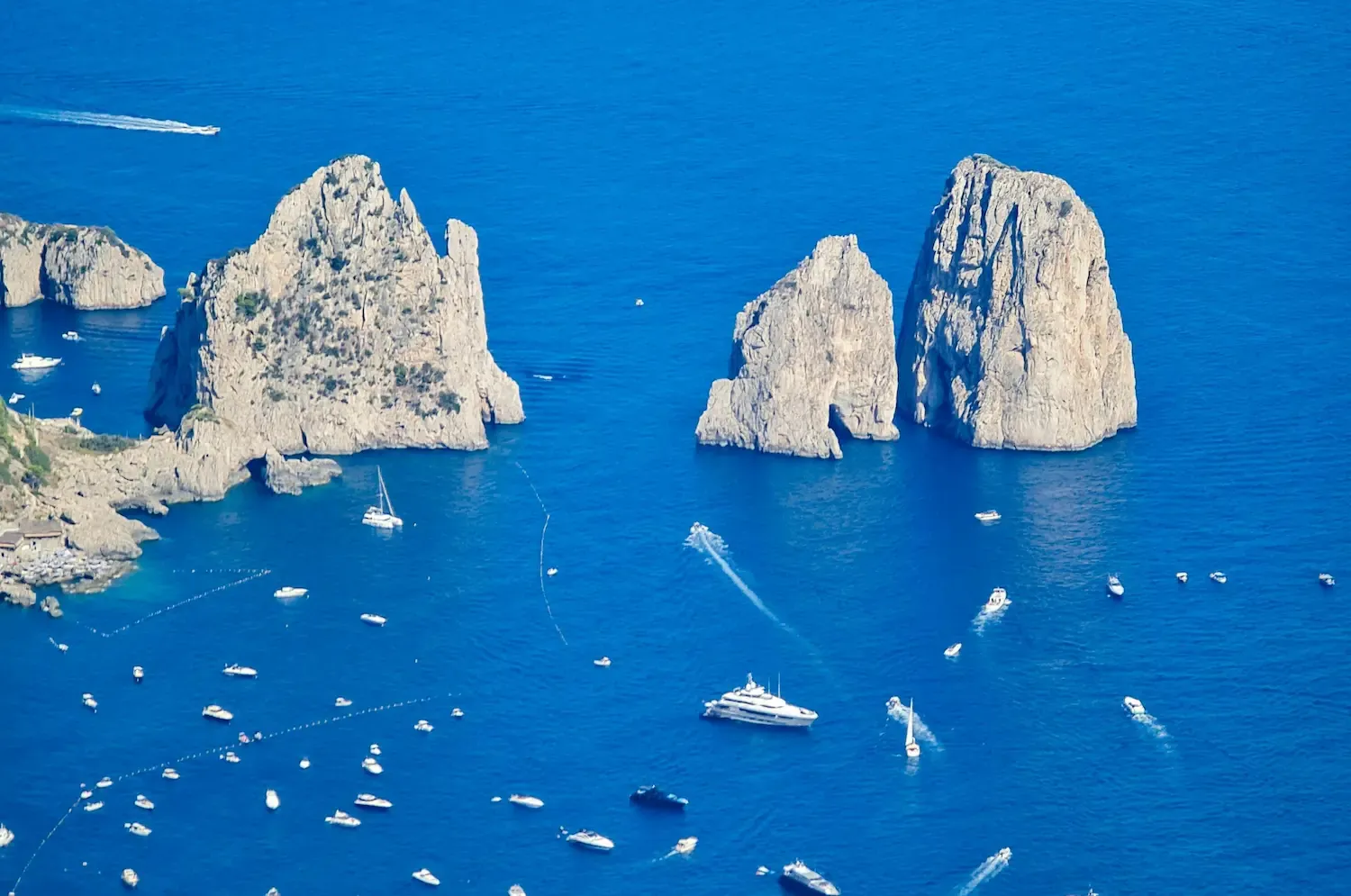
10:30am — Gardens of Augustus. A short walk from the Piazzetta, the gardens are free to enter and give you the best view of the Faraglioni from the island itself. The three sea stacks rising from the water below are the defining image of Capri.
11:30am — Bus to Anacapri. Take the orange bus from the Capri town terminal (approximately 15 minutes, €2.20). From Anacapri, take the chairlift to the summit of Monte Solaro. Allow 45 minutes to an hour at the top for the views. Return by chairlift.
1:00pm — Lunch in Anacapri. Anacapri has better value restaurants than Capri town. Take your time — this is not a day for rushing.
2:30pm — Blue Grotto. Take the bus from Anacapri to the Blue Grotto stop (10 minutes). This is the calmer approach — queue from the land steps rather than from a boat. In the early afternoon the main boat tour queues have often eased. Pay your €18 entry at the floating booth and board a rowboat.
4:00pm — Return to Marina Grande. Bus back to Anacapri, then bus to Marina Grande (or direct from the grotto stop). Allow time to browse the port area and have a final coffee or gelato before your return ferry.
5:00–6:00pm — Return ferry to Naples or Sorrento. Check your return timetable before you leave home — the last hydrofoils from Capri to Naples depart in the early evening. Don't leave it too late.
Practical Information
No private cars: Non-residents cannot bring vehicles to Capri between April and October. This is not a problem — the island is best experienced on foot, by bus and by funicular.
Luggage: If arriving with large bags, leave them at the luggage storage near Marina Grande. Or better still leave them in luggage storage in Naples. Most buses and the funicular have strict size limits on luggage.
Seasickness: If you suffer from seasickness, take a conventional ferry rather than a hydrofoil. If you do take a hydrofoil, choose one with a single solid hull rather than a catamaran, which sits above the water and can be very uncomfortable in rough seas.
Weather: Capri in rain is still beautiful but the Blue Grotto may close and some coastal paths become slippery. Check the forecast before you go and have a flexible plan.
Budget: A realistic day trip budget for one person in 2026 is €140–180, covering round-trip ferry from Naples (€46–60), Blue Grotto (€42), lunch at a mid-range restaurant (€40–50), and on-island transport (around €10). Skipping the Blue Grotto and packing lunch reduces costs significantly.
How Capri Fits Into a Broader Southern Italy Trip
Capri is most naturally combined with Naples and the surrounding region. If you're based in Naples, it's an easy full-day excursion — take the first hydrofoil out and the early evening one back. If you're based in Sorrento, the crossing is even shorter and Capri works as one of several island or coastal days.
The island also connects naturally with the Amalfi Coast by seasonal ferry — you can arrive in Capri from Naples, spend the day, and return to Positano or Amalfi in the late afternoon rather than going back to Naples. Check seasonal timetables carefully.
For the broader southern Italy by train picture — Naples, Pompeii, Salerno and the Amalfi Coast — see our Salerno and Amalfi Coast guide, our Pompeii vs Herculaneum: Why You Should Visit Both and our Italy train network guide.
Frequently Asked Questions
How do I get to Capri from Naples by ferry?
Hydrofoils depart from Molo Beverello in central Naples and take around 50 minutes. Conventional ferries depart from Calata Porta di Massa and take around 1 hour 20 minutes. Both piers are connected by a free shuttle bus. Tickets cost from around €23–30. Book in advance for July and August morning sailings.
Is the Blue Grotto worth visiting?
Yes — but go in with honest expectations. The experience inside the grotto is genuinely extraordinary: the blue light is unlike anything else on the island. However, the visit lasts only five minutes, the total cost is around €42 per person including the boat transfer, and queues in peak season can be one to two hours. Arrive by 9:30am or visit in the early afternoon when boat tour queues have eased.
Can you visit Capri as a day trip from Naples?
Yes — and it works well as a full day. Take the first or second hydrofoil from Naples, arrive by 9am, and return on the early evening service. A rushed half-day is possible but unsatisfying — you won't have time for both sides of the island and the Blue Grotto.
How do you get around Capri without a car?
The funicular connects Marina Grande to Capri town. Orange buses connect Capri town, Anacapri, the Blue Grotto and other points around the island for €2.20 per ride. Open-air taxis and tuk tuks are available for hire near the Piazzetta and at the port. Most of the island is also walkable for fit visitors.
What is the difference between Capri and Anacapri?
Capri town is the main settlement — the Piazzetta, the designer shops, the most visited restaurants. Anacapri is the upper village on the western side of the island, quieter, less crowded and the departure point for the chairlift to Monte Solaro. A day on the island ideally covers both — bus between them takes 15 minutes.
When is the best time to visit Capri?
May, June and September are the ideal months — good weather, the Blue Grotto more reliably open, but significantly fewer visitors than July and August. July and August are extremely busy and prices are higher. October is quieter still but some services begin to wind down. The island is open year-round but ferry services reduce significantly in winter.
How much does a day trip to Capri cost?
Expect to spend €140–180 per person for a full day including return ferry from Naples, the Blue Grotto, lunch and on-island transport. Skipping the Blue Grotto and eating simply reduces this to €60–80. Capri prices are higher than the Amalfi Coast mainland — budget accordingly.
Also on The Unseen Italy: Salerno — the Smarter Base for the Amalfi Coast · How Italy's Train Network Works · Pompeii vs Herculaneum: Why You Should Visit Both