Salerno is cheaper, calmer, and better connected than anywhere else on the Amalfi Coast. Ferries leave directly for Positano and Amalfi. Vietri is two minutes by train. And with Naples just 30 - 60 minutes away on the regional line, it sits at the heart of everything Campania has to offer.
Last verified: May 2026. Ferry timetables, prices and transport details change regularly. Always check official sources before travelling.
Salerno is the most practical starting point on the Amalfi Coast by train from Naples — with a ferry service that reaches Amalfi in about 30 minutes and Positano in just over an hour.
Most visitors rush through it on their way to the Amalfi. But if you base yourself here the whole coast opens up: Positano and Amalfi in a day by boat, the Path of the Gods walked end-to-end by bus and ferry, Vietri sul Mare in sixteen minutes by train. No hire car. No Positano hotel prices. Just a working southern Italian city with ferries leaving for the coast all morning.
In This Guide
Quick Reference
| Route | Method | Journey time | Approx. cost |
|---|---|---|---|
| Naples → Salerno | Trenitalia (fast) | 30–60 min | €6 |
| Rome → Salerno | Trenitalia (fast) | approx. 2h 15m | From ~€20 |
| Salerno → Amalfi | Ferry | 25–40 min | €12–16 |
| Salerno → Positano | Ferry | 50–75 min | €17+ |
| Amalfi → Positano | Ferry | 15–25 min | €10–14 |
| Salerno → Vietri sul Mare | Train (regional) | ~16 min | €2 |
| Amalfi → Bomerano (Path of the Gods) | SITA bus 5080 | ~40 min | ~€2 |
| 🎯 Best for | Exploring the Amalfi Coast without a hire car |
| 📅 Best time to visit | April–June and September–October |
| ⛴️ Ferry season | Full service April–October — Amalfi route runs year-round |
| 🥾 Path of the Gods | 6.5km — Bomerano to Nocelle, 2.5–4 hours, moderate |
| 🏨 Best area to stay | Near Lungomare Trieste or historic centre |
| 🏛️ Don't miss | Zaha Hadid terminal, Duomo di Salerno, Atrani, Vietri ceramics |
| 🔗 Combine with | Naples, Pompeii, Sorrento, Capri |
| ⚠️ Watch out for | Ferry cancellations in rough weather — always have a bus backup |
Why Salerno?
Most people planning an Amalfi Coast trip gravitate straight to Positano or Sorrento. Both are stunningly beautiful. But also expensive and chaotic.
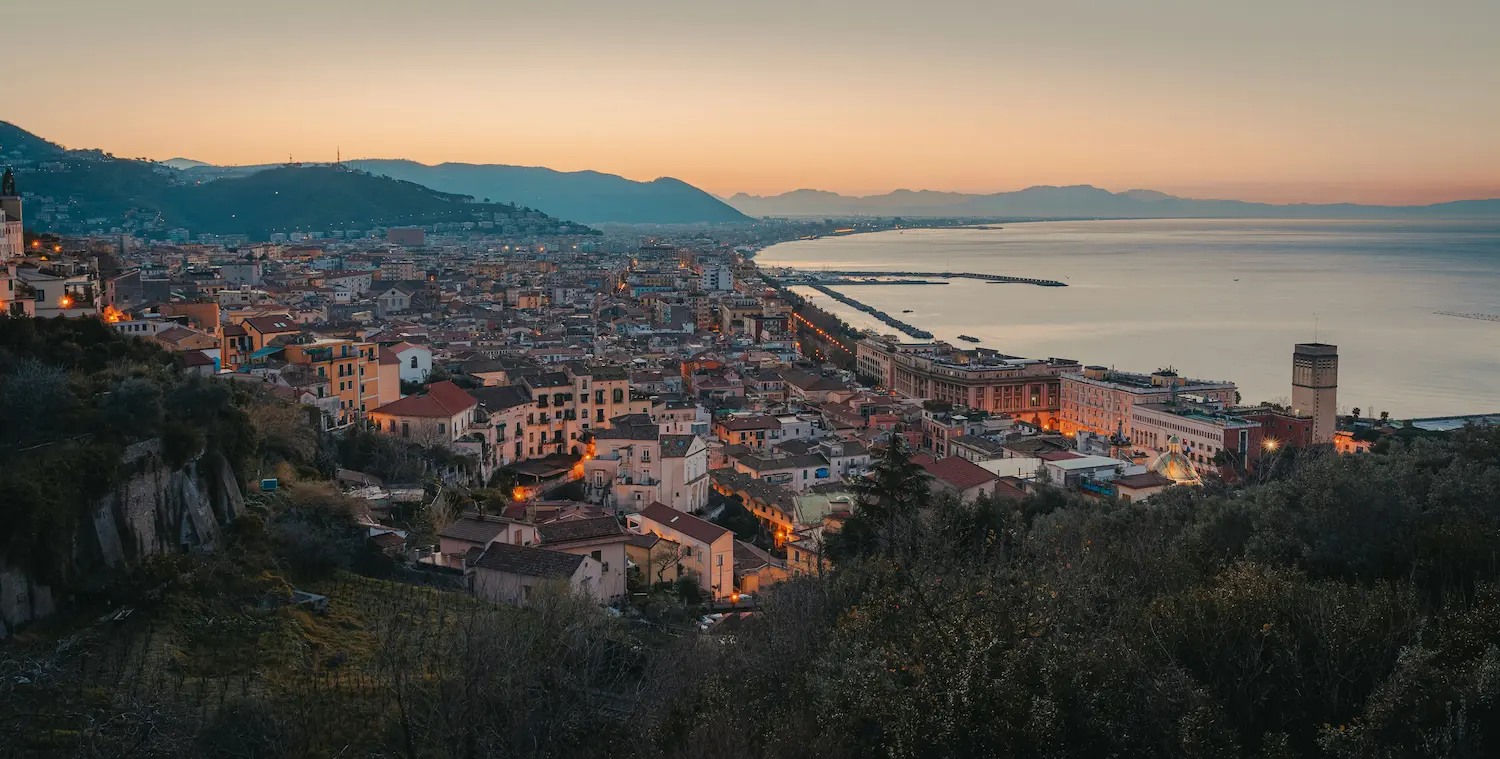
Salerno is different. It is a real southern Italian city of around 133,000 people — a working port, a university town, a place where people actually live. It has a proper old town, a seafront promenade that residents use for evening walks, excellent restaurants that are not entirely for tourists, and a direct ferry connection to the heart of the Amalfi Coast.
For the train traveller, it has another advantage that cannot be overstated: it is on the main Naples–Salerno rail line, served by fast Trenitalia regional trains. You can be at Napoli Centrale and in Salerno in 30–60 minutes for a handful of euros. Positano, by contrast, has no train station at all. Amalfi has no train station either. Salerno is where the railway meets the coast.
Base yourself here, and the entire coast opens up by boat and bus. No hire car. No queuing in Positano's traffic on the one road that threads the cliffside. Just the ferry from the waterfront, coffee in hand, watching the coast come into view.
Getting to Salerno
By Train from Naples
Take a Trenitalia regional or intercity train from Napoli Centrale to Salerno — not the Circumvesuviana (which goes to Pompeii and Herculaneum). You want the main line, departing from the ground-level platforms at Napoli Centrale.
- Journey time: 30–60 minutes depending on service
- Frequency: Very frequent — typically every 15–30 minutes
- Cost: €6
- Salerno station: Central and walkable to the waterfront
From Rome, Salerno is served by direct high-speed Frecciarossa services (run by Trenitalia) — around 2 hours 15 minutes, making it a viable destination for a longer trip from the capital.
From Naples Airport
The most straightforward route is a taxi or shuttle bus to Napoli Centrale, then the train to Salerno. Some direct bus services run between the airport and Salerno but are less frequent. The train option is generally faster and more reliable.
Salerno Itself: What to See Before You Take the Ferry
Many visitors treat Salerno as a purely functional base — somewhere to sleep between days on the coast. That is a mistake. The city has enough to reward a genuine afternoon of wandering, and one of its most interesting qualities is what has happened to its waterfront over the past thirty years.
A Waterfront Rebuilt by Starchitects
In the early 1990s, Salerno's long-serving Mayor Vincenzo De Luca initiated an ambitious urban regeneration plan. Rather than modest municipal development, he commissioned a sequence of internationally significant architects to rebuild the city's relationship with the sea. The result is genuinely unusual: a working Italian port city that now has a two-kilometre seafront designed by some of the most recognisable names in contemporary architecture.
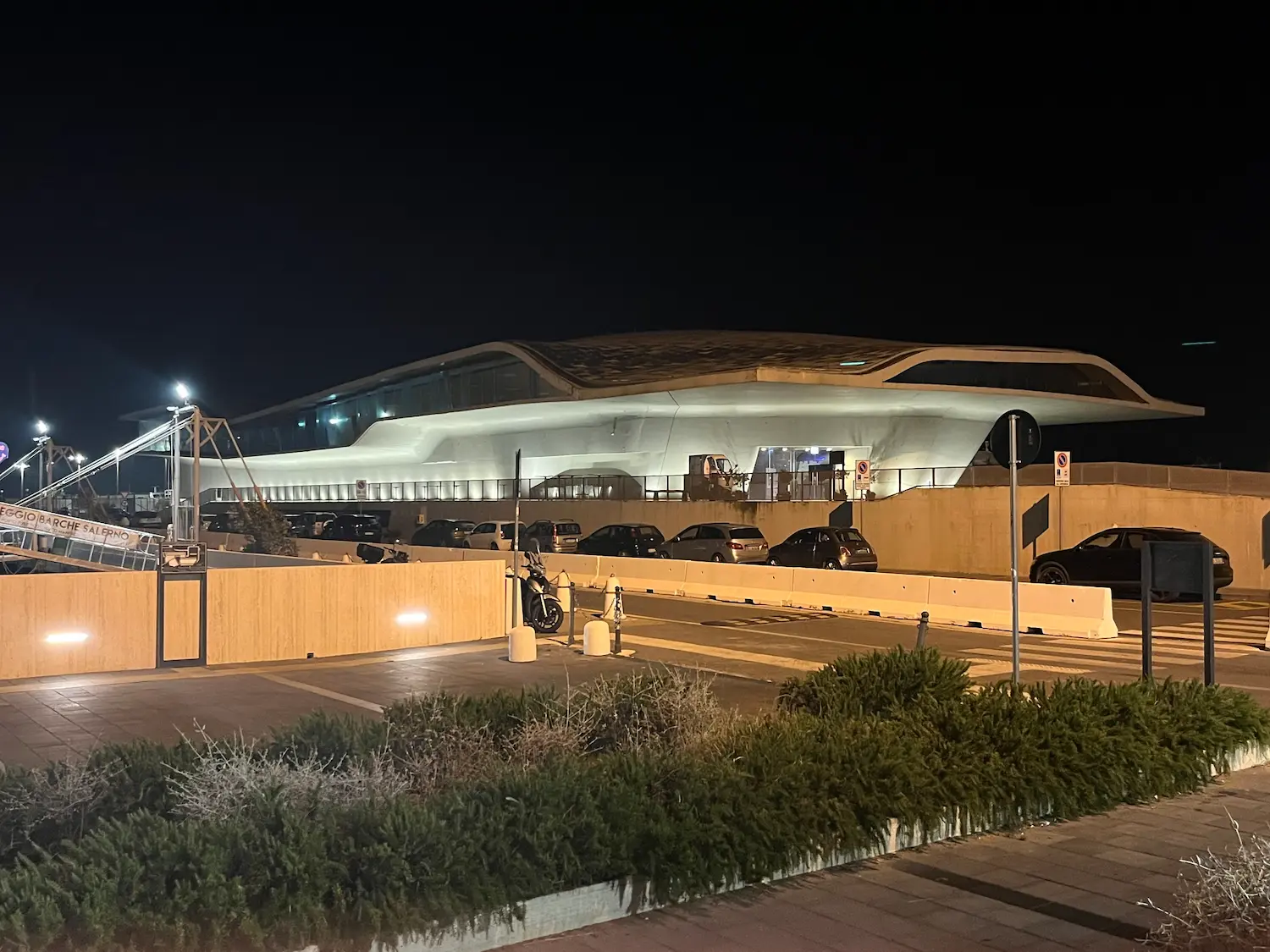
The Zaha Hadid Maritime Terminal (Molo Manfredi) is the most immediately striking piece. Completed in April 2016 — just weeks after Hadid's death, making it effectively her first posthumous building — it sits on the public quay like a vast concrete oyster, its asymmetric shell designed to shelter passengers from the Mediterranean sun. At night, illuminated from within, it glows on the shoreline like a lantern. It is extraordinary to encounter such a building in a port that most international visitors pass through without stopping.
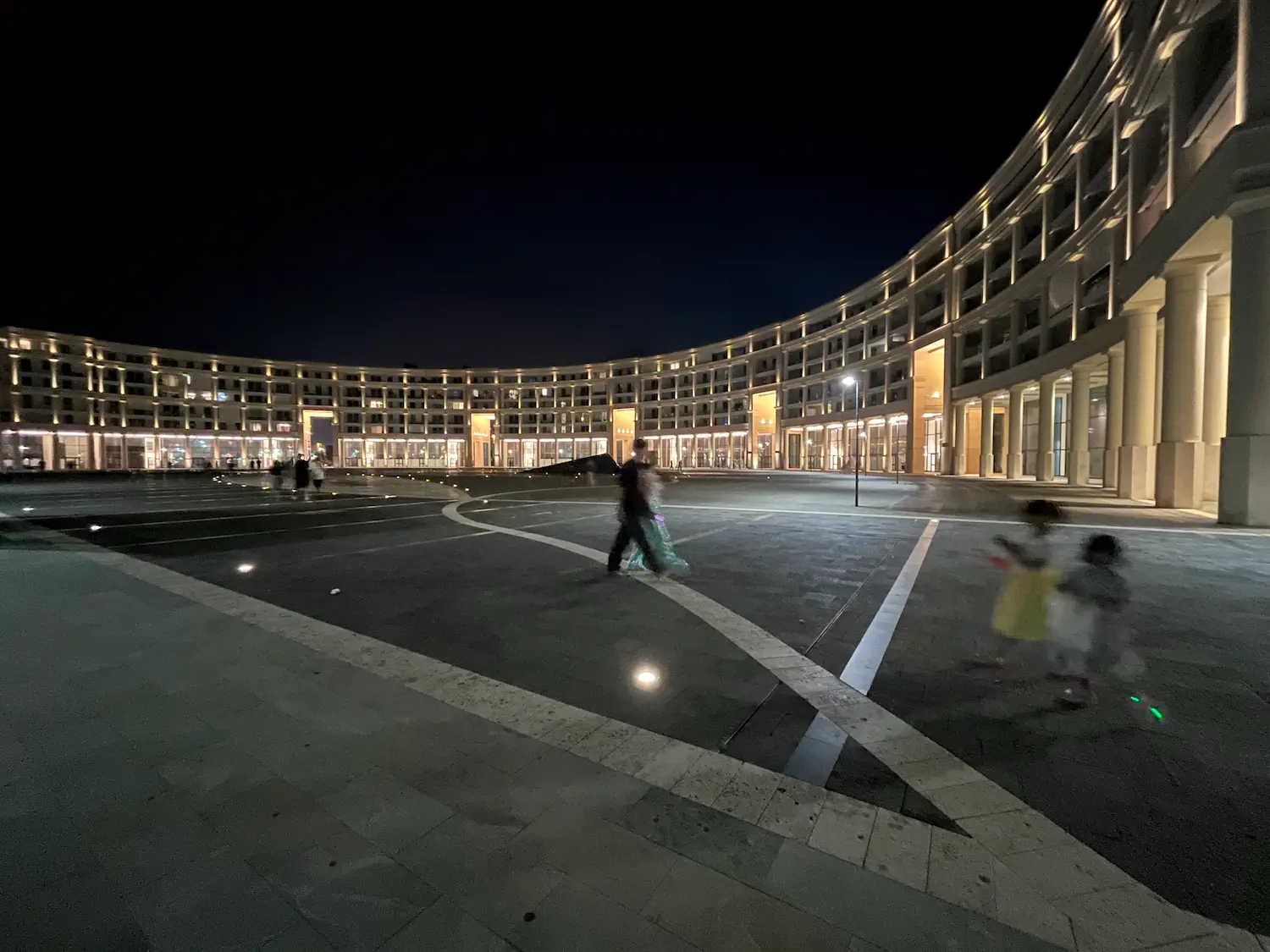
Piazza della Libertà and the Crescent, further along the waterfront, were designed by Catalan architect Ricardo Bofill. The semicircular crescent-shaped building frames what is claimed to be the largest seafront square in Europe — some 28,000 square metres of marble paving (imperial green marble and lava stone) facing the sea. The geometry is theatrical, with the square's triangular layout pointing towards the water. It divides opinion locally and has attracted some controversy, but it is impossible to ignore.
The regeneration project also included a Palace of Justice by David Chipperfield Architects, alongside Oriol Bohigas' urban masterplan which shaped the wider city's renewal. Salerno, in short, invested heavily in architecture as identity — and walking the waterfront, you can feel that ambition in the grain of it.
The Old Town
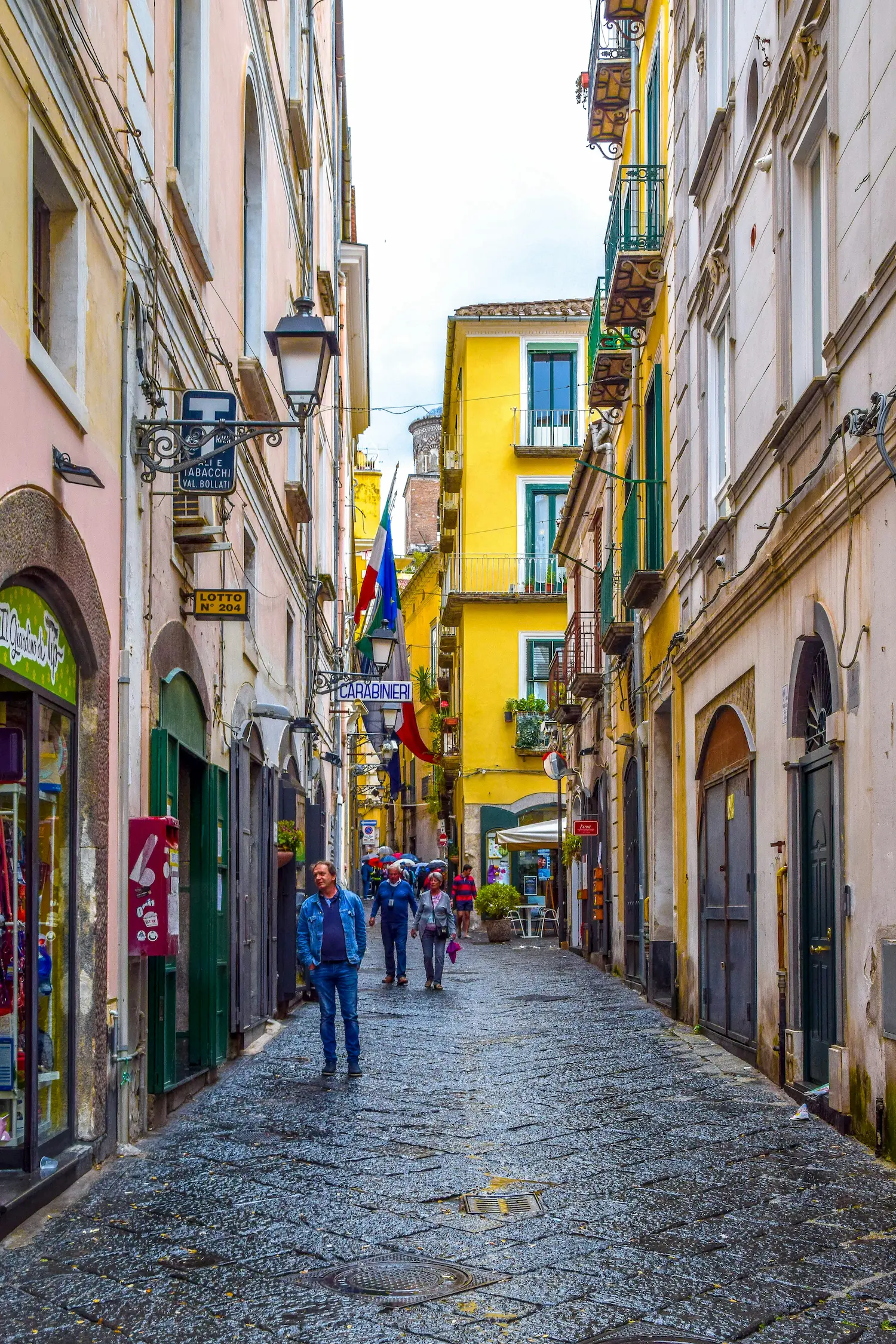
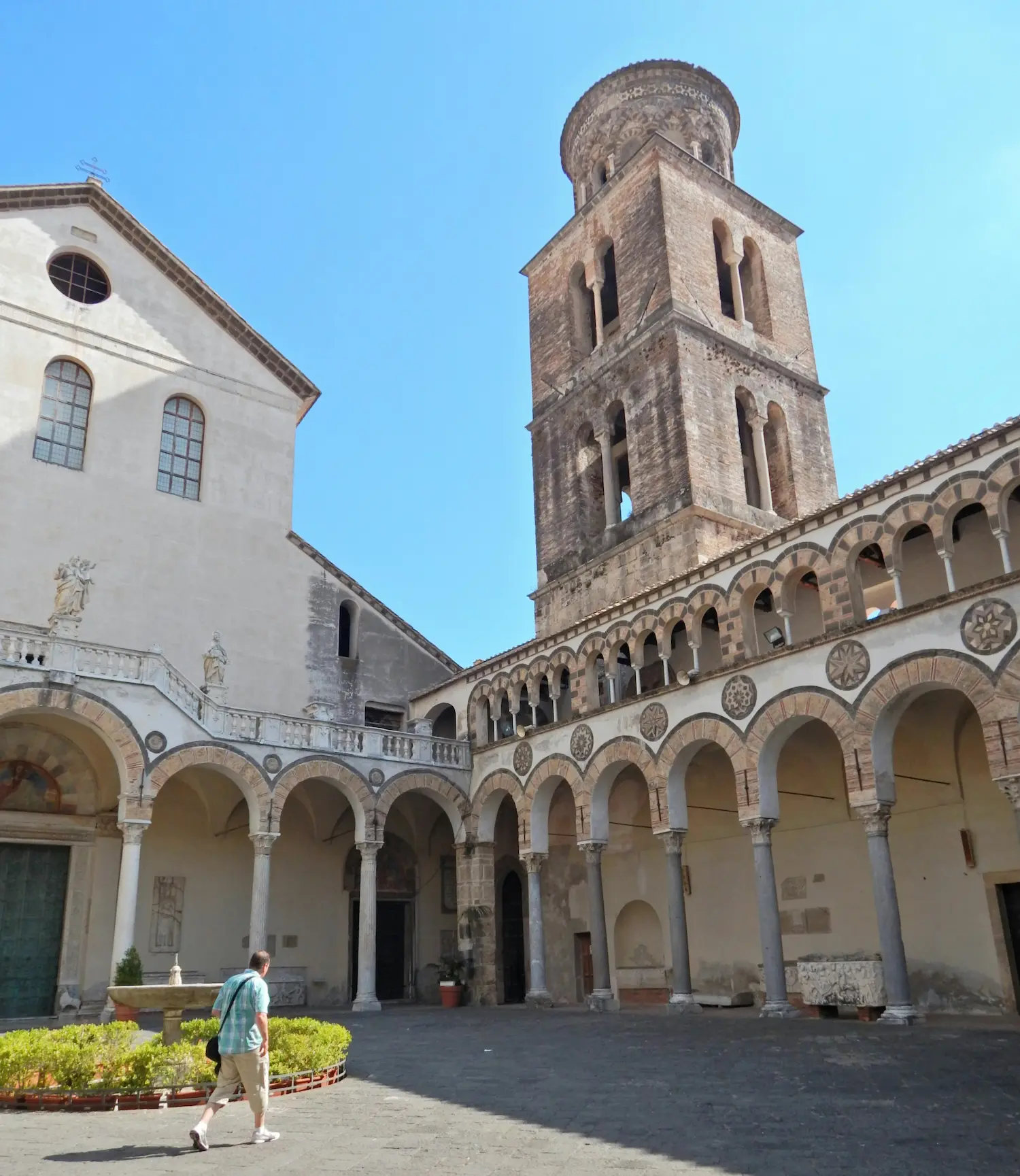
Away from the modern seafront, Salerno's historic centre is a network of medieval lanes between the cathedral and the castle that rewards aimless walking. The Duomo di Salerno (Cathedral of San Matteo) is one of the finest Norman cathedrals in the south — founded in the 9th century, rebuilt after a 1688 earthquake, and containing the crypt of the Apostle Matthew. The bronze doors of the main entrance were cast in Constantinople. It is quieter and less visited than it deserves to be.
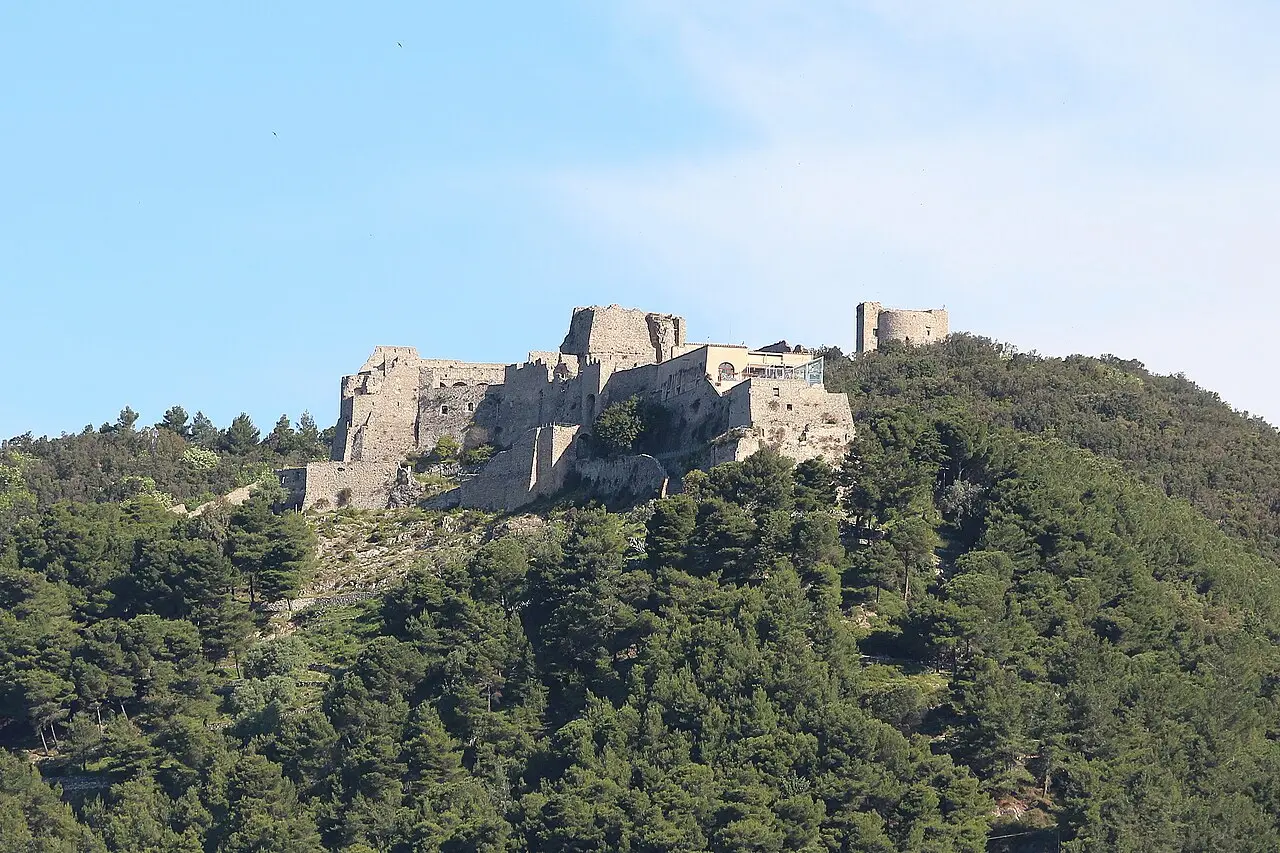
The Castello di Arechi sits on the hill above the city — a Lombard fortification later modified by the Normans, with panoramic views across the Gulf of Salerno and, on clear days, down the coast towards the beginning of the Amalfi peninsula. It requires a bus or taxi to reach but is worth it for the view alone.
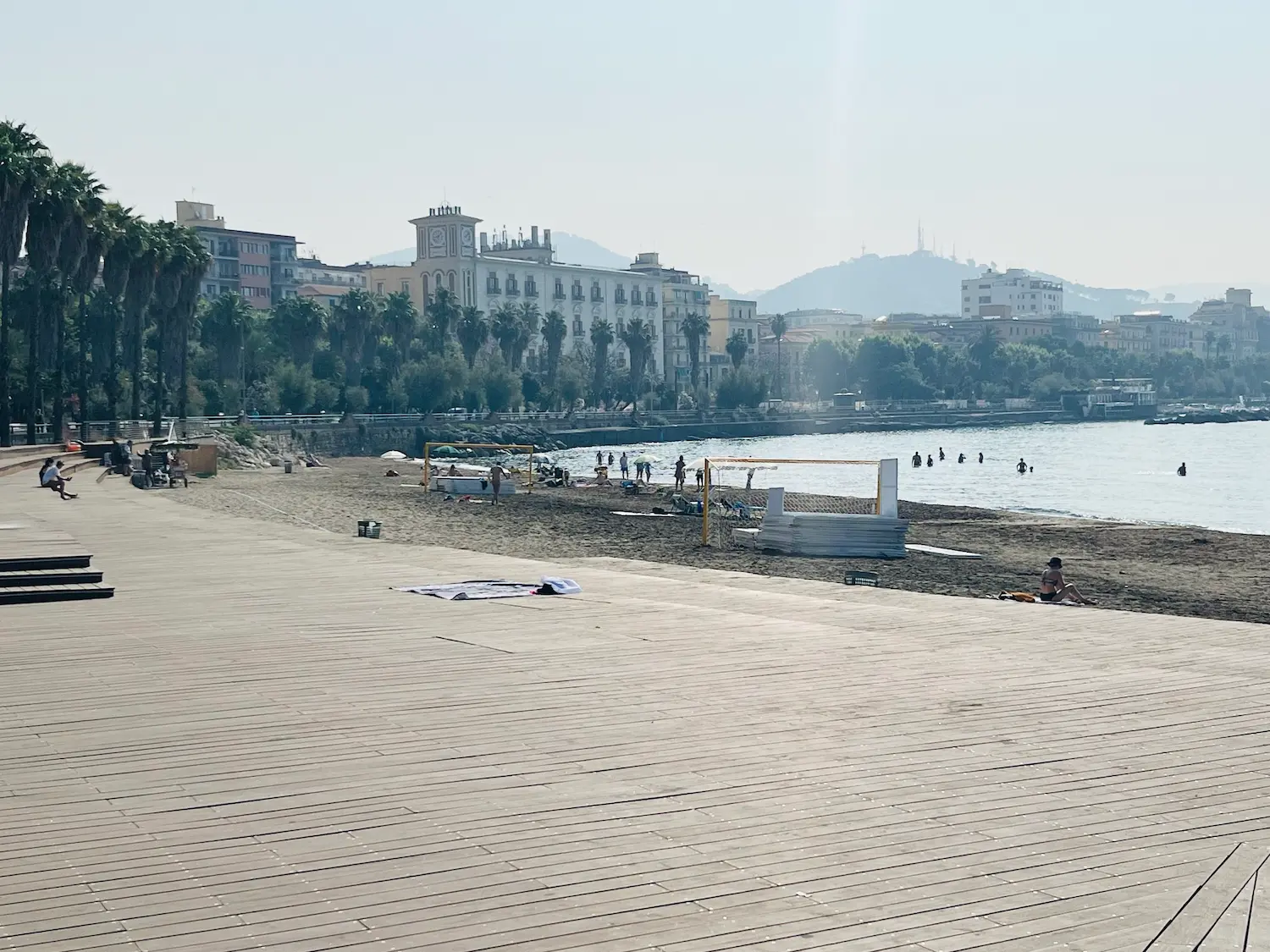
The Lungomare Trieste — the main promenade — is at its most authentic in the late afternoon, when Salernitani come out to walk. Lined with palm trees, it stretches along the bay with views across to the hills of the Cilento coast on the far side. Sit at a café, order an Aperol spritz, and resist the urge to check your phone.
The Ferries: Getting to the Amalfi Coast
This is the reason Salerno works so well as a base. Ferries depart directly from the waterfront — walking distance from the station, the old town, and wherever you are staying — for the main towns of the Amalfi Coast.
Where to Catch the Ferry
There are two departure points in Salerno, both along the Lungomare:
- Molo Concordia (Molo Masuccio): The pier closest to the city centre, about a 10-minute walk from the train station. Most local and regional ferries depart from here.
- Molo Manfredi: Further along the waterfront — this is the Zaha Hadid terminal, used for some routes and for cruise ships.
Check which pier your specific company uses when buying tickets.
Ferry Companies
Several companies operate routes from Salerno along the coast. The main ones to know are:
- Travelmar — the highest frequency of departures, particularly to Amalfi and along the coast. Runs up to 11 sailings daily to Amalfi in high season.
- Grassi Junior — operates Salerno to Amalfi and onwards.
- NLG (Navigazione Libera del Golfo) — operates from Molo Manfredi; fast service to Positano.
- Alicost — covers Amalfi and other towns.
- Positano Jet — direct to Positano.
You do not need to commit to one company — mix and match depending on timing. Booking comparison sites like Ferryhopper or Ferryscanner allow you to see all available departures side by side.
Salerno to Amalfi
- Journey time: 25–40 minutes (fast services); up to 1 hour on slower boats
- Cost: From around €12-16
- Frequency: Up to 15+ daily sailings in high season; year-round service available
- First departure: Around 8:25am
The ferry journey to Amalfi is itself one of the great pleasures of being based in Salerno. You leave the port with the modern terminal behind you, and within minutes the coast begins: white villages perched on impossibly steep cliffs, lemon groves terraced into the rock, the dark blue of the Tyrrhenian Sea. You arrive in Amalfi directly at the town's waterfront, right beside the main piazza. No bus, no traffic, no transfer.
Salerno to Positano
- Journey time: 50–75 minutes (high-speed services); slower boats up to 1 hour 40 minutes
- Cost: From around €17
- Frequency: Multiple daily sailings in season, up to 14 from Molo Concordia alone
- Note: Seasonal (roughly April–October); services are more limited outside of this window
Positano's ferry landing is directly on Spiaggia Grande — the main beach. You arrive at sea level and walk straight into the town. Given that everything in Positano involves either climbing or descending, arriving by water is both the most scenic and one of the most practical approaches.
Luggage note: Most ferry companies allow one piece of luggage but may charge a few euros for larger bags. Check individual policies when booking. Size limits vary (typically 50x35x20cm). If you are travelling with a large rucksack or suitcase, confirm in advance.
Buying Tickets
- Online: Ferryhopper and Ferryscanner both offer comparison and booking across multiple companies. Recommended in high season (book 3–4 weeks in advance for morning summer sailings, particularly to Positano). Although it is worth checking the individual ferry sites, as booking fees can be lower.
- At the pier: Ticket offices are located at both Molo Concordia and Molo Manfredi, as well as at various points along the seafront. You can generally purchase on the day outside peak season.
- Day-of note: Check the current timetable shortly before departure — services can be cancelled in bad weather or rough seas. The coast's exposure to southerly winds means this happens occasionally, particularly in shoulder season.
Ferry Season
The full service runs roughly April to October. Outside these months, routes are reduced significantly. If you are visiting in winter, the ferry to Amalfi still runs (year-round from Molo Concordia), but Positano services will be limited or suspended. Plan accordingly.
Doing Amalfi and Positano in One Day
It is possible, and it makes for a very satisfying day from Salerno. Here is a realistic plan:
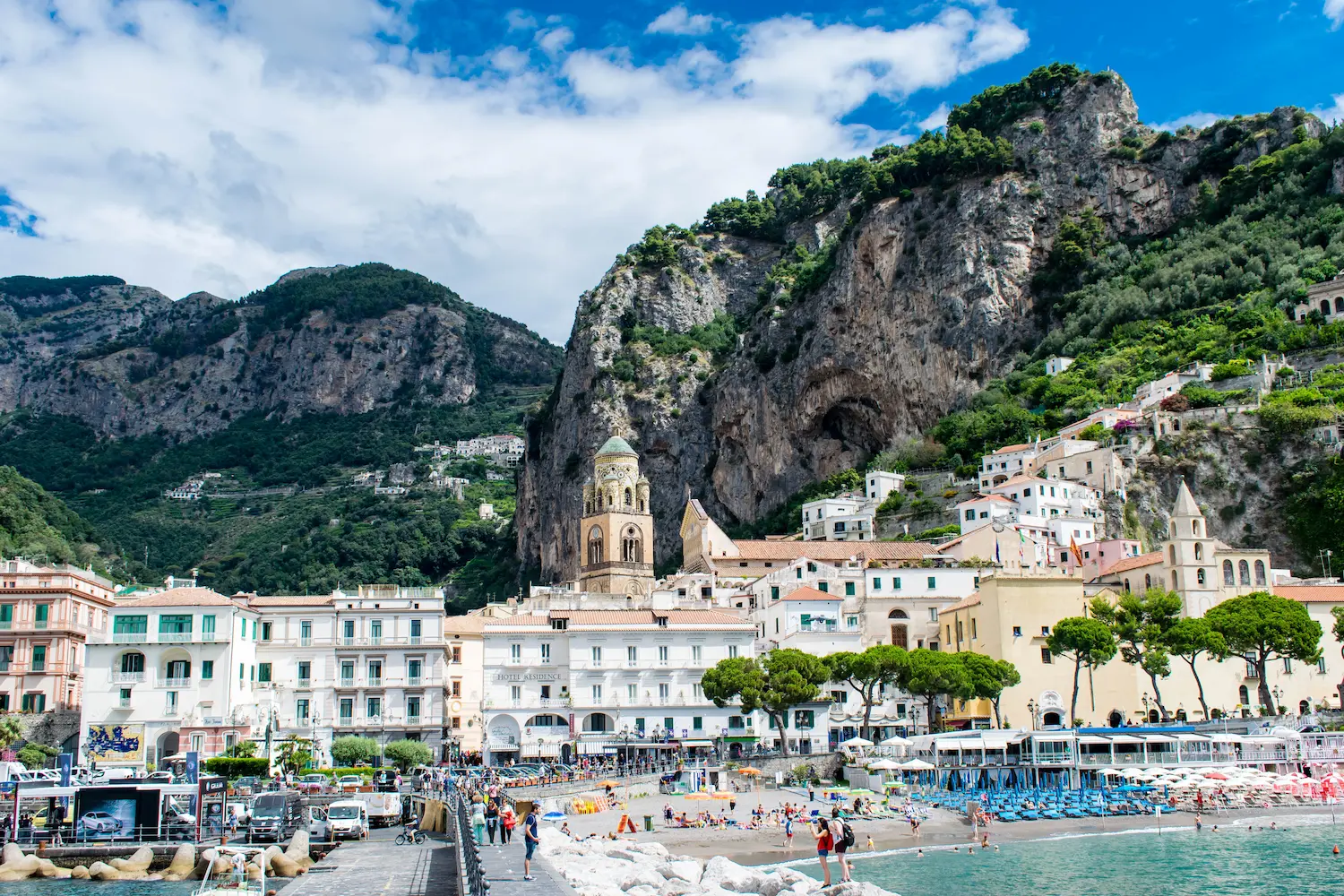
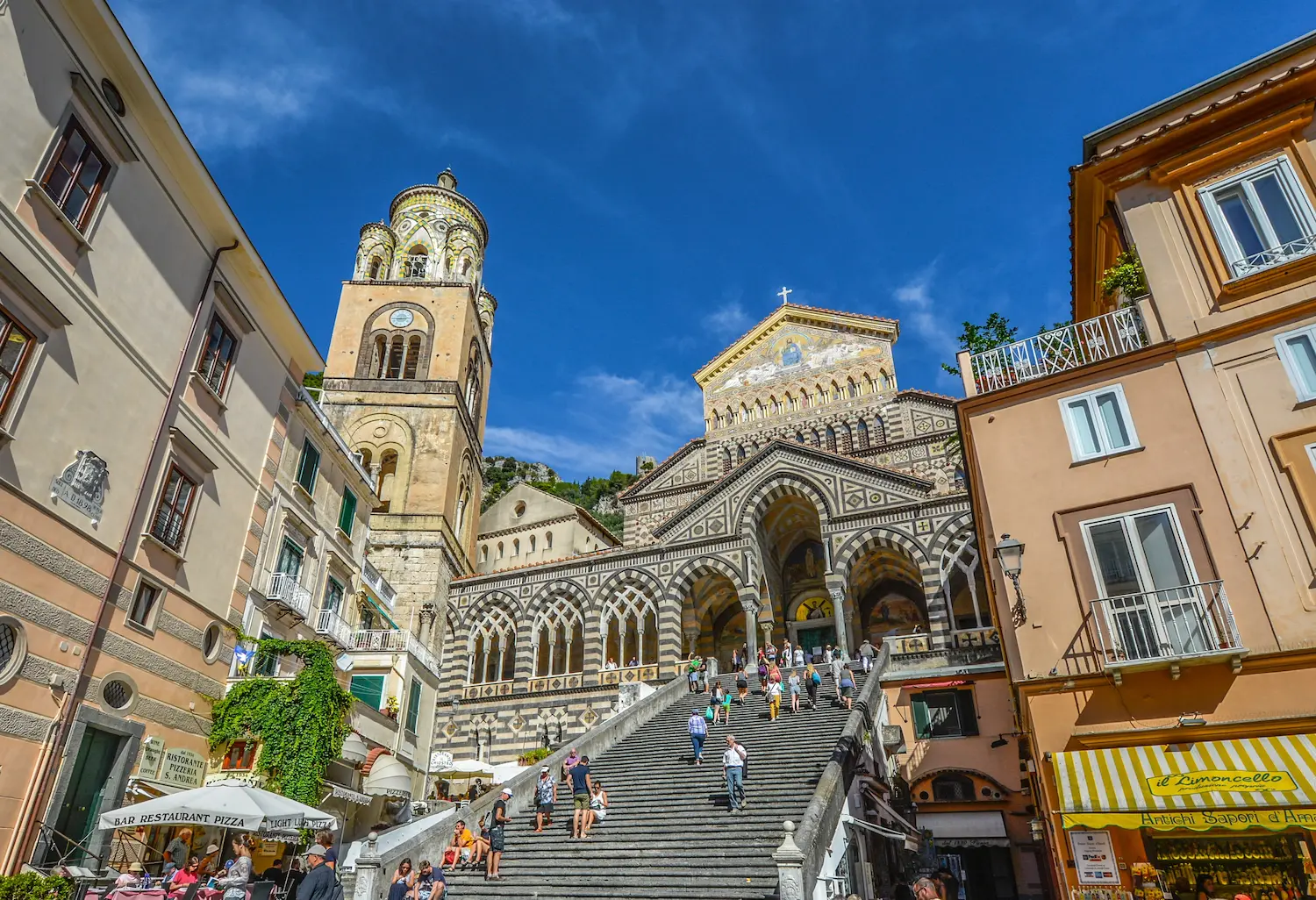
Morning: Take the early ferry from Salerno directly to Amalfi. Arrive by 9:30–10am. Walk up from the waterfront to the Cathedral of Sant'Andrea — its ornate, striped Romanesque-Arab facade is one of the most arresting sights on the coast. Climb the 62 steps. Have a coffee at a café on the piazza below and watch the light move across the facade.
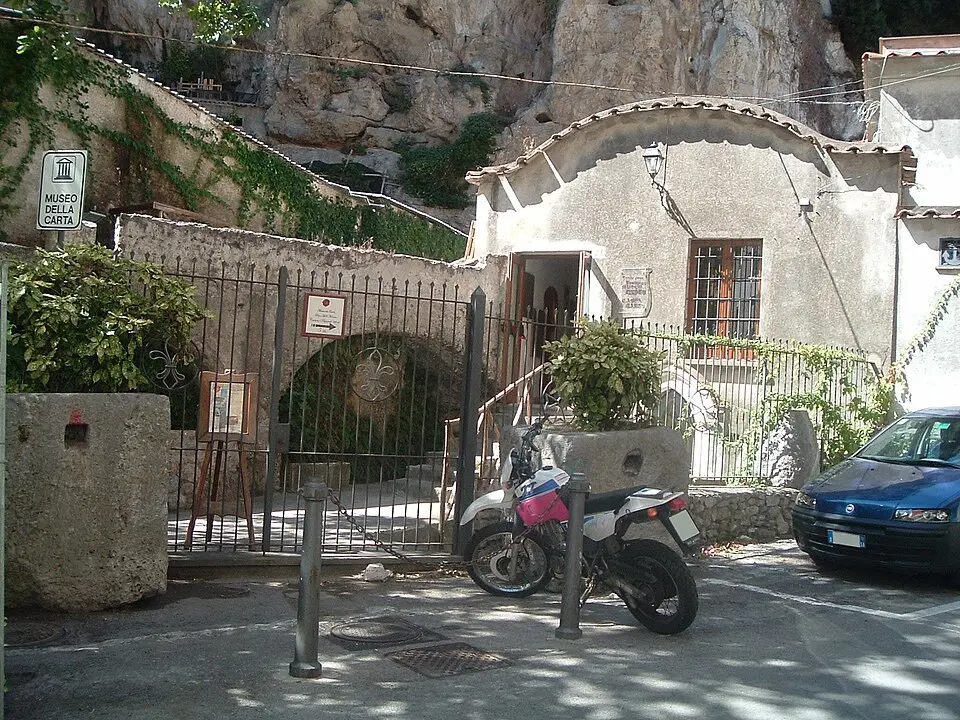
From Amalfi, walk up through the town and find the Paper Museum (Museo della Carta) — Amalfi was the first town in Europe to manufacture paper, and the 13th-century mill building in the Valle dei Mulini is unexpectedly interesting. Amalfi's old quarter is also less overrun than the seafront; spend time in the back streets.
It is also worth doing the short walk over to Atrani if you have time (see below).
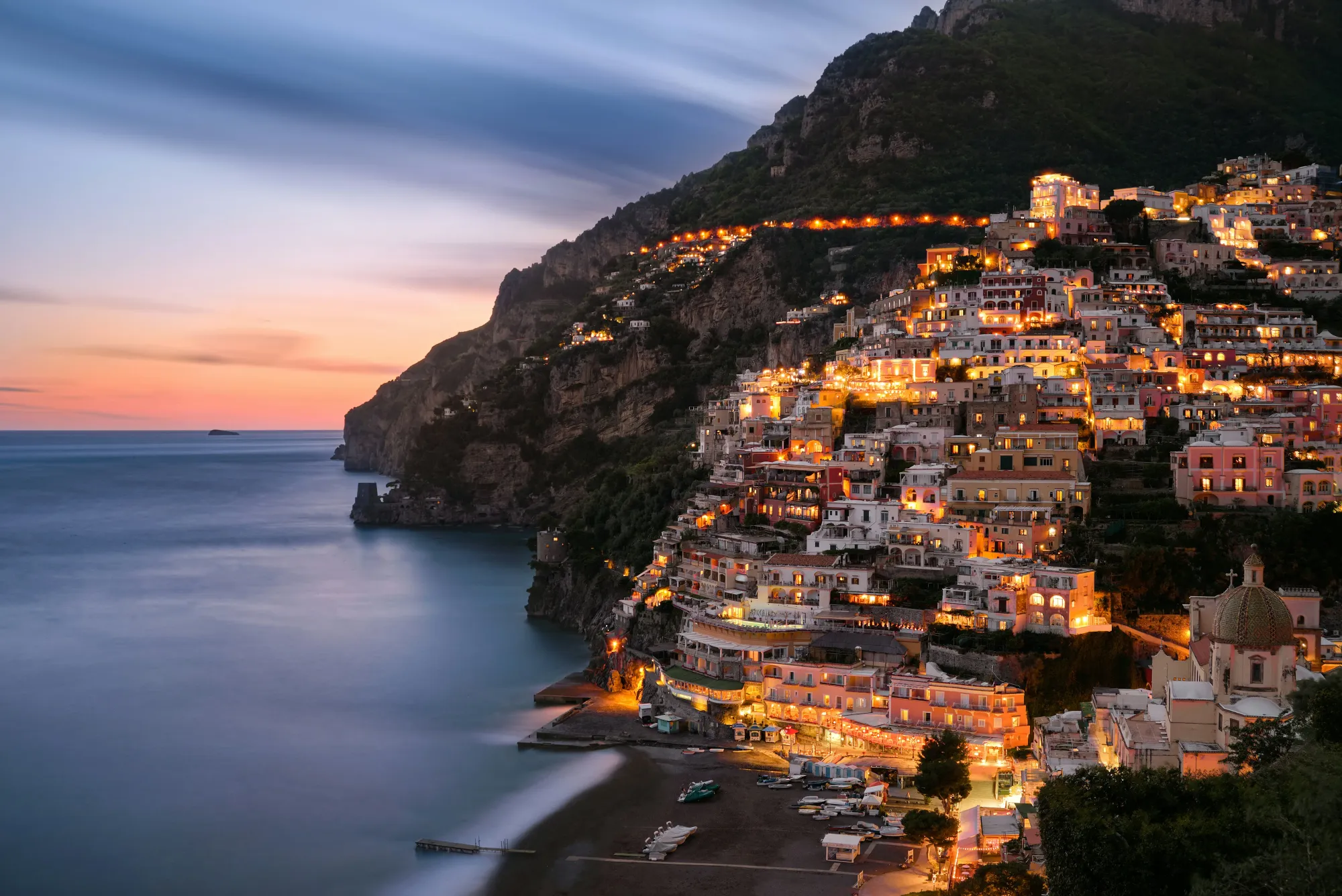
Late morning/lunchtime: Catch a ferry from Amalfi to Positano — the crossing takes 15–25 minutes and costs around €9–10. In Positano, have lunch somewhere with a view of the town from below. The famous pastel houses stacked vertically up the cliff look their best from the waterfront.
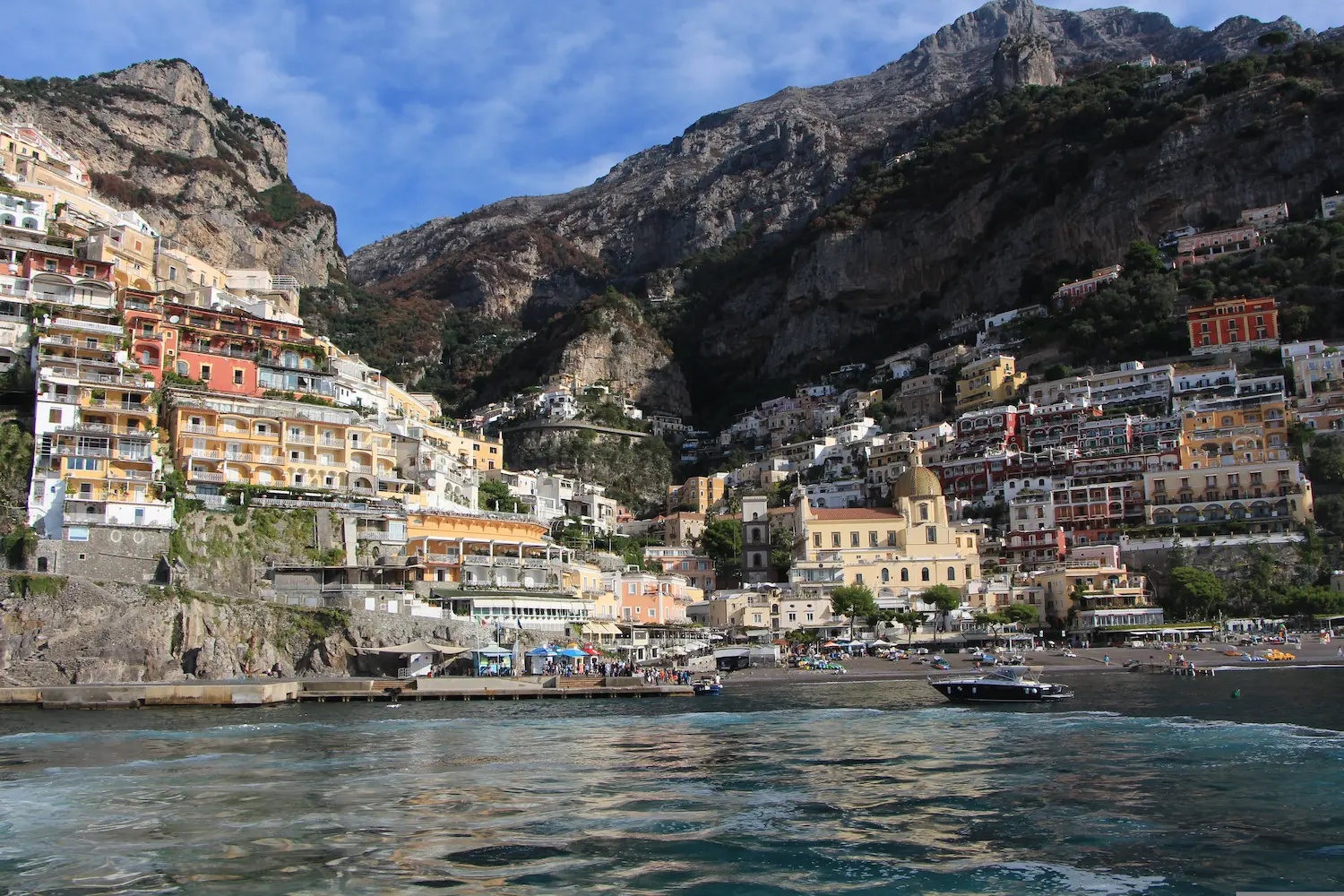
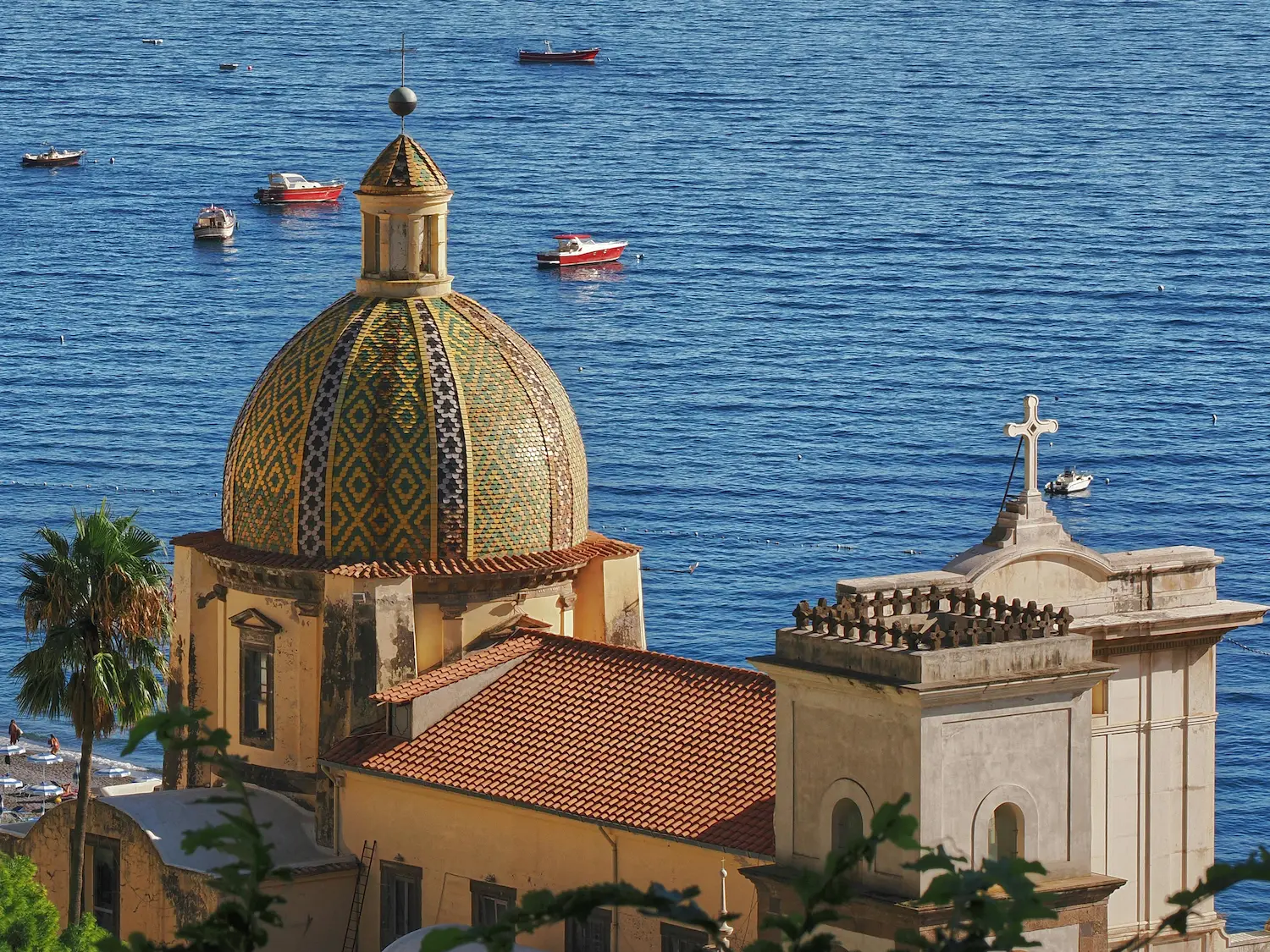
Afternoon: Explore Positano on foot. It is almost entirely vertical — every route involves either ascending or descending its steep lanes and staircases — but the town is small enough that you can cover it thoroughly in a few hours. The Church of Santa Maria Assunta, with its distinctive majolica-tiled dome, is at the centre of everything. The view from the steps outside the church, looking down over the beach and out to the Faraglioni rocks of Capri in the distance, is the quintessential Amalfi Coast image.
Return: Take a direct ferry from Positano back to Salerno in the late afternoon. Sit on the left side of the boat for the best views of the coast.

Amalfi to Atrani: The Walk Through the Car Park
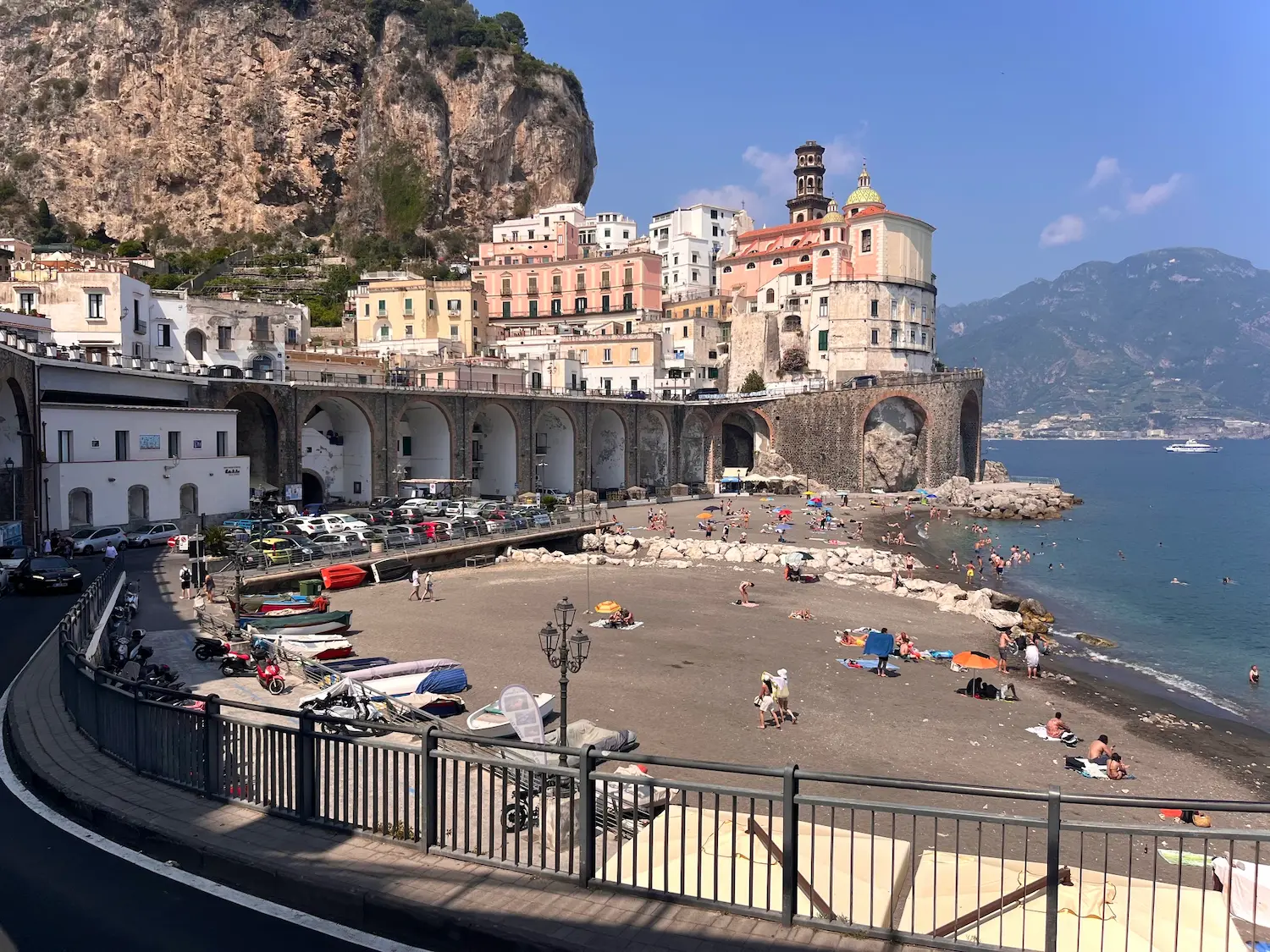
This is one of the small delights of the Amalfi Coast. Atrani is a village that most visitors to Amalfi miss entirely, despite being less than ten minutes' walk away — arguably the most charming small settlement on the entire coast. It sits in a narrow ravine just around the headland from Amalfi, its whitewashed houses rising tightly around a small square with a church and a fountain.
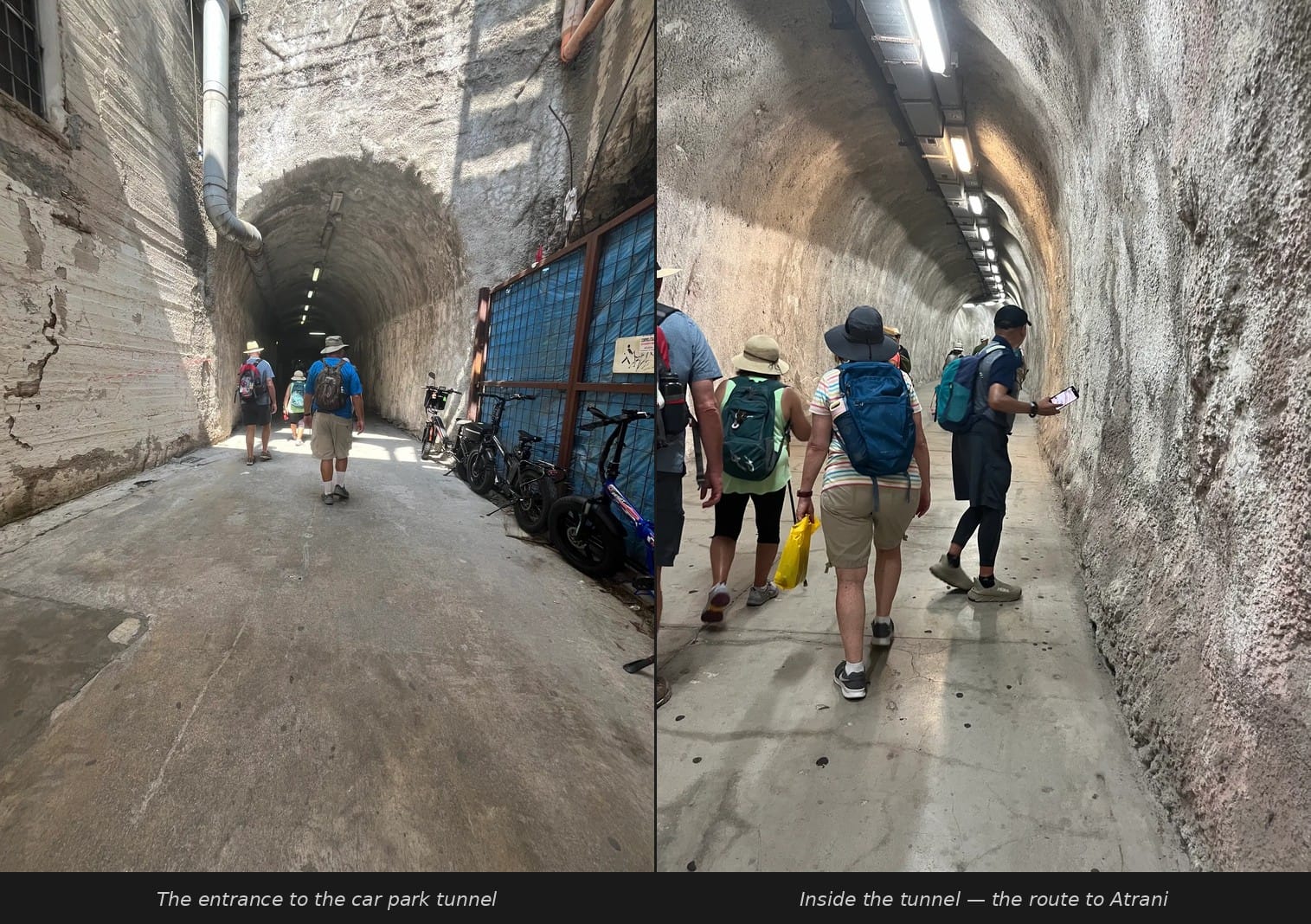
To walk there from Amalfi, you go through the car park. Literally: there is an underground car park near the eastern end of Amalfi, and the route to Atrani passes through it and out the other side via a tunnel. It is one of those transitions that takes you by surprise — from the tourist bustle of Amalfi, through a concrete tunnel, then a short walk along the road, and then suddenly into a quiet beach, and a tiny piazza close by that feels entirely Italian and almost entirely tourist-free.
Atrani has a small beach (free), a handful of restaurants, and the Church of San Salvatore de' Birecto, where the Doges of Amalfi were once crowned. Sit at a café on the square, have a spritz, and appreciate being somewhere that most people who spend the day in Amalfi never find.
The return walk is the same way — back through the car park, back into Amalfi, and down to the ferry pier.
The Path of the Gods (Sentiero degli Dei)
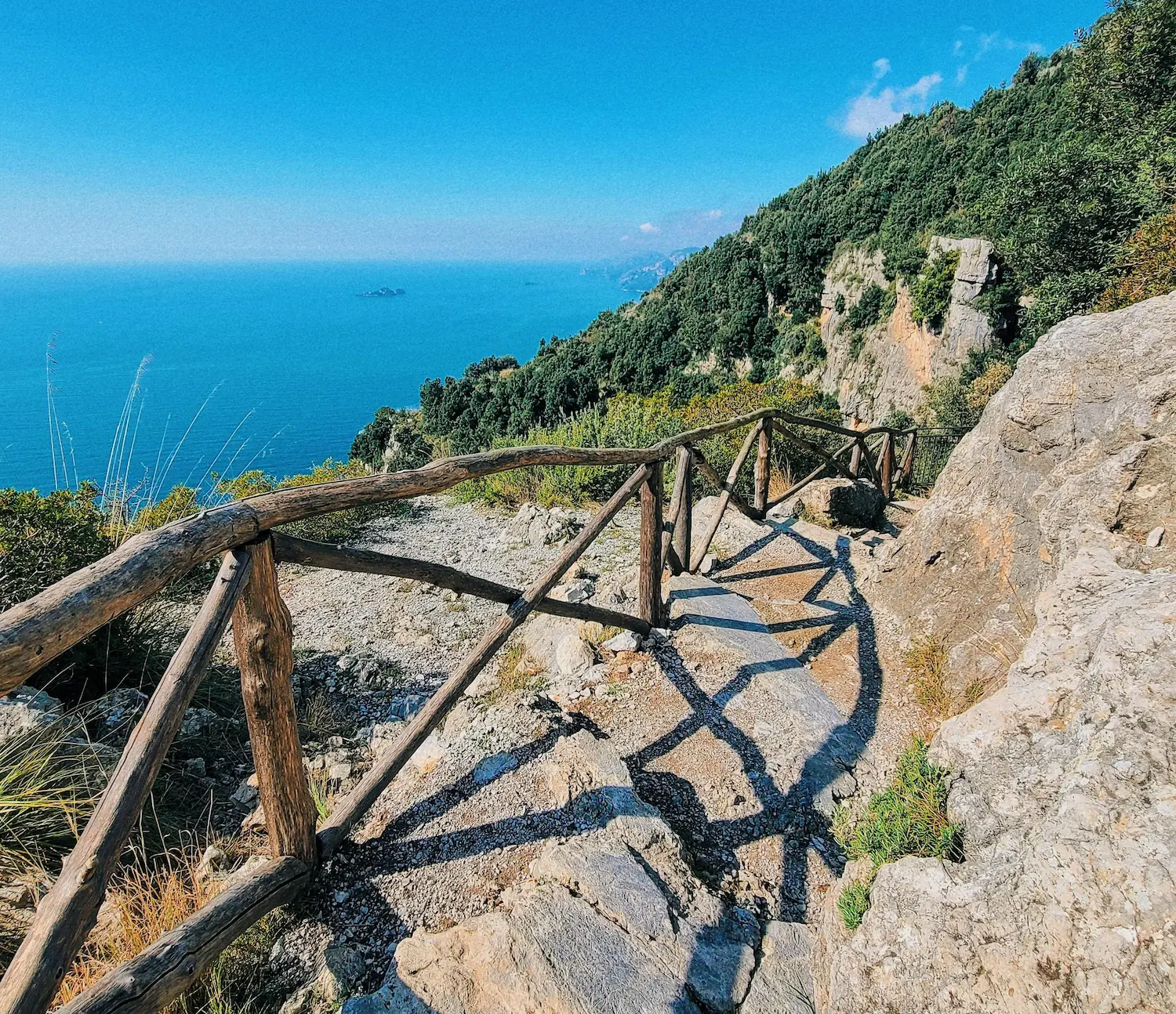
The Path of the Gods is widely considered one of the finest walks in Italy. The trail runs along the clifftops high above the Amalfi Coast, between the village of Bomerano (in the commune of Agerola) and Nocelle, just above Positano. Views of the sea, the Li Galli islands, Capri in the distance, and the coast dropping away on both sides accompany you for most of the 6.5km route.
The name comes from an ancient legend: the Greek gods walked this path to rescue Ulysses from the Sirens who lived near the Li Galli islands in the bay below. Whether or not you find this plausible, the name earns its keep.
The Route
The standard direction — and by far the better one — is Bomerano to Nocelle: start at the higher village and walk roughly downhill (or flat) towards Nocelle, keeping the coast and Capri ahead of you for almost the entire walk. Walking the other way means climbing 1,700+ steps with the view behind you. Start in Bomerano.
- Distance: ~6.5km
- Duration: 2.5–4 hours depending on pace and stops
- Difficulty: Moderate — the path is well-marked but uneven, exposed in places, and with some vertiginous sections. Not suitable for anyone who struggles with heights.
- Surface: Rocky, uneven mountain path. Hiking boots or sturdy trail shoes are strongly recommended. Do not attempt in flip-flops.
Getting There by Public Transport from Salerno
Step 1: Take the ferry from Salerno to Amalfi (first service around 8:25am — take this one, or as early as possible).
Step 2: From Amalfi, take the SITA bus 5080 in the direction of Agerola/Naples. The journey to Bomerano takes around 40 minutes. Buy your ticket in the bar in front of the bus stop before boarding (not on the bus itself). Ask the driver to let you know when you reach Bomerano — the stop is not always announced.
Step 3: From the bus stop in Bomerano, walk the short distance to Piazza Paolo Capasso and find Via Sentiero degli Dei — the path begins from there.
Getting Back: Nocelle to Positano to Salerno
From Nocelle at the end of the walk, you have two options to reach Positano:
- By bus: Mobility Amalfi Coast buses run from Nocelle to Positano approximately hourly in high season, taking around 25 minutes. Buy tickets on board or from the tabacchi shop.
- On foot: The descent from Nocelle to the main Amalfi Coast road involves approximately 1,700 steps — steep, knee-intensive, but faster than it sounds (around 20 minutes). From where the steps meet the road, it is around 1km into Positano proper.
From Positano, take the direct ferry back to Salerno. This is the elegance of the whole day: you start the walk from a ferry at one end of the coast, walk the clifftops, and return home by ferry from the other end. No car. No backtracking.
Practical notes:
- Start early - before 9am in Bomerano if possible. The path faces south, so afternoon sun in summer can be fierce.
- Carry at least 1.5 litres of water. There is one small refreshment stop on the path (Chiosco degli Dei, near Nocelle), but limited shade.
- The path is free and open year-round, though sections can be temporarily closed after wildfires or landslides. Check local conditions before setting out.
- Trekking poles help on the uneven descent sections.
Vietri sul Mare: A Quiet Day by Train
This is the contrast day — the one you take when you want to move slowly.
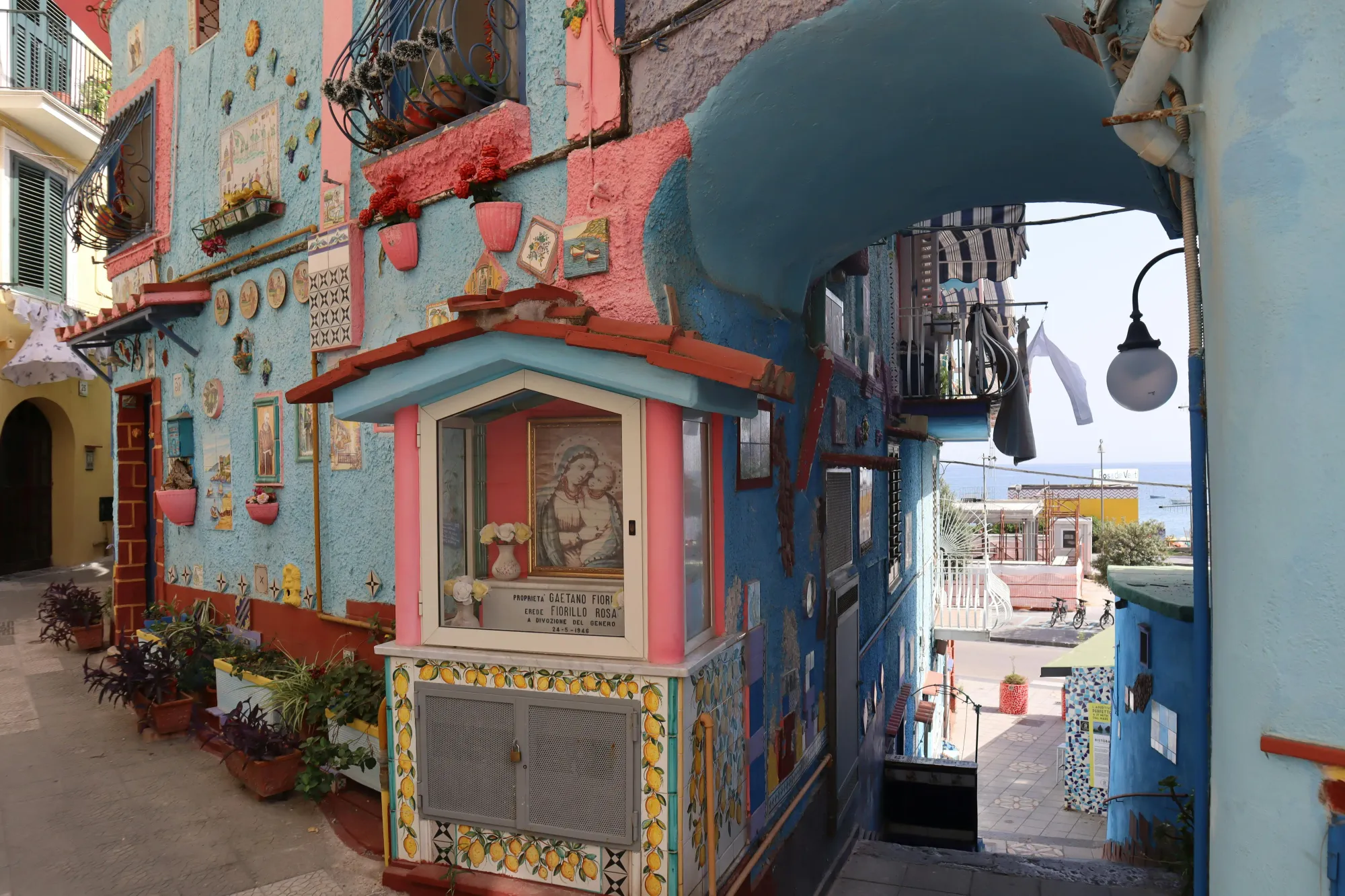
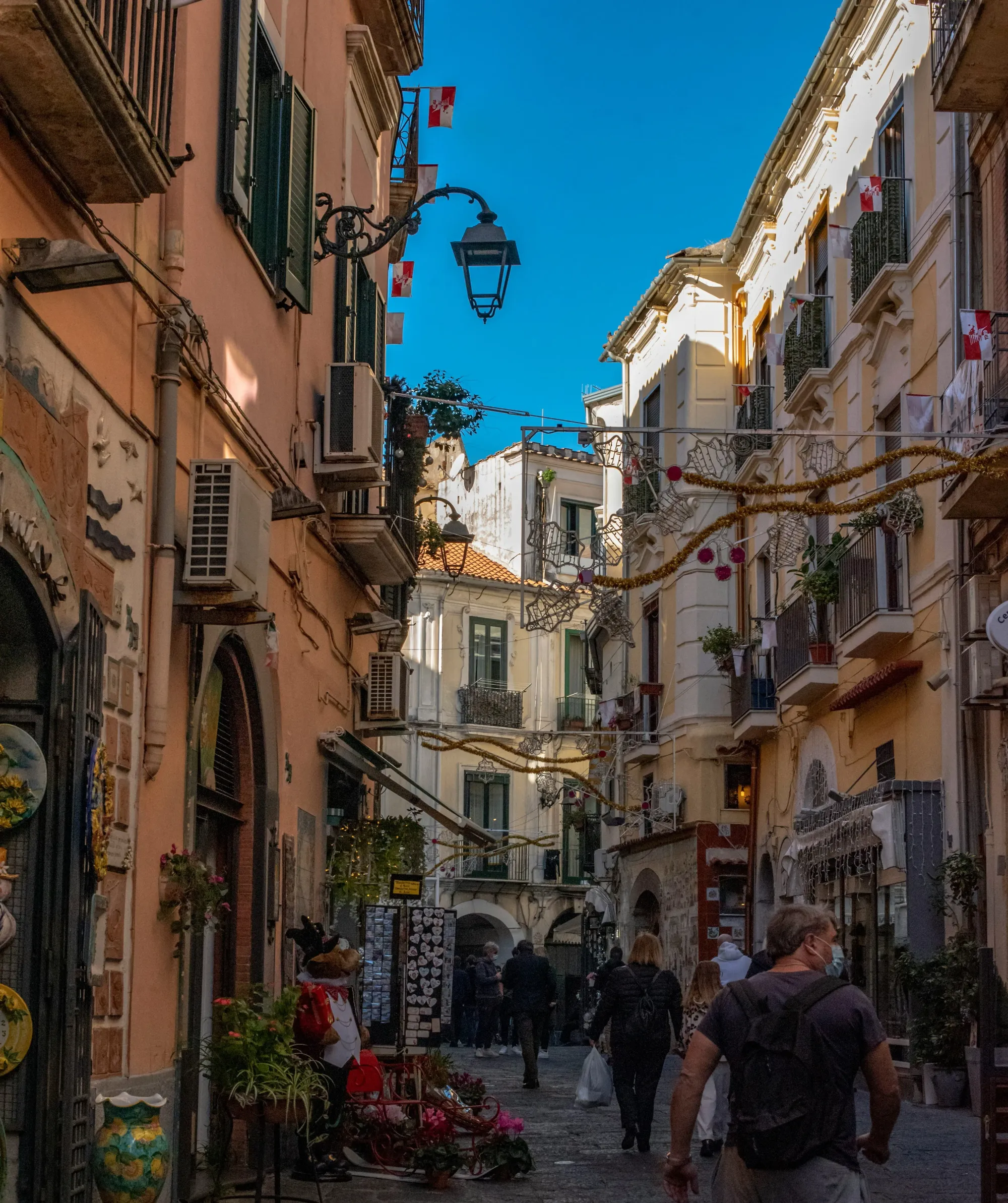
Vietri sul Mare is the first town on the Amalfi Coast as you approach from Salerno, and it is the only town on the entire coast with a train station. It is also genuinely quiet in a way that Positano and Amalfi are not — a working town rather than a resort, with its own character, its own traditions, and a seafront that has not been entirely absorbed by tourism.
Its defining characteristic is ceramics. Vietri has been producing and exporting hand-painted majolica since the Middle Ages, and the tradition is everywhere you look: in the tiles on building facades, the painted ceramic street numbers, the chapel dome of the Church of San Giovanni Battista gleaming in the sun with its distinctive majolica tiles, the ceramics workshops that still operate with techniques passed down through generations. The main streets are lined with shops selling everything from large decorative plates to individual tiles, in the characteristic Vietri palette of deep yellows, cobalt blues, and warm greens.
Getting There
From Salerno, the regional train to Vietri sul Mare takes approximately 16 minutes and costs around €2. Trains run on the main Naples–Salerno regional line. At the station, confirm you are boarding one that stops at Vietri (not all do — some fast services skip it).
The station is at the bottom of the town, close to the seafront. From there it is a walk up into the historic centre.
From Naples directly: Vietri is also reachable in around 50–70 minutes on the Naples–Salerno regional train. The station sits between Salerno and the start of the Amalfi Coast road, making it a logical first or last stop.
What to See and Do
The town itself is the main attraction. Walk the main shopping street for ceramics — prices are competitive and the quality is high. If you want to understand the history of the craft rather than just browse, the Museo della Ceramica at Villa Guariglia in the nearby hamlet of Raito is free to enter. It traces the tradition from medieval origins to the present day and is set in a beautiful old villa with views over the Gulf of Salerno.
The Villa Comunale — the town's public garden — has a tiled stairway that reminds some visitors of Gaudí's Parc Güell in Barcelona. The comparison is a stretch, but the mosaic handrails and ceramic decorations are beautiful.
The Church of San Giovanni Battista, in the upper town you'll find an 18th-century Baroque church whose dome is covered in majolica tiles that catch the light from a considerable distance.
At the bottom of the hill, the Marina area has a beach (one of the larger stretches of sand on the coast), seafront restaurants, and a noticeably more laid-back atmosphere than its neighbours. The water close to the Salerno port end is less clear than further along the coast, but the promenade and the views across the bay are pleasant.
Lunch: This is a town where you eat well and cheaply. Find a trattoria and take your time. This is the Amalfi Coast without the price tag.
A Slower Half-Day
Vietri works best as a half-day or a slow full day rather than a packed itinerary. Take the 16-minute train from Salerno, walk up to the ceramics shops and the church, have a long lunch, browse a few workshops, and take the train back in the late afternoon.
Practical Advice for Salerno
Where to stay: For ferry access and walking to the waterfront, look for accommodation near the Lungomare Trieste or in the historic centre between the cathedral and the station. Both are walkable to the main ferry piers. Prices are noticeably lower than equivalent accommodation in Positano, Amalfi, or Sorrento.
The ferry from Salerno in rough weather: The coast is exposed, and services do get cancelled when seas are rough. If you have a day planned around a specific ferry, check the weather forecast the night before and have a contingency. The SITA bus to Amalfi along the coast road is the backup — slower and more dramatic in a different way, but it runs regardless of sea conditions.
Luggage storage at Salerno station: Available at the station if you arrive early and want to explore before checking in. Useful if your hotel doesn't allow early check-in. Or alternatively use Radical Storage or Bounce apps - which are great for pre-booking your luggage storage (in shops, restaurants or bars). I've used both and they've both been great. And it's worth checking each of them - as they have different locations available.
When to visit: April to June and September to October are the ideal months. July and August are hot, busy, and the ferries fill up. November to March sees reduced ferry services and many coastal businesses closed — Salerno itself is fine year-round, but your options for reaching the coast are less.
Ferry season end date: The full Salerno–Positano service typically runs until late October. The Salerno–Amalfi service has year-round crossings (reduced in winter). Check current schedules at ferryhopper.com before planning.
Frequently Asked Questions
Can I visit the Amalfi Coast without a car from Salerno? Yes, completely. Ferries connect Salerno directly to Amalfi and Positano. SITA buses cover the route along the coast road (and up to Agerola for the Path of the Gods). For the places covered in this post, you need no car at all.
How do I get from Salerno to the Path of the Gods? Ferry to Amalfi, then SITA bus 5080 towards Agerola to the Bomerano stop (around 40 minutes). Walk to Piazza Paolo Capasso to begin the trail. Return from Nocelle: bus to Positano, then ferry back to Salerno. Total logistics are simpler than they sound.
What is the difference between Molo Concordia and Molo Manfredi in Salerno? Both are ferry piers on the Salerno waterfront. Molo Concordia is closer to the city centre and the train station (around 10 minutes' walk). Molo Manfredi is further along — this is the Zaha Hadid terminal, used for some routes and cruise ships. Check which pier your company uses when booking.
Is Salerno worth a day itself, not just as a base? Yes, genuinely. The waterfront architecture alone (Zaha Hadid terminal, Bofill's Piazza della Libertà, the Lungomare) rewards a few hours of exploration. Add the Duomo, the old town, and dinner at a proper Salernitano restaurant and you have a full, satisfying day that has nothing to do with the Amalfi Coast.
How far in advance should I book ferries? In peak summer (July–August), book morning ferry slots to Positano 3–4 weeks ahead. For Amalfi, a week ahead usually suffices. Off-peak, you can generally book a few days before or on the day. Check ferryhopper.com or individual company sites.
Can I do Vietri and the Amalfi Coast on the same day? Technically yes — the train to Vietri takes 16 minutes, and you could continue by bus to Amalfi from there. But the point of Vietri is to go slowly. If you want a busy day, do Positano and Amalfi by ferry and save Vietri for a separate, quieter day.
What is the best order for the Amalfi and Positano day trip? Take the early ferry to Amalfi first (the first morning service gives you the town before the crowds arrive), walk to Atrani, return, then take the short ferry on to Positano for the afternoon. Return direct to Salerno by the late afternoon ferry.
Getting Back to Naples
From Salerno, the return to Naples by train is straightforward: Trenitalia regional or intercity services from Salerno station, arriving at Napoli Centrale in 30–60 minutes. Trains run frequently. If you have bought an open-dated return or a flexible ticket, you simply board the next available service. If travelling during peak times, booking a specific service in advance on trenitalia.com or trainline.com is wise.
Related reading on The Unseen Italy: