
Mount Vesuvius is reachable by train and bus from Naples, Pompeii and Sorrento — no hire car required. This guide covers every transport option, tickets you must book in advance, what the climb is like, and how to combine it with Pompeii, Herculaneum or a vineyard on the slopes.
Last verified: May 2026. Bus schedules, ticket prices and opening times change regularly. Always check official sources before travelling.
Standing at the rim of Mount Vesuvius, looking down into the crater of the volcano that buried Pompeii in 79 AD and out across the Bay of Naples to Capri and the Sorrentine peninsula, is one of the most extraordinary moments available to a visitor in southern Italy. The volcano is still active. The crater still steams. And on a clear day the view is enormous.
The good news for the car-free traveller is that Vesuvius is entirely reachable by train and bus from Naples, Pompeii, Herculaneum and Sorrento. No hire car required. This guide covers every transport option, the tickets you must book in advance, what the climb is actually like, how to combine it with Pompeii or Herculaneum, and the vineyard experiences that make a Vesuvius day genuinely special.
At a Glance
| 🚉 From Naples | Circumvesuviana train to Ercolano Scavi (~25 mins, €1.90), then Vesuvio Express bus to crater (~20 mins, ~€30 round trip inc. entrance). Or alternatively you can take the Naples Vesuvius Express bus directly from Naples (~1 hour, ~€35 round trip inc. entrance) |
| 🚉 From Sorrento | Circumvesuviana train to Ercolano Scavi or Pompeii (~45–60 mins), then shuttle bus |
| 🚌 From Pompeii | EAV bus 808 every 50 mins from Villa dei Misteri stop (~55 mins), or private shuttle including entrance |
| 🎟️ Crater entrance | ~€10 — must be booked online in advance with a timed slot |
| 🥾 The hike | 30–40 mins up from the bus drop-off — gravel path, moderate incline |
| 👟 Fitness required | Reasonable — not suitable for very limited mobility |
| ⏱️ Time at crater | Allow 90 minutes to 2 hours once you arrive at the park entrance |
| 📅 Opening hours | Nov–Feb: 9am–2pm · Mar/Oct: 9am–4pm · Apr–Jun/Sep: 9am–5pm · Jul–Aug: 9am–6pm |
| 📵 Phone signal | Often poor or absent at the top — download tickets before you leave |
| 🌡️ Best time | Spring and autumn — cooler for the climb, clearer views |
In This Guide

Getting to Vesuvius by Train and Bus
No hire car is needed to reach Vesuvius — but you do need to plan the journey in two stages. The train gets you to the nearest town (Ercolano or Pompeii); the bus or shuttle takes you the rest of the way up the mountain. Or your can take a bus tour directly from Naples.
The Circumvesuviana — the Key Train
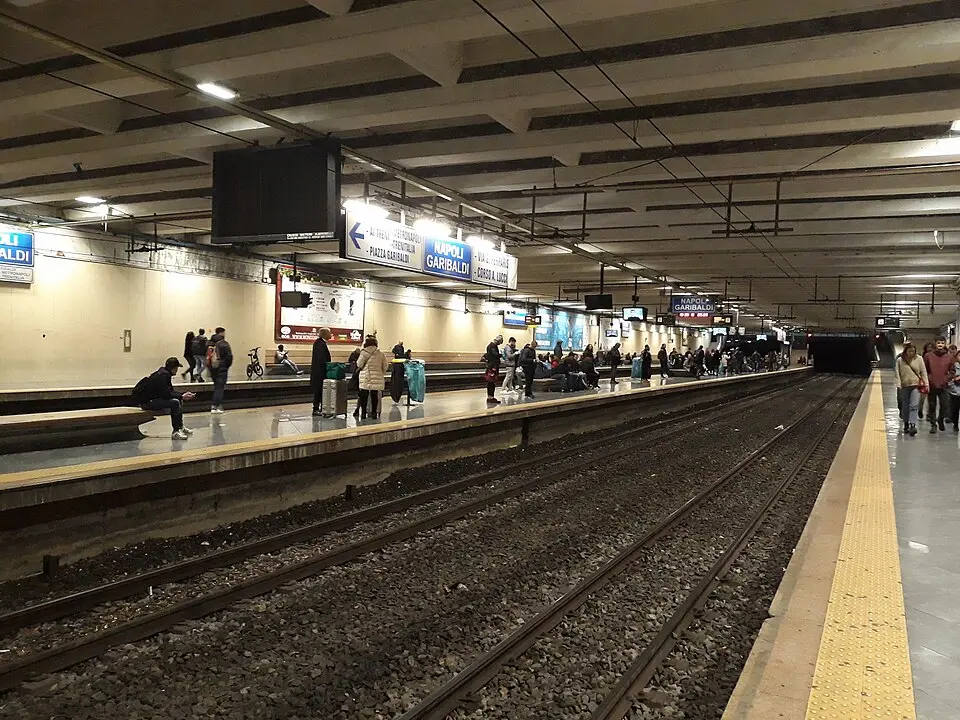
The starting point for all public transport options is the Circumvesuviana — the regional train line that runs from Naples Porta Nolana and Napoli Garibaldi (lower level platforms, departure level -1) south and east along the coast to Sorrento, stopping at Ercolano and Pompeii along the way.
Important: The Circumvesuviana is a separate network from Trenitalia — buy tickets at the Circumvesuviana counters or machines, not the main Trenitalia windows. Tickets are not interchangeable.
From Naples: around 25 minutes to Ercolano Scavi station, or around 35 minutes to Pompeii Villa dei Misteri station. Trains run approximately every 20–30 minutes - although departures to Ercolano are less frequent. Cost: from €1.90 each way.
From Sorrento: around 45 minutes to Pompeii, around 60 minutes to Ercolano. Take the line towards Naples.
It's worth being aware that these trains are not a comfortable ride. They are not air-conditioned and not in the best condition, and there is limited room for luggage. But they will get you there.
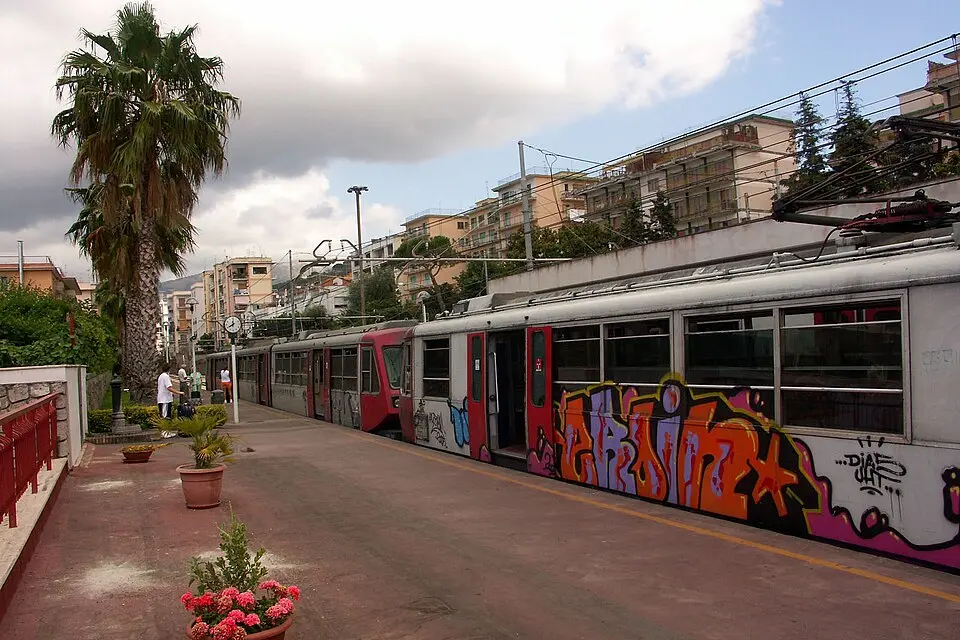
Option 1 — Via Ercolano: The Vesuvio Express
Ercolano is the closest place from where you can take a bus to Vesuvius Volcano.
From the Circumvesuviana station at Ercolano Scavi, the Vesuvio Express minibus takes you directly to the crater trail entrance in around 30 minutes. During the summer the service runs from 9:00 to 17:00. During the winter, from 10.00 to 14:00.
Buses and shuttles cost about €30 round trip, entrance to the park included.
Vesuvio Express — secure your ticket in advance at vesuvioexpress.it.

Option 2 — Via Pompeii: EAV Bus 808 or Private Shuttle
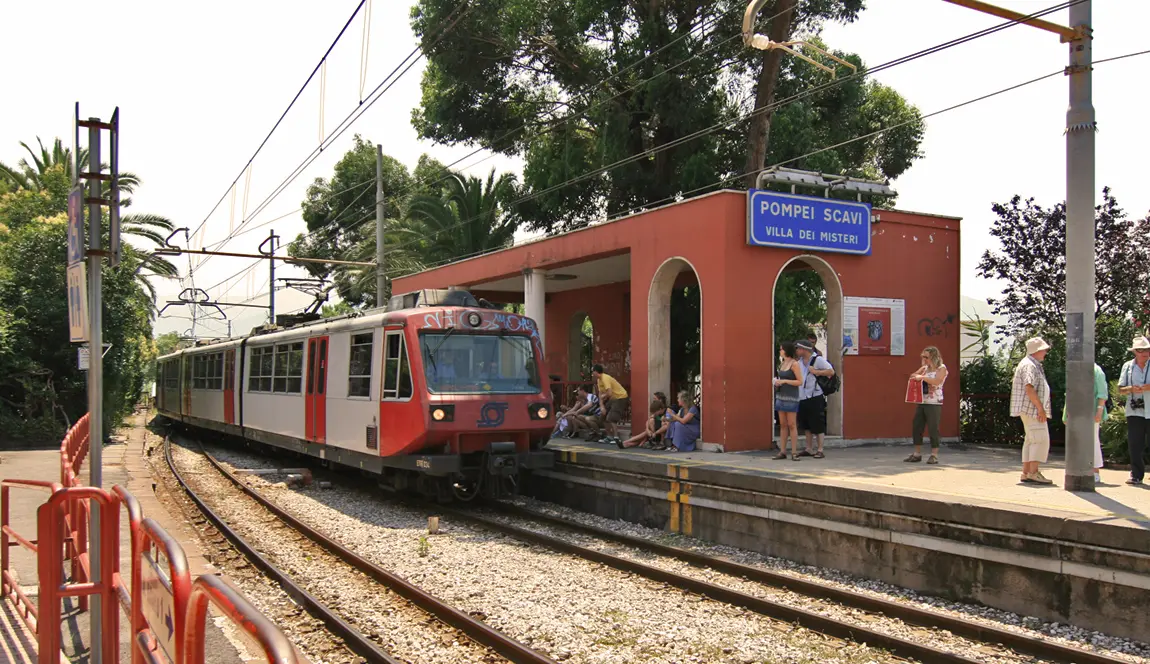
From Pompeii, the EAV bus 808 runs every 50 minutes from Pompeii Villa dei Misteri stop —next to the train station in Pompeii — and takes around 55 minutes to the crater trail entrance (final stop: Vesuvio Quota 1000).
Tickets cost €3–4, making it the cheapest option, but it is slower.
Private shuttle transfers from Pompeii are also available at around €30 per person including park entry.
The Pompeii approach makes most sense if you're combining Vesuvius with the archaeological site — visit Pompeii in the morning and take the bus up in the early afternoon.
Option 3 — Direct Bus from Naples
There are many private bus tours that leave from Naples that you can book on GetYourGuide.
Vesuvio Express also operates a direct service from near Piazza Garibaldi in Naples. This is the most convenient option if you don't plan to visit Pompeii or Herculaneum. This is my preferred option.
From Sorrento
Take the Circumvesuviana towards Naples and get off at either Ercolano Scavi (for the Vesuvio Express) or Pompeii Villa dei Misteri (for the EAV bus or private shuttle). See above for more details on these options.
Tickets — What to Book and When
Do not arrive at Vesuvius without a pre-booked ticket.
All Mount Vesuvius tickets have timed entry and need to be purchased online in advance. There is no ticket office within Mount Vesuvius National Park.
Entry is staggered — groups of 50 people every 10 minutes — so booking is compulsory. Entry through the automatic gate is allowed from half an hour before to half an hour after the selected time slot. Late arrivals will not be allowed in and the ticket value will not be refunded.
The crater entrance fee is approximately €10–12 per person. Children under 1.2 metres tall enter free.
Where to buy:
- Official site: vesuviopark.vivaticket.it
- With transfer from Ercolano included: vesuvioexpress.it (~€30 combined)
- Via GetYourGuide or Viator if combining with a guided tour or transportation
Critical warning on phone signal: Be sure to purchase your ticket before you arrive, as free Wi-Fi is not available and mobile network coverage may be limited.
The Climb and the Crater

The bus drops you at Piazzale di Quota 1000 — the ticket validation point. From here, the crater trail (Gran Cono, Trail 5) begins.
The path to the crater rim is a gravel and volcanic ash track, approximately 860 metres long, rising around 200 metres in altitude. The hike is moderate — gradual inclines — and takes around 45 minutes up and 30 minutes back down. The surface is loose volcanic gravel in places, which is harder on the descent than the ascent.

At the rim, the crater opens below you — roughly 300 metres across and 200 metres deep. You'll see lava from the 1944 eruption, now covered in silver lichen. Depending on conditions you may see steam venting from the crater walls. The volcano is monitored continuously and is considered safe to visit — the Vesuvius Observatory tracks seismic activity around the clock.
The views from the rim are exceptional on a clear day — the Bay of Naples, Capri, the Sorrentine peninsula, and on very clear days, the islands of Ischia and Procida.
Fitness and Mobility
Vesuvius requires a reasonable level of fitness and mobility. The path is not a gentle stroll. However, it is not technically challenging and most reasonably fit visitors of any age manage it without difficulty.
Wear proper footwear. Sandals, flip-flops or heels are not appropriate and are strongly discouraged — the gravel surface is uneven and can be slippery.
The path is not accessible for wheelchairs or pushchairs. Visitors with very limited mobility will not be able to reach the crater rim. The national park entrance and the lower areas of the site are accessible, but the trail itself is not.
Heat: In July and August the path faces south and has no shade. Starting early (before 10am at the crater) is strongly advisable in summer. Bring at least one litre of water per person.
Trekking poles are useful on the descent for those who find downhill sections on loose surfaces difficult for their knees.
Combining Vesuvius with Pompeii or Herculaneum
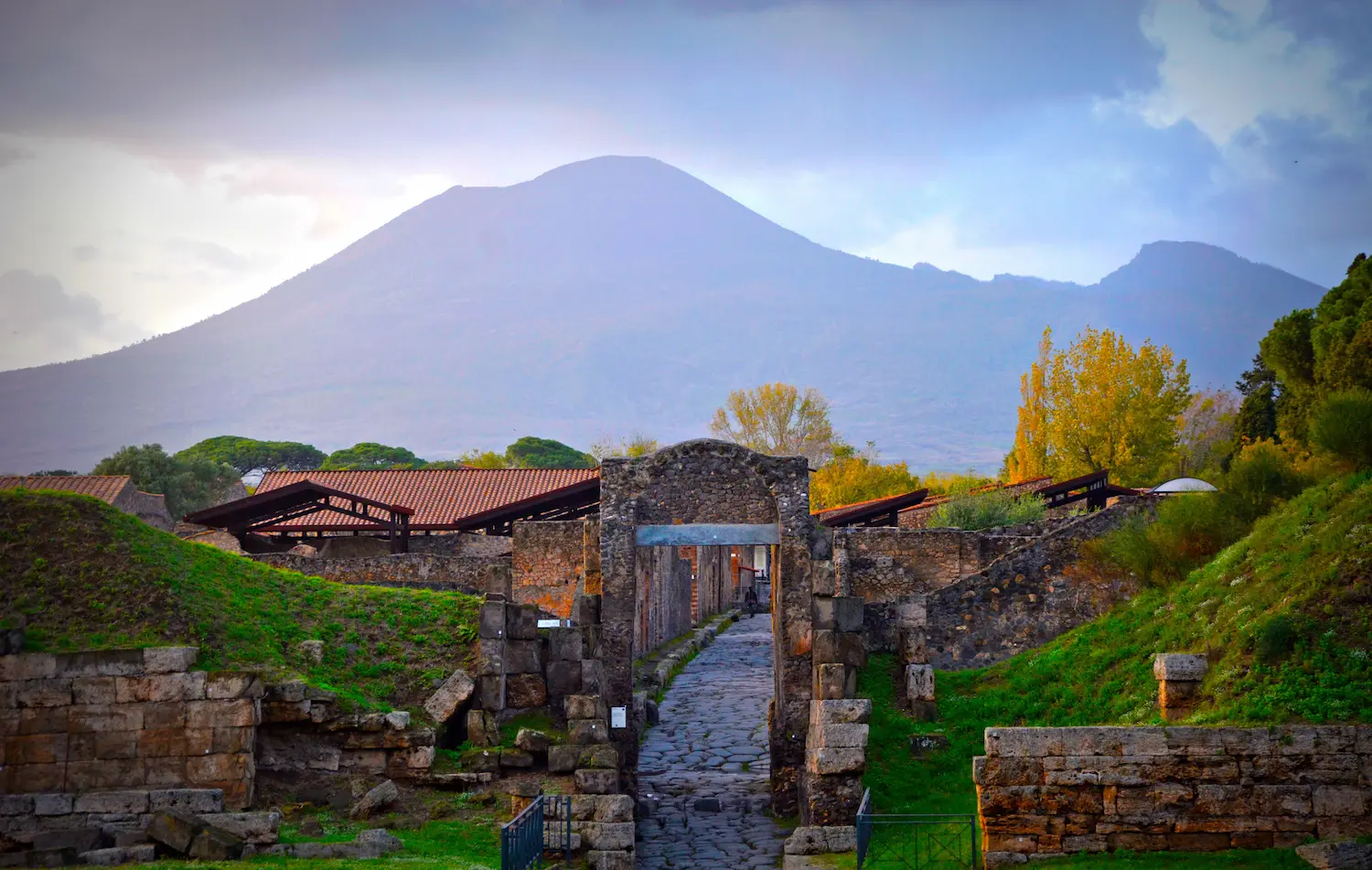
This is the natural question and the honest answer is: do one archaeological site and Vesuvius in a day — not both sites and Vesuvius.
Vesuvius + Herculaneum (recommended combination)
Herculaneum is the better choice for combining with Vesuvius in a single day. It is smaller and more intimate than Pompeii — you can cover the essential highlights in two to three hours rather than the four to five hours Pompeii demands. And crucially, both are served by the same Circumvesuviana station: Ercolano Scavi.
Suggested order: Arrive at Ercolano Scavi by 9am. Visit Herculaneum first (two to three hours — the site is a short walk from the station). Return to the station, board the Vesuvio Express bus, and reach the crater by early afternoon. Return to Ercolano by late afternoon and take the Circumvesuviana back to Naples or Sorrento.
See our complete guide to Pompeii and Herculaneum for full details on both sites.
Vesuvius + Pompeii
The larger combination — and the more tiring one. Pompeii is a vast site and even a partial visit takes three to four hours. The EAV bus to Vesuvius runs from near the Pompeii Scavi Villa dei Misteri station, making the logistics workable but the day very full.
Suggested order: Arrive at Pompeii as early as possible (site opens at 9am). Visit for three hours. Take the EAV bus from Pompeii to Vesuvius in early afternoon. Allow 90 minutes at the crater. Return to Pompeii station and take the Circumvesuviana back to Naples or Sorrento.
Vesuvius + an afternoon in Naples
If you're staying in Naples, Vesuvius in the morning works well with an afternoon in the city. The easiest option is to take a private tour bus from Naples, be at the crater by 10am, return to Naples by 1pm, and spend the afternoon in the city.
Combining with Sorrento
From Sorrento, visiting Vesuvius is a full day in itself. A Sorrento-based visitor should do Vesuvius only, or Vesuvius combined with a very brief stop at Herculaneum on the way back. Adding Pompeii would make for an extremely long and tiring day.
Vineyard Tours on the Slopes of Vesuvius

The slopes of Vesuvius produce some of the most distinctive wines in Italy — volcanic soil, extreme drainage and centuries of agricultural tradition combine to create great growing conditions. The local DOC wine is Lacryma Christi (Tears of Christ), produced from indigenous Piedirosso and Caprettone grapes. Both red and white versions are made, and the best examples are genuinely excellent — mineral, volcanic and unlike anything you'll find in a supermarket.
Combining a vineyard visit with Vesuvius is one of the most rewarding ways to spend a day in Campania. Here are the options accessible without a hire car:
Cantina del Vesuvio — Trecase

Cantina del Vesuvio is located in the open countryside on the slopes of Mount Vesuvius, situated in the village of Trecase, only a few kilometres from the archaeological site of Pompeii. For those who are unable to arrive by car, they offer a free shuttle service from Pompeii Porta Marina, right at the exit of the archaeological park, or from Torre Annunziata Oplonti station.
The winery offers a guided walk through the vineyards on the slopes of Mount Vesuvius, a guided visit of the winery with an explanation of Lacryma Christi production, followed by a wine tasting lunch. The lunch is generous and local — antipasto, pasta, dessert, multiple wines. The shuttle service availability is limited, so a reservation request by email is required at least 3 days in advance.
The winery is positioned halfway between Pompeii and the Vesuvius crater, making it a natural midday stop between the two.
Combined Pompeii + Vesuvius + Vineyard tours
Multiple operators offer combined Pompeii, Vesuvius and wine tasting tours from Naples, Sorrento and Pompeii — these are the most convenient option for visitors who want to include a vineyard without the logistical complexity of arranging transport independently. Most run as small groups with a guide, include entrance tickets, and organise transport between sites. Search GetYourGuide for current availability from your starting point.
Guided Tour Options
For visitors who want everything organised in one booking, guided tours are a very practical option for Vesuvius. A comfortable, air-conditioned coach picks you up from a central point in a nearby city, handles the drive up the volcano, includes your Mount Vesuvius entry ticket, and returns you to the starting point at the end of the day.
One important note: only official Vesuvius guides are allowed once inside the crater area, so external tour guides will not come with you right up to the crater.
Tour options to consider:
- From Naples with crater entrance: Picks up near Piazza Garibaldi, drives to Vesuvius, includes timed entry ticket and return transfer. Around 3 hours total.
- Vesuvius + Pompeii from Naples or Sorrento: Full day — Pompeii in the morning, Vesuvius in the afternoon, return to starting point.
- Vesuvius + Herculaneum from Naples or Sorrento: Often the better combination — Herculaneum is smaller and leaves more time for the crater.
- E-bike tour of the national park: Explore the paths of the national park on an e-bike tour before visiting the crater.
- Horseback riding: Go horseback riding in the Vesuvius national park on a half-day excursion.
Book tours via GetYourGuide or Viator.
Weather and Seasonal Considerations
Spring (April–June) is the ideal time — comfortable temperatures for the climb, wildflowers on the lower slopes, and generally clear views. May and early June are particularly good.
Summer (July–August) is hot, crowded and exposed. The south-facing path has no shade. Start as early as possible and carry plenty of water. Views can be hazy in the heat.
Autumn (September–October) is excellent — the summer crowds have eased, temperatures are comfortable, and the light is often at its best for photography.
Winter (November–February) brings cooler temperatures and shorter opening hours (9am–3pm). The crater occasionally closes due to snow or ice — there is no refund if the site closes on your visit day.
Rain and cloud: Vesuvius in cloud is dramatically atmospheric but you won't see much from the crater rim. Rain makes the gravel path slippery and visits can be restricted for safety. Check the forecast before you go.
Wind: High winds can cause temporary closures at the crater, as the exposed path becomes dangerous.
Practical Information
Luggage storage: Do not bring large bags to Vesuvius — the bus has limited space and the hike is considerably less pleasant with a heavy rucksack. Options for leaving luggage:
- Naples Centrale station has staffed luggage storage
- Radical Storage and Bounce both have locations in Naples, Pompeii and Ercolano — book in advance via the apps
- Many hotels will store luggage for the day even after checkout
What to bring: Water (at least 1 litre per person), sunscreen, a hat, comfortable shoes, a light layer for the top (it can be significantly cooler and windier at 1,200 metres than at the coast). Your phone with tickets downloaded before you leave.
Children: The climb is manageable for older children and teenagers. Pushchairs and prams are not suitable — the path is uneven volcanic gravel. Children under 1.2 metres tall enter the national park for free.
Toilets: Available at the Piazzale di Quota 1000 near the entrance. None on the trail itself.
Bar at the summit: There is a small bar near the bus drop-off point at the entrance, selling water, coffee, snacks and — appropriately — glasses of Lacryma Christi wine. Worth stopping at on the way back down.
Circumvesuviana trains: The Circumvesuviana is a popular and sometimes crowded train. In peak season, morning services towards Ercolano and Pompeii can be very full. Position yourself near the front of the platform to board first.
Frequently Asked Questions
Can I visit Vesuvius without a hire car?
Yes — entirely. The Circumvesuviana train from Naples or Sorrento reaches Ercolano Scavi or Pompeii, and buses take you directly to the crater entrance. No car is needed at any point.
Do I need to book Vesuvius tickets in advance?
Yes — this is essential. There is no ticket office at the national park. Tickets are timed and must be purchased online in advance at vesuviopark.vivaticket.it or included in a guided tour or shuttle package. Turning up without a pre-booked ticket means you cannot enter the crater.
What is the best way to get to Vesuvius from Naples?
A private shuttle bus from Naples is the most straightforward car-free option, and can be booked on GetYourGuide or on independent tour sites.
Or alternatively, take the Circumvesuviana train from Napoli Centrale (lower level, not the main Trenitalia platforms) to Ercolano Scavi — around 25 minutes. From the station, board the Vesuvio Express, which includes the crater entrance ticket in its combined fare of around €30.
How hard is the climb to the Vesuvius crater?
The path is around 860 metres long and rises 200 metres on loose volcanic gravel. Most reasonably fit adults and older children manage it in 30–40 minutes. Proper footwear is essential. Not suitable for very limited mobility or pushchairs.
Can I combine Vesuvius with Pompeii in one day?
Yes — but it makes for a long day. Arrive at Pompeii when it opens at 9am, allow three hours for the site, then take the EAV bus to Vesuvius in the early afternoon. Allow 90 minutes at the crater, then return. Vesuvius and Herculaneum is a slightly more manageable combination as Herculaneum takes less time to visit.
Can I visit Vesuvius from Sorrento?
Yes — take the Circumvesuviana train from Sorrento towards Naples and get off at Ercolano Scavi. From there, board the Vesuvio Express minibus directly to the crater entrance. The combined bus and entrance ticket costs around €30.
Alternatively, get off at Pompeii Villa dei Misteri and take the EAV bus 808 to the crater — cheaper but slower.
A Sorrento-based visitor should treat Vesuvius as a full day in itself, or combine it with a brief stop at Herculaneum on the way back. Adding Pompeii as well would make for an extremely long and tiring day.
What is Lacryma Christi wine?
Lacryma Christi (Tears of Christ) is the DOC wine produced on the slopes of Vesuvius from indigenous Piedirosso and Caprettone grapes. The volcanic soil gives the wine a distinctive mineral quality. You can try it at the bar near the crater entrance or on a dedicated vineyard tour.
Is Vesuvius safe to visit?
Yes — the volcano is continuously monitored by the Vesuvius Observatory and is considered safe. The last significant eruption was in 1944. Occasional small volcanic events (minor gas emissions, microseismic activity) are normal and do not affect visitor access. The national park manages access carefully and would close the site if activity increased.
What happens if Vesuvius is closed on the day of my visit?
The crater closes occasionally due to weather (snow, ice, high winds) or safety concerns. If the site is closed on your booked day, refunds are at the discretion of the booking platform and not guaranteed.
Also on The Unseen Italy: Pompeii and Herculaneum by Train · Salerno — the Smarter Base for the Amalfi Coast · Capri by Ferry from Naples and Sorrento · How Italy's Train Network Works