Italy by train is fast, affordable and one of the best ways to see the country — but the system has a few quirks worth knowing before you go. Here are the ten things first-time travellers get caught out by, and how to avoid them.
Last verified: May 2026. Train prices, ticket rules and timetables change regularly. Always check official sources before travelling.
Travelling Italy by train is genuinely straightforward once you know how it works. The high-speed network is fast, punctual and excellent value booked in advance. Regional trains are cheap and run frequently. And the whole country is connected — Milan to Naples in under three hours, Florence to Rome in ninety minutes. A little advance knowledge goes a long way. Here are the ten things worth knowing before your first journey.
At a Glance
| 🎟️ Most expensive mistake | Not validating a paper ticket before boarding |
| ⏰ Most common mistake | Booking the wrong train type for the journey |
| 🏛️ Most confusing | Rome and Milan both have multiple stations |
| 💸 Biggest waste of money | Buying a rail pass instead of point-to-point tickets |
| 📱 Easiest to avoid | All of the below — with five minutes of advance reading |
The 10 Mistakes
- Not validating your ticket before boarding
- Booking the wrong type of train
- Going to the wrong station
- Buying a rail pass when you don't need one
- Booking too late — or not booking at all
- Taking the wrong train to Pompeii or Vesuvius
- Bringing too much luggage
- Allowing too little time for connections
- Not checking the platform until it's too late
- Assuming your ticket is flexible or refundable
1. Not Validating Your Ticket Before Boarding
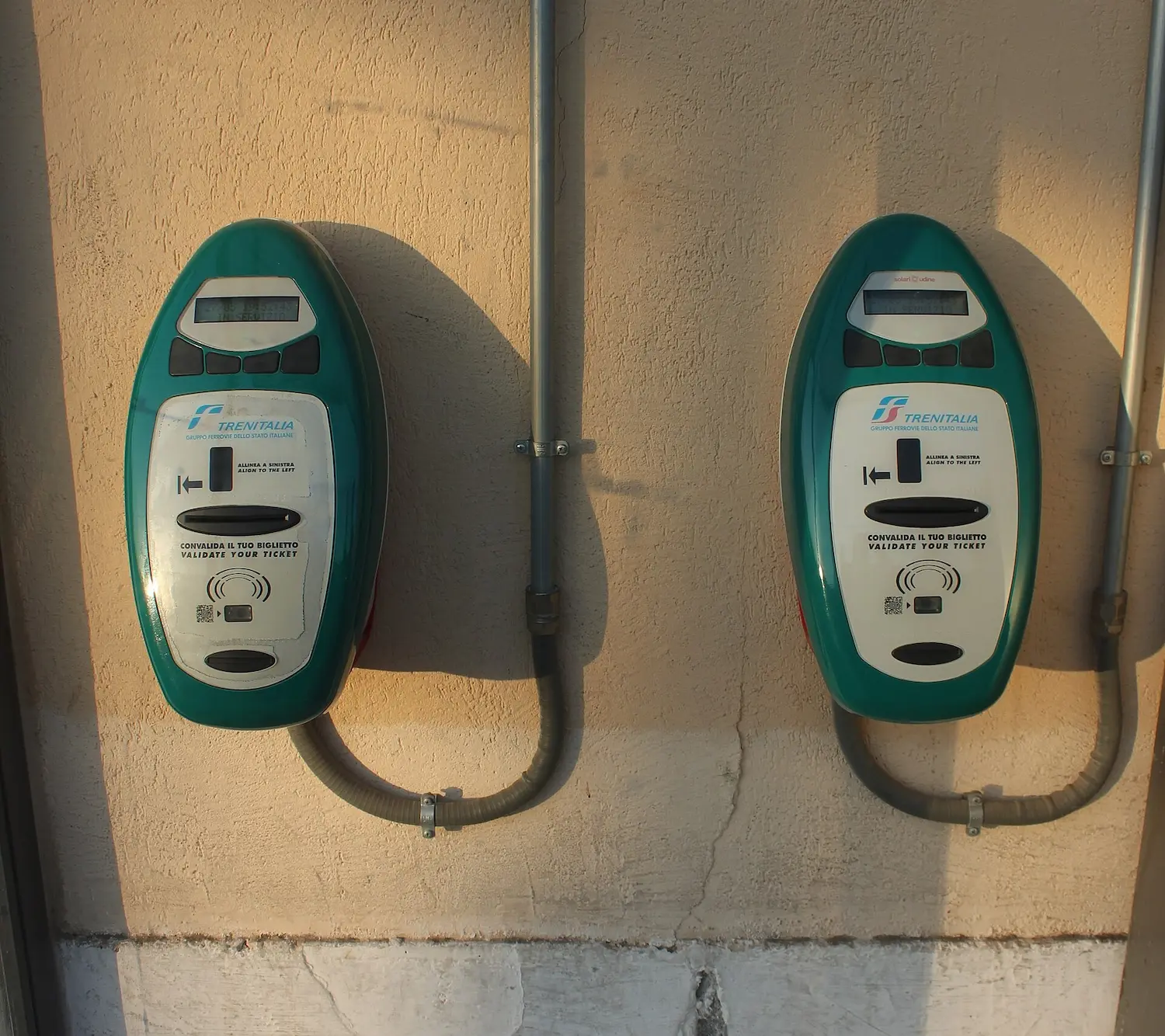
In Italy, paper train tickets must be validated before you board. Validation means stamping the ticket in a small green or yellow machine on the platform or in the station concourse. The machine prints the date and time on the ticket, making it valid for travel.
If you board without validating, you are technically travelling without a valid ticket — regardless of whether you paid for it. Ticket inspectors fine passengers on the spot. The fine is typically €50–200 on top of the cost of the ticket, with no exceptions made for tourists who didn't know the rule.
What to look for: Small green or yellow machines, usually near the platform entrance or along the station concourse. They have a slot — insert the ticket briefly and you'll hear a click or beep.
The exception: E-tickets (digital tickets on your phone or downloaded as a PDF with a QR code) do not need to be validated — the QR code is scanned by the inspector instead.
To find out more about ticket types and validation, see our Italy train network guide.
2. Booking the Wrong Type of Train
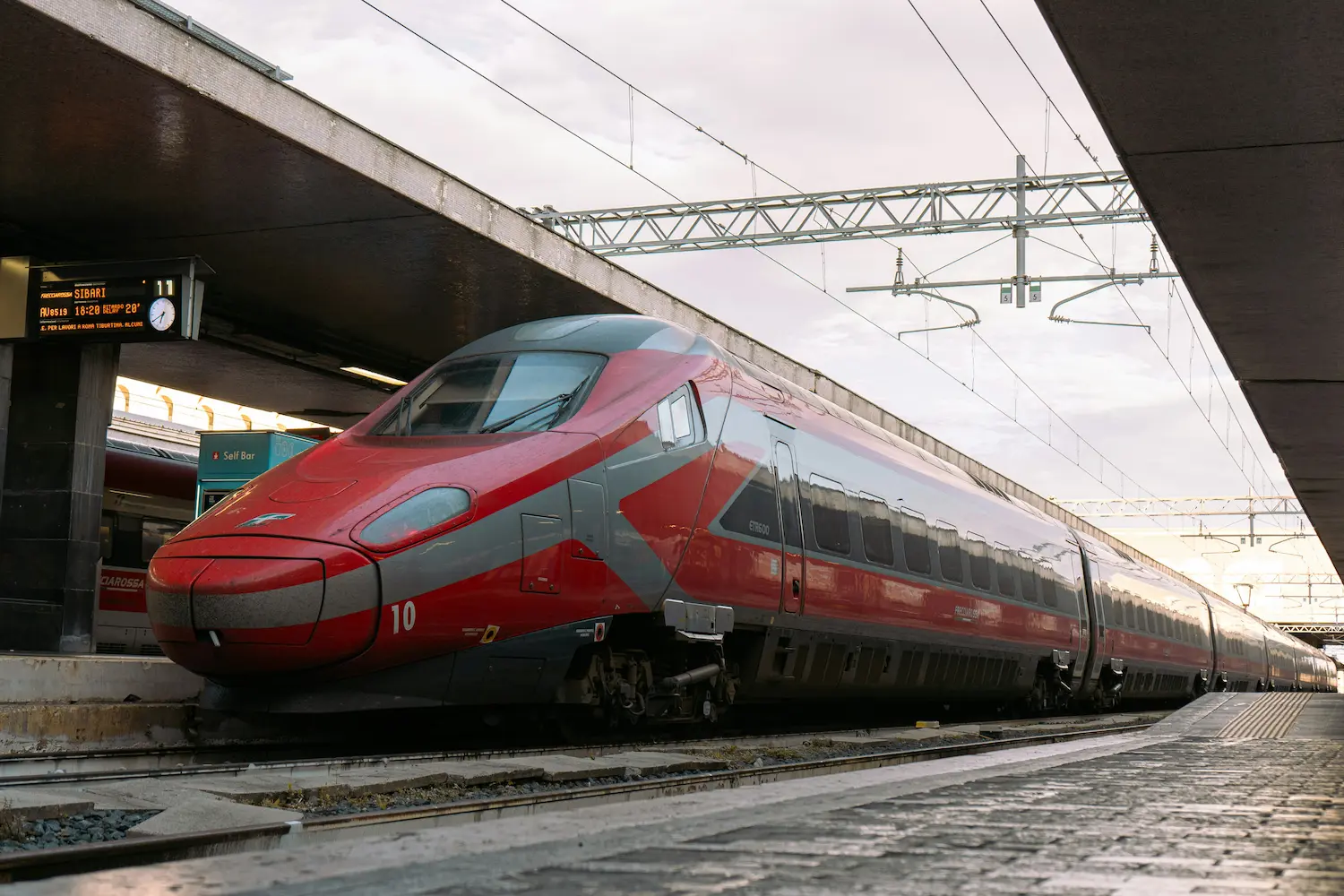
Italy has several different types of train, and choosing the wrong one can mean paying far more than necessary — or far less, and arriving hours later than expected.
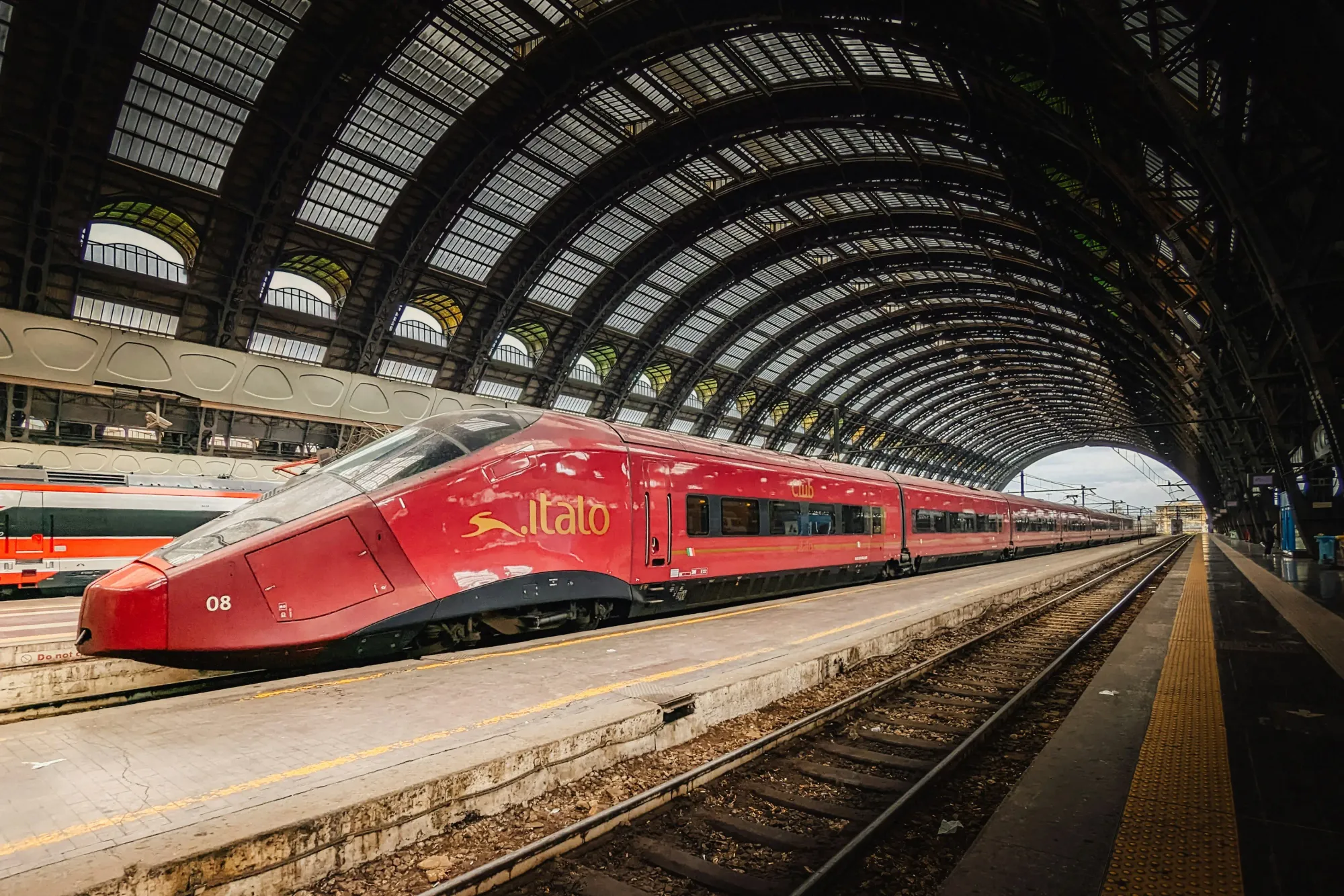
High-speed trains (Frecciarossa, Frecciargento, Italo): The fastest and most expensive option. Require advance booking and a seat reservation. Cover the main routes — Milan, Florence, Rome, Naples. Prices vary enormously depending on how far in advance you book — the same Milan to Rome journey can cost €19 or €90 depending on whether you plan ahead.
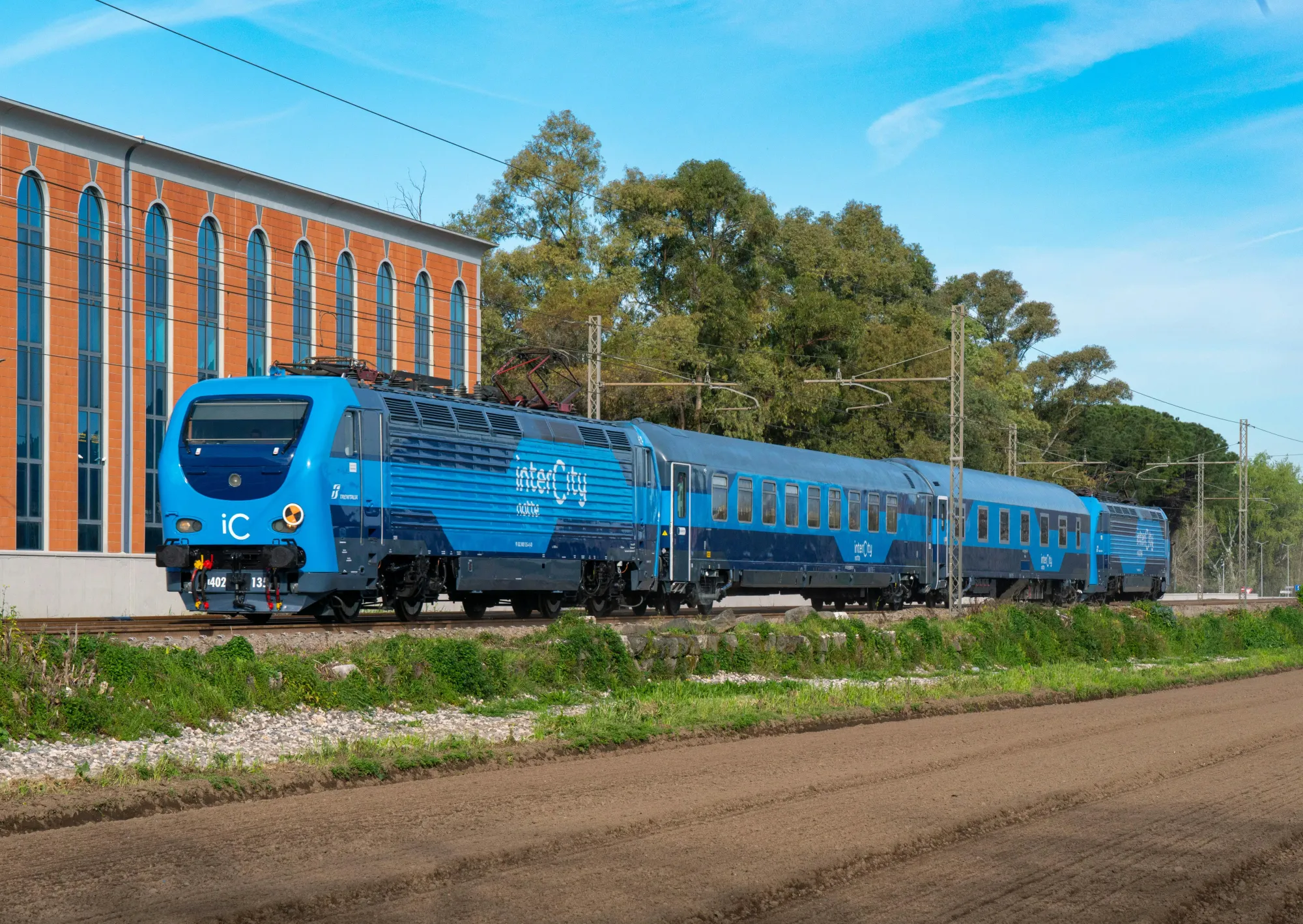
Intercity trains: Slower than high-speed but faster than regional. Cover routes not served by high-speed trains — Rome to Siena, for example. Require a seat reservation.
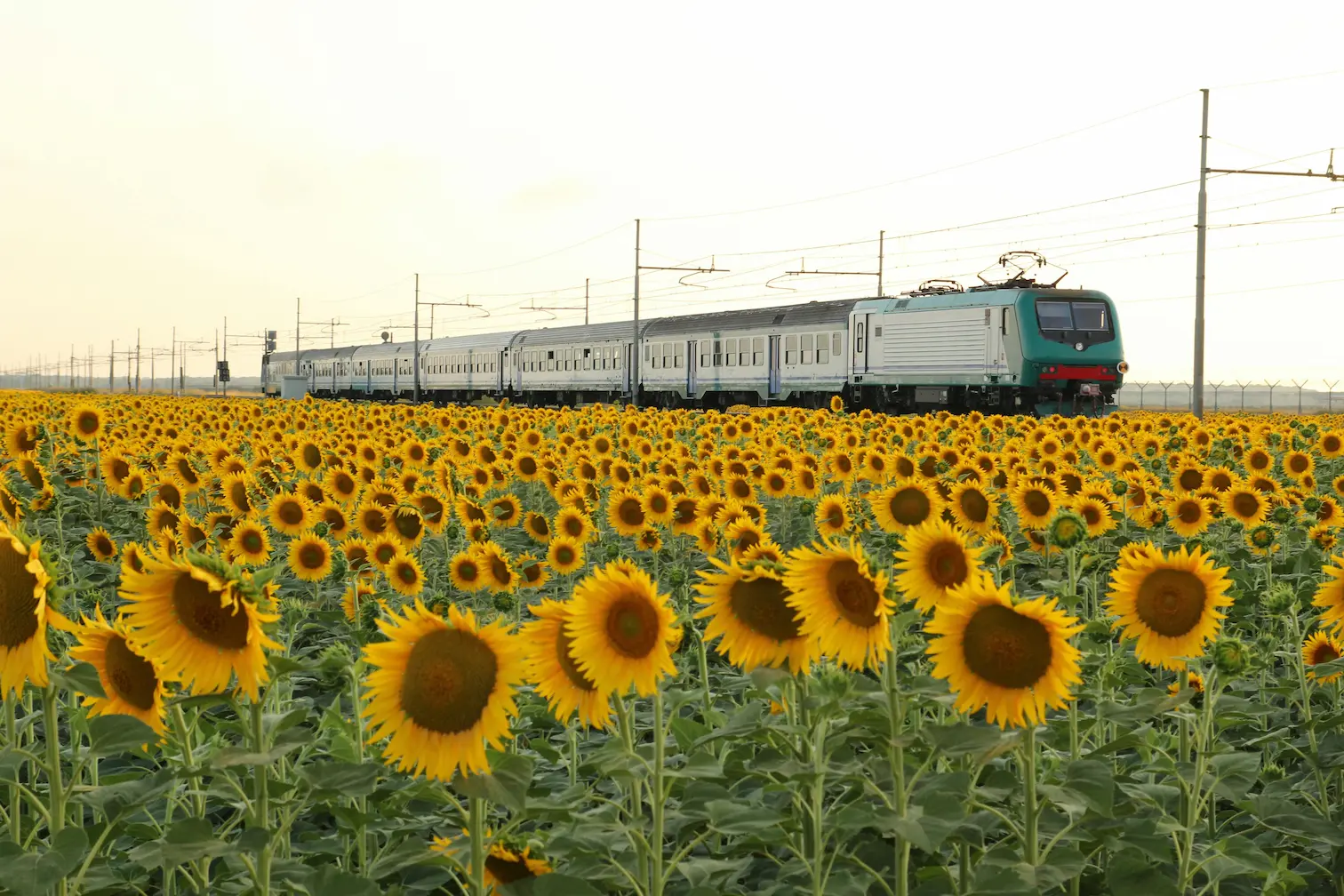
Regional trains (Regionale, Regionale Veloce): The cheapest option. No reservation required — you buy a ticket and board any service on that route. No seat allocation. Cover shorter distances and stop at more stations.
The most common mistake: Booking a high-speed train for a short journey where a regional train is perfectly adequate and a fraction of the price. Or booking a regional train for a long journey where a high-speed service would take half the time.
The rule of thumb: For journeys under 1.5 hours, regional trains are usually fine. For longer journeys between major cities, high-speed is worth the premium for the time saving.
3. Going to the Wrong Station
Rome has two main stations — Roma Termini (the main hub, central, connected to the metro) and Roma Tiburtina (used by some high-speed services and further from the centre, but still connected to the metro). Several high-speed trains stop at Tiburtina rather than Termini. If you book a train from Rome without checking which station it departs from, you may find yourself in another part of the city.
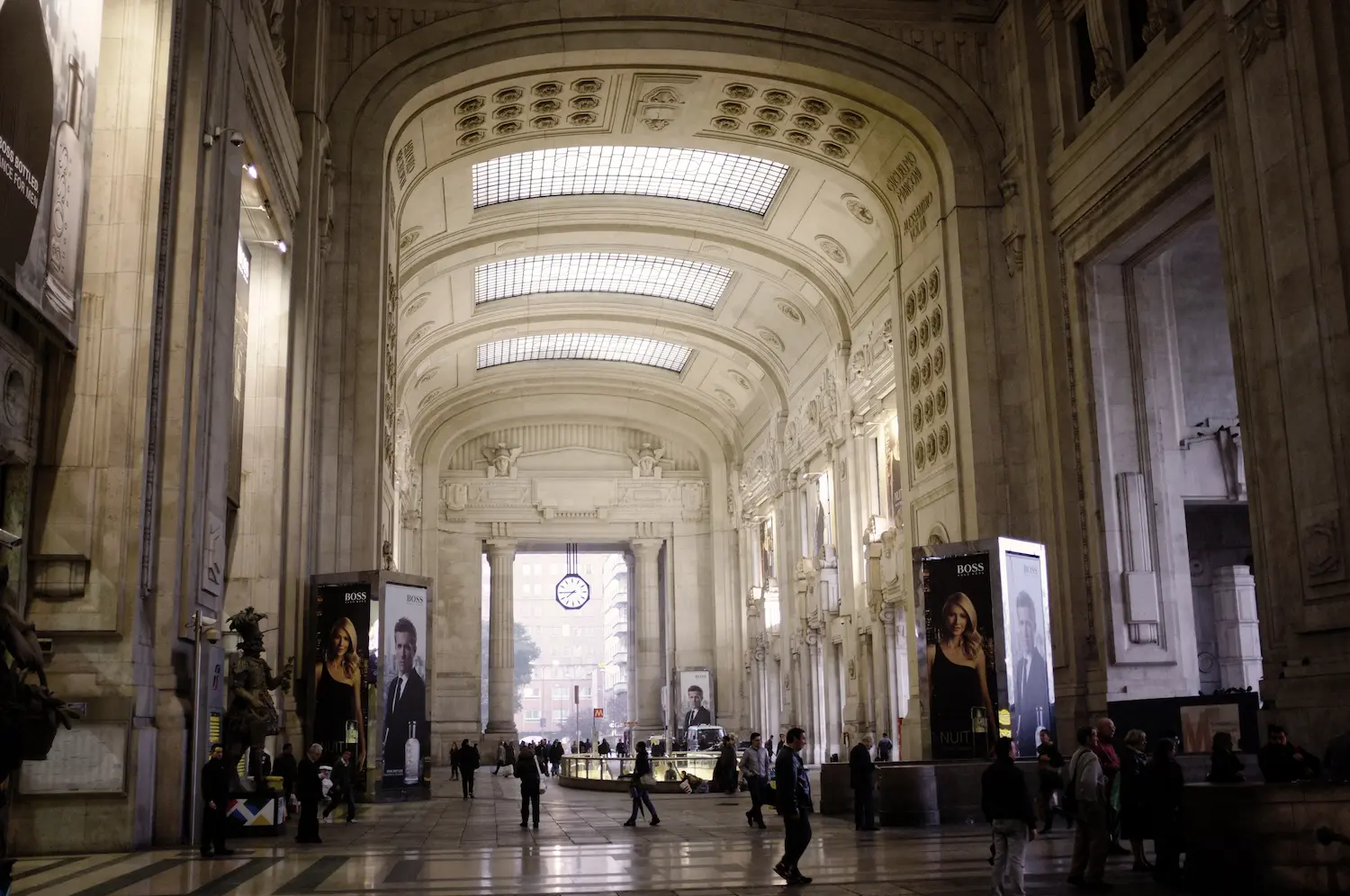
Milan has three stations to be aware of — Milano Centrale (the main station, where most high-speed and long-distance trains depart), Milano Garibaldi (used by some Italo services and regional trains) and Milano Cadona (closer to Milan centre).
The fix: Always check the departure station on your ticket carefully, not just the city name. Use Google Maps to assess the time it takes to get to your station.
4. Buying a Rail Pass When You Don't Need One
The Eurorail Italy Pass is heavily marketed to international tourists and is, for most visitors, not worth buying.
Here's the honest calculation: the pass sounds appealing — unlimited train travel for a fixed price. But high-speed trains in Italy require a seat reservation on top of the pass (typically €10–13 per journey), which erodes the apparent saving significantly. Regional trains are cheap enough that buying point-to-point tickets is almost always more economical.
A typical Italy itinerary — Milan to Florence, Florence to Rome, Rome to Naples — costs around €70—100 in advance point-to-point tickets on Trenitalia, Italo or Trainline. The Eurail Italy Pass for three days costs significantly more, before reservation fees.
When a pass does make sense: If you're travelling very frequently over a short period, making many spontaneous journeys, or combining Italy with other European countries on the broader Eurail Global Pass. For a straightforward Italy itinerary, point-to-point tickets are almost always cheaper.
5. Booking Too Late — or Not Booking at All
Italian high-speed train prices work like airline prices — they start low and increase as the travel date approaches. A Milan to Rome Frecciarossa booked six weeks in advance can cost €25. The same journey booked the day before can cost €90 or more.
For popular routes in peak season (June–September and around Easter), trains can also sell out entirely — particularly morning services to destinations like Venice, Florence and Naples.
The booking window: For high-speed trains, book at least two to four weeks in advance for the best prices. For summer travel, book as soon as your dates are confirmed. For regional trains, no advance booking is needed — buy on the day.
Where to book: Directly via Trenitalia or Italo, or via Trainline which covers both operators in one search. Trainline charges a small booking fee but it is useful for having everything in one place and having a UK-style booking interface.
6. Taking the Wrong Train to Pompeii or Vesuvius
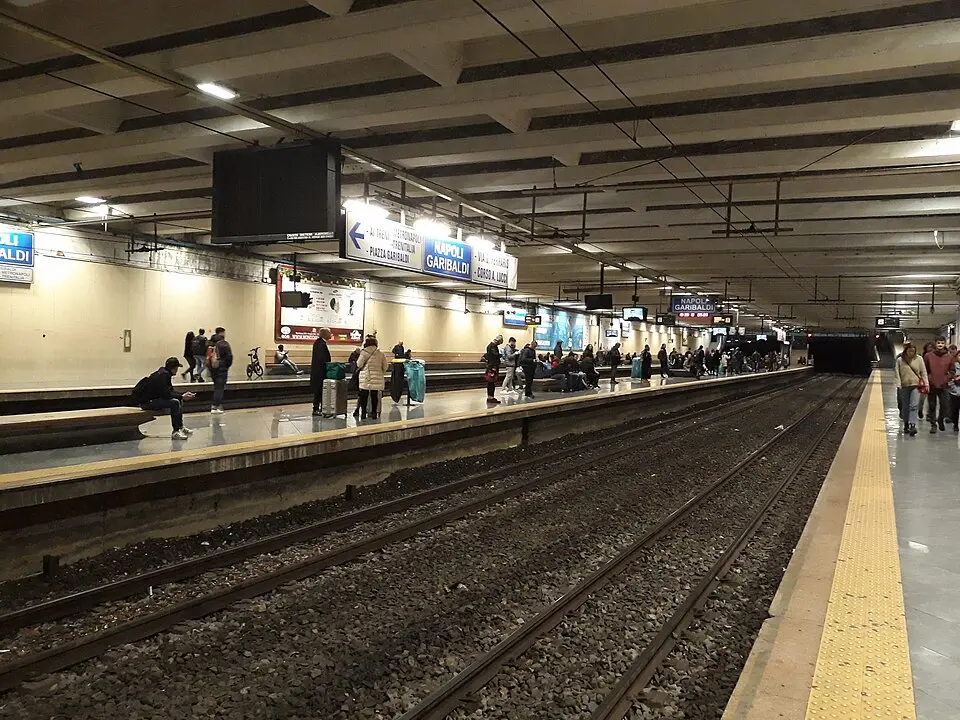
This catches out a significant number of visitors to the Naples area. Pompeii, Herculaneum and the starting points for Mount Vesuvius are all served by the Circumvesuviana — a separate regional rail network that runs south and east from Naples towards Sorrento.
The Circumvesuviana is not part of the Trenitalia network. It has its own ticket machines, its own counters and its own platforms — at the lower level of Napoli Centrale / Napoli Garibaldi, not the main Trenitalia platforms above.
At Napoli Centrale, follow signs for Circumvesuviana and descend to the lower level. Buy tickets at the Circumvesuviana counters or machines — separate from Trenitalia. The journey to Pompeii Villa dei Misteri takes around 35 minutes and costs around €2.80. To Ercolano Scavi (for Herculaneum and Vesuvius) takes around 25 minutes.
See our guides to Pompeii and Herculaneum and Mount Vesuvius by train for full details.
7. Bringing Too Much Luggage
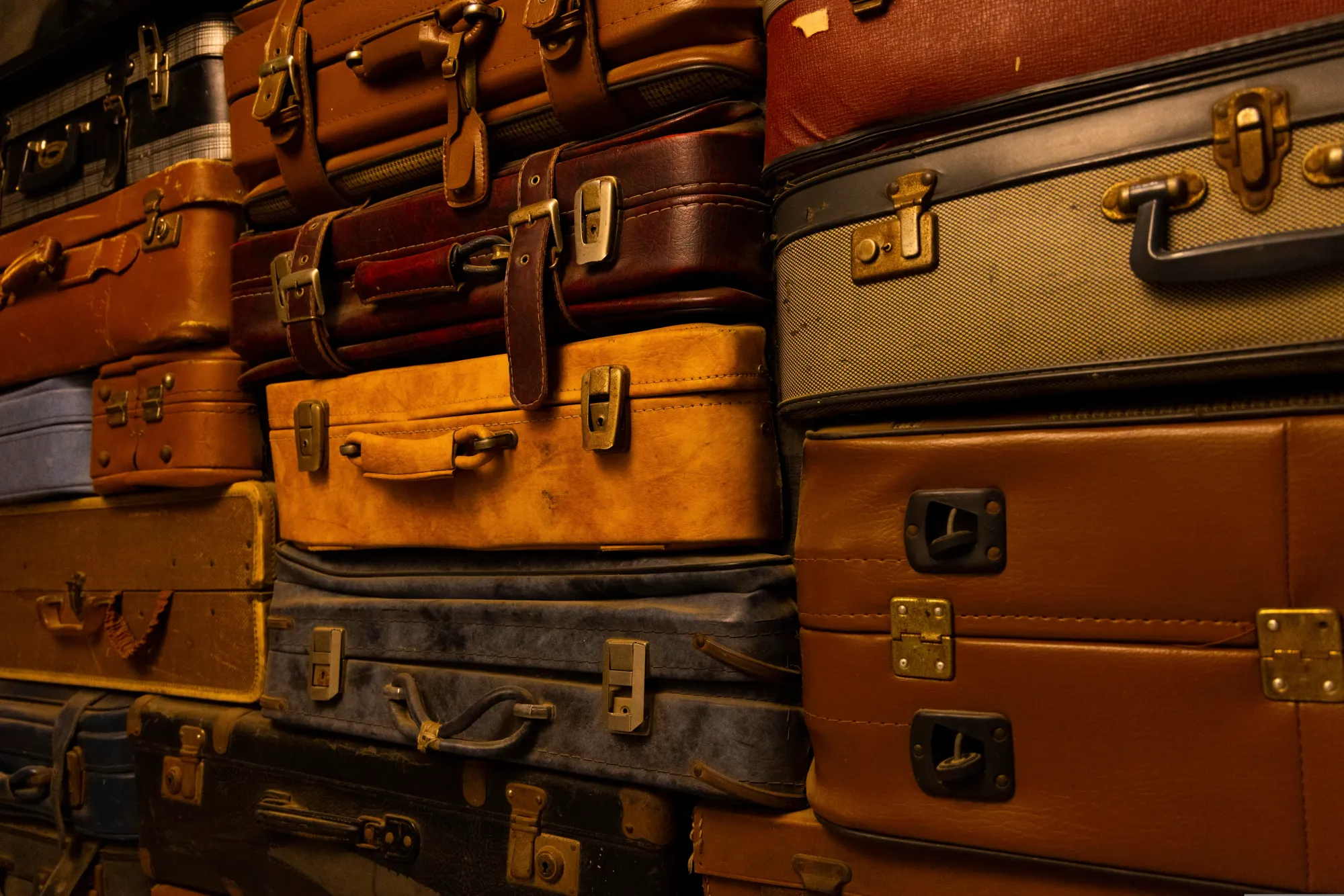
Italian trains do not have luggage limits as strict as airlines, but large bags create practical problems that first-time travellers underestimate.
Overhead racks on high-speed trains accommodate a standard carry-on suitcase. Larger cases need to go in the dedicated luggage areas at the ends of each carriage — these fill up quickly on busy services, and there is no guarantee your bag will fit. On regional trains, luggage space is more limited still.
More practically — Italian cities are not luggage-friendly. Station platforms, cobbled streets, steps up to platforms, the lack of lifts at smaller stations, crowded buses and metro carriages all make large rolling suitcases a significant burden.
The practical advice: Travel as light as you can manage. If you do have large bags, use luggage storage at major stations.. Radical Storage and Bounce offer affordable luggage storage in local shops near stations in most Italian cities — book in advance via the apps.
Upgrade your ticket: It is also worth booking business class or premium rail tickets, as these carriages are generally quieter, so you'll be competing with less passengers for luggage space.
8. Allowing Too Little Time for Connections
Italian trains are not always on time. Delays of 10–20 minutes are common, particularly on regional services and in summer when network congestion is higher. High-speed trains are generally more punctual but not immune to delays.
If you book a tight connection — say, 15 minutes between a regional train arriving and a high-speed train departing — and the first train is delayed, you will miss the second.
The rule of thumb: Allow at least 30 minutes for a connection between two trains at the same station. Allow 45–60 minutes if one of the trains is regional, as these are less punctual. Never book a tight connection on the day of a flight or a critical appointment.
If you do miss a connection: If the delay was caused by the first train being late, Trenitalia will generally allow you to travel on the next available service on the same route at no extra cost — ask at the station assistance desk immediately and explain what happened.
9. Not Checking the Platform Until It's Too Late
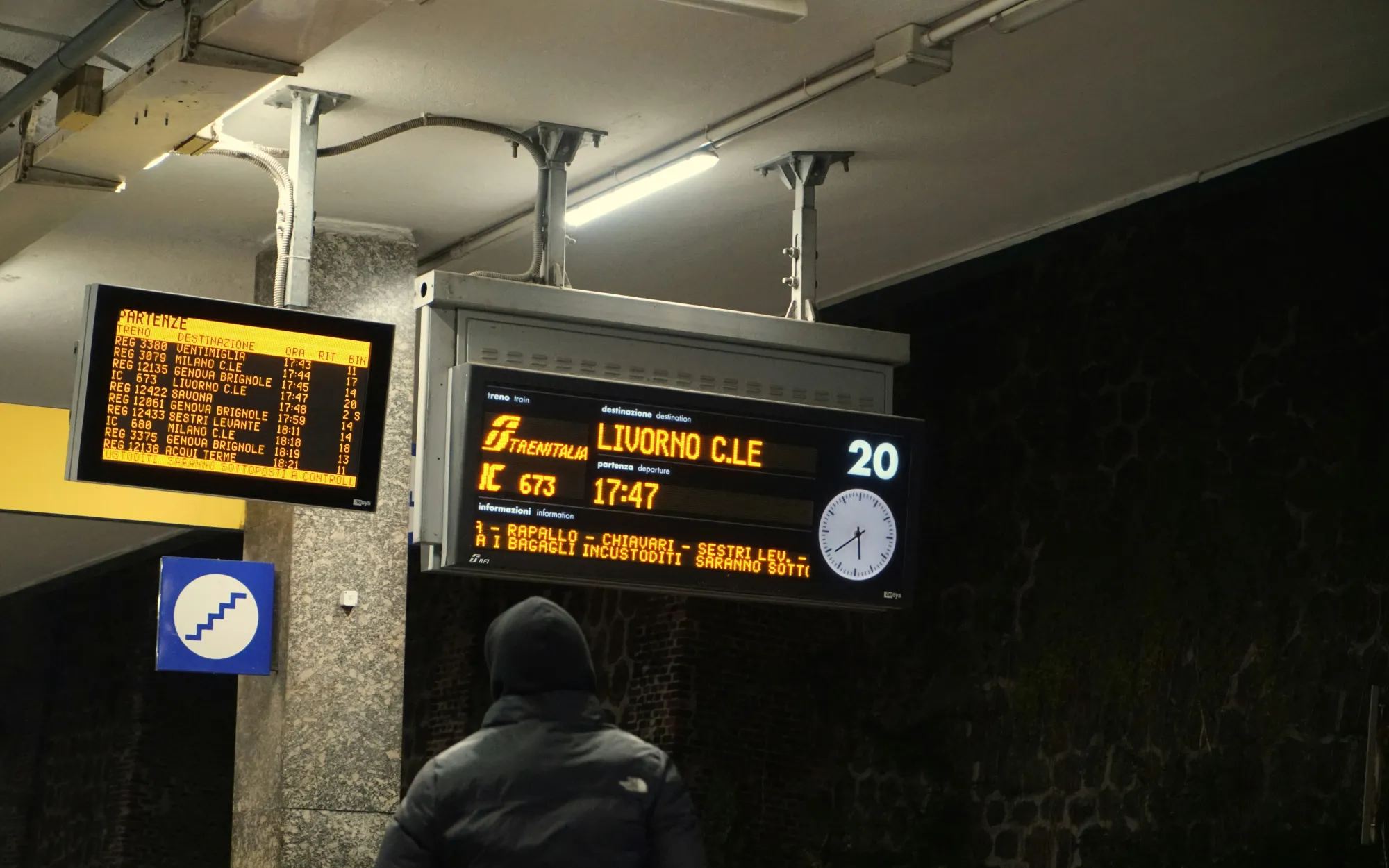
In Italy, train platforms are not assigned until shortly before departure — typically 10–20 minutes before. The large departure boards in the main station concourse show all departing trains; the platform number appears in the far right column when it is confirmed.
First-time visitors sometimes stand on a platform they assume is correct — because a previous train to the same destination left from there, or because the platform was communicated online via an app — and miss their train entirely.
The fix: Wait in the main concourse near the departure board rather than on a platform. When your train appears with a platform number, move to that platform. Then continue to check the train in the platform screens - as platforms do sometimes change.
Verify your train: check that your train number (which is always detailed on your ticket), a sometimes there may be two trains going to the same destination at similar times. This will give you the reassurance that you are boarding the right train.
10. Assuming Your Ticket is Flexible or Refundable
Most cheap advance train tickets in Italy are non-flexible and non-refundable. The "Super Economy" and "Economy" fares on Trenitalia and the equivalent low fares on Italo cannot be changed or refunded once purchased. If your plans change and you need to travel on a different date or time, you will need to buy a new ticket.
More expensive "Base" fares on Trenitalia allow changes (for a fee) and partial refunds. Check the fare conditions carefully before booking.
If your train is cancelled or significantly delayed: Trenitalia's policy is to offer a partial refund if the delay exceeds 60 minutes (30 minutes on high-speed trains). Full details can be found on their web site. Italo offer a partial refund with a delay over 60 minutes. Cancellations on both Trenitalia and Italo will normally be refunded or rebooked.
Frequently Asked Questions
Do I need to validate my train ticket in Italy?
Paper tickets must be validated in the green or yellow machines before boarding. E-tickets do not need validation. An unvalidated paper ticket can result on-the-spot fines of €50–200.
What is the difference between Trenitalia and Italo?
Both are train operators running high-speed services between major Italian cities. Trenitalia is state-owned and covers a wider range of routes including regional trains. Italo is private and operates only high-speed services. Prices are comparable — check both when booking. See our full comparison in our Italy train network guide.
Is a Eurail Italy Pass worth buying?
For most visitors, no. Point-to-point tickets booked in advance are almost always cheaper than the pass plus mandatory seat reservation fees. A pass may be worth it for very frequent travel or if combining Italy with other European countries.
How early should I arrive at an Italian train station?
For high-speed trains, 20–30 minutes is sufficient — platforms are announced around 10–20 minutes before departure. For regional trains, 10–15 minutes is enough. For international trains or if travelling with large luggage, allow more time.
What happens if I miss my train in Italy?
If you miss a high-speed train and your ticket is non-flexible (Economy or Super Economy), you will need to buy a new ticket. If your train was cancelled or you missed a connection due to a delay, Trenitalia and Italo will rebook you on the next available service. If your ticket is a Base fare, changes are permitted for a fee.
Can I buy Italian train tickets at the station on the day?
Yes — for regional trains, buying on the day is standard practice. For high-speed trains, you can buy on the day but prices will be significantly higher than booking in advance. In peak season, trains can also sell out. For the best prices, book high-speed tickets at least two to four weeks ahead.
Are Italian trains safe?
Yes — Italian trains are generally safe. The main practical concerns are pickpockets at busy stations (Roma Termini in particular) and occasionally on crowded regional trains. Keep your bag in front of you in busy station concourses and on the Circumvesuviana, which can be very crowded.
Also on The Unseen Italy: How Italy's Train Network Works · Plan Your Italy by Train Itinerary · Day Trips from Milan by Train · Day Trips from Florence by Train