Lucca is one of the most quietly rewarding cities in Tuscany — intact Renaissance walls you can walk or cycle around, a Roman amphitheatre whose shape still defines the piazza above it, and almost none of the crowds that overwhelm Florence.
Last verified: May 2026. Train times and prices change regularly. Always check official sources before travelling.
A direct train from Florence Santa Maria Novella gets you to Lucca in around 1 hour 20 minutes. What awaits is a city that has changed remarkably little since the Renaissance — its walls still encircling the historic centre completely, its Roman amphitheatre still visible in the oval shape of the piazza built over it, its medieval towers still rising above the rooftops. And unlike almost anywhere else in Tuscany, you can walk through it without navigating the crowds.
Most people who visit Tuscany never make it here. That is their loss and, if you go, your gain.
At a Glance
| 🚆 From Florence | Direct regional train from Santa Maria Novella — approx. 1h 20m, from ~€9 |
| 🚆 From Pisa | Direct train — approx. 30 mins, very frequent, ~€4 |
| 🎟️ Torre Guinigi | ~€8.50 entry — 230 steps to the rooftop oak garden |
| 🚲 Bike rental | Available near the station and inside the walls — from ~€6/hour |
| 🍽️ Eat | Buccellato cake, tordelli pasta, local olive oil, Lucchese DOC wine |
| 📅 Best time | Spring and autumn — summer is hot on the walls |
| ⏱️ Time needed | Full day — half day possible but rushed |
| 🏨 Combine with | Pisa (30 mins by train), Florence, Cinque Terre |
In This Guide
Getting to Lucca by Train
Direct regional trains run from Florence Santa Maria Novella to Lucca throughout the day — around 43 services daily, with the first departure at around 5am and the last after 10pm. The journey takes approximately 1 hour 20 minutes and tickets start from around €9, and can be bought via Trenitalia or Trainline.
Regional train tickets must be validated in the green machines on the platform before boarding. Buy on the day or in advance — no seat reservation required.
Lucca station is just outside the city walls on the southern side — a five-minute walk to the nearest city gate and ten minutes to the historic centre. The station has luggage storage if you want to leave bags before heading in.
From Pisa: Direct trains from Pisa Centrale to Lucca take around 30 minutes and run very frequently — ideal if you're combining both cities in a day. Tickets cost around €4.
From the Cinque Terre: Take the regional train from La Spezia to Pisa (around 1 hour), then change for Lucca (30 minutes). Lucca works well as a final stop on a trip in the Ligurian region before returning to Florence.
The City Walls — Walking and Cycling
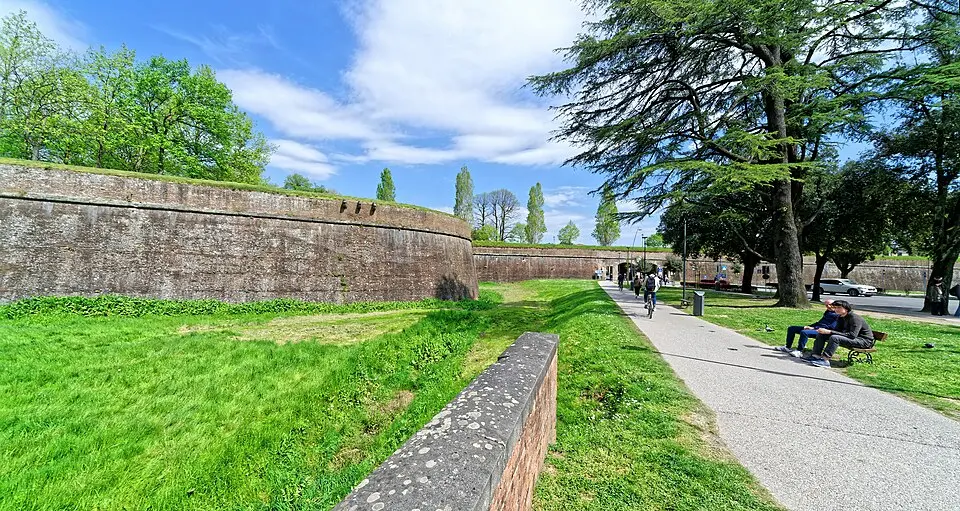
The walls are the reason to come to Lucca. Built between 1504 and 1648, Lucca's Renaissance ramparts are among the best preserved in Europe — 4.2 kilometres of wide, tree-lined walkway on top of the original fortifications, completely encircling the historic centre. Unlike most medieval walls in Italy, Lucca's are wide enough to walk and cycle along the top, with mature trees providing shade and views over the rooftops on one side and the surrounding countryside on the other.
Walking the full circuit takes around 45–60 minutes at a relaxed pace. Cycling takes around 20–30 minutes, or longer if you stop at the bastions for the views. The walls are flat, well-maintained and genuinely one of the most enjoyable walks in Tuscany.
Bike rental is available from several shops near the station and just inside the walls — from around €6 per hour for a standard bike or €25 for a half day. The four-wheeled pedal carts (risciò) are popular with families. Cycling the walls is the single best thing to do in Lucca and worth prioritising.
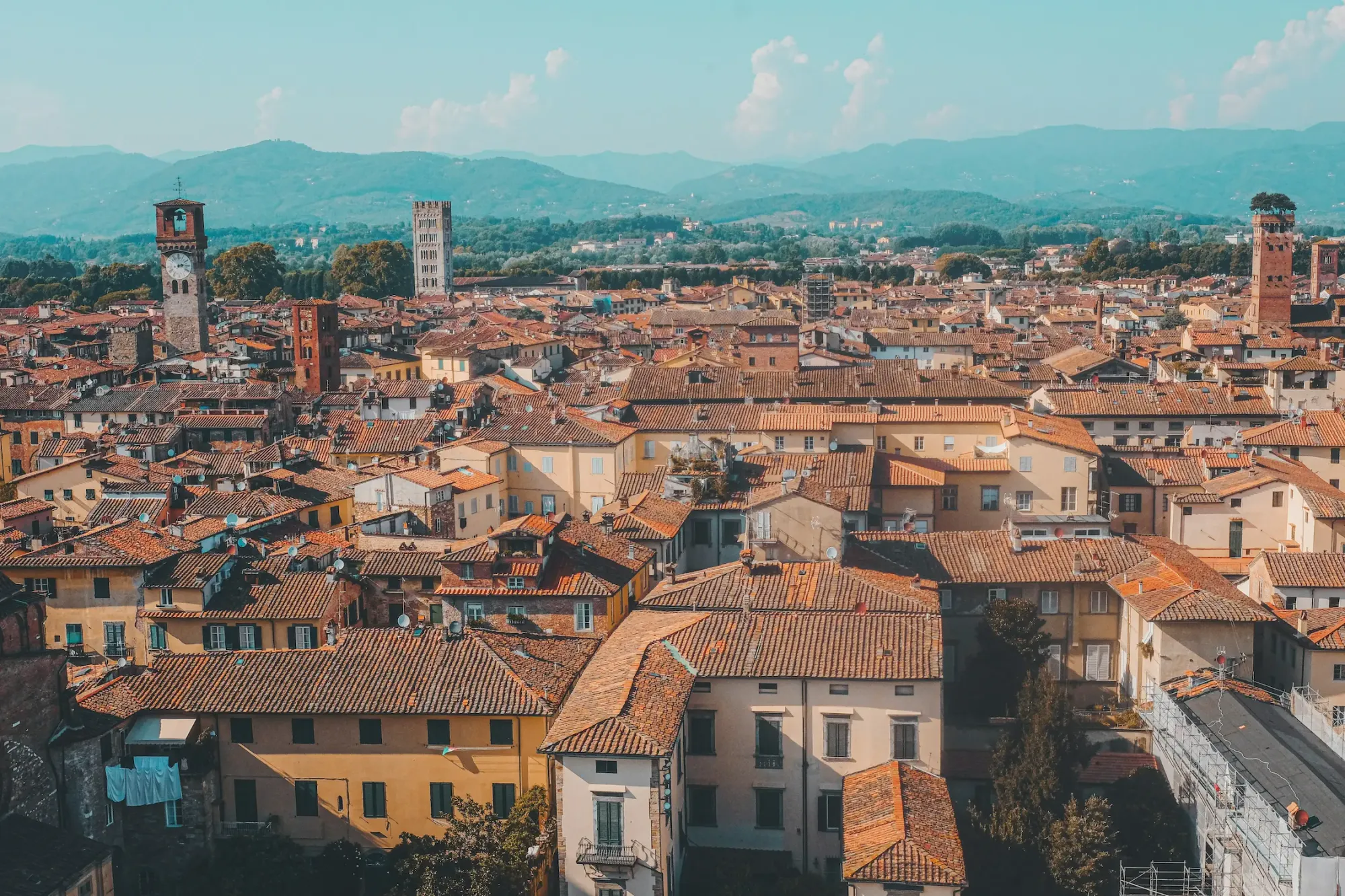
From the walls you can see the Torre Guinigi's rooftop oak trees, the Apennine hills to the east and the Apuan Alps to the north. On a clear day the view is extraordinary.
Piazza dell'Anfiteatro
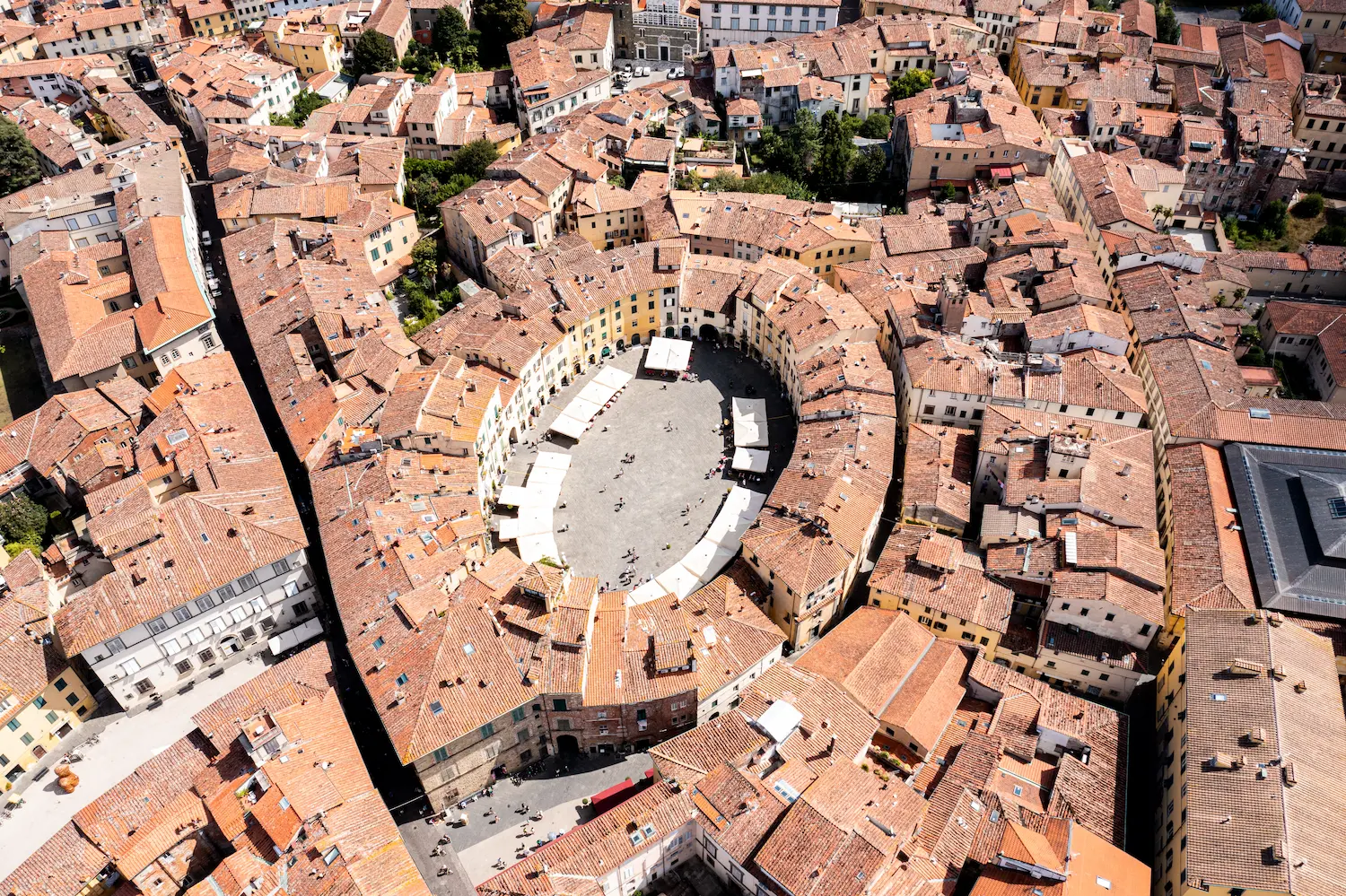
The Piazza dell'Anfiteatro is the most distinctive space in Lucca — an oval piazza built directly over the foundations of a Roman amphitheatre that stood here in the 1st century AD. The elliptical shape of the amphitheatre is preserved almost exactly in the ring of medieval buildings that surround the square, their irregular facades following the curve of the original seating tiers.
It is one of those spaces that takes a moment to understand — a medieval city built into the bones of a Roman one. There are cafés and restaurants around the perimeter and the square is one of the best places in Lucca for lunch.
Torre Guinigi — The Tower with Trees
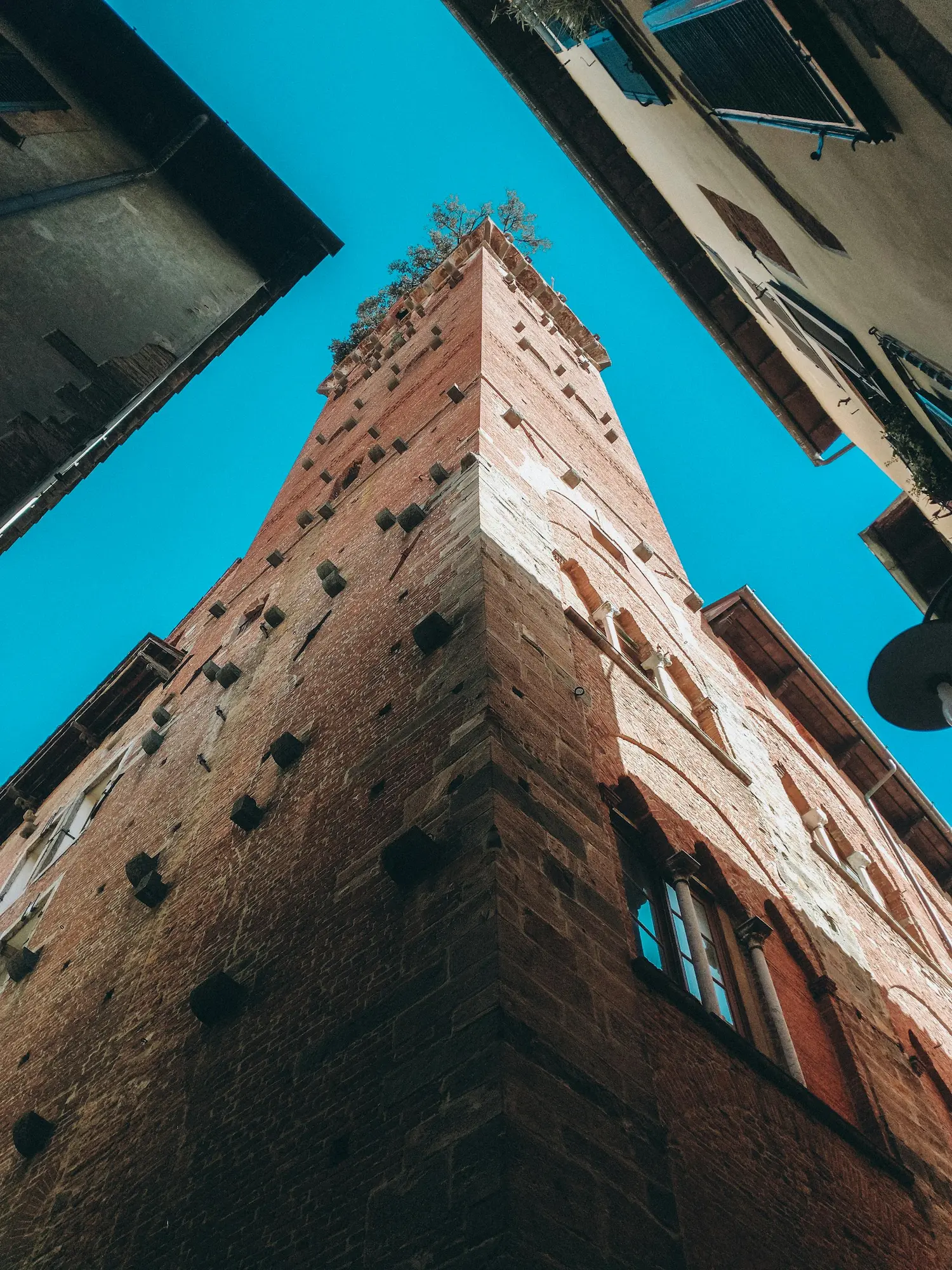
The Torre Guinigi is Lucca's most unexpected sight — a 45-metre medieval tower built by the powerful Guinigi family in the 14th century, with a small garden of holm oak trees growing from its roof. The trees were planted as a symbol of the family's power and have been growing there, improbably, ever since.
The climb is 230 steps and costs around €8.50, and can be bought online here. The views from the top are among the best in the city — the rooftops of Lucca, the walls, the surrounding hills — and the oak trees at your feet make the whole thing feel slightly surreal. Worth it.
The Streets and Churches
Lucca's historic centre is compact enough to cover thoroughly on foot in a few hours. The main axis is Via Fillungo — the principal shopping street, lined with shops, cafés and medieval tower remnants, running from near the Piazza dell'Anfiteatro towards the northern walls.
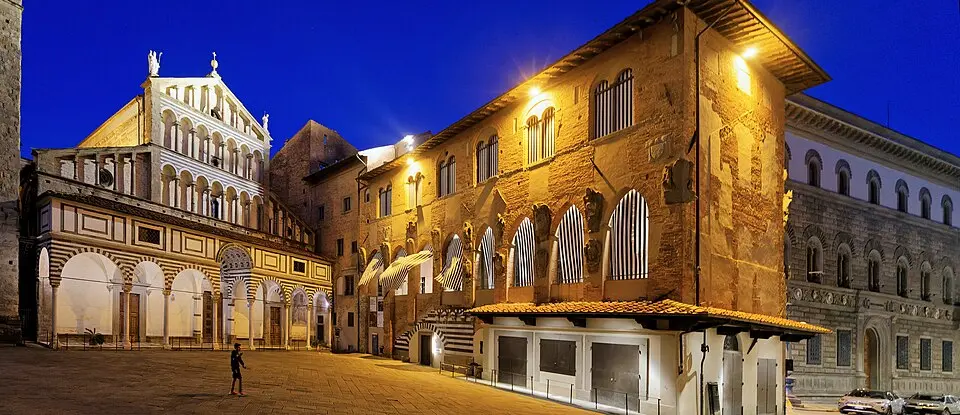
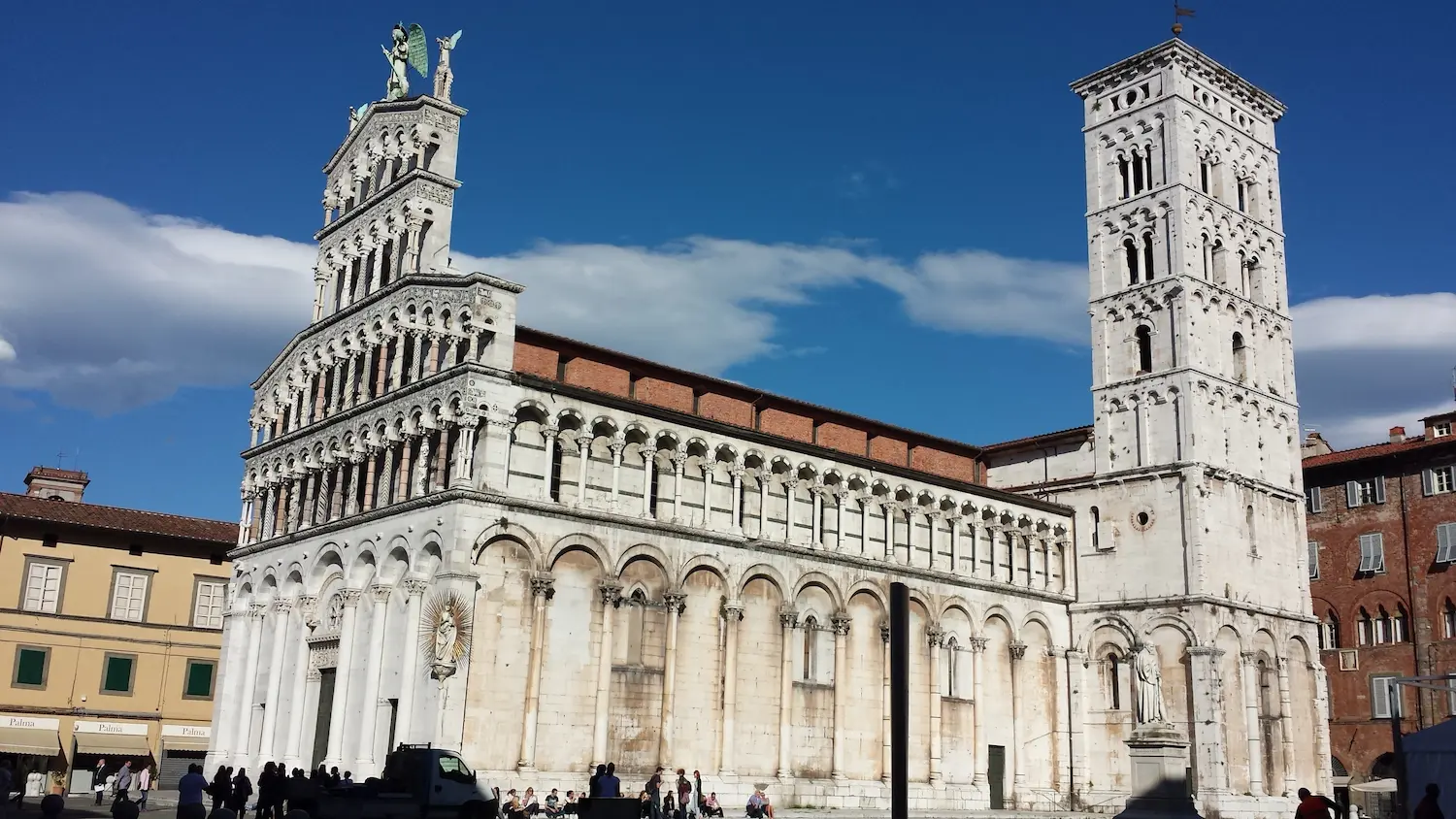
San Michele in Foro is the most striking church in the city — a Romanesque facade of extraordinary elaborateness, its multiple tiers of blind arcading rising above the piazza that occupies the site of the original Roman forum.
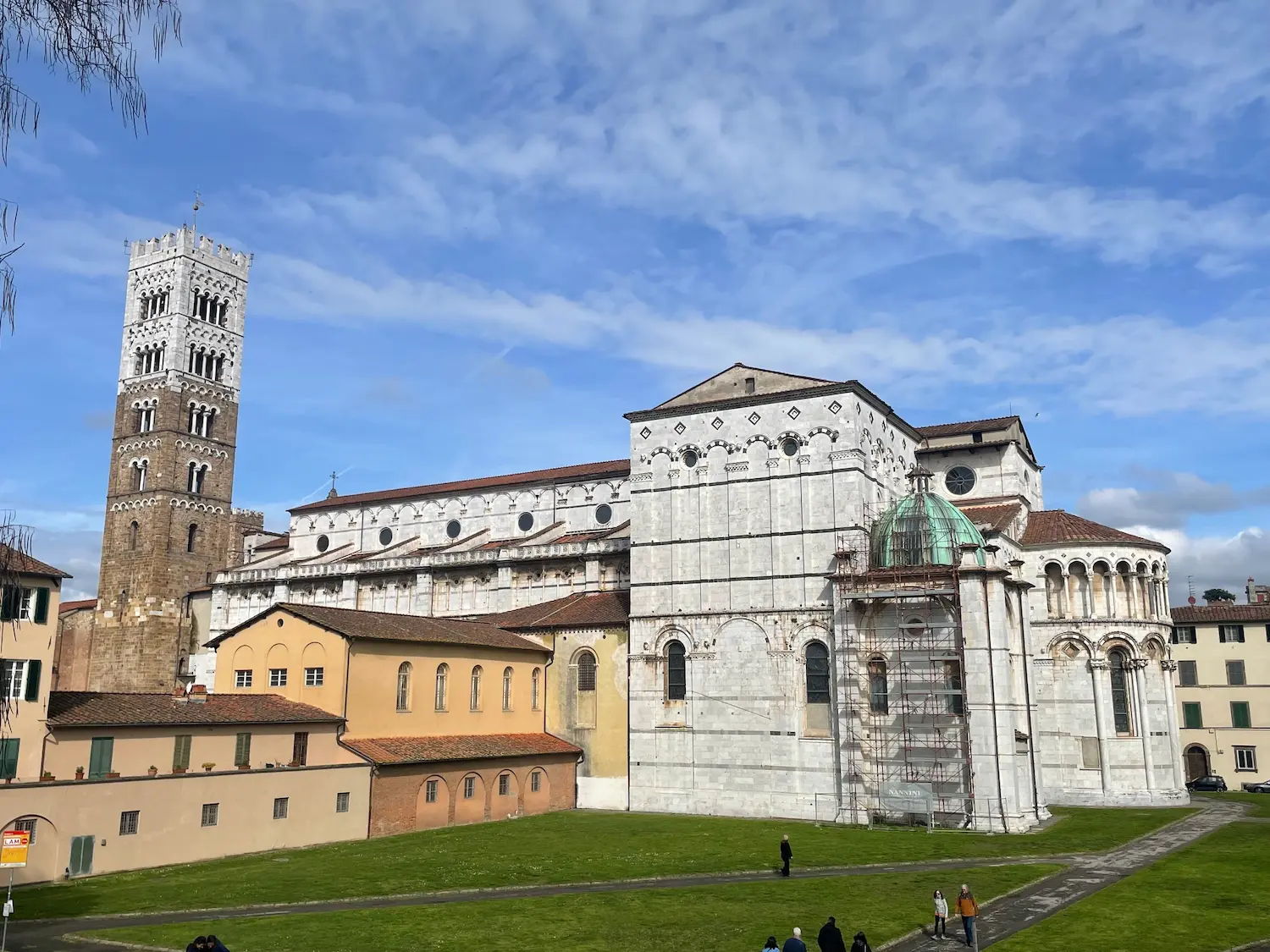
The Cathedral of San Martino (Duomo di Lucca) is a few minutes' walk away — a 13th-century Romanesque cathedral containing the Volto Santo, a wooden crucifix that was one of the most venerated images in medieval Europe, and the tomb of Ilaria del Carretto, a marble effigy by Jacopo della Quercia considered one of the masterpieces of early Renaissance sculpture.
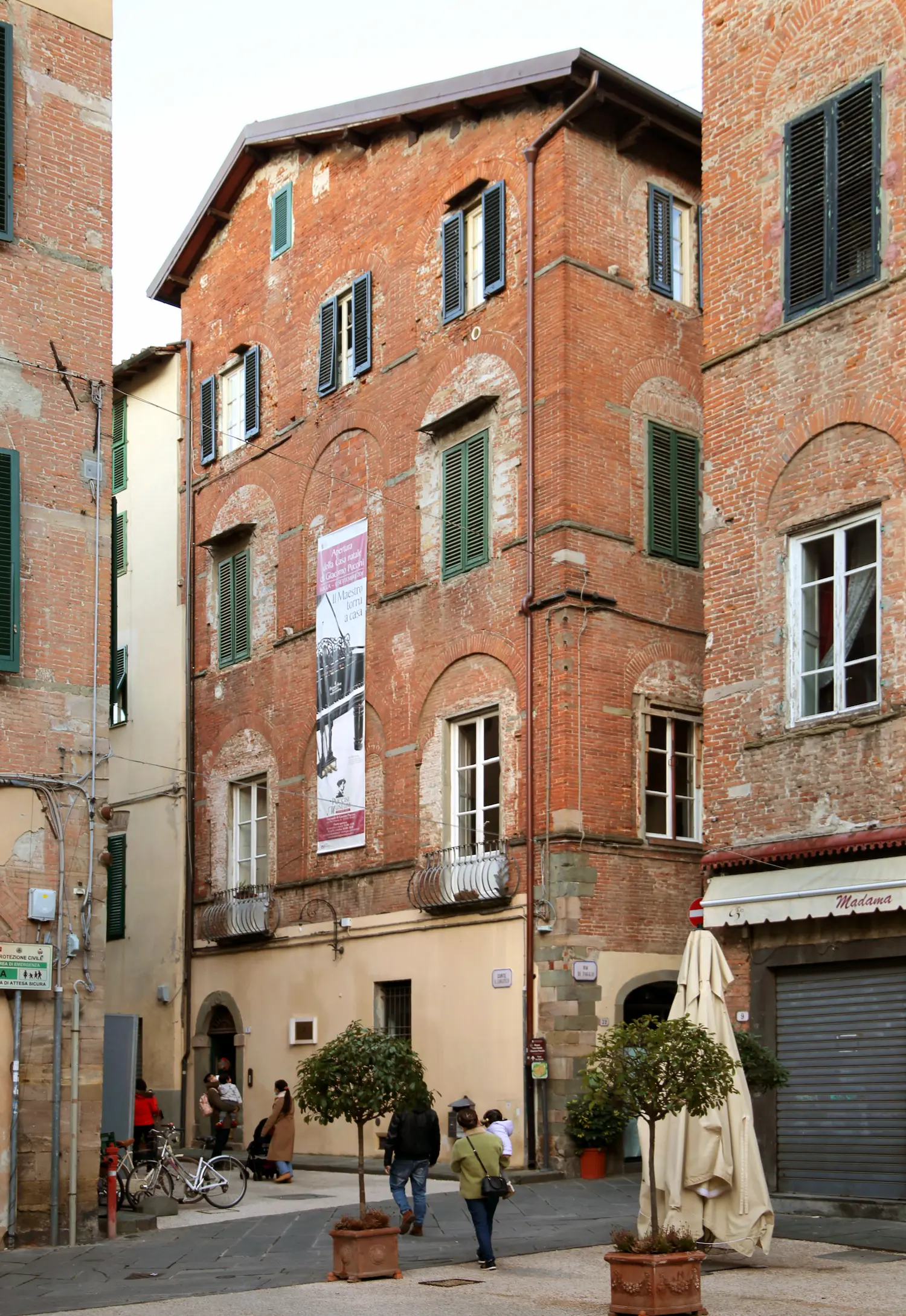
Lucca was the birthplace of Giacomo Puccini — the composer of La Bohème, Tosca, Madama Butterfly and Turandot. The house where he was born, on Corte San Lorenzo just off Via di Poggio, is now a small museum. Evening concerts of Puccini arias are held regularly in churches around the city — check listings when you arrive.
Food and Drink
Lucca has its own food traditions distinct from the rest of Tuscany.
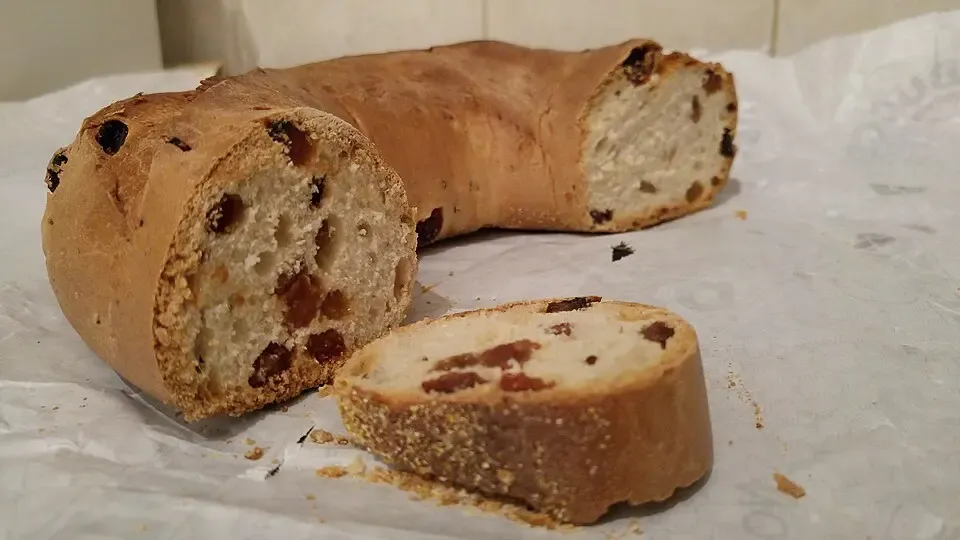
Buccellato is Lucca's signature cake — a sweet ring-shaped bread flavoured with anise and raisins, made to an ancient recipe. The best is from Taddeucci in Piazza San Michele, which has been making it since 1881.
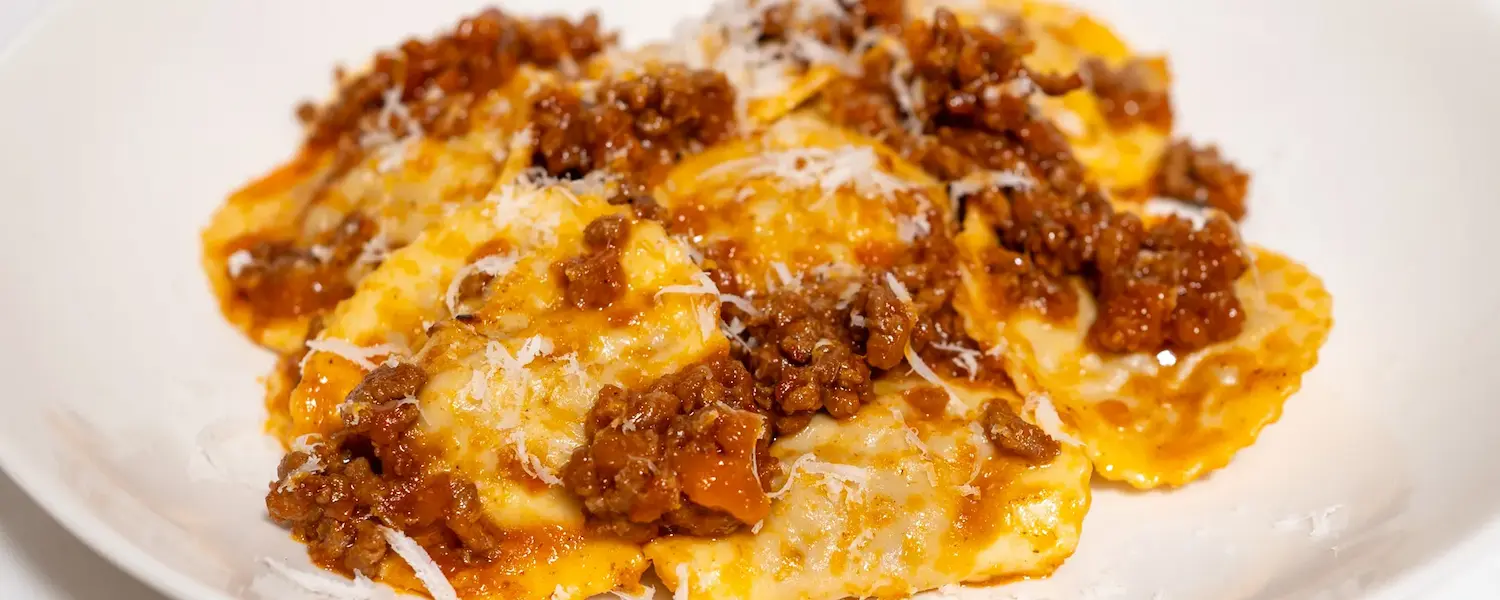
Tordelli is the local pasta — a larger, more rustic version of tortellini, filled with meat and herbs and served with a meat ragù. It can be found on almost every menu in the historic centre. Stefan's Gourmet blog article gives a great description of this dish.
Lucchese DOC is the local wine — produced in the hills around the city, less well-known than Chianti but worth seeking out in local restaurants and enoteche.
The market on Piazza San Giusto, held on Wednesday and Saturday mornings, is one of the most genuine local markets in Tuscany — sellling food, clothing, plants and household goods,
Combining Lucca with Pisa
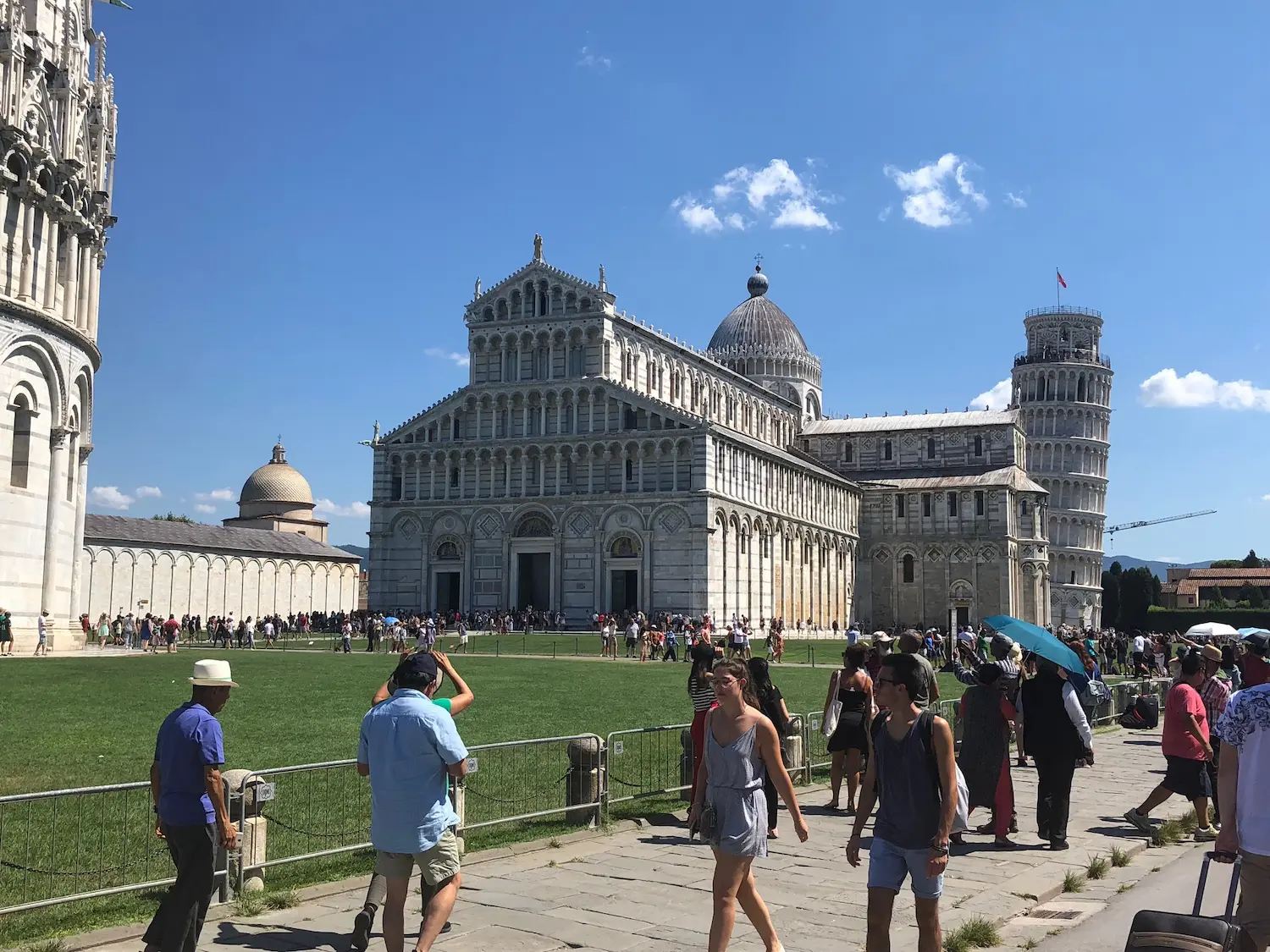
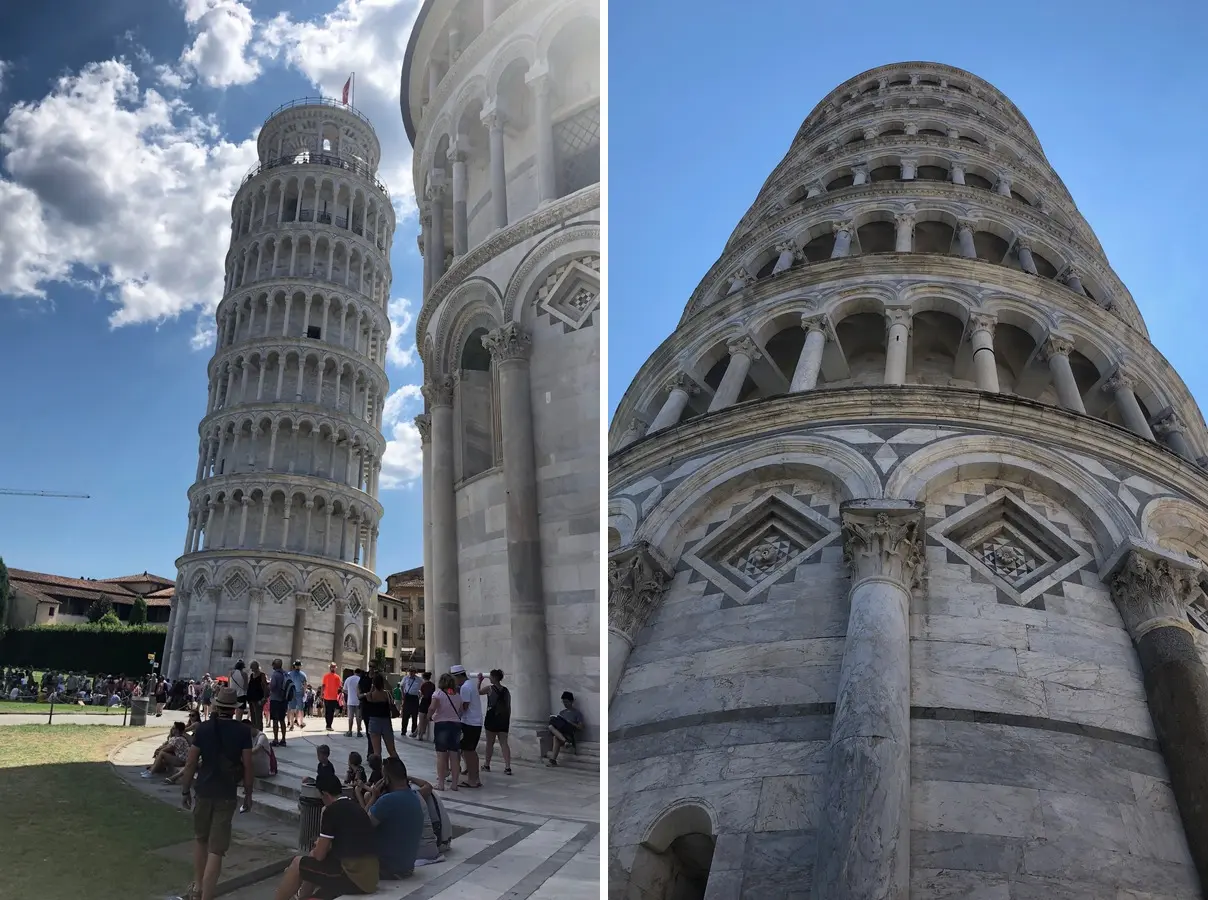
Pisa and Lucca are 30 minutes apart by direct train — making them a natural combination for a day trip from Florence. The standard approach is Pisa in the morning, Lucca in the afternoon.
Why this order: The Leaning Tower queue builds quickly as the day progresses. Arriving in Pisa as early as possible — ideally before 9am — gives you the Piazza dei Miracoli before the crowds peak. After two to three hours in Pisa, take the train to Lucca and spend the afternoon on the walls and in the piazzas.
The honest caveat: A half-day each is enough to see the highlights of both cities, but neither is enough to do either justice. If you have a choice, a full day in Lucca alone is more rewarding than a split day across both. But if you're pressed for time and want to see the Leaning Tower, the Pisa-Lucca combination works well.
Pisa Centrale to Lucca takes around 30 minutes, with trains running approximately every 30 minutes throughout the day. Tickets cost around €4 — no booking required.
Practical Information
Getting around: The historic centre is entirely pedestrianised and flat — genuinely walkable. Cycling is the best way to see the walls and cover more ground. Bike rental is available near the station and inside the walls.
Luggage storage: Available at Lucca station — useful if you're combining with Pisa or arriving before hotel check-in. Radical Storage and Bounce also have locations in the city centre and near the station.
Day trip or overnight: Lucca works well as a day trip from Florence. An overnight stay gives you the city in the evening when the day visitors have left — quieter, more local, and the walls at dusk are exceptional.
Best time to visit: Spring (April–June) and autumn (September–October) are the most comfortable. Summer is hot on the exposed walls — cycle or walk early in the morning if visiting in July or August. The walls are open year-round.
For a full guide to Italian trains — booking, validation and ticket types — see our Italy train network guide.
Frequently Asked Questions
Is Lucca worth visiting as a day trip from Florence?
Yes — emphatically. Lucca is one of the most complete and least crowded historic cities in Tuscany. The intact Renaissance walls, the Piazza dell'Anfiteatro and the Torre Guinigi make it genuinely distinctive, and the absence of mass tourism gives it a character that Florence has largely lost. A full day is ideal.
How do I get from Florence to Lucca by train?
Direct regional trains from Florence Santa Maria Novella reach Lucca in approximately 1 hour 20 minutes. Around 43 trains run daily. Tickets start from around €9, and can be bought via Trenitalia or Trainline. No seat reservation required — if you have bought a paper ticket then remember to validate it before boarding.
Can I combine Lucca and Pisa in one day from Florence?
Yes - Pisa and Lucca are 30 minutes apart by direct train. The standard approach is Pisa in the morning (arrive early for the Tower queue) and Lucca in the afternoon. It makes for a full day from Florence but is manageable.
What is the Torre Guinigi?
The Torre Guinigi is a 14th-century medieval tower in Lucca's historic centre, notable for the garden of holm oak trees growing from its roof. The 230-step climb costs around €8.50 and gives you the best panoramic view of the city.
Can I cycle the city walls of Lucca?
Yes — the walls are wide enough to cycle along and the full 4.2km circuit is one of the best things to do in Lucca. Bike rental is available near the station and inside the walls from around €6 per hour.
What is buccellato?
Buccellato is Lucca's traditional sweet ring-shaped bread, flavoured with anise and raisins. The best is from Taddeucci in Piazza San Michele, which has been making it since 1881. It is the definitive Lucca food experience.
Is Lucca easy to reach without a car?
Yes - direct trains from Florence run throughout the day and the journey takes around 1 hour 20 minutes. The historic centre is entirely walkable and car-free. Lucca is one of the easiest day trips in Tuscany by public transport.
Also on The Unseen Italy: Day Trips from Florence by Train · Hidden Gems in Florence · Siena by Bus from Florence · How Italy's Train Network Works