Striped Romanesque churches, a cathedral square among the finest in Tuscany, and a medieval hospital decorated with Della Robbia masterpieces — only 30 minutes from Florence by train, and almost entirely overlooked.
Last verified: June 2026. Train times and prices change regularly. Always check official sources before travelling.
Pistoia sits between Florence, Lucca and Pisa - geographically at the centre of Tuscany's main tourist circuit, but not many visitors go there. The cathedral, baptistery and bell tower cluster together in one of the region's most architecturally rich squares. A glazed terracotta frieze decorates a hospital that served the city for nearly 800 years. And in summer, an internationally respected blues festival fills the same piazza that also hosts a medieval joust.
At a Glance
| 🚆 From Florence | Direct regional train from Santa Maria Novella - approx. 30 min, from ~€5 |
| 🚆 From Lucca | Direct regional train - approx. 40 min, from ~€6 |
| 🚆 From Pisa | Direct regional train via Lucca line - 1 hour 20 mins, from ~€7 |
| 🏛️ Must see | Piazza del Duomo, Cattedrale di San Zeno, Ospedale del Ceppo |
| 🎵 Pistoia Blues | International music festival, every July in Piazza del Duomo |
| 🐻 Giostra dell'Orso | Medieval joust held in the same square each summer |
| ⏱️ Time needed | Half a day to a full day |
| 🗺️ Combine with | Lucca, Florence, Prato |
In This Guide
1. Getting to Pistoia by Train
This is one of the easiest and cheapest day trips from Florence. Direct regional trains run from Florence Santa Maria Novella to Pistoia roughly every 30 minutes throughout the day, with the journey taking around 30 to 40 minutes depending on the service. There is no high-speed option and none is needed - tickets start from around €5 one way and there is no advance booking required.
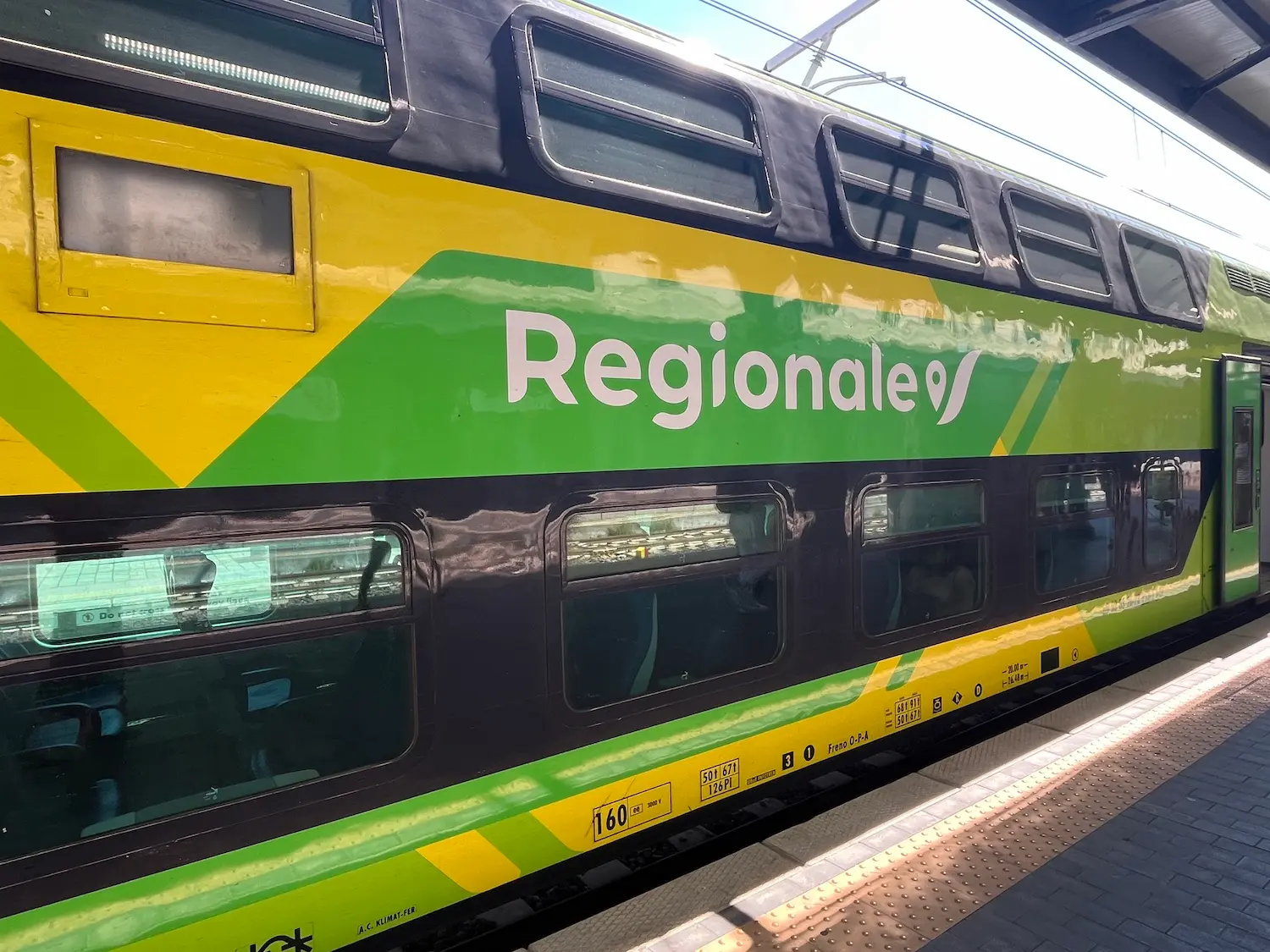
Buy tickets at the station machines or via Trenitalia or Trainline. As with all regional trains in Italy, validate a paper ticket in one of the green validation machines (on or around the platform) before boarding.
Pistoia sits on the line between Florence and Lucca, making it a natural stop if you're already heading that way - the journey from Lucca takes around 40 minutes. From Pisa, change at Lucca or take a direct regional service depending on the time of day.
From the station, walk straight ahead for around ten minutes to reach the edge of the historic centre.
2. Piazza del Duomo
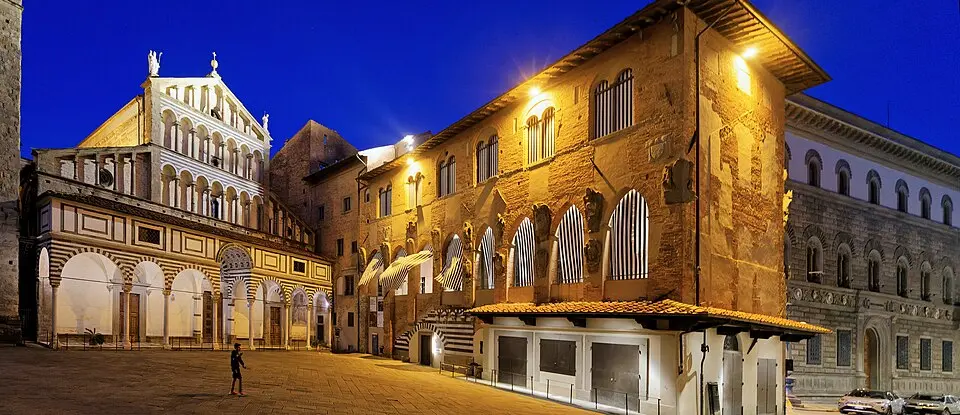
Piazza del Duomo is Pistoia's historic and artistic heart - widely considered one of the finest squares in Tuscany, and remarkable for the sheer density of significant buildings packed into a relatively compact space.
The Cattedrale di San Zeno (Pistoia's cathedral) sits within the line of the original city walls. The first documented mention of a cathedral on this site dates to 923, though the building was damaged by fire on at least two occasions in the medieval period and the present facade — striped green and white marble, arcaded and richly decorated in the Pisan-Romanesque style — was largely reconstructed between 1379 and 1440.
The cathedral is dedicated to Saint Zeno of Verona (not, as is sometimes assumed, a local bishop), reassigned to him from an earlier dedication to Saint Martin during the Lombard period. Statues of San Zeno and San Jacopo — Pistoia's patron saint — flank the facade on either side of its pointed gable.
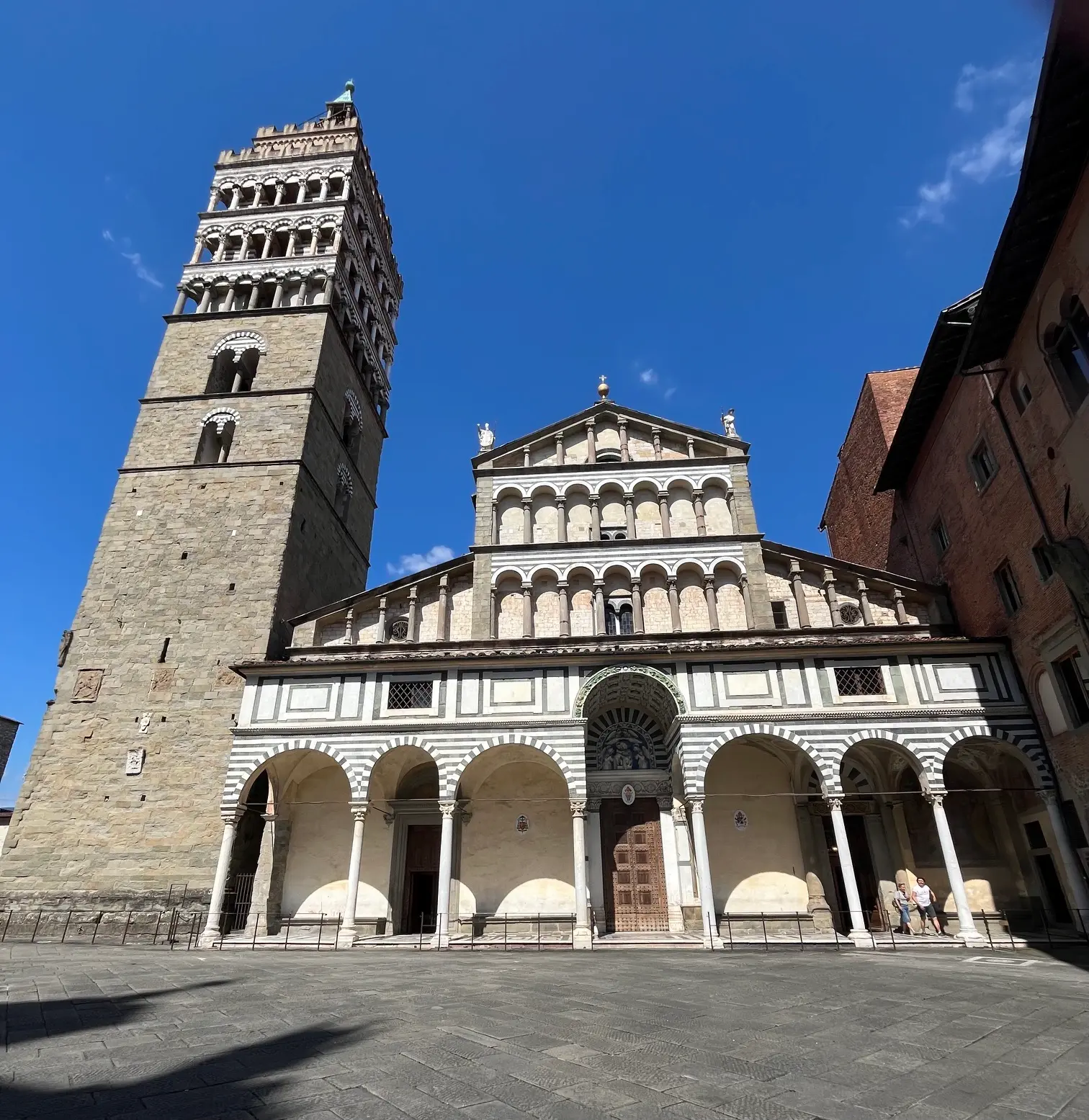
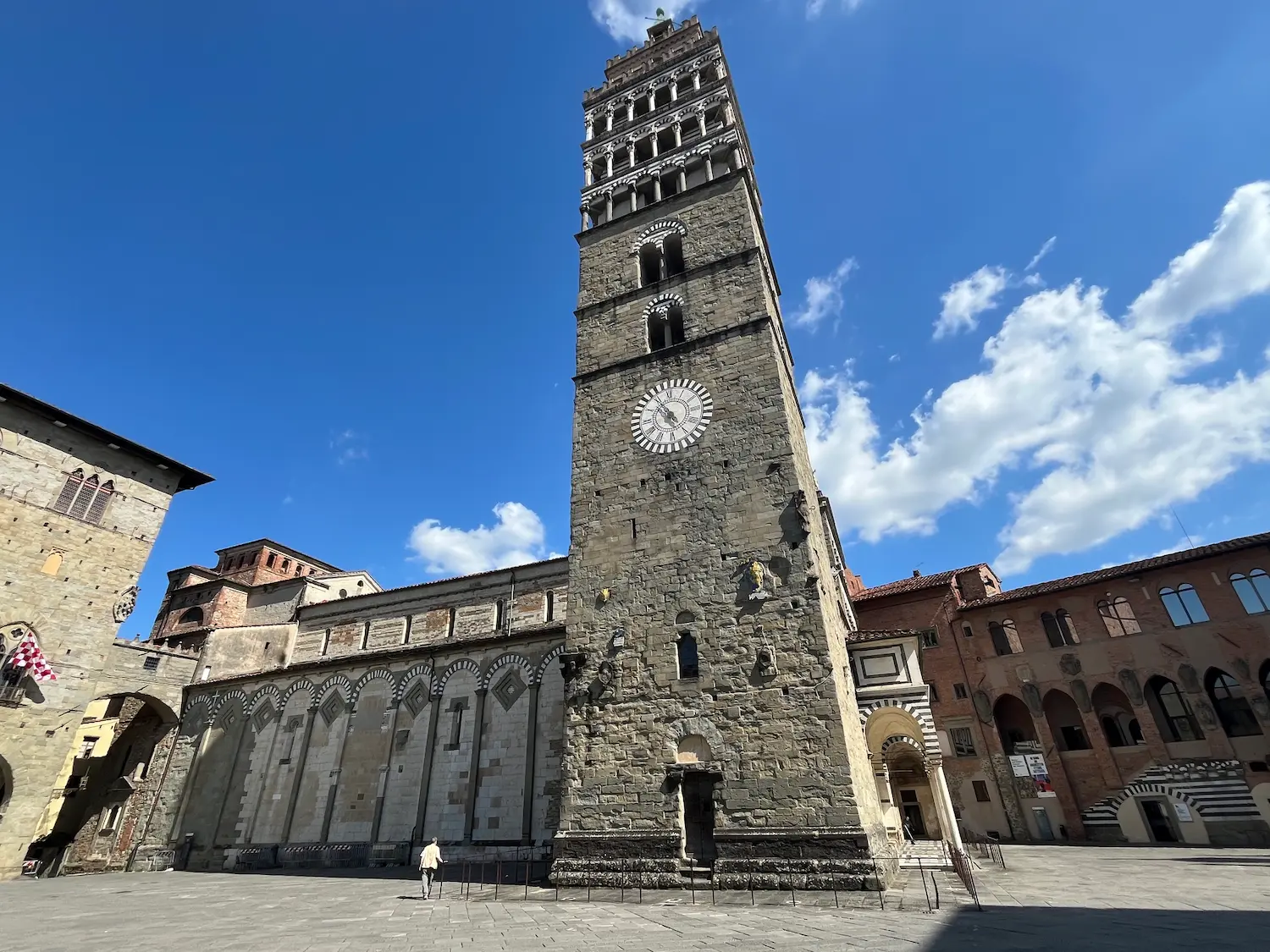
The Campanile (bell tower) rises 67 metres beside the cathedral, its Gothic battlements finished in the swallowtail shape. The climb is 200 steps and rewards you with a 360-degree panorama over the city and the surrounding Tuscan countryside - tickets are available from the tourist office in the square.
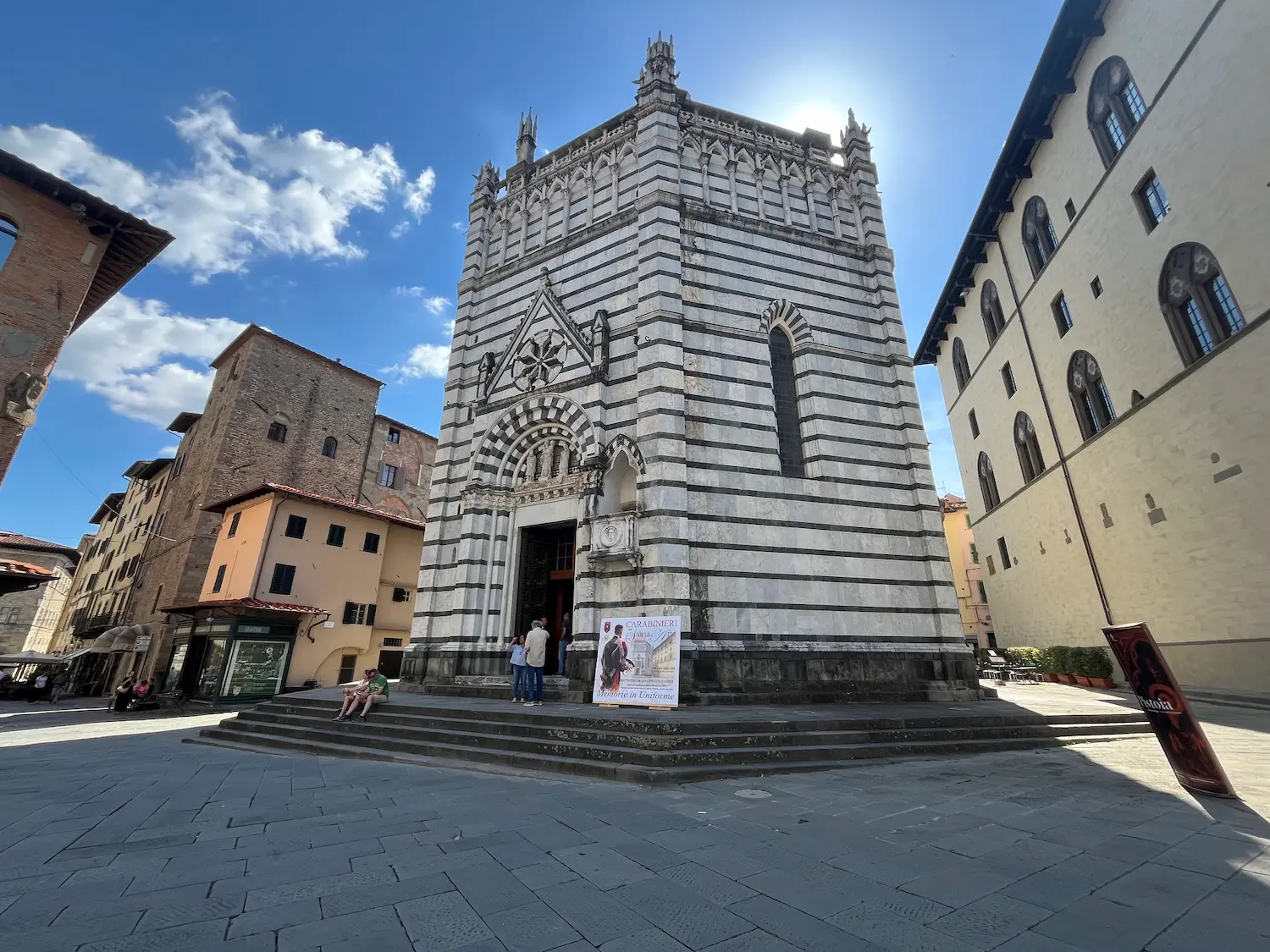
The Battistero di San Giovanni in Corte stands directly opposite the cathedral — a 14th-century octagonal baptistery in the same green-and-white banded marble. Its design is traditionally attributed to Andrea Pisano, following a claim made by Vasari, though no firm documentary proof of this survives; what is certain is that the Pistoiese master builder Cellino di Nese oversaw construction and was responsible for the marble facing..
The Palazzo dei Vescovi (Bishops' Palace), beside the cathedral, now houses the cathedral museum and gives access to underground archaeological routes beneath the square.
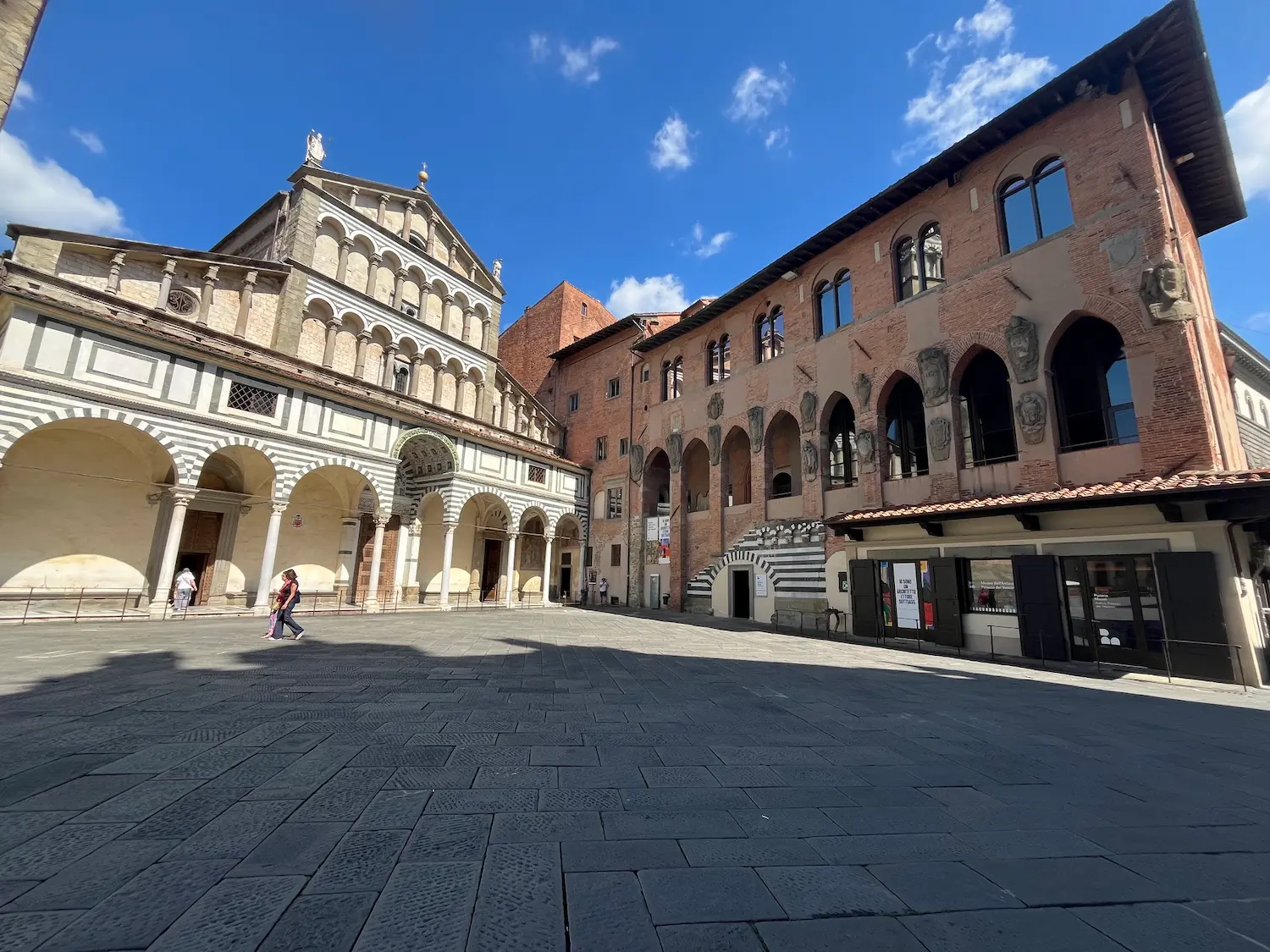
The Palazzo del Comune (Town Hall), opposite, houses the Museo Civico - a collection of Pistoian and Tuscan art spanning several centuries.
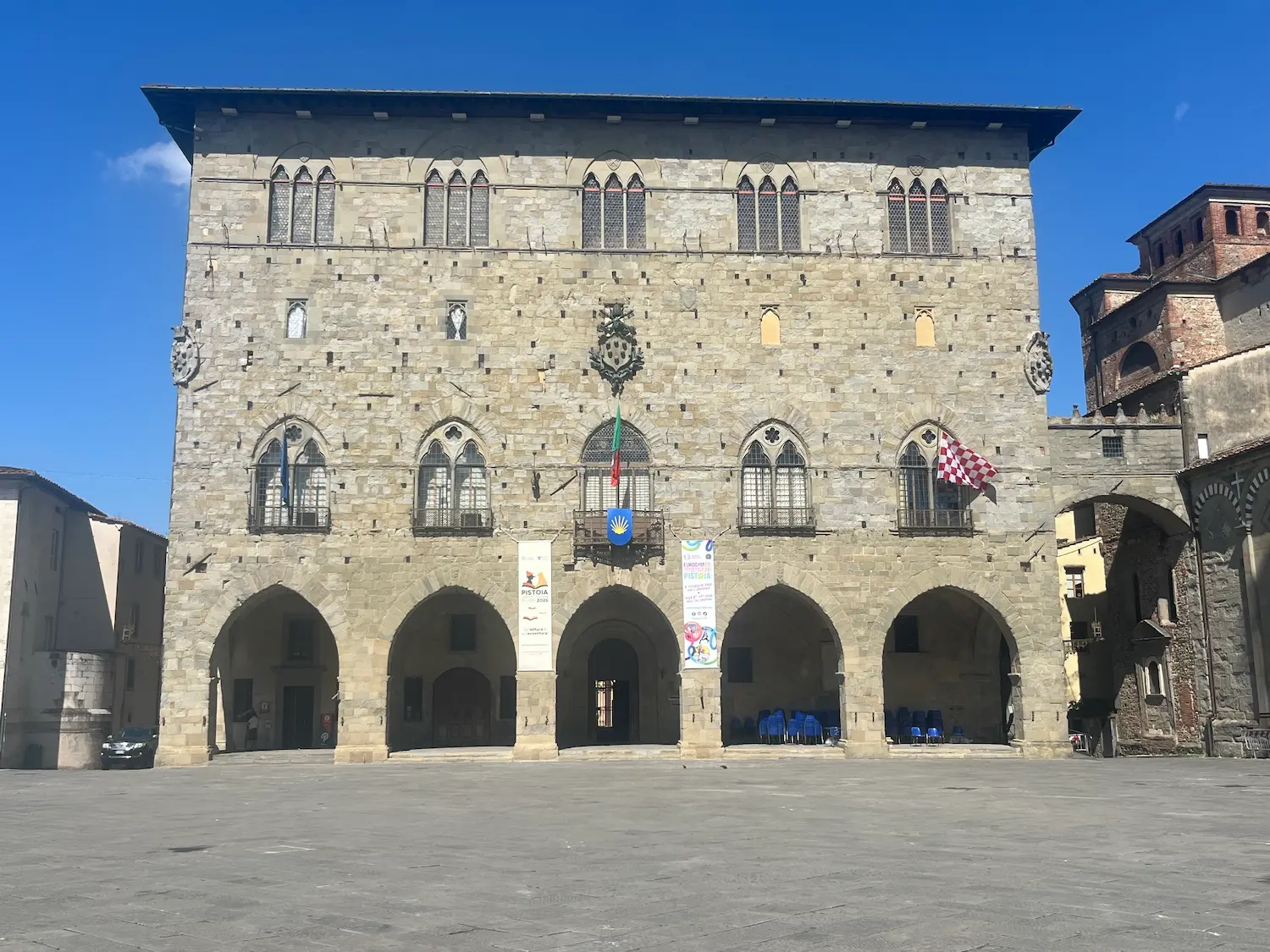
Take this square slowly. The combination of buildings - religious, civic and artistic, spanning multiple centuries and styles - rewards unhurried attention rather than a quick circuit.
3. Ospedale del Ceppo
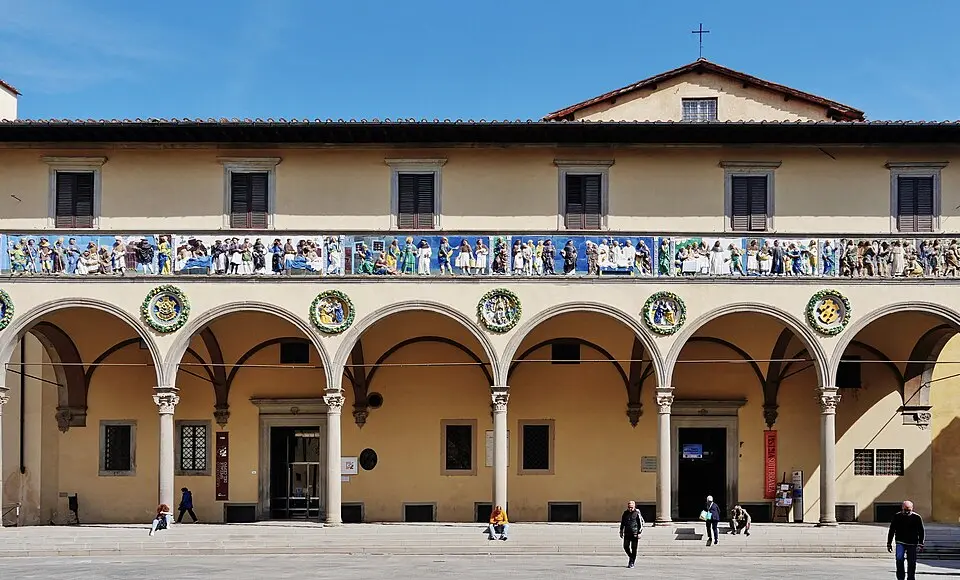
A short walk north of the cathedral square stands one of Pistoia's most genuinely extraordinary sights — the Ospedale del Ceppo, a hospital founded in 1277 that became the city's main hospital in the wake of the Black Death of 1348, and remained in continuous use until 2013, when its functions transferred to the new Ospedale San Jacopo.
The building's loggia is decorated with a vivid glazed terracotta frieze depicting the Seven Works of Mercy — scenes of citizens feeding the poor, comforting prisoners, tending the sick and washing the feet of travellers. The frieze itself was made by Santi Buglioni, working in the same glazing technique the Della Robbia family made famous, between 1525 and 1529.
Pistoia Sotterranea offers guided tours through the underground basement of the hospital, and tunnels beneath the complex - a different and atmospheric way to experience the site's long history. Allow 60 to 90 minutes for the underground tour.
4. Beyond the Square — Pistoia's Other Churches
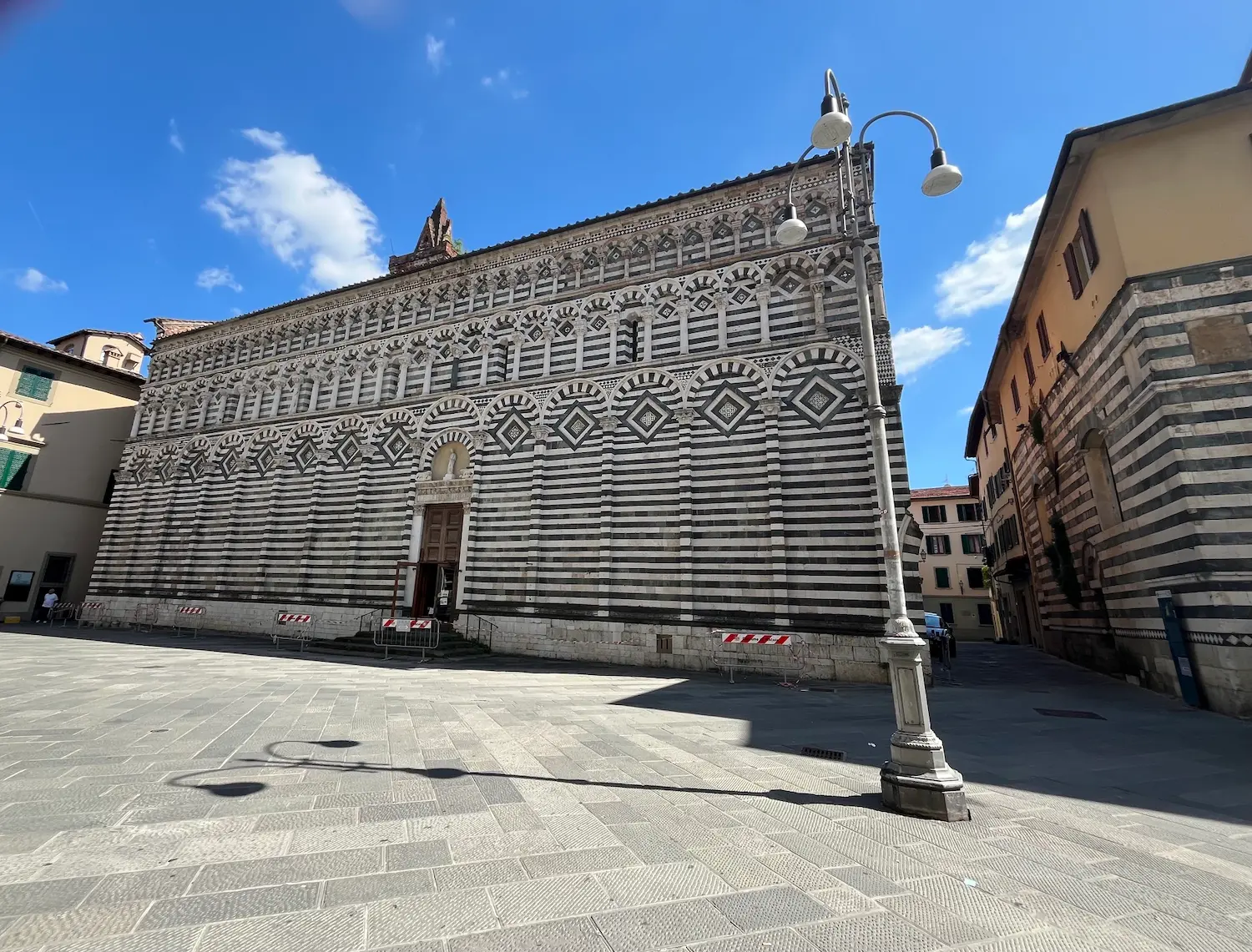
Pistoia has been nicknamed the city of beautiful churches, and venturing beyond Piazza del Duomo reveals why.
San Giovanni Fuorcivitas is a short walk south of the square via Via Cavour. Inside is a 13th-century pulpit by Fra Guglielmo da Pisa, intricately carved with biblical scenes.
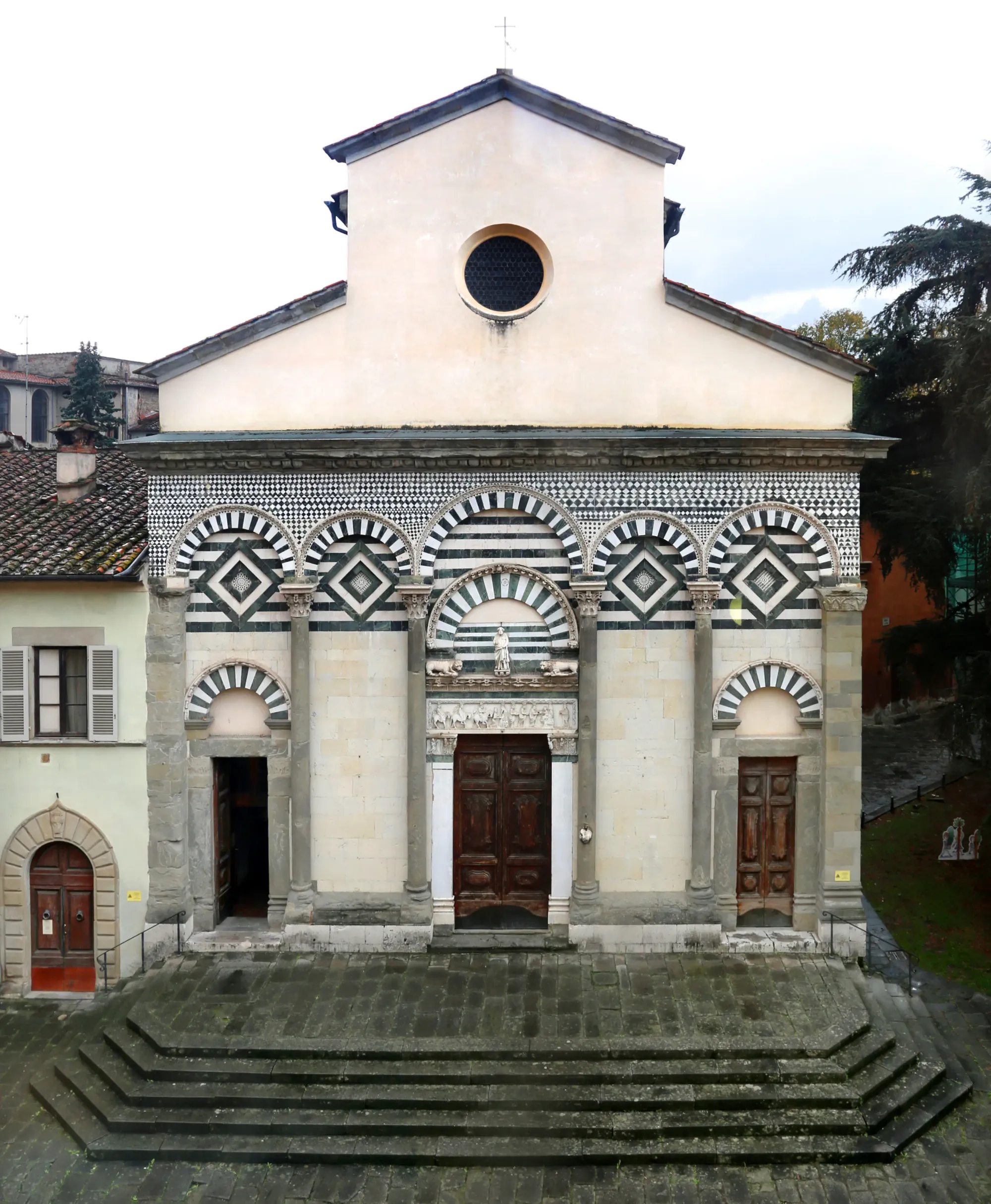
Sant'Andrea, north of the cathedral, is believed by some to have been Pistoia's earliest cathedral. Its real treasure is a pulpit by Giovanni Pisano — a masterwork of medieval sculpture.
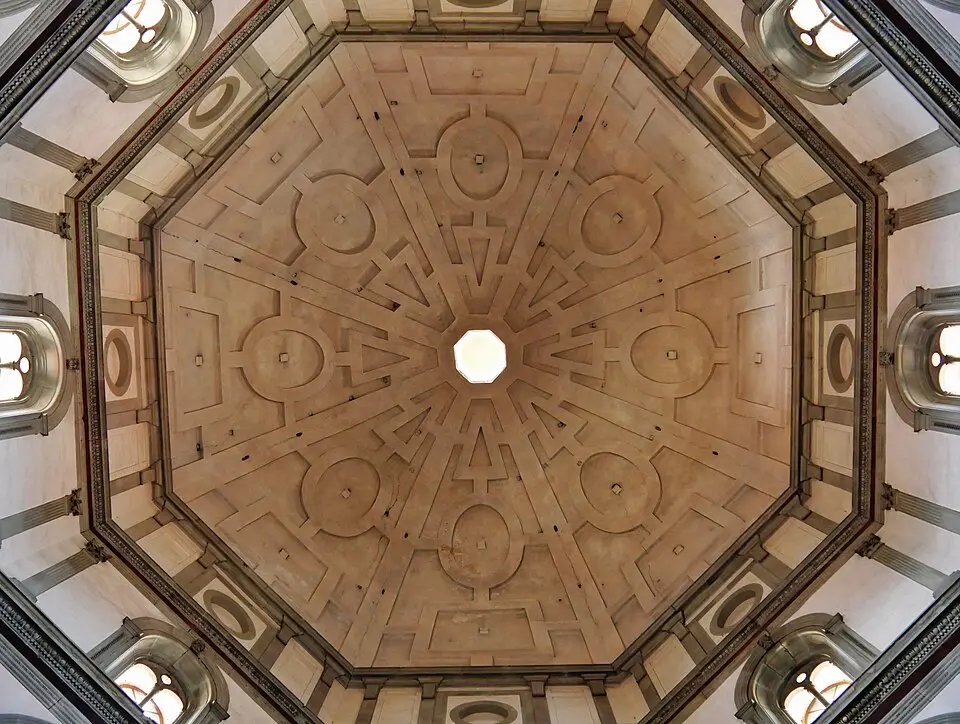
Basilica della Madonna dell'Umiltà, along Via della Madonna, has a deceptively plain facade that gives little indication of the substantial dome inside — one of the architectural symbols of the city's skyline, best appreciated from a distance.
5. Piazza della Sala and the Markets
Piazza della Sala, just behind the baptistery, is Pistoia's commercial and social counterpart to the grandeur of Piazza del Duomo. This is where the city actually lives day to day - small workshops, wine bars and cafés cluster around the square, making it the natural place to pause for lunch after a morning of churches and monuments.
The market here has operated for centuries and remains genuinely local - a good place to buy Tuscan produce, bread and cheese if you're planning a picnic, or simply to sit with a coffee and watch the city pass by.
6. Museums — Marino Marini and the Civic Collection
Palazzo del Tau, south of Piazza del Duomo, houses the Museo Marino Marini — dedicated to the sculptor Marino Marini, who was born in Pistoia in 1901 and became one of the most significant Italian sculptors of the 20th century.
Palazzo Fabroni is dedicated to contemporary art, hosting temporary exhibitions alongside a permanent collection of Italian artists.
The Museo Civico, inside the Palazzo del Comune on Piazza del Duomo, covers Pistoian and Tuscan art from the medieval period through to the 19th century, with paintings, sculpture and other works illustrating the city's artistic history.
7. Pistoia Blues and the Giostra dell'Orso
Piazza del Duomo transforms twice a year for two of Pistoia's most distinctive events.
Pistoia Blues, held every July, is an internationally respected music festival that despite its name extends well beyond blues - past performers have included BB King, Miles Davis and Sting. The festival turns the cathedral square into a major concert venue for several nights each summer.
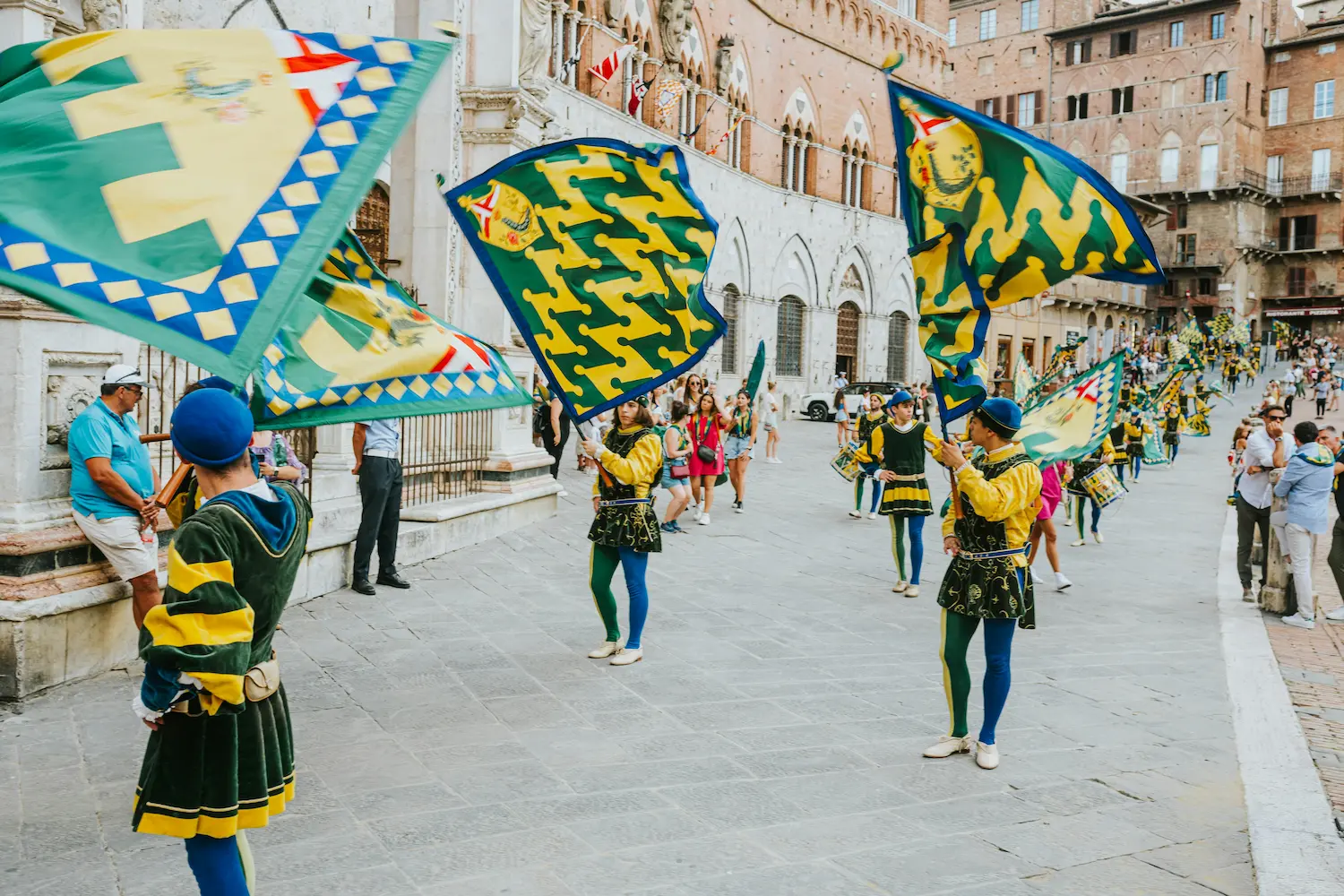
The Giostra dell'Orso (Joust of the Bear) is Pistoia's answer to Siena's Palio - a medieval tournament in which knights on horseback, representing the city's historic neighbourhoods (rioni), charge at a bear-shaped target in a chivalric parade and contest of skill. As with the Palio, the winning neighbourhood enjoys a year of bragging rights.
8. Practical Information
Getting around: Pistoia's historic centre is compact and entirely walkable - most of what's worth seeing sits within a 15-minute walk of Piazza del Duomo.
Day trip or longer: A half day covers Piazza del Duomo and the Ospedale del Ceppo. A full day allows time for the additional churches and one of the museums..
Best time to visit: Spring and autumn are the most comfortable for walking the city. July brings Pistoia Blues and considerably more visitors than usual - book accommodation ahead if attending.
Combine with: Pistoia sits naturally between Florence and Lucca - a stop on the way to or from either makes excellent use of the train line.
For a full guide to Italian regional trains, see our Italy train network guide.
Frequently Asked Questions
Is Pistoia worth visiting from Florence?
Yes — Pistoia is one of the most overlooked cities in Tuscany. Piazza del Duomo is considered one of the finest squares in the region, and the Della Robbia frieze on the Ospedale del Ceppo is a genuine highlight rarely mentioned in standard Tuscany itineraries. A direct train from Florence takes around 30 minutes, making it one of the easiest day trips available.
How do I get from Florence to Pistoia by train?
Direct regional trains run from Florence Santa Maria Novella roughly every 30 minutes, with the journey taking 30 to 40 minutes. Tickets cost from around €5 one way and no advance booking is required.
Can I combine Pistoia with Lucca?
Yes - both sit on the same regional rail line, with the journey between them taking around 40 minutes. Pistoia also connects easily towards Pisa via the same line, making it a natural stop on a wider day combining several Tuscan towns.
What is Pistoia Blues?
Pistoia Blues is an internationally respected music festival held every July in Piazza del Duomo, with a history of major international performers despite its blues-focused name. It transforms the cathedral square into a major outdoor concert venue for several nights each summer.
How long do I need in Pistoia?
A half day covers the essentials — Piazza del Duomo, the cathedral, the baptistery and the Ospedale del Ceppo. A full day allows time for the additional churches, Piazza della Sala and one of the city's museums.
Also on The Unseen Italy: Day Trips from Florence by Train · Lucca by Train from Florence · Siena by Bus from Florence · How Italy's Train Network Works