Buried Roman cities, an active volcano, islands and Greek temples - no other Italian city offers this density of extraordinary places within reach of public transport. Every major day trip from Naples, covered in one guide.
Last verified: June 2026. Train times and prices change regularly. Always check official sources before travelling
Pompeii and Herculaneum are 20 to 35 minutes away on the Circumvesuviana. The crater of an active volcano, Vesuvius, is 60 minutes away. Capri, Ischia and the Amalfi Coast are all easily reachable by ferry without a hire car. Greek temples older than the Acropolis and a royal palace to rival Versailles sit within just over an hour in the other direction. This is what makes Naples unique among Italian cities - the wide range of amazing destinations within reach of public transport.
This guide brings together every major day trip from Naples in one place - journey times, what each destination offers, and links to the complete guide for each.
At a Glance
| Destination | From Naples | Best for |
|---|---|---|
| Pompeii | ~35 min (Circumvesuviana) | The most famous archaeological site in the world |
| Herculaneum | ~20 min (Circumvesuviana) | Smaller, better preserved, less crowded than Pompeii |
| Mount Vesuvius | ~60 min total (bus tour, or train + bus) | The volcano that buried both cities |
| Sorrento | ~70 min (Circumvesuviana) | Clifftop town, gateway to Capri and the Amalfi Coast |
| Capri | ~50 min (hydrofoil) | The Blue Grotto, Faraglioni rocks, glamour |
| Salerno (for the Amalfi Coast) | ~35–45 min (train) + then ferry | Positano, Amalfi, the Path of the Gods |
| Ischia | ~50–60 min (hydrofoil) | Thermal pools, vineyards, a quieter island |
| Caserta | ~30-50 min (train) + 15 min walk | A Bourbon royal palace on a Versailles scale |
| Paestum | ~75 min (train) + 15 min walk | Greek temples older and better preserved than Athens' |
In This Guide
Pompeii and Herculaneum
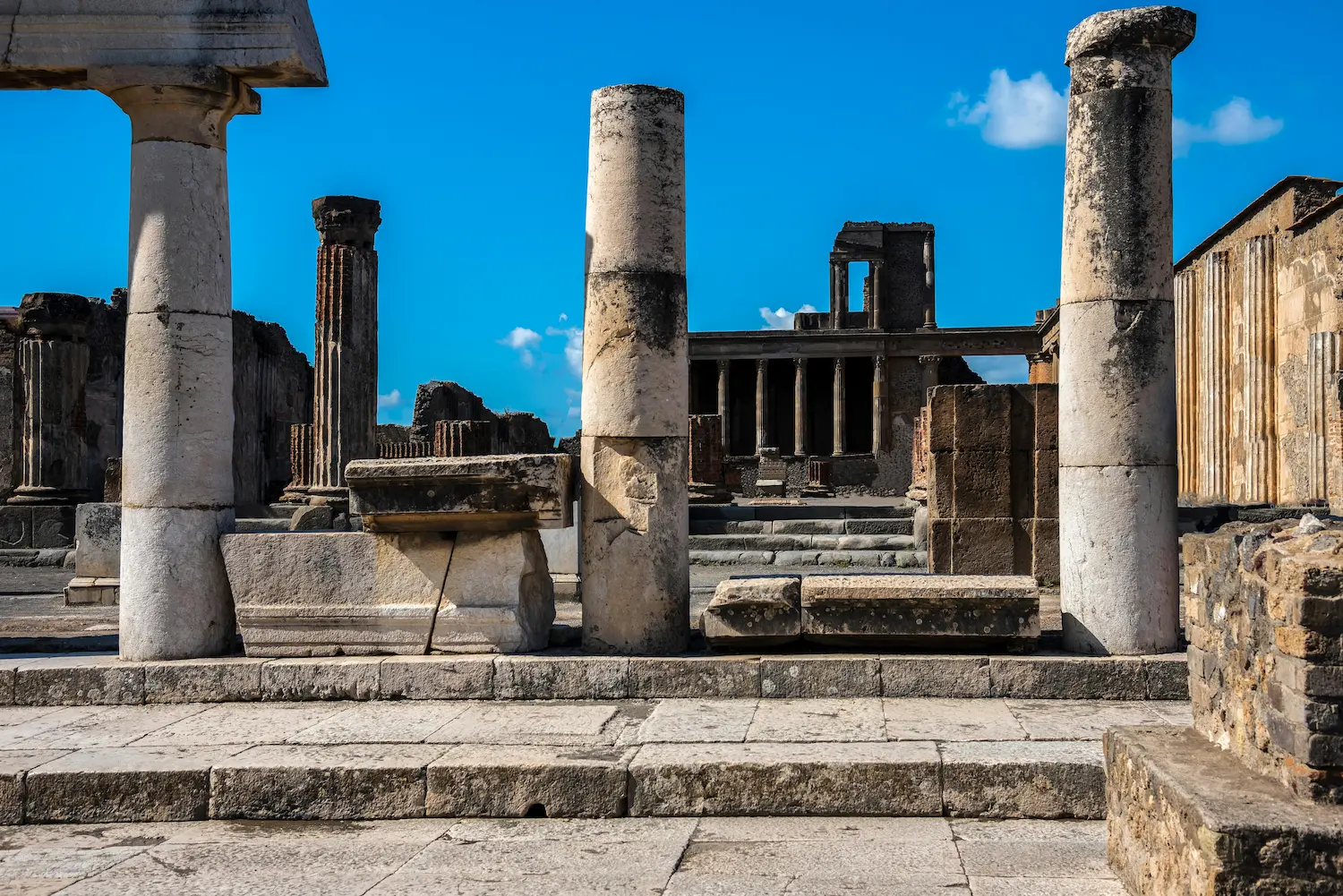
The two Roman cities buried by Vesuvius in 79 AD are both reached on the Circumvesuviana from the lower level of Napoli Centrale. Pompeii (stop: Villa dei Misteri) takes around 35 minutes and is vast - the largest and most visited archaeological site in Italy, requiring three to four hours minimum.
Herculaneum (stop: Ercolano Scavi) takes around 20 minutes and is smaller and more intimate - better preserved in many respects, with multi-storey buildings and even organic material surviving, and coverable in two to three hours.
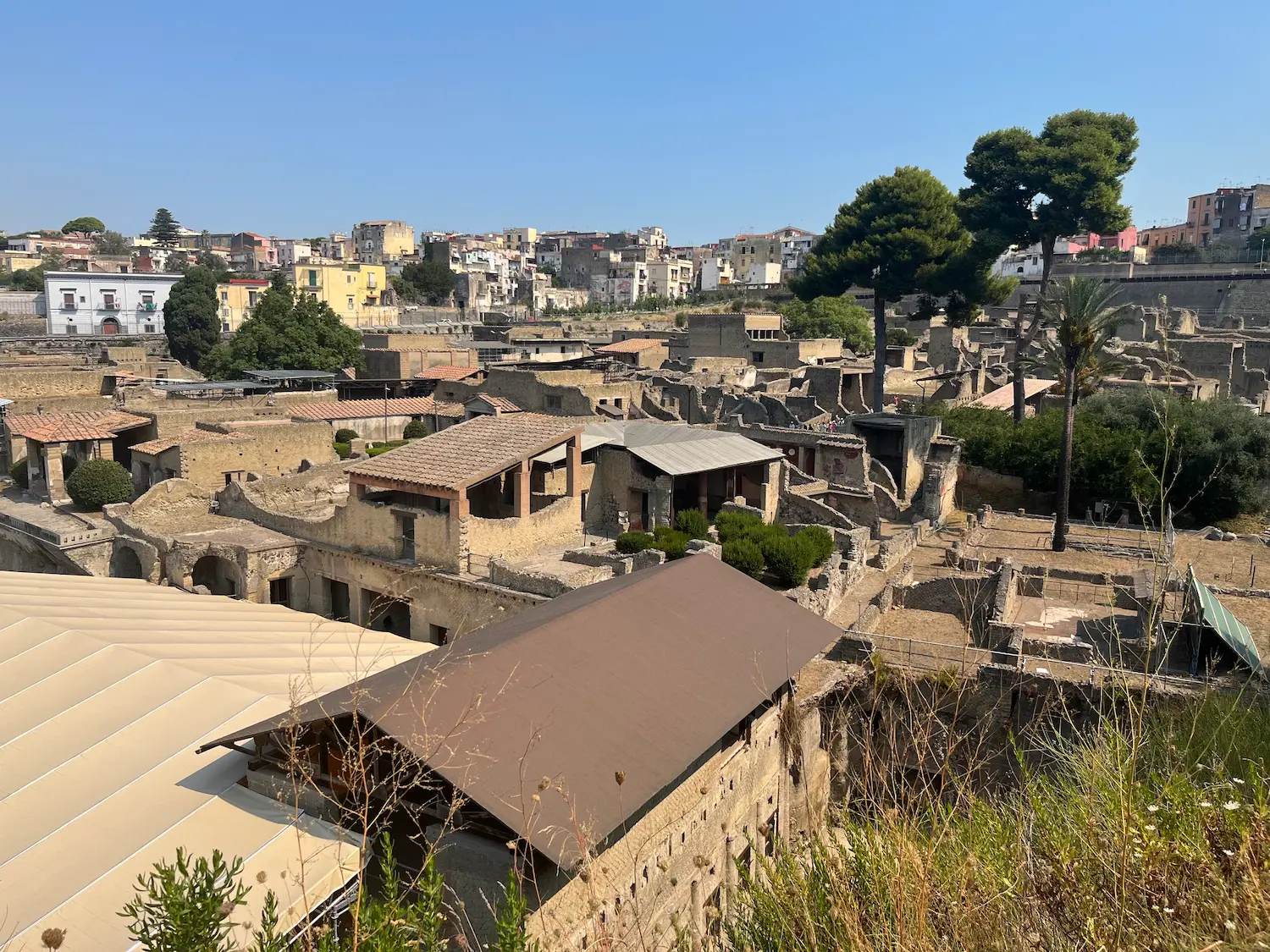
Both sites require timed-entry tickets booked online in advance, particularly in peak season. The Museo Archeologico Nazionale in Naples holds most of the finest objects found at both sites, making a visit there before or after a natural complement.
See our complete guide to Pompeii and Herculaneum by train for full logistics, ticket booking and a suggested itinerary for both.
Mount Vesuvius
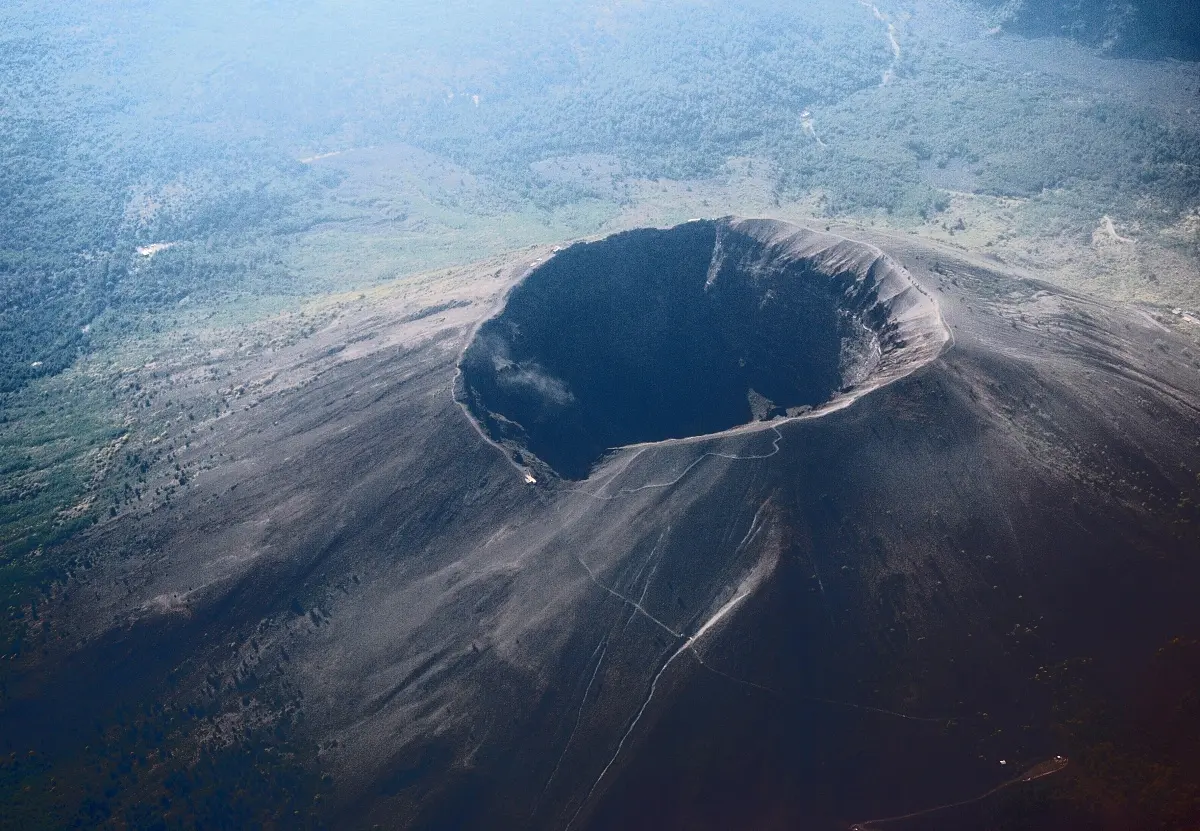
The volcano that destroyed Pompeii and Herculaneum is still active and open to visitors. From Naples, take the Circumvesuviana to Ercolano Scavi (around 25 minutes), then the Vesuvio Express minibus to the crater entrance (around 20 minutes). Allow 90 minutes to two hours at the top including the crater walk.
Tickets must be booked online in advance - there is no ticket office at the site and phone signal at the summit is unreliable. Vesuvius combines naturally with Herculaneum in a single day, since both are reached from the same Circumvesuviana stop.
See our complete guide to Mount Vesuvius by train for tickets, the climb, and combination itineraries.
Sorrento
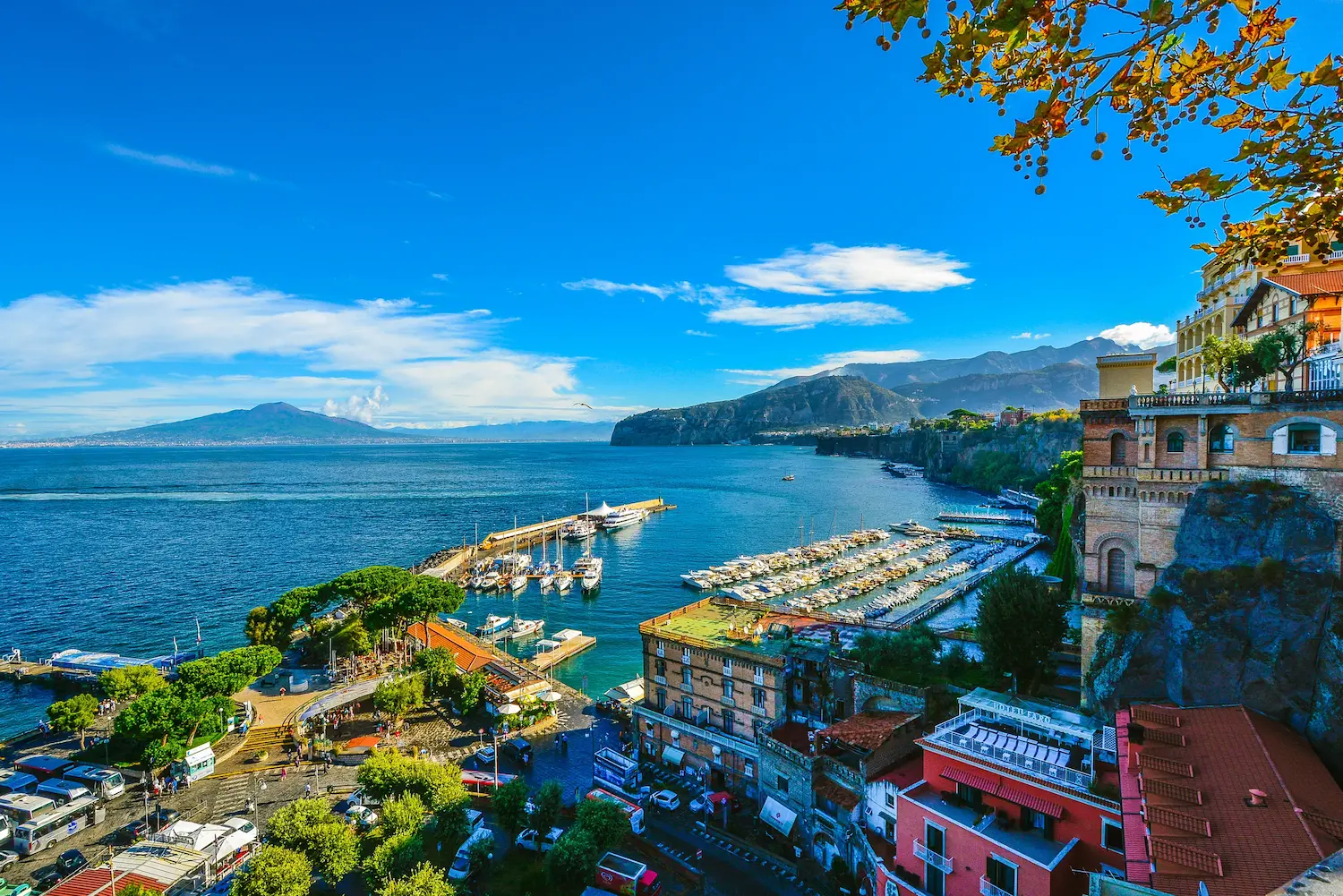
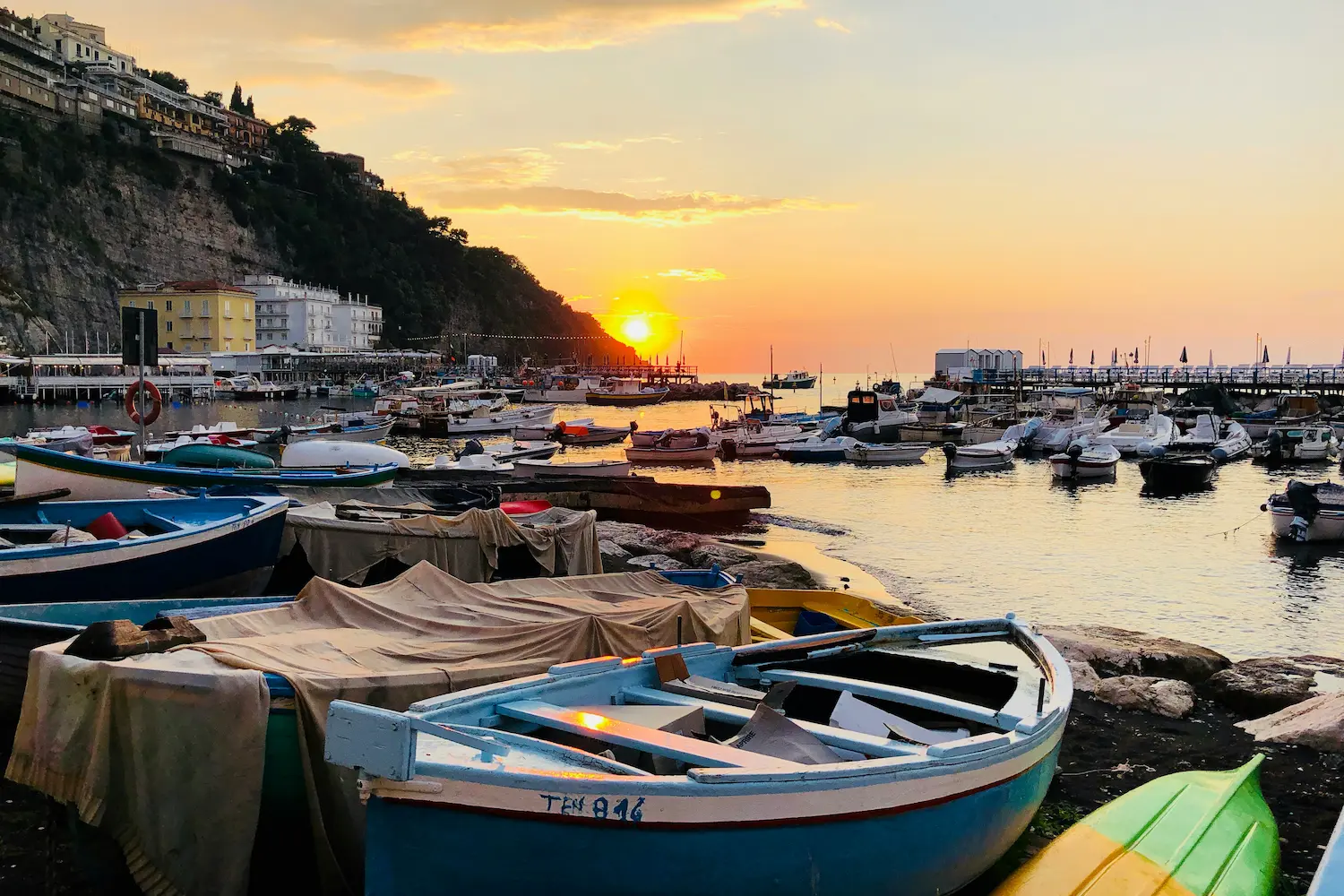
The end of the Circumvesuviana line, around 70 minutes from Naples - a clifftop town with gardens overlooking the bay, a historic centre scented with lemon groves, and a port that makes it the natural gateway to both Capri and the Amalfi Coast. Sorrento works as a destination in its own right and as a base for the wider region - ferries to Capri take just 15-20 minutes from here, and SITA buses run along the coast road to Positano and Amalfi.
See our complete guide to Sorrento by train from Naples.
Capri
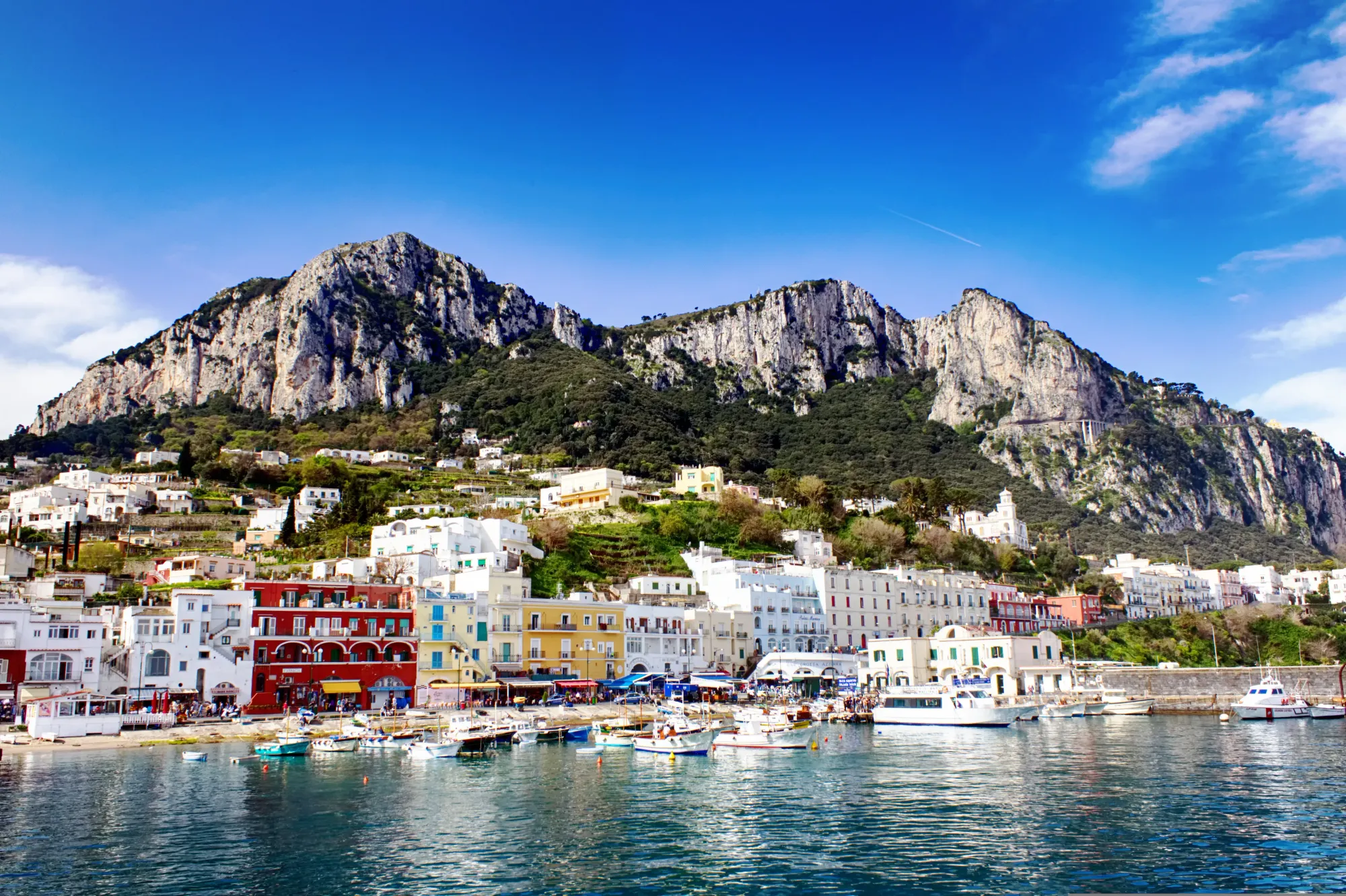
One of the most beautiful islands in the Mediterranean, reached by hydrofoil from Molo Beverello in around 50 minutes (or 15–20 minutes from Sorrento). The Blue Grotto, the Faraglioni rock stacks, the chairlift to Monte Solaro and the glamour of the Piazzetta make Capri a genuinely worthwhile, if busy, day trip. Arrive on the first ferry to beat the crowds and treat it as a full day rather than a rushed half day.
See our complete guide to Capri by ferry from Naples and Sorrento.
Salerno and the Amalfi Coast
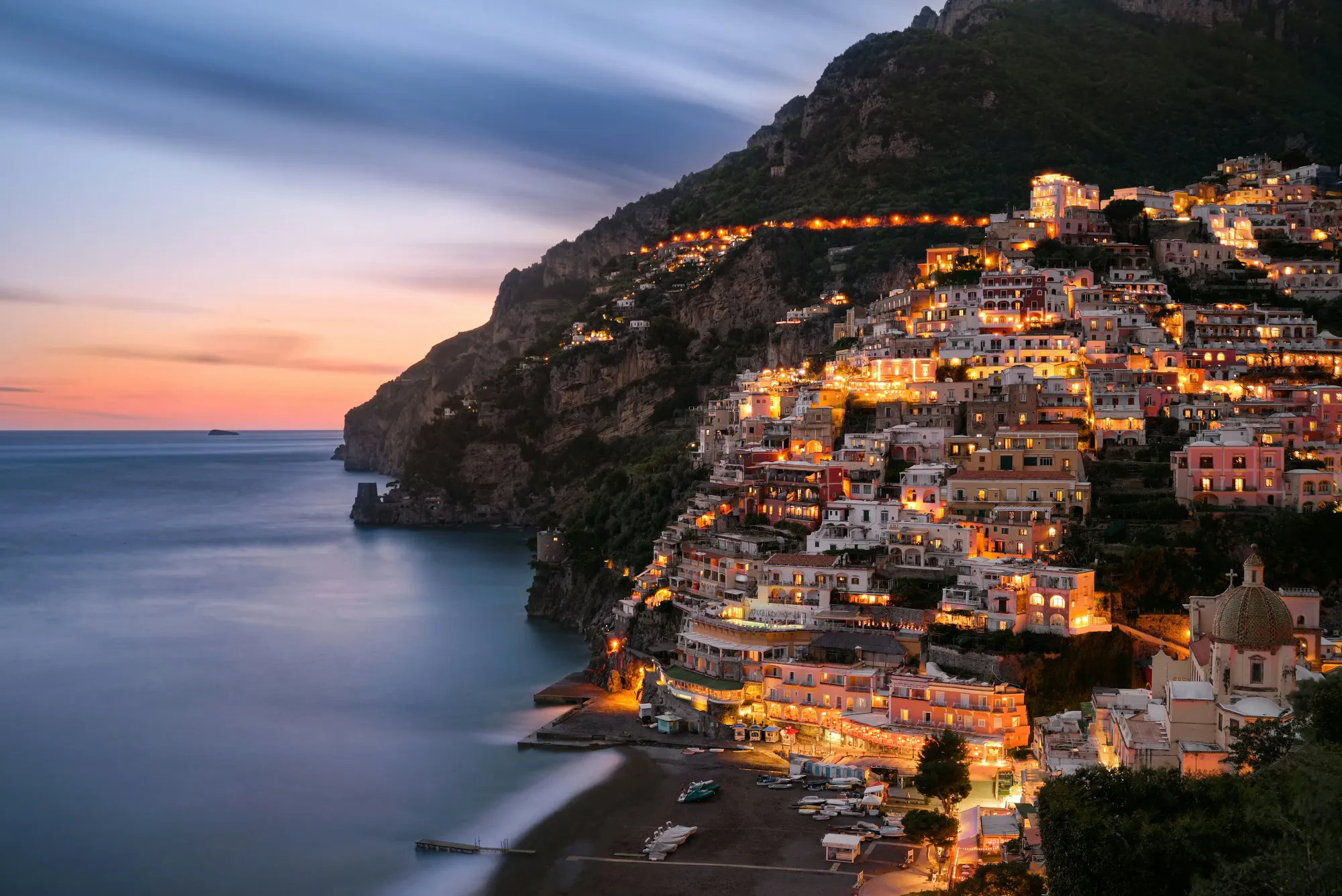
Salerno is the smarter, cheaper base for exploring the Amalfi Coast - a fast train from Naples Centrale takes 35-45 minutes, and ferries from Salerno's waterfront reach Amalfi in 25-40 minutes and Positano in under an hour and a half. Salerno itself has a striking modern waterfront (including a Zaha Hadid-designed ferry terminal) and a historic centre worth a few hours in its own right.
See our complete guide to Salerno and the Amalfi Coast.
Ischia
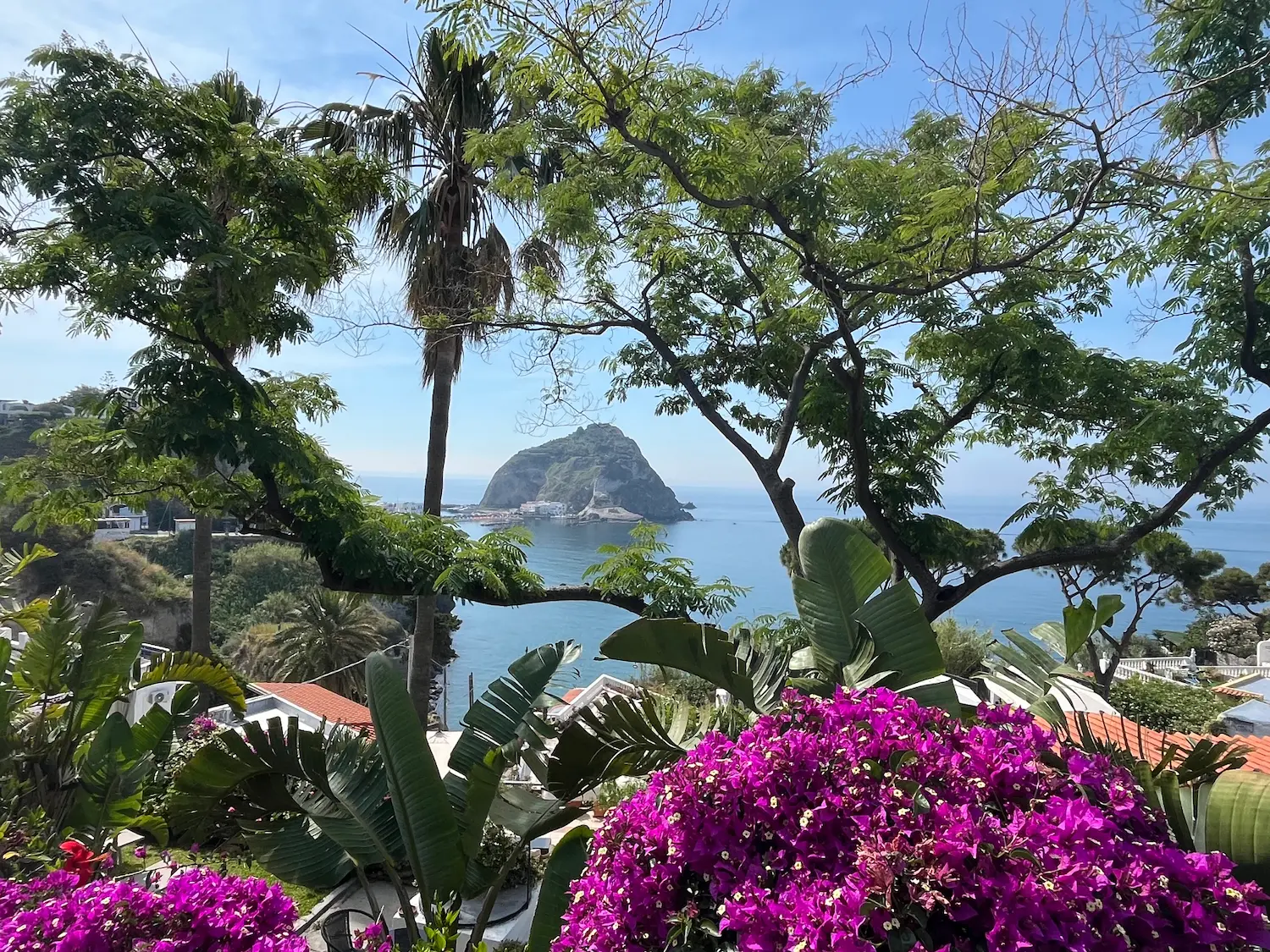
Larger, greener and considerably less visited than Capri - a volcanic island with thermal pools built into the rock at Forio, vineyards producing wine since the ancient Greeks, a 15th-century castle on a rock joined to the mainland by a bridge, and a bus network that covers the whole island without a hire car. Hydrofoils from Molo Beverello take around 50-60 minutes. Ischia rewards an overnight stay more than a rushed day trip.
See our complete guide to Ischia by ferry from Naples.
Caserta
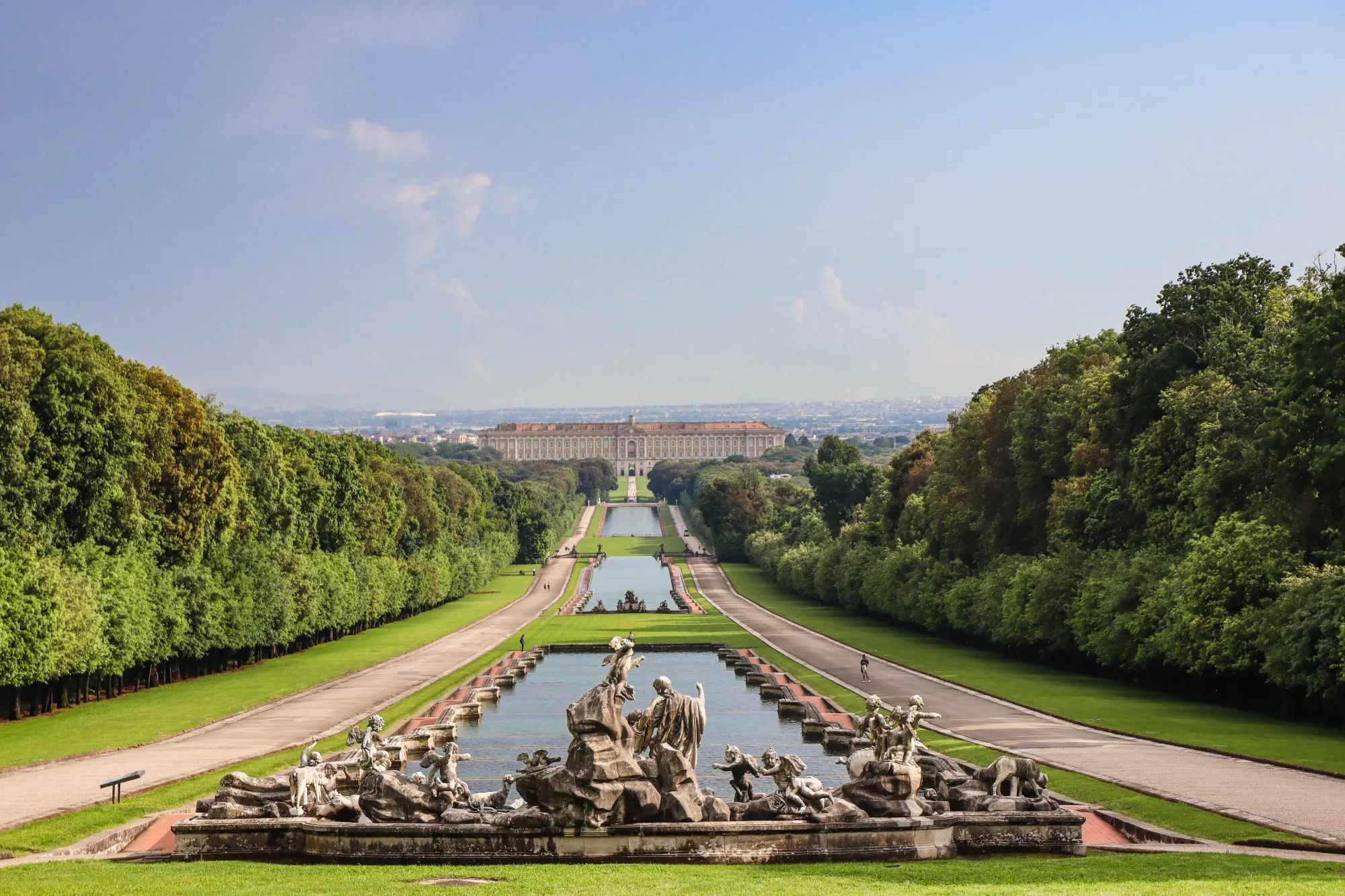
The Reggia di Caserta is one of the most extraordinary buildings in Italy and one of the least visited by international tourists - a royal palace built on a Versailles-like scale by the Bourbon kings in the 18th century, with 1,200 rooms and a 3-kilometre park leading to an artificial waterfall. Direct trains from Napoli Centrale take as little as 32 minutes, running roughly every 30 minutes, making it one of the easiest and most rewarding half-day trips from the city. The palace is only a short walk from the station.
Paestum and Cilento
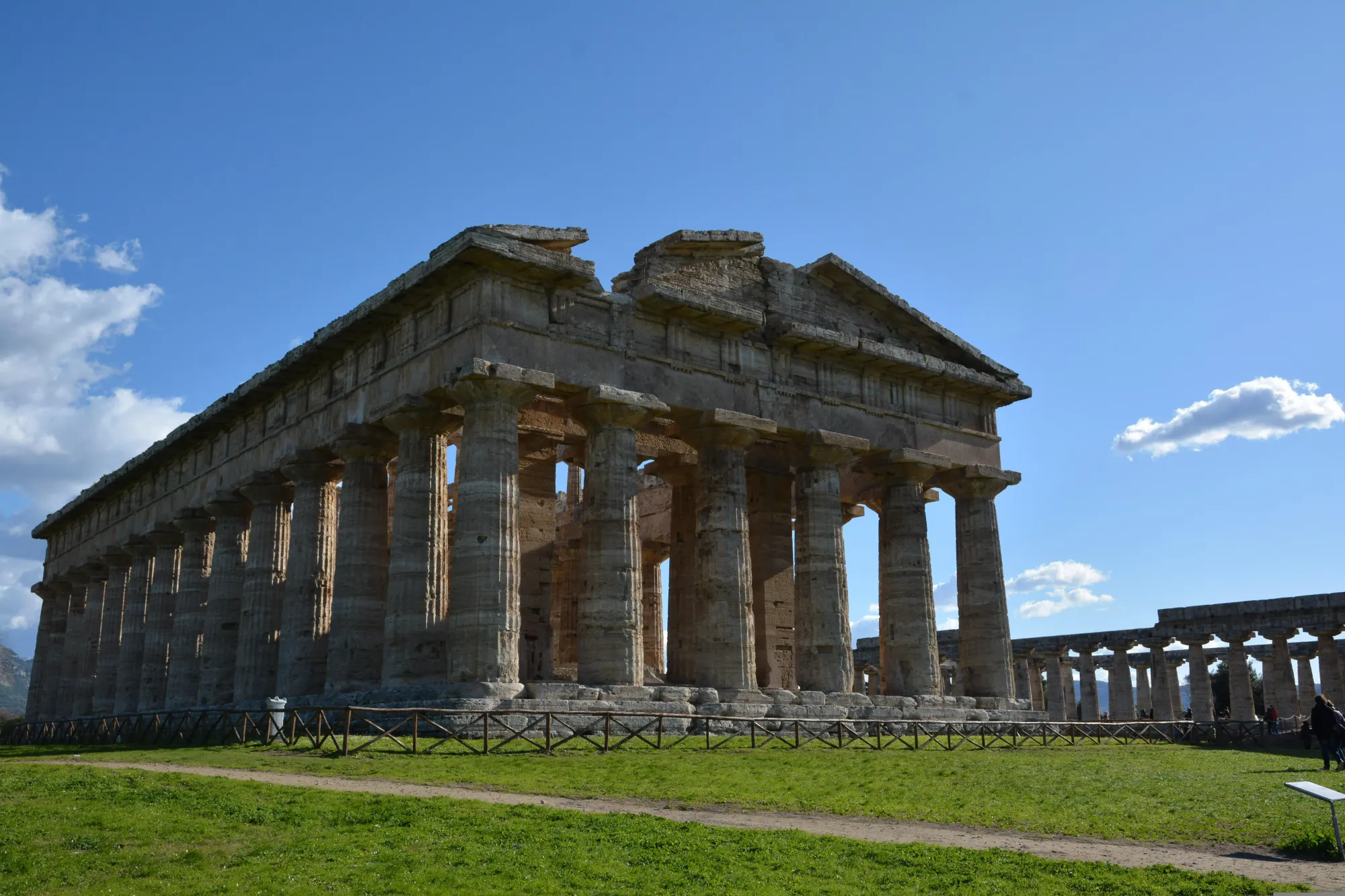
Paestum preserves three Greek temples from the 6th and 5th centuries BC, 90 kilometres south of Naples - among the best-preserved examples of ancient Greek architecture anywhere in the world. Direct regional trains take around 1 hour 10 minutes, with the site a fifteen-minute walk from the station. The on-site museum holds the Tomb of the Diver, the only known example of Greek figurative painting from the Classical period.
Paestum sits at the northern edge of the Cilento, a largely undiscovered national park stretching south along the coast - dramatic cliffs, small resort towns and a regional train line that continues south through Agropoli and beyond, almost entirely unknown to international visitors. The Cilento rewards a longer stay; Paestum and Agropoli are the parts most easily reached without a car.
Check the Paestum return timetable carefully before travelling - services are sparse in the middle of the day.
How to Choose — Suggested Combinations
First time in the region, one day only: Pompeii. The single most historically significant site and the most efficient use of a day trip.
Want the volcano and an archaeological site: Herculaneum and Vesuvius - both reached from the same Circumvesuviana stop (Ercolano Scavi), making the logistics straightforward. Herculaneum in the morning, Vesuvius in the afternoon.
Want an island: Capri for glamour and drama, Ischia for a quieter and more varied experience. Capri suits a single rushed day; Ischia rewards staying over.
Want the coast: Base in Salerno rather than Positano or Amalfi directly - cheaper, calmer, with ferries running to all the locations on the Amalfi Coast.
Want something nobody else is doing: Caserta or Paestum. Both are genuinely extraordinary, entirely reachable without a car, and see a fraction of the visitors of the more famous sites.
Have a full week: Naples (2 days) → Pompeii and Vesuvius (1-2 days) → Sorrento, overnighting there → Capri (1 day from Sorrento) → Salerno and the Amalfi Coast (1-2 days). This covers the essential southern Italy circuit entirely by train and ferry.
Practical Information
Booking ahead: Pompeii, Herculaneum and Vesuvius all require or strongly recommend advance timed-entry booking in peak season. Don't arrive without checking.
The Circumvesuviana: Pompeii, Herculaneum and Sorrento are all served by this separate regional train network, departing from the lower level of Napoli Centrale. It is not part of Trenitalia - buy tickets separately. See our guides to Pompei & Herculaneum, and Sorrento for more details.
Ferry weather: Hydrofoils to Capri and Ischia can be cancelled or delayed in rough seas. Conventional ferries are slower but more reliable. Check conditions if travelling outside the summer months.
Luggage: If combining day trips with onward travel, use luggage storage in Naples rather than carrying bags around. Radical Storage and Bounce both operate near Napoli Centrale.
Best time to visit: April-June and September-October for all of the above - comfortable temperatures, manageable crowds, and Capri, Ischia and Amalfi are running full ferry schedules during these periods.
Frequently Asked Questions
What is the best day trip from Naples?
Pompeii is the most dramatic and historically significant. Herculaneum is smaller and better preserved - the right choice if you want depth over scale. Capri is the beautiful, but Ischia is calmer. Vesuvius is amazing to see. All are within 90 minutes of Naples by public transport.
Can I visit Pompeii and Vesuvius in one day from Naples?
Yes, but it's a full day. Many visitors instead combine Herculaneum (smaller, faster to see) with Vesuvius, since both are reached from the same Circumvesuviana stop, Ercolano Scavi.
What are the best lesser-known day trips from Naples?
Caserta is 30-50 minutes by direct train - the Reggia di Caserta is one of the most extraordinary royal palaces in Europe and almost entirely crowd-free compared to comparable sites. Paestum is 75 minutes by regional train - three Greek temples from the 6th and 5th centuries BC. Both are genuinely undervisited and entirely reachable without a hire car.
Is Capri or Ischia better as a day trip from Naples?
Capri is more dramatic and better suited to a single rushed day - the Blue Grotto, the Faraglioni and the Piazzetta are all coverable in a long day. Ischia is larger and more varied - thermal pools, vineyards, beaches - and rewards staying overnight rather than rushing.
Do I need to book tickets in advance for these day trips?
Yes, for several. Pompeii, Herculaneum and Mount Vesuvius all require or strongly recommend timed-entry tickets booked online, particularly from May to September. Ferries to Capri and Ischia should be booked in advance in July and August.
Can I do the Amalfi Coast as a day trip from Naples?
Yes, but Salerno is the smarter base than Positano or Amalfi directly. A fast train from Naples to Salerno takes 35–45 minutes, then ferries reach Amalfi in 25–40 minutes and Positano in under 90 minutes. It's a long day but entirely possible; an overnight stay in Salerno makes it considerably more relaxed.
Also on The Unseen Italy: Pompeii and Herculaneum by Train · Mount Vesuvius by Train · Sorrento by Train from Naples · Capri by Ferry from Naples · Salerno and the Amalfi Coast · Ischia by Ferry from Naples · How Italy's Train Network Works