Just outside Milan by train, Oltrepò Pavese is Italy's largest wine-producing area in Lombardy — and one of its least visited. Rolling hills, medieval castles, native grape varieties you won't find anywhere else, and wines at a fraction of Tuscany's prices.
Last verified: April 2026. Tour availability and transport details can change. Always check official sources before booking.
Forty minutes south of Milan by train, a different Italy begins. The plains give way to rolling hills thick with vines, medieval castles watch over ancient trade routes, and the locals pour wine from stainless steel vats at €2–3 a litre. This is Oltrepò Pavese — the world's third largest producer of Pinot Nero, and almost entirely unknown to visitors from outside Italy.
The train makes it the ideal way to experience a wine region properly — no hire car needed, no one stuck as designated driver while everyone else enjoys a glass. You arrive, you taste, you take the train home. It's one of the most civilised day trips in northern Italy.
Oltrepò Pavese — at a glance
| 🚆 Getting there | Train from Milano Centrale to Voghera — approx. 40 minutes, from €7 |
| 🍷 Known for | Pinot Nero, Bonarda, Buttafuoco, Riesling, Barbera, Moscato |
| 🏰 Landscape | Rolling Apennine foothills, medieval castles, hilltop villages |
| 🎯 Best for | Wine lovers, slow travel, getting genuinely off the tourist trail |
| 📅 Best time to visit | Spring and autumn; August–September for the grape harvest |
| 🔗 Tour operator | WingsItaly — run by Claire Dymond |
| 🚆 Return to Milan | Last trains from Voghera run late evening — no rush |
Why This Works So Well as a Train Trip
Most wine regions in Italy require a car. The vineyards sit up dirt tracks, the villages aren't served by rail, and the buses run on schedules that suit commuters rather than tourists. Oltrepò Pavese is no different in that respect — but the train gets you to the heart of it in under 40 minutes from Milano Centrale, and from there a guided tour handles everything else.
The practical advantage is straightforward: no one needs to drive. You can enjoy food and conversation and unhurried time on a terrace overlooking the vines, without anyone watching the clock or nursing a single glass.
You take the train to Voghera, your guide collects you, and at the end of the day you take the train back to Milan. The last services run late in the evening, which means there's no pressure to leave early.
And if you want to extend the day further, Pavia is on the same line — a 20-minute train hop north of Voghera, with another 25 minutes back to Milan. Our Pavia day trip guide covers everything worth seeing there, and the two destinations combine naturally into a full day that covers both wine country and one of Lombardy's most quietly impressive cities.
The Region: What Makes Oltrepò Pavese Worth the Journey
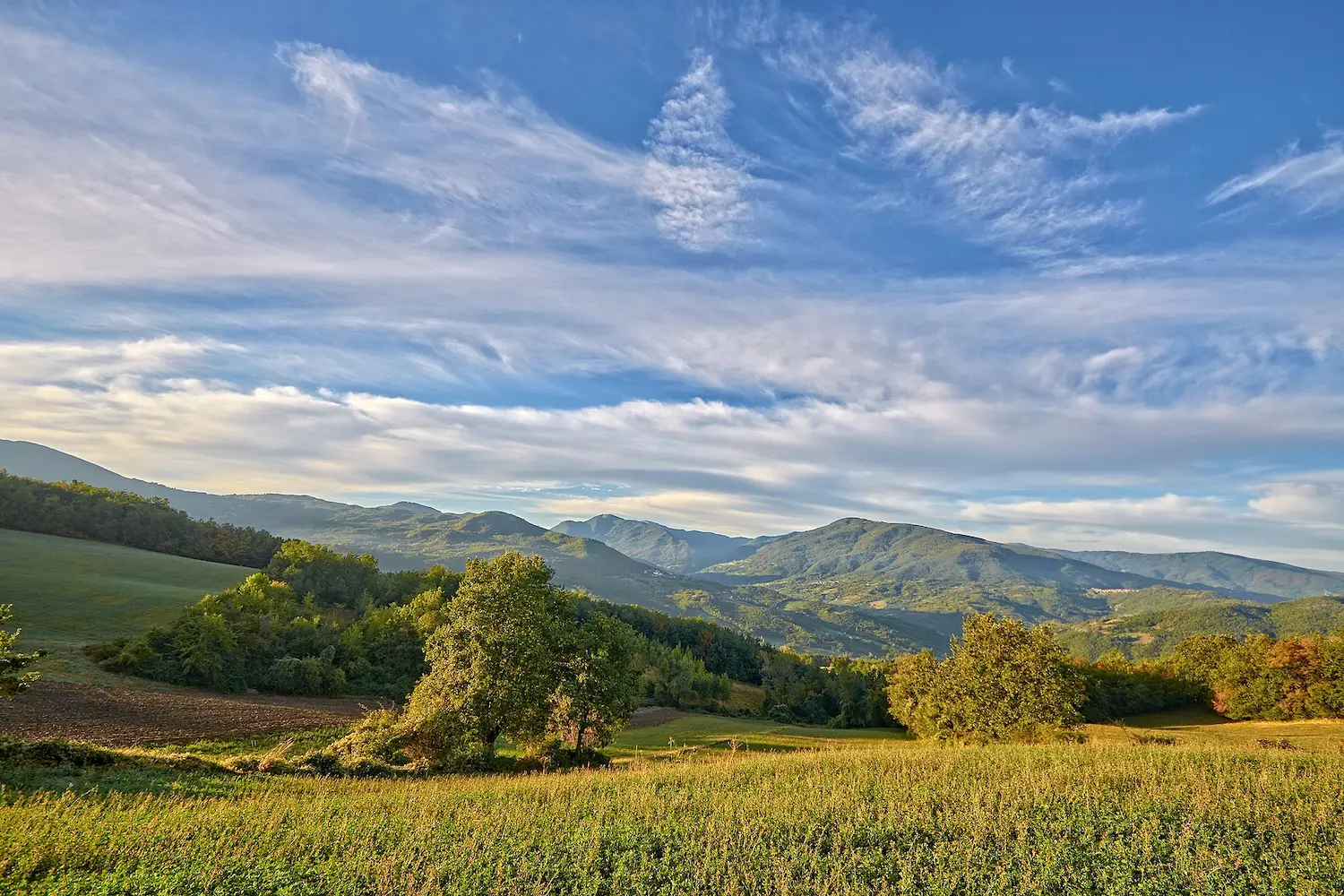
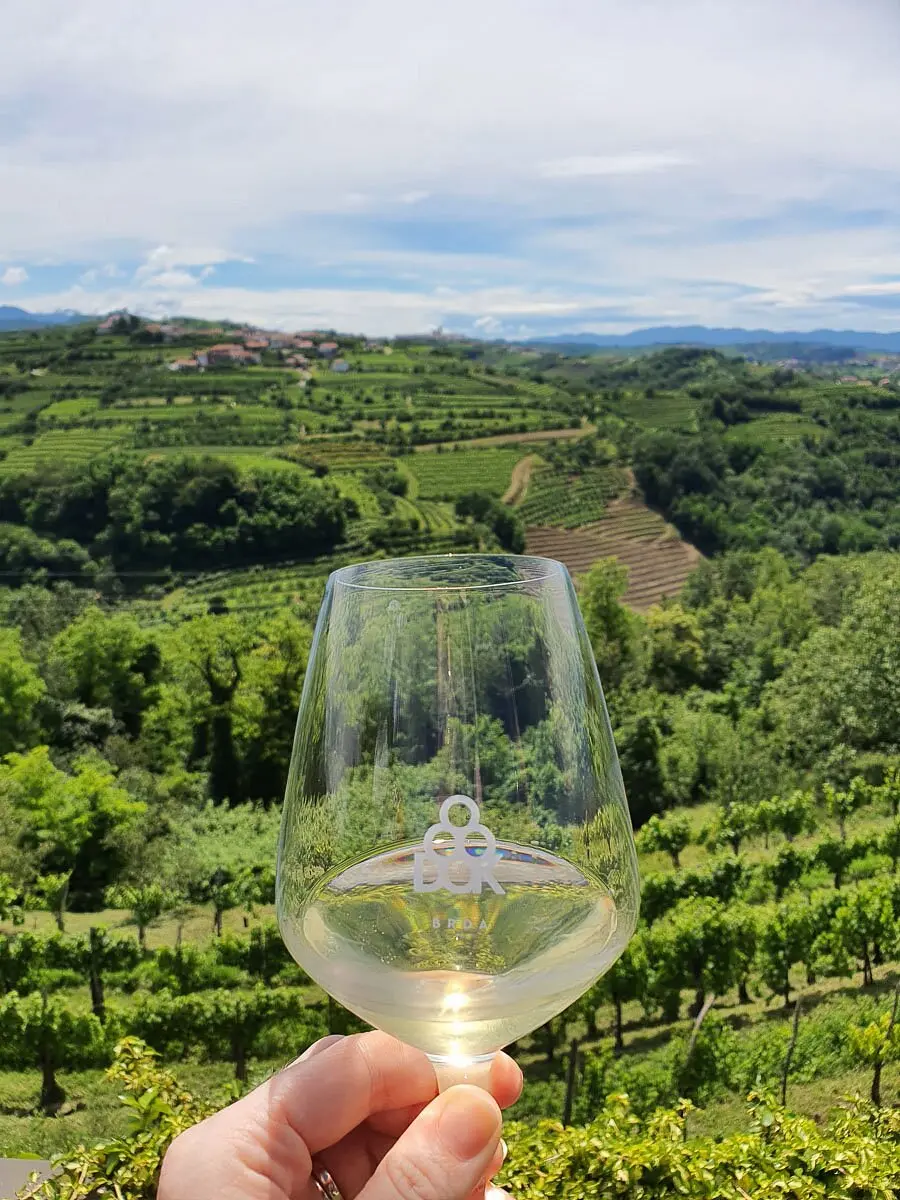
The name means "Pavia's lands beyond the Po" — and that sense of being just across the river from the rest of the world is part of its character. The region sits on the 45th parallel, the same latitude as Burgundy and Bordeaux, and the terroir shows it. The hills rise from the Po plain into the Ligurian Apennines, with a diversity of soils — clay, sand, chalk and gravel — that produces an extraordinary range of wine styles from a relatively small area.
The comparison with Tuscany is inevitable — Oltrepò is sometimes called the Tuscany of the north — but in one crucial respect it's better for the visitor: the wines are more varied, the vineyards are less crowded, and they cost a fraction of what you'd pay further south. Where a decent Chianti might cost €20, the equivalent bottle from Oltrepò rarely exceeds €10. And the native varieties are out of the ordinary — Croatina, Buttafuoco, Sangue di Giuda — make it particularly interesting for anyone who's tired of drinking the same wines.
The Wines to Know
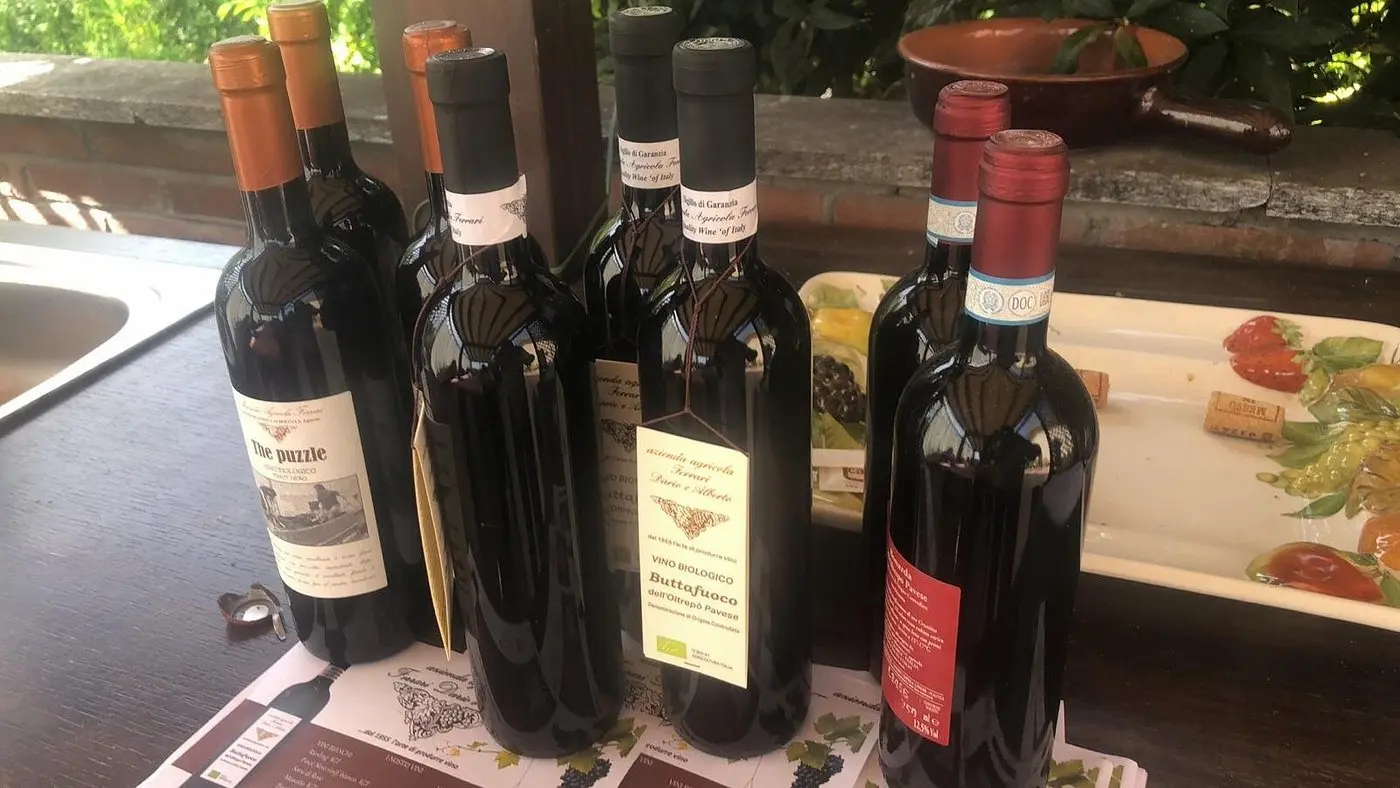
Bonarda — made from Croatina, the most planted grape in the region, this is a slightly sparkling, vibrant red with generous fruit and low tannins. It started as a farmers' table wine and has become one of Oltrepò's most characterful bottles.
Buttafuoco — a rich, spicy blend of Croatina, Barbera, Uva Rara and Vespolina, named after the fire it supposedly lights in the belly. A DOC wine with real depth and one of the most distinctive bottles the region produces.
Pinot Nero — made both as a still red and in the DOCG Metodo Classico sparkling white version, made by the same traditional method as Champagne. The sparkling wines are genuinely exceptional and priced at a fraction of their French equivalents. In fact, Oltrepò is the world’s third-biggest producer of pinot nero (noir) grapes, after Burgundy and Champagne.
Riesling — one of the best Italian Rieslings comes from these hills. The cooler elevated sites produce an aromatic, fresh white with good acidity that holds its own against German and Alsatian versions.
Barbera — brought from neighbouring Piedmont, it produces full-bodied, high-acid reds that pair perfectly with the rich local food.
Moscato — soft, lightly sparkling and aromatic. The local version is less well-known than Asti and often better value.
The Tour: A Day in Oltrepò Pavese with WingsItaly
The best way to experience Oltrepò Pavese by train is with Claire Dymond of Wings Italy Claire is a British expat who has lived in the region for years and runs tours whose entire model is built around arriving by train from Milan. Her mission, simply stated, is to introduce visitors to a part of Italy that most guidebooks ignore.
The tour I did was the Vineyard Tour at Azienda Agricola Ferrari. This isn't a carefully staged wine experience with a script. It's closer to being taken around by a knowledgeable friend who happens to know every farmer, every vintner and every local character in a fifty-kilometre radius.
Book the tour via: GetYourGuide. Tours vary by season — the grape stomping experience runs during the harvest season, but vineyard tours and tastings run year-round.
The Journey: Milano Centrale to Voghera
The tour begins at Milano Centrale, where you are met and you board the train together to Voghera — about 50 minutes south. The flat Po plain scrolls past the window, and as you approach Voghera the first low hills of the Apennine foothills appear. By the time you step off the train you're already somewhere that feels very different from the city you left an hour ago.
Claire and her husband collect you from Voghera station by car — which is how you access the vineyards and hilltop villages that sit back from the railway line.
Coffee in Casteggio — and a Choir
The first stop is Casteggio, the main town of the wine area, for a coffee in the local bar. This is not a scheduled activity. It's what happens when you arrive in an Italian town with someone the locals know.
On the day I visited, the bar was occupied by some members of the Coro Amici della Montagna di Casteggio — the local alpine choir founded in 1972, who perform traditional mountain songs and folk repertoire from the area. They broke into song over their morning espresso. That kind of thing happens in Casteggio.
It's exactly the sort of encounter that doesn't appear in any guidebook and can't be planned — which is why arriving somewhere by train with someone who lives there is always better than arriving by car with a map.
The Cantina Sociale — Wine at the Source
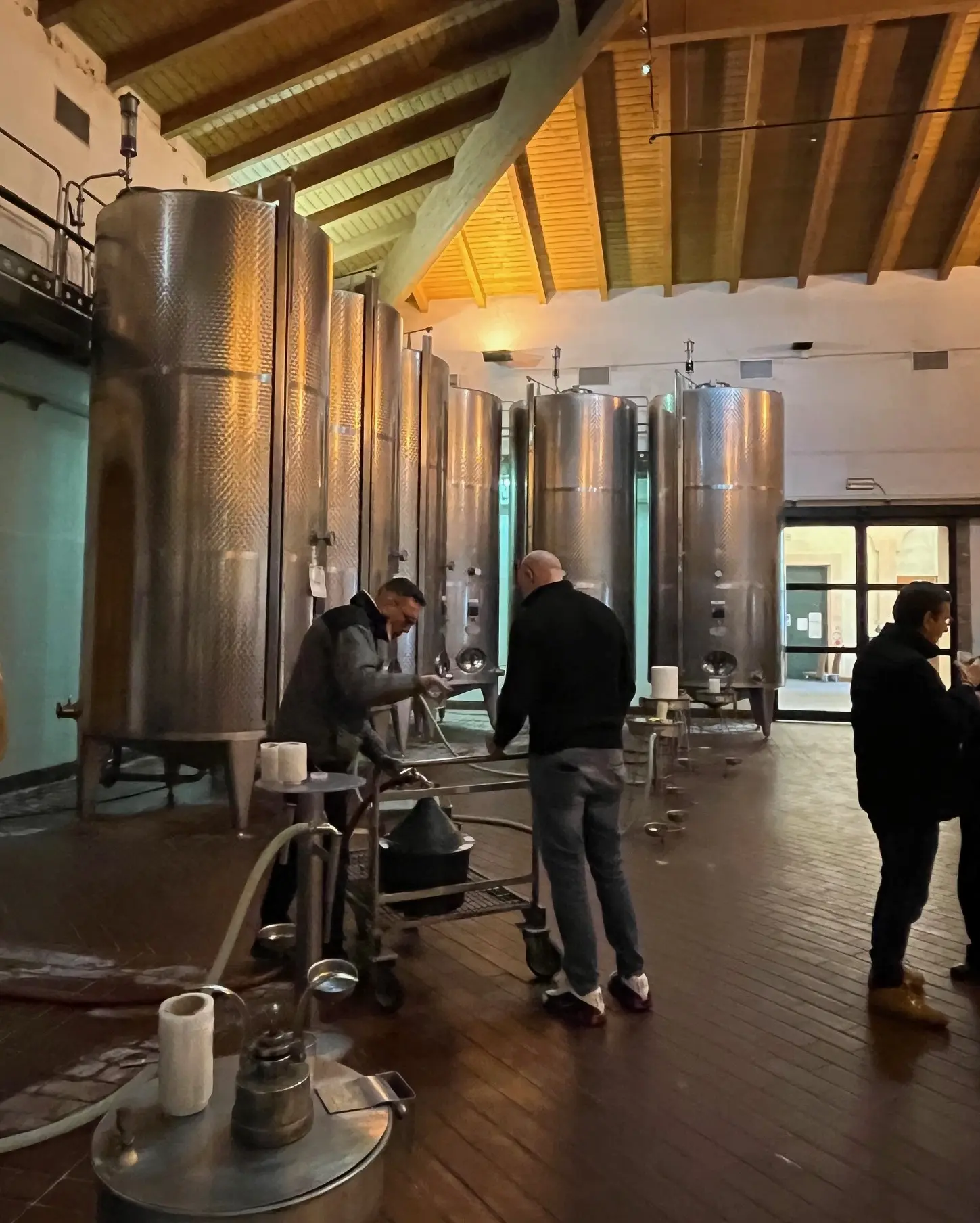
Before heading to the Ferrari vineyard, Claire takes you to the Cantina Sociale di Casteggio (terredoltrepo.it) — a co-operative winery where local growers bring their grapes and where residents come, containers in hand, to fill up directly from stainless steel vats.
The prices are extraordinary: €2–3 per litre for wine that would cost many times that in a bottle. It's a completely normal part of life for people here — a weekly errand like going to the supermarket — and it's fascinating to witness. Bonarda, Barbera, Riesling, Buttafuoco: dozens of wines available, the quality far higher than the price suggests.
This is where the train makes a practical difference too. You can buy wine here and carry it back to Milan — in whatever containers you've brought — without worrying about driving. A few litres of Bonarda at €2–3 a litre, wrapped carefully in your bag, is a very good souvenir of the day.
Ferrari Vineyard — Tour, Cantina and Tasting
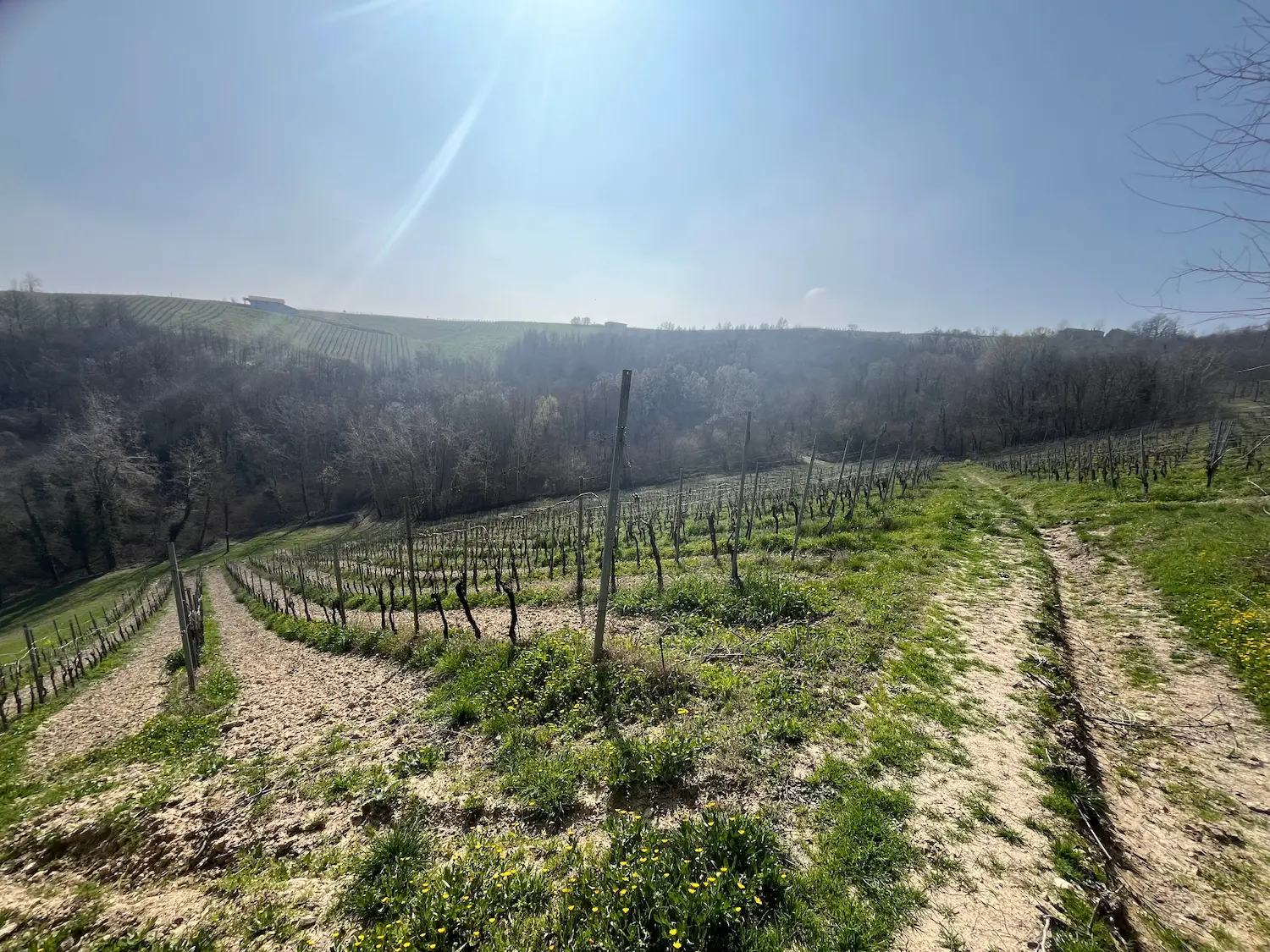
The centrepiece of the day is Azienda Agricola Ferrari Dario e Alberto (ferrarivini.it) — a family vineyard run by Alex Ferrari, whose passion for his wines and his region is impossible to fake and impossible not to absorb.
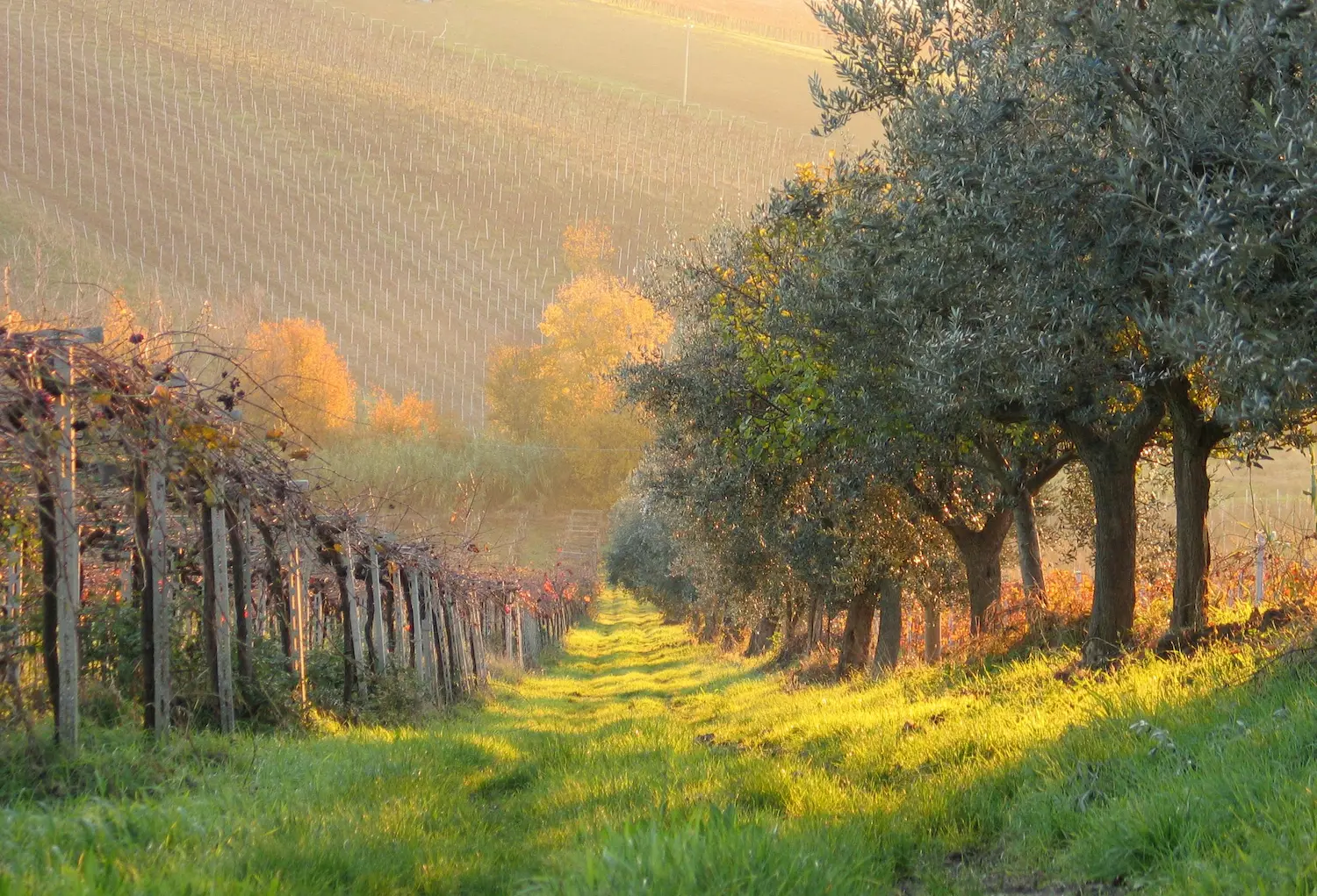
Alex leads the tour of the vineyard — walking the rows, explaining the different varietals, showing you how the aspect and soil of each plot shapes the wine in the glass. The cantina tour follows: barrel room, fermentation tanks, bottling equipment. And then the tasting on the terrace, which is where the afternoon begins in earnest.
On my visit I worked through Riesling, Pinot Nero, Croatina, Buttafuoco, Barbera and Moscato. The food was generous and local — cured meats, cheese, bread, pasta — and the afternoon passed with remarkable ease on the terrace with the vines spread out below.
The standout was the Buttafuoco: deeper and more complex than I expected, with a spicy warmth that earned its name. The Riesling was also a revelation — properly aromatic, crisp and elegant, and entirely unlike anything labelled Italian Riesling I'd tried before.
Walking Tours and Castles
One of the people I met during the day runs walking and e-bike tours in the area under the name ASD Walking in Oltrepò. He explained something I hadn't known: the hills of Oltrepò Pavese are scattered with medieval castles that once guarded the trade routes running north from Genoa to Milan through the Po Valley. Most are privately owned and closed to the public — but he has built relationships with the owners and can gain access for guests on his tours.
Getting There by Train
From Milano Centrale: Regional train to Voghera, approximately 40 minutes. Tickets from around €7. Buy at the machines or on the Trenitalia or Trainline app. Validate your paper ticket before boarding.
Casteggio also has its own station on the same line — check Trenitalia for which trains stop there if you want to arrive directly.
Return: Last trains from Voghera to Milan run late in the evening. Check the timetable on the day — there's no need to rush.
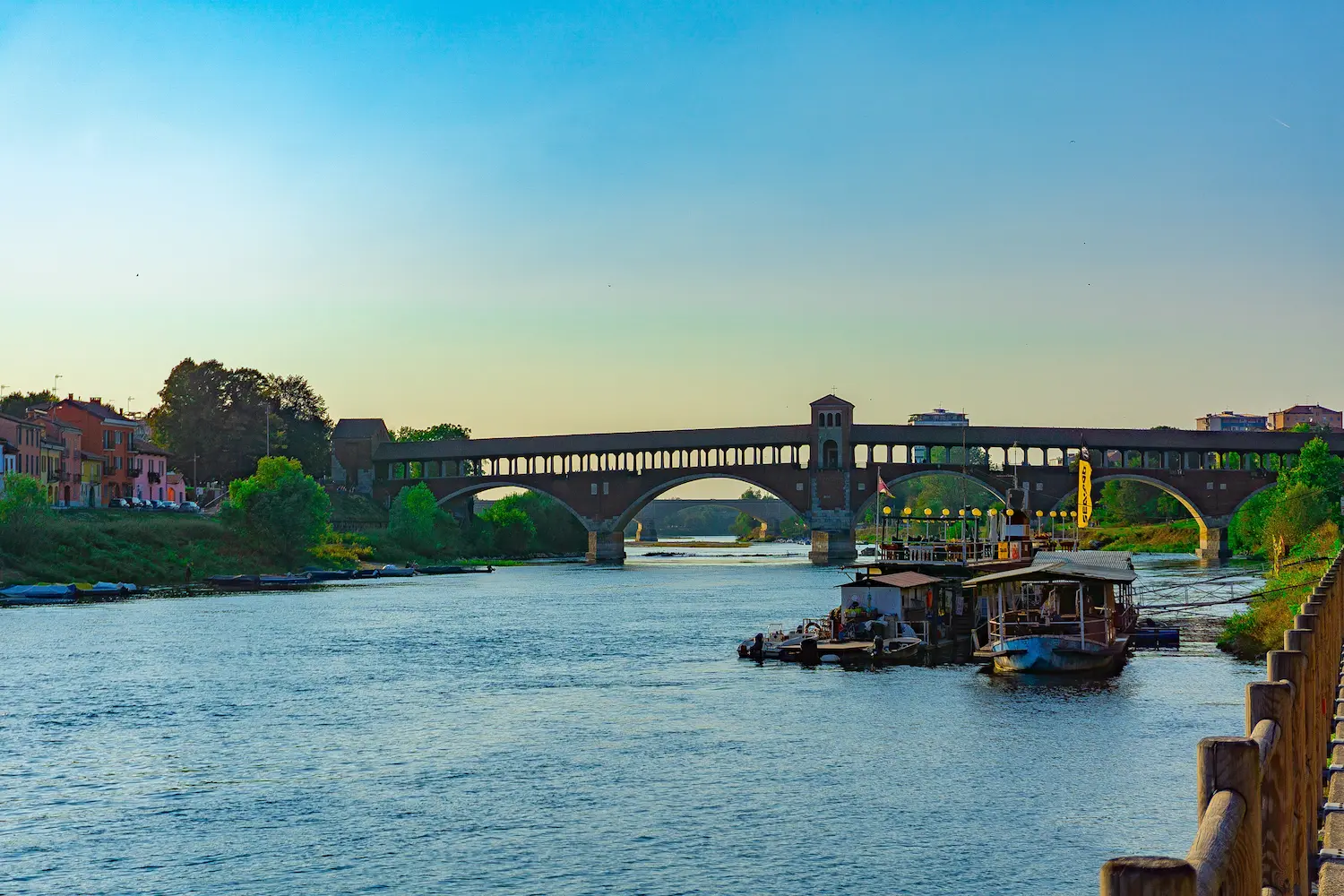
Combining with Pavia: Pavia is 20 minutes north of Voghera on the same line. Stop off on the way home for a walk across the Ponte Coperto and a coffee in the university quarter. Full details in our Pavia day trip guide.
New to Italian trains? Our guide to how Italy's train network works covers tickets, validation and everything else you need to know.
Practical Information
| Train | Milano Centrale → Voghera, approx. 50 mins, from €5 |
| Tour operator | WingsItaly — book via GetYourGuide |
| Ferrari Vineyard | ferrarivini.it |
| Cantina Sociale | terredoltrepo.it |
| E-bike and walking tours | ASD Walking in Oltrepò |
| Best time | Spring and autumn; harvest tours August–September |
| Combine with | Pavia — 20 mins north by train |
Frequently Asked Questions
Can I visit Oltrepò Pavese from Milan without a car?
Yes - the train from Milano Centrale to Voghera takes around 40 minutes. From there, the WingsItaly tour collects you and handles all the driving. No one needs to worry about being the designated driver, which means everyone can experience the wines properly - tasting at each stop rather than sipping cautiously.
What is the best time of year to visit Oltrepò Pavese?
Spring (April–June) and autumn (September–October) are ideal for vineyard visits. The grape harvest in August and September brings the additional option of grape stomping experiences. Although avoid August if you prefer quieter roads and cooler temperatures.
What wines is Oltrepò Pavese known for?
The region is most famous for Pinot Nero — both as a still red and in the DOCG Metodo Classico sparkling version made by the same method as Champagne. Local specialities include Bonarda (from the native Croatina grape), Buttafuoco (a rich blend of Croatina and Barbera), Riesling, Barbera and Moscato. The prices are significantly lower than equivalent wines from Tuscany or Piedmont.
How do I book the WingsItaly tour?
Through GetYourGuide. Tours are personalised and vary by season. Grape stomping is available August to September only; vineyard tours and tastings run year-round.
Can I buy wine to bring back to Milan?
Yes — and one of the best places to do it is the Cantina Sociale di Casteggio, where wine is sold directly from stainless steel vats at €2–3 per litre. Bring your own containers or buy on the spot. The train back to Milan means you can carry as much as you're willing to transport.
Is Oltrepò Pavese suitable as a day trip from Milan?
Comfortably. The train journey is under an hour each way, and a full day tour leaves you back in Milan by early evening. If you want to extend it, add a stop in Pavia on the return journey — see our Pavia day trip guide for details.
How does Oltrepò Pavese compare to Tuscany for wine tourism?
The wines are more varied, the crowds are essentially non-existent, and the prices are significantly lower. The native grape varieties — Croatina, Buttafuoco, Sangue di Giuda — offer something genuinely different from the Sangiovese-dominated wines of Tuscany. If you've done Chianti and want to go deeper into Italian wine, Oltrepò Pavese is the natural next step.
Also from Milan by train: Pavia · Bergamo · Oltrepò Pavese · Lake Como · Bernina Express to Switzerland