Less than two hours from Milan, the Bernina railway crosses into Switzerland and climbs to 2,253 metres through glaciers, frozen lakes and the high Alps. A UNESCO World Heritage line, and one of the most spectacular train journeys in the world.
Last verified: April 2026. Tour availability, prices and transport details can change. Always check official sources before booking.
Most people visiting Milan never think to leave Italy. That's understandable — but just across the Swiss border, one of the world's great train journeys is waiting.
Starting from the small Italian town of Tirano, reachable in under two hours from Milano Centrale, the Bernina railway climbs through deep Alpine valleys, past frozen lakes and glaciers, reaching 2,253 metres at the Bernina Pass — the highest railway crossing in the Alps — before descending into St Moritz. The entire journey from Tirano takes around two hours and fifteen minutes. You sit at the window and the mountains do the rest.
It's a long day from Milan, but it earns the word extraordinary.
At a Glance
| 🚆 Milan to Tirano | Trenord regional train, approx. 2 hours 30 minutes, from ~€13 one way |
| 🏔️ Tirano to St Moritz | Bernina line, approx. 2 hours 15 minutes, around €38 one way for the standard Bernina train |
| 🌍 UNESCO status | Rhaetian Railway Albula and Bernina lines — World Heritage Site since 2008 |
| 📍 Highest point | Ospizio Bernina station — 2,253 metres above sea level |
| 🛂 Documents needed | Passport — Switzerland is Schengen but border checks can occur |
| 📅 Best time | Year-round — winter for snow and frozen lakes, summer for glaciers and green valleys |
| ⏱️ Total day length | Allow 12–14 hours for a return day trip from Milan |
| 🎫 Book trains | Trenord (Milan–Tirano) and Rhaetian Railway (Tirano–St Moritz) |
Getting from Milan to Tirano
The starting point for the Bernina journey is Tirano, a small Italian town in the Valtellina valley close to the Swiss border. From Milano Centrale, Trenord regional trains run to Tirano roughly every hour throughout the day. The journey takes around two hours and thirty minutes, passes through the scenic Valtellina valley, and costs around €13 each way. No advance booking is required — buy at the machines at Milano Centrale, on the Trenord website or with Trainline.
When you arrive at Tirano's Italian station, the Rhaetian Railway station for the Bernina line is just a few metres across the piazza. You can't miss it — look for the red trains.
The Red Train vs the Standard Train — Which Should You Take?
This is the most useful thing to know before you go, and it's something most guides don't make clear enough.
There are two options for the Tirano to St Moritz journey:
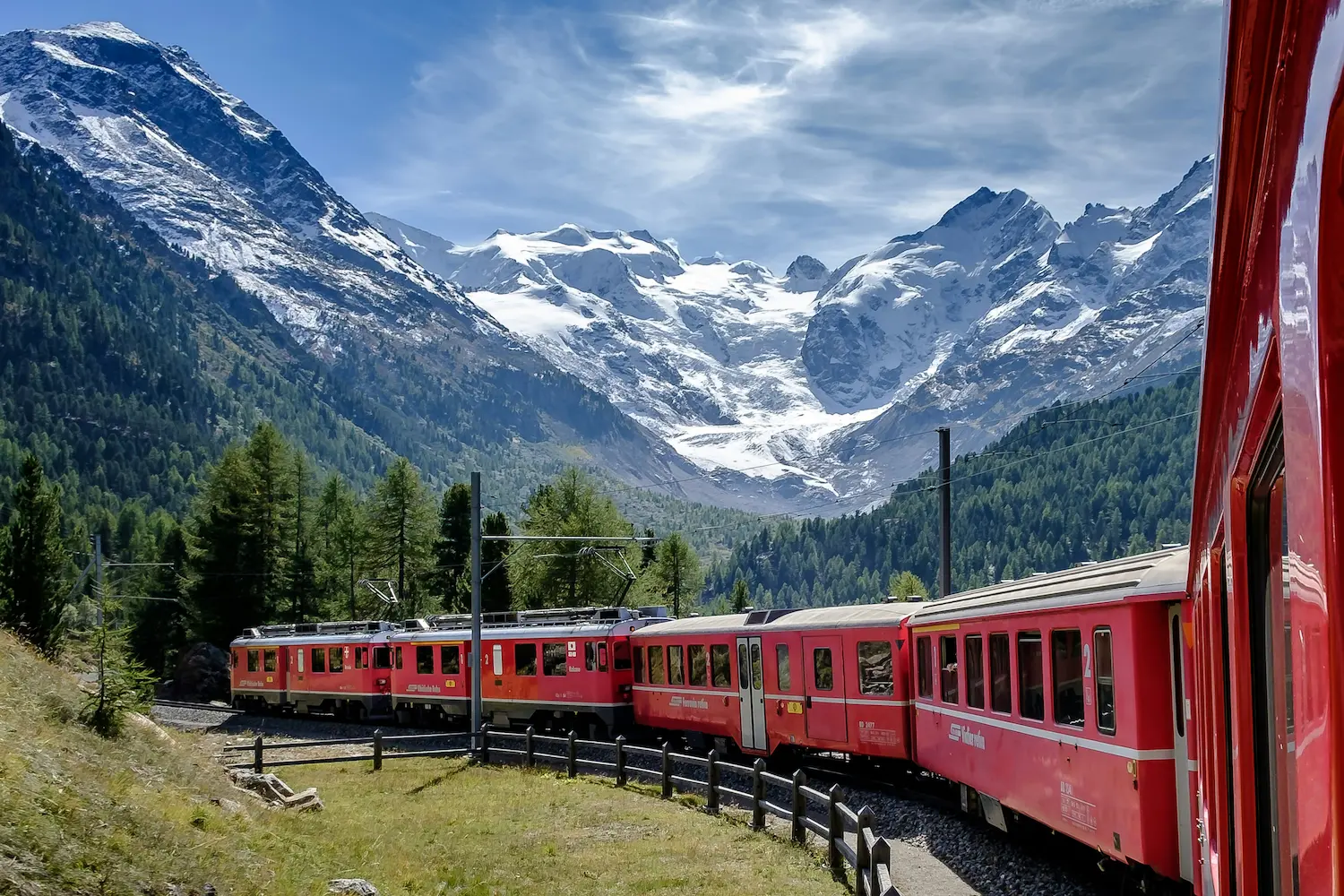
The official Bernina Express — the famous red panoramic train with large observation windows, onboard commentary, and a mandatory seat reservation fee on top of your ticket. Stunning to look at, and the panoramic windows are beautiful. But the windows don't open.
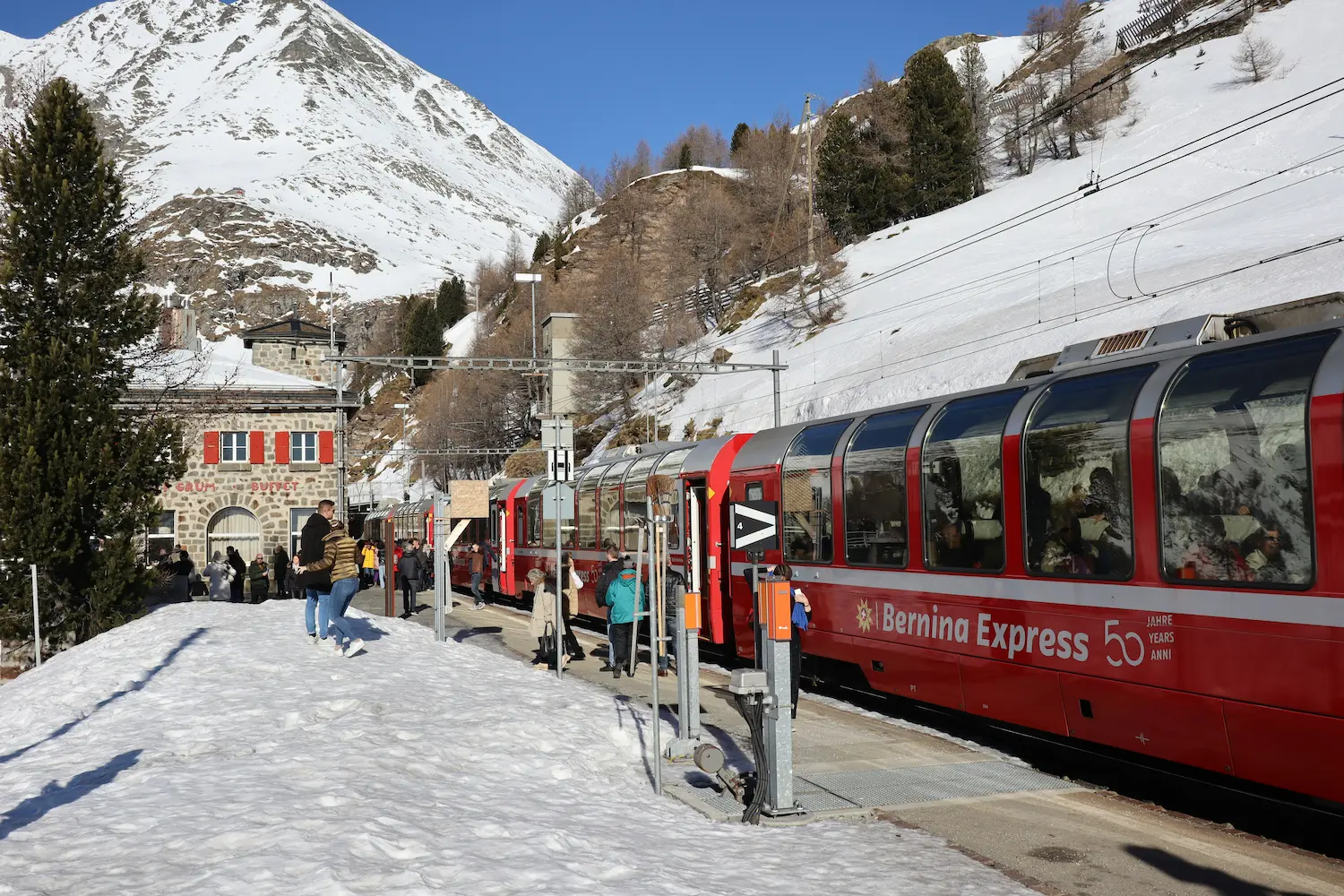
The standard regional Bernina train — runs on exactly the same UNESCO World Heritage track, through exactly the same landscapes, at the same times. The difference: the windows open. For photography, for fresh alpine air, for the sensory experience of the mountains — the standard train is arguably the better choice. No reservation required, and slightly cheaper.
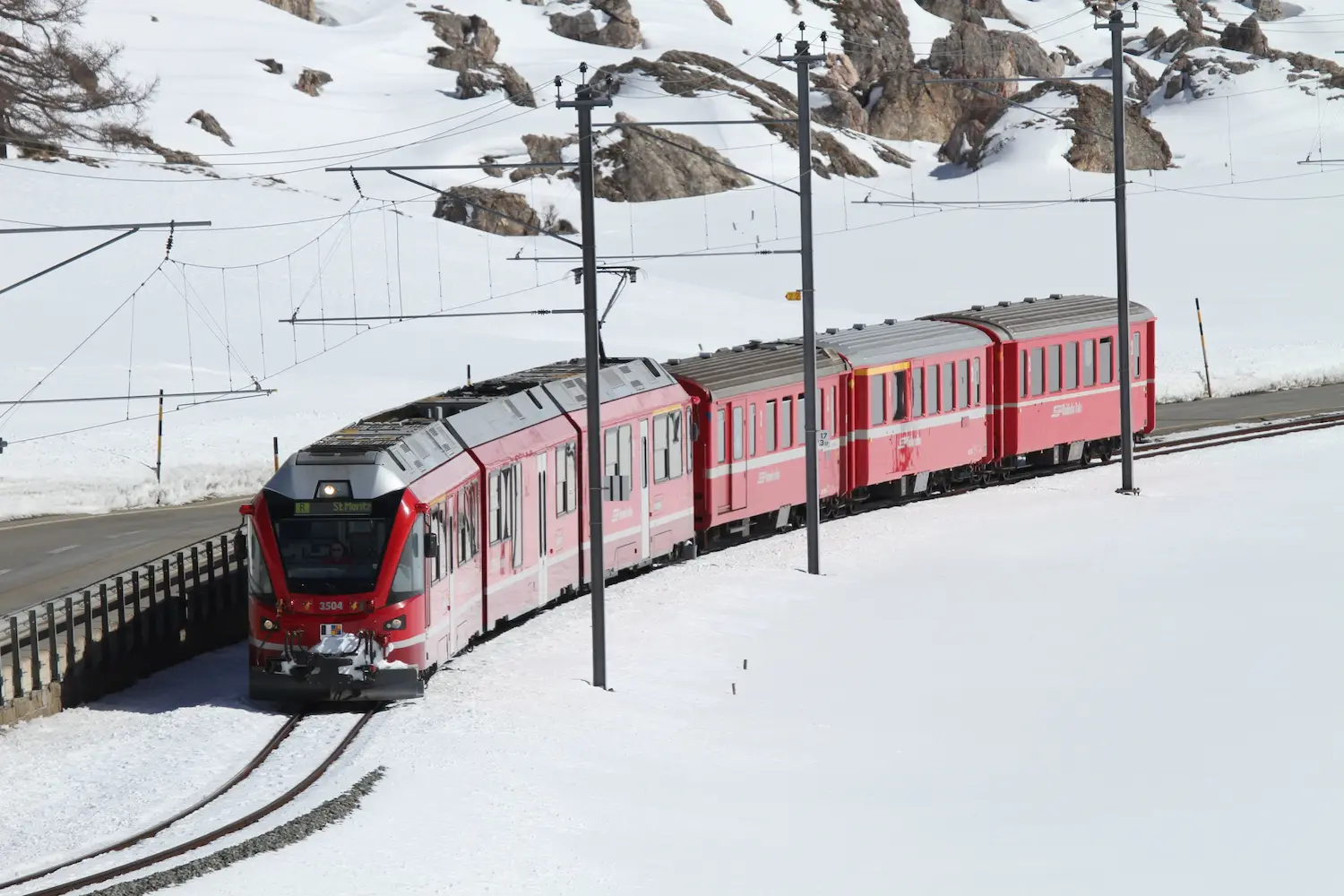
My recommendation: take the standard regional train. The scenery is identical. The ability to open the windows and feel the mountain air — and take photographs without reflections — makes the experience feel more immediate and more real. Sit on either side of the train; the views are spectacular from both.
If you do want the official Bernina Express for the panoramic carriages and commentary, book your seat reservation in advance at rhb.ch — they sell out in peak season. For the standard train book at sbb.ch or on Trainline.
The Journey: What You'll See
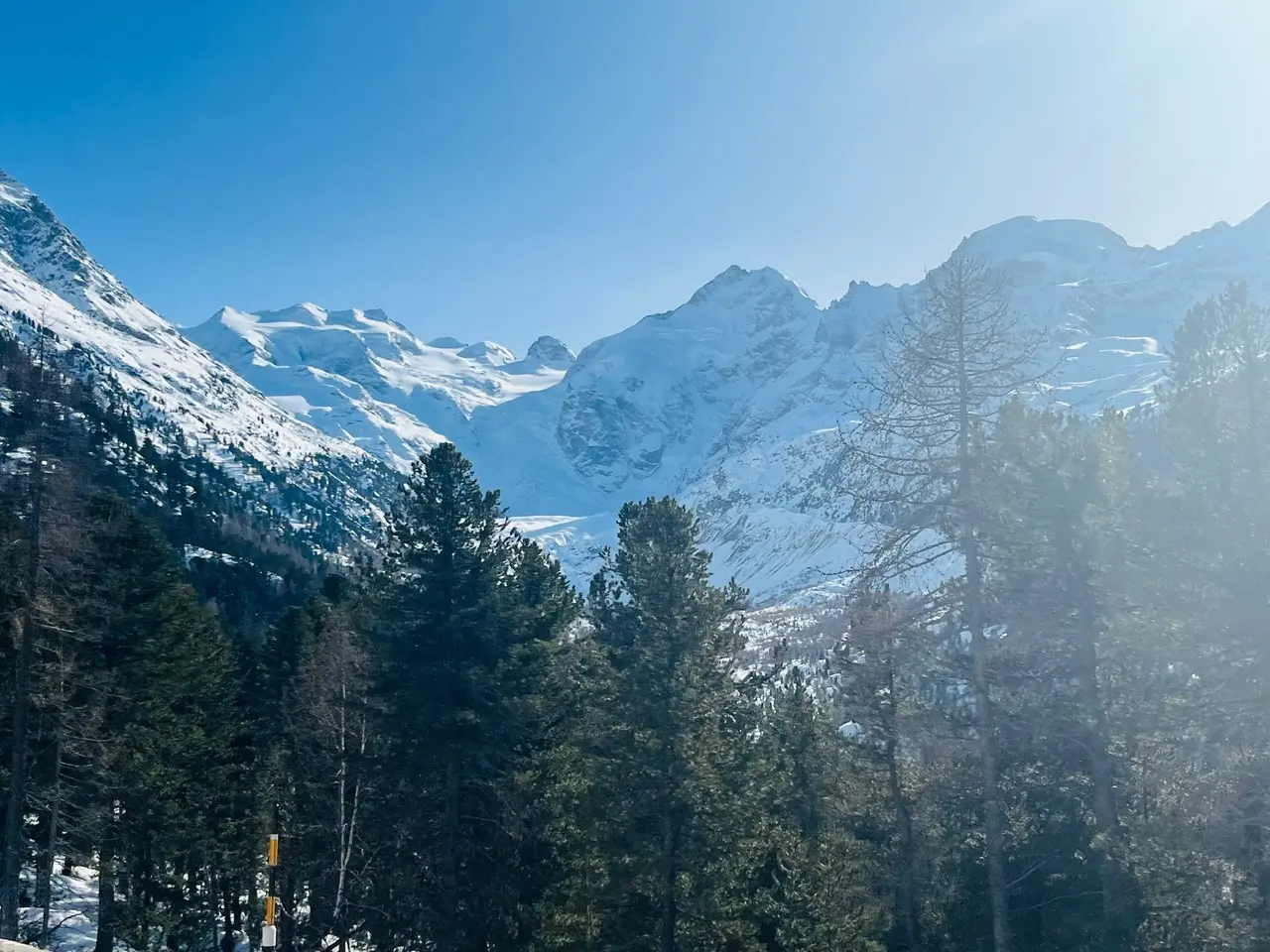
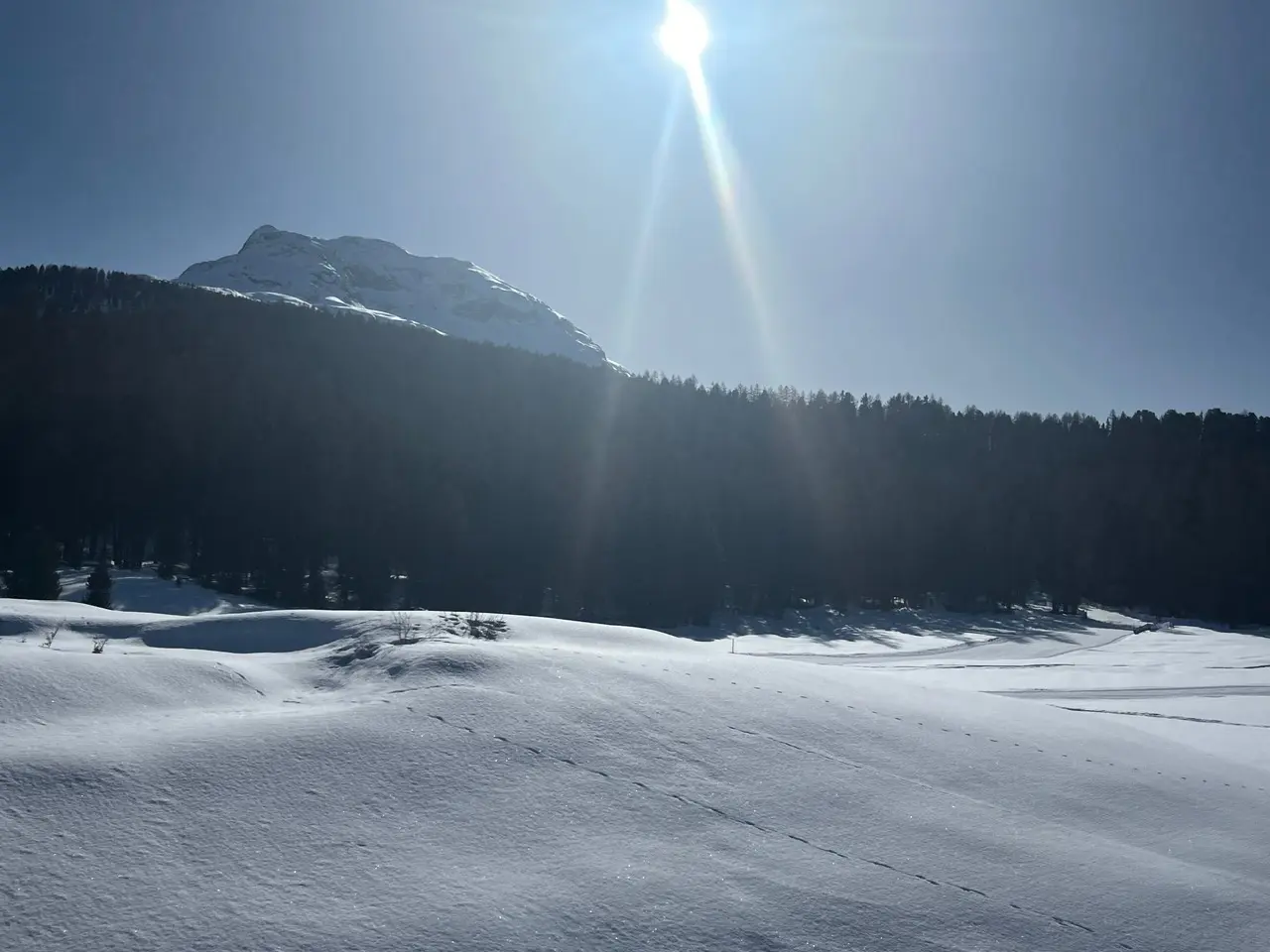
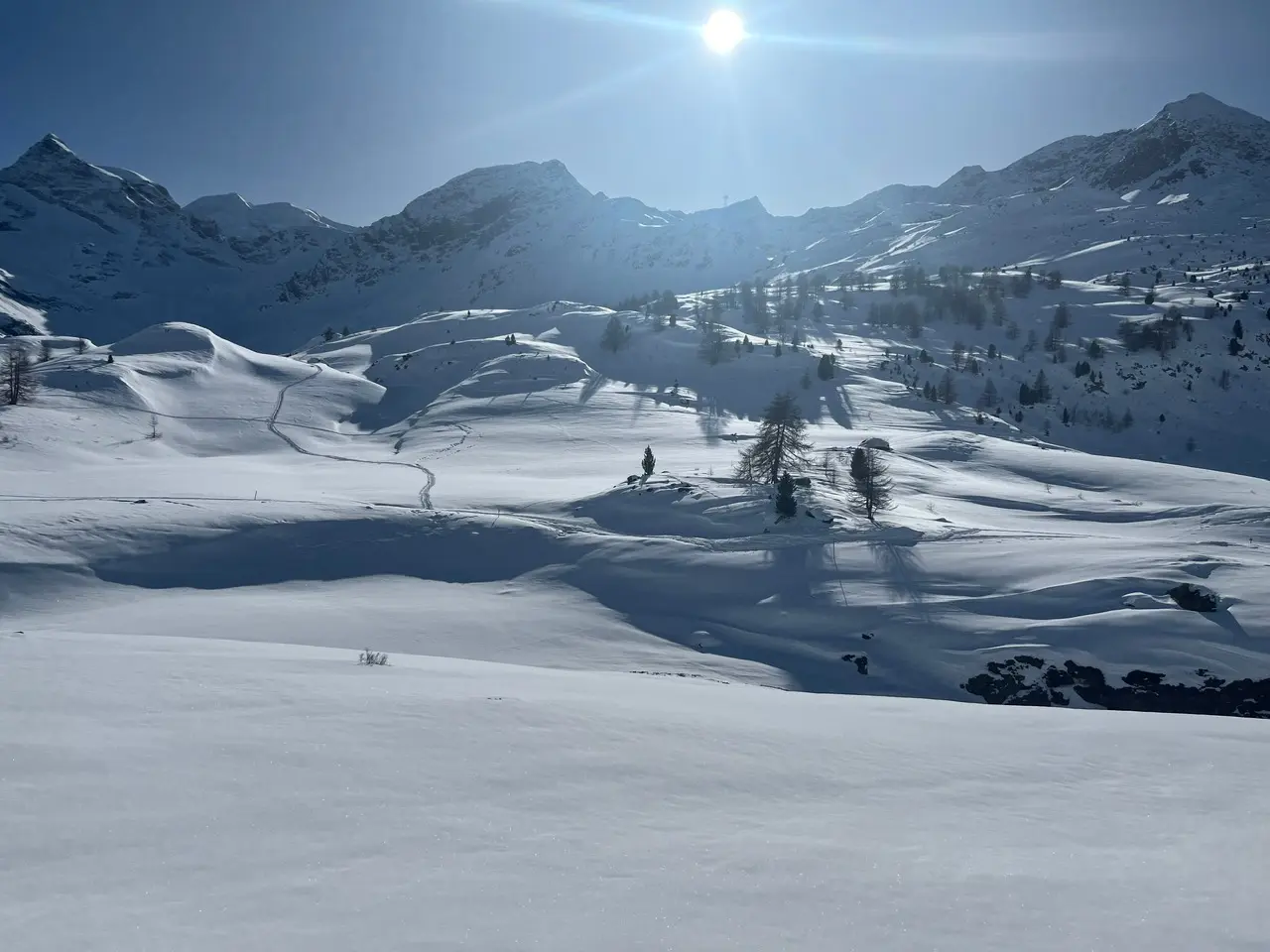
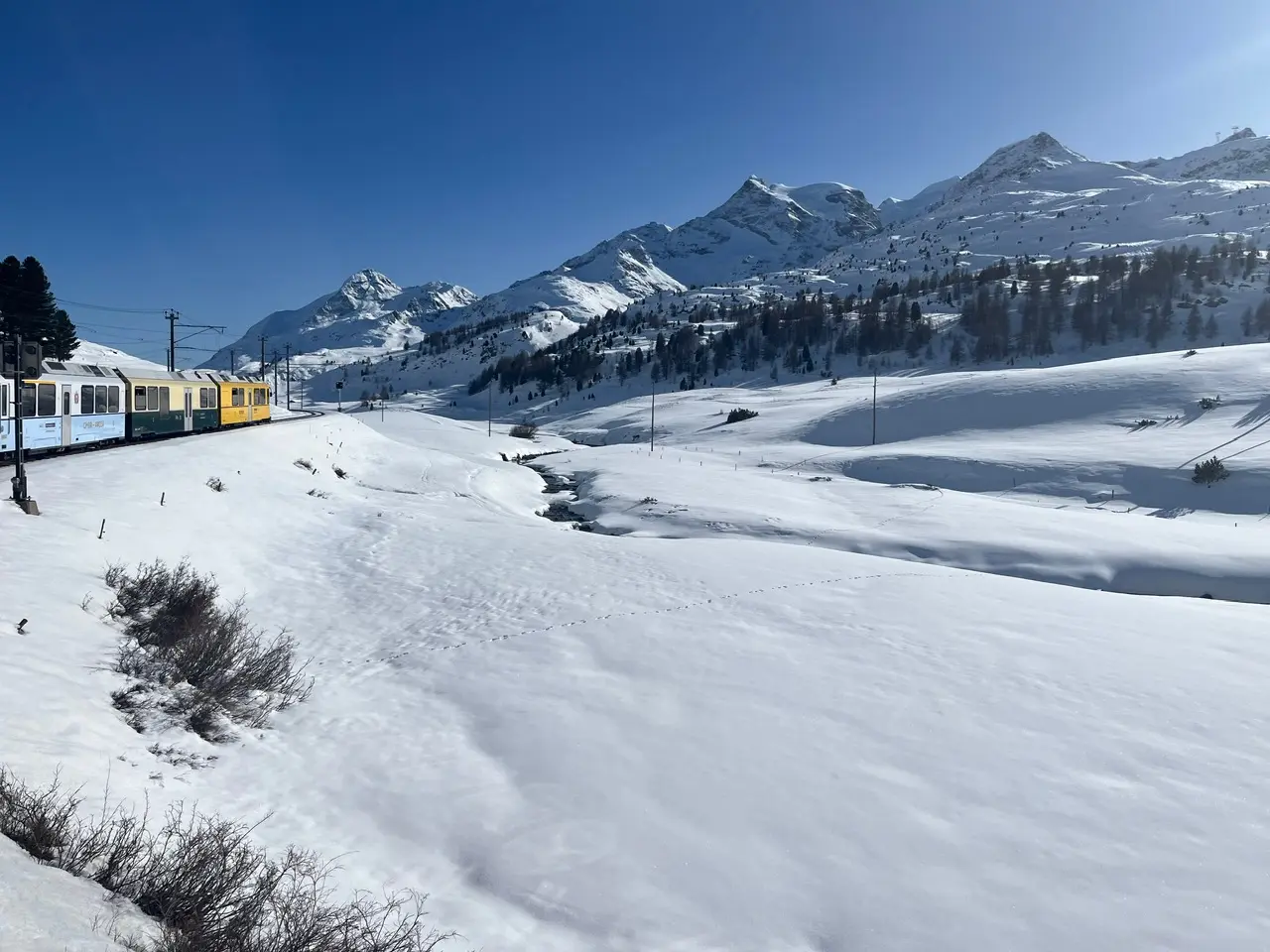
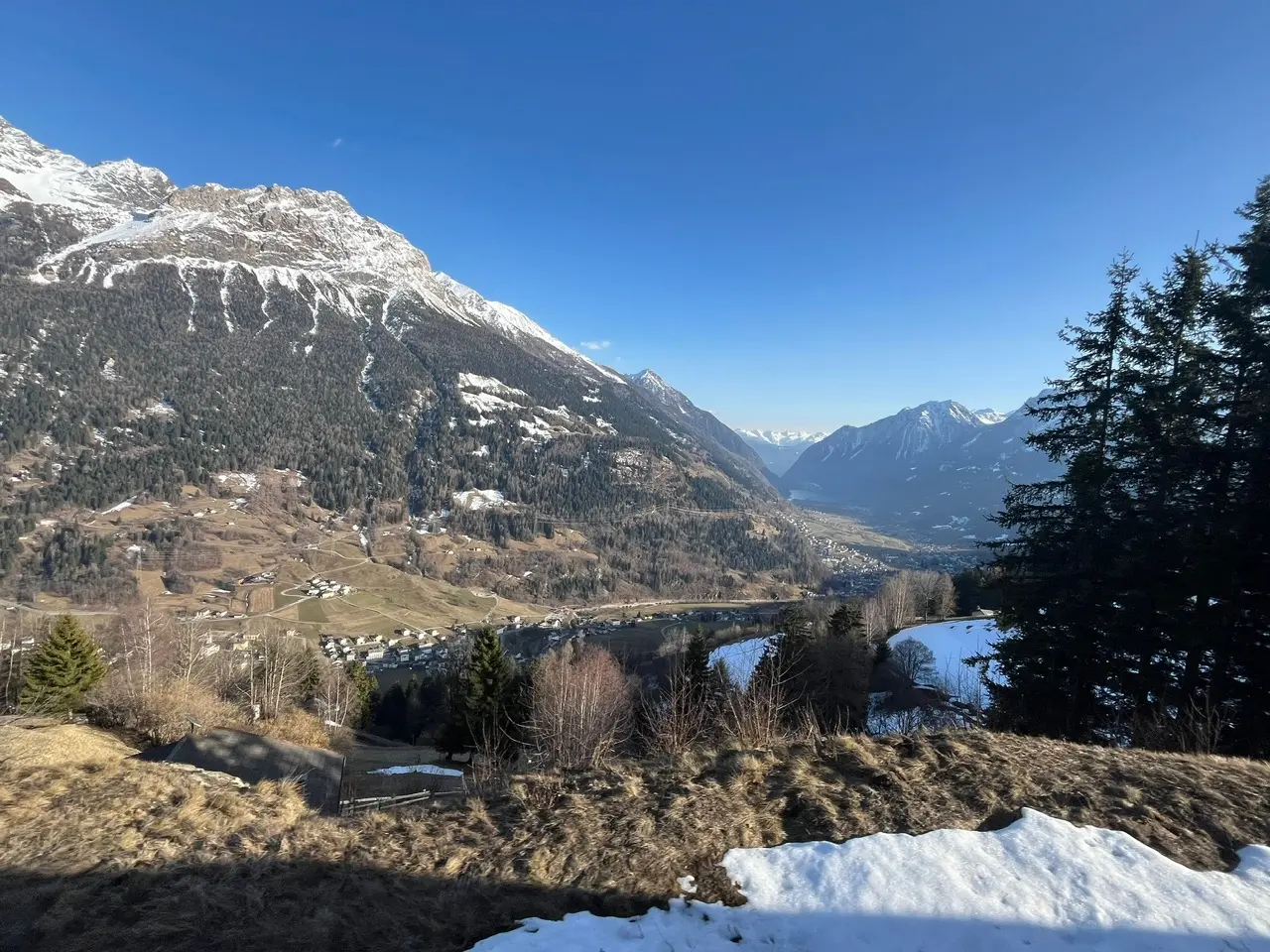
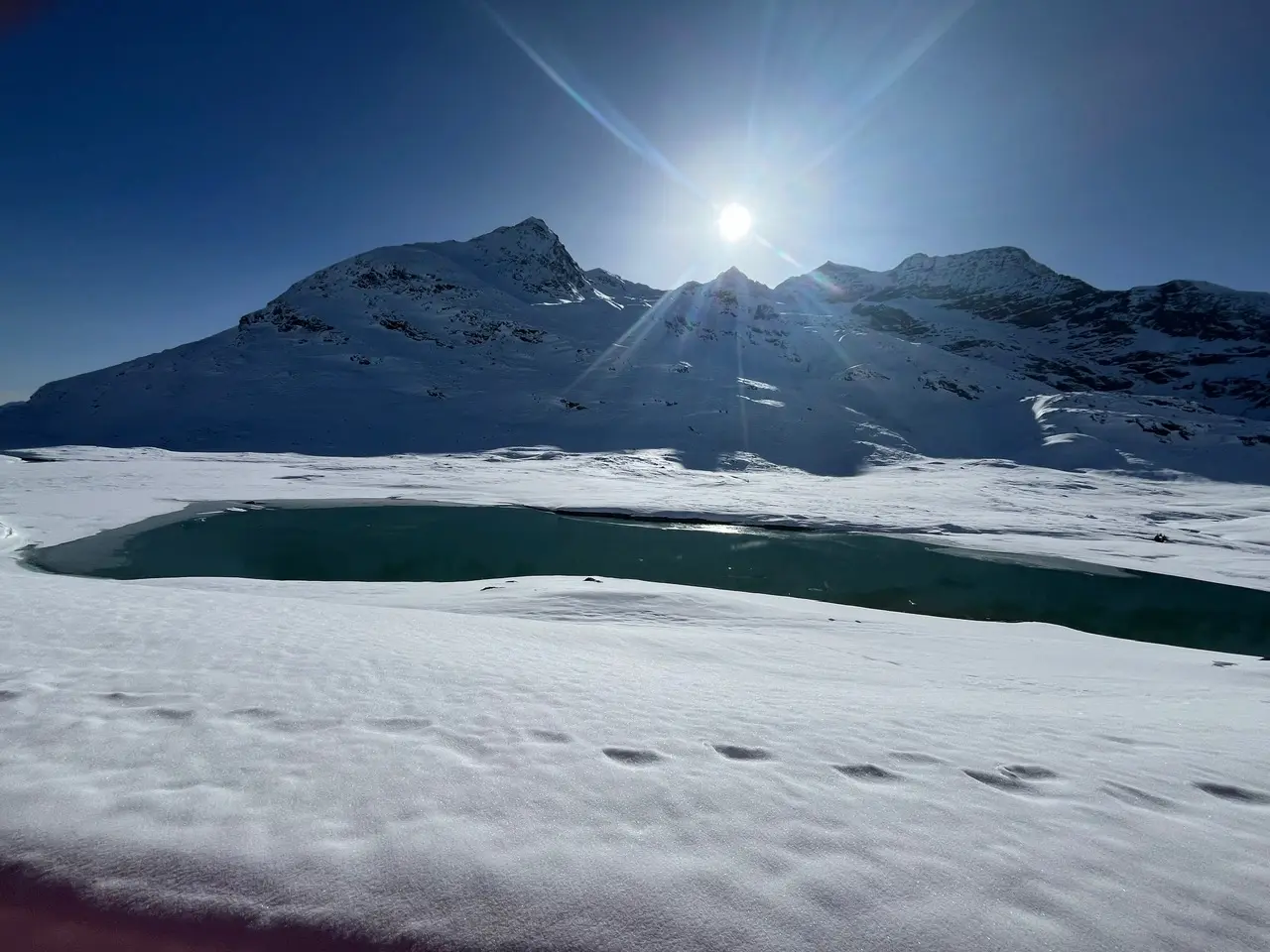
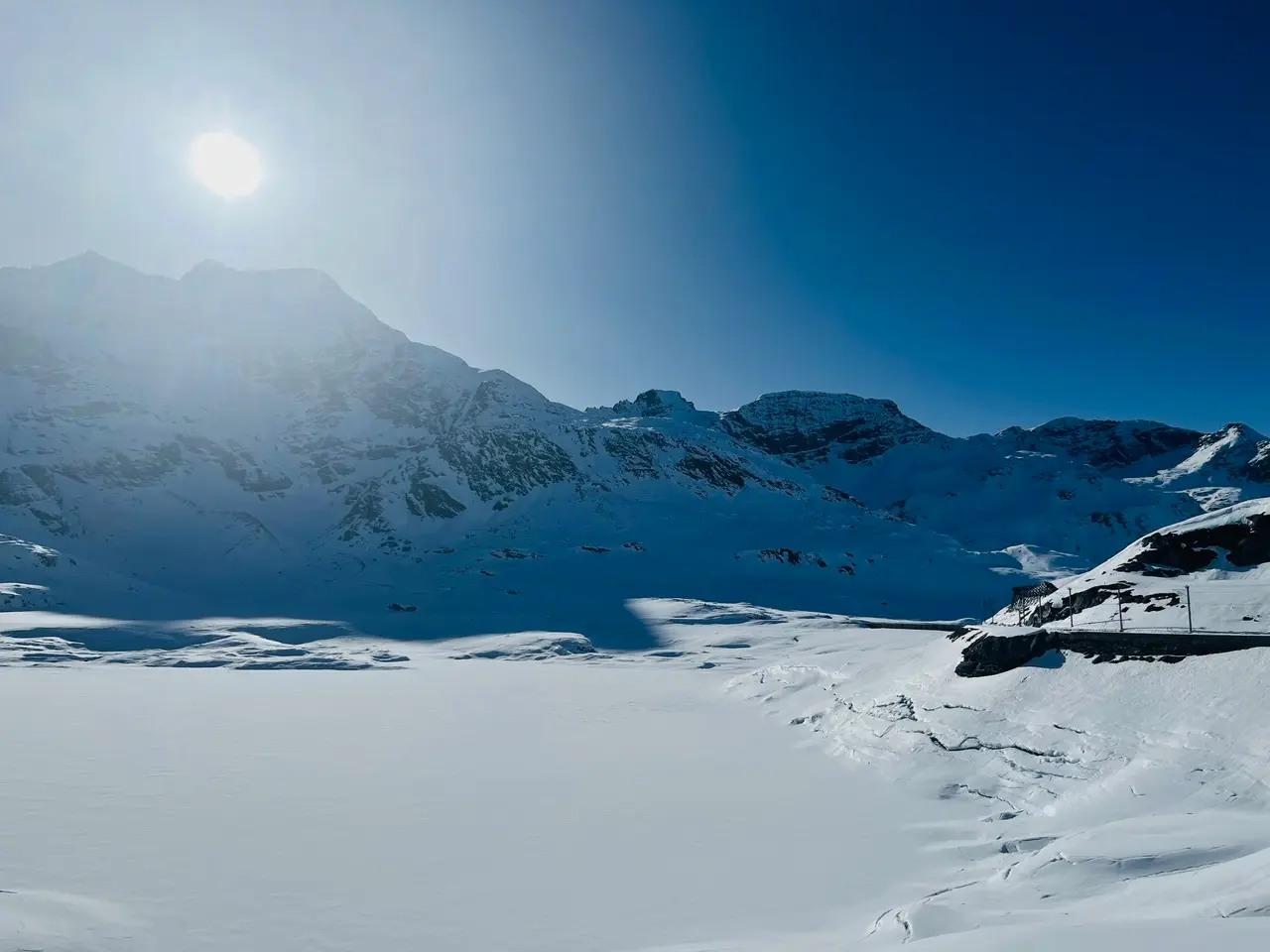
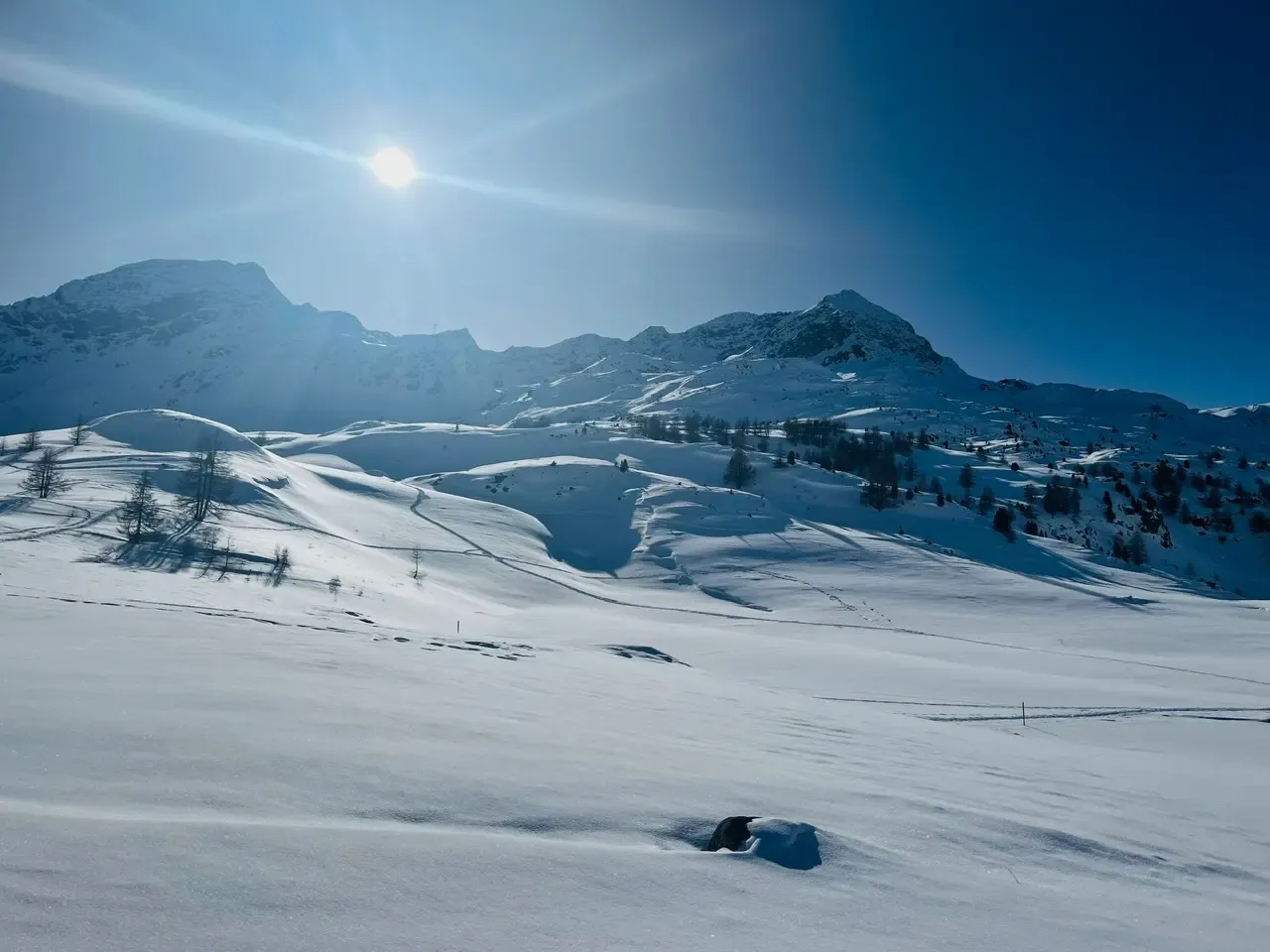
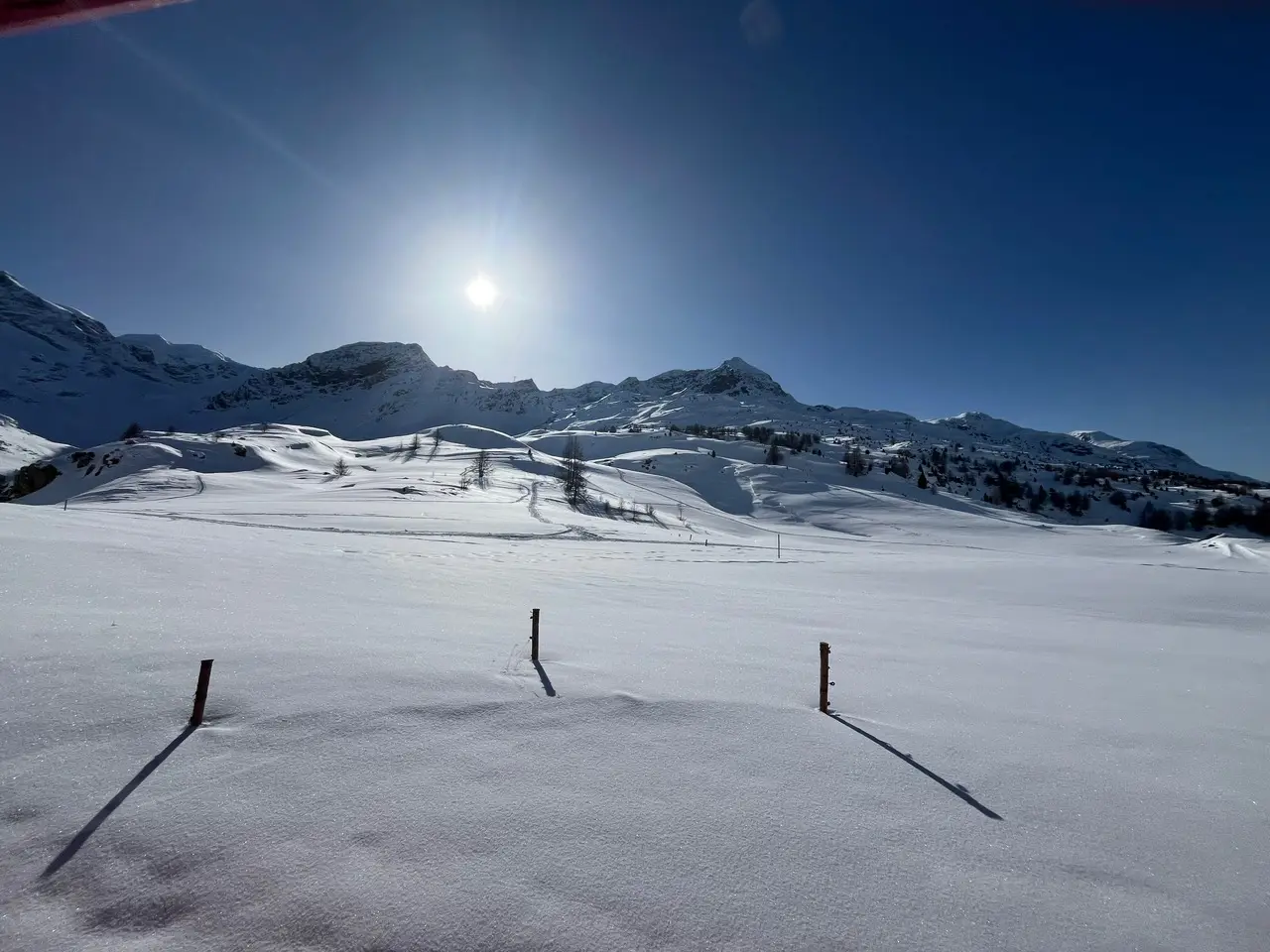
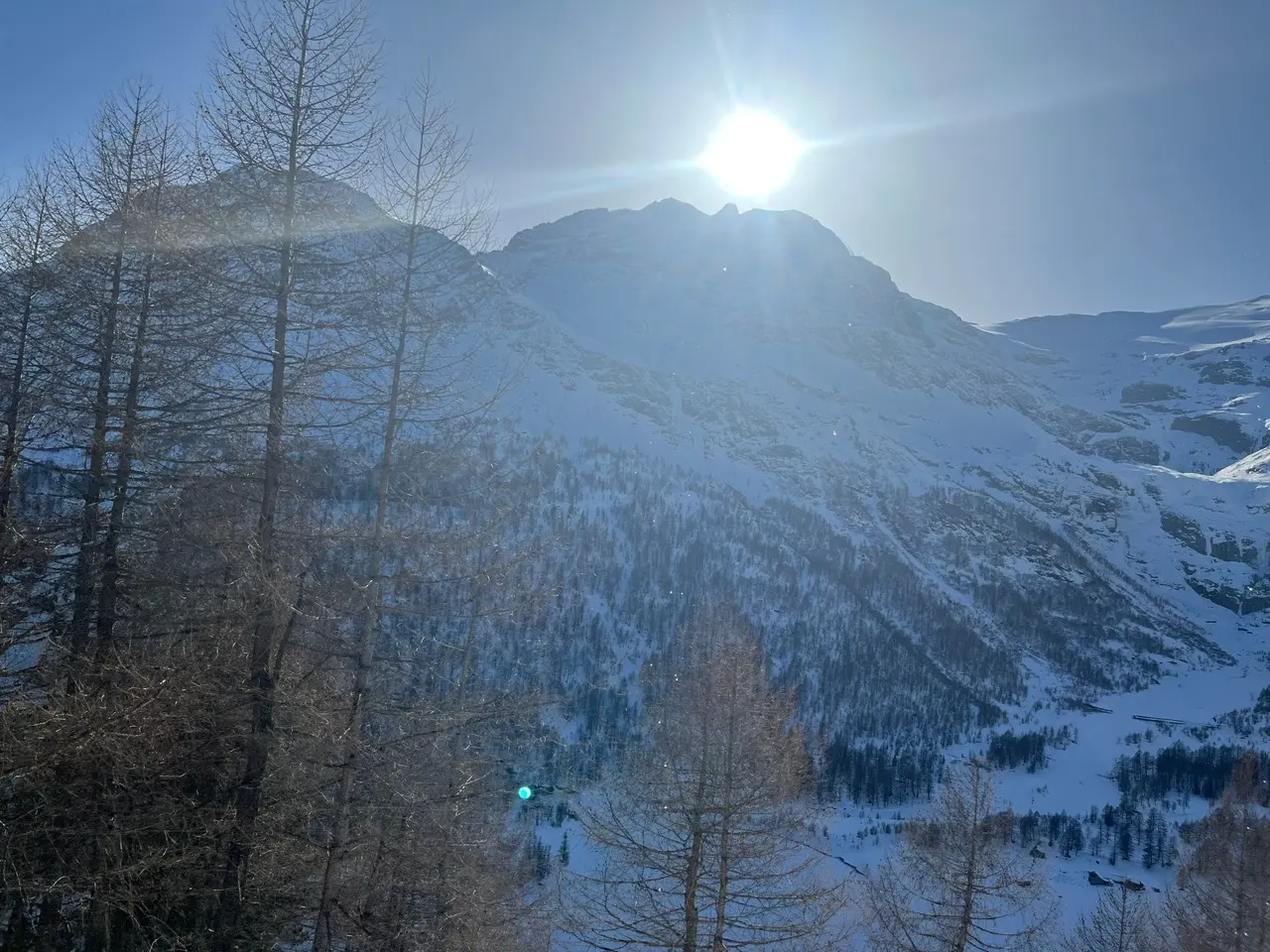
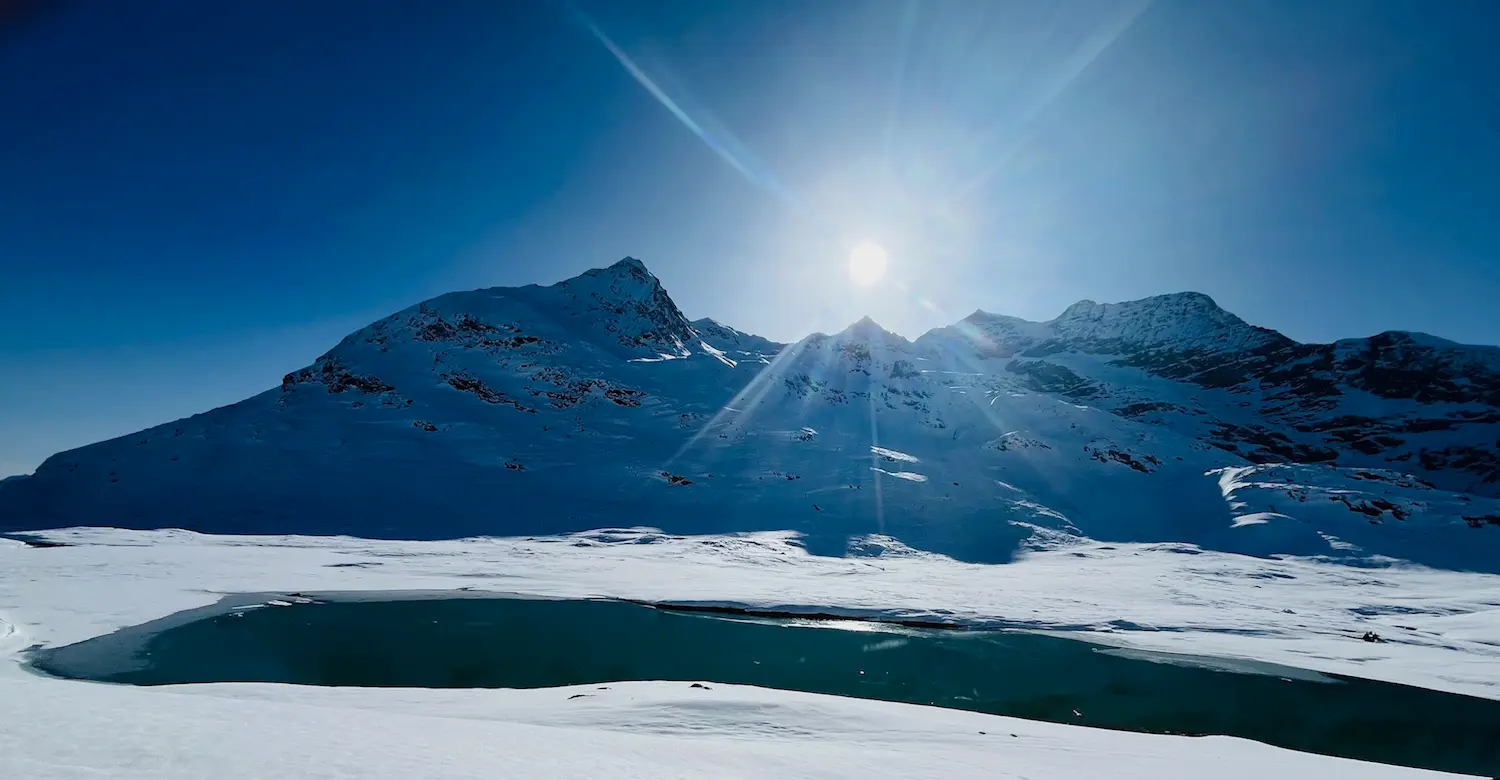
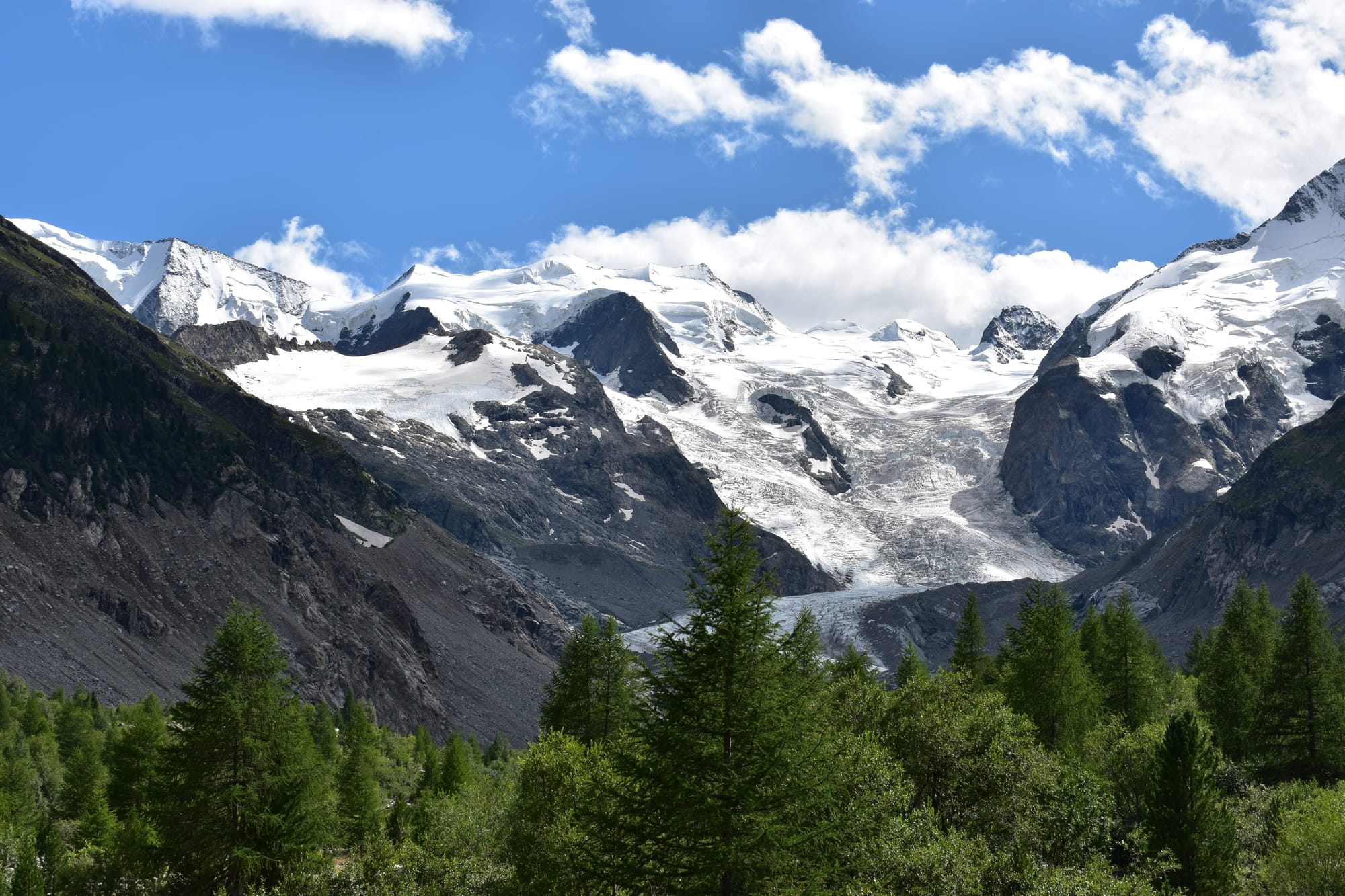
Views from the Bernina line in winter — all photographs taken from the train window between Tirano and St Moritz.
The Bernina line is one of those journeys where you put your phone away, or equally, can't stop taking photos — depending on your disposition. Either way, the landscape commands your attention for most of the two hours and fifteen minutes.
Leaving Tirano, the train passes through the town's streets at road level — an extraordinary sight — before beginning the climb into the mountains. The Brusio Spiral Viaduct comes early: a circular loop built to manage the gradient, where the train curves through a full 360 degrees and you can briefly see the carriages ahead and behind you simultaneously.
Above the treeline, the landscape opens into high alpine terrain. Lago Bianco — White Lake — sits at the Bernina Pass, a glacial reservoir that turns different colours through the seasons: brilliant turquoise in summer, and in winter, depending on conditions, you may see it frozen and snow-covered, the mountains reflected in the ice. The Morteratsch Glacier comes into view as the line descends toward St Moritz — one of the largest glaciers in the Alps, unmistakable against the rock face above.
In winter, on a clear sunny day, the journey is extraordinary in a completely different way — the entire landscape is white and still, the light is sharp at altitude, and the contrast between the snow and the deep blue sky is genuinely dazzling. The scenery changes completely with the seasons, which is reason enough to consider doing it more than once.
St Moritz — What to Do on a Day Trip
St Moritz is one of the most famous resort towns in the world, and it lives up to its reputation — beautiful, elegant, and expensive. On a day trip from Milan you have roughly one hour and an half before you need to think about the return journey, which is enough time to get a genuine feel for the place.
The lake is the first thing that strikes you — Lake St Moritz sits immediately below the station, and in winter it freezes completely. When I visited, it was frozen solid enough to walk across. Standing on the ice with the mountain village above and the Alps all around is a really special moment.
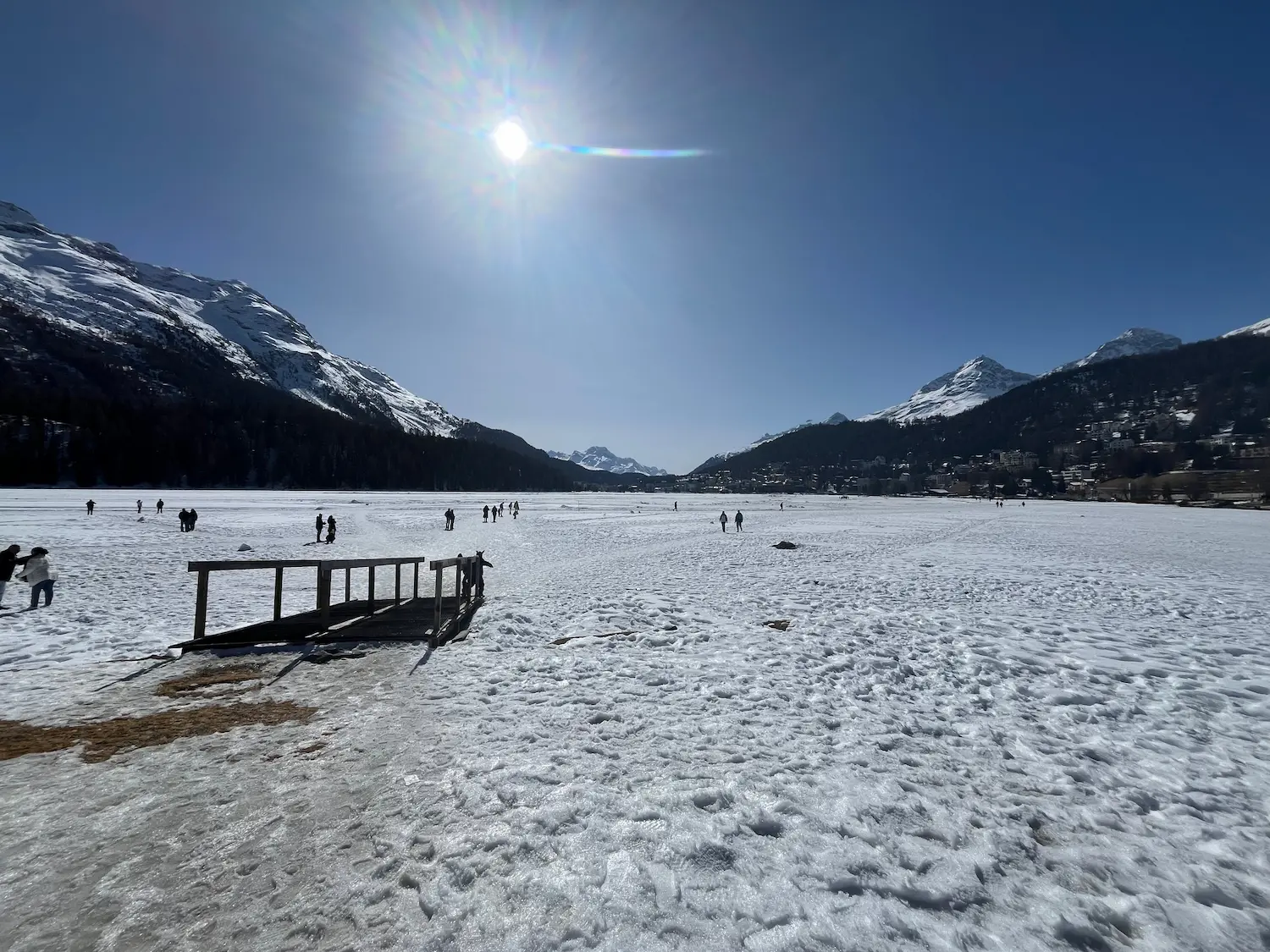
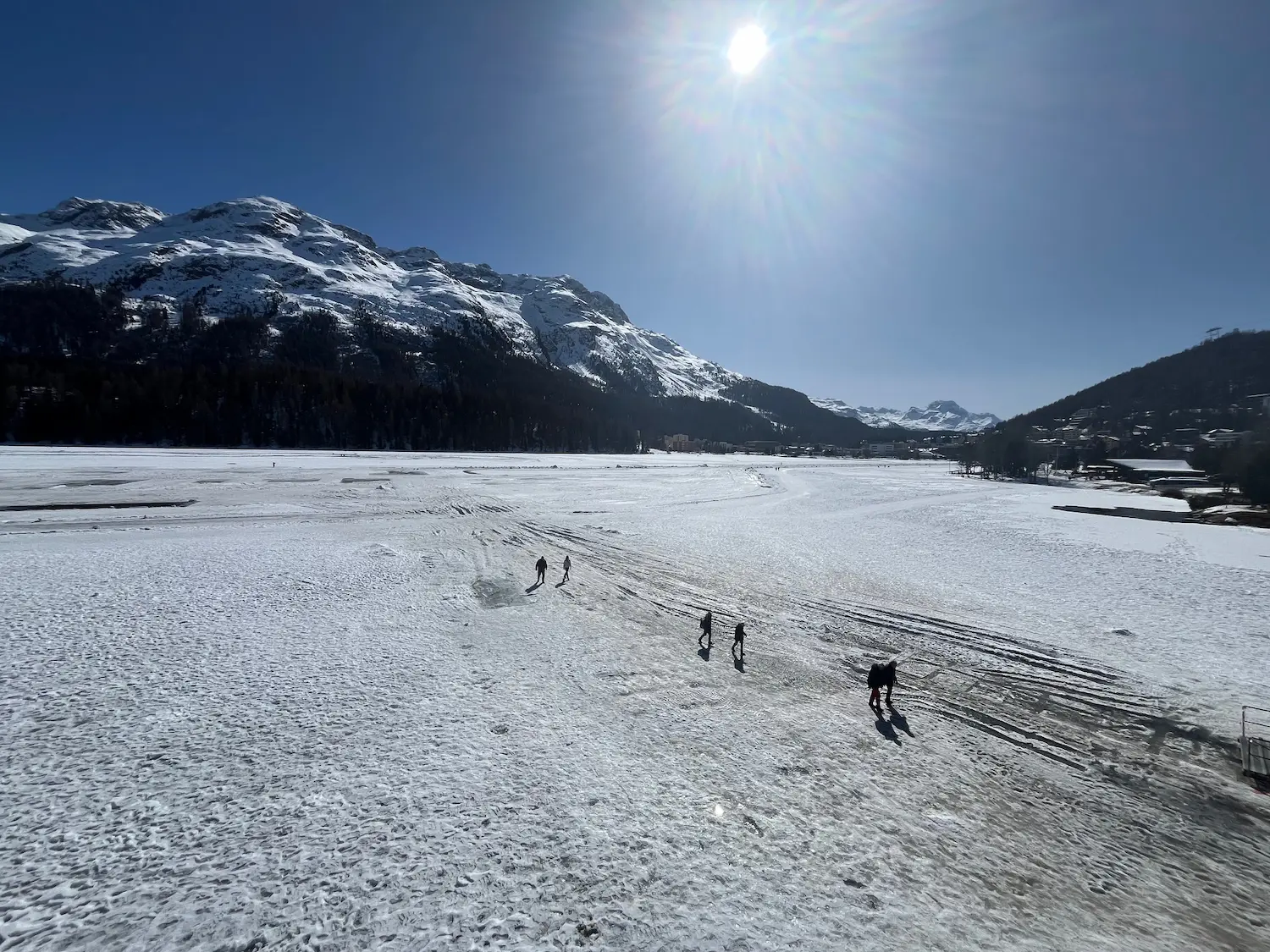
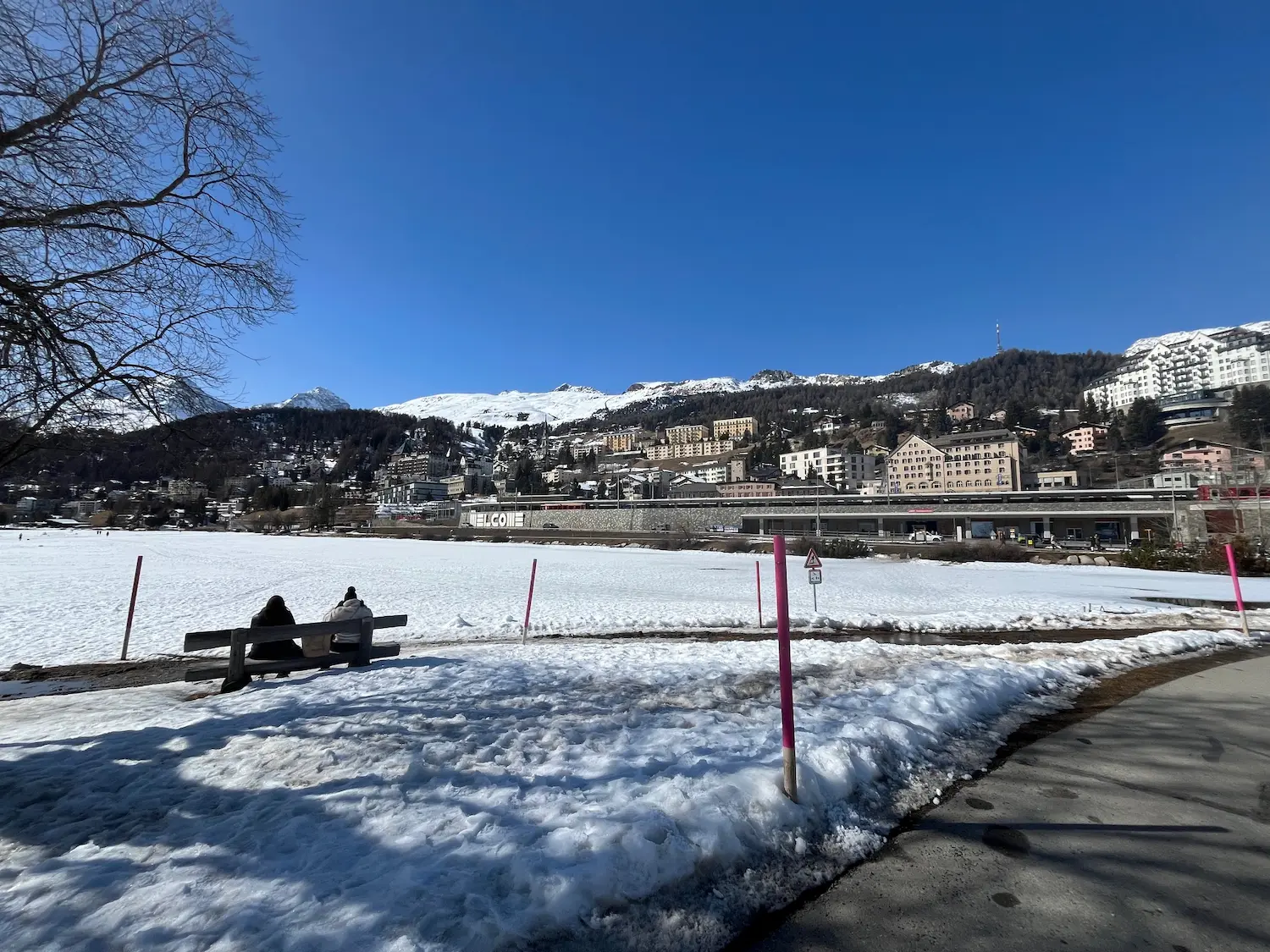
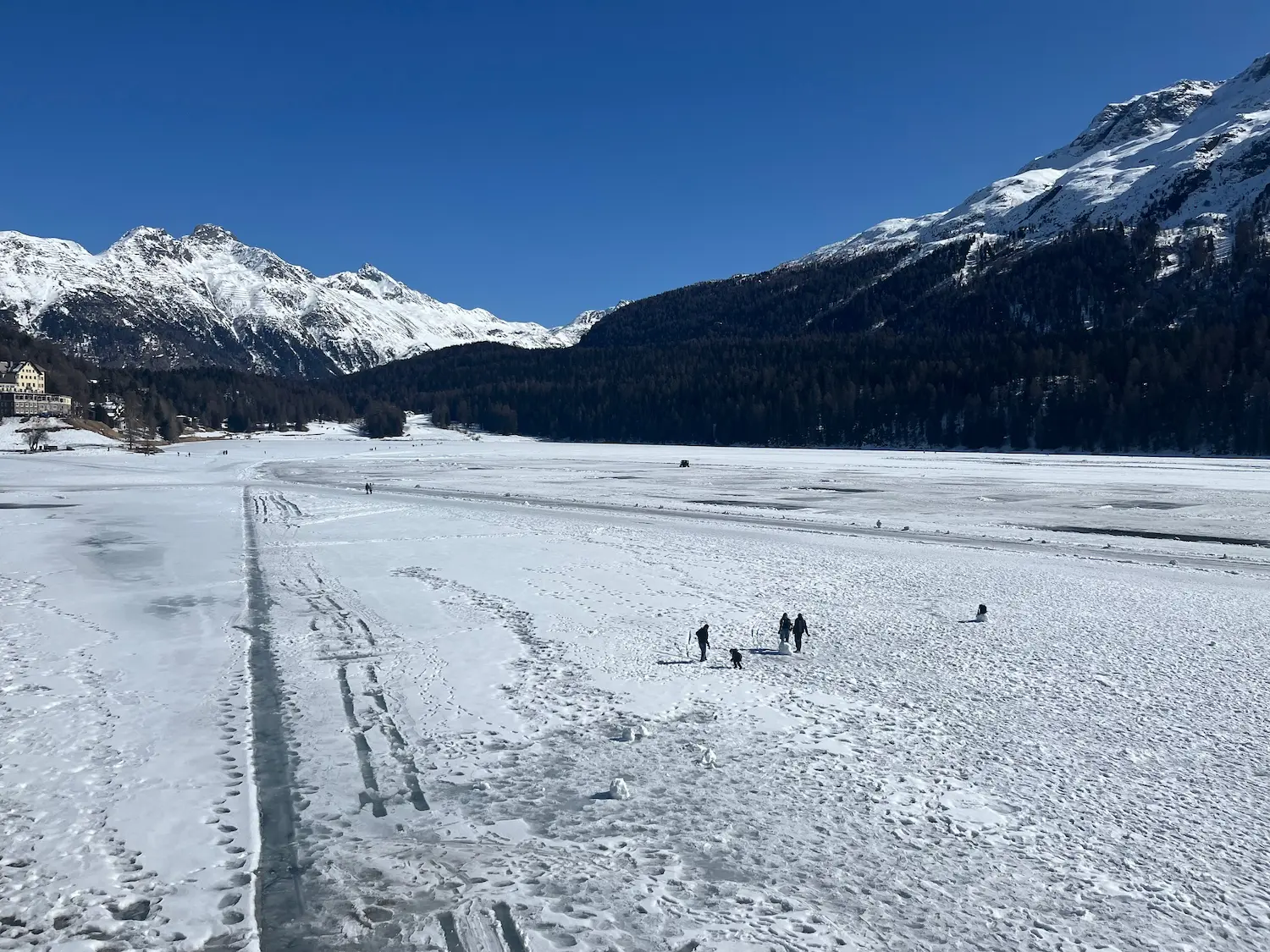
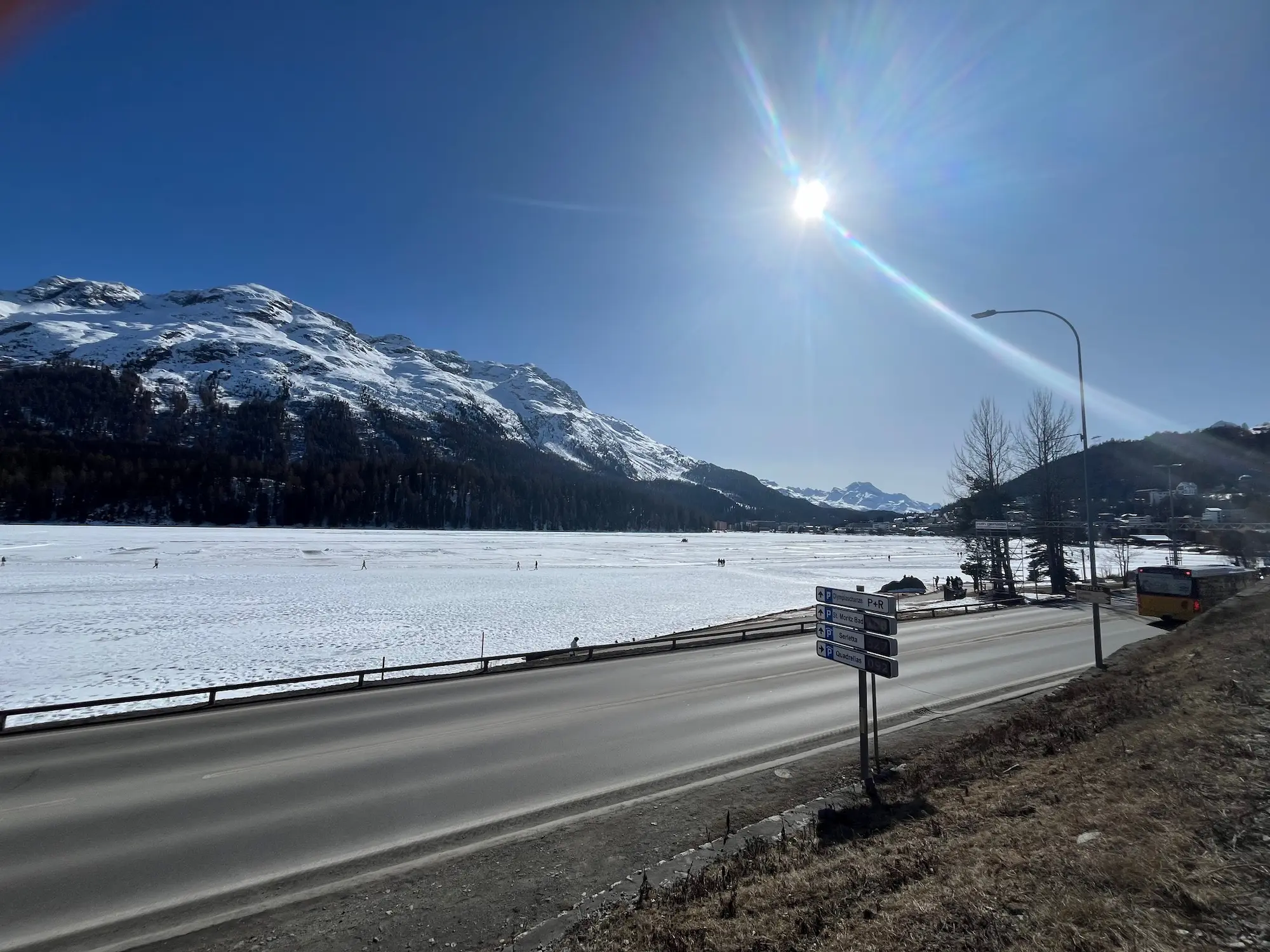
Lake St Moritz in winter — frozen solid and walkable, with the Engadin Alps above. A short walk from the train station.
What to do with your time:
- Walk down to the lake and along the waterfront — the views are magnificent and it takes no more than fifteen minutes to reach the water from the station
- Explore the chocolate shops in the village centre — St Moritz has some exceptional chocolatiers and a bar of Swiss alpine chocolate is the perfect souvenir
- If you want a quick meal, the supermarket inside the train station is better than you might expect — sandwiches, salads —, and Caffe Spettacolo next door is also good. Both have outdoor seating with lake views, which in good weather is an excellent option
- The town has restaurants and cafes at various price points, but bear in mind that St Moritz is one of Switzerland's most expensive resorts — budget accordingly
St Moritz is beautiful, but this day is really more about the journey than the destination. St Moritz is the turning point.
How to Structure the Day
Option 1 — Full return by train (most scenic)
Take the early morning Trenord train from Milano Centrale to Tirano (aim to be in Tirano by 9-10am), board the standard regional train to St Moritz, spend a short time in the town, then take the train back to Tirano and the evening Trenord service back to Milan. It's a long day — twelve to fourteen hours door to door — but you get the Bernina journey twice, which is not a hardship.
Option 2 — Bus one way, train the other (recommended for comfort)
Several tour operators run day trips from Milan that drive you by bus along Lake Como to Tirano, put you on the train for the Bernina journey to St Moritz, and collect you in St Moritz for the drive back to Milan. This means you do the scenic train journey once rather than twice, get more time in St Moritz, and arrive back in Milan less tired. For most people doing this as a one-day excursion, this is the better option. Book via GetYourGuide — look for tours departing from Milano Centrale.
Option 3 — Overnight in St Moritz or Tirano
An overnight stay transforms the trip from a long day into a genuine mini-break. St Moritz hotels are expensive but there are more affordable options around Pontresina, a short train stop away. Tirano, on the Italian side, is significantly cheaper and a pleasant small town in its own right. Staying in Tirano also means you can do the full Bernina journey fresh in the morning rather than at the end of a travel day.
Practical Information
Passport: Bring it. Switzerland is part of the Schengen area, so border checks are rare, but they do occasionally occur — particularly on international train routes. Don't leave it at the hotel.
Currency: Switzerland uses Swiss Francs (CHF), not euros. But to be honest - virtually everywhere accepts cards.
Tirano station logistics: The Italian Trenord station and the Rhaetian Railway station are separate buildings on opposite sides of the same piazza. The signage is clear. Allow yourself fifteen minutes to cross, find the platform and get oriented.
Train frequency Tirano–St Moritz: Regional trains depart Tirano roughly every hour and a half throughout the day. Check the current timetable for the Bernina Express at rhb.ch before you travel. Or at sbb.ch or Trainline for the standard Bernina train.
Booking Milan–Tirano: No reservation required on the Trenord regional service. Buy tickets at Milano Centrale machines or online at trenord.it or Trainline. Validate your paper ticket before boarding at the green machines on the platform — the same rule that applies across all Italian regional trains.
When to Go
Winter is exceptional on a clear day — the kind of clarity and light you only get at altitude with snow on the ground. The lake at St Moritz may be frozen. The Bernina Pass is white and vast. If the sun is out, the brightness at altitude is almost unreal. Take sunglasses.
Autumn offers dramatic colour in the lower valleys before the snow arrives, and quieter trains than the peak summer months.
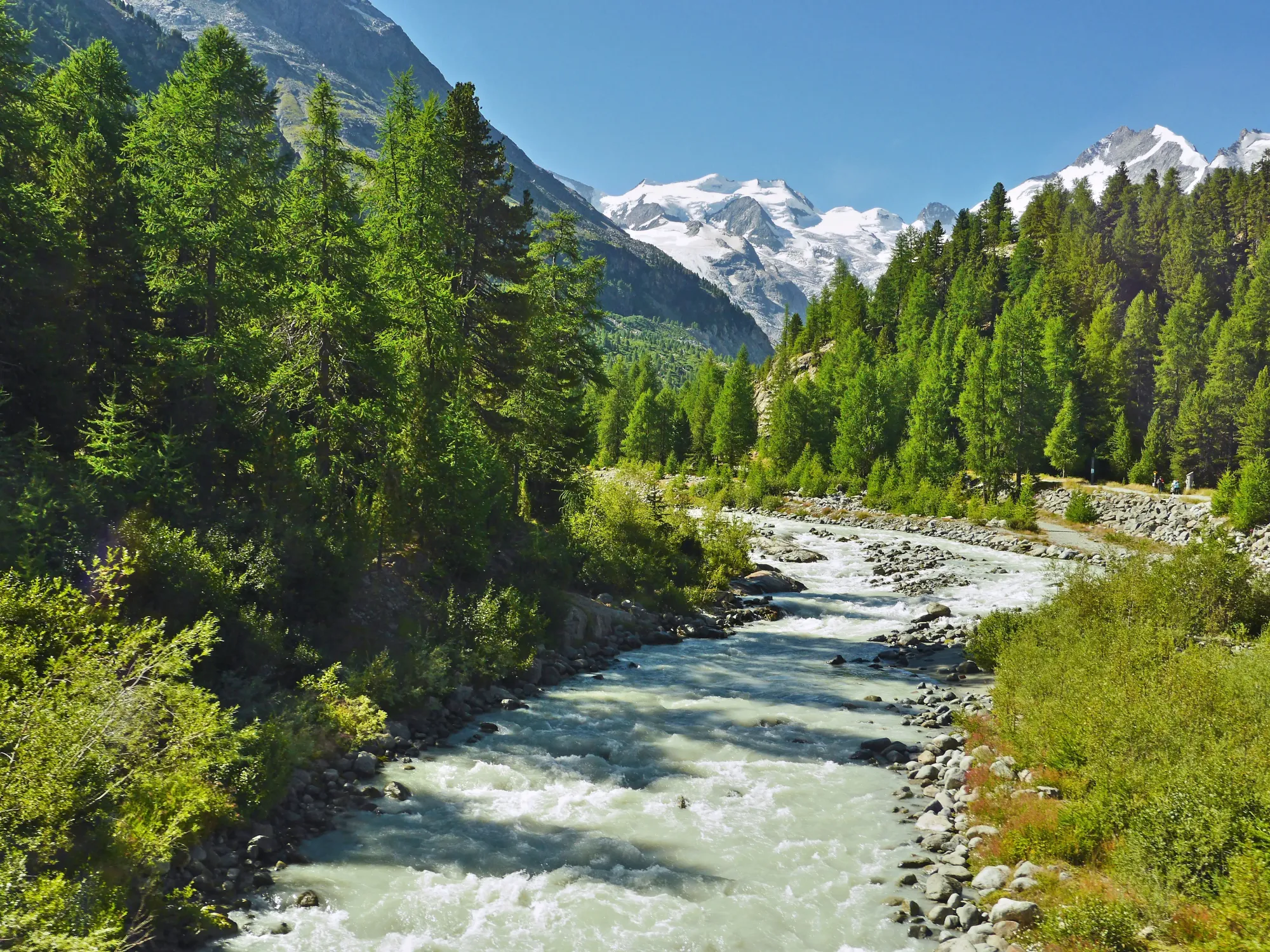
Summer brings the glaciers into full view and the alpine meadows are green and flower-filled. The contrast between the lush Italian valleys below and the permanent ice and snow above the Bernina Pass is striking in a completely different way.
The journey is worth doing in any season — the landscape simply changes character rather than becoming less beautiful.
How This Fits Into a Wider Italian Train Trip
The Bernina journey works particularly well if you're using Milan as a base for a few days. It's naturally combined with the other excellent day trips that radiate from Milano Centrale — our guides to Pavia, Bergamo, Lake Como and Oltrepò Pavese cover the best of Lombardy, and the Bernina adds an entirely different dimension to a Milan stay.
If you're planning a broader Italy trip with Milan as one stop among several, our guide to planning your Italy by train itinerary covers how to structure the connections — and our Italy train network guide explains everything you need to know about tickets and how Italian trains work before you travel.
Frequently Asked Questions
Do I need to take the official Bernina Express or can I use the standard train?
You can use the standard regional train on exactly the same route and see exactly the same scenery. The key advantage over the official Bernina Express is that the windows open, which is particularly valuable for photography and for the sensory experience of the journey. The official Bernina Express has panoramic windows and onboard commentary, but requires a mandatory seat reservation on top of your ticket. For most visitors, the standard train offers the better experience at lower cost.
How long is the Bernina journey from Tirano to St Moritz?
Around two hours and fifteen minutes on the standard regional train. The official Bernina Express takes a similar time. The full route from Chur in Switzerland to Tirano takes approximately four hours, but for a day trip from Milan, Tirano to St Moritz is the relevant section.
Do I need a passport to travel from Milan to Switzerland?
Yes — bring your passport. Switzerland is part of the Schengen area, so passport checks at the border are infrequent, but they do occur on international train routes. Don't travel without it.
Can I do the Bernina Express as a day trip from Milan?
Yes, but it's a long day — expect twelve to fourteen hours door to door if you're doing the full return by train. The alternative is a guided tour that drives you one way by bus and puts you on the train for the scenic section, which is less tiring and gives you more time in St Moritz. For a first visit, the guided tour option is worth considering.
What is there to do in St Moritz on a short visit?
Walk down to the lake — in winter it may be frozen solid enough to walk across — explore the chocolate shops in the village, and have lunch at the station supermarket or café, both of which offer good value with lake views.
What is the best time of year for the Bernina journey?
The journey is spectacular year-round. Winter offers snow, frozen lakes and extraordinary clarity of light on sunny days. Summer brings the glaciers into full view and the alpine meadows in bloom. Autumn is quieter and offers dramatic colour in the lower valleys. The scenery changes completely with the seasons rather than becoming less impressive.
Is the Bernina railway really a UNESCO World Heritage Site?
Yes — the Rhaetian Railway's Albula and Bernina lines were declared a UNESCO World Heritage Site in 2008, recognised for both their engineering significance and the exceptional landscapes they traverse. The line crosses 196 bridges and passes through 55 tunnels, climbing from near sea level in Italy to 2,253 metres at the Bernina Pass.
Also from Milan by train: Pavia · Bergamo · Oltrepò Pavese · Lake Como