Under half an hour by train from Venezia Santa Lucia, with no booking needed - here’s how to get to Padua, which ticket to buy and what to see when you arrive.
Last verified: September 2026. Train times, ticket prices and booking rules change regularly. Always check official sources before travelling.
Most visitors touring the Veneto give Padua a day trip at best, if they stop at all. That's a shame, because past the queue for the Scrovegni Chapel sits a Gothic basilica among Italy's largest, a university founded in the 13th century, a piazza that ranks among Europe's biggest open squares, and a historical centre that's been lived in continuously since Roman times. And it's all a short hop from Venice by rail.
At a Glance
| 🚉 Station name | Padova - search for this, not "Padua", when booking |
| 🚆 From Venice | Direct regional train - approx. 25–30 min, from ~€6 |
| 🚆 From Bologna | Direct train - approx. 1h, from ~€15 |
| 🚆 From Verona | Direct train - approx. 40 min, from ~€15 |
| 🚆 From Trieste | Train - approx. 2h 20 mins, from ~€18 |
| 🚆 From Milan | Train - approx. 2h, advance fares from ~€15 |
| 🚆 From Rome | Train - approx. 3h–3h30 |
| ✈️ From Venice airport | Bus to Venezia Mestre, then a 15-min train - or a direct Busitalia bus |
| 🚶 Station to centre | Scrovegni Chapel 10 min on foot - SIR1 tram for the rest |
| 🎨 Must book ahead | Scrovegni Chapel - slots every 15 mins, book at least a day in advance |
| 🏛️ UNESCO status | 14th-century fresco cycles of Padua - World Heritage Site since 2021 |
| 🎓 University | Founded 1222 - one of the oldest in the world |
| ⏱️ Time needed | Full day - half day possible if focused on the chapel and basilica |
| 📅 Best time | Spring and autumn - mild weather, fewer crowds at the chapel |
In This Guide
How to get to Padua by train
Padua’s station is called Padova on tickets, departure boards and the Trenitalia and Italo apps, so search for “Padova”, not “Padua”, when booking. It sits on the main lines from Venice to Milan and from Venice to Bologna, so most journeys are direct.
From Venice: Regional trains leave Venezia Santa Lucia several times an hour. The fastest, marked Regionale Veloce (RV) on the departure board, take around 25–30 minutes; stopping Regionale services take closer to 45. Tickets cost from around €6 one way, with no seat reservation and no need to book ahead.
Frecciarossa and Italo high-speed trains are barely quicker on this short stretch and cost considerably more, so a regional train is sufficient. Every train also calls at Venezia Mestre, around 15 minutes from Padova, which is useful if you’re staying on the mainland.
From Venice Marco Polo Airport: There’s no train from the airport itself. Take the ATVO Fly Bus or ACTV bus 15 to Venezia Mestre station and change onto a regional train to Padova, or take Busitalia Veneto’s direct bus from the airport into Padua.
From Verona and Milan: Padova is on the main line from Milan through Verona to Venice. From Verona, direct trains take around 40 minutes. From Milano Centrale, Trenitalia and Italo trains take around 2 hours, with advance fares from around €15; slower regional connections take closer to three hours.
From Bologna, Florence and Rome: Padova is on the high-speed line between Bologna and Venice. Direct trains from Bologna take around an hour, from Florence around 1 hour 30 minutes, and from Rome around 3 to 3½ hours. Book high-speed tickets in advance, as fares rise closer to departure and seats are reserved.
From Trieste: Allow around 2 hours 20 minutes. Most services involve a change at Venezia Mestre.
Tickets: Buy at the station machines or through Trenitalia, Italo or Trainline. Validate a paper regional ticket in the machines on the platform before boarding.
From the station to the sights: Padova railway station lies just north of the historic centre. The Scrovegni Chapel is one of the closest major sights, around a 10–15-minute walk via Corso del Popolo and the streets around the Roman arena. Piazza delle Erbe and the university are approximately 15–20 minutes on foot, while the Basilica of Saint Anthony is around 20–25 minutes and Prato della Valle around 25–30 minutes.
For a quicker journey to the further sights, take the SIR1 tram from the stop outside the station. Get off at Eremitani for the Scrovegni Chapel and Santo for the Basilica of Saint Anthony. You can purchase a ticket from ticket machines or, tap with a contactless debit or credit card on the onboard reader.
The Scrovegni Chapel - Booking and Visiting
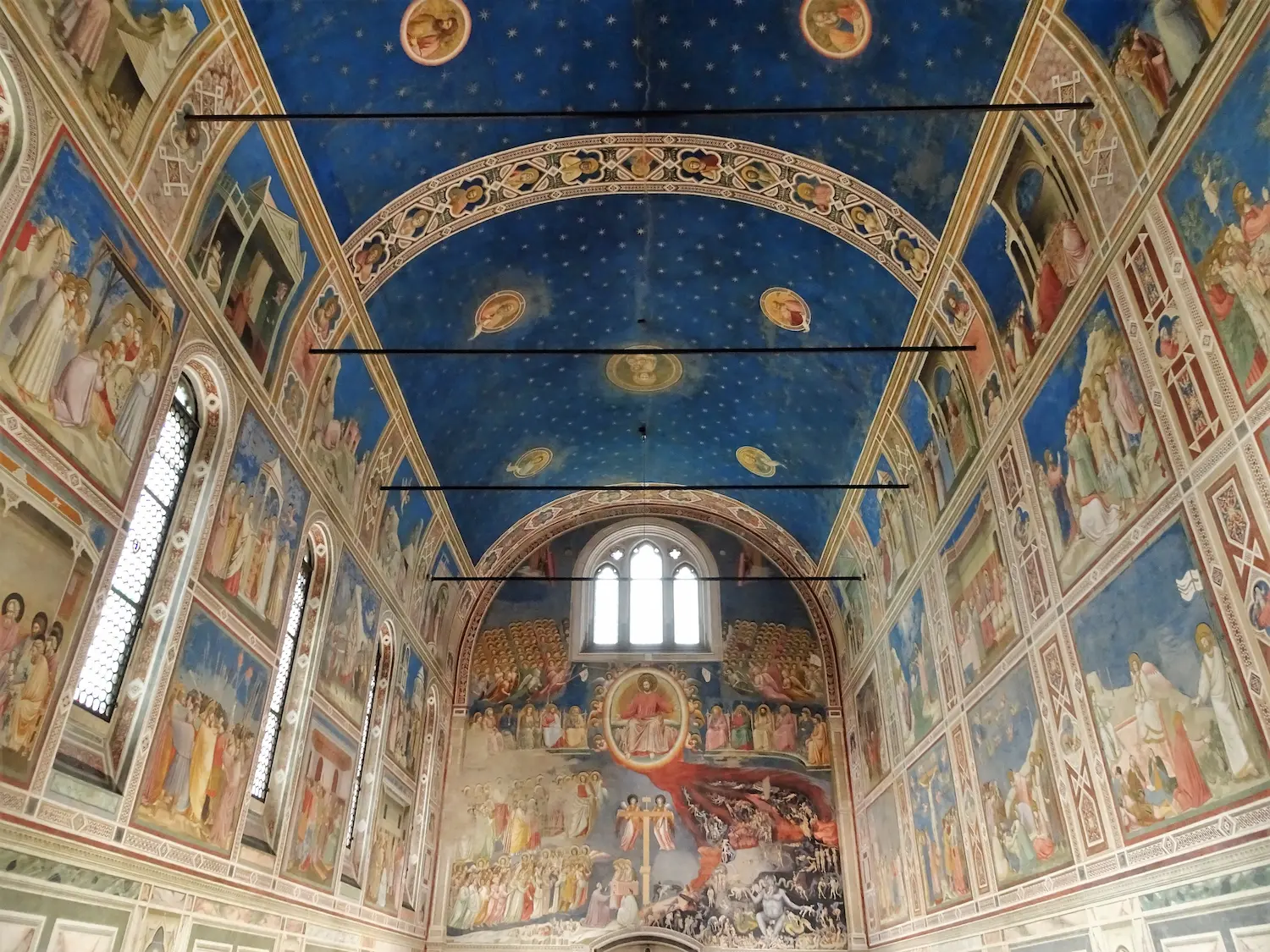
You cannot visit the Scrovegni Chapel without a pre-booked timed-entry ticket. It is open 9am-7pm.
The chapel was commissioned by Enrico Scrovegni, a wealthy Paduan banker, partly as an act of penance for the sin of usury committed by his father. Giotto's fresco cycle covers the life of the Virgin Mary and the life and Passion of Christ, culminating in a vast and vivid Last Judgment on the entrance wall. The ceiling is painted deep blue and scattered with gold stars. In 2021, the fresco cycles of 14th-century Padua, including the Scrovegni Chapel, were inscribed as a UNESCO World Heritage Site.
Booking: Tickets must be booked online at least one day in advance - same-day tickets are essentially unavailable except for occasional evening slots (7pm–10pm), which don't include access to the adjoining Musei Civici. Book at cappelladegliscrovegni.it. In peak season slots can sell out days ahead - book as far in advance as your travel dates allow.
The visit itself: Entry is in small groups on a strict 15-minute timer. Before entering the chapel proper, visitors wait in a climate-controlled anteroom for around 15 minutes, allowing your body temperature and humidity to equalise before you enter the fragile fresco environment. No photography is permitted inside.
The combined ticket includes access to the Musei Civici agli Eremitani next door, worth visiting for its archaeological and art collections if you have the time.
The Basilica of Saint Anthony
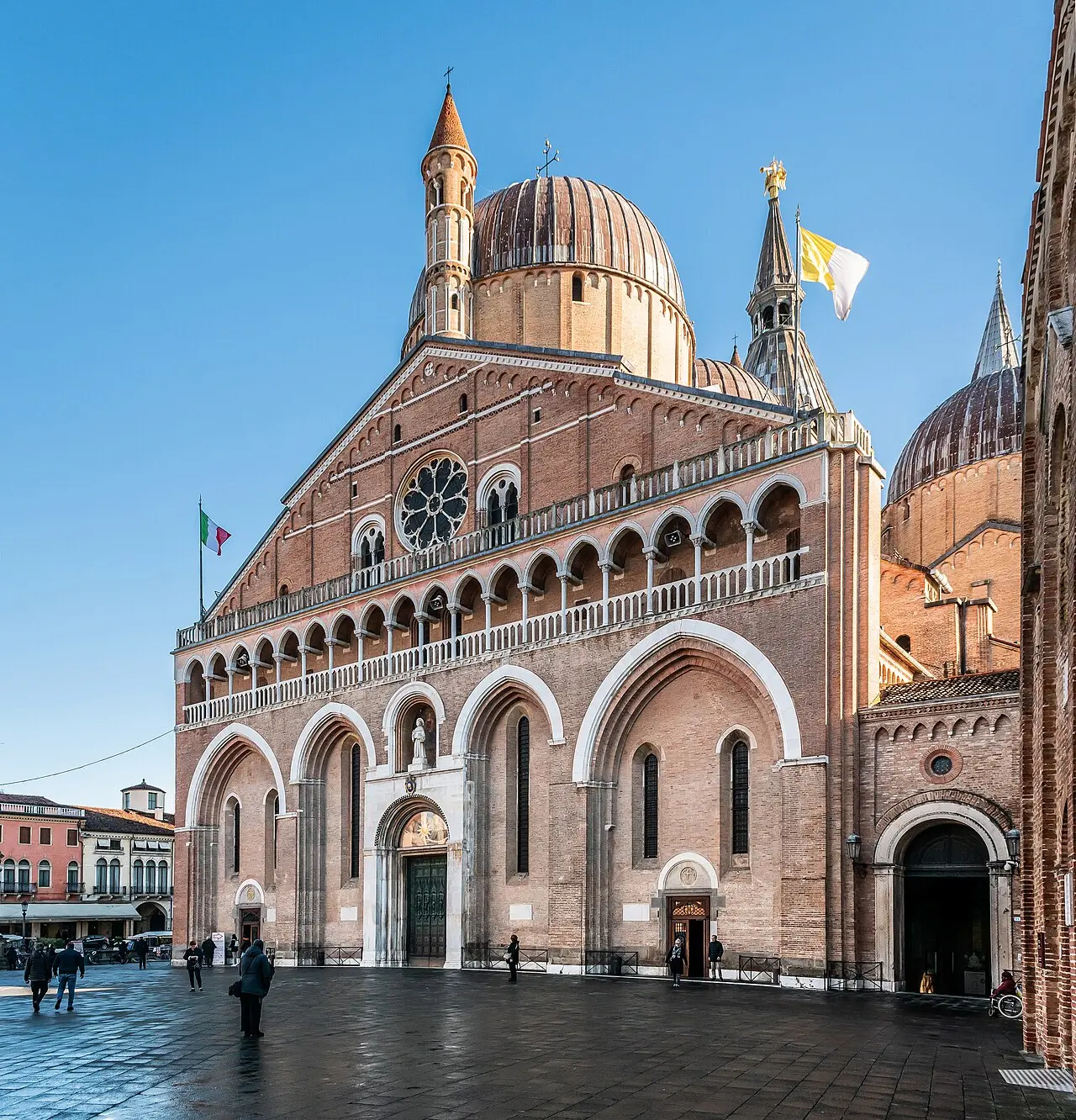
The Basilica di Sant'Antonio is one of the largest and most visited pilgrimage churches in the Catholic world, built to house the tomb of Saint Anthony of Padua, who died in the city in 1231 and was canonised the following year. The basilica's exterior is a striking mix of architectural styles - Romanesque, Gothic and Byzantine elements combine in a building crowned with eight domes that give it a faintly Eastern silhouette.
Inside, the Chapel of the Tomb is the devotional heart of the building - pilgrims queue to touch the marble around Saint Anthony's tomb, and the walls surrounding it are covered in ex-voto offerings and photographs left by visitors seeking intercession. The basilica also contains important works by Donatello, including his bronze crucifix and the high altar reliefs.
Entry to the basilica is free. Open daily, with varying opening hours. Check the web site for the latest hours.
The University of Padua
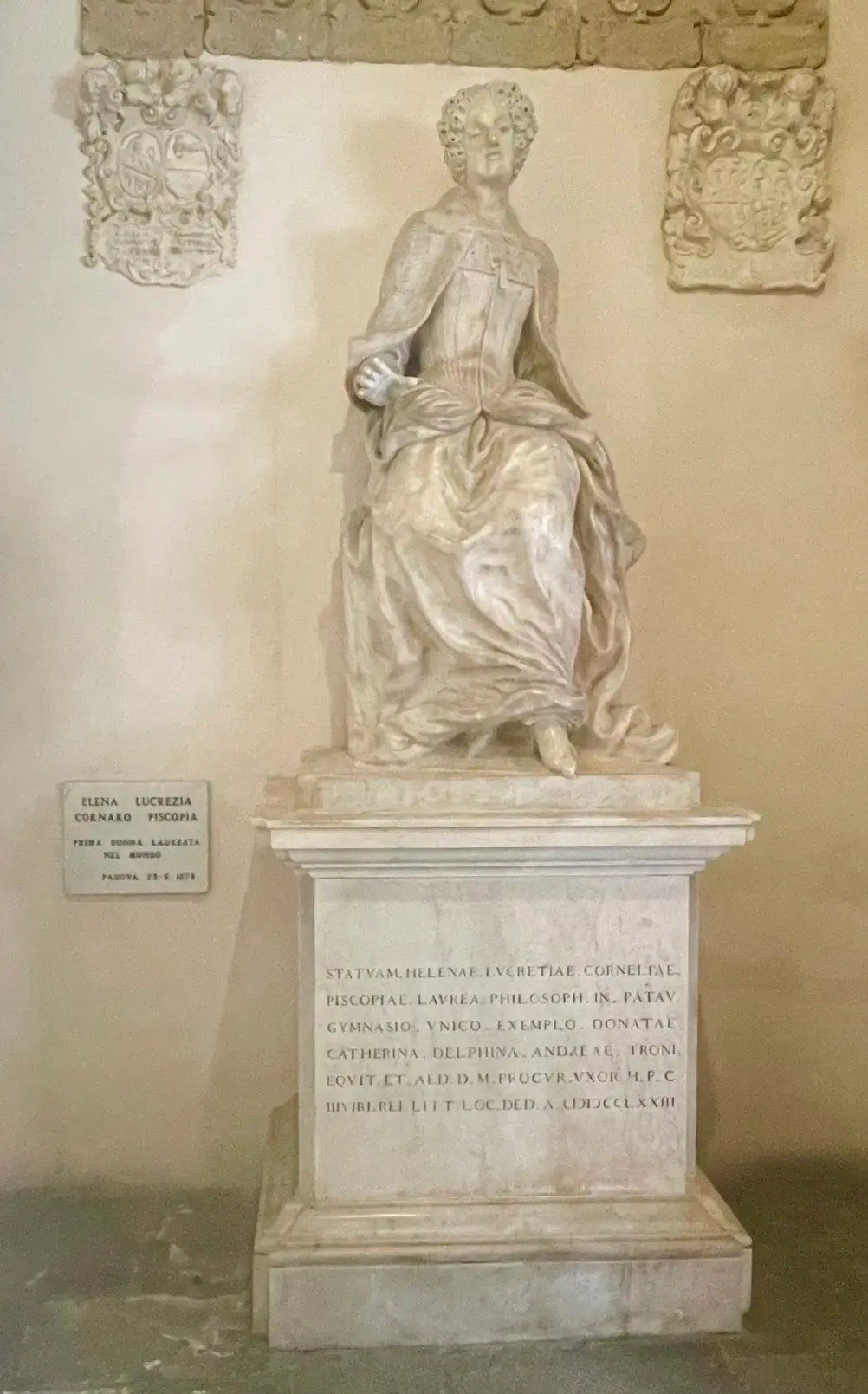
Founded in 1222, the University of Padua is one of the oldest universities in the world and among the most historically significant - Galileo Galilei taught mathematics here for 18 years, and the university was among the first in Europe to award a degree to a woman, Elena Cornaro Piscopia, in 1678.
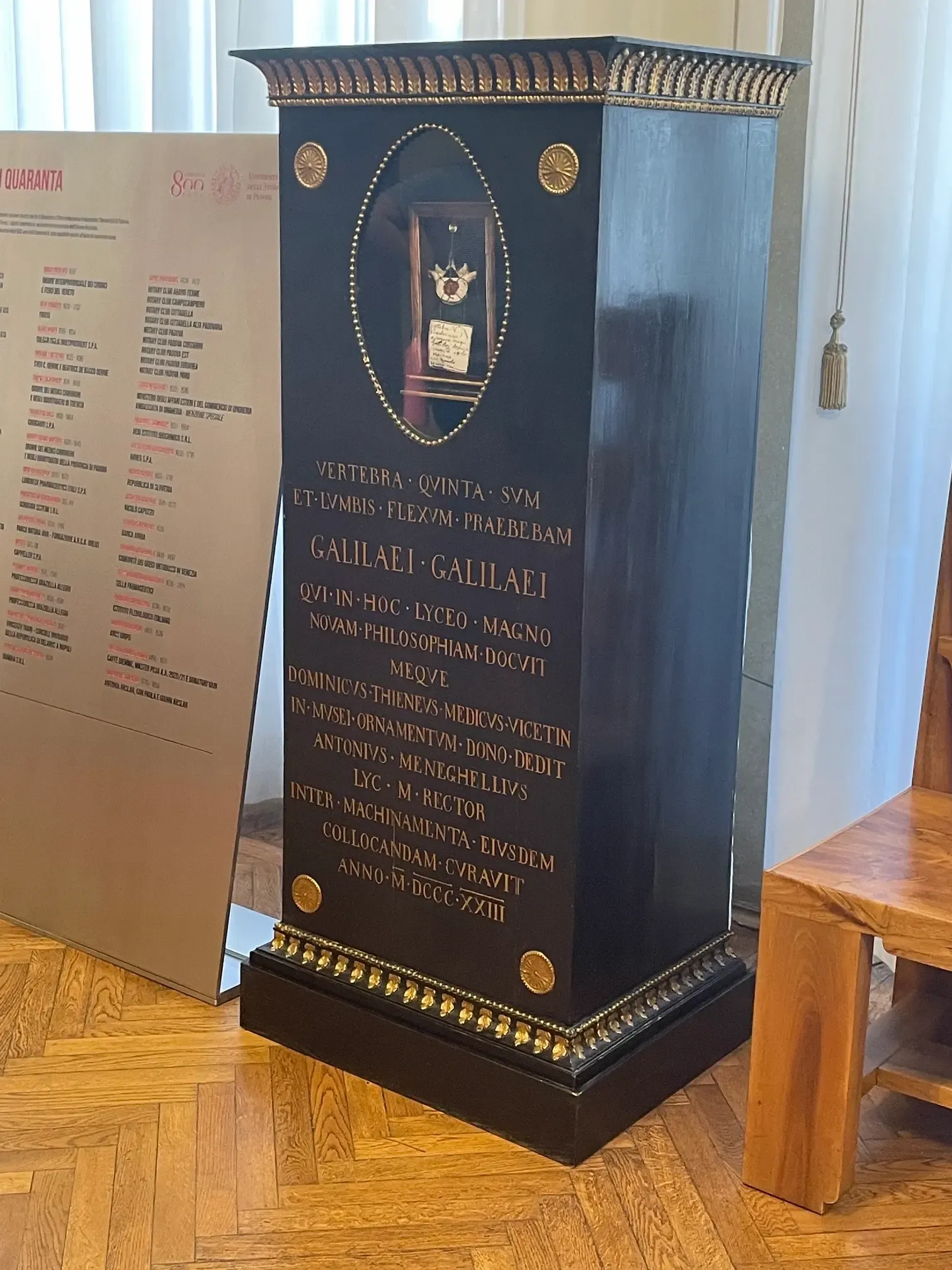
One of the university's stranger treasures is on display inside: Galileo's fifth lumbar vertebra, set into an ornate black-and-gilt reliquary donated in 1823. It's a genuinely macabre bit of history - when Galileo's body was disinterred from Florence's Basilica di Santa Croce in 1737 for reburial in a proper mausoleum, admirers on hand removed several relics from his corpse, including three fingers, a tooth, and this vertebra. The vertebra eventually made its way to Padua, where Galileo had taught, while the fingers and tooth ended up in Florence's Museo Galileo.
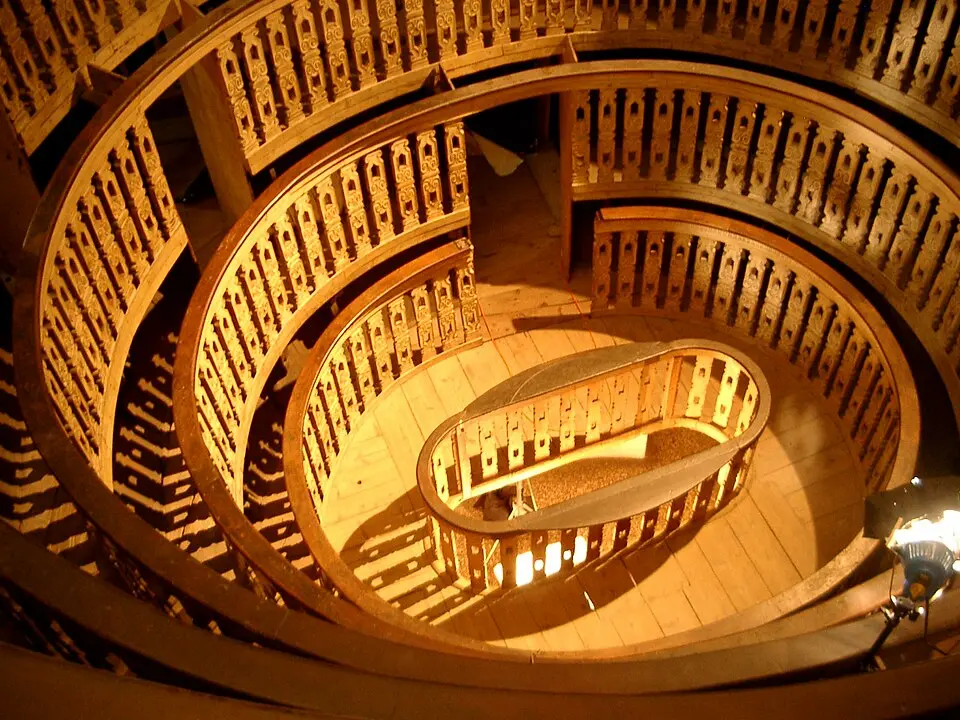
The Palazzo Bo, the historic seat of the university on Via VIII Febbraio, is open to visitors by guided tour and contains the Anatomical Theatre - built in 1594, the oldest surviving permanent anatomical theatre in the world, where students once observed human dissections from tiered wooden galleries arranged in a steep funnel shape around the dissection table. It predates and likely influenced the Bologna anatomical theatre built decades later. Tours run at scheduled times and should be booked in advance in peak season.
The university still functions today, and the city's substantial student population gives Padua a genuinely lived-in, youthful energy that distinguishes it from more purely tourist-oriented Veneto towns.
Prato della Valle
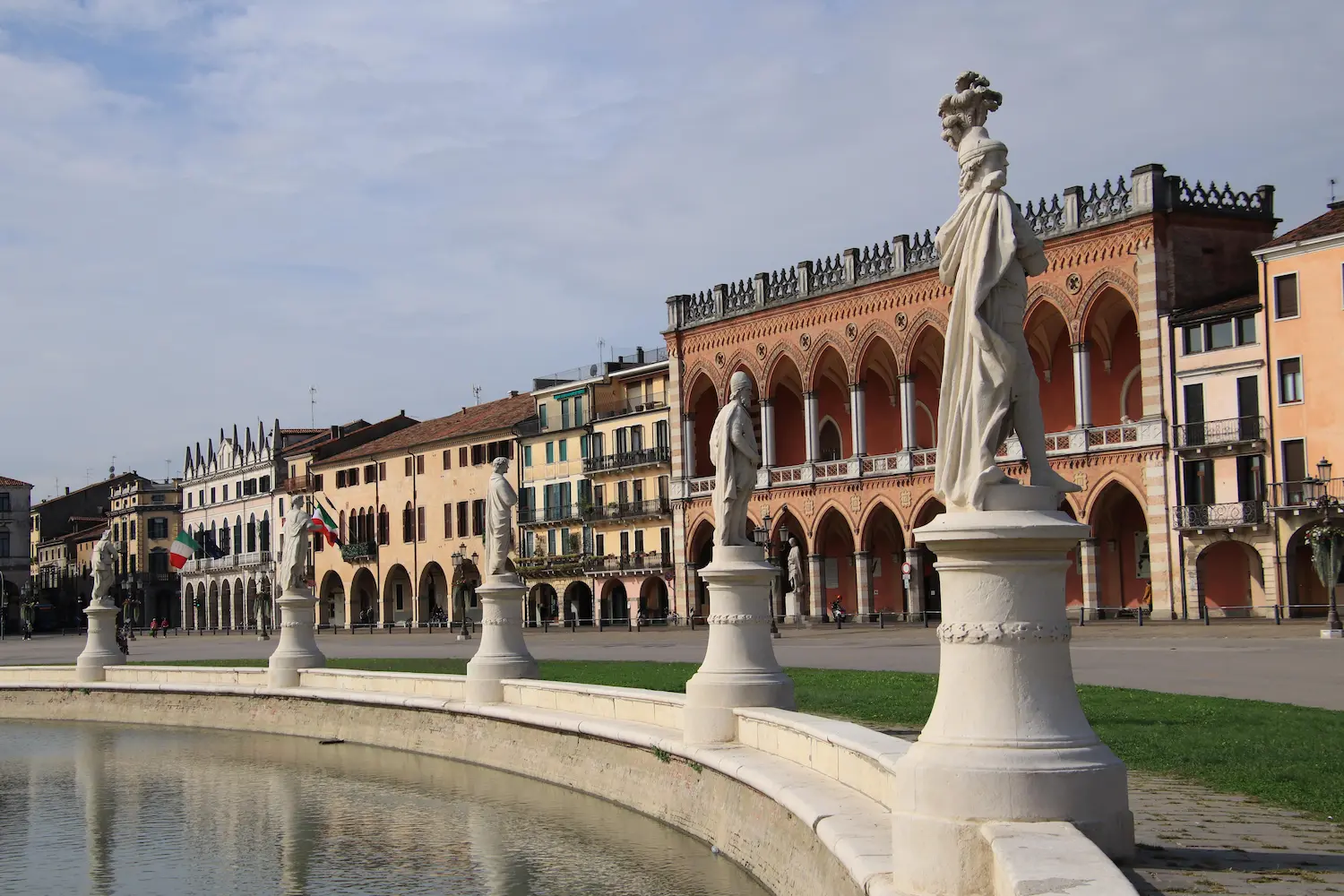
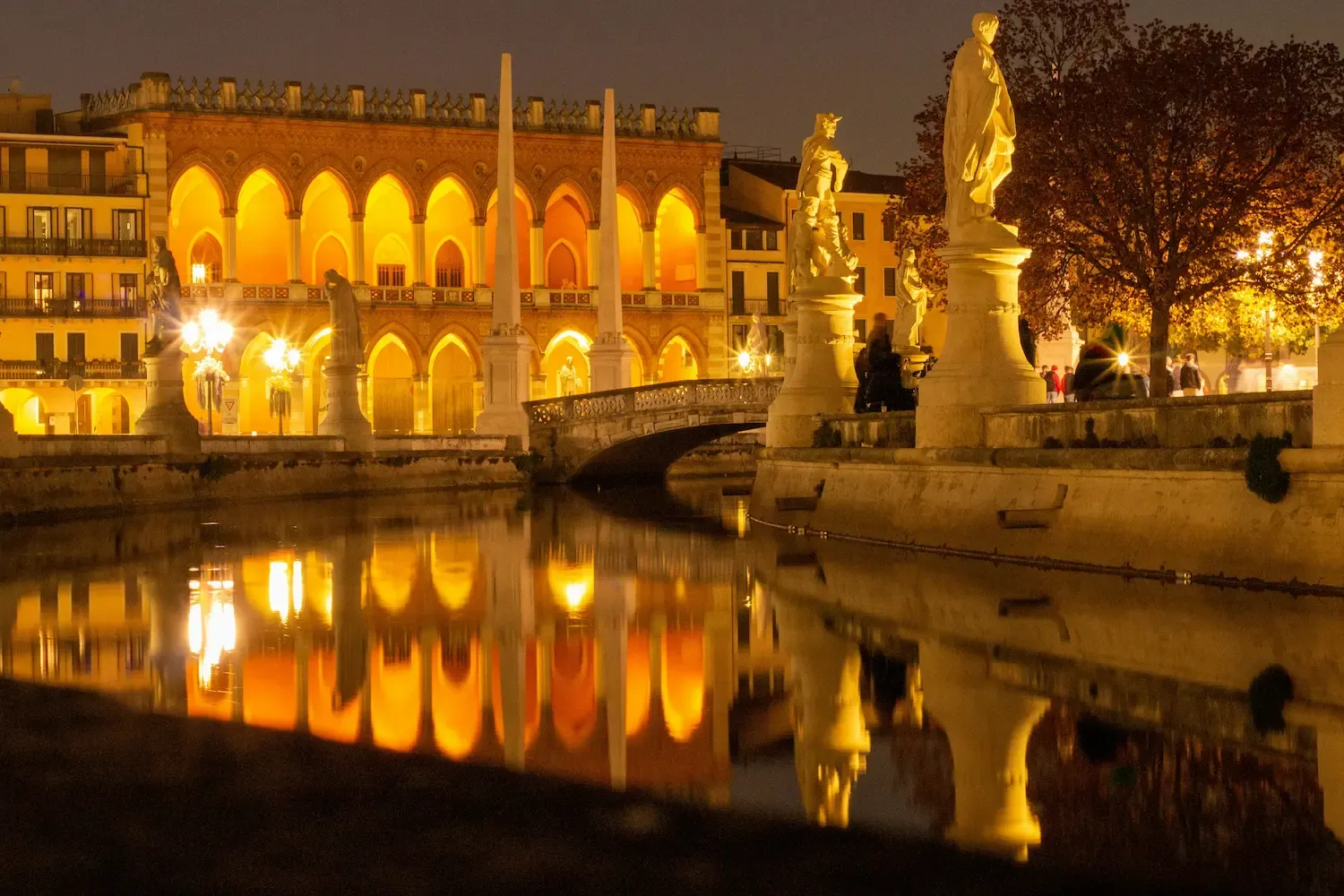
Prato della Valle is one of the largest public squares in Europe - an elliptical space enclosed by a moat-like canal, with 78 statues of notable Paduans standing along its banks. The square has served multiple functions over its history, including as a horse racing track, a venue for public executions, and today a large open space used for markets, festivals and simply walking.
The scale is genuinely disorienting the first time you see it - it takes a good 20 minutes to walk the full circuit. The adjacent Basilica di Santa Giustina, with its distinctive multiple domes, is worth a look inside for its scale and the relics it holds, including those of Saint Luke the Evangelist.
A market operates on the square on Saturdays, and a larger antiques and collectibles market takes place on the third Sunday of every month (except July and August).
Piazza delle Erbe and Piazza dei Frutti
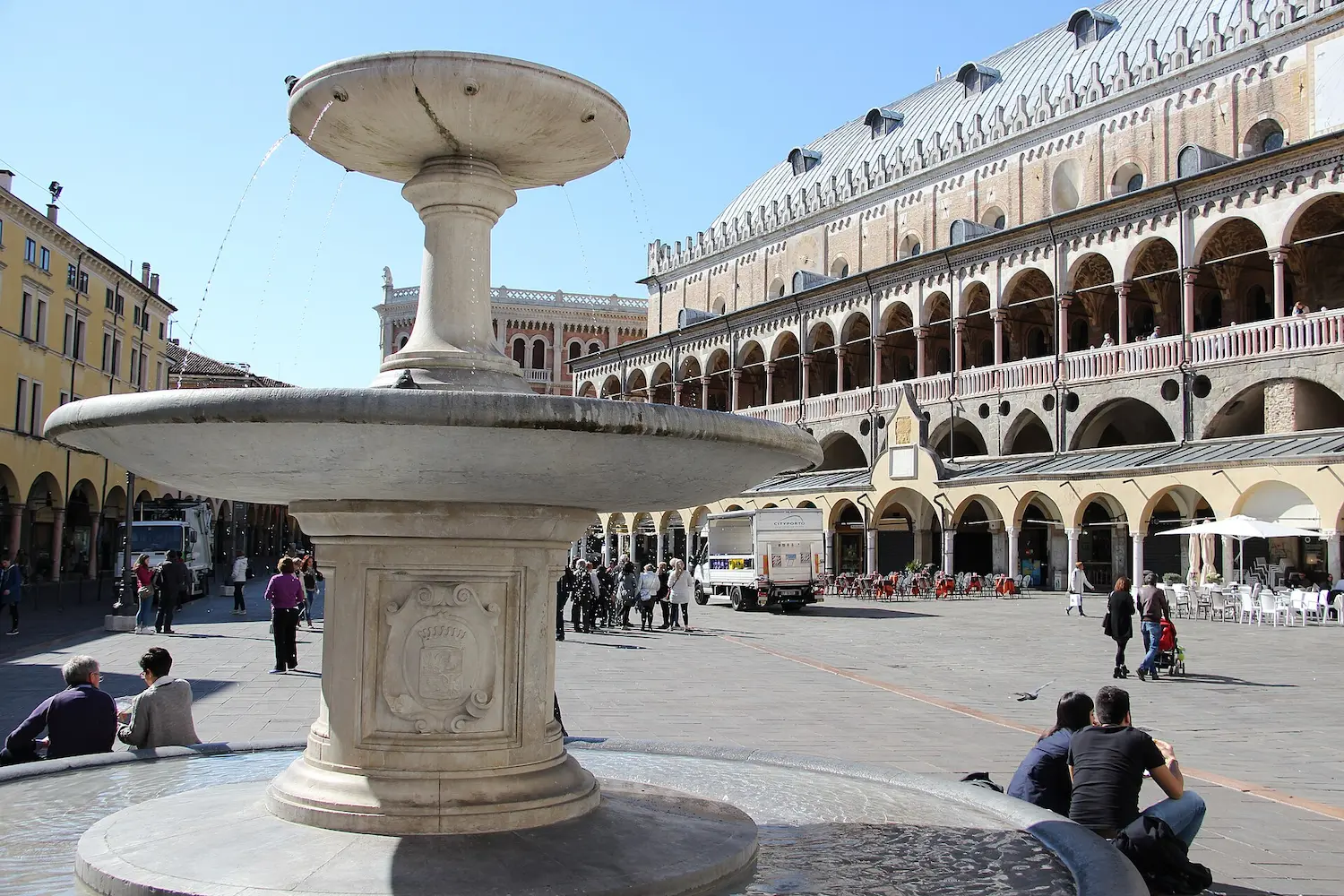
These two adjoining squares in the heart of Padua form one of the oldest and most vibrant market areas in Italy, flanking the extraordinary Palazzo della Ragione (see below). Piazza delle Erbe (herb square) and Piazza dei Frutti (fruit square) host a daily market that has operated on this site for centuries - fresh produce, cheese, flowers and household goods, with cafés and bars around the perimeter that make an excellent spot to pause.
The Cathedral and Palazzo della Ragione
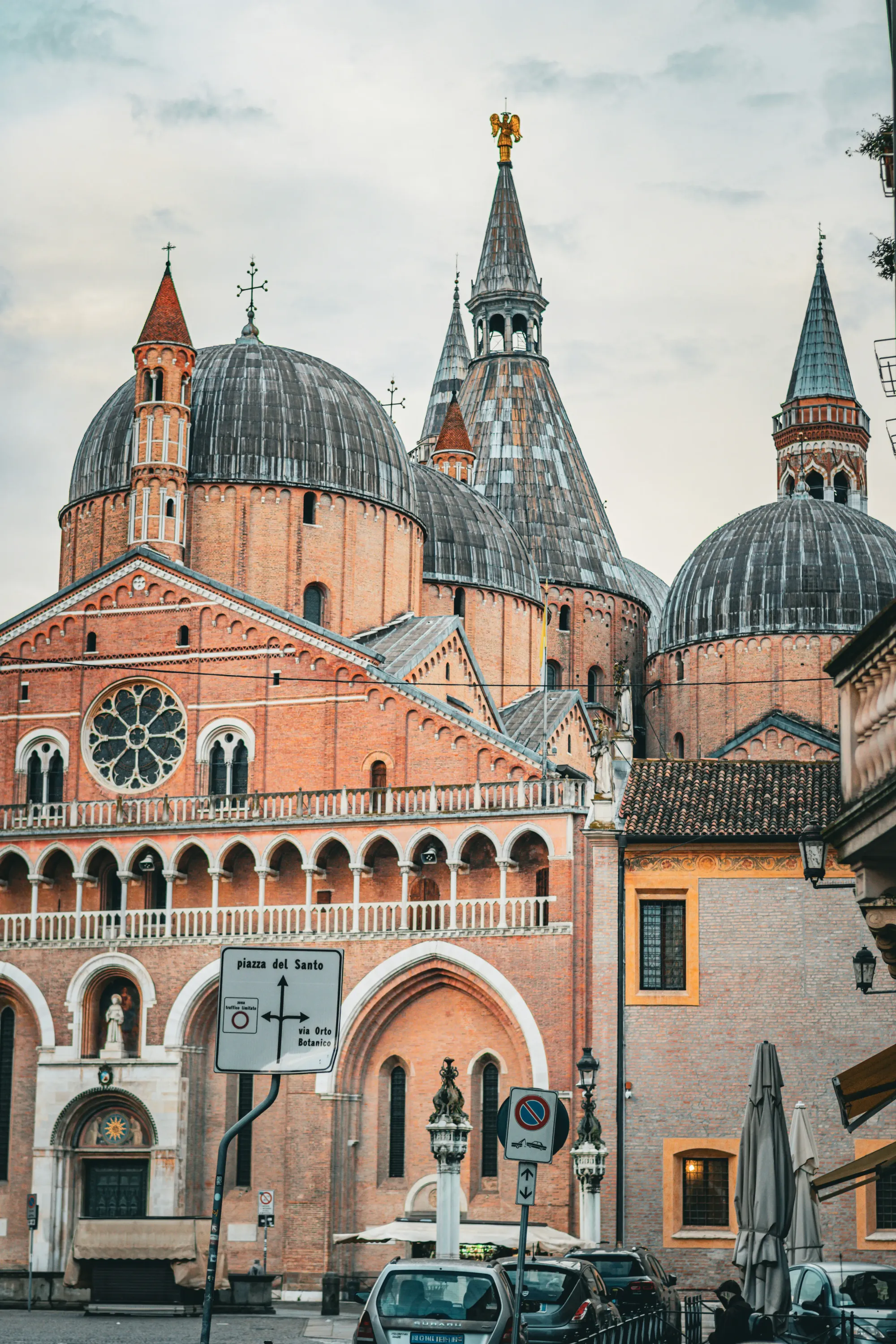
Padua Cathedral (Duomo di Padova) sits on a site that has held a church since the 4th century, though the current building dates largely from the 16th century, with a design partially attributed to Michelangelo. More significant than the cathedral itself is the adjoining Baptistery, whose interior is covered in a remarkable fresco cycle by Giusto de' Menabuoi from the 1370s - considerably less visited than the Scrovegni Chapel but genuinely comparable in scale and quality, and requiring no advance booking.
The Palazzo della Ragione, between Piazza delle Erbe and Piazza dei Frutti, is a vast medieval civic hall built in the early 13th century, topped with one of the largest suspended roofs in Europe unsupported by internal columns. The interior - a single vast hall known as Il Salone - is covered in a cycle of astrological frescoes and now used as an exhibition space.
Food and Drink
Padua's food culture reflects the broader Veneto tradition, with its own specific character.
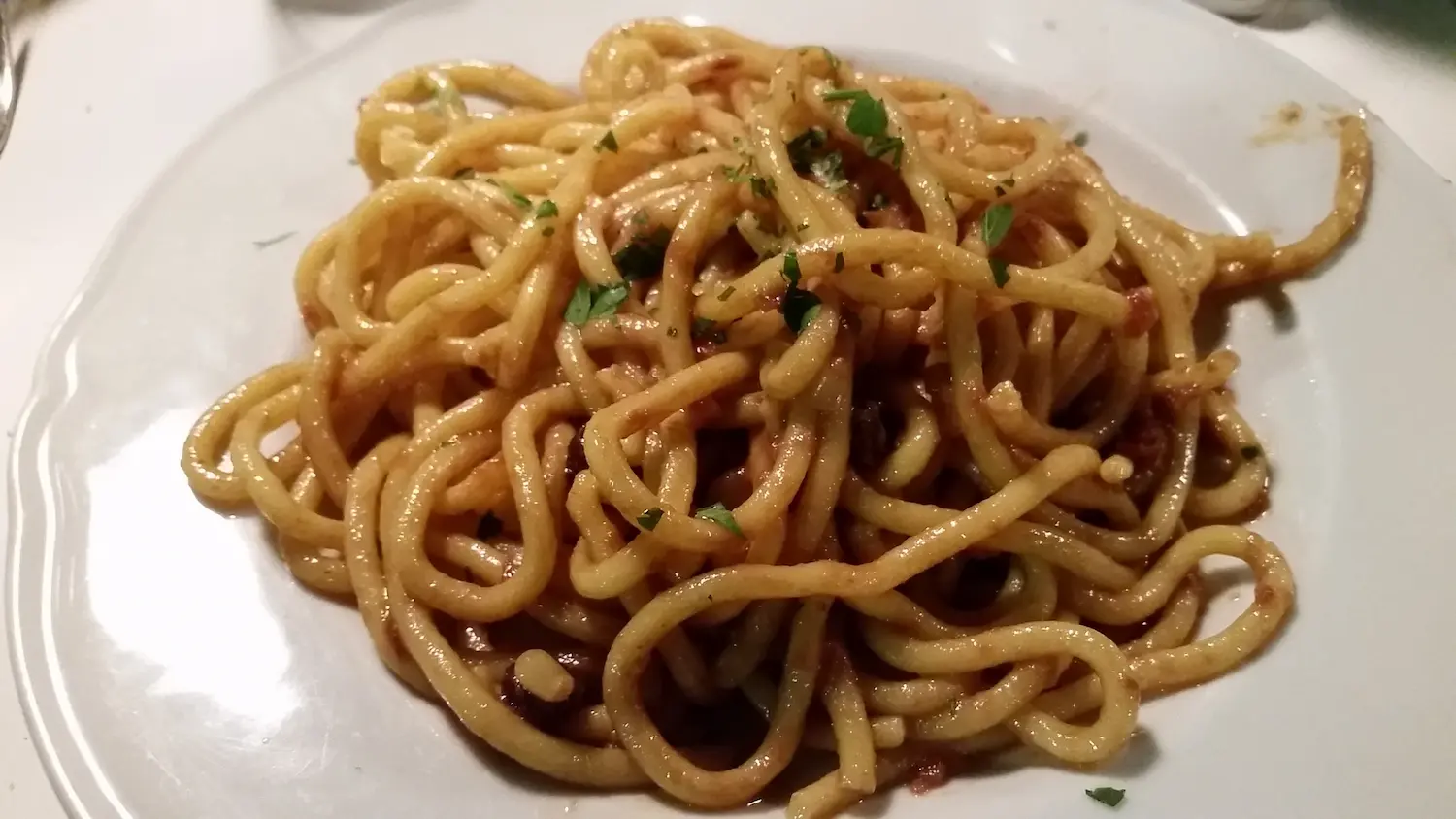
Bigoli is the local pasta - a thick, rough-textured wholewheat spaghetti, traditionally served with a sauce of anchovies and onion (bigoli in salsa) or with duck ragù.
Spritz - the Aperol or Select-based aperitivo — is believed to have originated in the Veneto region broadly, and Padua's version of aperitivo hour, particularly around Piazza delle Erbe and Piazza dei Signori, is a genuinely local drink.
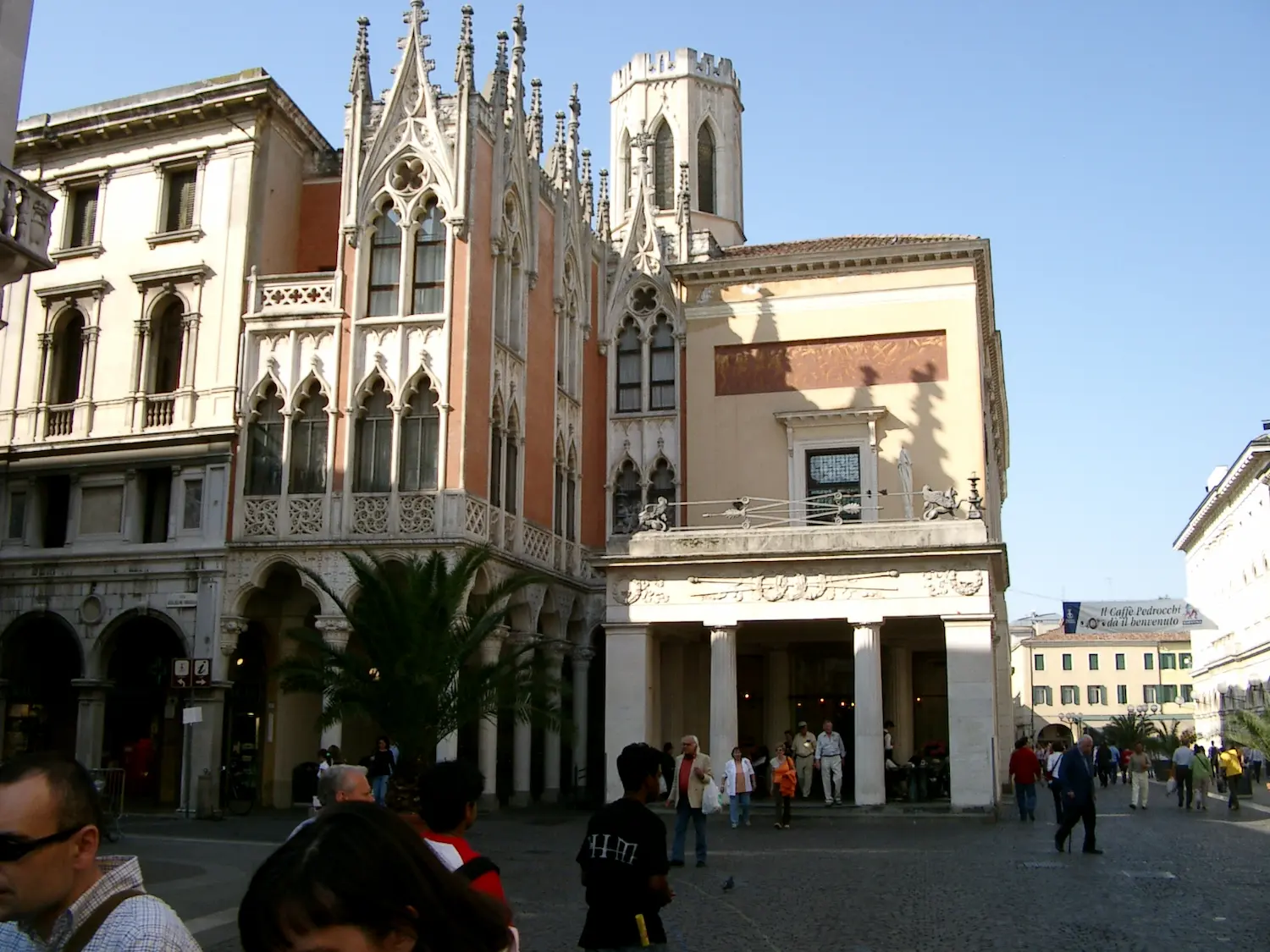
Caffè Pedrocchi, one of the most historic cafés in Italy, has been operating since 1831 and was once open 24 hours a day, earning it the nickname "the café without doors." It remains an excellent and atmospheric spot for coffee, worth visiting for the Neoclassical interior alone.
Practical Information
Getting around: Padua's historic centre is compact and entirely walkable. Most major sites are within a 20-minute walk of each other. A local bus and tram network covers the wider city if needed.
Day trip or overnight: Padua works very well as a day trip from Venice given the short journey time, but an overnight stay allows you to see the evening aperitivo culture around the markets and gives more flexibility for booking a Scrovegni Chapel evening slot if daytime tickets are unavailable.
Combine with: Padua sits on the direct line between Venice and Bologna, making it a natural stop on a broader Veneto or Emilia-Romagna itinerary. See our guides to Bologna, Ferrara and Ravenna for the wider region.
Luggage: Padua station has left-luggage facilities. Radical Storage and Bounce also operate in the city centre.
Best time to visit: Spring (April–May) and autumn (September–October) offer the most comfortable weather and the best chance of Scrovegni Chapel availability outside the very peak of summer demand. Book the chapel well ahead regardless of season.
For a full guide to Italian regional trains, see our Italy train network guide.
Frequently Asked Questions
Is Padua the same as Padova?
Yes. Padova is the Italian name, and it’s the one you’ll see on train tickets, departure boards and booking apps, so search for “Padova” when buying a ticket.
Is Padua worth visiting from Venice?
Yes - emphatically. Padua holds Giotto's Scrovegni Chapel frescoes, one of the largest pilgrimage basilicas in Europe, one of the world's oldest universities and one of the largest public squares on the continent. Half an hour from Venice by direct regional train, and considerably less crowded.
How do I get from Venice to Padua by train?
Direct regional trains run every few minutes throughout the day, taking 25 to 30 minutes. Tickets cost from around €6 one way. No advance booking required.
Can I visit Padua as a day trip and combine it with Bologna or Verona?
Yes - Padua sits directly on the rail line between Venice and Bologna, and is around 40 minutes from Verona, making it easy to combine with either as part of a broader Veneto or Emilia-Romagna trip.
Do I need to book the train from Venice to Padua in advance?
No. Regional trains have no seat reservations and fixed fares, so you can buy a ticket at the station on the day. Only Frecciarossa and Italo high-speed trains need booking, and they aren’t worth the extra cost for such a short journey.
How do I get from Venice Marco Polo Airport to Padua?
There’s no train from the airport. Take the ATVO Fly Bus or ACTV bus 15 to Venezia Mestre, then a regional train to Padova in around 15 minutes, or take Busitalia Veneto’s direct bus from the airport into Padua.
How do I get from Milan to Padua by train?
Direct Frecciarossa and Italo trains from Milano Centrale take around 2 hours, with advance fares from around €15. Cheaper regional connections take closer to three hours.
How far is the Scrovegni Chapel from Padova station?
Around a 10-minute walk down Corso del Popolo, or a short ride on the SIR1 tram to the Eremitani stop.
Do I need to book the Scrovegni Chapel in advance?
Yes - this is mandatory, not optional. Same-day tickets are essentially unavailable except for limited evening slots. Book at least a day ahead at cappelladegliscrovegni.it, and further ahead in peak season (April–May and September–October) when slots can sell out.
How long does a Scrovegni Chapel visit last?
Entry is limited to 15 minutes inside the chapel itself, following a mandatory 15-minute wait in a climate-controlled anteroom beforehand - a conservation requirement to protect the frescoes. No photography is permitted inside.
What should I see in Padua if I can't get Scrovegni Chapel tickets?
The Baptistery next to Padua Cathedral has a remarkable 14th-century fresco cycle by Giusto de' Menabuoi that requires no advance booking and is comparable in scale and quality, if less famous. The Basilica of Saint Anthony, Prato della Valle and the Palazzo della Ragione are also excellent alternatives that need no reservation.
What is the Basilica of Saint Anthony?
One of the largest pilgrimage churches in the Catholic world, built to house the tomb of Saint Anthony of Padua, who died here in 1231. The building combines Romanesque, Gothic and Byzantine architectural elements and contains important works by Donatello. Entry is free.
Also on The Unseen Italy: Bologna — Italy's Greatest Food City · Ferrara by Train · Ravenna by Train · How Italy's Train Network Works · Verona by Train: Day Trip Guide from Milan, Venice and Bologna · Venice by Train: A Car-Free Guide to the Floating City · Trieste by Train: A Car-Free Guide to Italy's Habsburg Port City