Urbino has no railway station of its own, but that's never stopped a determined traveller - here's exactly how to reach this walled Renaissance city on the Marche hilltops using nothing but trains and a regional bus.
Last verified: September 2026. Train times, ticket prices and opening hours change regularly. Always check official sources before travelling.
Urbino is the birthplace of Raphael, the seat of one of the most refined courts of the early Renaissance, and one of the best-preserved Renaissance towns anywhere in Italy - reachable by train and an easy connecting bus from the Adriatic coast. Most visitors base themselves in Pesaro or Rimini and treat Urbino as a day trip, though its steep, walled streets and near-total absence of cars reward an overnight stay.
At a Glance
| 🚆 From Pesaro | Adriabus regional bus - approx. 45-55 min, from ~€3–4 |
| 🚉 Nearest train station | Pesaro, on the Bologna–Ancona coastal line. Pesaro is easily reachable from Bologna |
| 🎨 Must-see | Palazzo Ducale - Galleria Nazionale delle Marche |
| 🏛️ UNESCO status | Historic centre - World Heritage Site since 1998 |
| 🎓 University | Founded 1506 - one of Italy's oldest |
| ⏱️ Time needed | Half a day minimum - a full day without rushing |
| 📅 Best time | Spring and autumn - mild weather, fewer coach-tour crowds |
| 🎟️ Gallery tickets | €12 full price - free on the first Sunday of each month |
In This Guide
- Getting to Urbino by Train and Bus
- The Palazzo Ducale and Galleria Nazionale delle Marche
- Raphael's birthplace
- The Duomo and Oratorio di San Giovanni Battista
- The University of Urbino
- The Orto Botanico
- Piazza della Repubblica
- The Albornoz Fortress
- Food and Drink
- Practical Information
Getting to Urbino by Train & Bus
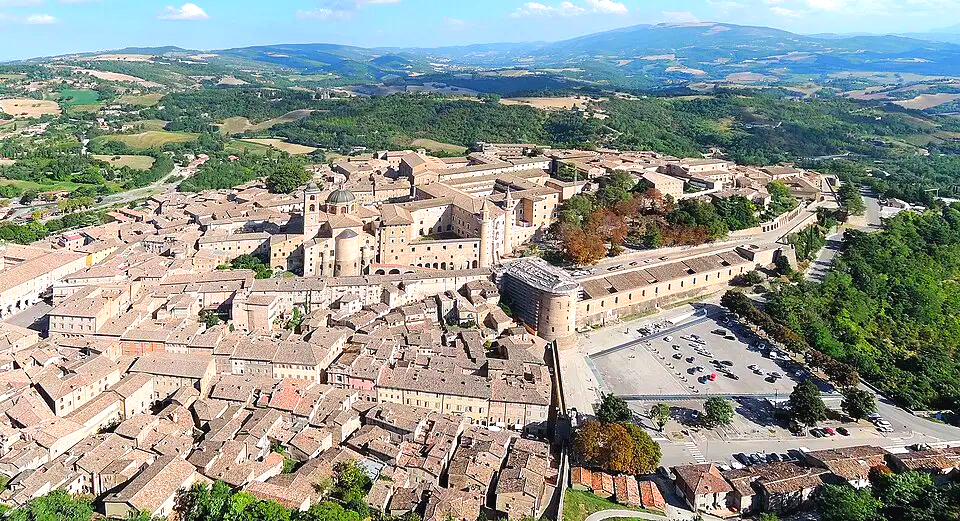
Urbino sits inland, off the coastal railway between Bologna and Ancona, so there's no way to arrive by train alone. Take the train to Pesaro, then the Adriabus regional bus (line LV or LVR) from the stop outside the station - timetables here under Orario Servizio Extraurbano. Buses run roughly every half hour, the journey takes 45–55 minutes, and tickets are bought at the station newsstand or via the Adriabus app rather than on board.
Buses arrive at Urbino S. Lucia Park, a short walk below the old town - or take the hillside escalators up into the walls if you'd rather skip the climb.
Pesaro is only an 1 hour and 25 minutes from Bologna by train. So you could build Urbino into your Bologna itinerary as an overnight trip (it's probably a little too far for a day trip).
The Palazzo Ducale and Galleria Nazionale delle Marche
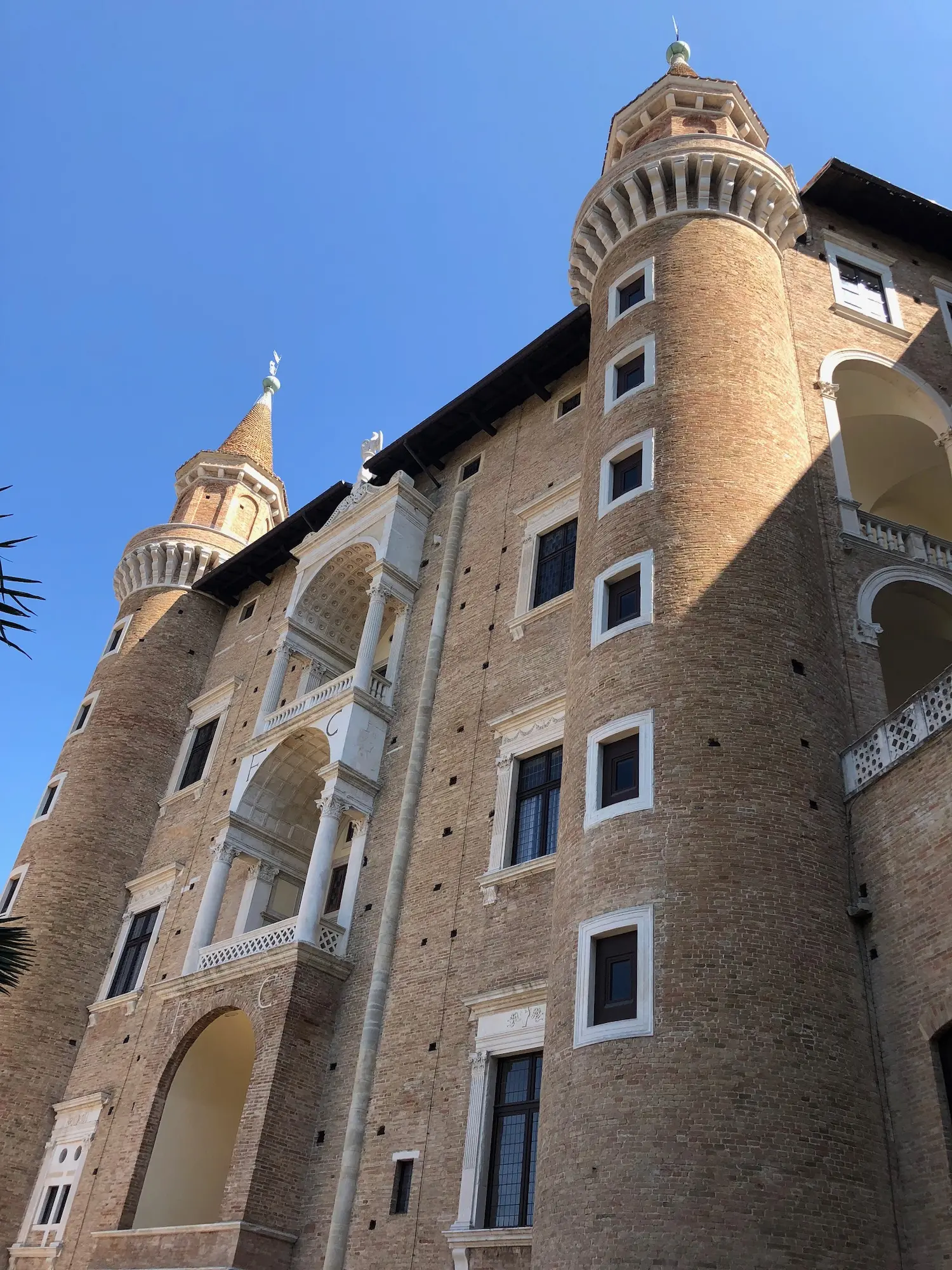
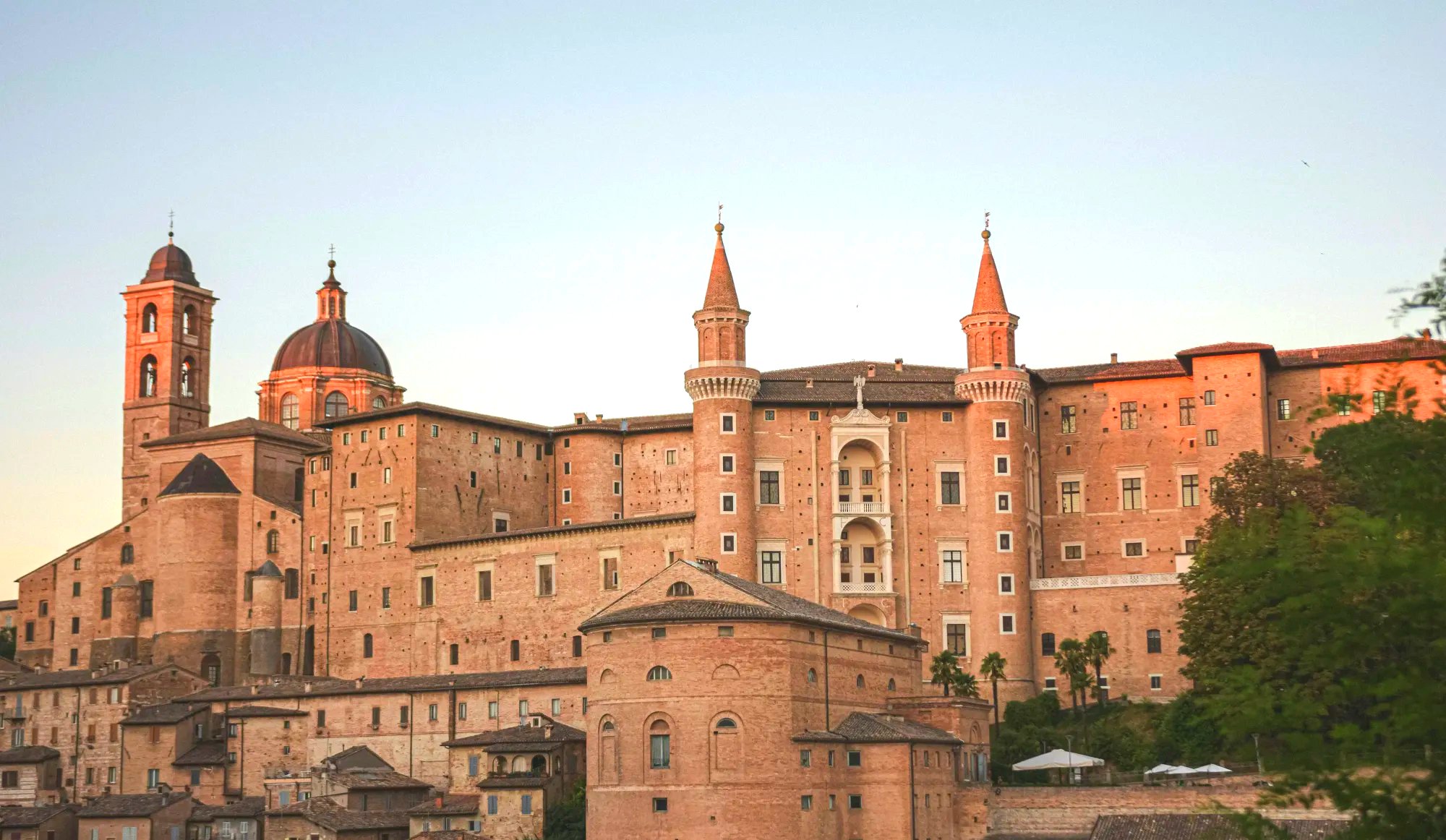
The Palazzo Ducale is the reason most people make the trip. Built for Duke Federico da Montefeltro in the second half of the 15th century, it's less a single building than a small city of courtyards, staircases, and state rooms, and it now houses the Galleria Nazionale delle Marche. The collection includes Piero della Francesca's Flagellation of Christ and Madonna di Senigallia, Raphael's La Muta, and the anonymous panel known as the Ideal City - one of the most reproduced images of Renaissance urban theory, and no one has ever agreed on who painted it.
Don't skip the Duke's Studiolo, a small study lined with trompe l'oeil wood inlay so convincing that the shelves, half-open cupboard doors, and scattered instruments look three-dimensional until you're close enough to touch them.
The gallery is open Tuesday to Sunday, 8:30am to 7:15pm (ticket office closes 6:15pm), with reduced afternoon-only hours on Mondays. Full tickets are €12, and admission is free on the first Sunday of every month.
Raphael's birthplace
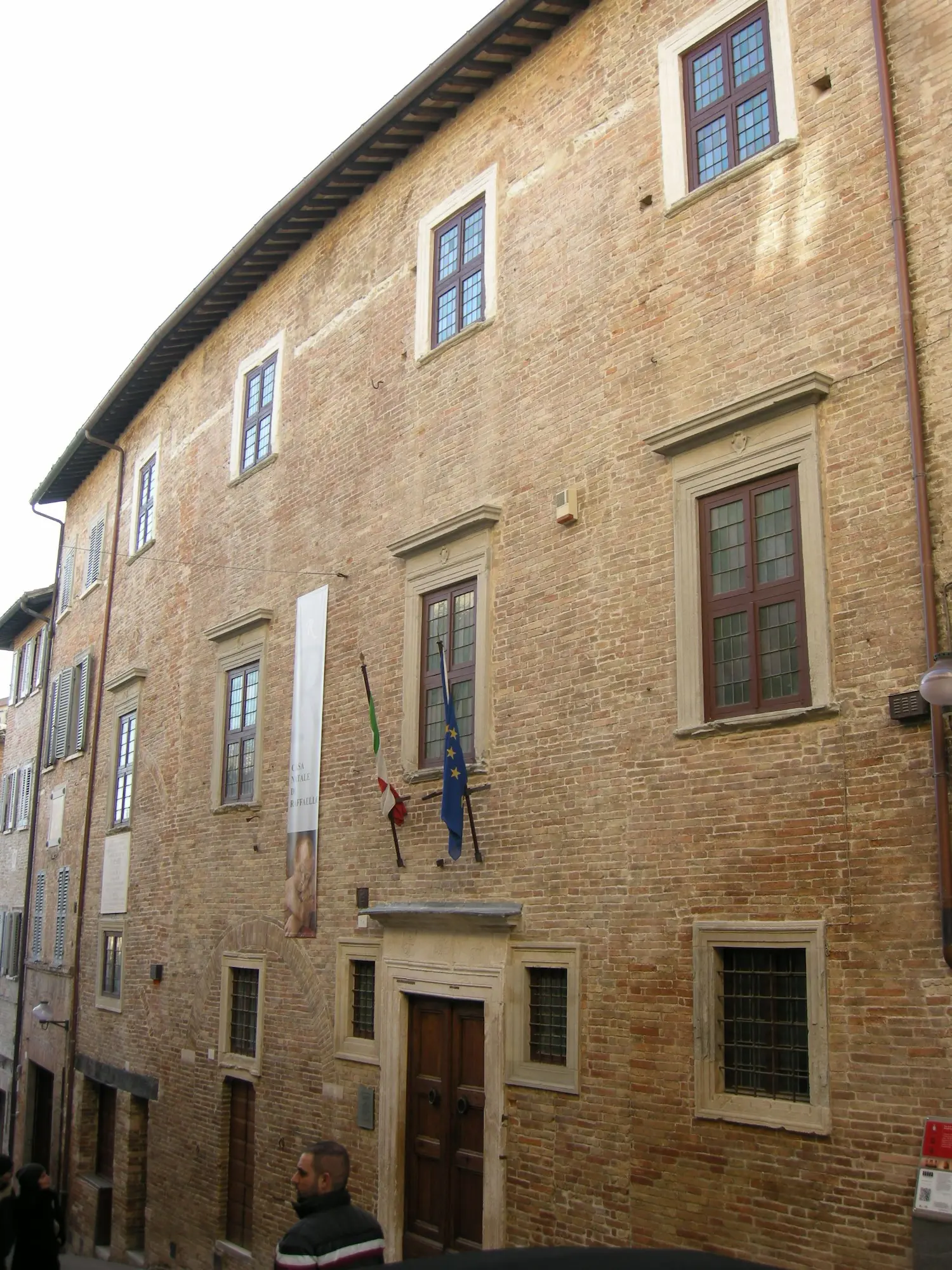
A few minutes' walk from the palace, the house where Raphael was born in 1483 is now a modest museum, Casa Natale di Raffaello. It's a smaller, quieter stop than the Palazzo Ducale, but it's worth the ten minutes and is free to enter: the ground floor kept his father's studio (Giovanni Santi was also a painter), and one fresco of the Madonna and Child in an upstairs room is attributed, with some scholarly disagreement, to Raphael himself as a teenager.
The Duomo and Oratorio di San Giovanni Battista
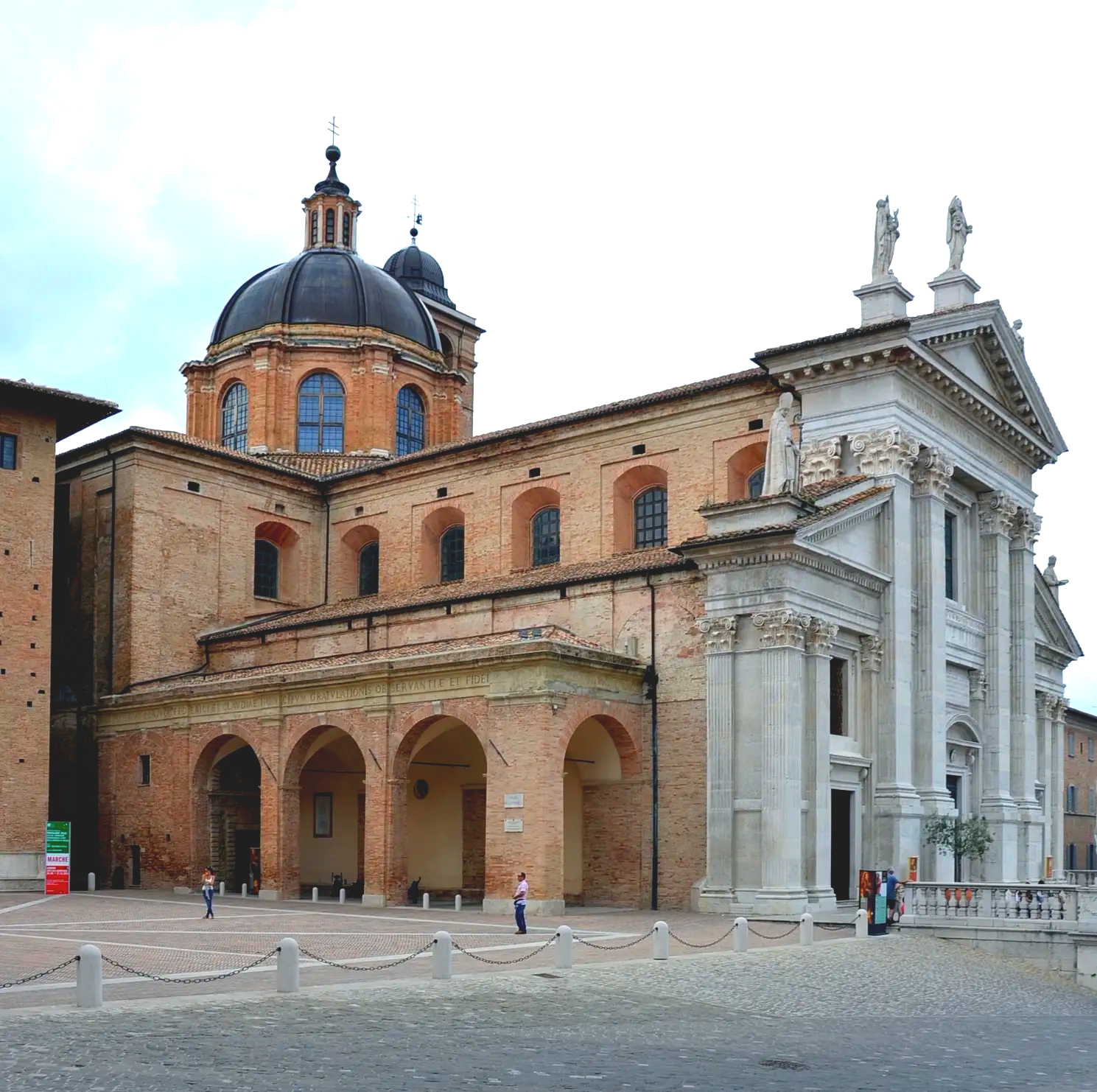
Urbino's cathedral was largely rebuilt after an earthquake in 1789, so its neoclassical interior doesn't match the Renaissance mood of the rest of the town - but its Diocesan Museum, entered from the same complex, holds religious art worth a look. Better, and easy to miss, is the Oratorio di San Giovanni Battista, a small confraternity chapel whose walls and ceiling are covered floor to ceiling in vivid, well-preserved frescoes from 1416 depicting the life of John the Baptist and the Crucifixion.
The University of Urbino
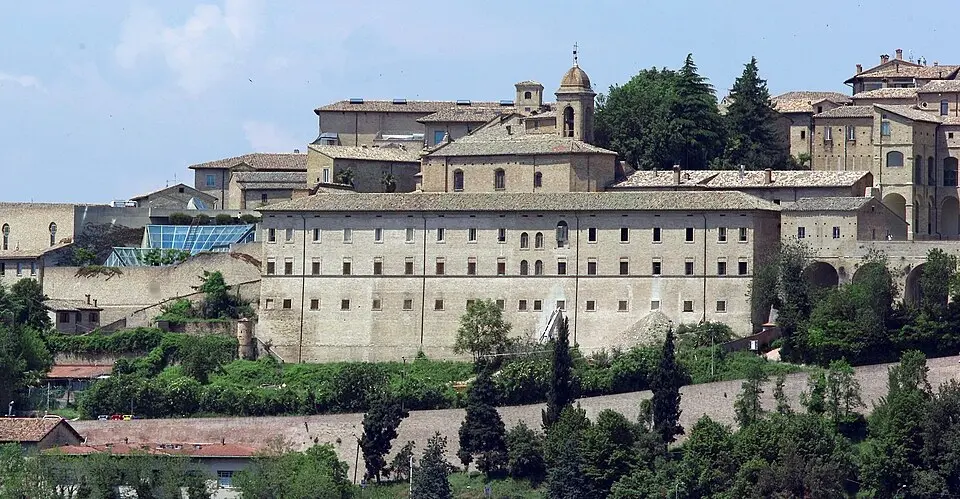
Urbino is a university town in the fullest sense - the historic centre itself doubles as the campus. The University of Urbino was founded in 1506 by Duke Guidobaldo da Montefeltro, making it one of Italy's oldest, and it was reshaped again in the 20th century under Carlo Bo, its rector for 54 years from 1947 to 2001, who bought up and restored large parts of the old town for university use rather than building a separate campus outside the walls. There's no single "university building" to visit, but the effect is everywhere throughout the city.
The Orto Botanico
Just below the fortress, the University's Orto Botanico is one of Italy's older botanical gardens, laid out in 1809 on the site of a former Franciscan friars' vegetable patch. It climbs the hillside in three sloping terraces, connected by paths and steps, with a 1913 greenhouse for tender species and a "garden of simples" - thirteen box-bordered beds of medicinal plants grouped by what they were historically used to treat. A handful of trees date back to the garden's founding, including a yew and a tulip tree. It's a quiet, shaded stop after the density of the palace and churches, and rarely busy.
Piazza della Repubblica
Piazza della Repubblica is where the town lives. This is the town's informal social hub - ringed by cafés and bars, quiet in the morning and filling with students by early evening. It sits a short walk downhill from the grander, more formal square in front of the Palazzo Ducale. It's a good spot to sit with a coffee or a spritz and watch the town's rhythms.
The Albornoz Fortress
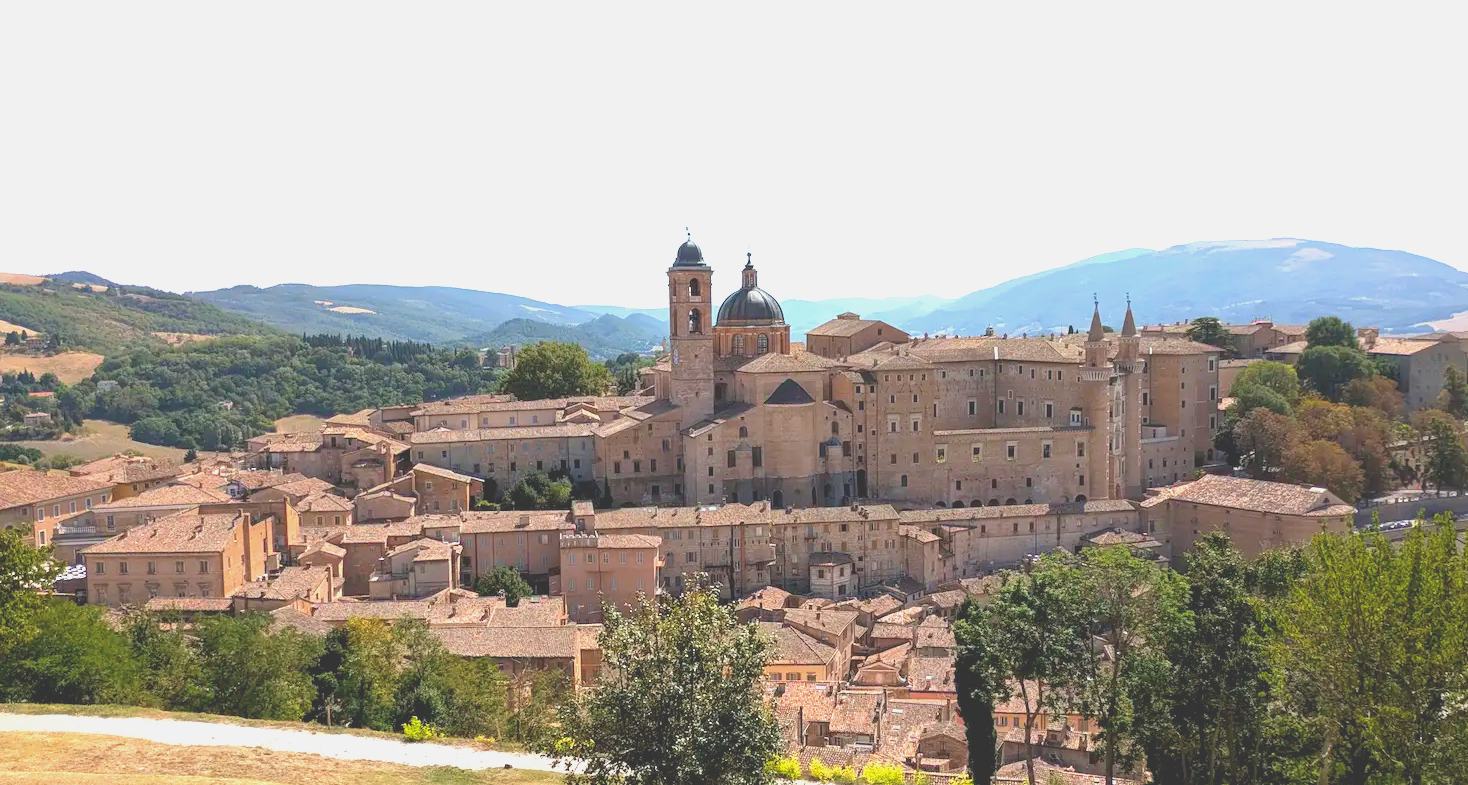
Above the old town, a short uphill walk from Porta Valbona, the Albornoz Fortress is more park than fortress today, but it gives the single best view of Urbino: the Palazzo Ducale's twin towers rising above a tightly packed jumble of terracotta roofs, with the university's newer buildings and the surrounding Marche hills spreading out behind.
Food and Drink
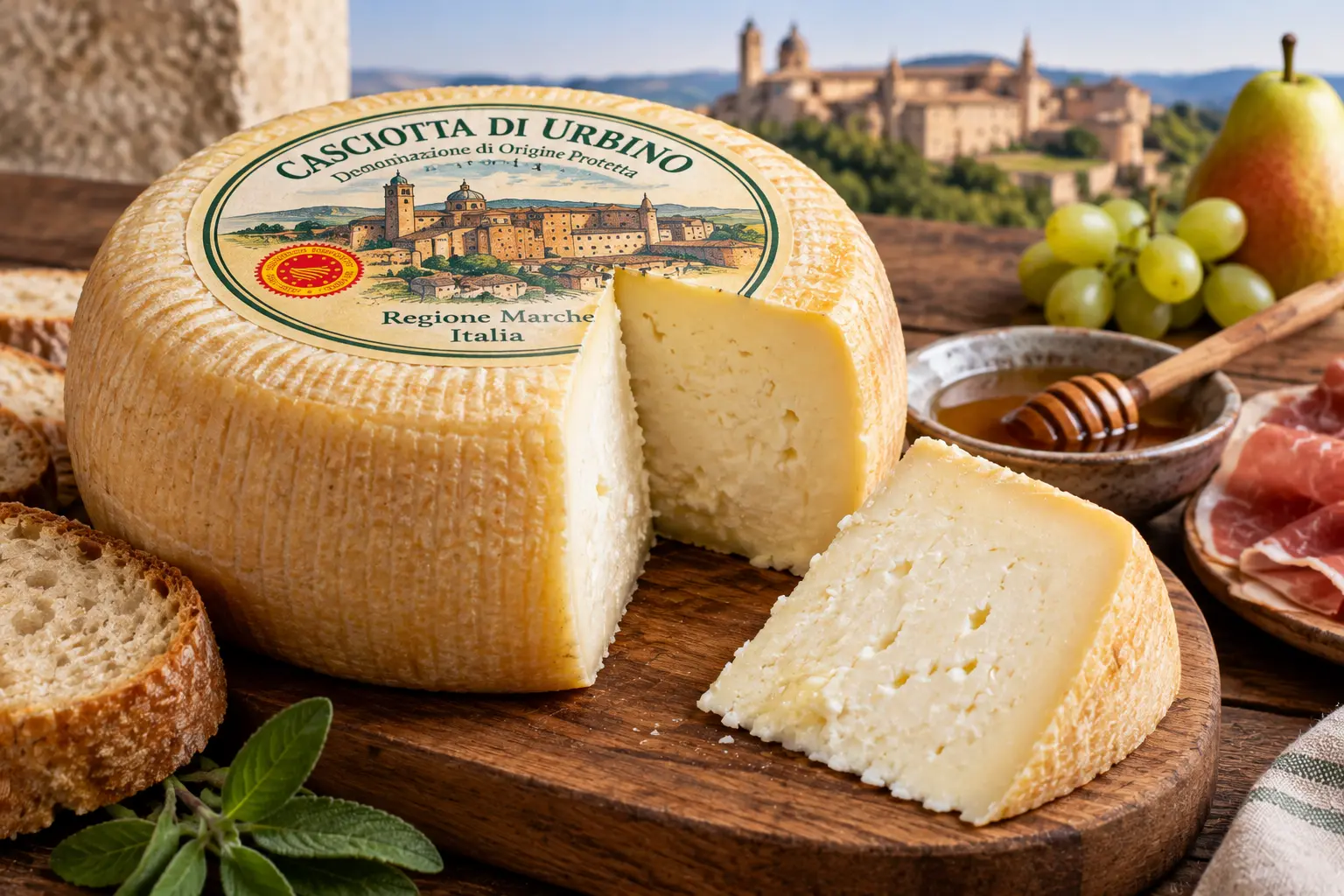
Urbino is a university town as much as a museum town, and the food reflects it - plenty of unpretentious, good-value places aimed at students rather than tour groups. Look for crescia, a flatbread cooked on a griddle and split for fillings, and casciotta di Urbino, a DOP sheep-and-cow's-milk cheese with a history reputedly going back to Michelangelo, who is said to have had it shipped to him in Rome. Both turn up on menus across the old town, usually simply and cheaply.
Practical Information
Urbino's historic centre is built on two hills connected by steep streets and stepped passages, and it's entirely closed to private traffic - which makes it a genuinely pleasant place to walk, but not a flat one. Comfortable shoes are definitely necessary.
As a day trip, Urbino works well from Pesaro (the easiest base, given the bus connection), from Rimini, or as a longer add-on from Ancona. If you'd rather not compress the Palazzo Ducale and the rest of the old town into an afternoon squeezed around bus times, an overnight stay lets you see the fortress views at sunset and to join the streets among students and residents.
Frequently Asked Questions
Is there a train station in Urbino?
No. Urbino has no railway line of its own. The nearest station is Pesaro, on the Bologna-Ancona coastal line, from where an Adriabus regional bus completes the journey in 45-55 minutes.
How do I get from Pesaro to Urbino without a car?
Adriabus runs regional buses from directly outside Pesaro's train station to Urbino roughly every half hour. Buy tickets at the station newsstand or through the Adriabus app before boarding.
Can you do Urbino as a day trip?
Yes - it's a common day trip from Pesaro, Rimini, or Ancona. Allow at least half a day for the Palazzo Ducale alone, and a full day if you want to add Raphael's birthplace, the Oratorio di San Giovanni Battista, and the fortress viewpoint without rushing.
Is Urbino walkable, or hilly?
Both. The historic centre is closed to cars and fully walkable, but it's built across two hills with steep connecting streets, so it demands some legwork.
Do I need to book Palazzo Ducale tickets in advance?
Not usually - the gallery sells tickets online and at the door, and individual visitors rarely need to book ahead. It's worth booking only if you're travelling in peak summer season or visiting as part of a group.
What is Urbino known for?
It's the birthplace of Raphael and the seat of Duke Federico da Montefeltro's Renaissance court, centred on the Palazzo Ducale - now home to the Galleria Nazionale delle Marche. The historic centre is a UNESCO World Heritage Site.
Also on The Unseen Italy: Padua by Train: Giotto's Frescoes, a Basilica and Europe's Oldest University · Ferrara by Train · Bologna — Italy's Greatest Food City · How Italy's Train Network Works