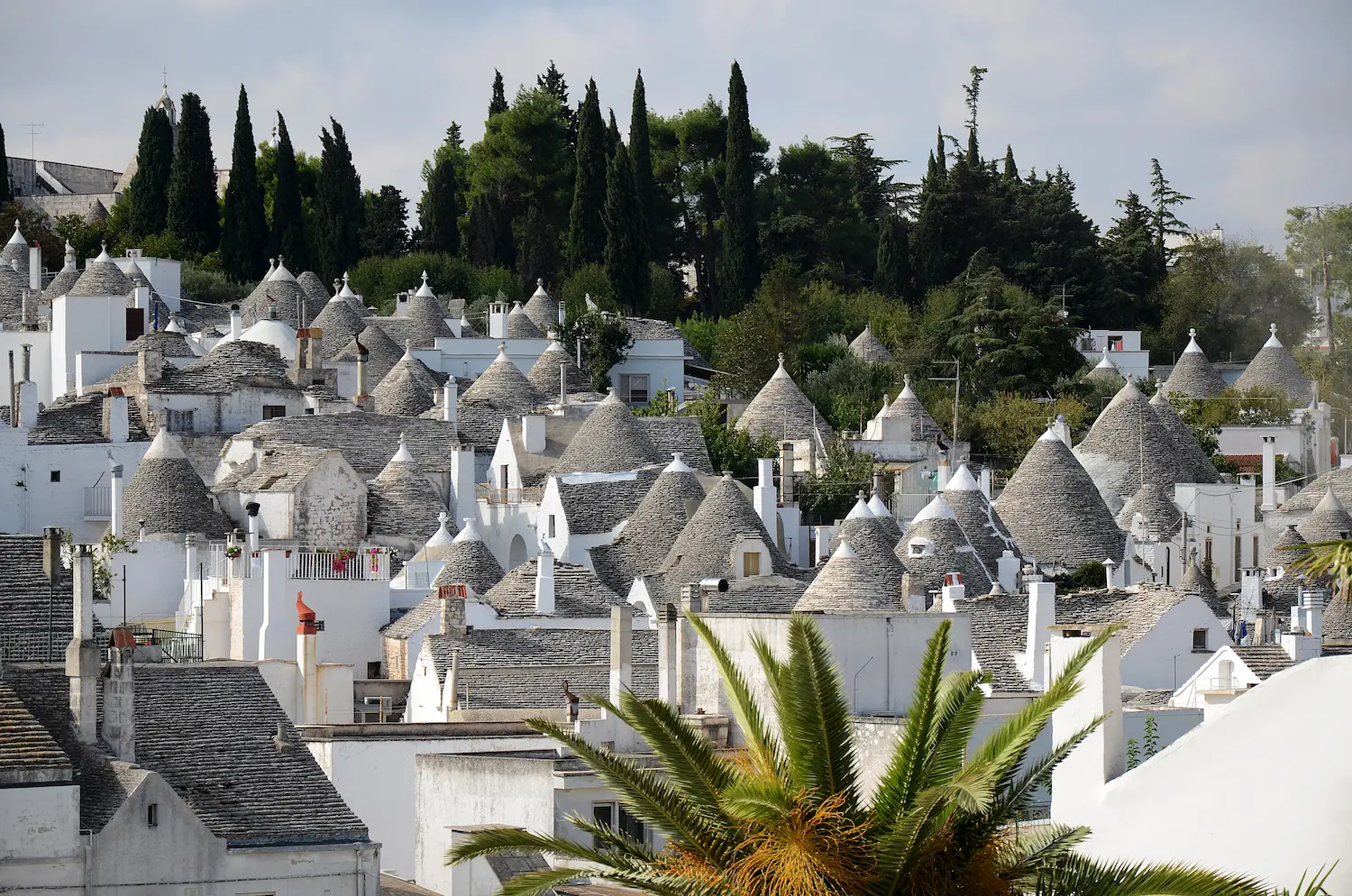
Alberobello is one of the most distinctive townscapes in Europe - over 1,500 conical-roofed trulli crowding a Puglian hillside, UNESCO-listed since 1996. The bus from Bari gets you there in an hour and fifteen minutes. No hire car needed.
Last verified: August 2026. Train times and prices change regularly. Always check official sources before travelling.
The first time you see Alberobello, it stops you in your tracks. Because what's in front of you doesn't quite look real. Hundreds of small stone houses, each topped with a conical grey roof, crowd the hillside in every direction. The walls are whitewashed. The rooftops are painted with symbols - crosses, suns, moons - and some of the lanes between them are just wide enough for two people to pass.
Alberobello is a UNESCO World Heritage Site for good reason. The trulli - dry-stone dwellings built without mortar, with corbelled limestone conical roofs - represent an architectural tradition dating from the 14th century. Most travel guides suggest a hire car to get there, but you don't need one.
At a Glance
| 🚆 From Bari | Ferrovie del Sud Est (Trenitalia) - approx. 1h 15 by direct bus, or 2h by train + connecting bus (connect at Putignano) from ~€6 one way |
| 🏛️ UNESCO status | Trulli of Alberobello — World Heritage Site since 1996 |
| 🗺️ Two districts | Rione Monti (commercial, 1,030 trulli) and Rione Aia Piccola (residential, 400 trulli) |
| 👀 Must see | Trullo Sovrano, Rione Aia Piccola, Belvedere Santa Lucia viewpoint, Chiesa di Sant'Antonio |
| 🍽️ Eat | Orecchiette, fave e cicoria, local olive oil, Primitivo wine |
| ⏱️ Time needed | Full day - half day possible but rushed |
| 📅 Best time | April-June and September-October - arrive early in summer |
| 🔗 Combine with | Matera, Locorotondo, Martina Franca |
In This Guide
Getting to Alberobello by Train and Bus from Bari
The trains and buses to Alberobello are both operated by Ferrovie del Sud Est (Trenitalia).
By train
The journey from Bari Centrale takes approximately 2 hours depending on the service.
The rail journey is actually a combination of train and bus. Firstly, a train to Putignano (or some routes connect in Monopoli) and then a connecting bus to Alberobello. The train + connecting bus route is a longer way to get to Alberobello than the direct bus (see section below), but is often less crowded.
Trains run several times a day, with the first departure from Bari in the early morning and the last return from Alberobello in the early evening.
You can buy tickets at Bari Centrale train station or online via Trenitalia or Trainline. Tickets cost from around €6 one way.
By bus
The direct bus journey from Bari Centrale takes around 1 hour and fifteen minutes.
The buses are run by the same company that runs the train line - Ferrovie del Sud Est. And tickets can be bought via Trenitalia or Trainline, and cost around €6 one way. The buses can get busy, so it's worth booking in advance.
Getting to Alberobello from the station
From the station in Alberobello, the historic centre and the trulli districts are a short flat walk - the town is compact and everything is reachable on foot within 15 minutes of arriving.
The Trulli - What They Are and Why They Exist
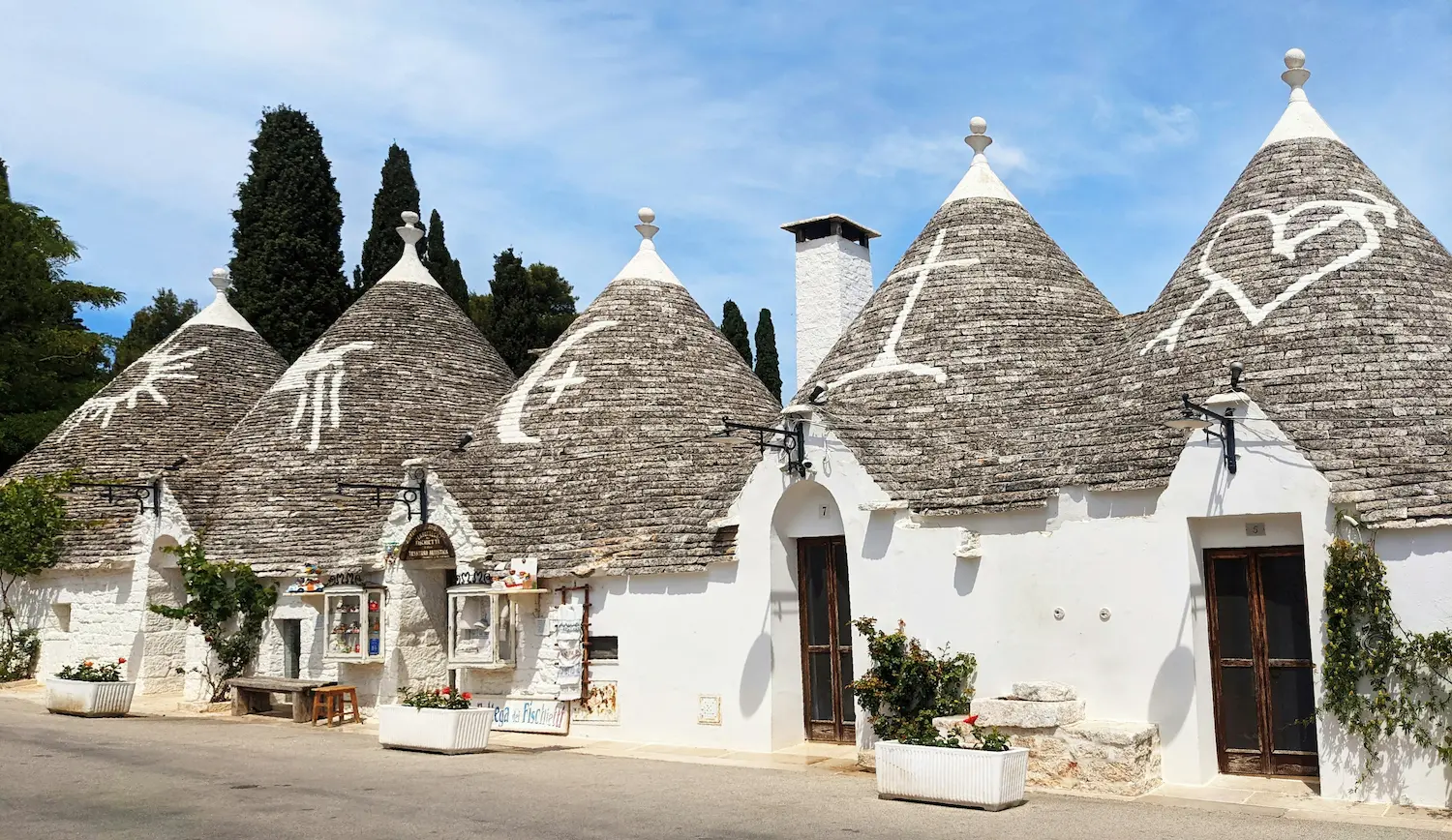
The trullo (plural: trulli) is a dry-stone dwelling built using a prehistoric technique - stones stacked without mortar, with a conical roof constructed from corbelled limestone slabs called chiancarelle. The walls are whitewashed. The roofs are left in their natural grey limestone. Painted symbols - crosses, astrological signs, pagan and Christian motifs combined - decorate the rooftops of many trulli, their exact origins and meanings still debated.
The reason trulli were built without mortar is more practical than aesthetic. The Counts of Conversano mandated that local farmers build their homes using dry-stone methods so the dwellings could be quickly dismantled if royal tax inspectors came calling to check for permanent settlements. A mortarless structure could be disassembled rapidly at the approach of the tax man - and reassembled just as quickly once he had gone.
Today around 1,500 trulli remain in Alberobello, concentrated in two UNESCO-listed districts. The town's name itself comes from the ancient Latin Silva Arboris Belli - the wood of the beautiful tree - a reference to the forest that once covered this hillside before the trulli replaced it.
Rione Monti
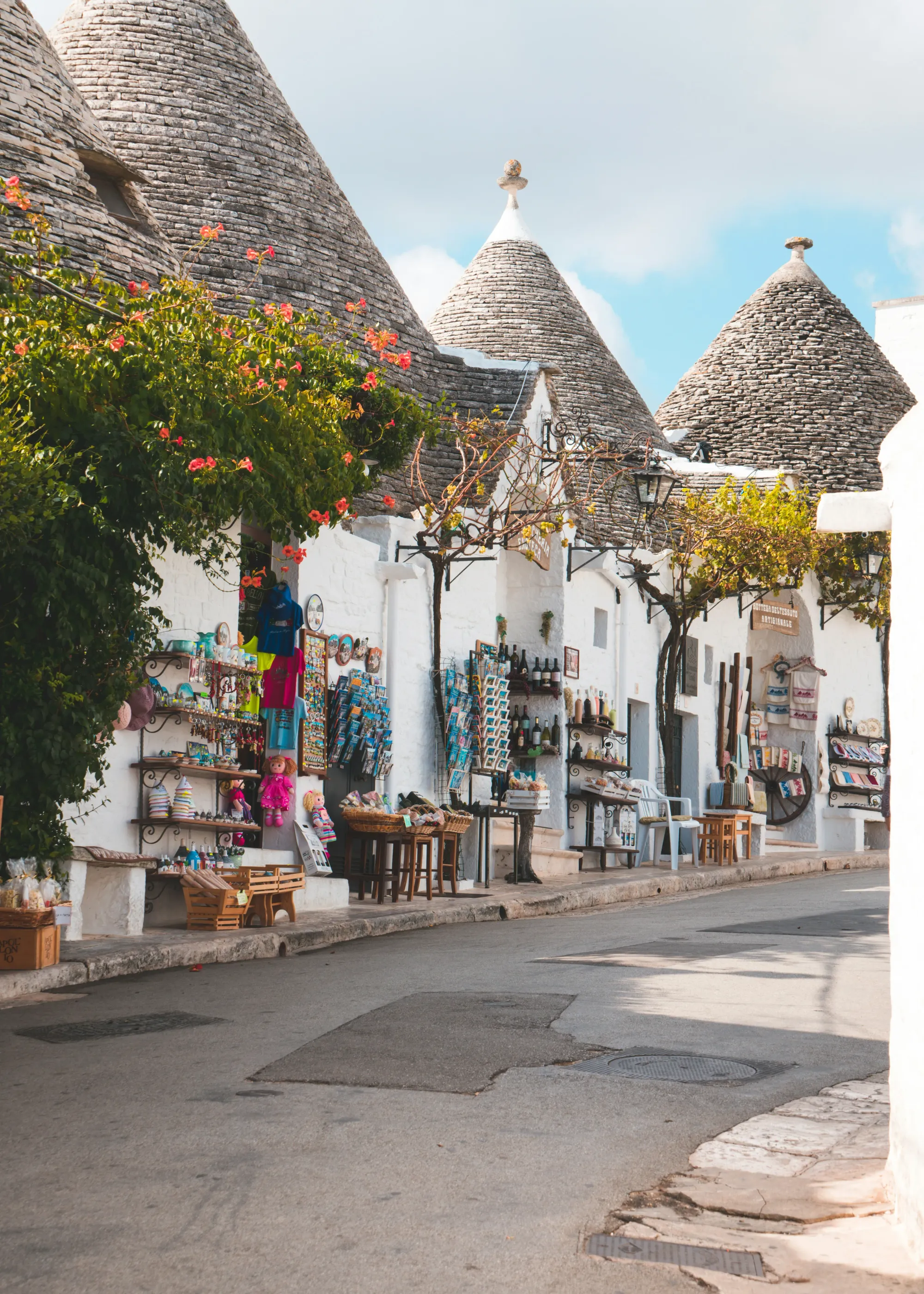
Rione Monti is the larger and more visited of the two trulli districts - around 1,030 trulli spread across the southern slope of the hill, most of them now converted into shops, cafés and souvenir outlets. This is where the tour groups go and where the photographs are taken - the density and uniformity of the trulli here, tumbling down the hillside in every direction. The streets are named after mountains where Italy fought in the First World War.
Many of the trulli in Rione Monti are open - shopkeepers actively invite visitors to enter. The inside of a trullo is surprisingly large, cool in summer, and gives an immediate sense of how these structures actually worked as homes - the corbelled ceiling rising to a point, the thick stone walls, the niches cut into the rock for storage.
Rione Aia Piccola
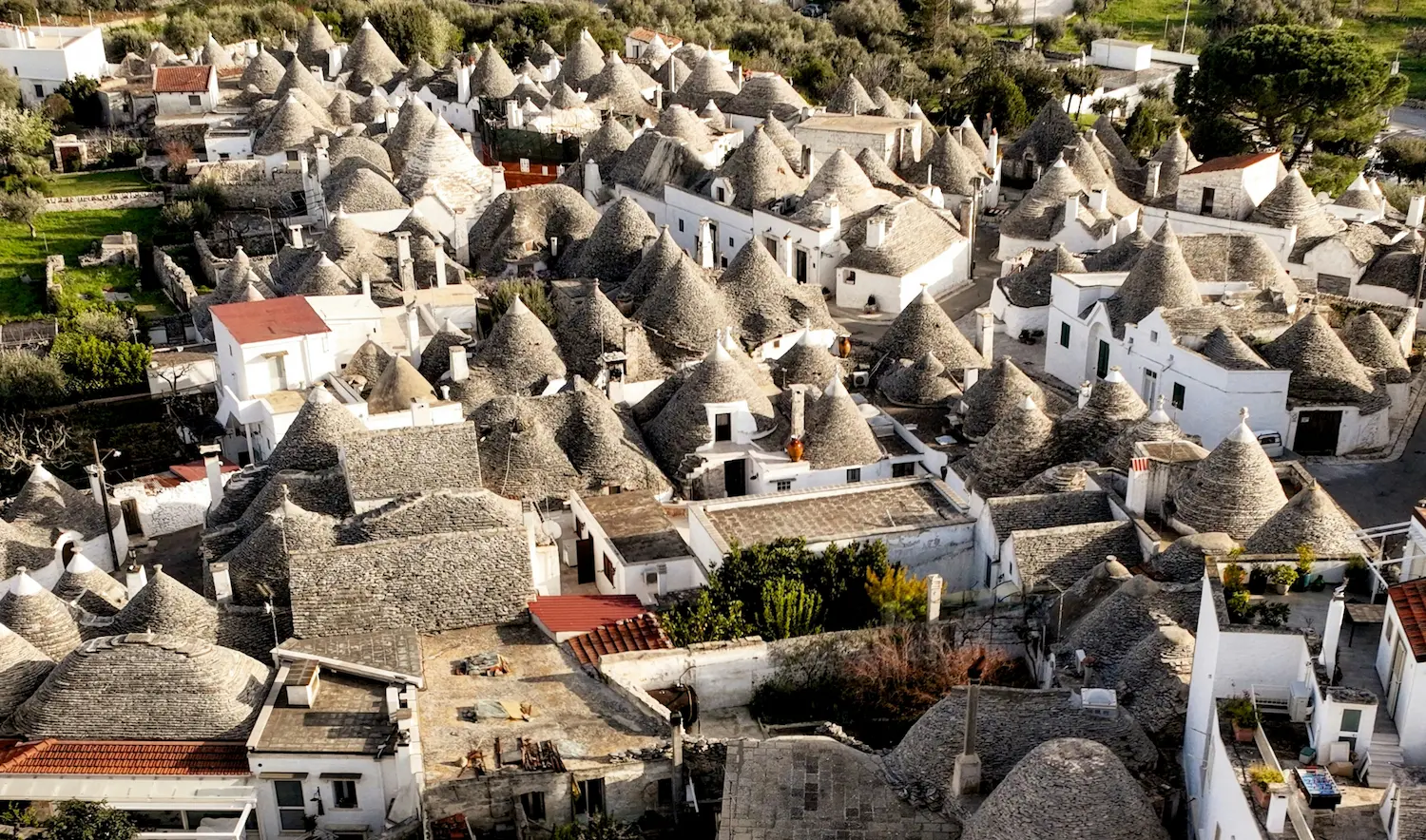
Rione Aia Piccola is the other side of Alberobello - smaller, quieter, and more authentic. Around 400 trulli, none converted into commercial use (commercial activity is officially prohibited in the district), still inhabited by around 1,500 residents. Washing hangs between trullo chimneys. Elderly residents sit outside. Cats sleep on warm stone. The architecture is identical to Rione Monti - dry-stacked limestone, conical roofs, painted symbols.
Spend at least 30 minutes here even if you only have half a day. This is where Alberobello is still a village rather than a tourist attraction.
Trullo Sovrano - Going Inside
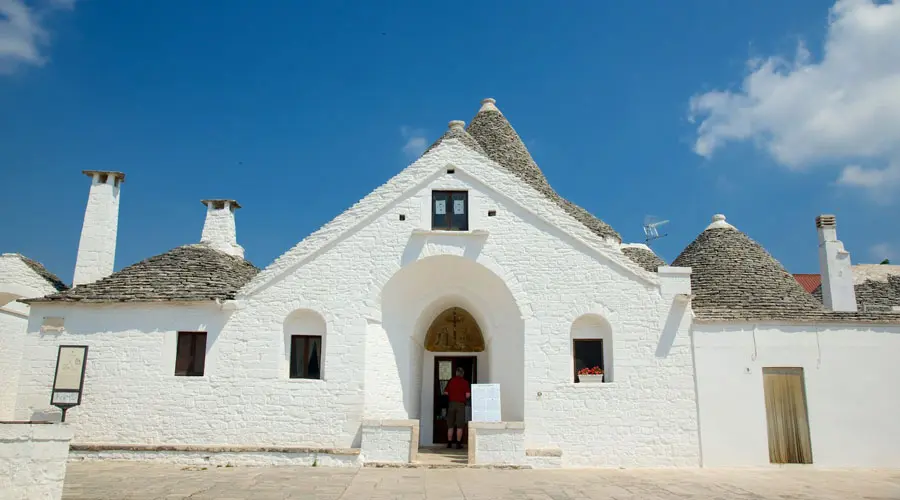
The Trullo Sovrano is the only two-storey trullo in Alberobello - an architectural anomaly in a tradition that almost never exceeded a single floor, given the structural challenges of dry-stone construction. Standing 14 metres high, its central dome towers over twelve smaller cones, and the building was commissioned in the 18th century by the family of a local priest named Cataldo Perta.
Today it functions as a house museum, furnished with original pieces from the early 20th century and preserved to show exactly how these structures functioned as homes. The interior shows the division of domestic space within a trullo: sleeping areas, a kitchen, storage, the cistern for collecting rainwater. Entry costs around €2.50.
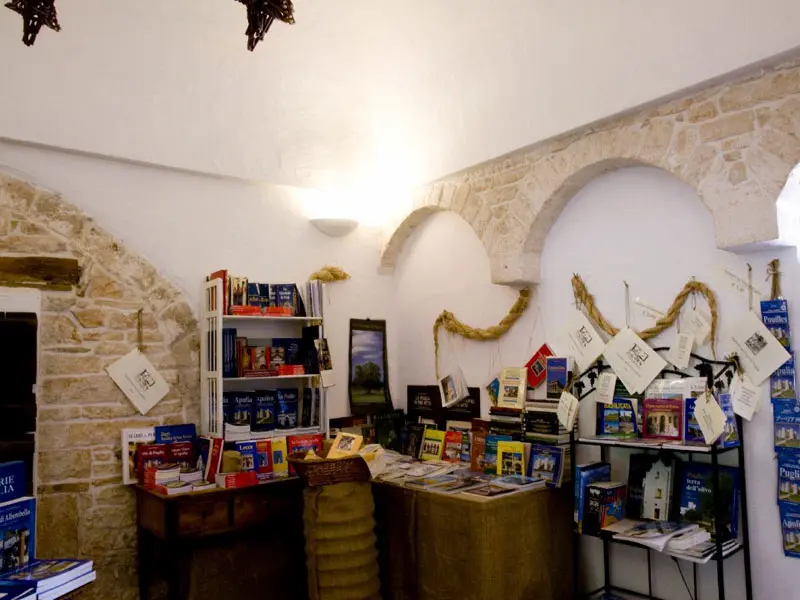
The Trullo Sovrano is at Piazza Sacramento in the northern part of the town - a logical starting point for a day's exploration, before heading south through Rione Monti.
Belvedere Santa Lucia - The Best View
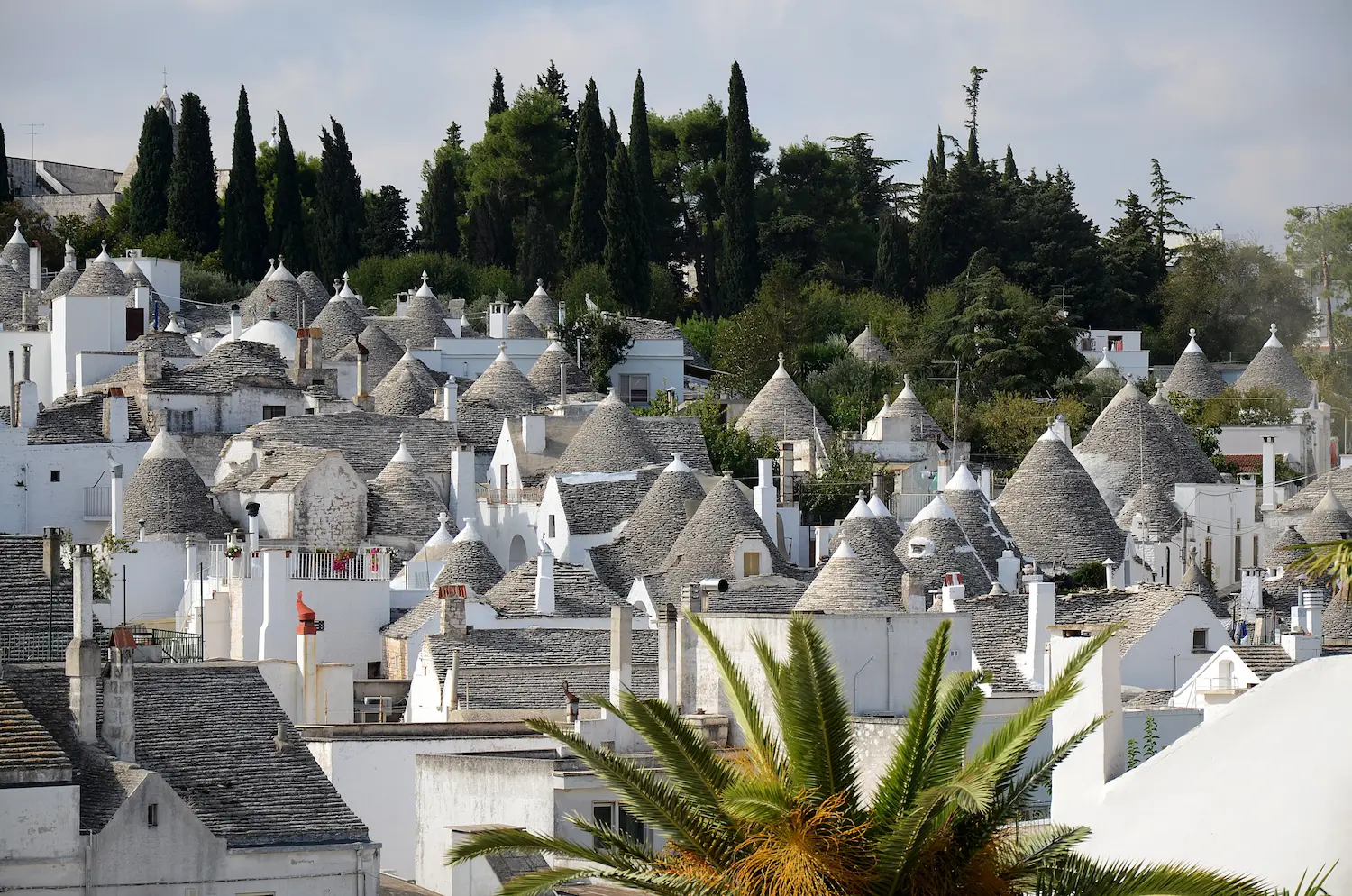
The Belvedere Santa Lucia terrace offers the most famous panoramic view of Alberobello - looking out over an unbroken sea of grey conical rooftops, the trulli stretching in every direction down the hillside. This is the angle from which the full scale and density of the trulli landscape becomes clear.
The viewpoint is free and open throughout the day. Go in the late afternoon when the light is warm and the shadows between the cones deepen.
Chiesa di Sant'Antonio
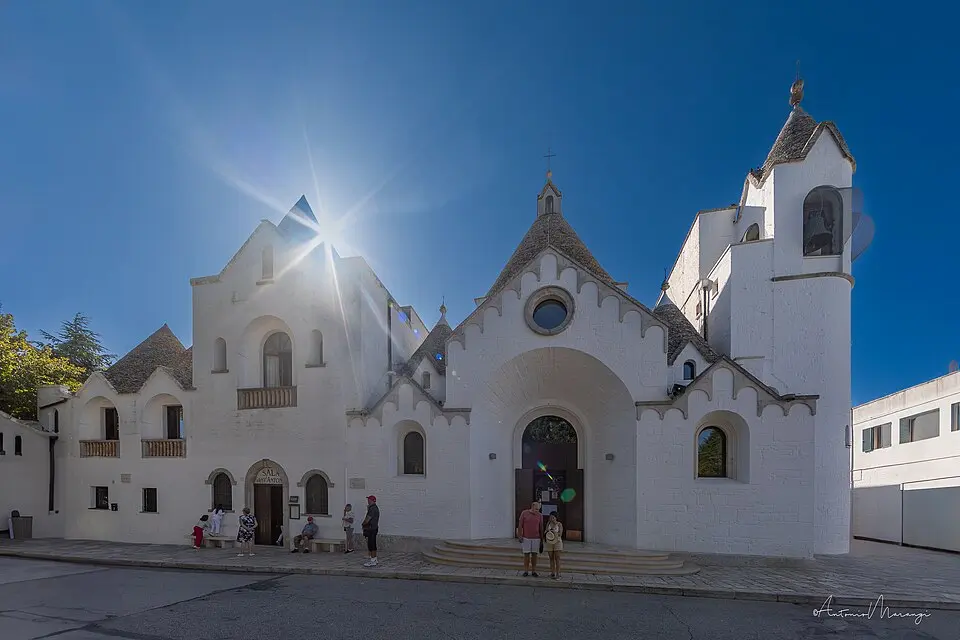
At the top of Rione Monti stands the Chiesa di Sant'Antonio - the only church in the world built in the trullo style. Constructed between 1926 and 1927, it was designed to blend with the surrounding architecture: a massive 21-metre conical dome with matching bell tower, all in the same dry-stone technique as the trulli surrounding it.
The interior is simple and atmospheric, still used for services. Worth the climb to the top of Rione Monti for the church and the views from the surrounding streets.
Food and Drink
Puglia has one of the strongest regional food cultures in Italy and Alberobello is a good place to eat it - several restaurants are built within trulli, which gives the dining experience a special touch.
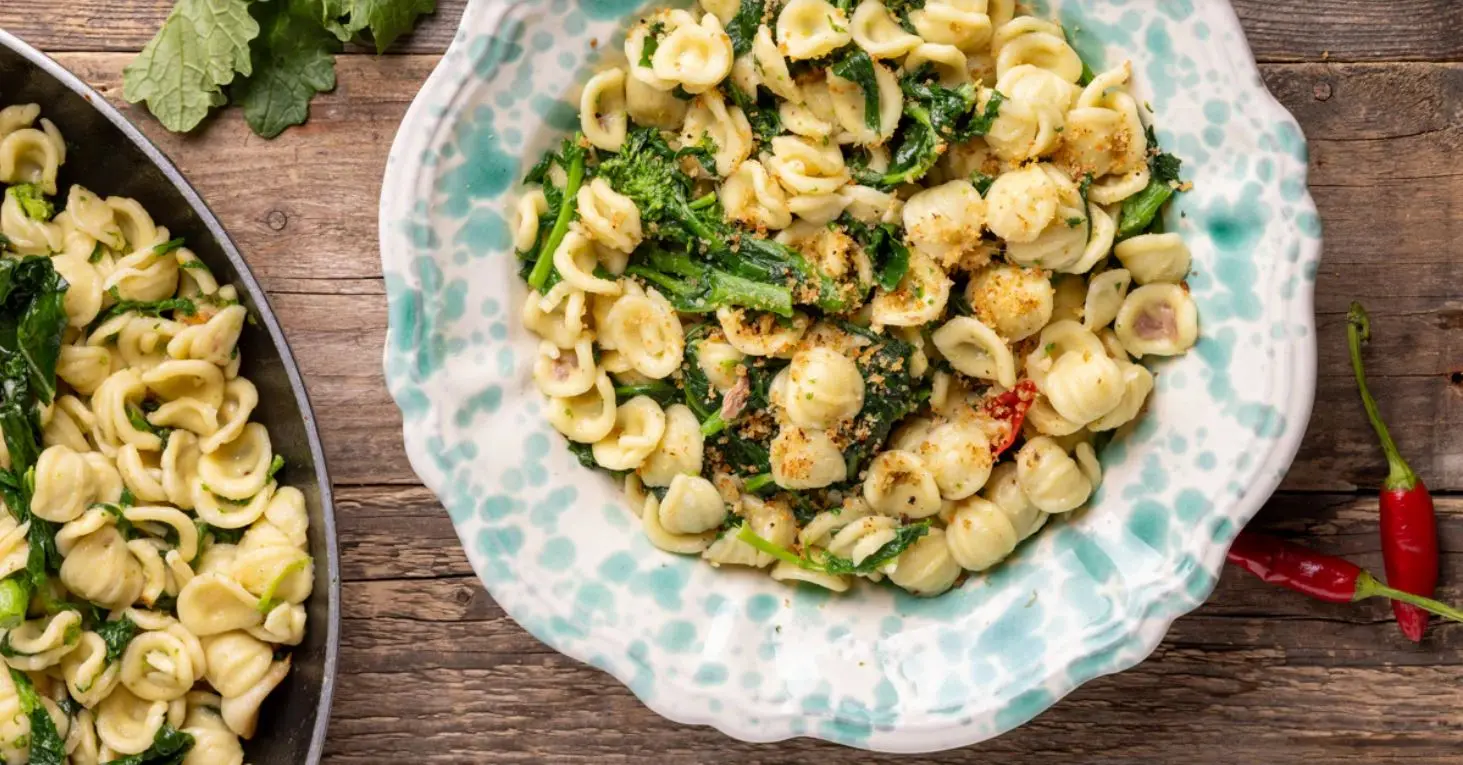
Orecchiette is the defining Puglian pasta - small ear-shaped pasta, traditionally handmade, served most characteristically with turnip tops (cime di rapa) sautéed with garlic, olive oil and chilli, or with a meat ragù.
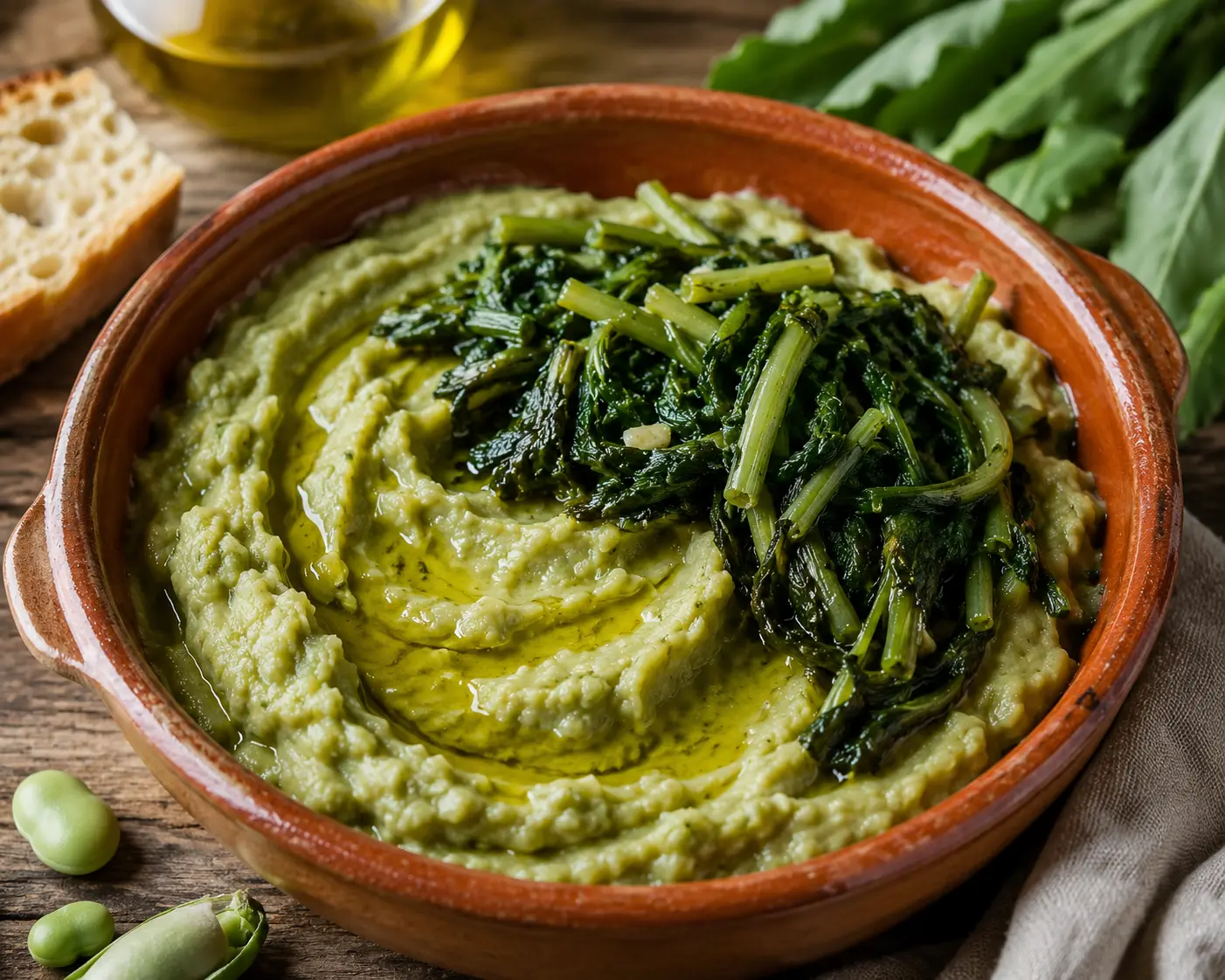
Fave e cicoria is the most traditional Puglian dish - dried broad beans pureed and served with braised wild chicory, dressed with local olive oil. Simple, ancient and extraordinarily good.
Primitivo is the local red wine - full-bodied, dark and rich, produced from the same grape as Zinfandel in California. Local restaurants serve it by the carafe at prices that make it one of Italy's best value serious wines.
Eating in a restaurant built inside trulli is worth seeking out - the experience of dining in a corbelled stone room lit by candles, with the cone roof rising above you, is one of those things that is genuinely as good as it sounds.
Combining Alberobello with Matera
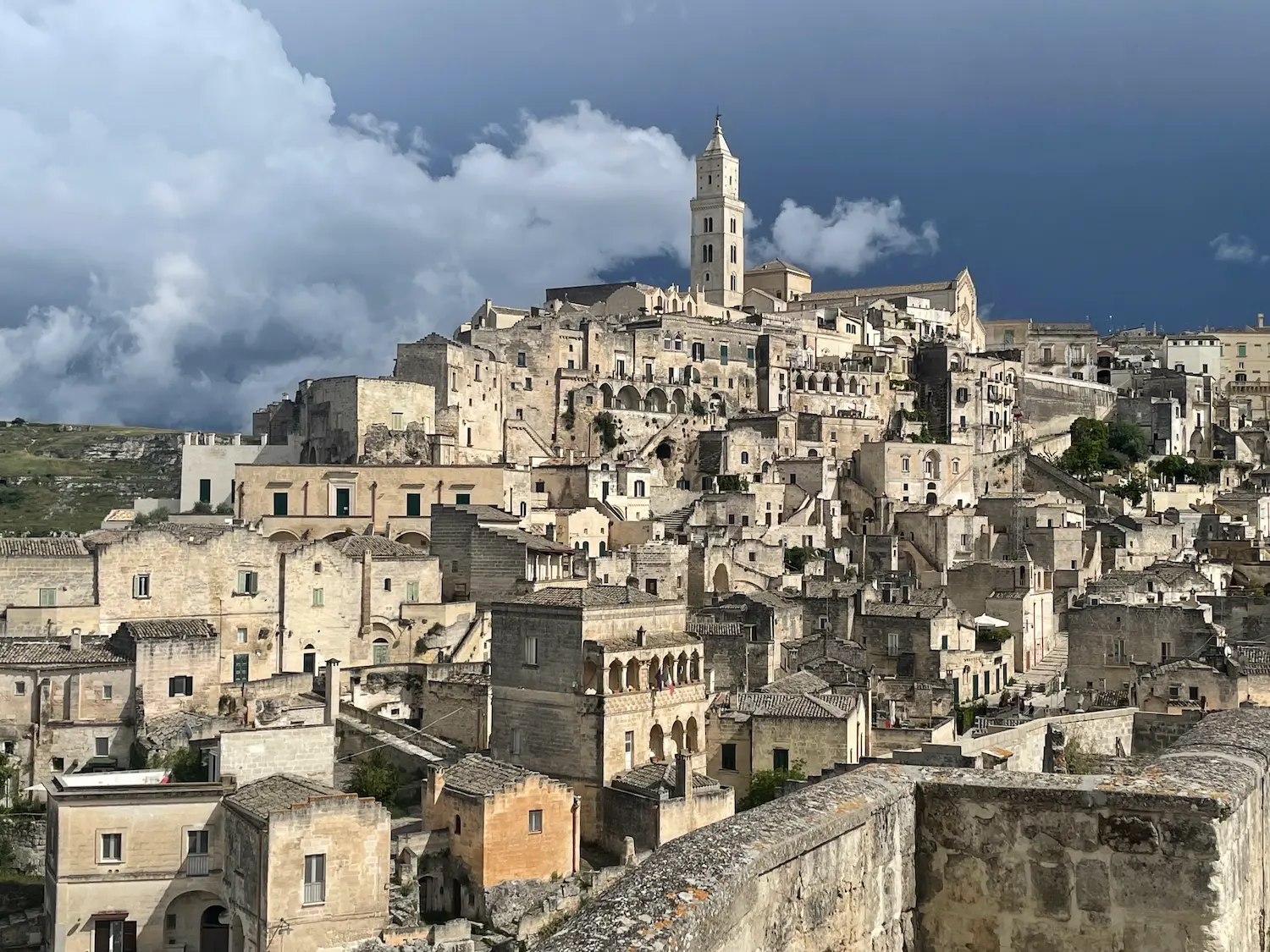
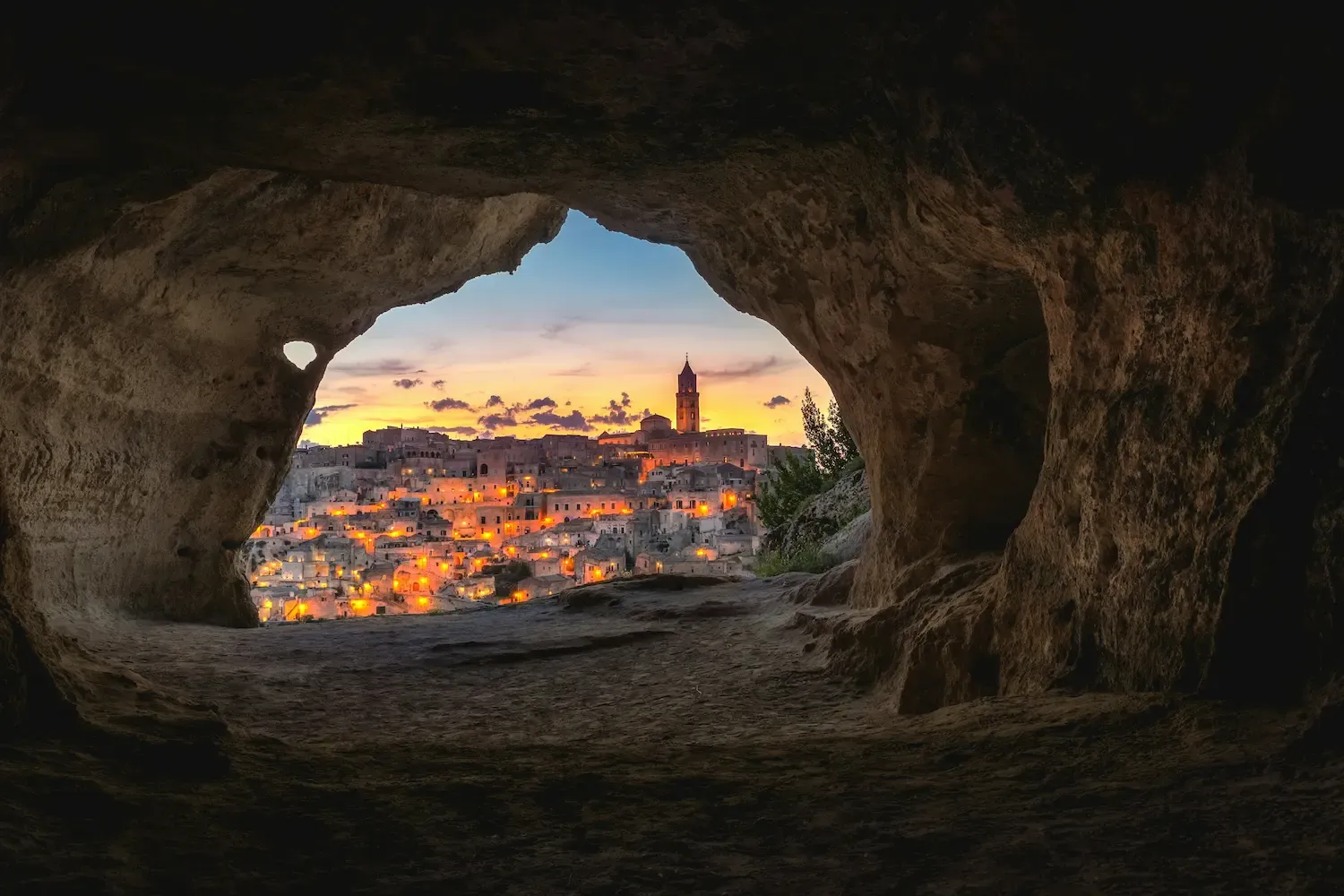
Alberobello and Matera are the two most distinctive destinations in this corner of southern Italy, and they complement each other perfectly - one a fairy-tale town of conical roofed dwellings above ground, the other a labyrinthine city of cave dwellings carved into limestone ravines.
There is no direct public transport between Alberobello and Matera. The practical approach is to use Bari as the connecting hub: train or bus from Alberobello back to Bari, then bus from Bari to Matera.
See our complete guide to Matera without a car for full details on reaching Matera from Bari.
Practical Information
Getting around: Alberobello is entirely walkable. The historic centre is compact, flat in places and hilly in others - comfortable shoes are useful but nothing more demanding than a normal city walk is required.
When to go: April, May, June and September are ideal - good weather, trulli at their most atmospheric, and manageable crowds. July and August are peak season and the narrow lanes of Rione Monti can feel extremely crowded by mid-morning. If visiting in summer, arrive on the first train from Bari to experience the town before the day-trippers arrive.
Half day or full day: A half day covers Trullo Sovrano, Rione Monti and Rione Aia Piccola. A full day adds the Belvedere viewpoint, a proper lunch in a trulli restaurant, and a slower pace. A full day is preferable.
Luggage: Unless you are staying in Alberobello, then leave bags at Bari Centrale before taking the train - use Radical Storage or Bounce.
Return trains: Check the last FSE train or bus back to Bari before you arrive - as the last departure is in the early evening. Don't leave it too late if you have onward travel from Bari.
For a full guide to Italian regional trains, see our Italy train network guide.
Frequently Asked Questions
Can I visit Alberobello without a hire car?
Yes - entirely. The Ferrovie del Sud Est regional trains and buses from Bari Centrale reaches Alberobello in around 1 hour 15 minutes (bus) or 2 hours (train + connecting bus), arriving directly in the town centre. Tickets cost from around €6 one way. The town itself is entirely walkable.
How long should I spend in Alberobello?
A full day is ideal - enough time to explore both Rione Monti and Rione Aia Piccola properly, visit the Trullo Sovrano, find a viewpoint and eat lunch. Half a day covers the essentials but feels rushed.
What are the two trulli districts in Alberobello?
Rione Monti is the larger commercial district with around 1,030 trulli - most converted into shops, cafés and restaurants. Rione Aia Piccola is smaller, entirely residential with around 400 trulli, where commercial activity is prohibited. Both are UNESCO-listed. Rione Monti is more photogenic; Rione Aia Piccola is more authentic.
Can I go inside the trulli?
Yes - in Rione Monti, many shopkeepers invite visitors inside their trulli, which gives you the interior experience for free. The Trullo Sovrano (the only two-storey trullo) is a house museum with entry around €2,50 - the best way to understand how people lived in these structures.
Why were the trulli built without mortar?
The dry-stone technique allowed the structures to be quickly dismantled if royal tax inspectors arrived to assess permanent settlements - a loophole in feudal taxation law that produced one of Europe's most distinctive architectural traditions.
Is Alberobello worth visiting?
Yes - it is one of those places that genuinely delivers on its visual promise. The trulli are extraordinary in person in a way that photographs don't fully capture, and the contrast between the commercial bustle of Rione Monti and the quiet authenticity of Rione Aia Piccola gives the visit an unexpected depth. A full day from Bari is one of the best day trips in southern Italy.
Can I combine Alberobello with Matera?
Yes, but not directly by public transport - there is no direct bus between the two. The practical approach is to use Bari as a hub: train to Alberobello, return to Bari, then bus to Matera. See our Matera guide for full details.
Also on The Unseen Italy: Matera Without a Car · Naples — The Complete City Guide · Day Trips from Naples by Train · How Italy's Train Network Works