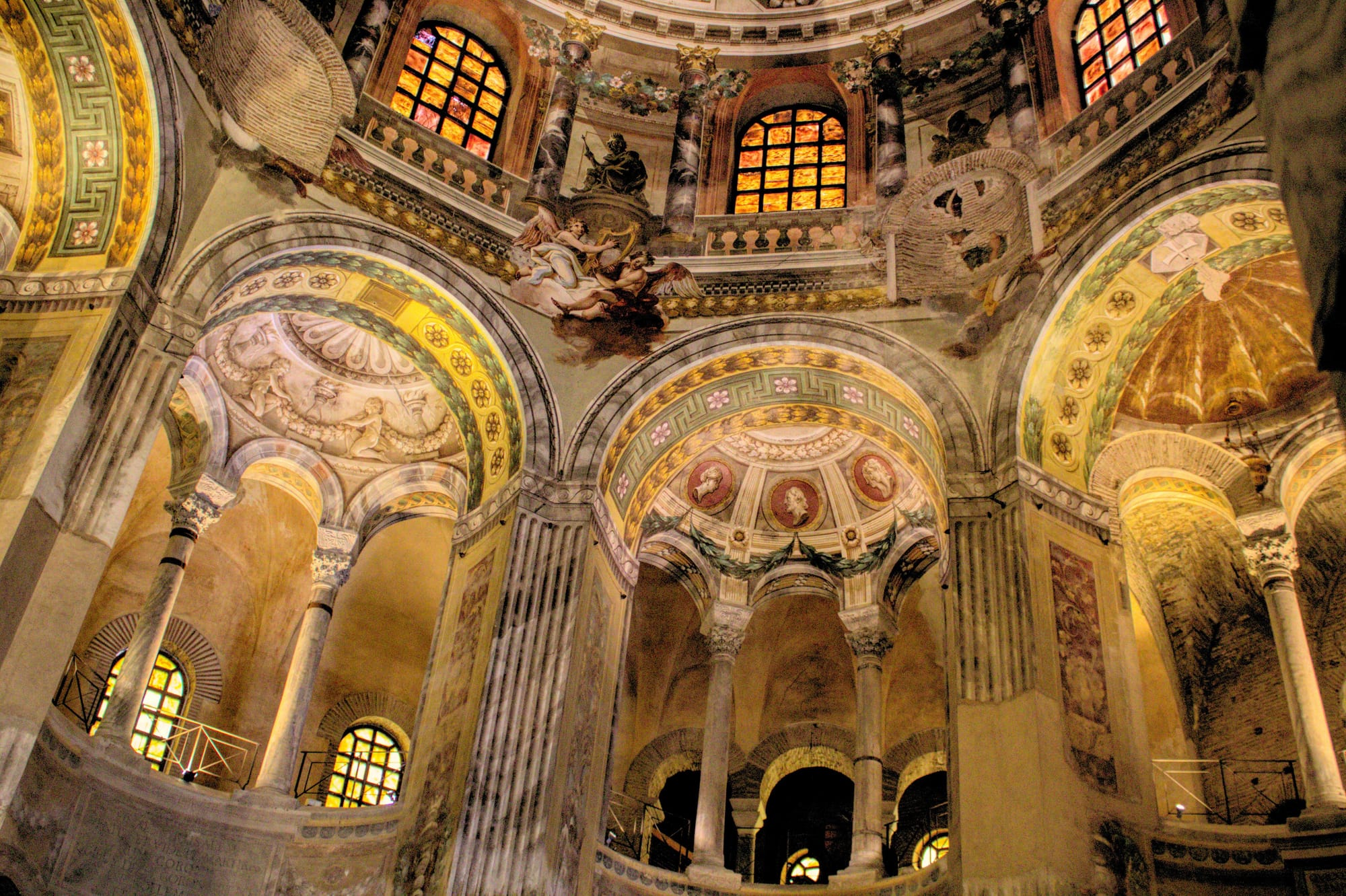
Ravenna was the last capital of the Western Roman Empire, then the seat of Byzantine power in Italy for two centuries more. Eight monuments survive from that era - the finest collection of early Christian mosaics anywhere in the world. An hour from Bologna by direct train.
Last verified: August 2026. Train times, ticket prices and opening hours change regularly. Always check official sources before travelling.
Ravenna lies between Bologna and Italy’s Adriatic coast - easily reachable by train - and quietly holding some of Europe’s most extraordinary surviving mosaics. Inside the Mausoleum of Galla Placidia, a deep midnight-blue dome is scattered with golden stars. A few streets away, in the Basilica of San Vitale, full-length mosaic portraits of the Emperor Justinian and Empress Theodora preside over the altar, their gold backgrounds catching the flicker of the candles around them.
These are two of Ravenna’s eight UNESCO-listed buildings, created during the centuries when the city served first as the last capital of the Western Roman Empire and later as a centre of Byzantine power in Italy. Buy a train ticket, spend the day wandering between them, and you may find yourself wondering why nobody told you about Ravenna sooner.
At a Glance
| 🚆 From Bologna | Direct regional train - approx. 1h 15m, from ~€9 |
| 🚆 From Florence | Change at Bologna - approx. 2h 20m, from ~€30 |
| 🚆 From Venice or Milan | Change at Bologna - approx. 3h |
| 🏛️ UNESCO sites | 8 early Christian monuments - World Heritage Site since 1996 |
| 🎟️ Combined ticket | 5-site pass €14.50 - book timed slots in advance |
| ⏱️ Time needed | Full day for the main sites - two days for a more relaxed pace |
| 📅 Best time | Any time of year - avoid summer weekends for the smaller sites |
In This Guide
Getting to Ravenna by Train
Direct regional trains from Bologna run to Ravenna throughout the day - the journey takes around 1 hour 15 minutes depending on the service, with around 40 departures daily. Tickets cost from around €9 one way. No advance booking or seat reservation is required - buy at the station machine and validate before boarding.
From Florence, change at Bologna - the total journey is around 2 hours 20 minutes. From Venice change at Bologna - around 3 hours. Buy tickets via Trenitalia or Trainline.
Ravenna station is a 15-minute walk from the historic centre and the main UNESCO sites. The city is flat and compact - everything worth seeing is walkable from the station.
Tickets - What to Book and When
The main UNESCO sites in Ravenna use a combined ticket system and some sites require timed-entry slots that sell out - particularly in spring.
The 5-site combined ticket covers the Basilica of San Vitale, the Mausoleum of Galla Placidia, the Neonian Baptistery, the Basilica of Sant'Apollinare Nuovo and the Archiepiscopal Museum (with the Chapel of Sant'Andrea). Costs €14.50 and valid for 7 days (one visit per site). Buy online at ravennamosaici.it
For visits to the Archiepiscopal Museum and Chapel of Sant’Andrea, the Mausoleum of Galla Placidia and the Neonian Baptistery, you need to book an admission time slot (when you book your ticket online).
There are 2-site and 4-site ticket options at €10.50 and €12.50, but if you are there for the day then the 5-site option definitely makes sense. You can find all ticket options at www.ravennamosaici.it
Separate tickets:
- Basilica of Sant'Apollinare in Classe (6km south of Ravenna, requires a bus) - €6
- Mausoleum of Theodoric - €6
- Arian Baptistery - €3
- Dante's Tomb - free
The 5-site combined ticket covers the essential highlights of a full day in Ravenna. The outlying sites are worth including on a second day or if you have particular interest.
The Mausoleum of Galla Placidia
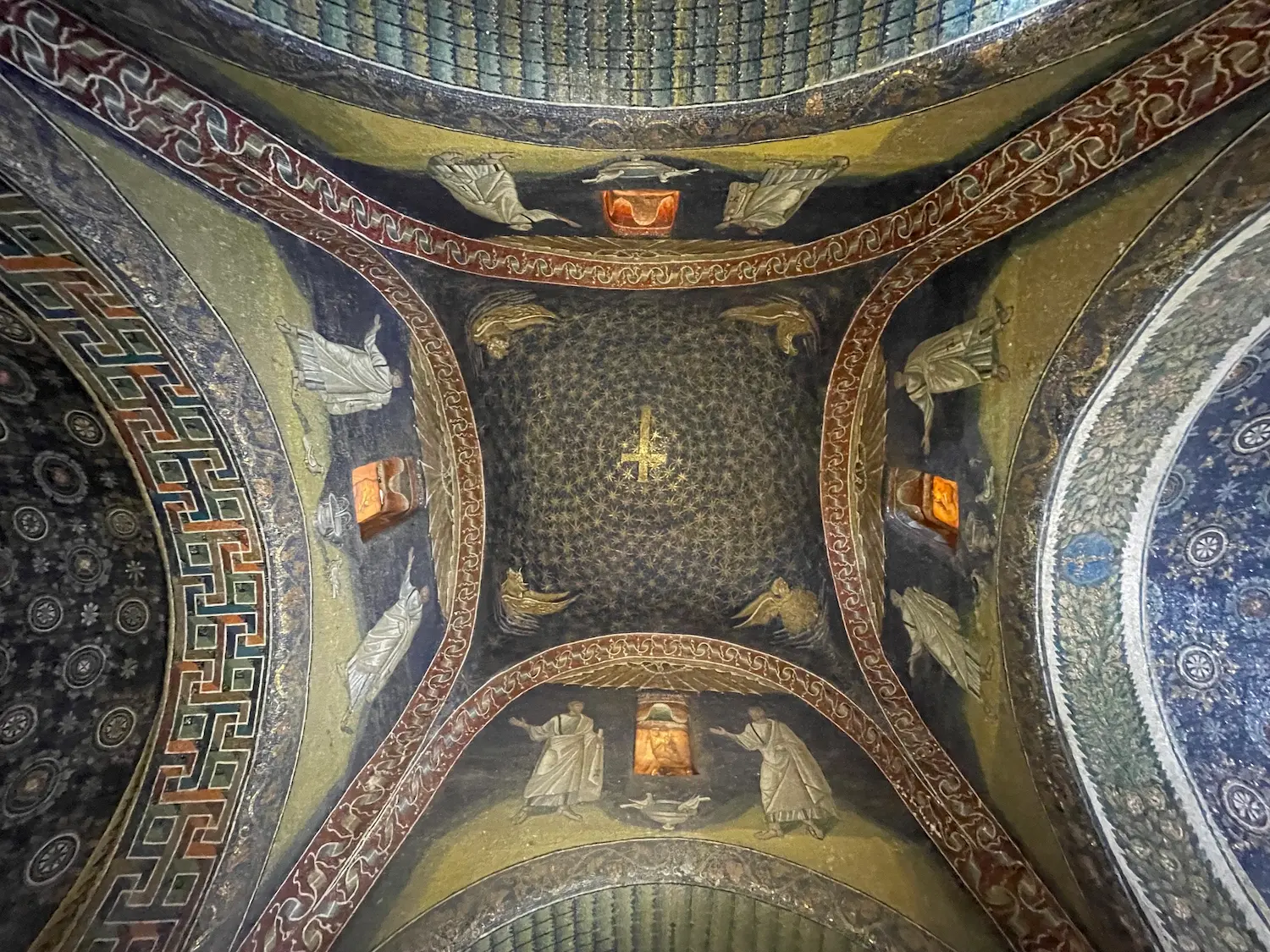
The Mausoleum of Galla Placidia is the oldest of the eight UNESCO monuments and, for most visitors, the most overwhelming - a small, cross-shaped building commissioned after 426 AD by Galla Placidia, daughter of the Emperor Theodosius, as her intended burial place.
From the outside it is almost entirely unassuming. Inside, every surface - lunettes, barrel vaults, dome - is covered in 5th-century mosaic of extraordinary quality and preservation. A deep cobalt blue is set against gold stars in the dome and populated with symbolic figures - the Good Shepherd above the entrance, doves drinking from a fountain, apostles in procession, the deer of the 42nd Psalm.
The building is tiny and therefore visits are timed. Go early, take your time to digest the detail.
The Basilica of San Vitale
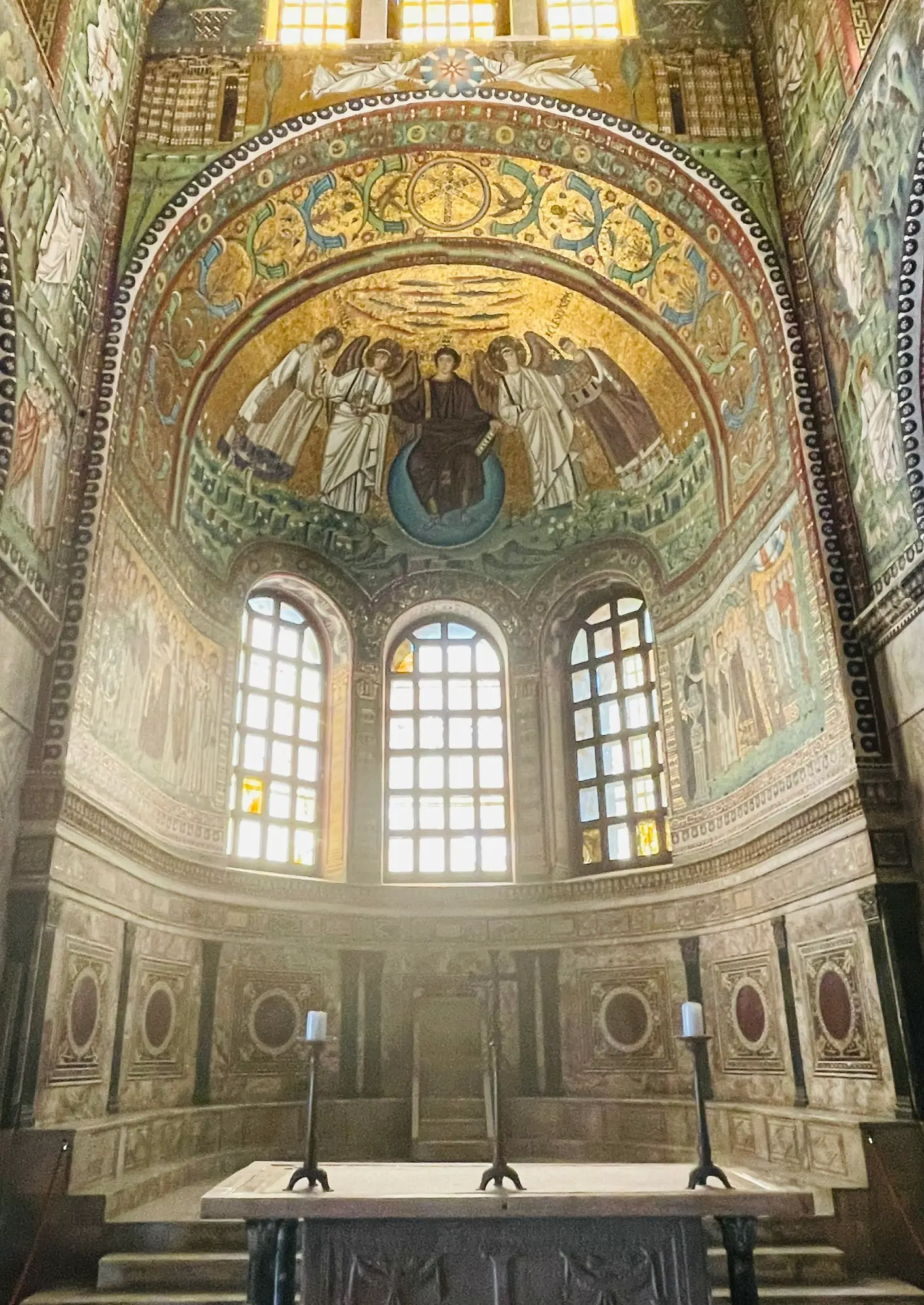
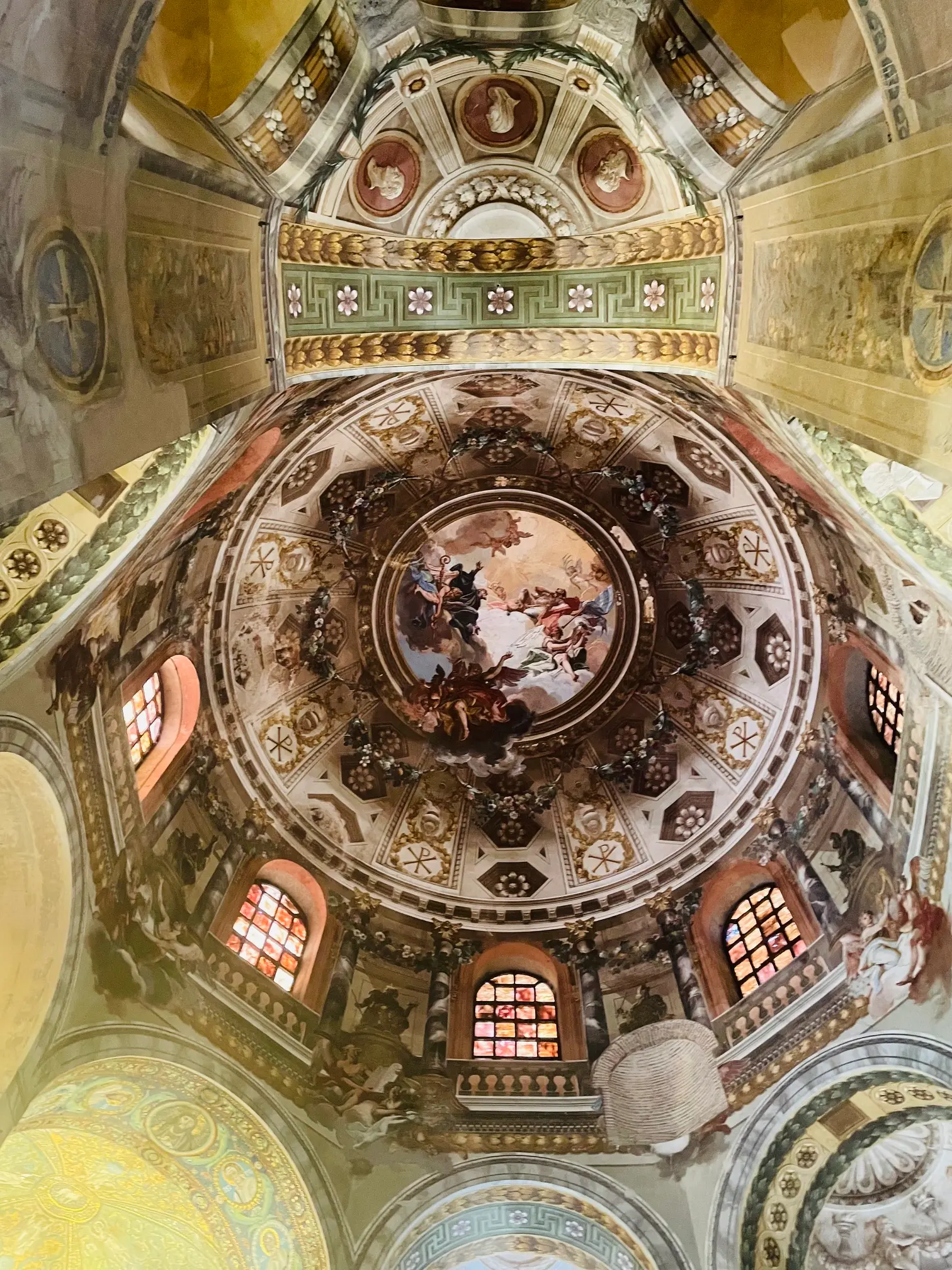
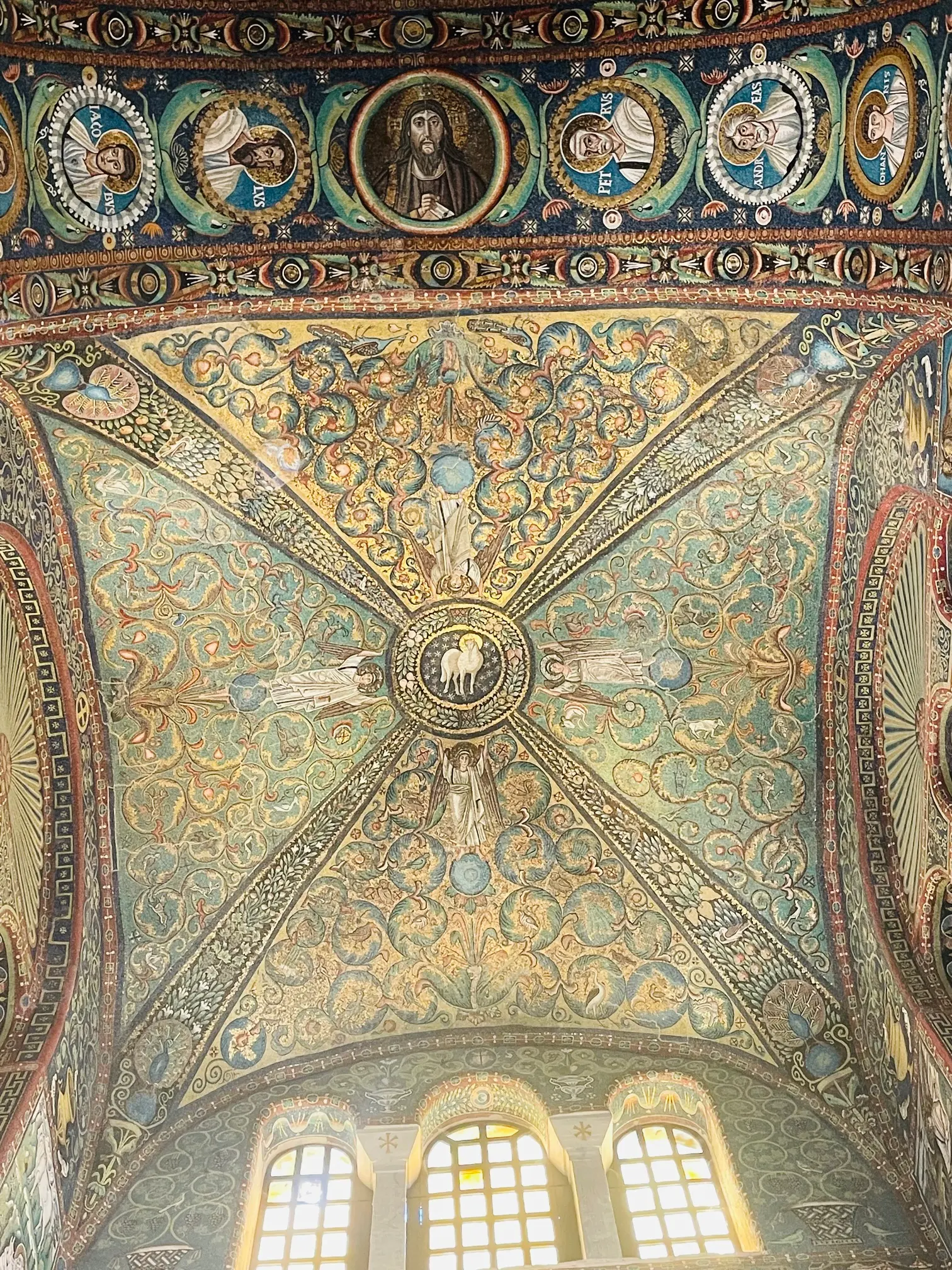
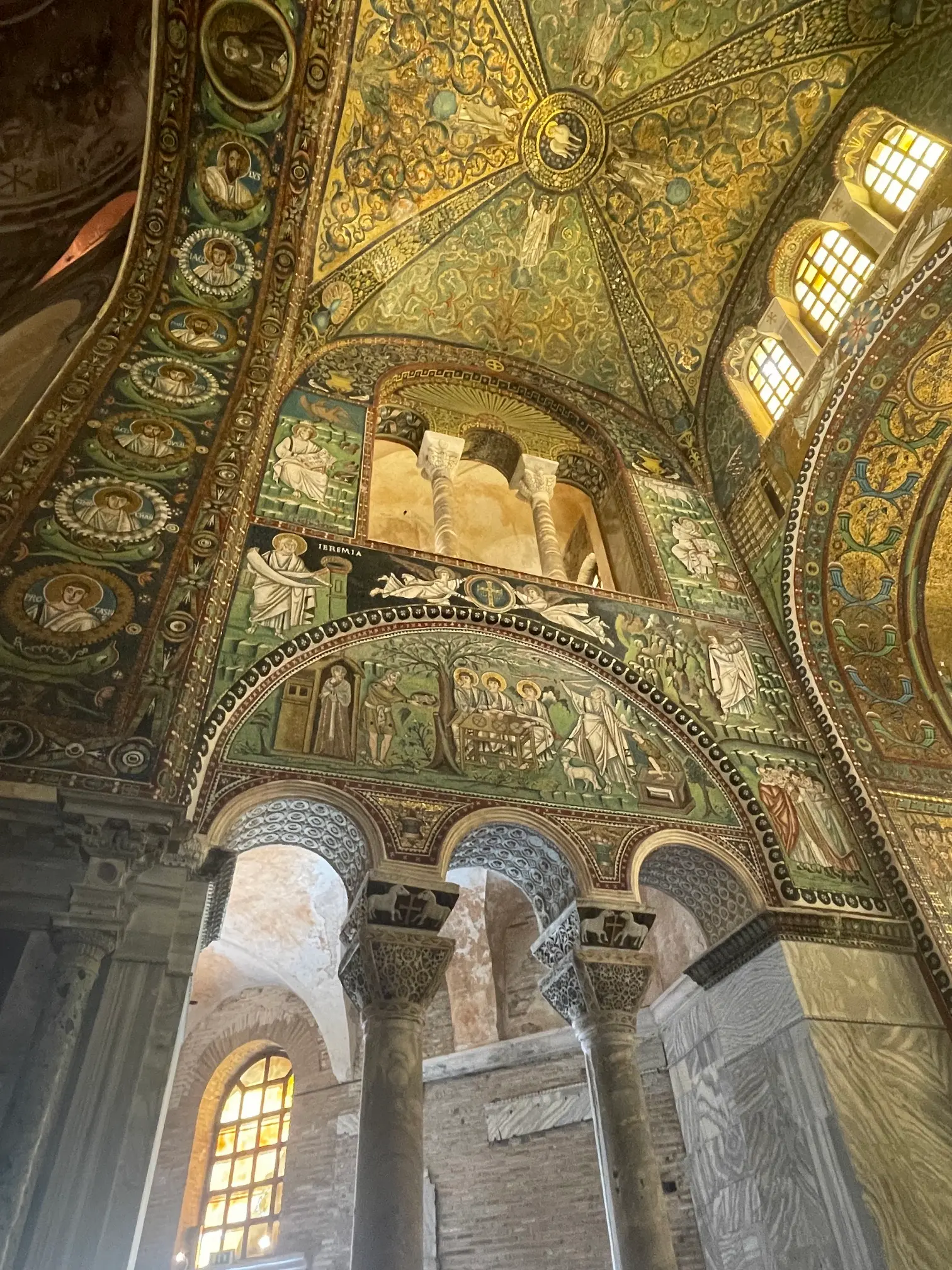
The Basilica of San Vitale, Ravenna — 6th-century Byzantine mosaics including the famous panels of Justinian and Theodora.
The Basilica of San Vitale is Ravenna’s most famous monument. This remarkable octagonal church was begun in 526 under the Ostrogoths and completed in 548, following the Byzantine reconquest of Italy.
The mosaics behind the altar are the undisputed highlight. On either side, magnificent procession scenes show the Emperor Justinian with his court and soldiers, and the Empress Theodora surrounded by her ladies and attendants.
Facing them is a stunning mosaic of Christ seated above a rainbow, flanked by angels presenting San Vitale and Bishop Ecclesius. Gold covers almost every surface, while light pours through sixteen windows above, making the mosaics shimmer and giving the interior its extraordinary glow.
The Basilica of Sant'Apollinare Nuovo
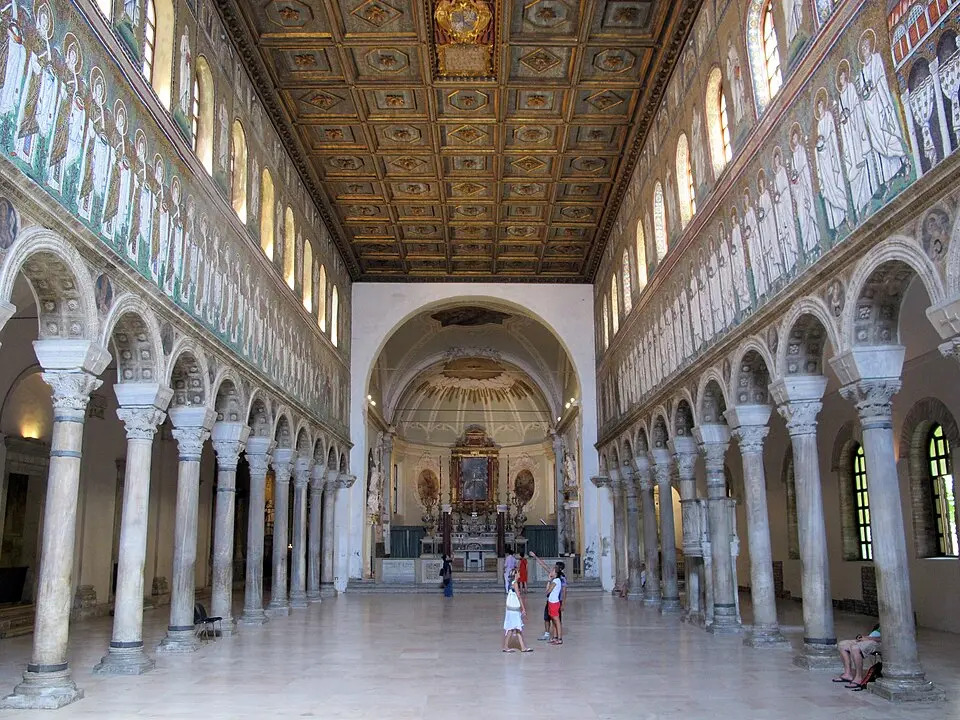
Sant’Apollinare Nuovo is the largest of Ravenna’s central UNESCO sites - a 6th-century basilica built by the Ostrogothic king Theodoric as his palace church.
Its long nave is lined with an extraordinary sweep of early Christian mosaics, among the most complete of their kind anywhere. The highlight is the procession of saints and martyrs, stretching along both walls in a repetition of gold, colour and faces. Above them, scenes from the life of Christ - including his miracles and Passion.
It is the sheer scale and rhythm of the mosaics that makes Sant’Apollinare Nuovo so impressive: walk through the nave and you are surrounded by 1,500 years of history, still remarkably vivid today.
The Neonian Baptistery
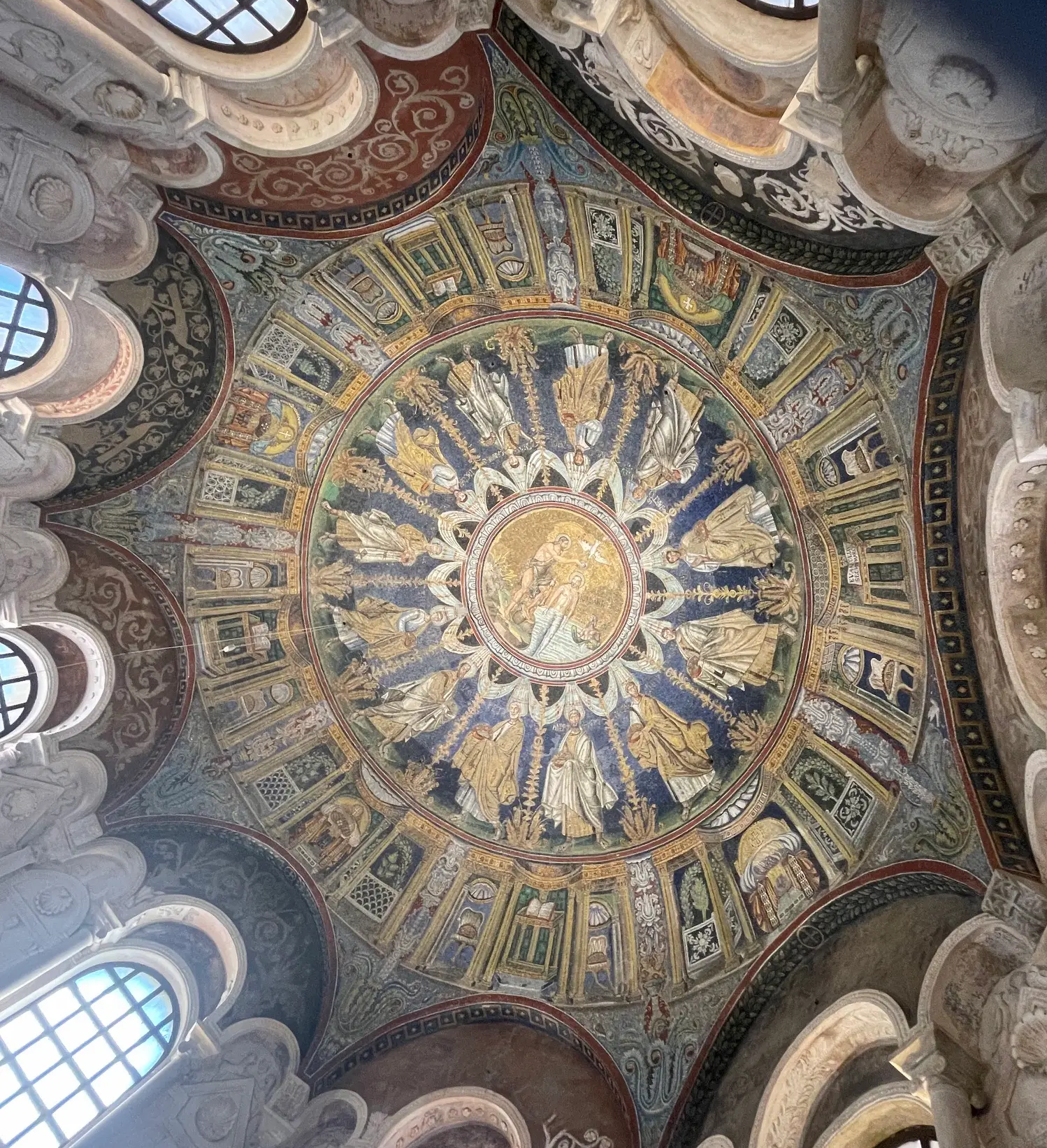
One of Ravenna’s oldest surviving monuments, the Neonian Baptistery is a small octagonal building with a spectacular surprise inside: a glittering 5th-century mosaic dome.
At its centre, Christ is shown being baptised in the River Jordan, surrounded by the twelve apostles moving in a circle around him. Their flowing robes and sense of movement make the whole dome feel almost alive - a remarkable sight after more than 1,500 years.
The Other UNESCO Sites
The 5-site combined ticket also includes the Archiepiscopal Museum, which houses the Chapel of Sant'Andrea - a tiny private oratory built by Archbishop Peter II around 500 AD, with a mosaic floor and ceiling that includes a famously direct depiction of Christ as a Roman warrior trampling a lion and a serpent. The museum also contains the Throne of Maximian, an ivory throne of the 6th century considered one of the masterpieces of Byzantine decorative art.
Also worth a visit - The Mausoleum of Theodoric. An extraordinary feat of engineering, topped by a huge single-piece stone roof weighing around 300 tonnes. Made from Istrian limestone, the roof was placed over the mausoleum without the use of mortar.
A short bus ride 6km south of Ravenna takes you to the Basilica of Sant’Apollinare in Classe, the largest of Ravenna’s basilicas. Inside, the vast, peaceful space feels a world away from the busy city centre. At the far end, a beautiful mosaic of Sant’Apollinare surrounded by his sheep creates a wonderfully calm and serene scene. It’s well worth the short journey.
Take bus number 4 from Ravenna train station or Piazza Caduti and get off at Classe Scuola or Classe Piazza. Buses run approximately every 30 minutes, with the journey taking around 20–30 minutes.
Dante's Tomb
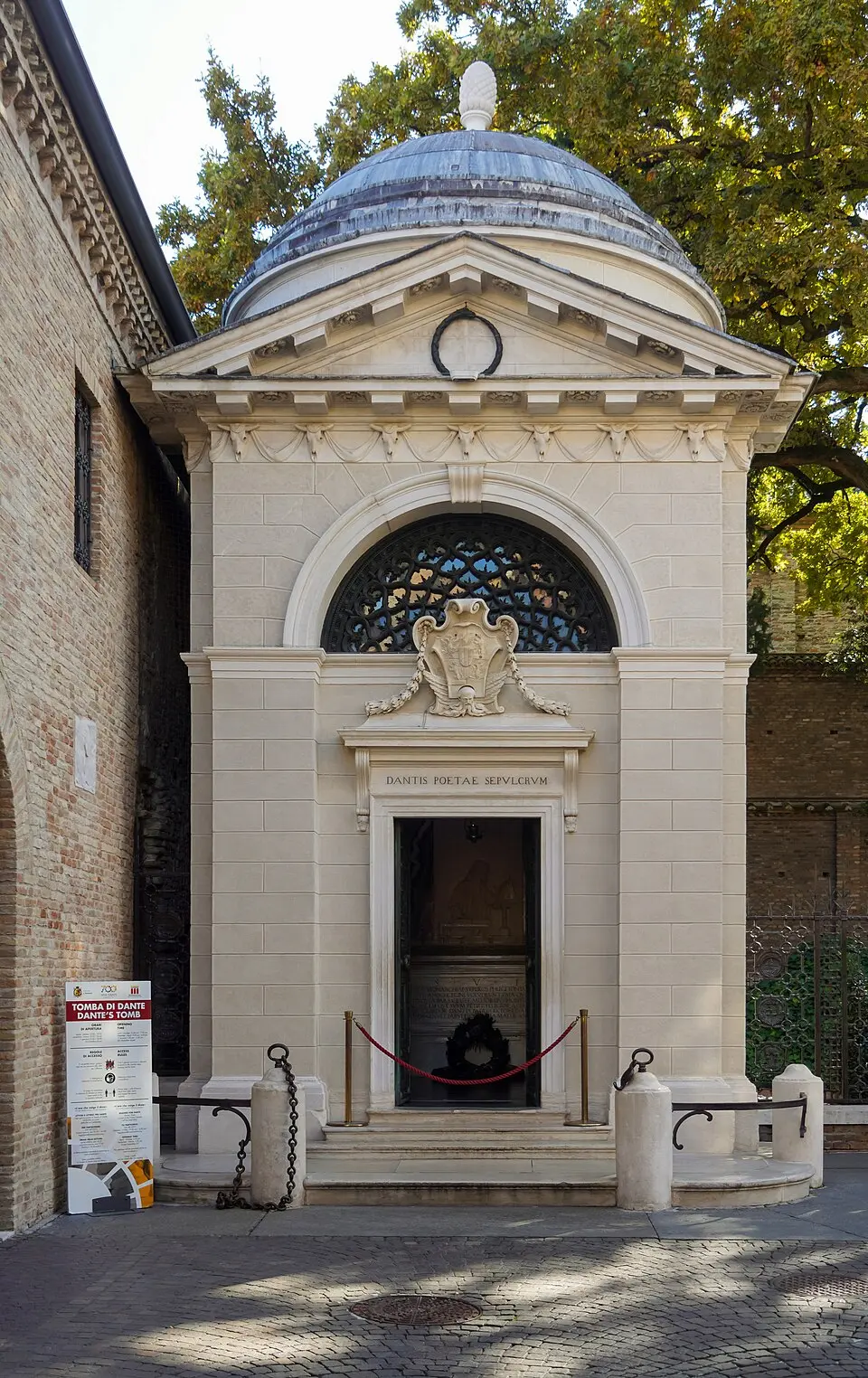
Dante Alighieri died in Ravenna in 1321, exiled from Florence. He completed the Divine Comedy during his years in exile, including his final years in Ravenna. His tomb is a small neoclassical building on Via Dante Alighieri, just a few minutes’ walk from Sant’Apollinare Nuovo - simple, quiet and free to enter.
Florence tried for centuries to recover his remains, but Ravenna consistently refused. The Florentines eventually built an empty cenotaph in Santa Croce in his honour. Dante’s bones remained in Ravenna.
The small lamp burning inside the tomb is kept alight with olive oil sent annually from Florence - a gesture of reparation that has continued since 1519.
Definitely worth a visit.
Food - Piadina and Ravenna's Market
Ravenna is in Emilia-Romagna and eats accordingly. The defining street food here is the piadina, the thin flatbread of the Romagna coast, filled with cheese, cured meats or vegetables and eaten folded. It is the essential Romagnola lunch, available from dedicated piadina stalls (piadinerie) throughout the city centre.
The Mercato Coperto on Piazza Andrea Costa is Ravenna's covered food market - fresh produce, cheese, cured meats, baked goods, and a handful of food stalls for a market lunch. Open Monday to Saturday mornings.
For a more substantial lunch, the restaurants around Piazza del Popolo - the main square - serve local Romagnola pasta, seafood from the nearby Adriatic and local Sangiovese wine. The coastal influence is noticeable in Ravenna's food: brodetto (Adriatic fish stew) and grilled fish appear alongside the inland Emilian dishes.
Practical Information
Getting around: Ravenna is compact and entirely walkable. The five central UNESCO sites are within a few minutes of each other on foot. Sant'Apollinare in Classe requires a bus (Line 4 from the station or central stops) or taxi.
How long do you need: A full day covers the five combined-ticket sites and Dante's tomb comfortably. Two days allows the outlying sites and a more relaxed pace - staying overnight also lets you experience the city in the evening, when it becomes genuinely local rather than tourist-facing.
Book ahead: From tickets ahead at ravennamosaici.it before you travel.
Free on first Sundays: The state-run UNESCO sites (Sant'Apollinare in Classe and the Mausoleum of Theodoric) are free on the first Sunday of each month.
Luggage: Leave bags at Bologna Centrale if day-tripping - Radical Storage and Bounce have locations near the station.
Best time to visit: Ravenna is worth visiting at any time of year. The mosaics are interior experiences unaffected by weather. Spring and early autumn are the most comfortable; summer weekends are the busiest period, particularly for the Mausoleum of Galla Placidia.
For a full guide to Italian regional trains, see our Italy train network guide.
Frequently Asked Questions
Is Ravenna worth visiting?
Without question - it contains the finest surviving collection of early Christian and Byzantine mosaics in the world, in eight UNESCO monuments built between the 5th and 6th centuries. An hour and 15 minutes from Bologna by direct train.
How do I get from Bologna to Ravenna by train?
Direct regional trains from Bologna Centrale reach Ravenna in 1 to 1 hour 15 minutes, with around 40 departures daily. Tickets cost from around €9 one way. No advance booking required - buy at the station and validate before boarding.
Do I need to book tickets in advance for Ravenna?
Yes - timed-entry slots for the Mausoleum of Galla Placidia and the Neonian Baptistery sell out, particularly at weekends. Book at ravennamosaici.it before you travel.
What is the combined ticket for Ravenna?
The 5-site combined ticket (€14.50, valid 7 days) covers the Basilica of San Vitale, the Mausoleum of Galla Placidia, the Neonian Baptistery, the Basilica of Sant'Apollinare Nuovo and the Archiepiscopal Museum. It is the most efficient way to visit the central UNESCO sites and available online or at the first site you visit.
How many UNESCO sites does Ravenna have?
Eight - the Mausoleum of Galla Placidia, the Neonian Baptistery, the Basilica of Sant'Apollinare Nuovo, the Arian Baptistery, the Archiepiscopal Chapel, the Mausoleum of Theodoric, the Church of San Vitale and the Basilica of Sant'Apollinare in Classe. All were built between the 5th and 6th centuries AD.
How long do I need in Ravenna?
A full day covers the five combined-ticket sites and Dante's tomb comfortably. Two days allows the outlying sites (Sant'Apollinare in Classe, Mausoleum of Theodoric) at a relaxed pace and gives you the city in the evening.
Where is Dante buried?
In Ravenna, at the small Tomb of Dante on Via Dante Alighieri - free to visit, a few minutes' walk from the Basilica of Sant'Apollinare Nuovo. Dante died in Ravenna in 1321 having completed the Divine Comedy in exile here. Florence attempted for centuries to recover his remains; Ravenna refused. A lamp kept alight by Florentine olive oil has burned in the tomb since 1519.
Also on The Unseen Italy: Bologna — Italy's Greatest Food City · Ferrara by Train · Day Trips from Florence by Train · How Italy's Train Network Works · Venice by Train: A Car-Free Guide to the Floating City · Day Trips from Milan by Train: The Best of Lombardy and Beyond