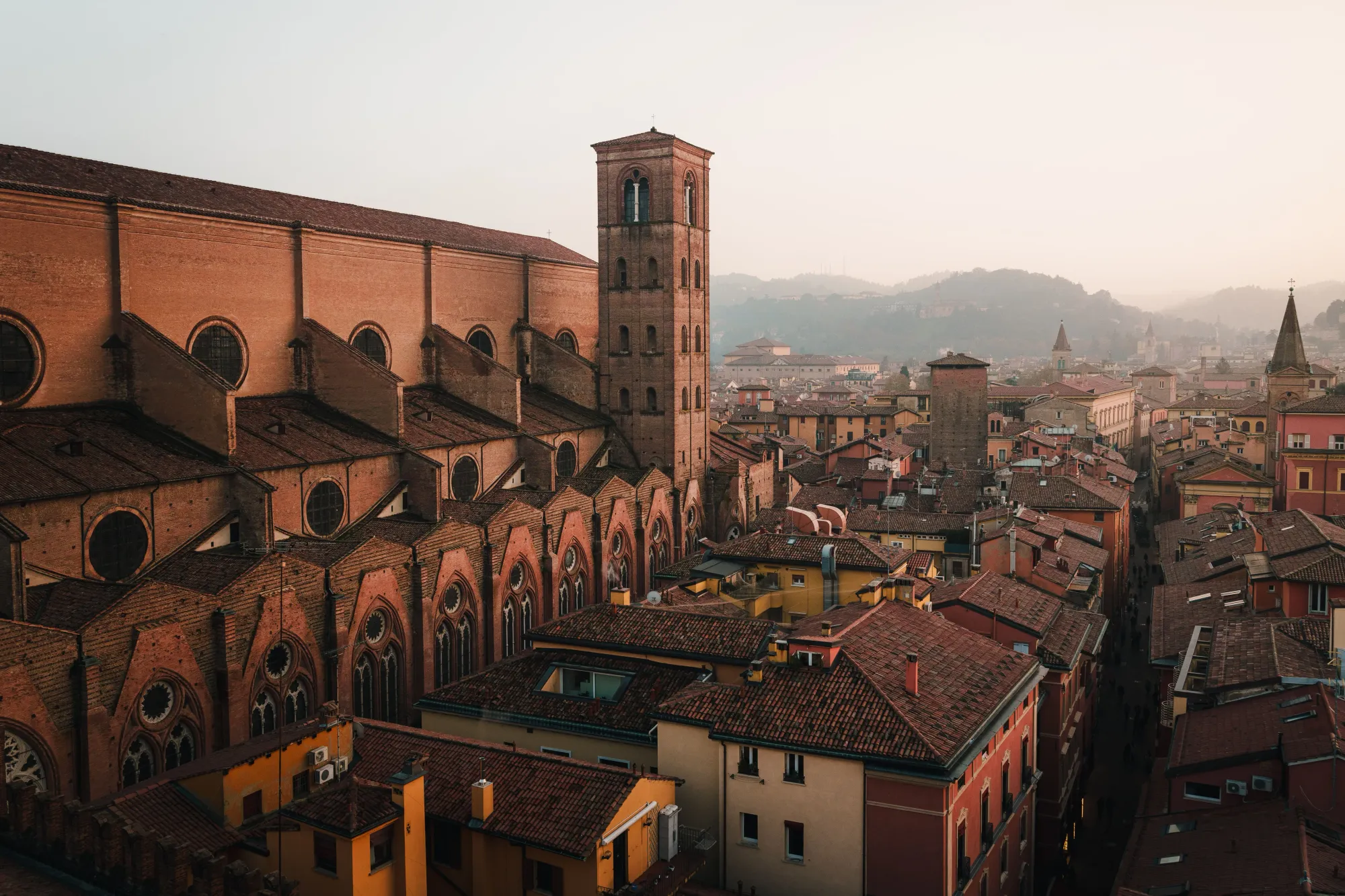
Bologna has three nicknames - La Rossa for the terracotta rooftops, La Dotta for Europe's oldest university, La Grassa for the food. Thirty-eight minutes from Florence by train and almost entirely absent from the standard Italy itinerary. The best food city in Italy, and one of the least visited.
Last verified: August 2026. Train times, prices and opening hours change regularly. Always check official sources before travelling.
Walk into Bologna’s Quadrilatero on a weekday morning and you immediately understand why the city is considered one of Italy’s great food destinations. Within a few medieval lanes, fishmongers, cheese vendors, salumerias and pasta makers fill the streets with the ingredients and flavours of Emilia-Romagna. This is the Bologna of ragù, fresh pasta and traditional trattorias - a city where food is part of everyday life rather than simply a tourist attraction.
Beyond the food, Bologna is remarkably easy to explore. Its nearly 40 kilometres of porticoes provide covered walkways through the historic centre, while the University of Bologna, founded in 1088, gives the city a youthful energy that spills into its bars, piazzas and streets. The result is a city that feels lived-in, historic and intensely local - and one that rewards travellers who come to Bologna to eat, wander and stay awhile.
It is a short trip from Florence, an hour and 15 minutes from Milan, and directly on the main line between Rome and Venice. Yet it remains surprisingly absent from the standard Italy travel itinerary.
At a Glance
| 🚆 From Florence | Trenitalia or Italo - approx. 38 min, from ~€15 |
| 🚆 From Milan | Trenitalia or Italo - approx. 1h 15 minutes, from ~€30 |
| 🚆 From Rome | Trenitalia or Italo - approx. 2h 20m, from ~€30 |
| 🚆 From Venice | Trenitalia or Italo - approx. 1h 30m, from ~€20 |
| 🏛️ UNESCO status | Porticoes of Bologna - World Heritage Site since 2021 |
| 🍝 Essential food | Tagliatelle al ragù, tortellini in brodo, mortadella, tigelle |
| 📅 Best time | Any time of year - university city, always alive |
| ⏱️ Time needed | Full day minimum - two days to do it properly |
| 🗺️ Best base | Historic centre near Piazza Maggiore |
In This Guide
- Getting to Bologna by Train
- The Porticoes — UNESCO World Heritage
- Piazza Maggiore and San Petronio
- The Quadrilatero — Bologna's Food Market
- The Archiginnasio and the Anatomical Theatre
- The Two Towers
- The Complesso di Santo Stefano - the Seven Churches
- The Sanctuary of San Luca
- Food — La Grassa
- Day Trips from Bologna
- Practical Information
Getting to Bologna by Train
Bologna sits at the intersection of the main Italian high-speed lines - the north-south line connecting Milan to Naples runs through here, and the east-west line to Venice branches off from Bologna Centrale. This makes it one of the most accessible cities in Italy by train, with frequent services from every major city. See the At a Glance table above for journey times and prices.
Buy tickets via Trenitalia, Italo or Trainline. Book in advance for the best fares.
Bologna Centrale is a magnificent station in its own right - a Fascist-era building of considerable architectural ambition. The historic centre is around 20 minutes on foot from the station, or a short bus ride.
The Porticoes - UNESCO World Heritage
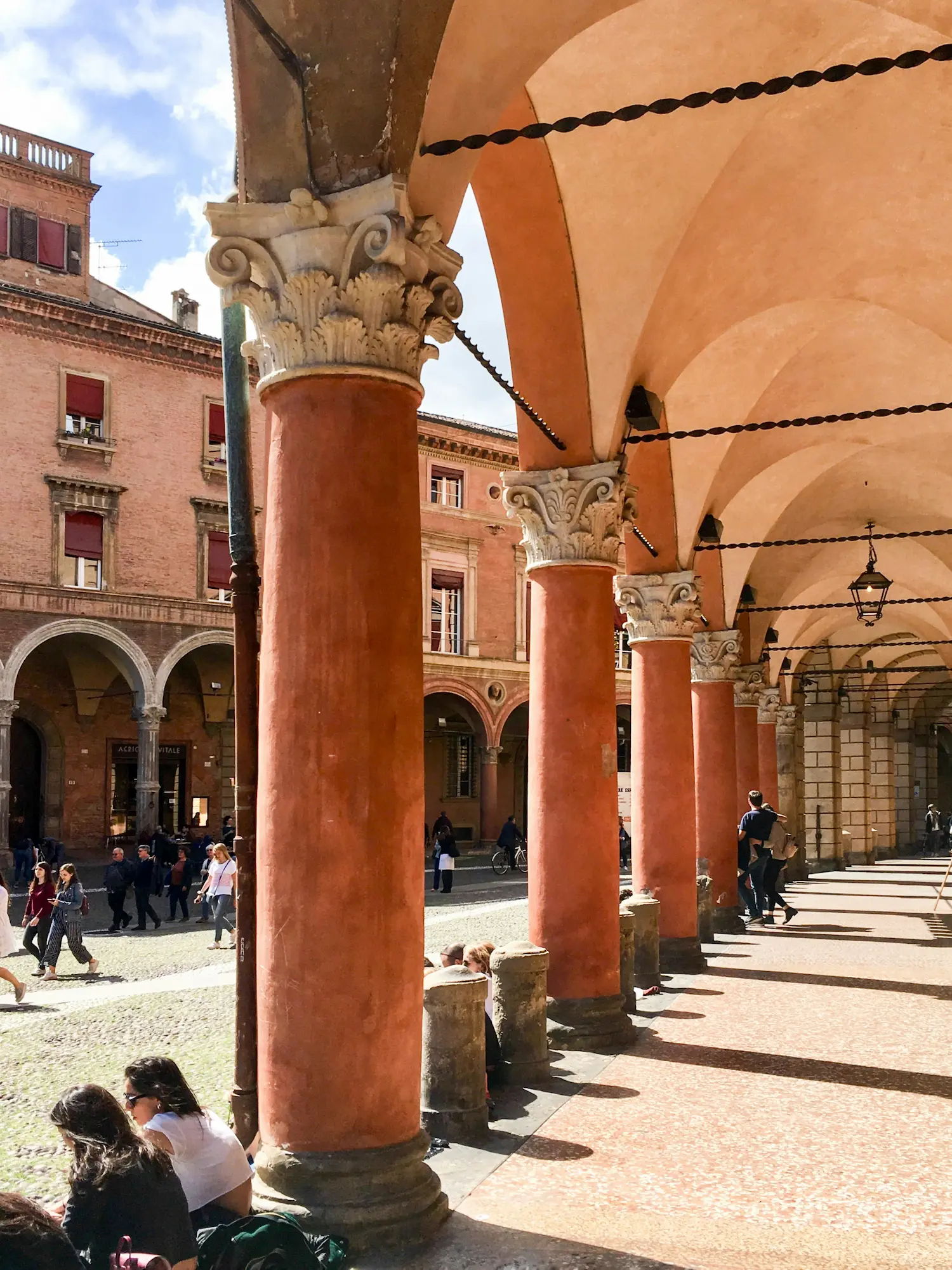
Bologna has nearly 40 kilometres of covered walkways - porticoes, or portici - lining the streets of the historic centre and extending out into the surrounding hills. They were added to the UNESCO World Heritage List in 2021, recognising what is one of the most distinctive and practically useful urban features in Europe: a city where you can walk from one end of the centre to the other without being exposed to rain or direct sun.
The porticoes were built from the medieval period onwards - originally wooden, later replaced with brick and stone.
Piazza Maggiore and San Petronio
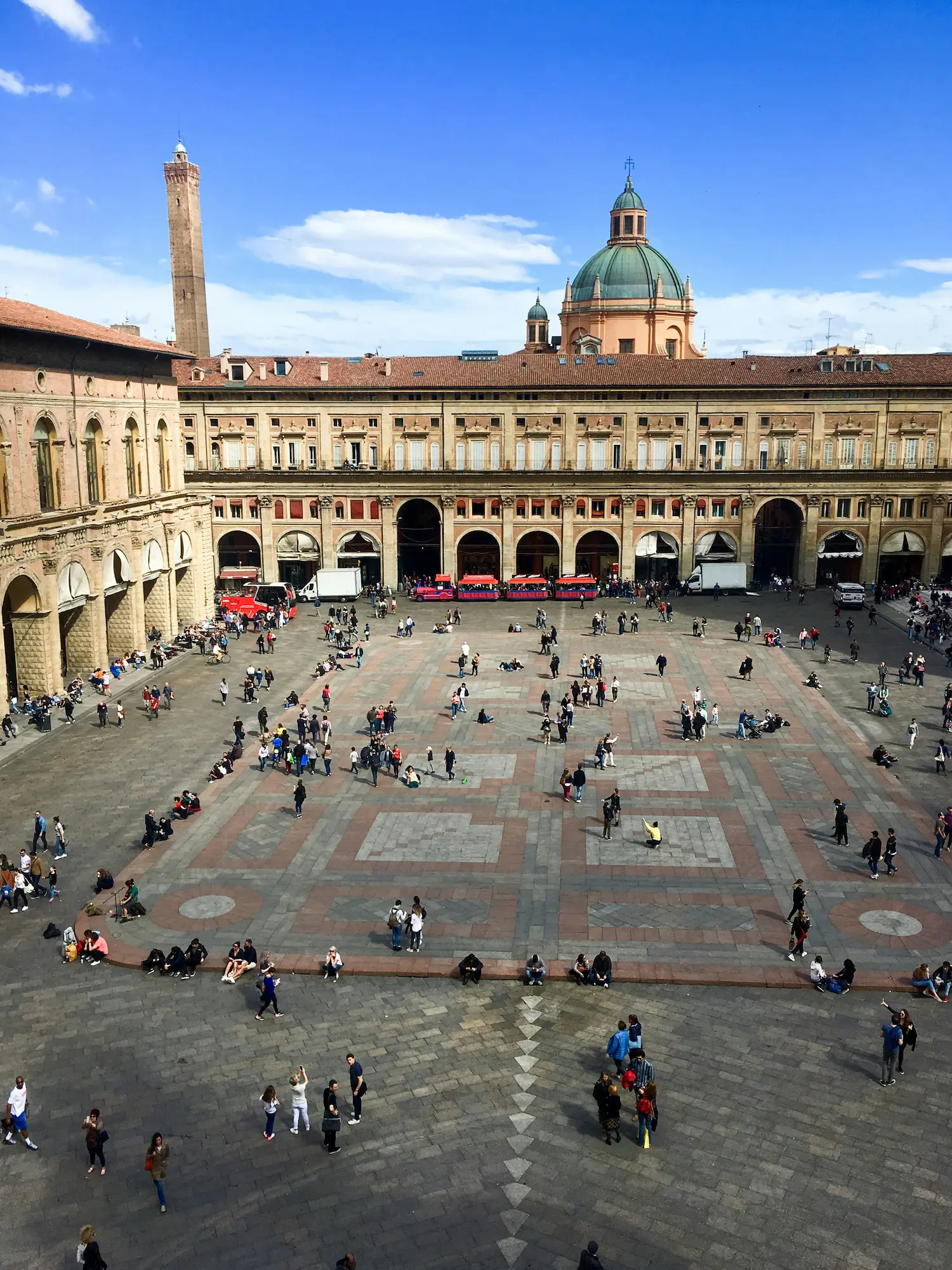
Piazza Maggiore is Bologna's great civic square - a vast open space surrounded by medieval and Renaissance palaces, with the enormous unfinished facade of the Basilica di San Petronio dominating the southern side. Arrive early in the morning when the square is quiet and the terracotta buildings catch the first light. It is one of the most beautiful urban spaces in northern Italy and almost entirely free of the tourist density that overwhelms comparable squares in Florence or Venice.
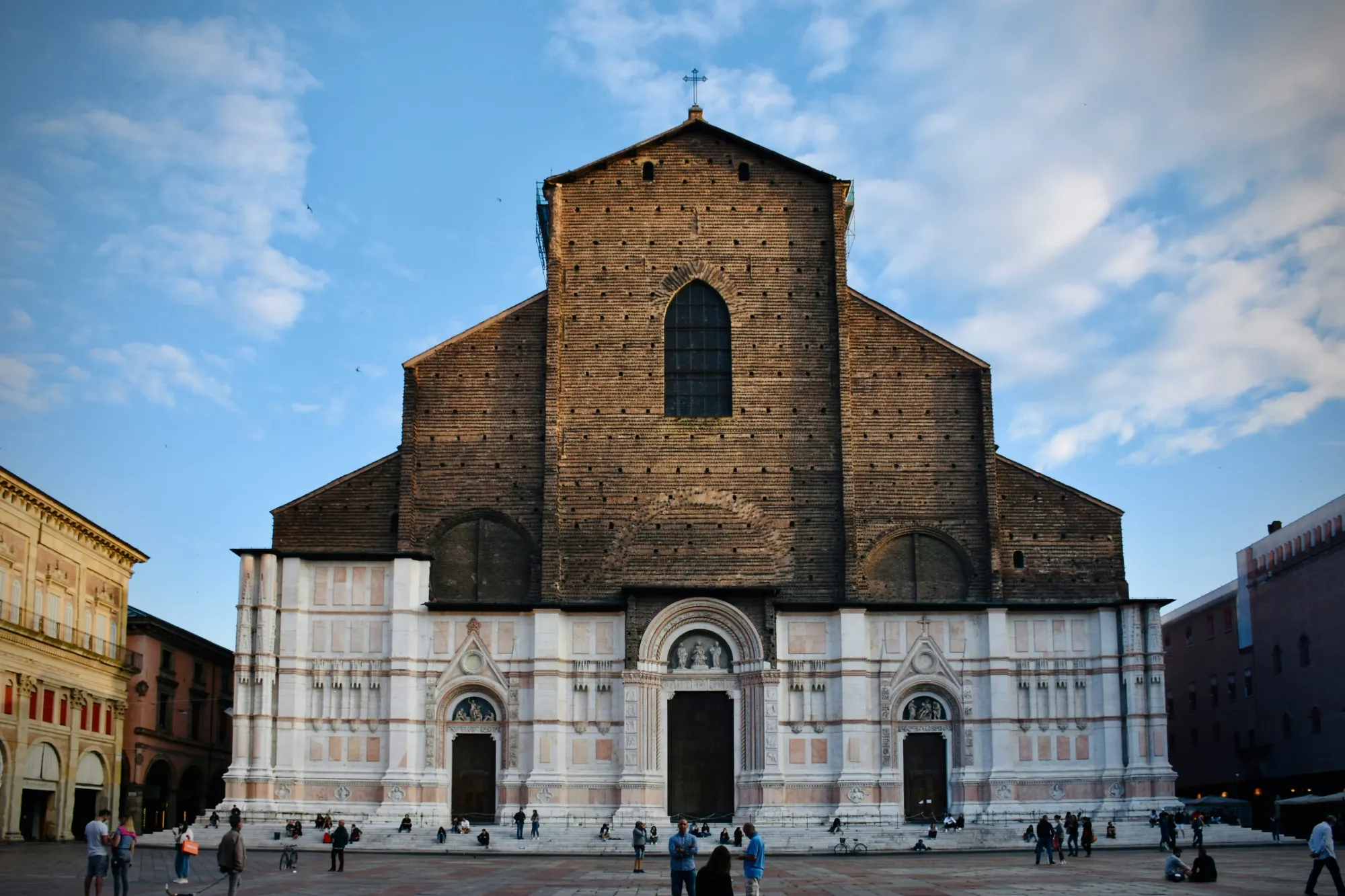
The Basilica di San Petronio is the dominant presence - one of the largest Gothic churches in the world and, crucially, unfinished. The lower half of the facade is covered in red and white marble panels; the upper half is bare brick, as it has been since construction stalled in the 16th century when the Pope redirected funds elsewhere.
The scale is overwhelming - the nave stretches 132 metres - and the interior contains a wonderful feature: a meridian line inlaid in the floor in 1655 by the astronomer Giovanni Cassini, which allows a sunbeam entering through a small hole in the ceiling to trace the position of the sun through the year with extraordinary precision. Entry is free.
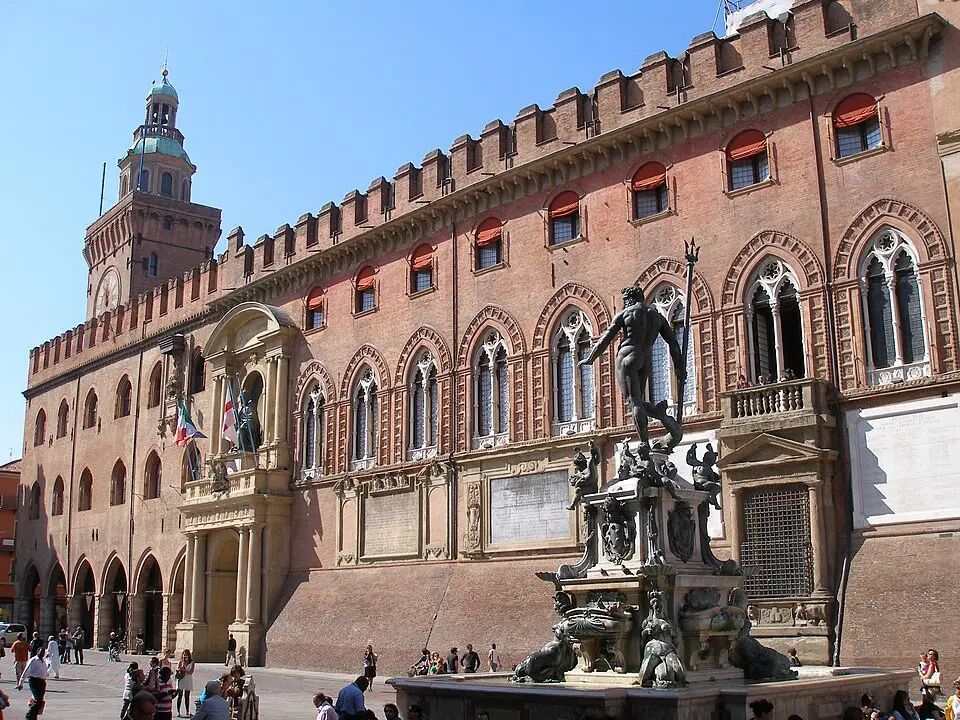
Palazzo d'Accursio, the town hall, occupies the western side of the square and houses the Collezioni Comunali d'Arte - a collection of medieval and Renaissance art open to visitors with a modest entry fee. The Clock Tower above it offers views over the square and rooftops.
The Quadrilatero - Bologna's Food Market
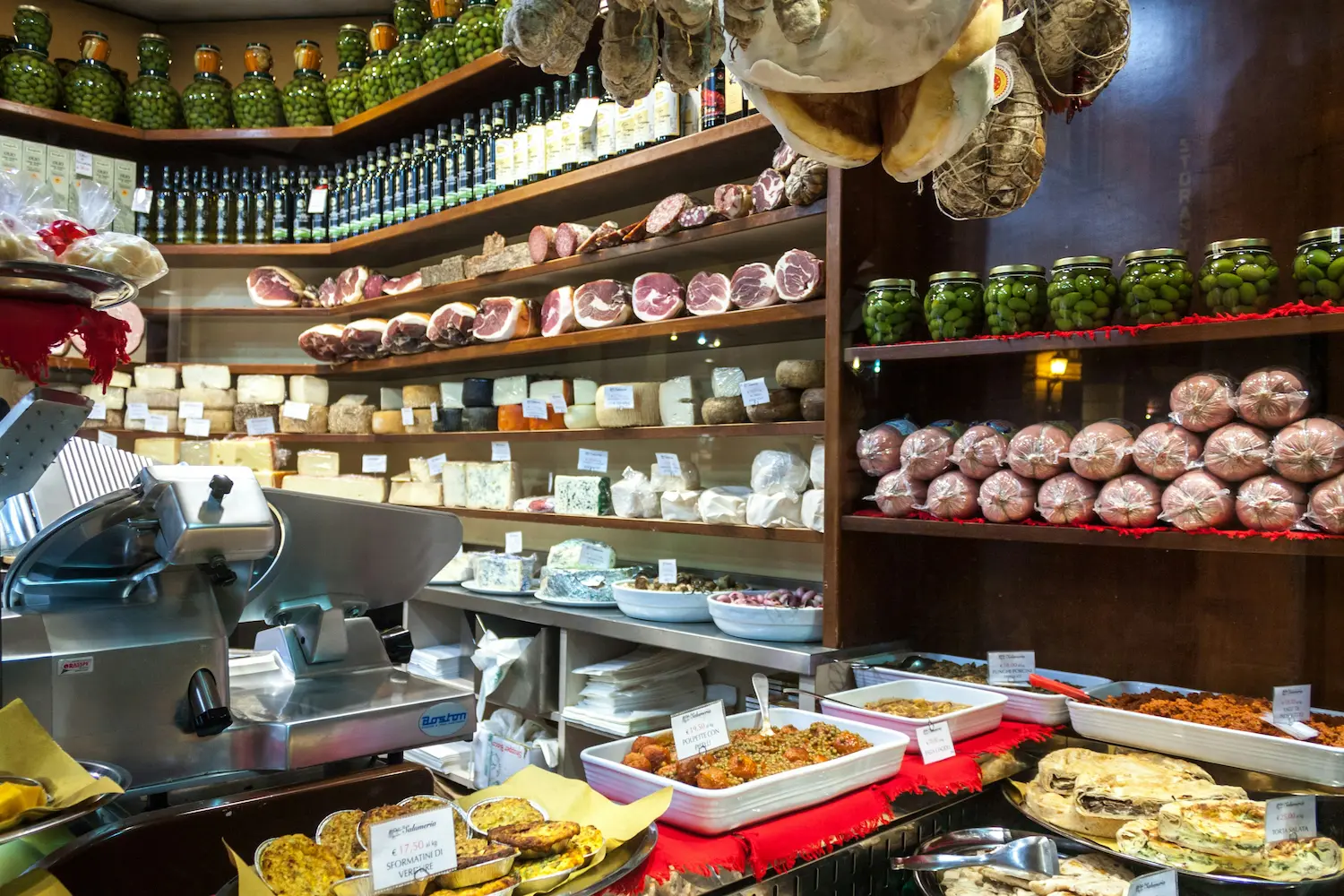
Just east of Piazza Maggiore, the Quadrilatero is the ancient market quarter of Bologna - a dense grid of narrow medieval streets lined with salumerias, cheese shops, fishmongers, butchers, pasta makers and market stalls that has operated on this ground since the Middle Ages. Walk slowly. Buy something to eat at every counter that tempts you.
The Mercato di Mezzo at the southern edge of the Quadrilatero is a more formalised food hall - useful for a sit-down lunch of Bolognese dishes in one place. Tamburini on Via Caprarie, open since 1932, is the most famous delicatessen in the city and worth seeing even if you only buy a single slice of mortadella.
The Archiginnasio and the Anatomical Theatre
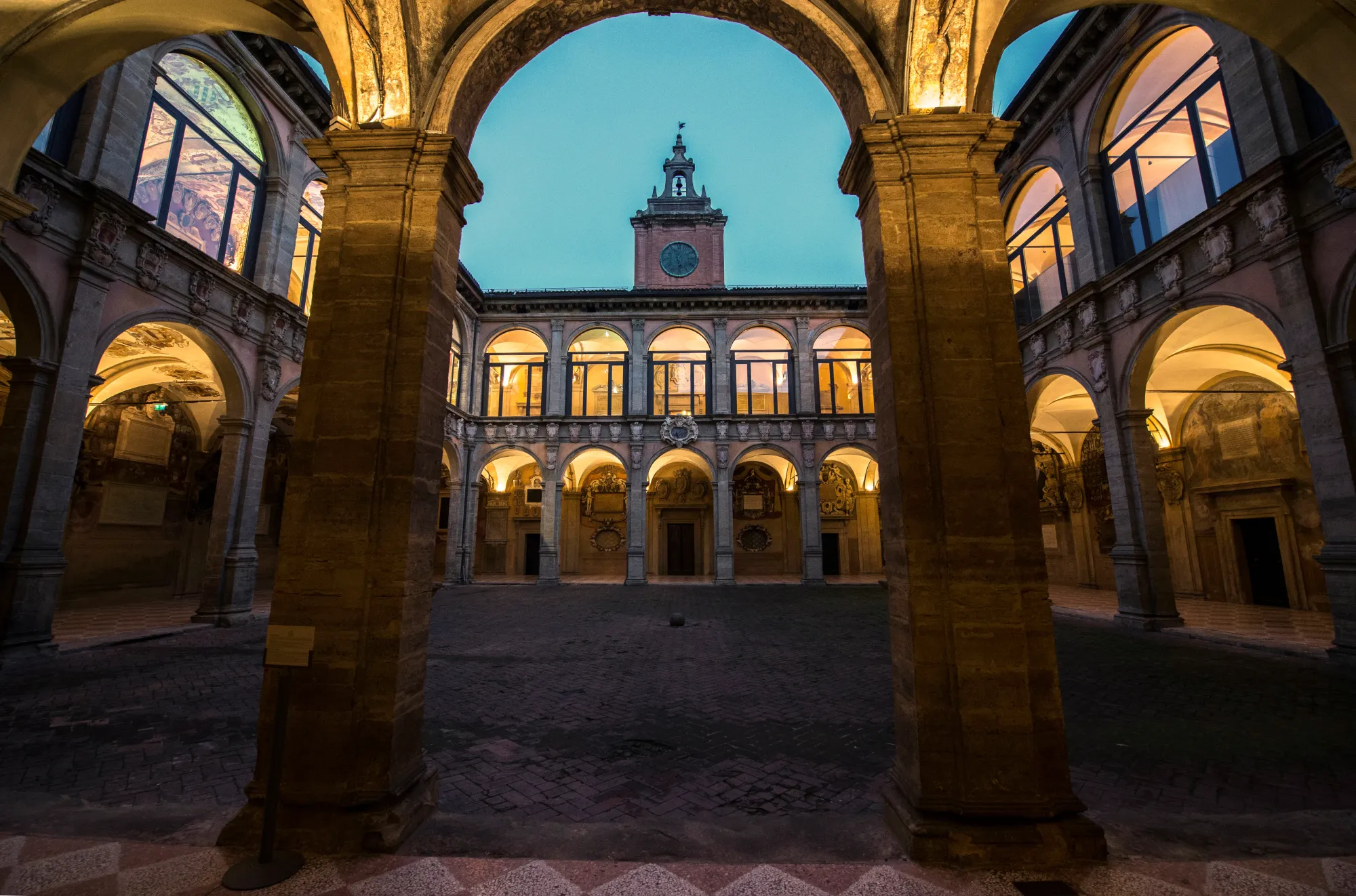
The Archiginnasio, on Piazza Galvani just south of Piazza Maggiore, was the first unified seat of the University of Bologna, built in 1563. The courtyard and arcaded loggias are covered floor to ceiling with the coats of arms of students and professors who studied here over five centuries - a peculiar and dense record of medieval and Renaissance academic culture.
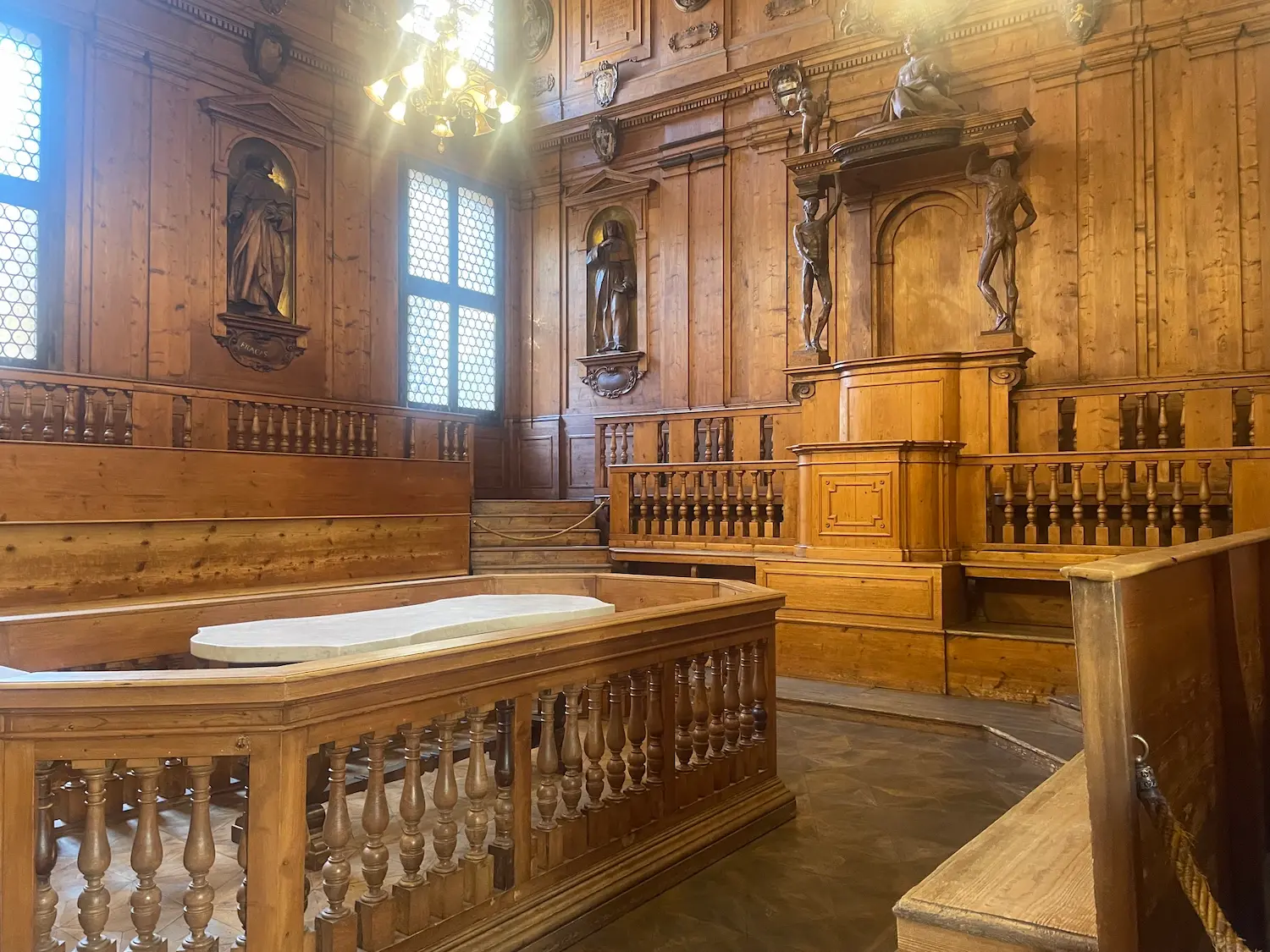
The building's most extraordinary space is the Anatomical Theatre (Teatro Anatomico) on the upper floor - a Baroque lecture hall carved entirely from spruce wood, built in 1637 for the teaching of human anatomy through public dissection. The carved wooden professor's chair is flanked by figures of two flayed men; the tiered seating rises in a semicircle; an effigy of Pope Gregory XV looks down from above. A ticket with audio-guide costs €10.
The Archiginnasio is open Monday to Friday 9am–5pm, Saturday 9am–1:30pm (within extended hours in the summer months).
The Two Towers
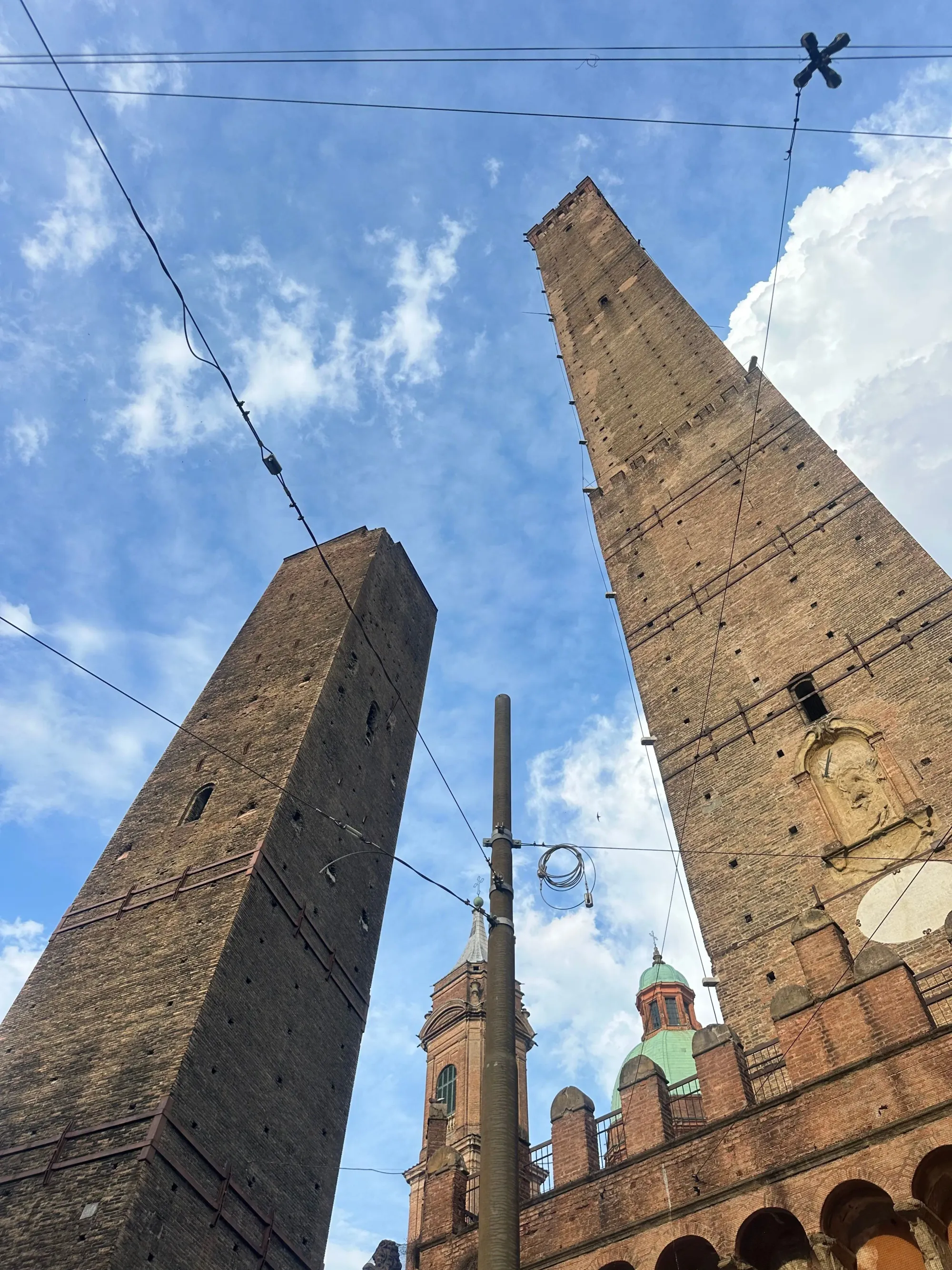
The Due Torri - the Two Towers - are Bologna's most recognisable landmark: two medieval towers that once formed a gate into the city, rising from a small piazza where Via Rizzoli meets Via Ugo Bassi. In the 12th and 13th centuries, Bologna had more than 100 such towers, built by rival noble families as symbols of wealth and power. Only around twenty survive.
The taller of the two, the Torre degli Asinelli, rises 97 metres and has been leaning slightly since the 13th century. While previously open to the public, it is currently closed, with no reopening date confirmed as of 2026. Even without the climb, the towers are worth seeing from the piazza below - the lean of the Garisenda in particular is alarming from close range.
The Complesso di Santo Stefano - the Seven Churches
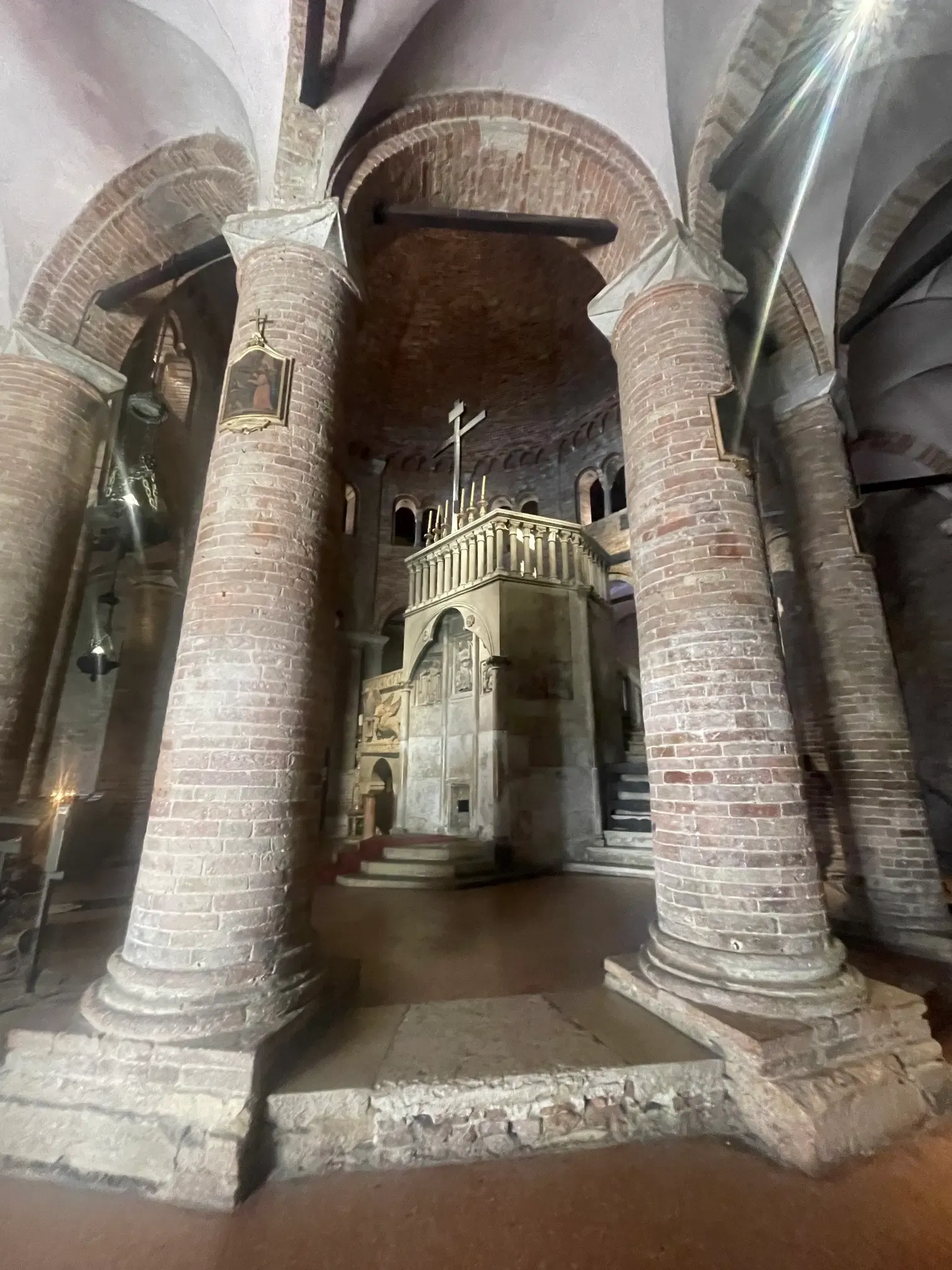
Piazza Santo Stefano is one of the most atmospheric squares in Bologna - a triangular medieval space backed by an extraordinary tangle of religious buildings known as the Sette Chiese, the Seven Churches.
Walking through the complex feels less like visiting a church and more like navigating a sacred labyrinth - a series of interconnected buildings from different centuries, each passage opening onto a surprise: a change in light, a different architectural style, a courtyard or cloister where you weren't expecting one.
The complex dates from the 5th century, when Bishop Petronio built a sanctuary here intending it as a reproduction of the sacred sites of Jerusalem. The Church of the Holy Sepulchre at its heart is modelled directly on the original. The Courtyard of Pilate, the crypt of Bologna's two early Christian martyrs, the medieval cloister with its central well - each space adds another century of history to the one before.
Entry is free. Open Tuesday to Friday 9:30am–12:30pm and 2:30–7pm, closed Monday. Allow 30 to 45 minutes.
The Sanctuary of San Luca
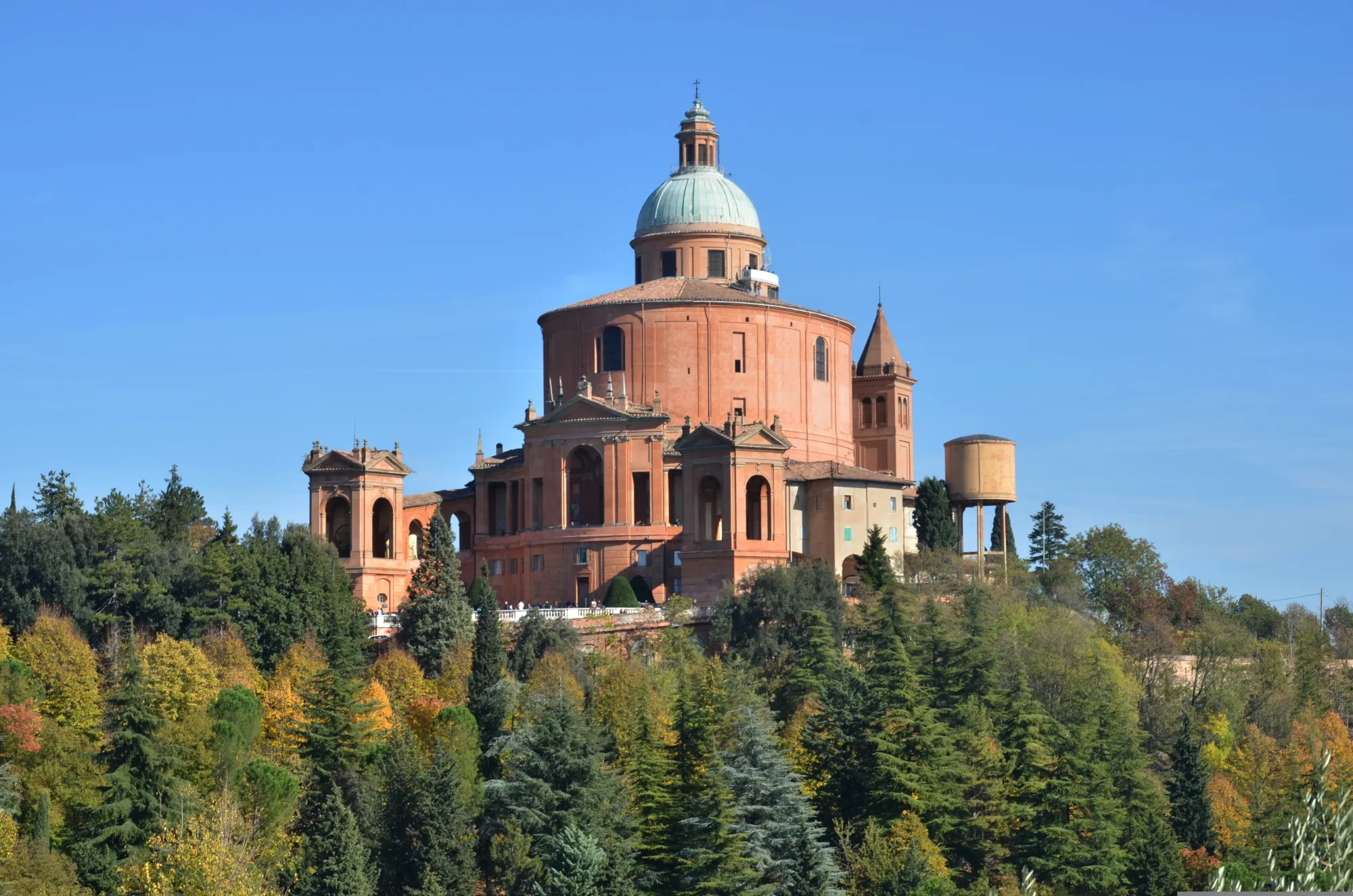
The Sanctuary of San Luca sits on the hill of Monte della Guardia above Bologna, reached by the world's longest portico - 3.8 kilometres of continuous covered walkway, 666 arches, climbing from the Porta Saragozza at the edge of the historic centre to the church at the top. The walk takes around 45 to 60 minutes each way and it is worthwhile.
At the top, the sanctuary itself is a Baroque church housing a Byzantine icon of the Madonna - the original Black Madonna of San Luca - that has been venerated here since the 12th century. The terrace outside gives panoramic views over Bologna and the surrounding Emilian plain, with the Apennine hills behind and, on clear days, the Alps in the far distance.
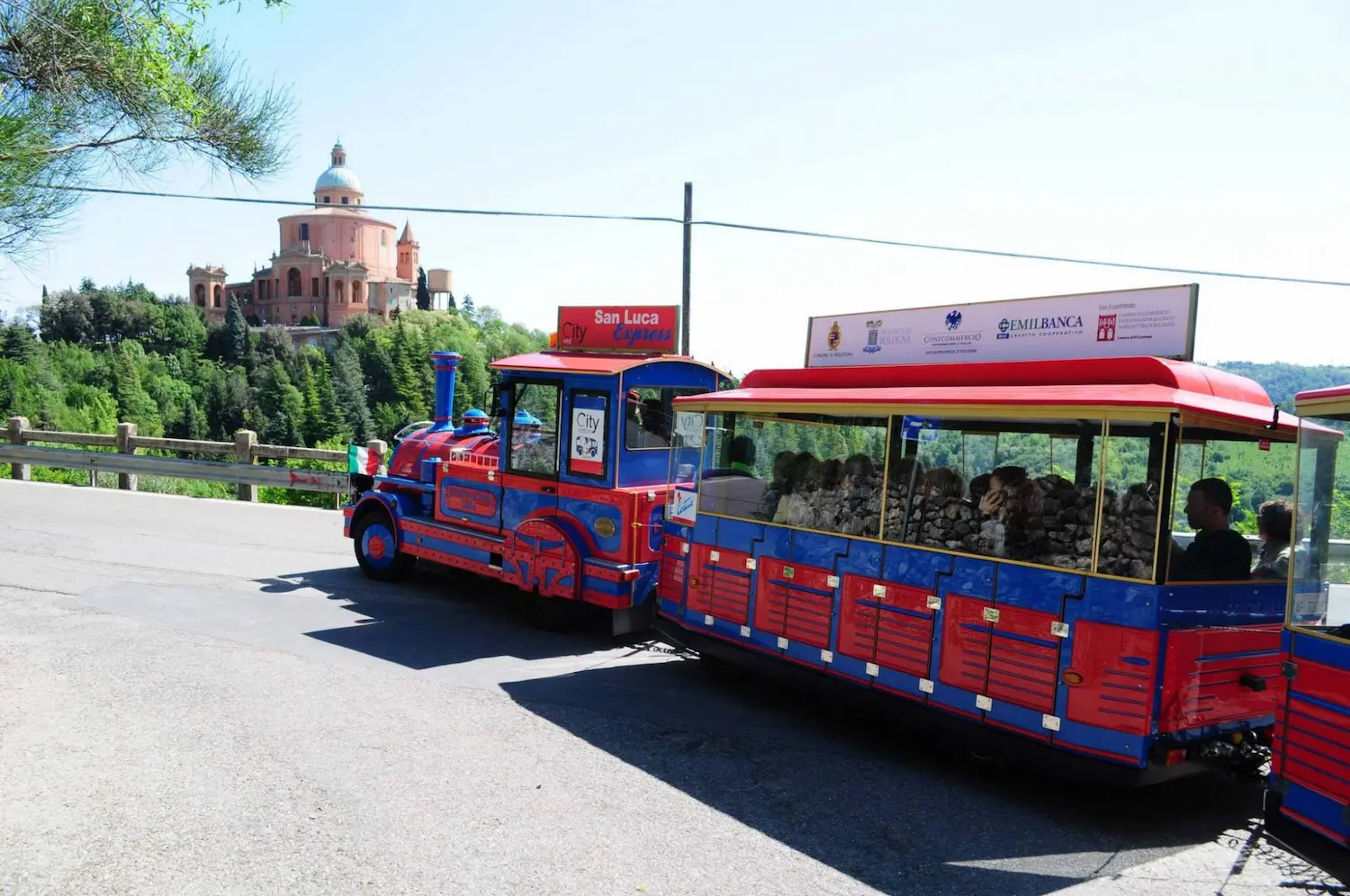
If you prefer not to walk, the San Luca Express, a small tourist train operates from Piazza Maggiore and costs €15 a ticket.
Food - La Grassa
Bologna's food reputation is among the most distinguished in Italy - this is where tagliatelle al ragù, tortellini, and mortadella originate.
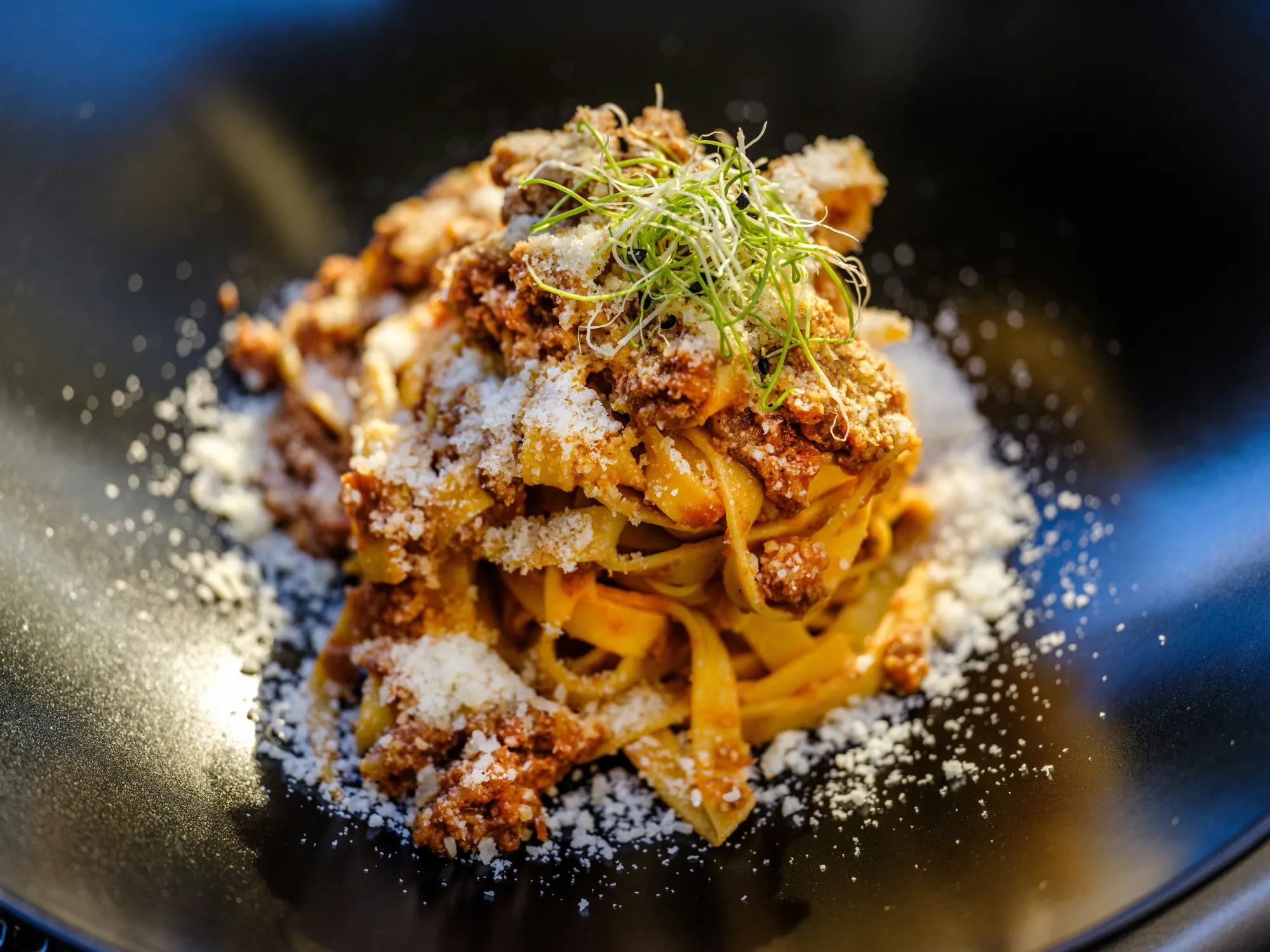
Tagliatelle al ragù is the dish to start with. The sauce is a slow-braised ragù of beef and pork (roughly 60/40), pancetta, soffritto (onion, carrot and celery), tomato paste, wine and milk, simmered for several hours. It is rich, deep and very tasty.
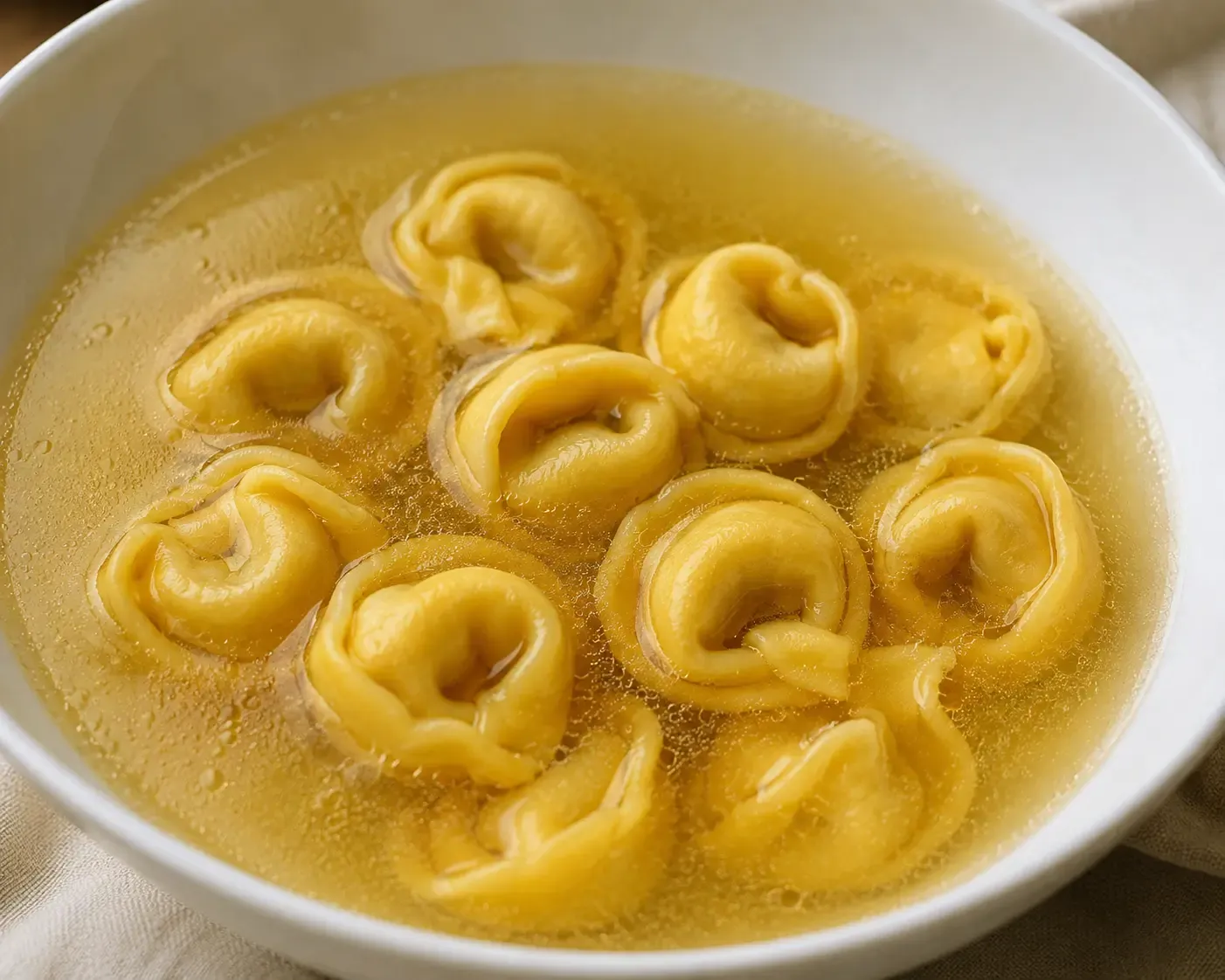
Tortellini in brodo is the other defining dish - small pasta parcels filled with pork, mortadella and Parmigiano Reggiano, served in a clear capon broth. Traditionally served on Sundays and at Christmas, available daily in every serious trattoria in the city.
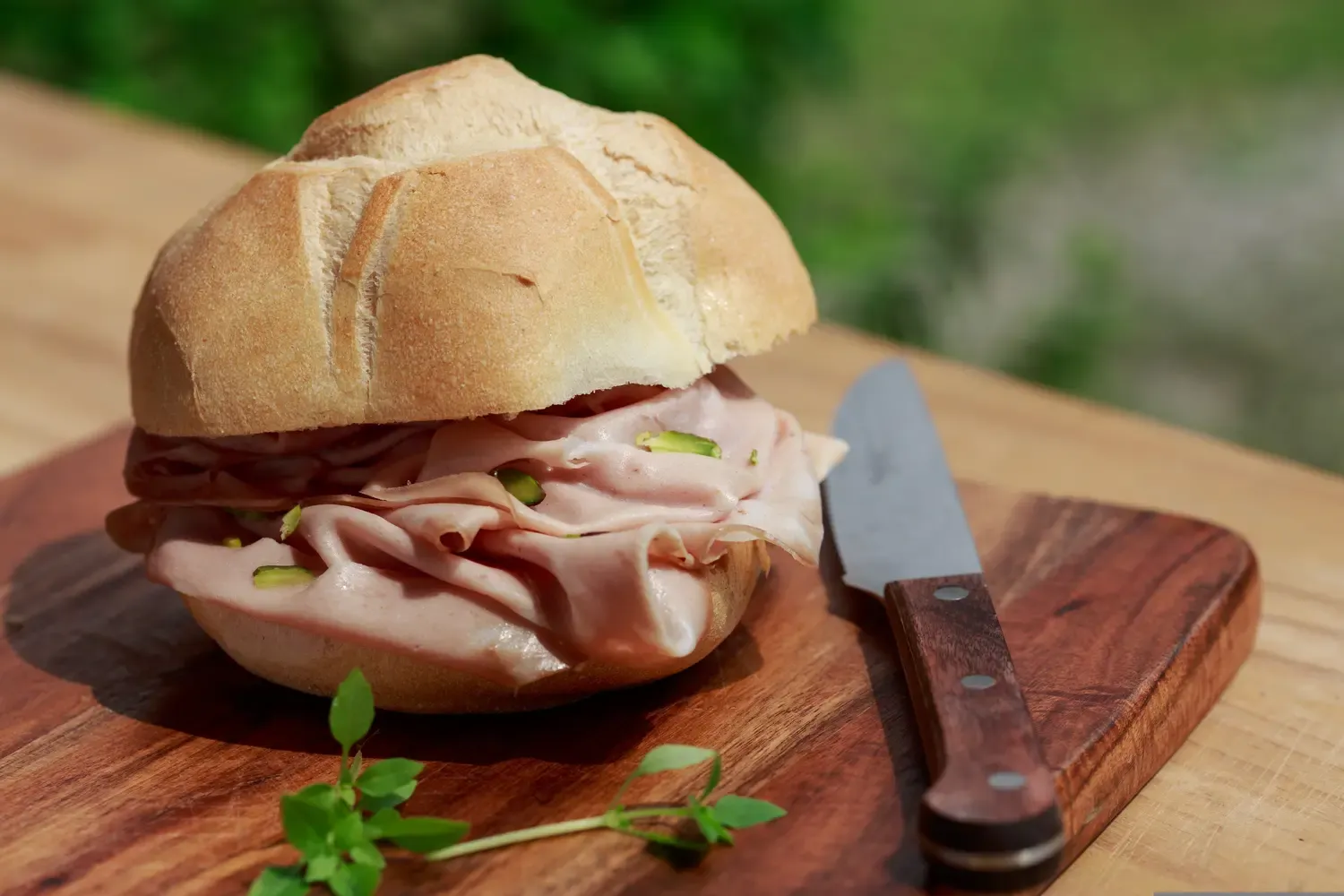
Mortadella is the cured meat that Bologna has exported to the world. A meat studded with pistachio and peppercorns, sliced to order, best eaten in a soft bread roll with nothing else. Buy it in the Quadrilatero.
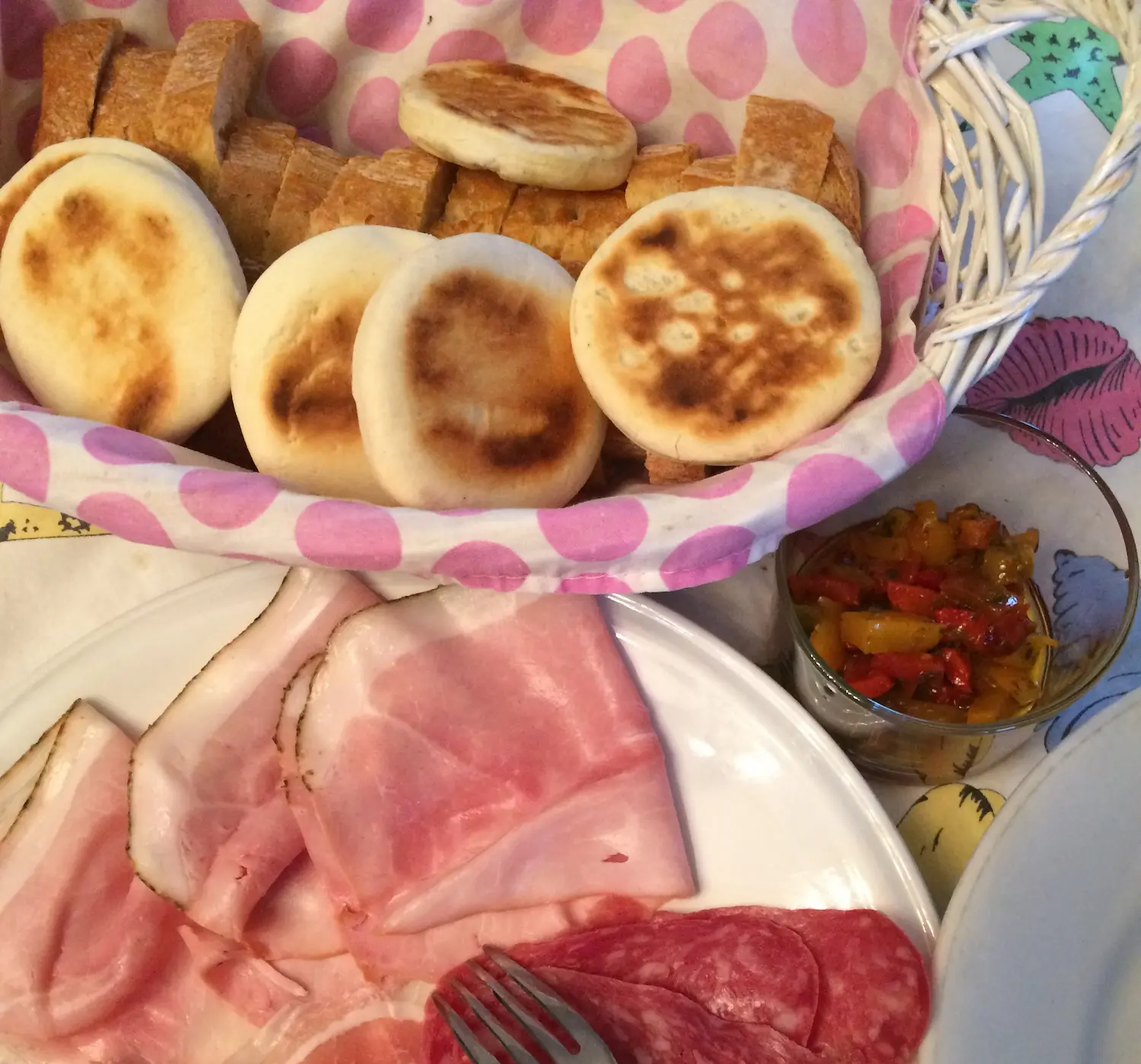
Tigelle are small disc-shaped flatbreads, cooked on a hot iron, split open and filled with whatever you like - cured meats, soft cheese, pesto, lard with rosemary. A street food and a trattoria staple, entirely local to the Emilian tradition.
For lunch: Osteria dell'Orsa on Via Mentana - loud, chaotic, full of students and locals, no reservations, queues outside at peak times. Order the tagliatelle al ragù. Prices are low and the food is serious. Alternatively, Osteria Del Podestà for lasagna or again for tagliatelle al ragù - there are only a few tables inside, so be sure to book ahead.
For the market: The Quadrilatero, any morning. Buy, eat standing, continue.
For aperitivo: The early evening aperitivo hour when bars serve drinks with substantial free food. The streets around Piazza Verdi and Via del Pratello fill with students and residents from 6pm onwards.
Day Trips from Bologna
Bologna's position on the high-speed network makes it an exceptional base for day trips into Emilia-Romagna - a region of extraordinary food, culture and history.
Modena - 25 minutes by regional train. Home of traditional balsamic vinegar (aceto balsamico tradizionale di Modena DOP), Parmigiano Reggiano, Lambrusco wine, and the Ferrari Museum. The cathedral is a UNESCO World Heritage Site.
Parma - 1 hour by train. The home of Parmigiano Reggiano and Parma ham (prosciutto di Parma), with a UNESCO Creative City of Gastronomy designation and a Farnese ducal palace. The Baptistery (one of the finest Romanesque buildings in Italy) and the Correggio frescoes in the Camera di San Paolo are outstanding.
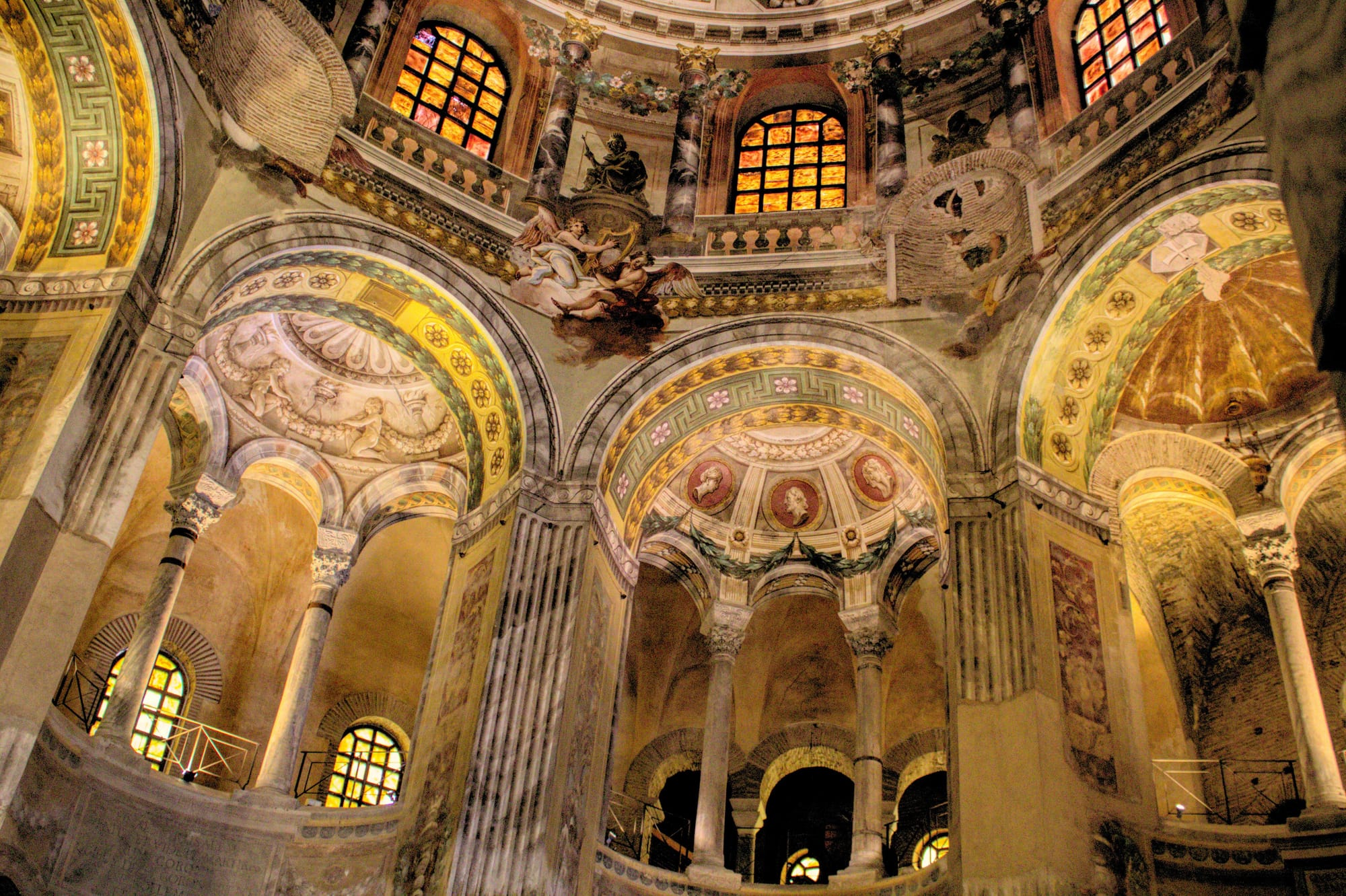
Ravenna - 1 hour 20 minutes by regional train. The capital of the Western Roman Empire in its final decades and home to eight UNESCO-listed early Christian mosaics - the finest surviving Byzantine mosaic work in the world.
Ferrara - 30 minutes by regional train. A Renaissance city of extraordinary completeness, UNESCO-listed since 1995, with a medieval castle moat, broad avenues planned in the 15th century and a Jewish quarter of great historical significance.
Florence - 38 minutes by high-speed train. Bologna sits directly on the high-speed line between Florence and Venice, making it a natural addition to any Tuscan trip - Siena, Lucca, Pistoia and Pisa all within easy reach on the same journey.
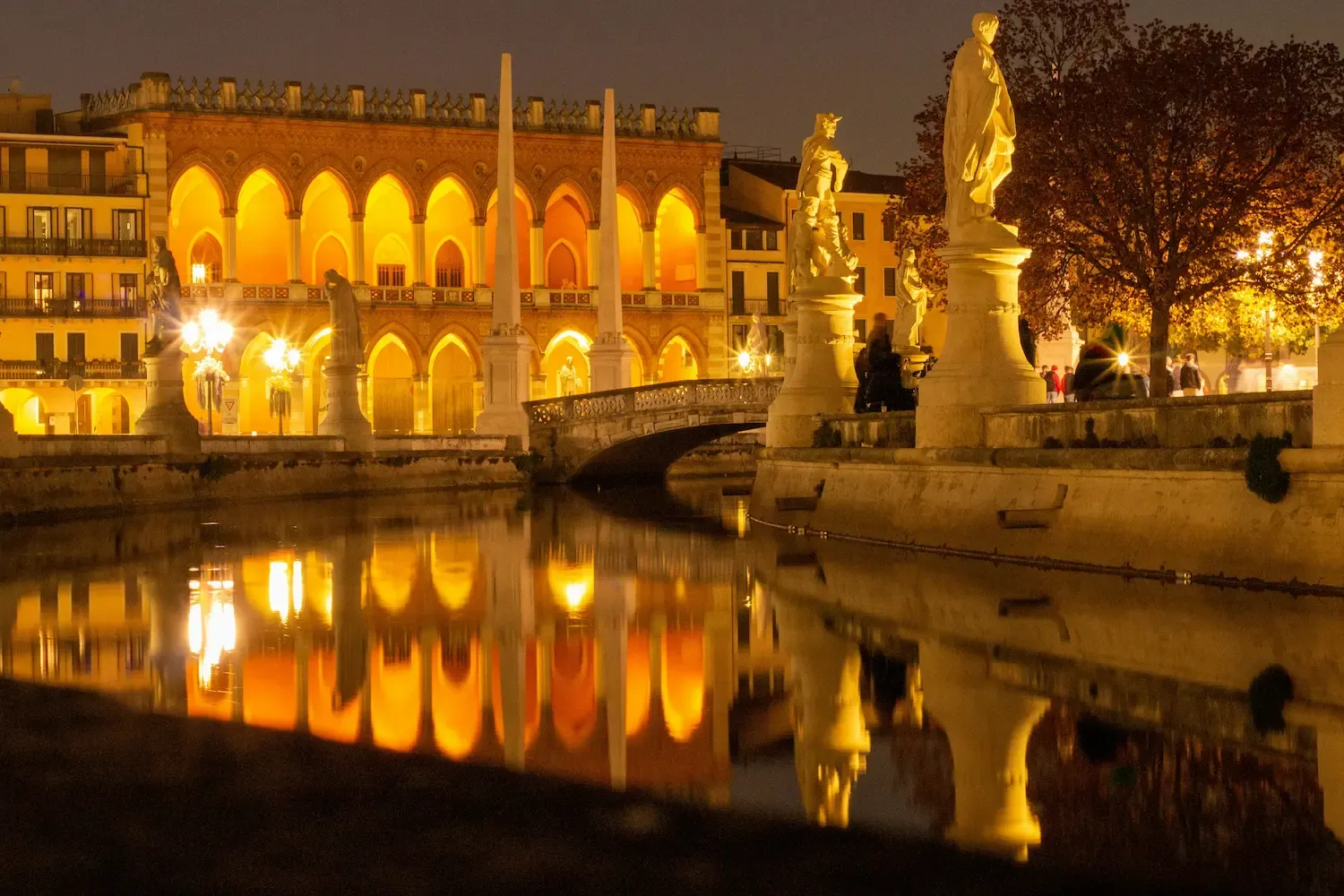
Padua - around 1 hour by direct train. Giotto’s fresco cycle in the Scrovegni Chapel (book ahead - timed entry only), the vast pilgrimage Basilica of Saint Anthony, and a university founded in 1222 where Galileo taught for 18 years. It sits on the line to Venice, so you can combine both in a longer trip.
Venice - around 1 hour 30 minutes by high-speed train, arriving at Venezia Santa Lucia right on the Grand Canal. A day covers St Mark’s Square and the Rialto, but the lagoon islands and quieter neighbourhoods reward an overnight stay.
Practical Information
Getting around Bologna: The historic centre is compact and almost entirely walkable. The porticoes make walking comfortable in all weathers. The historic centre is largely traffic-free and flat - the only significant hill is the walk to San Luca.
Luggage: Bologna Centrale has left-luggage storage. Radical Storage and Bounce both have locations near the station and in the centre.
Day trip or overnight: Bologna works as a day trip from Florence (38 minutes) but rewards an overnight stay significantly - the aperitivo culture, the quieter evening streets and the morning market are all missed by day visitors. Two nights allows for visiting Bologna itself and a day trip to Modena or Ravenna.
Best time to visit: Bologna is a year-round destination - the university keeps the city alive and lively even in winter when other Italian tourist cities feel empty. Summer is pleasant but the city is busy with visitors. October is particularly good - the summer crowds have eased and the food culture is at its most active.
The Torre Asinelli: The tower is currently closed while the Garisenda (the tower beside it) is stabilised, with no reopening date confirmed. Check before visiting if climbing the tower is a priority.
For a full guide to Italian trains, see our Italy train network guide.
Frequently Asked Questions
Is Bologna worth visiting?
Without question - it is an Italian city we recommend to travellers who have already done Rome, Florence and Venice. The food is some of the best in Italy, the porticoes are UNESCO-listed and genuinely extraordinary, the university gives it a human energy, and the absence of mass tourism means the experience is more authentic.
How do I get from Florence to Bologna by train?
Trenitalia and Italo high-speed trains run from Florence Santa Maria Novella to Bologna Centrale in around 38 minutes, with departures throughout the day. Tickets start from around €15 booked in advance. Buy via Trenitalia, Italo or Trainline.
What is the food of Bologna?
Tagliatelle al ragù (not spaghetti Bolognese - that dish does not exist here), tortellini in brodo, mortadella, tigelle and Parmigiano Reggiano are the defining dishes. The food culture here is the richest in Italy and the quality in local trattorias and market stalls is consistently exceptional.
What are the porticoes of Bologna?
Nearly 40 kilometres of covered walkways lining the streets of the historic centre and extending to the surrounding hills - a UNESCO World Heritage Site since 2021. The porticoes make Bologna uniquely comfortable to walk in all weather and define the character of daily life in the city.
Can I visit Bologna as a day trip from Florence?
Yes - 38 minutes by train make Florence one of the easiest day trips in Italy. A full day covers Piazza Maggiore, the Quadrilatero, the Archiginnasio, the Two Towers and a proper lunch. Two days allows you to add the San Luca portico walk and a day trip to Modena or Ravenna.
What day trips can I do from Bologna?
Modena (25 minutes - balsamic vinegar, Ferrari Museum, UNESCO cathedral), Parma (1 hour - Parmigiano Reggiano, prosciutto, Farnese art), Ravenna (1 hour 20 minutes - the finest Byzantine mosaics in the world), Ferrara (30 minutes - Renaissance UNESCO city) and Padua (1 hour - Giotto's Frescoes, a Basilica and Europe's Oldest University) are all within easy reach by train. As are of course Florence (38 minutes away) and Venice (1 hour 30 minutes away) - two of the most beautiful cities in Italy.
Is the Torre Asinelli open?
Not currently - with no confirmed reopening date as of August 2026. Check current status before visiting if this is a priority.
Also on The Unseen Italy: Day Trips from Florence by Train · Hidden Gems in Florence · How Italy's Train Network Works · 12 Days in Italy by Train · Ravenna by Train: Eight UNESCO Sites and the Finest Byzantine Mosaics in the World · Ferrara by Train: A Renaissance City the Crowds Have Missed · Venice by Train: A Car-Free Guide to the Floating City · Padua by Train: Giotto's Frescoes, a Basilica and Europe's Oldest University